Rather than try to win through force or cut a deal, could President Trump just walk away from the war with Iran? It’s an option that could force the Middle East into a search for a fundamentally new regional order.
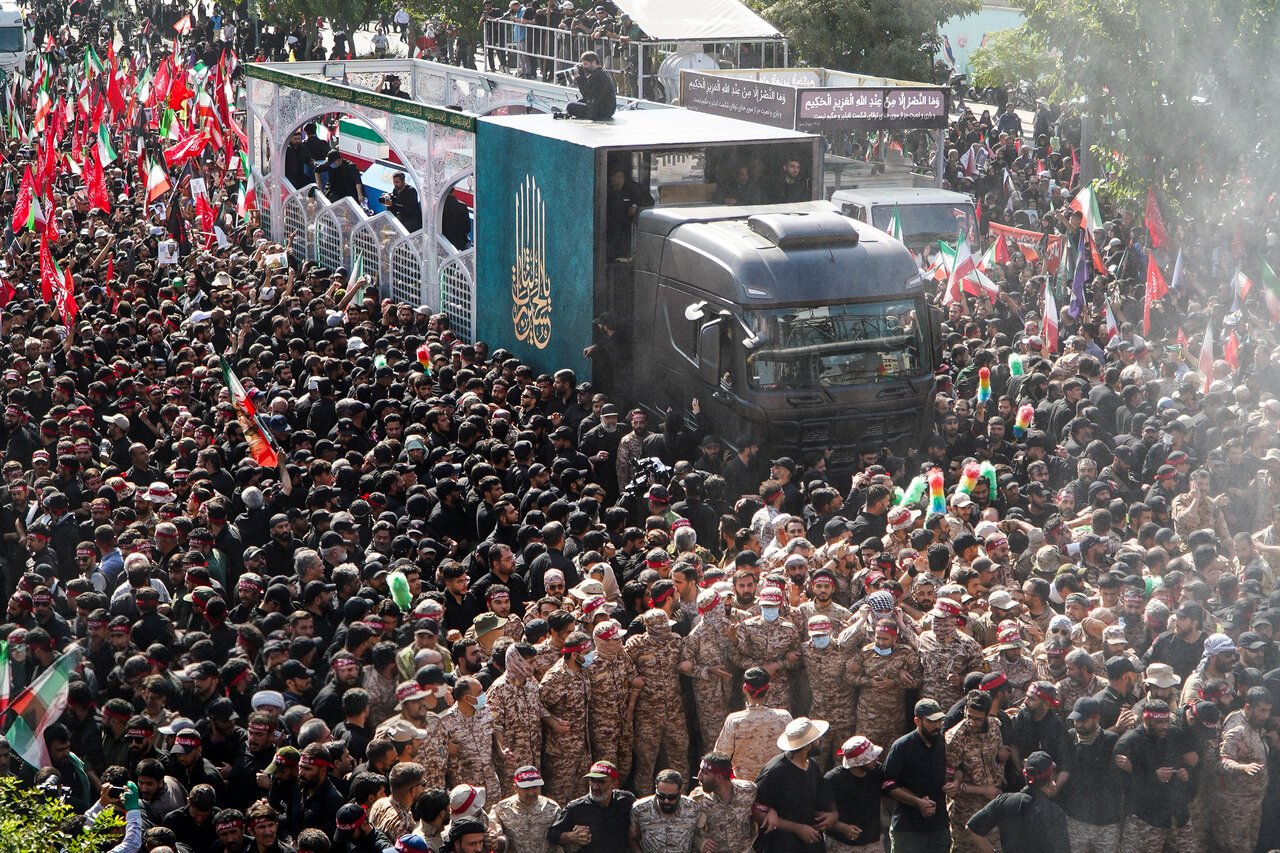
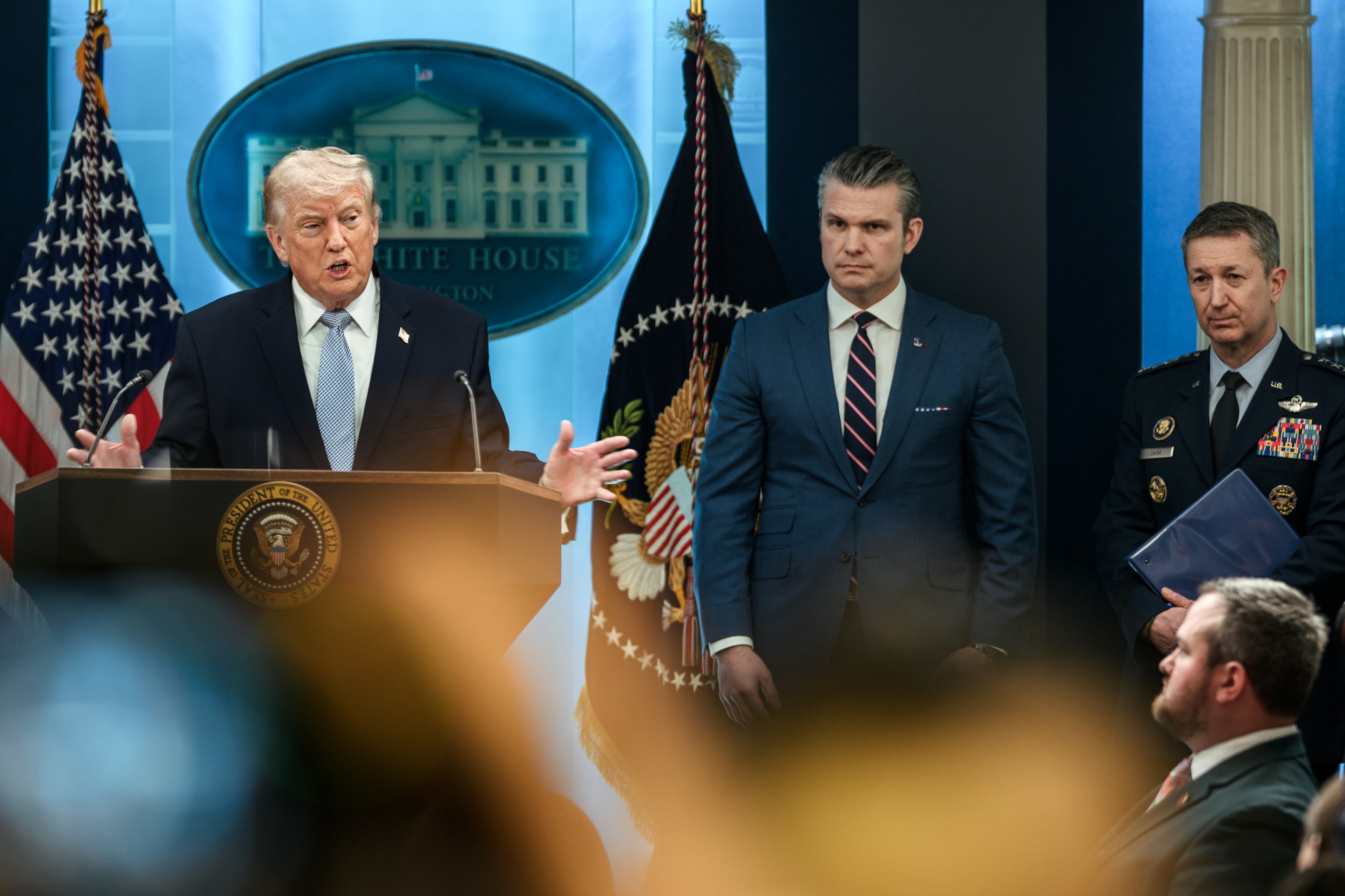
The war that began with US and Israeli strikes on Iran in February has upended the Middle East and, more than eight months in, nothing is settled. A ceasefire in April and a memorandum of understanding in June both fell apart within weeks. Tehran has throttled traffic through the Strait of Hormuz, forcing the US to commit warships, more than 100 aircraft, and about 15,000 personnel to protect commercial vessels from Iranian drones, missiles, and small boats. The US has blockaded Iran’s ports since April, but neither side fully controls the strategic waterway, and tankers continue to come under regular attack. This week, the most recent diplomatic effort stalled, with President Donald Trump sidelining his lead negotiator, Vice President JD Vance, and declaring, “We don’t need a deal with Iran.”
The situation has looked unsustainable for months, but all sides have by now accommodated themselves to it in various ways — so much so that this neither-war-nor-peace state could be emerging as Trump’s preferred outcome. Even as he intermittently pushes for a settlement and reportedly considers escalatory plans, a third option — walking away and leaving an unresolved conflict for others to bring to a close — may be gaining in appeal, if only because it opens a path of unilateral action.
Trita Parsi, a co-founder of the Quincy Institute for Responsible Statecraft, told the One Decision podcast in November that Trump has learned both the difficulty of negotiating with Iran and the political costs of military escalation. While the world “is still not out of the woods” on the risk of renewed war and Trump could still strike a deal, Parsi believes that “it’s more likely that he will go for a third option, which is essentially to walk away but without retaining the blockade in place. Instead, you would see a slow, almost imperceptible decay of the blockade, of the sanctions regime, strong enough so that the US can continue to say that the sanctions are in place, but weak enough so that the Iranians do not have any incentives to challenge the new status quo.”
At stake in Trump’s decision to fight, deal, or walk is not just how the war ends but also what kind of regional order is possible or necessary in the aftermath. Trump may be able to tolerate an in-between outcome of the kind Parsi describes; the region, analysts say, does not have this luxury. And the search for a way out of the present impasse could take Iran and its neighbors through a series of branching scenarios, including some that would mark radical departures from historic norms.
TRUMP’S CHOICE
Trump has often seemed to see himself in world-historical terms, and the choice before him offers a role to match. Renewed strikes would likely pull the Gulf states back toward their existing protector, the US. Any deal would need a guarantor, whether an outside power with leverage over both sides or a regional body. Walking away, by contrast, would leave the hardest questions unanswered: the Strait of Hormuz still threatened, an enriched uranium stockpile still unaccounted for, and nothing in place to stop the next crisis.
More Strikes
With more forces on the way, Pentagon planners have reportedly drawn up options that include striking nuclear facilities, energy infrastructure, and military installations. Two earlier rounds, the 12-day war in June 2025 and the renewed fighting that began in February, failed to dislodge the Iranian regime or resolve the nuclear question, and arguably left Tehran with more bargaining leverage than before. It remains unclear, analysts say, how further US strikes would change that balance.
The cost of any new fighting would fall first on Gulf countries including Bahrain, the UAE, and Qatar. Officials there anticipate Iranian reprisals against civilian infrastructure such as water and energy facilities, and Tehran has telegraphed plans to target undersea cables, data centers, and AI infrastructure across the region. The political fallout may matter more: Iran’s message to Gulf leaders is that the US bases meant to protect them have made them targets, sharpening doubts about US security guarantees that were already growing. At the Hili Forum in Abu Dhabi in September, Qatar’s foreign ministry spokesperson, Majed al-Ansari, said the US alliance is “very important, but is not enough.”
The deeper issue is whether more force can achieve what Washington wants. The US and Israel cannot continue to “bomb away” the war’s strategic, economic, and political consequences, Ali Vaez, the International Crisis Group’s Iran Project director, told One Decision in September. “The only thing that has worked, if you look at the long history of using different tools against Iran, the only thing that has delivered results is actually diplomacy,” he said. “Sabotage, covert operations, military options — none of it has really resolved the problem.”
A Deal
The June memorandum, mediated by Pakistan, was meant to be an off-ramp. The 14-point document promised safe passage for commercial shipping through the Strait of Hormuz, but it pushed nearly every hard question, from the fate of Iran’s enriched uranium to Israel’s presence in Lebanon, into a 60-day window for negotiating over sanctions and the nuclear issue. It fell apart in about three weeks, after attacks on tankers in the Strait prompted US strikes on Iran. Trump declared it “over” on July 7, showing how fragile an agreement built on deferred questions can be. Iran formally suspended its commitments on July 18.
Now Qatar, Pakistan, and Egypt are leading a second attempt. Since October, Doha has been brokering a proposal under which the US would ease its blockade and release frozen Iranian funds, while Tehran would allow nuclear inspections and restore free passage through the waterway. Iran’s own version would end the US blockade, lift some sanctions, and halt the bombing in return for lifting its restrictions on shipping, with nuclear talks to follow.
The main obstacles are the sequencing of blockade relief and what to do with Iran’s estimated 440 kilograms of highly enriched uranium. Washington insists Iran surrender the stockpile and ship it out of the country. Analysts argue the conflict has pushed Tehran to harden its position: a nuclear deterrent looks like the best way to safeguard the country’s future. Secretary of State Marco Rubio, for his part, has dismissed some of Tehran’s conditions as “outrageous and ridiculous.”
Even a signed deal risks becoming a ceasefire with a schedule rather than a lasting peace. Under the Doha proposal, the blockade and shipping access are traded first, and the stockpile — the sharpest point of disagreement — is left for later along with broader sanctions relief. A phased agreement like that needs a third party that can certify each step and penalize slippage. Mediators like Pakistan, Qatar, and Egypt can bring the parties together but lack the leverage to enforce what they negotiate. None of them, for example, can stop Israeli strikes in Lebanon, police a shipping route, or lift US or UN sanctions.
Without a guarantor to offer incentives and impose costs for noncompliance, any new agreement risks the same fate as the June memorandum, Sultan Barakat, a senior associate fellow at the Royal United Services Institute, has warned: “signed with optimism, briefly observed and rapidly undone.”
Walk Away
The third option, which Parsi believes is the likeliest, involves both the US and Iran quietly stepping back and leaving the war’s most intractable issues unresolved. “You would see a slow, almost imperceptible decay of the blockade, of the sanctions regime, strong enough so that the US can continue to say that the sanctions are in place, but weak enough so that the Iranians do not have any incentives to challenge the new status quo,” he said.
The appeal for Washington is political. Any formal deal now would have to acknowledge the war’s unsatisfying results: Iran’s regime intact, a chokepoint it can still disrupt, and an enriched uranium stockpile it has refused to hand over. The June memorandum was also attacked, including by Republican senators, as a capitulation. Exiting without a deal would let the president say he ended the war without signing anything that shows who gained from it.
For Iran, the same outcome would offer leverage, income, and a story of victory. It would keep the uranium as Tehran’s main bargaining chip. It would let the Islamic Revolutionary Guard Corps continue collecting transit fees from shipping companies, reportedly as much as $2 million per vessel — money Washington believes could help fund the force, and a way for Tehran to normalize its control of the Strait. And it would allow Iran to say, as Parsi put it, that it fended off two nuclear-armed states, one of them a superpower.
But this path faces real obstacles. Iran’s supreme leader, Mojtaba Khamenei, has rejected a gray-zone outcome, saying there will be peace or war, “but nothing in between.” The deal Trump wants would also require Tehran to give up something that cannot be undone — its 60 percent stockpile. Iran learned from the 2015 agreement, when it shipped most of its low-enriched uranium to Russia and the deal later collapsed, what surrendering its strongest card can cost. The only US concession of comparable weight is lifting sanctions, which Congress imposed and the president cannot do alone. If Parsi is right, the long-term question is less what replaces the war than who moves into the space it leaves behind.
POST-WAR ORDERS
A walkaway by the US would leave the region facing a series of thorny challenges — including achieving a durable modus vivendi with Iran, coming to terms with the withdrawal of the US security umbrella, and dealing with the conundrum of Israel’s regional role.
China as Guarantor
If the US and Iran simply walk away, the question is no longer how the war ends but what keeps it from restarting. The June memorandum fell apart, many analysts argue, because it had no mechanism for deconflicting incidents, so no one knew how to handle an attack on a ship or fighting in Lebanon. Any future deal would need a neutral but powerful guarantor to fill that gap, and Parsi believes China could play that role.
“In order to really make sure that a deal can stick, there needs to be some other entity there that can bridge the gap of trust between the two sides, and that can actually have leverage on both of them to make sure that they stay in that deal... if you actually can get the Chinese to agree,” Parsi said.
There is precedent. Beijing brokered the 2023 agreement normalizing Saudi-Iranian relations, which helped seal the pact because each side trusted China and knew the other was too dependent on the relationship to break the terms. China also has a stake in how this war ends. Parsi noted that the country gets roughly 40 percent of its oil from the Middle East, and renewed fighting, with the price spike it would bring, would almost certainly hurt its economy.
Other analysts, however, are skeptical of that prospect. China has long stayed out of other countries’ conflicts, a posture that Georgetown scholar Evan Medeiros described as “calculated neutrality” on the One Decision podcast: protecting its commercial interests and keeping its options open without committing to anyone’s defense. Beijing may also be more ready to act than it once was. Rush Doshi, director of the China Strategy Initiative at the Council on Foreign Relations, told One Decision that Chinese leaders grow bolder when they believe American power is in decline, and today they are as confident as they have ever been, with the country’s top intelligence minister calling the US a “spent force.”
A Region On Its Own
If no outside guarantor steps in, the region may have to organize its own security. Some governments have already started. On August 7, Saudi Arabia, Turkey, and Pakistan signed the Mecca Joint Defense Agreement, which treats an attack on one as an attack on all three. Reached for comment, Nawaf Obaid, a senior fellow in the Department of War Studies at King’s College London, said he expects more countries to join, eventually including Iran.
“A Saudi-anchored architecture can coexist with an agreement with Tehran,” Obaid said. “Deterrence provides the foundation, but the objective is a durable accommodation that respects Iran’s legitimate security interests and its neighbours’ sovereignty.” The most important condition, he added, is that “Tehran must accept that armed proxies cannot remain its instrument for coercing neighbouring states.”
In practice, that condition runs through Yemen. Under Obaid’s framework, a regional ceasefire cannot leave the Houthis able to attack Saudi Arabia and threaten critical shipping routes: deterrence comes first, and accommodation follows only if Iran gives up its proxies. Parsi’s Quincy Institute, through its Better Order Project, reverses that order. Its proposal would seat Tehran as a founding member of a standing security body, alongside Iraq, Saudi Arabia, Turkey, and Egypt. Designed to move beyond rival alliances, the body would put responsibility for defense primarily on regional states and reject containment as a strategy.
Both plans, however, have to reckon with one major actor that is part of neither, appears intent on scuttling any deal, and has declared the fall of the Iranian regime its goal.
The Israel Factor
Israel’s intentions are one of the greatest unknowns in this conflict. Analysts are split on whether it is working to wreck a deal or defending interests that a deal ignores. The June memorandum required an end to military activity on all fronts, including Lebanon, but Israeli strikes there continued after it was signed, and Iran suspended the talks until Tehran could verify the strikes had stopped. Since then, Israel has kept troops inside a self-declared security zone in south Lebanon and carried on near-daily attacks, saying Hezbollah is trying to rebuild.
Daniel Shapiro, a former US ambassador to Israel now at the Atlantic Council, wrote of a more structural problem: Israeli Prime Minister Benjamin Netanyahu believes more military pressure could topple the regime, but Trump has been looking for a way out. Israel also wants Iran’s nuclear program dismantled, and Trump seems prepared to accept much less. The once-modest gap between them has opened into a “chasm,” Shapiro said.
Any regionally led peace plan runs into another wall: Palestinian statehood. “Israel will remain the outlier and a spoiler while the Palestinian question remains unresolved,” Obaid said. “Until Israel accepts that requirement and respects its neighbours’ sovereignty, I do not see it becoming part of this framework.” The Better Order Project makes statehood the condition for Israel’s place in a regional order, and Saudi Arabia has made a similar demand, tying normalization to a credible path to a Palestinian state.
Israel’s October 27 election offers little reason to expect either demand will be met. Netanyahu’s bloc won 53 seats, eight short of a majority; former military chief Gadi Eisenkot’s won 48. Either man could form the next government, and both oppose a fully independent Palestinian state. A survey by the Jerusalem Center for Security and Foreign Affairs found 63 percent of Israelis opposed a Palestinian state even when it was tied to normalization with Saudi Arabia.
Parsi’s answer is not to wait. His plan would build the order now and keep the door open, betting that a working architecture excluding Israel could eventually move the country’s voters — an outcome that, he acknowledged, would take time.
A lasting deal would have to include not only a Palestinian solution but also security guarantees for Israel, Sir Richard Dearlove, the host of One Decision, noted. Without both, “the pieces just don’t fit together in the medium to long term.” But conflict, he added, also has a way of rearranging what is possible. “The extremes of warfare do push solutions which were previously unthinkable.”