Despite crippling economic sanctions and an intermittent war, Iran has managed to rearm and bankroll Hezbollah, the most powerful proxy in its “Axis of Resistance.”
Key takeaways:
- Hezbollah has survived. Despite the 2024 pager attacks, Nasrallah's killing and heavy losses this year, the group still has about 40,000 fighters and 15,000 rockets. It is rearming with help from Iran's Revolutionary Guard.
- Iran is betting on Hezbollah over Hamas. With less money to spend, Tehran is prioritizing its proxy on Israel's border and letting a sealed-off, depleted Hamas fade.
- The money keeps flowing. Iran sent Hezbollah more than $1 billion in 2025, moving it through exchange houses, cash couriers, Dubai and informal hawala networks to get around US sanctions.
- Weapons come in overland. Smugglers move drones, missiles and explosives through Iraq and Syria, even as Syrian and Lebanese authorities seize shipments and close tunnels.
- Hezbollah is changing how it fights. It is making cheap 3D-printed drones at home and shifting toward Ukraine-style guerrilla tactics, so the size of its rocket arsenal is no longer the best measure of the threat.
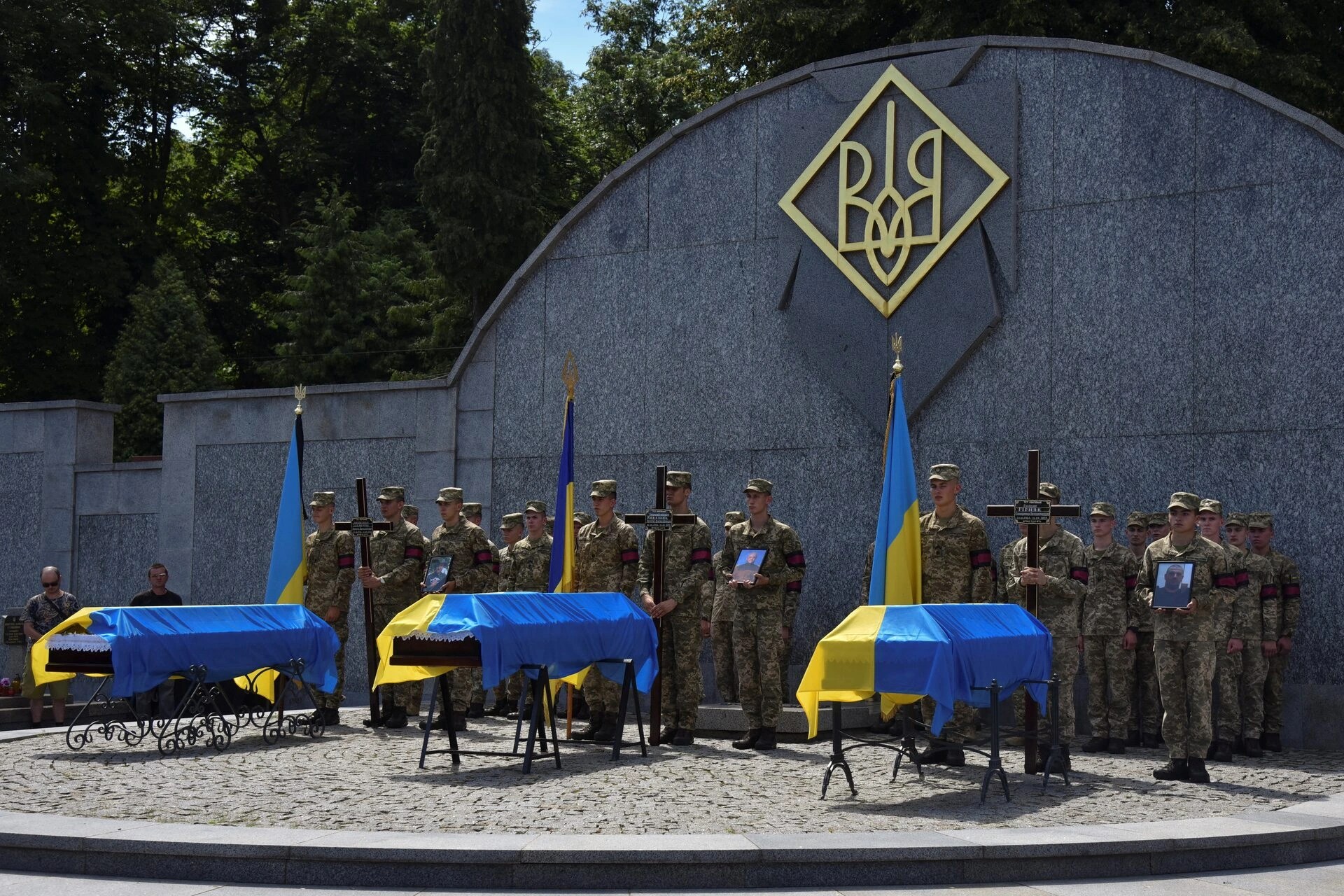
Two years ago, Hezbollah looked finished. In September 2024, a coordinated Israeli attack using exploding pagers and walkie-talkies left at least 1,500 of the group’s fighters too badly injured to fight. Within two weeks, airstrikes killed the group’s longtime leader, Hassan Nasrallah. By the time a ceasefire took hold that November, some 5,000 Hezbollah fighters were dead and, according to the Israeli military, 70 to 80 percent of its rocket arsenal had been destroyed. The US-Israeli war against Iran only made matters worse: Hezbollah’s entry into the fight on March 2 sparked an Israeli offensive that killed more than 4,000 people in Lebanon and uprooted a quarter of that country’s population.
Hezbollah has begun to rebuild, however, with help from Iran, its main patron. Despite US sanctions, a naval blockade, and the loss of much of the group’s Syrian land corridor, Tehran has kept hundreds of millions of dollars flowing, along with a supply of drones, explosives, and other weaponry. At the same time, Iran appears to be triaging support to its other key proxy, the militant group Hamas in Gaza. The most recent assessments suggest the Palestinian movement has been badly degraded, with most of its senior leadership killed and its rocket arsenal depleted.
Tamir Hayman, a former head of Israeli military intelligence who now leads the Institute for National Security Studies in Tel Aviv, described Hamas as a “shadow” of its former self. But Hezbollah, he told the One Decision podcast in November, “is more complicated.” The Lebanon-based group remains “connected to the world,” Hayman noted, “and Iran was succeeding, until recently, in transferring money through different channels and different financing tools. They are even succeeding in transferring weapons systems [to Hezbollah] through Syria.”
A TALE OF TWO PROXIES
By most measures, Hamas has borne the brunt of Israel’s campaign against Iran and its allies. Above all other considerations, this reflects Israel’s resolve to extract a heavy price for the Hamas attack of October 7, 2023, which killed approximately 1,200 people, most of them civilians. Eliot Cohen, professor emeritus at the Johns Hopkins School of Advanced International Studies, noted on a recent podcast that the Israeli security establishment is determined “to kill every single individual involved in the October 7th attacks. And they’re doing it systematically.”
In May, airstrikes killed Hamas’s military chief and, less than two weeks later, his reported successor. In early September, Shin Bet commandos captured its internal security chief, and four weeks later another airstrike killed the commander of its northern Gaza brigade. Israel says it has also choked off many of the group’s supply lines and gone after the networks that fund Hamas’s armed wing. Since October 2023, it has largely barred cash from entering the enclave and killed prominent financial operatives and money changers.
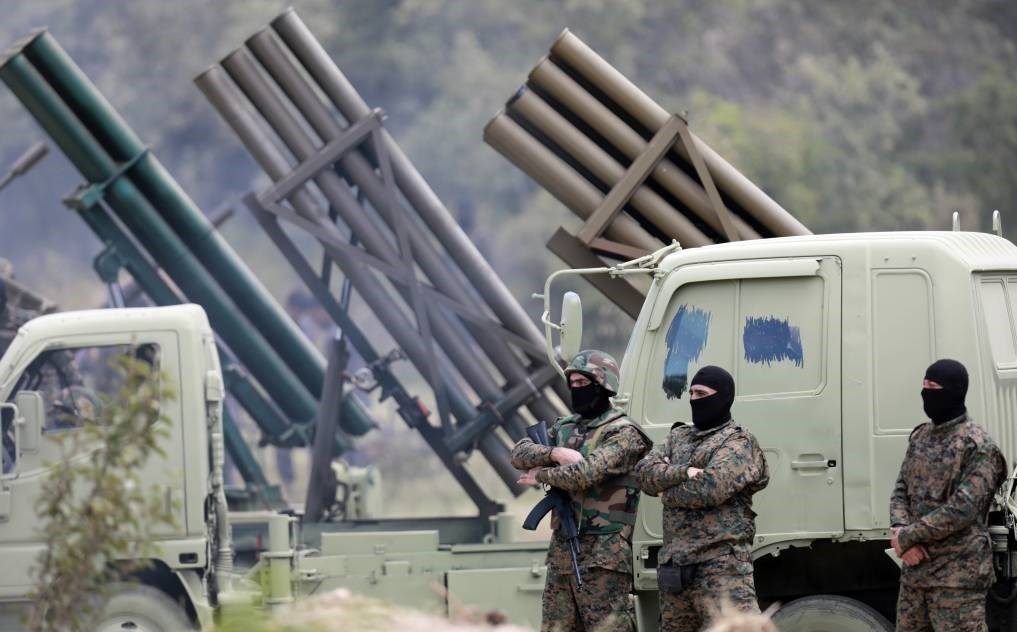
The picture 100 or so miles to the north, in Lebanon, looks very different. According to recent estimates, Hezbollah still has 40,000 regular fighters, tens of thousands of reservists, and about 15,000 rockets. Lebanese security officials say the group has used the lull since June to rearm and repair its command structure, with the assistance of hundreds of Iran’s Islamic Revolutionary Guard Corps officers. In 2025, Tehran was able to funnel more than $1 billion to Hezbollah, according to the US Treasury Department, along with hundreds of millions of dollars since.
That spending, according to some analysts, reflects an informed bet about where Iran’s dwindling resources will have the greatest effect: concentrating what it can still afford on Hezbollah, historically its most powerful ally and “flagship regional proxy,” while allowing Hamas to wither. The reasoning rests primarily on geography and deterrence. Unlike Iran-backed groups in Iraq and Yemen, Hezbollah sits on Israel’s border with a sizable rocket arsenal, which makes it, according to Chatham House’s Sanam Vakil, “uniquely central to Iran’s leverage in both war and negotiations.” Gaza, by contrast, is largely sealed off and its arsenal is depleted, leaving it beyond Tehran’s reach.
“Immediately after the Twelve-Day War [of June 2025]…Ali Khamenei started reconstructing the lost capabilities,” including “missiles, nuclear, proxies, whatever,” Hayman said. “All of the principles of Iran’s national security concept [were] replenished very, very quickly, much quicker than predicted.”
HOW IRAN’S MONEY AND WEAPONS PIPELINE WORKS
Israel maintains a security zone up to six miles deep in southern Lebanon, and airstrikes and ground raids since fighting resumed in March have killed an unknown number of senior Hezbollah commanders. Despite such military pressure, Iran has managed to keep funds flowing to its proxy. Much of that money moves outside the formal banking system, mostly through money-exchange companies. In August, the US Treasury also sanctioned a courier network that could move up to hundreds of millions of dollars in bulk cash on commercial flights from Iran, Turkey, and the United Arab Emirates to Lebanon.
To keep a steady stream of weapons flowing to Hezbollah, Iran has relied on a patchwork of overland smugglers. On the Iraqi side of the border, armed factions aligned with Tehran lean on border officials and recruit commercial drivers familiar with cross-border routes. Inside Syria, Hezbollah’s networks include former Assad-regime loyalists, and Israeli analysts say the group also moves cargo in civilian trucks through official crossings.
In July, Syrian customs officers at one such crossing discovered a large cache of sophisticated weapons, including first-person-view drones and Iranian-made anti-tank missiles, hidden inside a tanker truck bound for Lebanon. Later that month, they found 226 hand grenades in hidden compartments of a vehicle. In October, Lebanese authorities seized more than 1,000 pounds of explosives in three separate cases, including about 440 pounds carried across the Syrian border on mules.
HEZBOLLAH ADAPTS TO GROWING PRESSURE
In recent months, Syrian and Lebanese authorities have cracked down on Iran’s smuggling routes, intercepting weapons shipments at border crossings and closing cross-border tunnels. The US, meanwhile, has targeted Hezbollah’s money pipeline by sanctioning couriers, exchange houses, and front companies.
After Beirut tightened controls at its airport, Iran reportedly shifted to more couriers carrying smaller sums of cash or jewelry, while also moving hundreds of millions of dollars in oil revenue through Dubai last year. According to a Wall Street Journal report, oil earnings went to Iran-linked exchange shops, companies, and couriers in the UAE’s commercial hub, then moved to Lebanon through hawala, an informal, trust-based transfer system. Once inside Lebanon, Iranian money runs through Hezbollah’s own institutions, including Al-Qard al-Hassan, a sanctioned quasi-bank that holds cash and gold, and affiliated companies such as a gold-exchange firm.
Hezbollah has also adapted to the seizures on its land routes. According to Adam Chamseddine, a senior policy adviser at the Beirut-based Alternative Policy Institute, the group has been manufacturing more weapons domestically. Military analysts have long measured Hezbollah’s potential lethality by its missile and rocket capability, but that yardstick may no longer be relevant. Drawing lessons from Ukraine’s battlefield, the group appears to be shifting more toward smaller-scale, guerrilla-style tactics and especially cheap fiber-optic drones. Some of its workshops, using 3D printers and off-the-shelf parts, have been turning out models that cost as little as a few hundred dollars. Iran is helping to bankroll the buildup: Hezbollah recently received tens of millions of dollars from Tehran to boost its military capabilities, including procuring explosives and producing drones in preparation for a possible resumption of fighting with Israel.