Key takeaways
- Putin said in September 2026 that there will be no general mobilization, but 20 of 26 surveyed Russia experts rated a new draft by year’s end as a “high” or “medium” likelihood
- Russia has avoided a second mass call-up with record bonuses, regional quotas, foreign recruits, and police-linked coercion
- Analysts cite two possible triggers: a front-line crisis or a force buildup on NATO’s borders. Others point to casualties and the exhaustion of the contract model
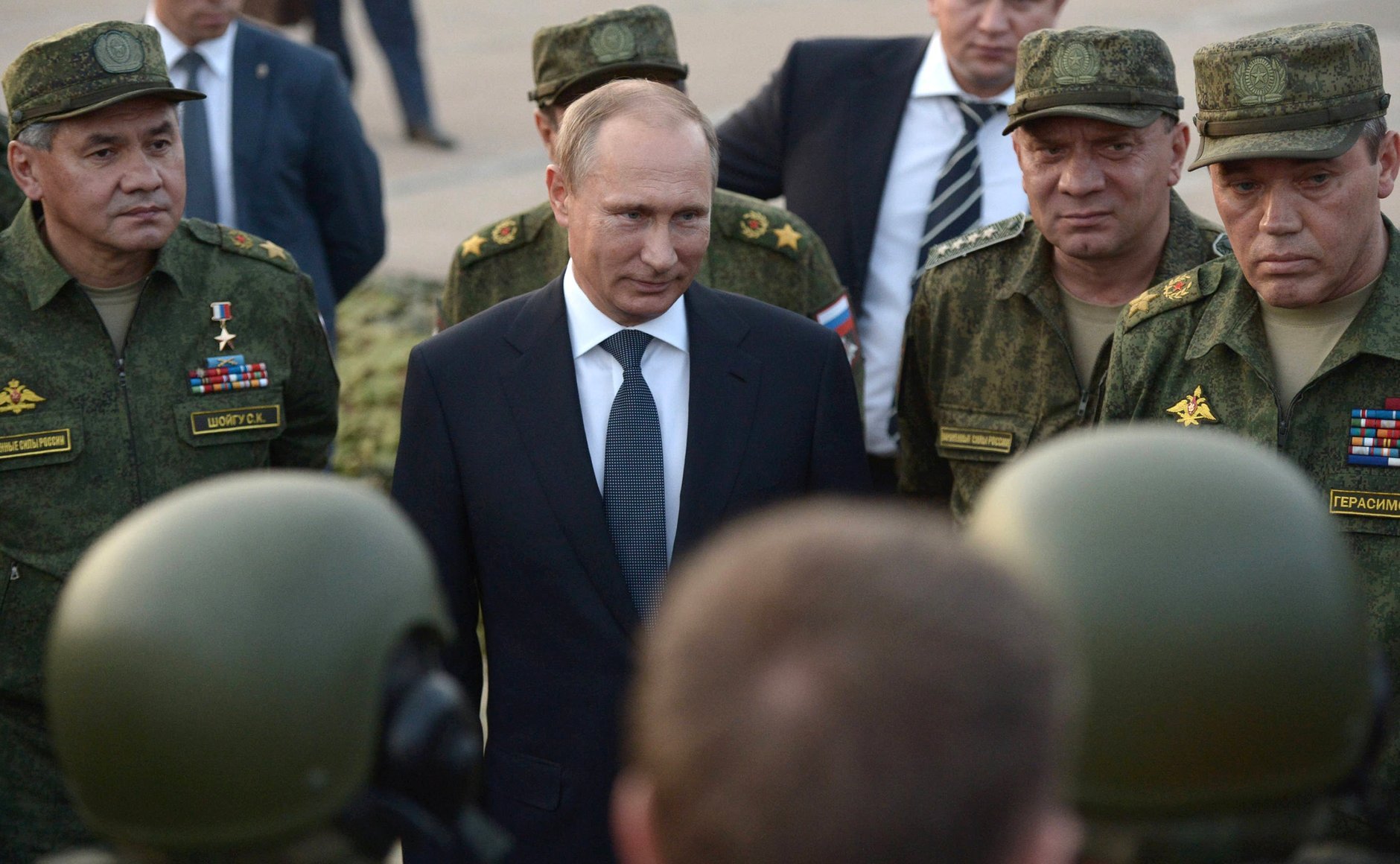
On the campaign trail last month, while stumping for his party to increase its already overwhelming majority in the Duma, Russian president Vladimir Putin took pains to assure voters on a particular point of anxiety. Their sons and husbands were safe, he promised. There would be no general mobilization. Claims to the contrary were “absolute nonsense” and “an information attack” on Russia.
It is little wonder, though, that speculation about a draft has swirled for months. And Putin’s campaign-trail statements may not be the last word on the matter. In a recent survey of 26 Russia experts, 20 rated the likelihood of a new draft by year’s end as “high” or “medium.”
The case for a call-up, experts say, rests on grim arithmetic. The most accurate low-end counts of Russia’s dead range from nearly 300,000 soldiers to as many as 450,000 since the country invaded Ukraine. One recent report put total Russian casualties — killed, wounded, and missing — at about 1.4 million. In early 2026, Russia’s irrecoverable losses — killed and seriously wounded — reportedly outran monthly recruitment for the first time. Ukraine’s military, meanwhile, has slowed Russia’s advance to a crawl.
Such bloodletting and the stalled advance fed widespread speculation that Putin was simply just delaying a politically unpopular move until after the Duma elections. So far, that speculation has not borne out. But even with the elections behind him, Russia’s leader has reason to regard a draft as politically risky enough that fielding an undermanned army in Ukraine may remain his preferred choice. Central to this calculus is the need to avoid alienating a key constituency: the urban professional elite, which has so far been compliant with his brand of authoritarianism but may not stand for the forced conscription of their sons and nephews.
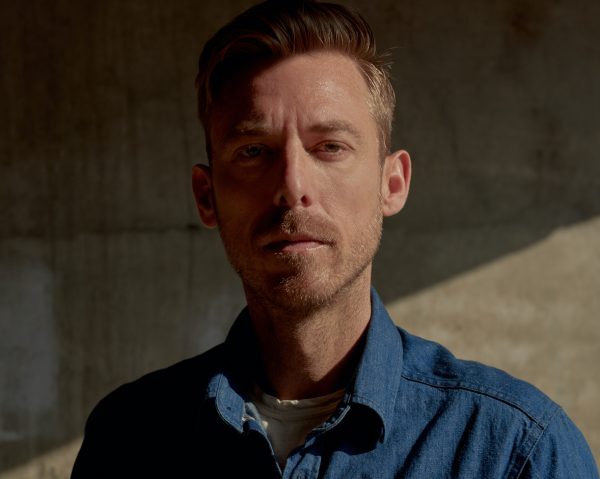
Jamison Firestone, a human rights lawyer and Russia expert who expects that a general mobilization could take place by spring 2027, explained the essential tradeoff on the One Decision podcast. Pulling the draft lever, he noted, could imperil Putin’s implicit pact with his citizens. “The Putin bargain is: I deliver you a good life, right? And you basically get out of my way and let me do what I want,” he said. “In the midst of that bargain, Putin started this war. And this war has gone off track for him. And so now, the question is — what would make the Russian people say enough? And so Putin seems to think that one of the things that might do it is a general mobilization.”
How Russia Has Avoided a Second Mobilization Since 2022
Russia’s first mobilization came seven months into the war, in September 2022, when the Defense Ministry announced a partial call-up of some 300,000 reservists. More than 194,000 Russians — many of them young men — crossed into Georgia, Kazakhstan, and Finland over the following week, and later estimates put the total exodus as high as a million. Putin had also turned to Wagner founder Yevgeny Prigozhin to recruit prison convicts, who were promised a pardon and 100,000 rubles a month for six months of service. The cost in lives was staggering: Prigozhin often used the prisoner battalions as human-wave cannon fodder, and an estimated 17,000 of them died in the battle for Bakhmut alone.
Since then, Putin has avoided another mass call-up by paying for volunteers. The federal government is currently offering new recruits a signing bonus of 400,000 rubles ($5,250), and regional governments add bonuses that averaged 1.47 million rubles ($18,200) in March, on top of a monthly salary of about 200,000 rubles ($2,500). Recent reporting in The Economist suggests that governors are competing to meet recruitment quotas by signing up poorer Russians from other regions, sparing their own constituents military service.
The Kremlin has also recruited contract fighters from countries as far away as Nepal, Sri Lanka, and Cuba. It has leaned on such inducements, according to a December UK Defense Ministry assessment, to limit the war’s impact on the urban Russians with the most political agency. Among those identified by name, Tyva, one of Russia’s poorest regions, had lost 120 of every 10,000 men, compared with 3 of every 10,000 in Moscow. For those who enlist, the estimated life expectancy of a new recruit after reaching the battlefield is “between 20 and 30 minutes.”
Russia guards its lists of war dead as state secrets, and a 2022 law against “fakes” about the military carries prison terms of up to 15 years. Journalists and researchers have turned instead to other sources — obituaries, relatives’ social media posts, regional news reports, and even Russia’s public registry of inheritance cases — to arrive at independent tallies. Janis Kluge, a researcher at the German Institute for International and Security Affairs, began combing through budget data published by Russia’s Finance Ministry. By dividing spending on sign-on bonuses by the size of each bonus, he calculated that the Kremlin was recruiting about 800 men a day in early 2026, or about 24,000 a month — 20 percent fewer than a year earlier. Using a similar method involving payouts to families of killed soldiers, he estimated that about 9,000 Russian soldiers were being killed each month this summer — roughly 300 a day.
What Could Force Putin to Order a General Mobilization?
Losses at that rate would seem to demand more men, yet more than five weeks after the Duma elections, no new call-up has been announced. Instead, according to some analysts, Putin is likely to lean on quieter levers before violating his bargain with Russia’s comfortable urban classes. Tetiana Fedosiuk, an editor at the International Centre for Defence and Security, calls them “mobilising without a mobilisation”: record-setting bonuses for new recruits, pressure on students and employers, and electronic summonses, which bar those who ignore them from leaving the country. Despite severe Western sanctions, money does not yet appear to be an obstacle, at least for Moscow. In February, Kluge calculated that all recruitment bonuses together cost about 0.5 percent of Russia’s GDP — roughly a tenth of the Defense Ministry’s spending from the federal budget.
If bonuses fail, Putin could also turn to coercion, a method already in evidence. A 2025 investigation by the independent outlet Vyorstka found that Russian authorities were paying police in several regions between 10,000 and 100,000 rubles (roughly $120 to $1,240) for each detainee who signed a military contract. Police officers were also required to tell detainees between the ages of 18 and 65 that enlisting could end their prosecution. Similar reports have alleged that men held in police custody were offered “prosecution or military service” and then shipped to military units within days.
The question, then, is what would push Putin past such half-measures. According to Mikhail Komin, an analyst at the Center for European Policy Analysis, two triggers could set off a large-scale draft: a front-line crisis on the scale of Ukraine’s 2022 counteroffensives or a buildup of forces on NATO’s borders. At least for the time being, Komin considers both unlikely. Other analysts point to high casualties and the exhaustion of Putin’s contract model as likely triggers.
Firestone, for his part, sees a call-up that reaches Russia’s two biggest cities as the most likely catalyst for turning the public against Putin. “What hasn’t happened is drafting the young of Moscow and St. Petersburg,” he said. “When the comfort breaks down, when having no choice breaks down, when affluent people’s children may have to go to war and nobody can travel, that’s when people go, ‘Hey, wait a minute, maybe ceding this power wasn’t a great idea.’”