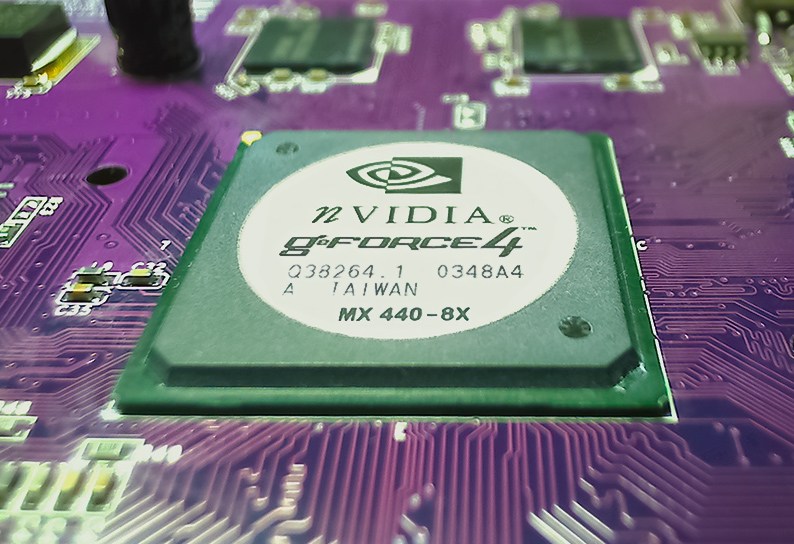
The Artificial Intelligence chip giant appears to be the latest target in China’s decades-long pursuit of US technology by illicit means. That’s unsurprising. AI is the biggest prize yet.
Allegations that Jensen Huang had become romantically entangled with a Chinese intelligence asset — Alice Huang (no relation), a former executive of the Singapore data-center company Megaspeed — forced him from his perch at the top of Nvidia, history’s first $5 trillion company, earlier this month.
It is unclear precisely what, if anything, China may have gained from its alleged access to the company founder and CEO. A classified memo reported by The New York Times claims that China’s Ministry of State Security (MSS) recruited Ms. Huang to collect intelligence about Jensen Huang — and to “nudge Nvidia to lobby for China to get its most advanced chips.” The relationship unfolded as Huang was pressing Washington to loosen export controls, a campaign that culminated in President Donald Trump approving sales of Nvidia’s H200 chip to China last December. Megaspeed, meanwhile, is now the subject of a US criminal investigation over whether the chips it bought were diverted to China.
What is not subject to doubt is that Nvidia — and Huang — would have presented targets too tempting for Chinese spies to ignore.
“Jensen Huang would have been a top priority target,” Sir Richard Dearlove, the former head of MI6 and host of One Decision, said in November. “They would look at who he was in contact with, who he trusted, and try to recruit those people. Obviously a Chinese mistress in Singapore is in a very privileged position.” He added: “This is a carefully planned Chinese intelligence operation, probably several years in the making, and there’s some guy sitting in the MSS who’s been promoted to colonel or whatever because he’s been so successful.”
While Nvidia’s exceptional role in the battleground technology of AI — as the supplier of roughly 80 percent of data-center chips — would have rendered it an especially alluring focus for Chinese intelligence, it is far from the only Western company to have drawn the attention of Beijing’s spymasters. In fact, the government’s campaign to aggressively target strategic Western technologies stretches back more than four decades.
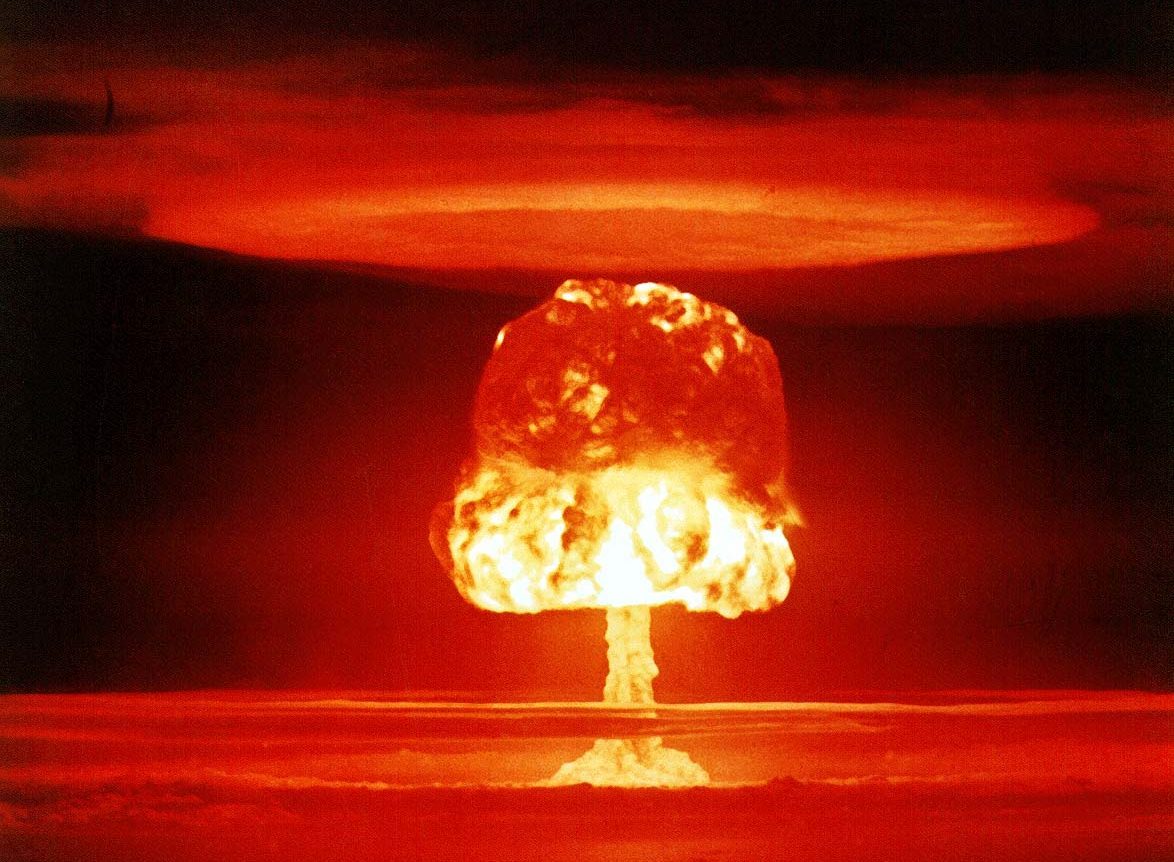
NUCLEAR WEAPONS
The campaign can be traced to Deng Xiaoping, who took control of China in the late 1970s. According to Dearlove, Deng tasked military intelligence with accelerating the country’s economic development “largely through the acquisition of foreign intellectual property, whether legally or illegally.”
Speed was the point of Deng’s directive. A country trying to catch up to the US could close the gap faster by acquiring foreign technology than by reinventing it. By at least the late 1970s, American intelligence later concluded, China had launched “an ambitious collection program” focused on the US, including its national laboratories.
The earliest documented case involved nuclear weapons. Design information on the W-70, a warhead that could be configured as a neutron bomb, was stolen from Lawrence Livermore National Laboratory and passed to China. US officials learned of the theft months later, and the FBI investigated but never charged a Taiwan-born scientist at the lab. A second case surfaced in 1995, when a walk-in gave the CIA a classified Chinese document containing technical details on the W-88, a warhead for the Trident missile. The FBI’s hunt for the leak led to Los Alamos scientist Wen Ho Lee, who was indicted in 1999 on 59 felony counts. After nine months in prison, and with his prosecution collapsing, Lee pleaded guilty to one count of mishandling national defense information.
China denies stealing American nuclear technology, though it tested a neutron bomb in 1988 that US officials allege drew on the W-70 design. In 1999, a congressional committee reported that China had stolen classified information on the W-88 and six other warheads. A separate intelligence community assessment found that China had obtained at least basic design information on several reentry vehicles through espionage, likely accelerating its nuclear program.
SPACE
Deng’s post-1978 reforms, which opened China to foreign trade and technology, heightened the country’s need for commercial satellites and rockets, but its aerospace industry lacked much of the expertise to deliver either.
In 1979, officials in China’s state-controlled aviation industry began sending a US-based Rockwell engineer named Dongfan “Greg” Chung “tasking” letters requesting information about the space shuttle and civilian and military aircraft. Chung, a Chinese-born naturalized US citizen with a national security clearance, replied that he wanted to “contribute to the Four Modernizations of China.” Over the next three decades, he sent manuals and technical data on the shuttle, the Delta IV rocket, and the B-1 bomber to his handlers by mail, by ocean freight, and through intermediaries.
The FBI stumbled onto Chung in 2005, only after investigating another engineer suspected of passing US Navy warship technology to China. Agents searching his trash found Boeing technical documents hidden inside newspapers, and a search of his home turned up binders of shuttle stress analyses, design data stashed in a crawl space, and papers on the Delta IV’s fueling system stacked throughout the house.
Chung was convicted in 2009 in the first economic espionage trial in US history and sentenced to more than 15 years in prison. He insisted he was gathering material for a book, and his lawyers portrayed him as a pack rat, a defense the judge called “ludicrous.” Exactly what Chung passed to China remains unknown, but US officials called the case part of a pattern of escalating espionage. Beijing, they alleged, had deployed a network of professional spies, students, and scientists to systematically collect US know-how, an enterprise one senior official likened to an “intellectual vacuum cleaner.”
FIGHTER JETS
By the late 2000s, as defense contractors moved their secrets online, espionage followed. Beginning in 2008, a Chinese businessman named Su Bin worked with two hackers in China to break into the computer networks of Boeing and other contractors. According to prosecutors, Su advised his two co-conspirators on which companies and technologies to target. Once inside a firm’s network, one of them emailed Su listings of its files and folders, and Su told the hacker which ones to steal.
Over more than five years, the group pilfered data on the US Air Force’s C-17 transport and on Lockheed Martin’s F-22 and F-35 stealth fighters. Su translated the files into Chinese and then tried to sell the information to state-run companies in China. The FBI tied him to the theft through emails he exchanged with the hackers, including a list of files and folders matching what was stored on Boeing’s computers. In 2014, Canadian police arrested Su at the Bureau’s request, and two years later he pleaded guilty to conspiring to hack US defense contractors and illegally export military data.
Su, as it turned out, was not the only one targeting the F-35. Documents leaked by Edward Snowden indicate that Chinese hackers, in an operation code-named Byzantine Hades, had broken into Lockheed Martin’s networks and stolen “many terabytes” of F-35 data, including the number and types of modules in its radar and technical details of its engine. Ironically, US stealth technology was built on a 1962 paper by the Soviet physicist Pyotr Ufimtsev, which the Soviet military ignored but the US Air Force translated and a Lockheed engineer turned into one of the most revolutionary military technologies of the era.
ARTIFICIAL INTELLIGENCE
If the past cases were about borrowing technology to catch up, AI is different: the prize is the engine that builds every other technology and could enable the first winner to leap ahead. “The primary way that the Chinese government sees AI is as a general purpose technology that can help them leap to the next level of economic development,” Matt Sheehan, a senior fellow at the Carnegie Endowment for International Peace who co-directs its China AI Initiative, told the One Decision podcast. Beijing also tends to worry less about AI’s downsides, he noted, comparing the attitude to the reform-era maxim Deng popularized, “Cross the river by feeling the stones.”
Training the most advanced models takes enormous computing power, and US labs currently have a large lead — roughly five to ten times the compute available to their Chinese peers — with Nvidia at the center of that advantage. “The real limiting factor for them is the chips, is the computing power,” Sheehan said. Fabricating cutting-edge chips is “one of the most high-precision things that humanity has ever done,” he added, and unlike solar panels, for example, the manufacturing process can’t simply be scaled up.
The gap exists because China cannot yet manufacture the most advanced chips at scale. The machines that make them, extreme ultraviolet lithography tools with more than 100,000 parts, come from a single Dutch company, ASML, which has not been allowed to sell them to China since 2019. The country also started late: its first modern chipmaker did not launch until 2000, and for years Western export controls kept the best equipment out of reach. A homegrown prototype, reportedly built with help from former ASML engineers, has yet to produce a working chip.
The hardware serves a more ambitious goal: US labs are chasing models intelligent enough to build and train themselves, a milestone known as recursive self-improvement. In August, Anthropic claimed that its Claude model was leading 26 percent of the company’s own AI research and development work, up from under one percent in February. A Forecasting Research Institute report found that AI could take over most AI R&D tasks by 2027 or 2028. A US lab that gets there first could give Beijing a strong reason to turn to theft.
INTELLIGENCE TARGETING INTELLIGENCE
China may already have gone after American AI. In January, a former Google engineer named Linwei Ding was convicted of stealing AI secrets for two China-based firms. A judge threw out the economic-espionage convictions, though, finding insufficient evidence that Ding meant to benefit Beijing. American models are also being copied without a break-in: three Chinese labs — DeepSeek, Moonshot, and MiniMax — allegedly used about 24,000 fraudulent accounts to pull more than 16 million exchanges out of Claude and train their own models, a technique known as distillation.
US labs may be poorly defended against future attacks. In April, the White House accused foreign entities, principally in China, of “industrial-scale” campaigns to copy US AI models, and a June report by the cybersecurity firm CrowdStrike said China-linked hackers are stepping up espionage to steal the AI capabilities they can’t build fast enough themselves. The 2026 International AI Safety Report, an assessment written with input from more than 100 experts, found that security varies across the industry and “may be insufficient against sophisticated attackers.”
That is why the affair matters even if Alice Huang never passed Beijing a single secret. Chung and Ding were engineers with access to one company’s secrets; Jensen Huang was different. “He’s both at the center of the technology and he’s at the center of the politics around this,” Sheehan said. “It’s not just that his company builds some of the most valuable pieces of technology, it’s that he very clearly has President Trump’s ear.” Given those facts, Huang’s lack of even basic threat awareness, Sheehan also observed, was startling, though “maybe you look at history and it’s not that shocking.”