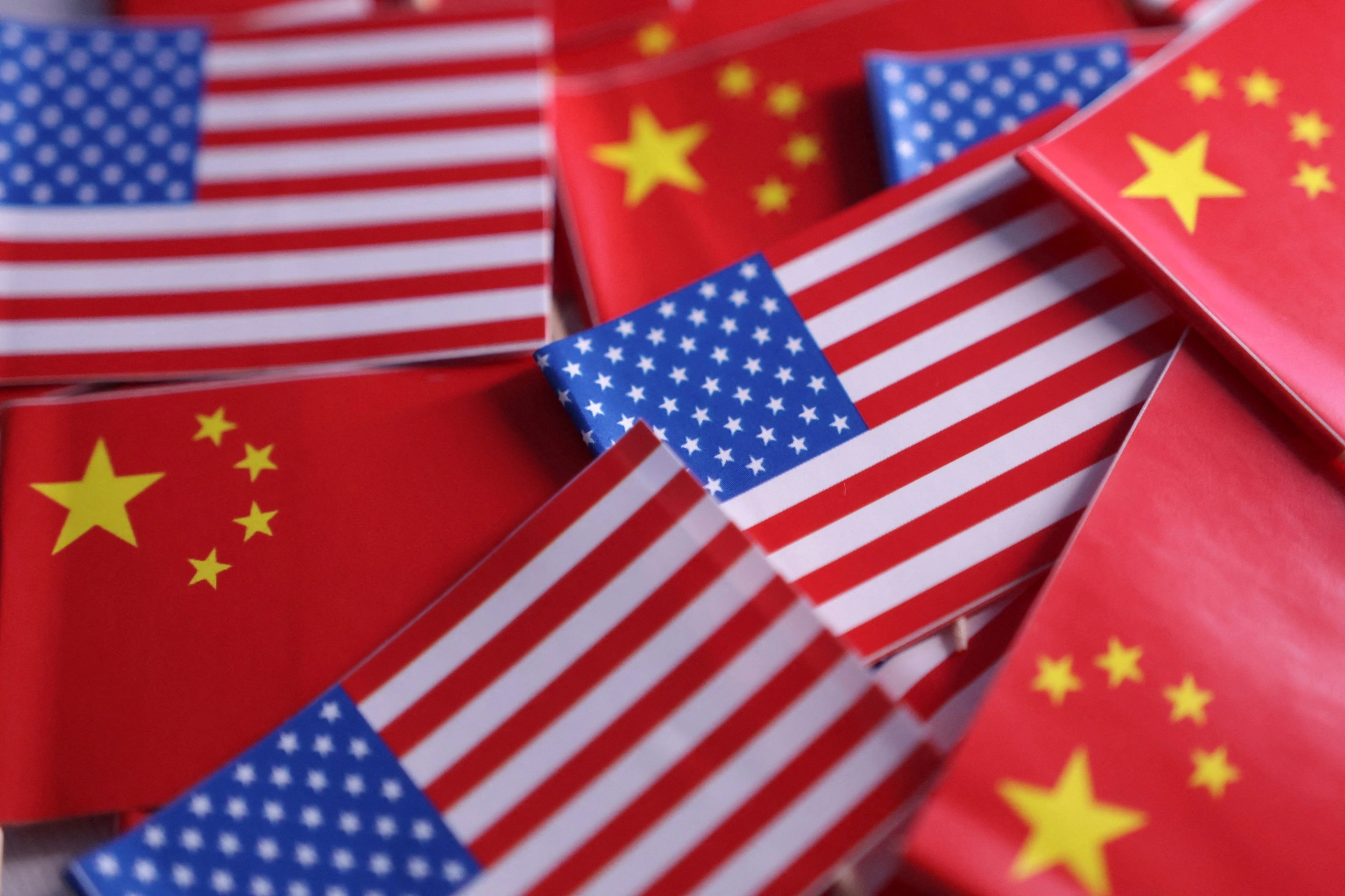
When US and Israeli forces launched strikes on Iran on February 28, China’s official response was measured condemnation and calls for de-escalation. But behind that public posture, according to analysts who study Chinese strategic thinking, Beijing likely saw a war that would contribute to the same kind of favorable conditions it had exploited in the years following the 2001 terrorist attacks.
Following the September 11 attacks and the US-led invasion of Afghanistan, Chinese leader Jiang Zemin formally declared that China had entered a “period of strategic opportunity” — a judgment, rooted in Deng Xiaoping’s strategic doctrine, that the international environment had aligned in ways that would allow China to develop its economy, technology, and military relatively undisturbed. That calculation, documented by CSIS and the National Bureau of Asian Research, shaped Chinese foreign policy for more than a decade.
China expected that window to last twenty years, Rush Doshi, director of the China Strategy Initiative at the Council on Foreign Relations and a former deputy senior director for China and Taiwan at the National Security Council under President Biden, told the One Decision podcast earlier this month. “Whether or not there’s a…second period of strategic opportunity created by Iran is something I think many in Beijing may be considering.”
Chinese officials, he said, are signaling in their writings and in public that US involvement in Iran “might basically weaken American power” and give Beijing the opening it seeks.
Evan Medeiros, a former senior director for Asian affairs at the National Security Council under President Obama, made the same argument on One Decision in April. “When the Chinese look at what’s going on in the Middle East,” he said, “they see first and foremost a strategic opportunity for them to position themselves to increasingly displace the United States.” If the US gets bogged down in another complicated military operation in the Middle East, Medeiros added, “that redounds to their benefit” by drawing resources and attention away from the Indo-Pacific.
THE STRATEGIC ENVIRONMENT
China put the post-9/11 window of opportunity to use, accelerating military modernization (particularly its naval buildup), beginning construction of artificial islands in the South China Sea, and expanding its diplomatic and commercial footprint through the Belt and Road Initiative and new multilateral institutions, all while avoiding direct confrontation with the US. China’s trade with Latin America, for example, grew from roughly $10 billion in 2000 to more than $450 billion by 2021, according to the Council on Foreign Relations, making China South America’s largest trading partner and displacing the United States in a region Washington had long considered its own.
Analysts who monitor Chinese foreign policy decision-making say that Beijing perceives the Iran war as having created a significant strategic opening for China across several dimensions.
Most directly, the war has diverted US military resources from Asia. Patricia Kim, a senior fellow at the Brookings Institution, wrote in May that as the United States becomes more deeply tied down in the Middle East, “it inevitably diverts attention and resources away from the Indo-Pacific, which remains the primary theater of strategic competition with China.” Patriot missile defense batteries have been withdrawn from South Korea, components of the THAAD anti-missile system redeployed, and a Marine Expeditionary Unit pulled from Okinawa. Zack Cooper, a senior fellow at the American Enterprise Institute, told PBS NewsHour: “The longer this war continues, and the more forces that are shifted out of Asia, the more it will feed Asian allies’ concerns about US distraction and resource constraints.”
The war has deepened political divisions that analysts say directly weaken Washington’s capacity to maintain a focused, long-term competition with China. Cherry Hitkari of Harvard-Yenching Institute, writing for Pacific Forum in March, found that observers in Beijing specifically flag “the polarization that the war has incited in American society” as one of its most consequential effects. Timothy Heath of the RAND Corporation has argued that “intense partisan feuding imposes a severe obstacle for national leaders seeking to enact strategically valuable measures to compete with China” — a dynamic the Iran war has sharply deepened. Jon Alterman of CSIS and Ali Vaez of the International Crisis Group put Beijing’s reading plainly in Foreign Affairs: both Beijing and Moscow “believe that a U.S. government enmeshed in endless Middle Eastern wars is one that would make much less trouble for them.”
The damage extends beyond domestic politics. Zongyuan Zoe Liu, a senior fellow at the Council on Foreign Relations, argues that a distracted Washington is becoming “less capable of organizing coalitions and more likely to drive away the very partners it needs to balance China.” The US launched the campaign without building a coalition, and European allies declined to participate — a stark contrast to the coalitions Washington assembled for the Gulf War, Afghanistan, and the campaign against ISIS. The president and his top aides offered varying justifications in the days after the strikes, shifting between regime change, preemption, nuclear disarmament, and support for Iranian protesters, making it harder still to organize international support around a coherent objective.
In a December 2025 article in Study Times, the newspaper of the Central Party School — written before the war began — Minister of State Security Chen Yixin assessed that “unipolar hegemony” was becoming “increasingly unsustainable,” with the US experiencing “credit collapse, hegemonic decay, and the shattering of myths internationally.” Writing in the China Leadership Monitor in February 2026, Brookings Institution analysts Jon Czin and Allie Matthias described Chen’s piece as the most authoritative Chinese official assessment of US decline they had seen. Ryan Hass, director of the John L. Thornton China Center at Brookings, wrote in May that based on his conversations with Chinese officials and experts, Beijing views the Iran war as confirming that assessment. “Yet another violent spasm by a late-stage capitalist system whose internal contradictions are projected outward through imperialism and war.”
The war is also reshaping the economic landscape in ways that favor China. Andrew Miller and Michael Clark of the Center for American Progress argue that among the clearest beneficiaries is China’s renewable energy sector, as the oil shock drives governments worldwide to accelerate their shift away from fossil fuels — and China dominates those supply chains. Chinese solar exports alone hit 68 gigawatts in March, a new record, CNN reported, citing data from the energy think tank Ember. David Hart, a senior fellow at the Council on Foreign Relations, wrote in April that regardless of how the conflict ends, “China will be better off in the postwar world order due to its global leadership” in renewable energy and batteries. The Trump administration, which has rolled back renewable energy incentives and prioritized fossil fuel production, may be positioning the US on the wrong side of that transition.
POTENTIAL NEXT MOVES
Analysts at AEI/ISW and CSIS, as well as The Diplomat, have identified several behaviors that suggest Beijing is already acting on the opportunity — with others likely to accelerate the longer the US remains focused on the Middle East.
The most immediate is accelerated pressure on Taiwan short of military action. The Diplomat analysis from April notes that while the US intelligence community assesses China has no fixed timeline for invasion, Beijing is “probably seeking to set the conditions for eventual unification short of conflict” — through persuasion, coercion, and limited kinetic operations. During the first weeks of the Iran war, SCMP reported that Beijing sent 26 sorties over Taiwan in a single weekend. Li Yihu, head of Peking University’s Institute of Taiwan Studies and a prominent mainland expert on cross-strait affairs, was direct about the logic: “Any weakening of US presence in Asia-Pacific will work to someone’s advantage, and you can imagine who that is.”
That strategic space comes against a backdrop of accelerating Chinese naval expansion. CSIS analysis has found that Chinese shipyards are launching vessels at a rate exceeding the combined output of all other major naval powers, with shipbuilding capacity estimated at roughly 230 times that of the United States. China is commissioning roughly sixty naval vessels per year against six to nine for the US, Doshi told the One Decision podcast.
The AEI/ISW China and Taiwan Update for May describes a broader pattern: China employing “a multifaceted strategy to counter US influence and prepare for potential conflict with covert military support for Iran, military posturing toward Taiwan, and strategic diplomatic maneuvers across the Indo-Pacific.” Henry Tugendhat, a Soref fellow at the Washington Institute for Near East Policy, noted in Foreign Policy that this echoes an explicit historical precedent — a 1964 Peking Review describing US intervention in Congo as Washington’s “second South Vietnam,” with Beijing calculating that US assets tied down elsewhere meant reduced capacity to respond in Asia.
Brookings’ Jon Czin told ABC News that Beijing is studying the conflict closely, drawing lessons directly applicable to Taiwan war-gaming: “This just gives them more things to consider and more ways to expand their portfolio of options for thinking about Taiwan.” With US attention elsewhere, The Diplomat analysis argues, Beijing has both the time and reduced scrutiny to develop asymmetric capabilities specifically designed to counter what the conflict has revealed about US military operations: how its systems perform against Chinese-supplied air defenses, how a naval blockade is enforced, what the logistics chain looks like under sustained pressure.
LIMITS ON CHINA’S FREEDOM OF MANEUVER
The first strategic opportunity period eventually eroded. RAND Corporation analysis concluded that growing Chinese assertiveness provoked exactly the US attention Beijing had been trying to avoid. By the early 2010s, the US had pivoted back to the Pacific, and the assessment of a benign environment gave way to a more contested rivalry in which Chinese leaders elevated national security concerns alongside development goals.
Even as Beijing perceives a strategic opening, Doshi told the One Decision podcast, it is also operating with clear awareness of US military capability. What Chinese observers are seeing is a US military that, whatever its strategic overextension, retains formidable precision strike capability, logistical reach, and the ability to enforce a naval blockade against a determined regional power. He insisted: “At the tactical level, they’re impressed with what the US military is capable of doing.”
That combination — strategic opportunity alongside tactical respect — suggests to Doshi that Beijing may exploit the opening selectively, learning from the last period of strategic opportunity, which ended — RAND concluded — because Chinese assertiveness became too visible too fast.