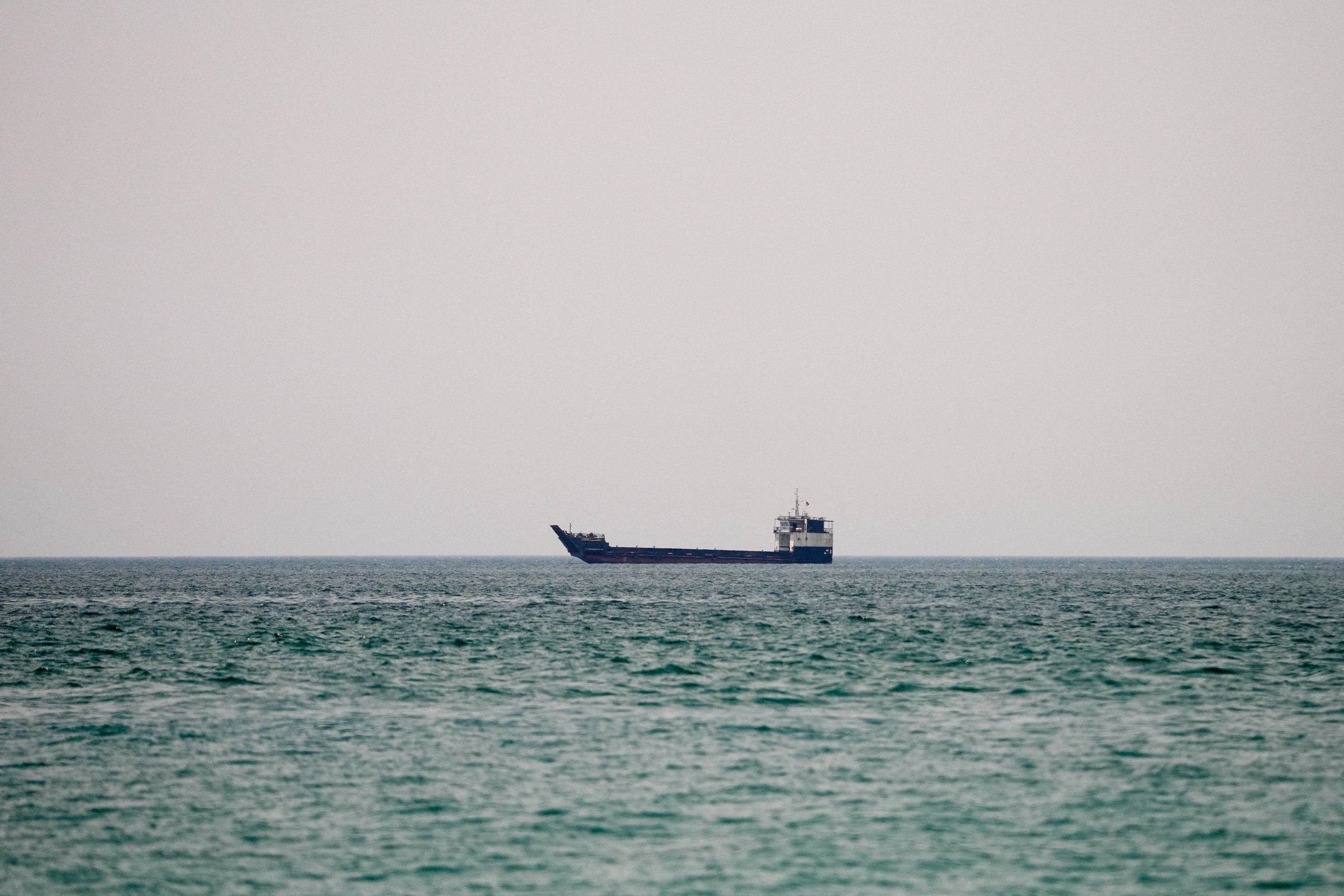
On Christmas Day 2024, the Eagle S — a Cook Islands-flagged oil tanker linked to Russia's shadow fleet of sanctions-evading vessels — dragged its anchor for almost 100 kilometers across the floor of the Gulf of Finland, eventually snagging and severing the Estlink-2 power cable that supplies much of Estonia's winter electricity and cutting four data cables. Finnish police boarded the vessel by helicopter and prosecutors brought charges. In October 2025, the Helsinki District Court dismissed them. Finland, the court ruled, had no jurisdiction. The vessel was registered in the Cook Islands. Its captain was Georgian; the crew included Indian nationals. Under the international law that governs the high seas, penal proceedings against a ship that damages a cable can only be brought by the flag state — in this case, a small Pacific nation with no conceivable interest in prosecuting anyone. Estimated damages exceeded 60 million euros. The anchor drag had been, in the court's formulation, an "incident of navigation."
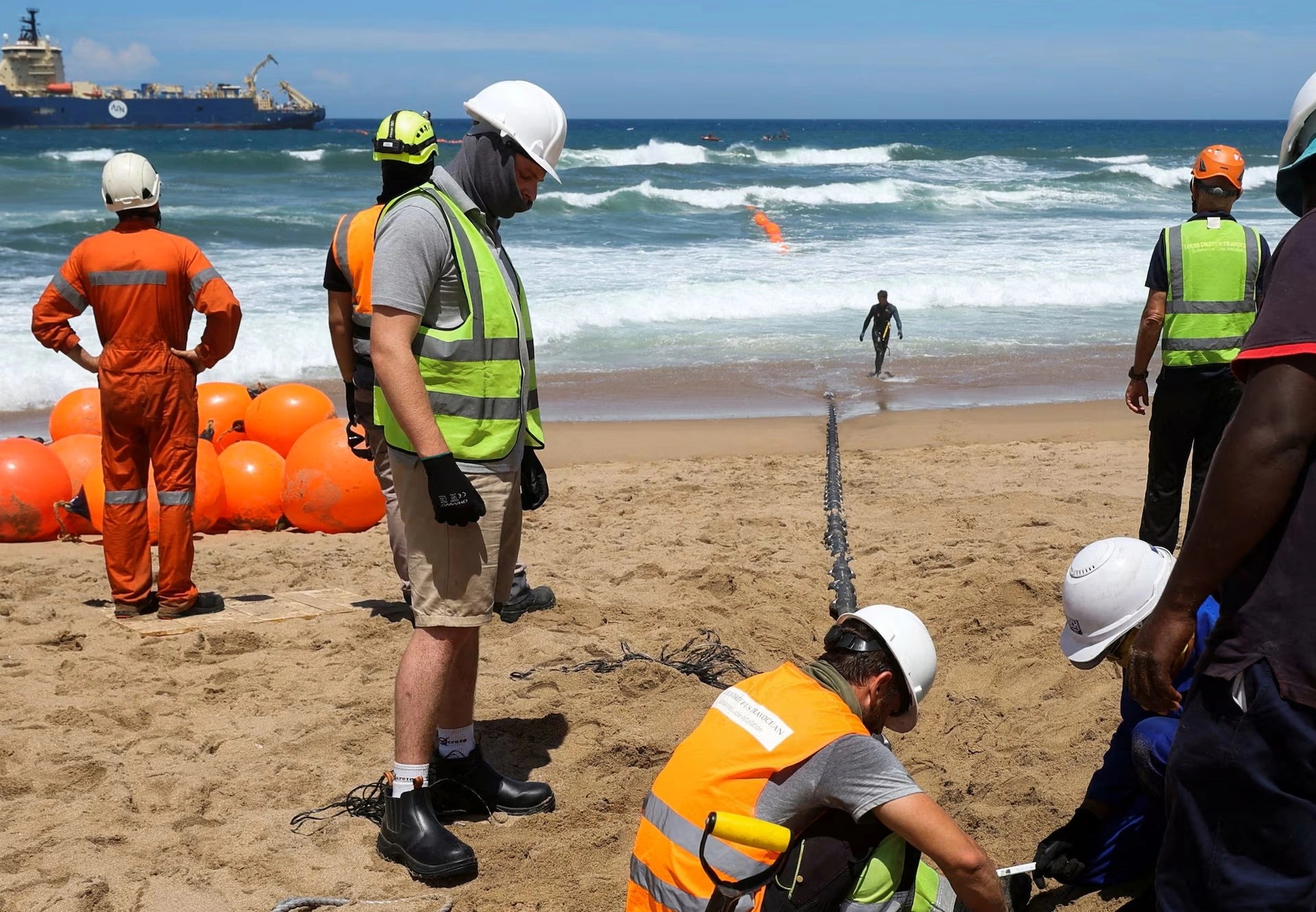
The undersea cables that carry 95 percent of all international data traffic — emails, financial transactions, military communications, the daily workings of modern economies — are protected by a legal framework that was largely designed in 1884, when the cables in question carried telegraph signals and the most sophisticated threat to them was a careless anchor. The world has spent a century and a half building an almost total dependence on this infrastructure but almost no time building the legal architecture to protect it.
As the war in Iran escalated, IRGC-linked media began mapping the undersea cable infrastructure of the Strait of Hormuz in what the Jerusalem Post described as a "thinly veiled warning that the region's digital backbone may now be in Iran's line of fire" — a threat specific enough that Google and Meta activated contingency rerouting plans and cable insurance markets moved immediately. On May 11, Tasnim, a media outlet regarded as an IRGC mouthpiece, went further, publishing a three-step plan for Iran to begin taxing the undersea cables that pass through the strait: requiring licensing fees from cable operators, compelling major technology companies to operate under Iranian law, and developing Iranian infrastructure to control cable maintenance and repair. No country has ever imposed such tolls on data infrastructure.
The governance gap would matter less if the cables were not an increasingly attractive target. Severing a country's undersea connections can knock out financial markets, military communications, and civilian infrastructure simultaneously — and, as the Eagle S case illustrated, be done with near-total impunity. For adversaries seeking to impose costs without triggering a formal military response, the seabed offers a permissive environment that no other domain can match.
Speaking on the One Decision podcast in May, Sir Richard Dearlove, the former chief of MI6, suggested that the risk of a major internet cable cut had been overlooked for too long. "It's not one minute to midnight. It's long past midnight."
The Strait of Hormuz concentrates that vulnerability in one of the world's most volatile corridors. Approximately 20 major cables pass through the strait — including the FALCON and AAE-1 systems and the 2Africa Pearls cable, which collectively link Europe, the Middle East, South Asia, and East Africa — running along a seabed that averages only about 150 feet in depth, making them more accessible to interference than cables in the open ocean. Samanth Subramanian, a journalist whose book The Web Beneath the Waves documents the history and vulnerabilities of the global cable network, told the One Decision podcast that the Hormuz situation revealed something the industry had long avoided confronting. For years, the overland routes through Iran, Iraq, and Syria had seemed too unstable to consider as cable corridors, and so the strait became the default. "There were always good reasons for why people did it the way they did. It's just that instability has now moved to a different part of the world."
The legal framework governing those cables has not kept pace. UNCLOS — the United Nations Convention on the Law of the Sea, the closest thing to a global maritime constitution — provides the basic structure for who has authority over cables in different ocean zones. But UNCLOS has never been ratified by the United States, and even for states that have ratified it, the convention does not criminalize the deliberate destruction of cables as an international offense. The European Journal of International Law, in a 2025 analysis of the Baltic incidents, found that the framework left the prosecution gap precisely as wide as the Helsinki court had concluded.
The International Cable Protection Committee, an industry body, documents roughly 200 cable damage incidents per year, of which it formally classifies about 1 percent as intentional. Subramanian said that figure understates the problem considerably: China is widely believed to routinely cut cables near Taiwan using vessels disguised as fishing boats, but those incidents almost never enter the 1 percent because deliberate intent is difficult to prove. The ICPC, for its part, is a voluntary organization with no enforcement powers.
Kevin Frazier, an assistant professor at St. Thomas University College of Law who has written extensively on undersea cable governance, has argued that even if the US Senate ratified UNCLOS and Congress adopted implementing legislation, the United States would still lack practical enforcement capacity: there are simply too many cables distributed along American coastlines to create a credible deterrent. Scholars have proposed various remedies — a UN Security Council resolution on cable protection, cable protection zones, universal jurisdiction over intentional sabotage, a new dedicated international treaty — but each faces significant obstacles. Security Council resolutions risk vetoes from Russia and China, both of which have evident interest in maintaining freedom of action in the subsea domain. A new treaty would take years to negotiate and might not be ratified by the states whose cooperation matters most. Subramanian concluded: "There are still all these gray areas we've never even thought about that continue to crop up, surprising us even today,"
The vulnerability of undersea cables is not an isolated governance failure. The wars in Ukraine and Iran have both unfolded without formal declarations of war, as the international legal order that once drew clear lines around the use of force has weakened. The seabed is the newest arena in which that weakening is being exploited — a domain where conflicts can be waged below any legal threshold, with near-total deniability, and against infrastructure on which the world entirely depends. Subramanian added: “Countries seem to be at war with each other without actually being at war with each other.”