On June 17, President Trump declared the Strait of Hormuz open for business. He wrote on Truth Social: "Ships of the World, start your engines. Let the oil flow!"
Oil markets responded immediately, prices tumbling on the expectation that a conflict the IEA had called the largest supply disruption in the history of the global oil market was over. Three days later, shipping traffic through the strait reached its highest single-day count since the war began: 62 commercial vessel crossings on June 24.
In the days since, Iranian drones have struck two outbound commercial vessels — the Ever Lovely on June 25 and the MT Kiku on June 28 — prompting US retaliatory strikes and the suspension of an IMO evacuation plan for 11,000 mariners still stranded in the Gulf.
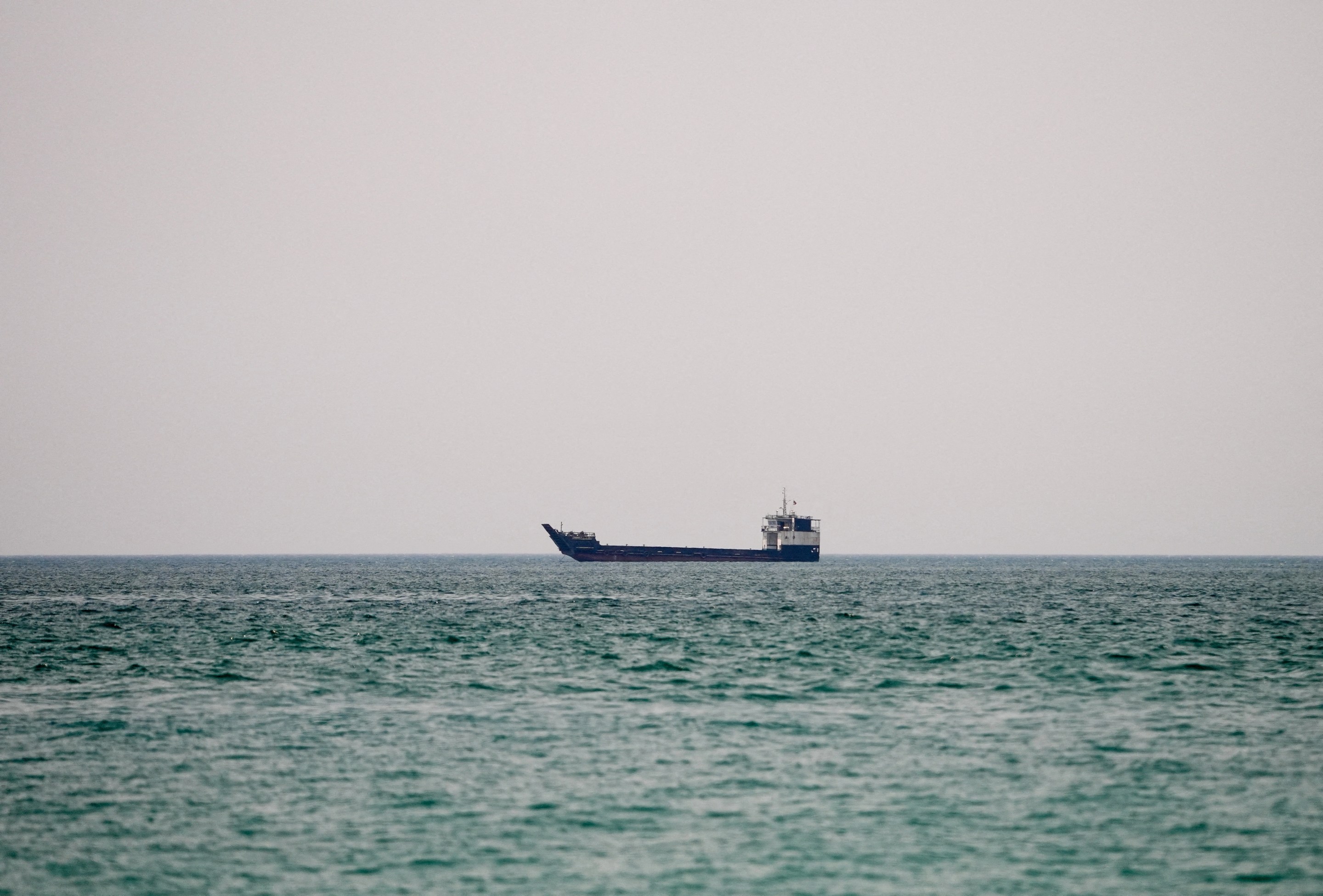
Some inbound traffic has begun — state-linked tankers, a handful of individual charterers, some vessels transiting with their tracking systems off. But the high-volume Western carriers that moved the bulk of pre-war Gulf crude have not returned, and the obstacles they face go well beyond the security situation that has dominated headlines. A routing dispute, uncleared mines, war-risk premiums still more than twelve times their pre-war level, and a legal problem specific to Western operators all remain unresolved.
For Iraq and Kuwait, which have no meaningful alternative export route to Hormuz, the distinction between nominal and functional reopening matters acutely. Both countries were forced to cut production sharply during the conflict as onshore storage filled and there were no ships to load. Restarting that production requires the kind of inbound traffic that has not yet materialized at scale.
The Ships That Are Moving
The 62 crossings recorded on June 24 were concentrated in one direction: outbound. Before the war, roughly 20 percent of the world's oil and gas passed through the strait daily, approximately 15 million barrels. Since the deal, shipments have recovered to around 4.8 million barrels per day — roughly a third of pre-war volume. Kpler, the commodity data firm, cautioned that the recovery should not be interpreted as durable.
Chinese and Indian shipping companies will likely be among the first willing to transit in both directions, according to Helima Croft, global head of commodity strategy at RBC Capital Markets and a former CIA analyst who spoke to the One Decision podcast on Thursday. Smaller operators that have been anchored in the Gulf for months are also moving. The four largest Western container carriers — Maersk, MSC, CMA CGM, and Hapag-Lloyd — had not, as of this writing, confirmed a return.
Iraq and Kuwait have no pipeline alternatives to the strait — unlike Saudi Arabia and the UAE, which partially rerouted exports to the Red Sea and Fujairah during the conflict. As the strait closed, both Iraq and Kuwait were left pumping crude into storage with no outlet. Production at Iraq's main southern fields fell 70 percent, from 4.3 million barrels per day to around 1.3 million, as terminals ran out of tank space. Kuwait, with roughly 14 days of onshore storage at the start of the war, was forced to cut production within weeks. By May, cumulative supply losses from Gulf producers exceeded one billion barrels, according to the IEA.
Saudi Arabia presents a separate dimension of the supply problem. During the conflict, the kingdom redirected exports through its East-West pipeline to Yanbu on the Red Sea, running the system at its 7 million barrel per day capacity. Even with the strait nominally open, Saudi Gulf exports have been slow to restart. On June 26, Saudi Aramco resumed loading at Ras Tanura — its primary Gulf terminal — for the first time since early March, a signal of returning confidence. But volumes remain well below pre-war levels. Aristidis Alafouzos, chief executive of Okeanis Eco Tankers, told CNBC the day before, before the Ras Tanura restart was confirmed: "The one big missing factor is the Saudis. For now, we haven't seen them export almost anything from inside the Arabian Gulf — everything is coming from Yanbu."
Restoring Saudi Gulf exports, as well as Iraqi and Kuwaiti volumes, requires inbound tankers — specifically the high-volume Western operators who have not yet returned.
The Ships That Are Not
Western carriers considering an inbound transit face an immediate problem that precedes mines and insurance: which route to take. The US and Oman have designated a southern corridor through Omani waters, with American naval oversight. Iran does not recognize that route and has struck two vessels using it in the past four days. The alternative is a northern corridor running through waters Iran controls, which requires coordination with the IRGC — raising the same sanctions compliance exposure as paying a transit fee. Shipowners are left navigating two competing authorities with no agreed rules and no single body both Iran and the US recognize.
Beyond the routing question, the central deep-water channel remains blocked by approximately 80 mines, which analysts estimate will take 40 to 50 days to clear — and which, according to some reports, Iran has lost track of entirely. Ships are confined to the two coastal channels, both contested. Within 48 hours of the US-Israeli strikes on Iran, most of the world's Protection and Indemnity clubs — the mutual insurers covering roughly 90 percent of the global merchant fleet — cancelled war risk extensions for vessels in the Middle East. The Irregular Warfare Initiative, a research program at West Point, noted that insurance had effectively closed the strait before Iran's navy did.
War-risk premiums remain at 3 to 4 percent of hull value, according to Marcus Baker, global head of marine and logistics at Marsh, compared with 0.25 percent before the war — still more than twelve times the pre-war rate. For a Very Large Crude Carrier worth $100 to $150 million, that translates to $3 to $6 million per transit. Han Shen Lin, China country director of The Asia Group, put the calculation bluntly: "Boardrooms aren't asking about cargo safety — they're asking if it is insurable. That's a serious business model stress test."
Baker said mine clearance is the prerequisite for normalization: until the central channel is cleared and the security environment has held for several weeks, actuarial confidence will not recover.
The legal obstacle compounds the others. The IRGC — which would administer any transit fee after the MOU's 60-day free window closes in mid-August — remains a designated foreign terrorist organization under US law. Paying a fee to the IRGC would expose a Western shipping company to sanctions risk. Whether Iran can rebrand the toll as a "service fee" administered through another entity, and thereby resolve the compliance problem, remains unclear. Several Gulf Cooperation Council states have publicly opposed any tolling arrangement. Croft said: "GCC leaders have said absolutely not to paying a transit fee. They have said the strait has to remain an international waterway open to all commerce."
The Red Sea Precedent
The Red Sea offers a recent parallel. The United States reached a deal with the Houthis to end attacks on Red Sea shipping in September 2025. More than nine months later, Maersk still does not transit the route. Traffic through the Bab el-Mandeb remains roughly 50 percent below pre-crisis levels. BIMCO, the global shipping trade association, warned after the Hormuz MOU that the security situation "remains volatile" and transit "very risky." Its chief safety officer, Jakob Larsen, said the assessment had not materially changed.
Lars Barstad, chief executive of Frontline — one of the world's largest tanker companies, with five vessels stranded in the Gulf since the war began — said ships would move "very quickly once a deal is signed." Executives with assets trapped in the Gulf have a commercial interest in projecting optimism about the reopening, and the broader industry has been more cautious. Croft noted that the conflict had produced more than three dozen announcements, from its first day, that it was effectively over. Each time, oil prices fell on the news.
The Sixty-Day Test
The MOU's free-transit window closes in mid-August. The nuclear questions it deliberately deferred — the status of Iran's highly enriched uranium, the inspection regime, the long-term sanctions architecture — remain unresolved, as does the transit-fee question and the demining of the central channel.
Jake Sullivan, who served as national security adviser under President Biden and was a principal negotiator of the 2015 Iran nuclear deal, offered a reading of Iranian strategy on CNN's GPS on Sunday that may help explain the pattern of the past week. "The Iranians are leaning forward to exercise control over the strait, to remind the world that they control that waterway," he said, "then leaning back when the Trump administration objects vigorously enough — because the Iranians want to keep getting the windfall that they've gotten out of this MOU." On the nuclear file, he was equally pessimistic: "We're very unlikely to see material solid progress, especially on the nuclear program in the next 60 days. Tehran would dribble out very small concessions bit by bit, then pull them back to keep the US at the table."
Until the routing dispute is resolved, the mines are cleared, premiums normalize, and the legal status of any transit fee is settled, the strait may be open in name while remaining effectively closed for the traffic that would make the difference.