The Kings Mountain lithium mine in North Carolina has been closed since 1988. It sits on one of the world's richest deposits of spodumene ore — enough, Albemarle Corporation estimates, to supply batteries for 1.2 million electric vehicles annually. The Pentagon awarded Albemarle $90 million to help reopen it, part of a broader push to build a domestic critical mineral supply chain free of dependence on China. The company originally planned to have the mine operating by late 2026.
It won't. Albemarle has pushed the timeline back indefinitely and put the associated processing plant in South Carolina on hold, citing the collapse in lithium prices — which have fallen more than 80 percent from their 2022 peak. The company cut $500 million in capital spending and laid off workers. The reason prices collapsed is that demand for electric vehicles — the primary consumer of lithium — has slumped. And the reason EV demand has slumped is, at least in part, policy.
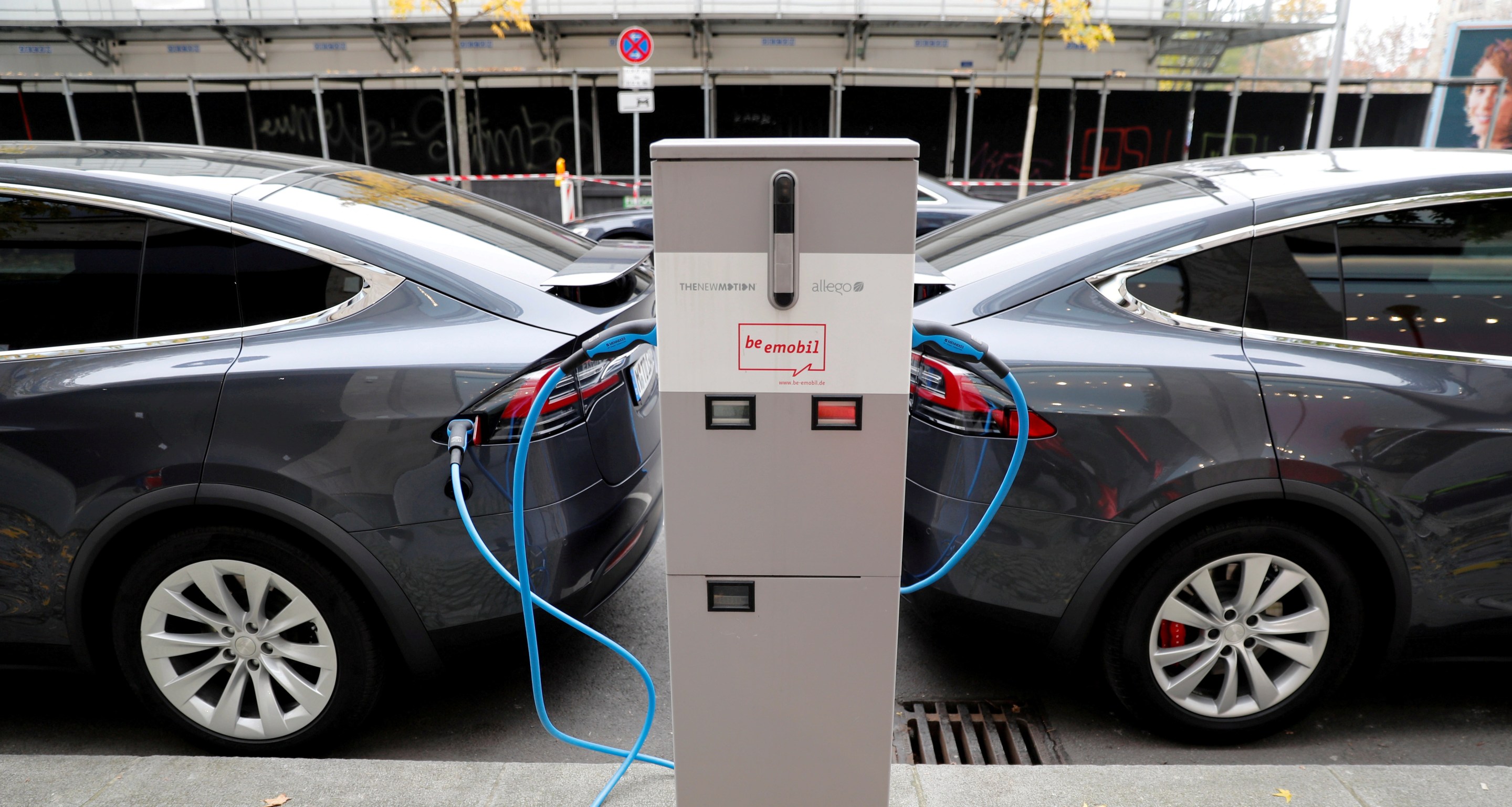
In July 2025, Congress passed and President Trump signed legislation eliminating the $7,500 federal tax credit for new electric vehicles, effective September 30 of that year. General Motors took a $1.6 billion charge in October from EV capacity writedowns. Ford's chief executive warned that the credit's elimination would "sharply curtail EV demand." Honda recorded its first annual loss in nearly 70 years, directly attributing the result to the rollback of US EV incentives.
Dr. Gracelin Baskaran, founding director of the Critical Mineral Security Program at the Center for Strategic and International Studies, told the One Decision podcast this month: "It's one of the things I lose sleep about the most."
The Demand Problem
China controls roughly 60 percent of global rare earth production and processes nearly 90 percent of the world's rare earth magnets. Washington has responded with supply-side interventions: price support mechanisms, Development Finance Corporation investments in mines across Africa and South America, bilateral frameworks with allies like Australia and Japan. What it has not addressed is whether there is sufficient demand to make those mines economically viable without permanent government subsidy — a question the Kings Mountain situation puts in sharp relief.
The reason that question matters is one of scale. According to the IEA's 2025 Global Critical Minerals Outlook, EV deployment is the single largest driver of demand growth for battery metals and rare earths — with lithium demand alone projected to grow fivefold by 2040. An electric vehicle uses 210 kilograms of critical minerals, compared to 32 kilograms for a conventional gasoline-powered car. The defense industry, which provides much of the political rationale for mineral security, consumes less than half a percent of total critical mineral supply. "Nobody is going to build a multi-billion dollar mine and processing facility for that half a percent of off-take," Baskaran said.
Missing the Demand Signal
The price dynamics are already visible. Lithium peaked at roughly $85,000 per ton before collapsing to around $8,000. Albemarle's chief executive said the company needed prices of at least $20,000 per ton to justify further investment. For rare earths, prices fell so far — to around $54 per kilogram — that the US government intervened with a price floor set at $110, nearly double the market rate, to keep projects outside China viable. The floor was established as a 10-year guaranteed price through the government's deal with MP Materials — a temporary intervention, not a structural fix. Restoring market equilibrium, Baskaran argues, requires demand — and the most powerful lever for creating demand for lithium and rare earths is the electrification of transportation. The administration's rollback of EV incentives has moved in the opposite direction.
The incoherence is not limited to EVs. In 2022, Congress passed the CHIPS and Science Act, allocating $280 billion to build a domestic semiconductor manufacturing industry. Not a dollar was allocated to the minerals that semiconductors require — the germanium, gallium, and palladium without which chips cannot be made. Beijing noticed: it imposed export restrictions on germanium and gallium in July 2023, shortly after the legislation passed. Jane Nakano, an energy security expert at CSIS, told Foreign Policy: "U.S. dependence on China for these minerals is a known Achilles heel. The latest development is a very blunt reminder that we, the United States, continue to be dependent."
The Japan Model
In September 2010, a Chinese fishing trawler collided with Japanese coast guard vessels near the disputed Senkaku Islands, triggering a two-month Chinese embargo on rare earth exports. Japan imported roughly 90 percent of its rare earths from China at the time, and the embargo sent its automotive and electronics sectors into crisis. The response was immediate and sustained: a ¥100 billion national recovery budget, mandatory stockpiling requirements at both the government and company level, and a systematic program to invest in rare earth mines across Namibia, Australia, and elsewhere. Japanese companies provided the patient capital that allowed Lynas, an Australian rare earth processor, to begin separating heavy rare earths outside China for the first time. By 2020, China's share of Japan's rare earth imports had fallen from 90 percent to below 60 percent.
Naoki Kobayashi, an official in the minerals division of Japan's trade ministry, told Business Standard last year: "The urgency of the rare-earths situation is just now dawning on the United States and Europe. For Japan, this painful lesson came 15 years ago."
Japan's experience points to what the US has so far struggled to sustain: the kind of policy durability that outlasts election cycles. The US, Baskaran argues, faces a structural constraint: it accounts for between one and five percent of global consumption of most critical minerals — not enough to move market prices on its own. Her proposed solution is a "buyer's club": a manufacturing incentive that rewards sourcing minerals from the US or allied countries regardless of what is being manufactured, rather than tying credits to EVs specifically. The combined market of the US, European Union, United Kingdom, Japan, South Korea, Australia, and India amounts to 2.7 billion consumers — large enough, she argues, to sustain mineral production outside China without permanent subsidy.
In North Carolina, the water still sits in the pit at Kings Mountain, waiting for someone to drain it.