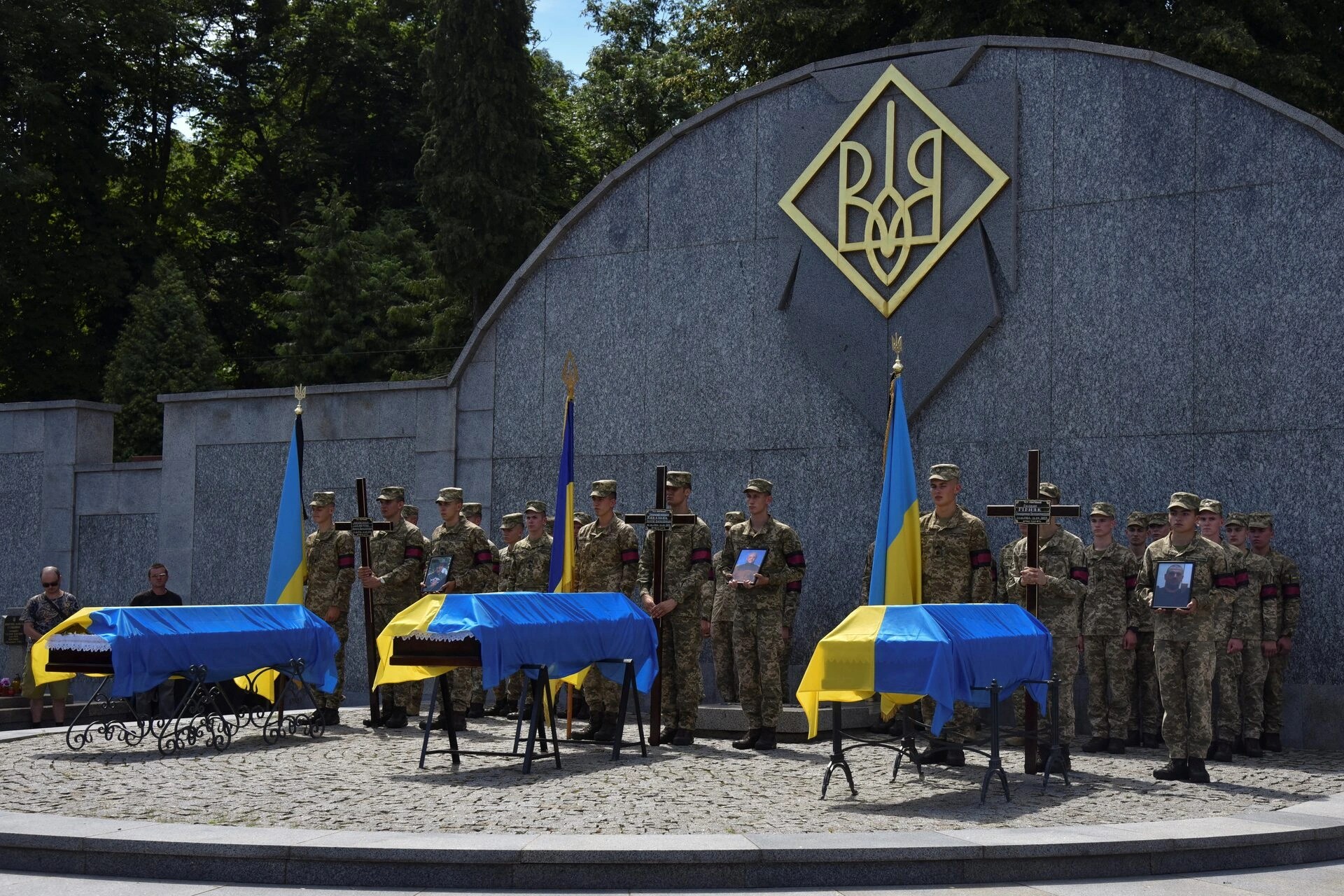
In the first days of the Iran war, Gulf states used more than 800 Patriot interceptors to defend against Iranian ballistic missiles. In all of 2025 — a record production year — 620 of the most advanced variant were manufactured globally. Ukraine has received approximately 600 in total over four years of war.
A two-week ceasefire brokered by Pakistan was announced on April 8, pausing 40 days of US-Israeli strikes. It came under strain almost immediately — Israel continued operations in Lebanon, which Iran says violates the agreement; the Strait of Hormuz has barely reopened despite explicit ceasefire terms requiring it; and Iran's new supreme leader declared victory and promised revenge for the killing of his father. Whether the ceasefire holds, extends into a lasting settlement, or collapses within its two-week window remains unresolved. What is already resolved is the damage to Western interceptor stockpiles.
Speaking on the One Decision podcast on April 7 — the day before the ceasefire was announced — Alexander Gabuev, director of the Carnegie Russia Eurasia Center in Berlin, drew out the implication. Ukraine has developed considerable capacity against Russian drones and cruise missiles, he noted, but against ballistic missiles there is only one answer: the US-supplied Patriot. "The war in the Middle East is definitely eating into resources available to Ukraine."
By late autumn, he warned, Russia may be able to launch massive attacks against Ukrainian power infrastructure, ports, and other facilities with ballistic missiles that Ukraine will lack the interceptors to stop. The ceasefire does not change that calculation: the missiles fired in the Gulf over the past six weeks cannot be unfired.
AN IRREPLACEABLE SYSTEM
Ukraine has developed considerable capacity against drones and cruise missiles. Electronic warfare, interceptor drones, F-16s, and improvised air defense have all reduced the lethality of the mixed strike packages Russia fires nightly. Against Russian ballistic missiles — Iskander-Ms travelling at hypersonic speeds on near-vertical terminal trajectories — none of these approaches work. The Patriot PAC-3 MSE interceptor is the only system in Ukraine's arsenal, or in any allied arsenal currently transferable to Ukraine, that reliably destroys them.
A Franco-Italian alternative, the SAMP-T system, exists but cannot substitute for Patriot at scale. Aster missiles — SAMP-T's interceptor — are produced at roughly 80 to 100 per year across all variants, against 620 PAC-3 MSEs annually. Ukraine ran its Aster stocks nearly to zero by spring 2025 and has two to three batteries against six Patriot batteries. Gabuev described the system as "not as successful, unfortunately" — a view that France's Army Chief of Staff, General Fabien Mandon, disputed in November 2025 testimony to the French Senate, claiming SAMP-T was by then outperforming Patriot specifically against modified Iskander flight profiles. The technical comparison between the two systems is contested; the production gap is not. Ukraine's own anti-ballistic missile development program is years from maturity. The Institute for the Study of War has stated the position plainly: "If it runs out of Patriots entirely, then Ukrainian cities will be open to Russian ballistic missiles."
The Iran war placed unprecedented stress on a supply chain already depleted before the first US-Israeli strike on February 28. In July 2025, the Guardian reported that the Pentagon's own munitions tracker showed US Patriot interceptor levels had fallen below the minimum floor required for US war plans — a primary reason for the Trump administration's temporary pause in arms deliveries to Ukraine that month. CNN reported that the US burned through roughly a quarter of its entire THAAD stockpile in just twelve days of the June 2025 Israel-Iran conflict. The current war consumed interceptors at a far higher rate. Joe Costa, director of the Forward Defence program at the Atlantic Council and a former principal civilian adviser to Pentagon leadership on force posture, told the Hill on March 4: "Timelines are difficult without perfect information, but you're talking weeks, not months."
THE PRODUCTION GAP
Lockheed Martin manufactured approximately 620 PAC-3 MSE interceptors in 2025, a record. Current global annual production of all Patriot variants runs to roughly 850 missiles. A single PAC-3 MSE takes 25 months to manufacture. Lockheed Martin and the Pentagon have signed a framework to increase production to 2,000 per year, but reaching that target will take six to seven years of factory expansion, according to the Department of Defense's own fiscal year 2026 budget estimates.
More than 800 Patriot interceptors were used in the first days of the Iran war alone — more than the entire annual global production run. RBC-Ukraine, one of Ukraine's leading independent news agencies, calculated that 1,000 interceptors expended in the Middle East equals nearly two years of global production. The US Army's goal — to increase its Patriot stockpile from 3,376 to 13,773 missiles — is an aspiration, not a funded contract. Experts at Responsible Statecraft are sceptical it is achievable even with full funding, given the complexity of the systems and the peacetime structure of the defense industrial base.
CSIS, in a brief published on March 23, drew the direct conclusion: "The US-Iran war has exposed the fragility of Western air defense stockpiles. Europe must launch a crash program to scale up its own missile manufacturing before supply shortages leave Ukraine and the continent exposed."
Germany, a leading supplier of air defense equipment to Ukraine, announced in February that it had exhausted its national reserves of transferable air defense missiles.
A SHIFT IN RUSSIAN TACTICS
ISW reported on March 8 — just over a week after the Iran war began — that Russian strike packages against Ukraine had shifted markedly: ballistic missiles accounted for roughly half of one overnight attack, far above the typical rate. Russia rarely launches more than ten ballistic missiles in a single package; ISW noted: "Russia is likely trying to capitalize on the Patriot interceptors shortage in Ukraine and the conflict in the Middle East."
The tactical shift reflects a stockpile that has been growing for over a year. Ukrainian military intelligence, cited by the Kyiv Independent in June 2025, assessed that Russia's Iskander-M stockpile had grown to nearly 600 missiles — up from approximately 40 in May 2024, an increase of at least 66% in production year-on-year. Defense Express, citing Ukrainian intelligence in July 2025, put monthly Iskander production at approximately 60, up from 40 the previous year. The Economist, drawing on Ukrainian intelligence and a Royal United Services Institute assessment, reported Russia producing more than 1,400 Iskander ballistic missiles annually, plus 500 Kh-101 cruise missiles.
For most of the war, Russia fired missiles nearly as fast as it could produce them. Fabian Hoffmann, a missile defense expert at the University of Oslo, told Euromaidan Press that Russia's ballistic missile launches already exceed the rate at which Ukraine can secure Patriot interceptors capable of shooting them down — pointing toward "a moment when Ukraine would run dry."
ISW's campaign assessment of April 3 noted that Russia launched ten Iskander-M ballistic missiles, 25 Kh-101 cruise missiles, and 542 drones in a single overnight attack, and assessed that Russian forces "will likely shift their long-range strike campaign toward Ukrainian water supply and logistics targets in Spring and Summer 2026" — a pattern that, in previous years, has preceded winter campaigns against power infrastructure.
UKRAINE'S RESPONSE
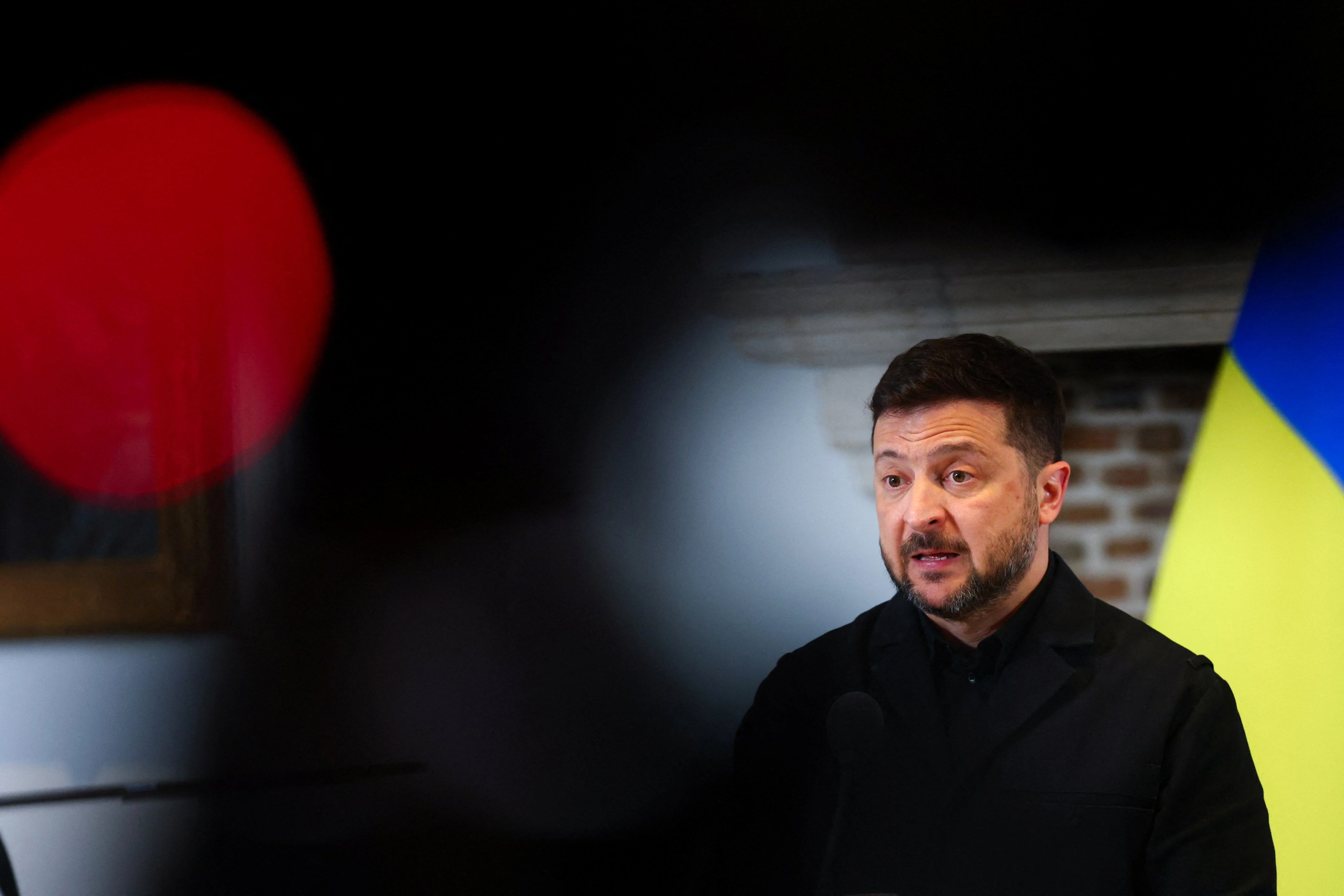
President Zelensky has been travelling Gulf capitals, offering Ukraine's expertise in counter-drone warfare in exchange for Patriot missiles or capital investment in Ukrainian defense production. Ukrainian teams are training Gulf forces against Iranian drones and missiles — systems that, as Gabuev noted, represent "2022-2023 technology, child's play for Ukrainians" compared to the more sophisticated Russian variants they face daily. Gulf states, benefiting from oil revenues at $100-plus per barrel, have both the financial capacity and the operational reason to fund Ukrainian drone manufacturing.
Ukraine has also been developing its own long-range strike capability. Foreign Policy reported in March that a Flamingo cruise missile strike damaged the Votkinsk missile production complex, more than 1,000 kilometres beyond Moscow. Ukraine is producing roughly one Flamingo per day. These capabilities raise the cost of Russian production, but they do not address the interceptor shortage.
There is no Ukrainian-developed, European-supplied, or Gulf-funded substitute for the PAC-3 MSE interceptor against Russian ballistic missiles. That production line runs at 620 units per year and takes 25 months per missile.
THE WINTER AHEAD
Russia has attempted to destroy Ukraine's power grid in the winters of 2022, 2023, and 2024. It has not succeeded. It has never attempted it with the combination of circumstances that now exist: a growing ballistic missile stockpile, a depleted Patriot supply chain, and a US defense establishment whose attention has been absorbed by a Middle East conflict for the better part of six weeks.
Whether the Iran ceasefire holds and becomes a lasting settlement — ending the drain on interceptor stocks and potentially freeing US attention to return to Ukraine — is the central variable Gabuev's forecast cannot resolve. A durable peace in the Gulf would change the picture materially. But even in that scenario, the interceptors consumed over the past six weeks remain consumed, Russia's ballistic missile stockpile continues to accumulate, and the Aster production line runs at 80 to 100 missiles per year. The production cycle for a single PAC-3 MSE interceptor is 25 months. The ceasefire, if it holds, buys time. It does not replace what was spent.
Gabuev projects that by late autumn 2026, Russia will have accumulated a larger stock of ballistic missiles than Ukraine can defend against with available interceptors. "When President Zelensky talks about his concerns, that's the key issue on his mind. And he's absolutely right. It's very worrisome."