In an interview on the One Decision podcast last week, CNN host and Washington Post columnist Fareed Zakaria offered a pointed comment on the conflict's cost. “You could make the case,” Zakaria said, “that, as publicly disastrous as the war in Iraq was, [the Iran conflict] has much broader negative consequences for the world.”
It is a charged comparison. The Iraq war, launched in 2003, remains the defining example of US military overreach — the conflict that produced the most sustained domestic and international backlash in a generation and has shaped the foreign policy debate for two decades.
The difference is structural. Despite decades of sanctions, Iran retained one asset that Iraq lacked: control over the passage through which a fifth of the world's oil moves. And the Gulf economies it is now attacking have been transformed since 2003 — from oil exporters into hubs of global finance, logistics, and tourism whose disruption ripples outward in ways that had no equivalent when the US invaded Iraq.
WHAT IRAQ DID TO THE WORLD
The costs to Iraqis were catastrophic and lasting. Estimates of Iraqi deaths from the invasion, the subsequent civil conflict, and the rise of ISIS run to several hundred thousand. At the peak of the displacement crisis, some 4 million Iraqis had fled their homes — roughly 2 million internally displaced and 2 million abroad, primarily in Syria and Jordan. The country was destabilised for a generation. As Chatham House noted on the twentieth anniversary of the invasion, Iraq today has one of the highest national revenues in the world but one of the lowest relative life expectancies and human development scores in the region — a disparity directly linked to the political system the war produced.
The costs to the coalition were also severe. Brown University’s Costs of War project estimates the US spent roughly $2 trillion on the conflict over fifteen years, at the cost of nearly 4,500 US service members killed, along with around 180 British troops and more than 100 from other coalition partners. The war's damage to US credibility was severe and durable. The refugee exodus strained Syria and Jordan directly; the rise of ISIS eventually drew in a broad international coalition to finish what the invasion had started.
What the Iraq war did not do was significantly disrupt the world beyond its immediate geography. The decision to go to war divided Europe — France and Germany's refusal to participate became a defining moment in transatlantic relations — but NATO survived the rupture. The war did not produce an energy shock: Iraqi oil was already severely constrained before the invasion, with sanctions having cut output from 3.5 million barrels a day to around 1.5 million by 2002, and the lifting of sanctions that followed eventually brought more Iraqi oil on. Russia, in 2003, was not positioned to exploit the distraction. Ukraine was not at war. The damage was severe — but it was concentrated inside Iraq, in coalition resources and prestige, and in the immediate region. The rest of the world was largely spared.
CHOKEPOINTS REAL AND VIRTUAL
For decades, Iran was on the receiving end of a chokepoint strategy. As Edward Fishman, author of “Chokepoints: US Power in the Age of Economic Warfare,” has argued, sanctions, financial exclusion, and the weaponisation of dollar-clearing networks were designed to mimic the effect of a physical blockade — to constrict Iran’s access to the global economy without firing a shot. Iran has now gone straight to the real thing: the Strait of Hormuz. All the financial architecture Washington spent decades building — the power to cut adversaries off from dollar clearing, correspondent banking, payment systems — has no direct answer to that.
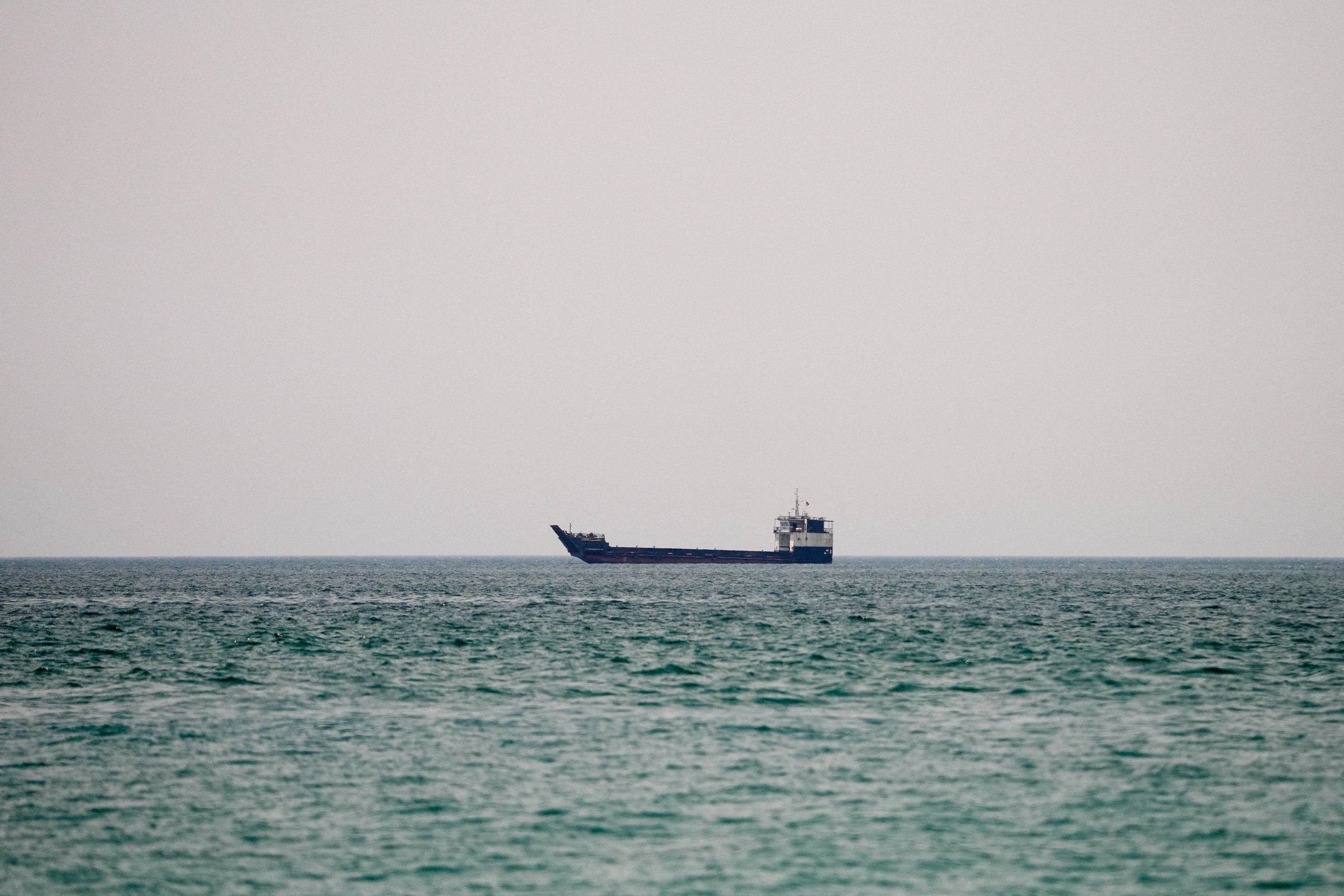
The results have been immediate and global. By striking a small number of ships with cheap drones and missiles, Tehran reshaped the risk calculus of the entire global shipping industry. Traffic through the Strait has fallen by around 90 percent — what the International Energy Agency has called the “largest supply disruption in the history of the global oil market.” Even after the war ends, fear that Iran can repeat this at will may linger — deterring investment, reducing traffic, and embedding a lasting premium in global energy markets.
ENERGY, FOOD AND SUPPLY CHAINS
The economic consequences have spread well beyond energy markets. Iran’s effective closure of the Strait of Hormuz — through which roughly 20 percent of the world’s traded oil passes — has pushed oil above $100 a barrel. European households are paying more for heating and electricity. India and Taiwan are facing sharply revised growth forecasts. Diesel, up more than 40 percent since the war began, runs the trucks, combines, and construction equipment that move food and goods across economies. Petrochemical costs — for plastics, packaging, and manufacturing inputs — are working through supply chains with a lag not yet fully visible in consumer prices. The Philippines declared a national energy emergency; hundreds of gas stations across Australia have reported fuel shortfalls. European airports have begun rationing jet fuel; Lufthansa's chief executive has warned of grounding up to 40 aircraft in the peak summer season if fuel supplies do not stabilise. The Financial Times has raised the prospect of stagflation — slowing growth combined with persistent oil-driven inflation — as a plausible downstream consequence.
About a third of the world’s fertilizer transits the Strait of Hormuz, and urea prices have risen close to 30 percent since the war began — hitting exactly when northern hemisphere farmers need to apply nutrients before spring planting. One fertilizer industry executive told NPR it was “the nightmare scenario.” The USDA is forecasting the US’s smallest wheat crop since 1919 and corn planting down more than 3 million acres. CSIS has reported that the UN World Food Programme estimates the number of people facing acute hunger could increase by 45 million if oil prices remain above $100 per barrel beyond June. US farmers, already under pressure from tariffs and weak crop prices, are taking on debt to stay afloat. Even if the Strait reopened tomorrow, a farm supply economist told PBS, “there’s going to be a tail to this that’s going to take time to get everything turned back on.”
CHIPS, AI AND FINANCIAL MARKETS
The war's reach extends into technology supply chains in ways that have no precedent in the Iraq era. Qatar produces roughly a third of the world’s helium — a gas essential to semiconductor manufacturing, where it cools the silicon wafers from which chips are made. Iranian strikes on Qatari LNG facilities halted production; the Strait closure cut off what remained in transit. Spot helium prices have surged by 70 to 100 percent in some markets. South Korea sources 55 percent of its helium from Gulf states; Taiwan, the world's dominant chipmaker, sources 69 percent. Scientific American has reported that even if the Strait reopened tomorrow, the supply disruption would last at least two additional months. Aluminum — another Gulf export and a key material in electronics and packaging — faces similar pressures. CBS News quoted one industry executive warning that “everything from vehicle chips to iPhones will definitely be affected.”
The Gulf had become a major destination for data center investment — drawn by sovereign wealth, cheap land, and abundant energy — but direct attacks on cloud facilities in the UAE and Bahrain have rendered the region high-risk. AI data centers consume up to five times more electricity than conventional facilities; surging energy costs are raising their operating costs globally. Ralf Gubler of S&P Global Energy has described the helium shortage as highlighting “a deeper vulnerability in the AI build-out: extreme dependence on a small number of geopolitically exposed nodes.”
AI and Big Tech drove the S&P 500 bull market for much of the period from 2022 through early 2026, with the five largest stocks accounting for roughly a quarter of the index’s weight. The Iran war has pushed the S&P and Nasdaq toward correction territory. CNBC reports that even as analysts expect strong corporate earnings, markets have fallen sharply — a disconnect that reflects deep uncertainty about the duration and economic consequences of the conflict. Morgan Stanley has flagged the combination of stagflation risk and mounting questions about AI capital expenditure returns as a compounding pressure. The Bank of England has warned the conflict “increases the likelihood of these vulnerabilities crystallising at the same time, potentially amplifying their combined impact.”
INSTITUTIONS, ALLIANCES AND US STANDING
The consequences of the Iraq war extended beyond the economic and the human — but they were largely contained within the region and within the coalition that fought it. The Iran war is generating consequences that are spreading well beyond the Middle East.
Nowhere is this clearer than in Ukraine, whose ability to defend itself has become ensnared in the Middle East hostilities. There are unconfirmed reports that US military hardware funded by European governments and earmarked for Ukraine is being diverted to the Gulf — an unprecedented breach of the terms under which those funds were provided. Ukraine’s loss is Russia’s gain, and Putin has also benefited from the Iran war in other ways: most notably through higher oil prices and through a temporary lifting of sanctions by the Trump administration to ease energy prices — both of which have bolstered the revenues Moscow needs to finance its own war effort in Ukraine.
The damage to Western institutions runs deeper. NATO burden-sharing negotiations, already contentious before the war, have been further complicated by Trump’s demands that European allies support a conflict most of them opposed. Spain has closed its airspace to US military aircraft, with its defence minister describing the war as “profoundly illegal and profoundly unjust.” A joint parliamentary report concluded last week that Britain can no longer treat Washington as its primary defence ally without qualification. Whether these strains represent a temporary rupture or something more remains to be seen.