Hosted by John Raine and Sir Richard Dearlove
Guest
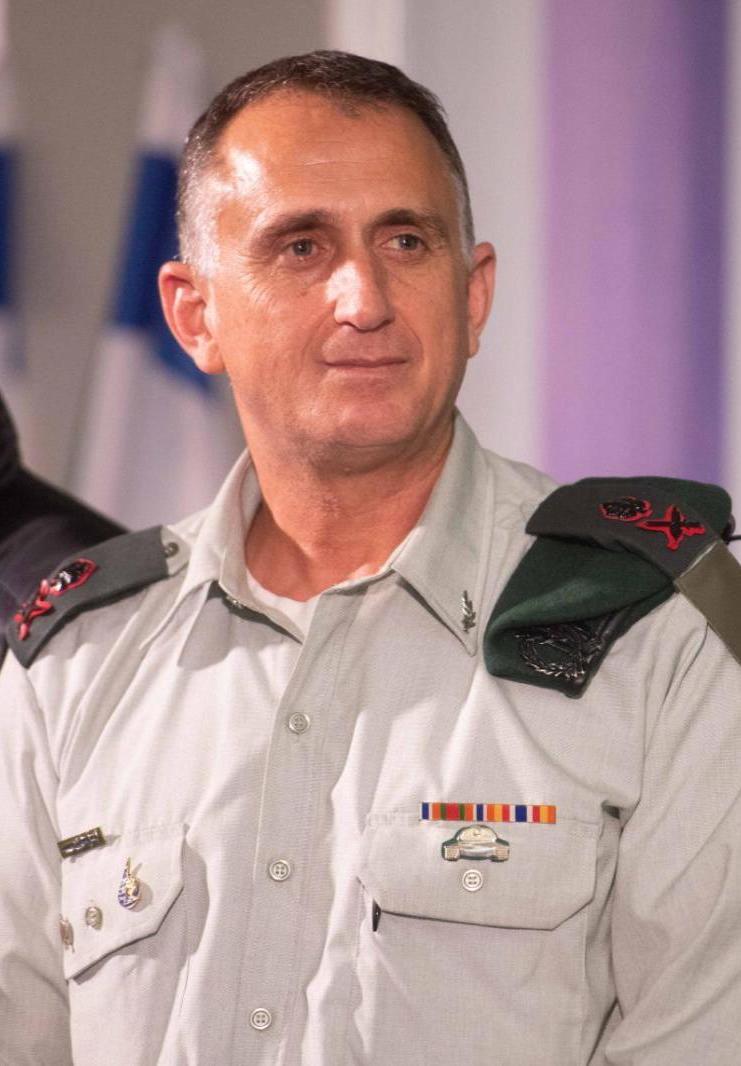
Tamir Hayman
Tamir Hayman is the Executive Director of the Institute for National Security Studies (INSS), Israel's leading defense and foreign-policy think tank, a post he assumed in 2024 after two years as the institute's Managing Director. A retired Israeli major general, he previously served as Chief of the IDF's Military Intelligence Directorate from 2018 to 2021, and is now a frequent commentator on Iran, Gaza, and Israel's post-October 7 security posture for outlets including The Times of Israel and PBS.
Hayman spent 34 years in the IDF, rising through the Armored Corps to commands including the National Defense College and the Northern Corps, with operational experience in Lebanon and the Palestinian arena, before joining the General Staff in 2015. He holds a bachelor's degree in political science and economics and a master's degree from the National Defense College.
Episode Summary
Tamir Hayman, who led Israeli military intelligence from 2018 to 2021, tells Sir Richard Dearlove and John Raine why he believes Israel is preparing for another strike on Iran. Before Israel and the United States act together, he says, they need to agree on what they want the strike to achieve and how they would end the war.
Hayman also explains how Israel lost a vital intelligence source on Hamas before October 7. Asked which decision he’s watching most closely, he picks Gadi Eisenkot’s choice of coalition partners over Trump’s next move on Iran.
In this episode:
(00:00) Israel Bracing for Renewed Iran War
(00:48) Meet the Hosts
(01:06) Netanyahu Elections After October 7th
(02:45) October 7th Intelligence Security Failures
(06:07) Hamas Deprioritized as Intelligence Target
(15:55) Gaza Reconstruction and Security Redesign
(19:55) Hamas and Hezbollah Military Capabilities
(24:09) Gaza Reconstruction Stalled Political Options
(33:58) Netanyahu Iran Regime Change Strategy
(40:07) Israel Proactive Military Strategy Risks
(45:49) Gulf States Iran War Position
(49:22) Gadi Eizenkot Alternative Israel Security Vision
(54:06) Trump Iran Strike or Deal
(56:26) The Coalition Decision Hayman is Watching
Show Notes:
A Second Wave of Popular Anger Is Building in Iran | Wall Street Journal: https://www.wsj.com/world/middle-east/a-second-wave-of-popular-anger-is-building-in-iran-ac51969c?reflink=desktopwebshare_permalink
Hosted by Sir Richard Dearlove (former MI6 Chief) and co-host John Raine (International Institute for Strategic Studies)
Listen & Subscribe
- Watch on YouTube
- Listen on Apple Podcasts
- Listen on Spotify
Transcript
2026-11-05
Cold Open
[00:00:00] HAYMAN: It's the general sentiment in Israel that we are on a course for a renewed war with Iran. There are those who hope that we will reach a deal instead of a war, but those are the two options right now on the table. It's either an intermediate deal or a strike, and it is a pendulum. It's a very crucial pendulum. It moves on an hourly basis, but that's the situation. At some point of time, in the next few weeks, it will come to a decision. And all of the cards are in Trump's hands.
Introduction
[00:00:35] RAINE: Hello, and welcome to One Decision. Conversations about intelligence, statecraft, and the forces that drive world politics. Conversations with people, too, who have been in the room and on the ground. I'm your co-host, John Raine, formerly of the UK's Diplomatic Service.
[00:00:52] DEARLOVE: And I'm Sir Richard Dearlove, the former chief of MI6.
[00:00:56] RAINE: Please do keep up with all of our content. Subscribe wherever you get your podcasts, and you can also like this episode or drop us a comment and tell us who do you want to see on the show?
Netanyahu Elections After October 7th
[00:01:06] RAINE: Last week, Israelis voted in their first election since the traumatic events of October the 7th. The leading vote winner was the bloc led by incumbent Prime Minister Benjamin Netanyahu, the man who many Israelis also hold responsible for failing to prevent October the 7th. So, how well has Benjamin Netanyahu, Bibi, served Israel's security interests, and what lies ahead for Israel's regional military initiatives now that the votes are in? To help us answer those questions is Major General Tamir Hayman. He is the former chief of Israeli military intelligence and a 34-year veteran of the IDF. He serves now as the executive director of the Institute for National Security in Tel Aviv. General Hayman, welcome to One Decision.
[00:02:01] HAYMAN: Thank you for hosting me.
[00:02:03] RAINE: It is a particularly timely discussion as Israel is now in the process of forming a new government after elections that have been held in the shadow still of October the 7th. And I'd like to start with that, if I may. The opposition leader, Gadi Eisenkot, has promised that if he's elected, he's going to initiate a formal inquiry into the security failures that led up to October the 7th. And I wonder, with your experience, whether you have yourself reflected on that, conducted, as it were, a personal inquiry. And what do you think that such an inquiry, if it were conducted at the national level, what do you think it might find? And in what way would it implicate President Netanyahu?
October 7th Intelligence Security Failures
[00:02:45] HAYMAN: There are three circles of inquirement needed. Let's start with the obvious: what happens in the few days just before the attack. There are now accumulated evidence that since October 4th till October 7th, there was enough information to indicate that something terribly wrong is going on and we are facing. I won't go far as to predict a full-scale invasion in the scale that was conducted, but there was enough intelligence in the system that could prevent the catastrophe of October 7. Secondly, it was not just the collapse of the intelligence in the early warning, it was a collapse of all of the operational concept of defending in front of Gaza Strip. So the questions: where was the IDF in the few crucial hours? And why was the defense not suited or adjusted to the threat that was accumulated or was obviously known back then? So that's the crucial internal circle of research, of investigation. There is this broader circle: what are the events that led us to that mistaken conceptions of Hamas preferring a sovereignty over resistance? And when did we get that wrong? Whether it was all through the history of Hamas-Israeli relationship, whether there was some pivotal moment in history where things have shifted from arrangements and status quo to escalating evolvement that should have been noticed and taken care of. That's the second circle. And that circle is much more complicated. First of all, personally, I'm involved in that because some of those events happened during my term as the head of intelligence. But more important than the personal aspect, in terms of the political level, the policy, the strategy towards the Palestinian arena as a whole, was orchestrated, designed, and executed mostly by the same prime minister, Benjamin Netanyahu, all through these years. And we should investigate whether that kind of framework of strategy forced us into bad decisions and bad policy that eventually supported or contributed to the catastrophe of October 7.
Hamas Deprioritized as Intelligence Target
[00:05:42] RAINE: Do you feel, General, that in a way Gaza and Hamas itself was just neglected, under-resourced as an intelligence target, and that the methods that we used were inadequate and almost guaranteed to miss, say, the tunnels, the stockpiling weapons, the change of intent? Had it, as it were, just been deprioritized in the hopes that it would somehow, if not go away, just remain as it was and be manageable?
[00:06:21] HAYMAN: There are priorities of the different arenas in terms of intelligence sourcing and other capabilities. The rate or the status of Hamas or the prioritization of Hamas dropped over the years. And it's a fair question to ask: how come we have somehow considered Hamas and Gaza as a secondary or even third in the priorities, and whether that was a smart thing to do? In order to answer that question, you must examine what happened in Iran and the Shiite Axis in the same period of time. And you will notice that since the destruction of ISIS, since the defeat of ISIS, following the years from 2017 till 2023, Iran and Israel entered into a collision course. And the presence and the entrenchment of Iran, not just as a force generation, but more operational activities, was much more aggressive and prominent in the security establishment of Israel. And in a closed environment or in a closed system, there's always a balance. If one thing gets more attention, the other is neglected a little bit. That's one. Secondly, which is partly connected to the event or the catastrophic event of October 7, we, that is the Israeli defense intelligence and others, noticed or came to believe that Sinwar prefers what we call the arrangements. He knows that he cannot militarily defeat Israel. He knows that he is maintaining his resistance identity, but he has other means to channel his resistance identity to other arenas: West Bank, the Northern Arena in Lebanon, and in a minute I'll talk with Iran, this very unique connections that he made with Iran, and maintained the sovereignty of him, Hamas controlling Gaza Strip, unchallenged or defended a little bit. That concept of him wants to maintain quiet. We have dozens of evidence that supports the theory. He wants to maintain sovereignty in Gaza, but to disrupt other arenas. And third, we have noticed what we call the unification of fronts, okay? That there is some form of an unexplained connections of lessons learned from Hamas to Hezbollah, to back then the head of Hezbollah, Hassan Nasrallah, and from Hassan Nasrallah in Hezbollah to Quds Force leadership in Tehran. That triangle was noticed, but everybody worked under the assumption that the head of this triangle is in Tehran, not in Egypt, not in Gaza City. According to what Sinwar thought about that triangle, he leads that. Sinwar idea that he only wants to start the war, and soon after the whole Shiite Axis and Iran will join in, and in that aspect, he is the initiator. The intelligence and others in Israel understood it differently, that Sinwar and Hamas are just a small marginal entity, actor in this broader strategy of Iran, and we got that wrong. Actually, we got that right sometimes in history, but it shifted. And sometimes I think after the operation in May '21, what we call Guardian of the Walls, there was this shift. There was this change, and I think that Nasrallah was the orchestrator of this shift. Nasrallah in Lebanon understood the potential of the Palestinians and twisted it all around, initiating the idea that maybe the destruction of Israel will start from the Palestinian arena, maybe Arab Israel will join in, and then the rest of the Axis will storm from all of their positions surrounding Israel in order to finish the job.
[00:11:17] DEARLOVE: That's a fascinating explanation. But let me just recount a little bit from my own experience, which partly reflects what you're talking about. In 2007, I think it was, I was invited to the Israeli Security Institute. The meeting, as far as I could tell, was largely a wash-up on the 2006 war with Hezbollah, during which there had been some, I wouldn't say significant intelligence failures, but a significant underestimation of the capabilities of Hezbollah. And I was asked to lecture about operations against Hezbollah, which I did. It seems to me that after that conference, clearly the evidence would suggest that Israeli intelligence, whether it was military or Mossad, paid significant attention to Hezbollah, became a major target. And we see the benefits of that playing out over time in terms of the operations run against Hezbollah. What I don't understand is why, you know, there wasn't a sort of insurance policy to cover Hamas in the same way. But it seems to me that the evidence would suggest there was very little penetration of Hamas. There was observation of security along the frontier with Gaza, along the electronic wall that you had there. But the actual running of sources inside Hamas would suggest that otherwise surely you would have picked up on their plans.
[00:12:51] HAYMAN: I was the head of intelligence since March 2018 till October '21. I can honestly say that our penetration into Hamas was equal to the level of penetration we had to Hezbollah. There was a sense of dominance that was demonstrated in the operation in May '21. I still was there, the head of intelligence. We had such great intelligence that drove us into this sentiment of dominancy. We are dominating the spectrum, and we know everything about Hamas. We know the decision makers, till the tactical level of decision making. Of course, for obvious reasons, I won't get into the capability that ensured that or that was the base for that knowledge. But it's not that we had a very good intelligence in the north and it was at the expense of developing other capabilities in the south, in Gaza. Unfortunately, the main tool, the main source that created this superiority fell at the end of '21. Instead of creating alternative methods of penetration and reconnaissance and sourcing, the situation kept on deteriorating without friction of the self-awareness. We still maintain our level of superiority, but if you check practically the sources, the capabilities, it was declining. And this gap between the notion of superiority and the practical situation of inferiority, that gap is one of the roots of the fact that there was no early alert and there was no sufficient preparation in terms of military activities for Gaza. 2006 caught the Northern Command of Israel and the Israel intelligence agency in a such low posture that issued a range of capabilities that were developed, part of them was the same capabilities that we used in Gaza and in other places. So you're absolutely correct by your observation of 2006. I would add that the lessons learned in terms of intelligence were effective and implemented in Gaza. But unfortunately, it fell just two and a half years before the war, two years before the war.
Gaza Reconstruction and Security Redesign
[00:15:55] RAINE: General, might I ask a question about Gaza itself as a theater, and a theater that you know very well, densely populated and riddled, it turned out, with tunnels and resistance infrastructure. When Gaza is finally rebuilt, would Israel put as a major priority in the redesign of Gaza that it is an environment less conducive to resistance? So, however the political settlement works out, would it be fair to say that Israel will not allow Gaza to be the same shape again, so that the chances of a movement concealing a colossal amount of terrorist infrastructure is removed?
[00:16:51] HAYMAN: I would hope to agree with your statement, but unfortunately, it seems like the current Israel government didn't learn the lesson of October 7 because it maintains or prefers the existence of Hamas leading Gaza Strip right now instead of promoting the 20 points plan and removing Hamas out of their governing capabilities, entity. And that goes a long way back in history where, in order to obstruct or to block any possible route for a Palestinian state, it was more comfortable for the Israeli government to, I would not say encourage Hamas, but to live with Hamas as a weak entity that confronts the Palestinian Authority in the West Bank, and to maintain the Palestinian Authority in the West Bank in the level of existence without flourishing. And I think before entering maybe the more military dimensions that you might be referring to, I would say in the strategic overflow, as long as you are keeping and you are living aside Hamas as a ruling entity, the lessons of October 7 was not learned.
[00:18:19] RAINE: I have to say, General, to many it would sound just perverse that the Israeli government is preserving Hamas and its ability to operate after the damage that Hamas has inflicted.
[00:18:32] HAYMAN: They won't really agree. If you'll ask a formal official in the Israel government, said, of course not. We will crush it, we will destroy it, we will whatever do in order to annihilate it. But practically, right now, Hamas controls the life of two million Palestinians in Gaza, okay? They are the government entity. They are receiving the humanitarian aid. They are transforming the humanitarian aid into cash money that they are paying salaries with. They are reconstituting their military capabilities. And why Israel is refusing to administrate the National Committee for the Administration of Gaza, the NCAG? Because Israel government claims that the existence of a military branch of Hamas beneath the NCAG is unacceptable. I would argue you should choose from bad options. What's worse? Hamas controlling the administration level and Hamas controlling the entity with the gun, with the security, compared to NCAG and Hamas beneath. I think it's a very, very easy decision to make.
Hamas and Hezbollah Military Capabilities
[00:19:48] DEARLOVE: How do you estimate now the military capability of Hezbollah and Hamas? Are the Iranians paying sufficient attention to help them rebuild, or are they more or less at a standstill?
[00:20:05] HAYMAN: Two different stories. You can't really compare both of them regarding to Iran. Iran currently cannot support Hamas at all, okay? All of the lines of support, the money transferring, the mechanism, all of that was crushed totally. And they cannot smuggle all what they've smuggled through to Hamas previous to the war, that's blocked. Okay, Iran cannot really do anything with Hamas right now. Hamas recovering itself by their own means based on the taxing of goods, merchants, etc., etc. Basically, they are robbing the humanitarian aid. They are providing it eventually, but they are collecting all the necessary funding they need in order to survive. And of course, the basic need or the basic source of power for entity like Hamas is human resource. As long as they are controlling the population in Gaza, they will have no problem replenishing their ranks by newly recruits from Gaza civilians. As for the military capabilities, well, they have still approximately 100 rockets, but they are not able to use them because they cannot be used. They have about 30,000 operational individuals. I think half of them are armed with weapons, the rest are just volunteering with other elements, and they are trying to rebuild some of their military industrial base underground. But basically, it's a shadow of its former capability, Hamas, that is. Hezbollah is more complicated. Hezbollah is still connected somehow to the world, okay? And Iran is succeeding until recently to transfer money through different channels and different financing tools to Hezbollah. Hezbollah can also use dual-use components to build drones, UAVs, etc., etc. It still has 10% of their former stockpiles of missiles, and they are recruiting new recruits. So again, when you compare Hezbollah now in the military dimension, it's much weaker than before. And both of them, Hezbollah and Hamas, cannot execute invasion operation into Israel because of the buffer zone. We have huge, wide, deep buffer zone in Lebanon and a buffer zone in Gaza, so it's very hard for them to threaten the state of Israel like formerly. But in terms of Iran, it's two different stories. Hezbollah is still a member of the Axis, still being controlled by Mojtaba Khamenei, receives directions, and, for example, if there will be a war that Israel and US will strike Iran, Hezbollah will retaliate because it's still subordinate to the Supreme Leader, Mojtaba Khamenei, and knows that its future and existence depends on Iran. Hamas, totally different story.
Gaza Reconstruction Stalled Political Options
[00:23:50] RAINE: On Hamas, given what you've said about the view of the current government, which is to leave Hamas in at least municipal control, what do you think happens next on reconstruction? Because to many it seems simply stalled, that there isn't the commitment, the diplomatic engagement and capacity to take this forward. The Board of Peace is a remote, somewhat nebulous body. What do you think happens? Is it just allowed to fester as it is now, or is there more happening that we can't see?
[00:24:31] HAYMAN: A lot of that depends on the next Israeli government. And a lot of it has to do with United States, because there is this option that we will resume military campaign in Gaza Strip, whatever left that is under the control of Hamas. About 40% of the Gaza Strip is under Hamas control. And theoretically, the IDF has no real challenge or problem defeating what's left of Hamas. Military, that is. Apparently they will recover. It's not, you know, it's a terror organization, a military terror organization, it's hard to fully eradicate. The problem is, while doing so, you'll need to give some solution to the uninvolved civilians there. There are approximately two million civilians in Gaza Strip. You might evacuate them from Gaza City. That's the northern Gaza enclave. But that's all, okay. You solved half of the problem. Most of the terrorists will move with the civilians down south to the south part of Gaza. How you will enter a very condensed area with two million people without controlling a huge, huge devastation that will be intolerable and unacceptable by the international community, where we are in a bad state as it is right now? Returning back to fighting with this current situation can be devastating. It will bring isolation, sanction, and Israel will, no matter what the government of Israel, I see little chance of that happening right now. And it depends on, it's connected also to Trump. Another element is the United States. President Trump considered the 20 points of the Gaza plan as his own signature diplomacy. So I'm not sure that he will allow or back Israel government of reoccupying Gaza Strip and trying to evacuate people, of course. It will be very, very problematic. So if you remove the military operation from the table, you are left just with the 20 points plan or trying to somehow transform or force Hamas into disarming itself. And in that aspect, the only tool available is the 20 points plan. And that is Hamas will give up their control of the administration of Gaza and will accept the NCAG. And we will start the reconstruction of Gaza for the disarmament of Hamas. That is, if, for example, Hamas returns back half of its weapons, half of Gaza Strip can be reconstructed. That's the only way I can see that going forward. There is this option of this government maintaining its power, the same right-wing government. And if that's the case, I think they are more than happy to keep the situation as it is right now. Keeping the situation as it is right now means that no reconstruction, Israel keeps control of about 60% of Gaza Strip. Hamas remains in control of about 40% of Gaza Strip and most of the civilians in Gaza, and that's it. To sum things up, three options. Military campaign, highly problematic. Low probability. Keeping the situation as it is right now, comfortable for a right-wing government because there's no concession. Promoting the 20 points plan according to the Board of Peace strategy, recommended, but conditioned with a different government in Israel that will accept it because it means some form of withdrawal from Gaza. And I think a right-wing government will insist on not withdrawing. I think an alternative government will promote it.
[00:28:54] DEARLOVE: I mean, is there any chance at all of Eisenkot doing some sort of deal with the Arab parties?
[00:29:02] HAYMAN: It will be the last resort. But if it will come to a decision between re-election and a minority government backed by Arabs from outside, and the Arabs party will agree to that, that will be the last resort. Unfortunately, on the way there, we will pass through very complicated obstacles cycle. That means trying to cooperate with the ultra-Orthodox with Eisenkot, very, very, very problematic because the conscription act and recruiting the ultra-Orthodox was a main thing in the election campaign promises that they will need to breach. But I think they would rather breach that promise or breach the promise of not sitting with Arab parties. That is the Gadi Eisenkot party, which is a central-right party. Another alternative that will have to cross from the potential outcome is the unity government. And Benjamin Netanyahu insists that he will be the prime minister of a unity government, and there's little chance that he will break his own bloc by giving up the alliances with the ultra-Orthodox and the ultra-right parties. So I don't know what the sequence of crossing all of those scenarios off the list will be, but I'm sure that Gadi will try all of them. As for the Likud Party and Benjamin Netanyahu, the main leverage he has, that he has no problems on returning back to election because, according to most experts, in a second round of election he will get majority because the little chance of this huge momentum that was accumulated in order to try to replace him will be resumed, and therefore he might have a chance of improving his odds in a re-election campaign. That's his main leverage. And once he'll get the opportunity to formulate a government, because he is what he is, he is the only one that will have no problems going with Arabs, going with ultra-Orthodox. He can go with everything, and his supporters, his electorate will forgive him for everything that he'll do.
[00:31:33] RAINE: So he gets back into power, General, and in whatever format he stands up a coalition. Does he go on doing everything that he's done before? In other words, we haven't seen the end yet of his legacy, or do you think it's a point at which he starts to reconsider, you know, longer-term impact on Israeli society?
[00:32:01] HAYMAN: You say he, you're meaning to Benjamin Netanyahu?
[00:32:05] RAINE: Yes, I am. Really, the question is about how, first of all, finished and, second, enduring his legacy might be on, for example, politicization of the military or any one of the number of things that you've pointed to in your definition of the security concept that he has followed. Do you think that these shifts are permanent, or do you think they've got further to go, or do you think that it's a temporary phenomenon associated with Netanyahu in this particular phase of Israel's history?
[00:32:43] HAYMAN: Unfortunately, I think in the conceptual level, he is following the populist trend of transforming the Israel national security strategy from a very constructive and responsible foundations that all of the concept was built on in the years of Ben-Gurion and Jabotinsky into a very radical, right-wing, extreme notion of national security, which I laid a little bit exaggerated in the paper I published. Unfortunately, that's a very dangerous trend that will end up eroding Israel national security. And because it is very popular and it sounds good after October 7, unfortunately, in the conceptual level, I think he will continue in encouraging that.
Netanyahu Iran Regime Change Strategy
[00:33:47] HAYMAN: In the strategic level of operation, his signature strategy is about Iran, and he will not let it go until he will succeed on promoting or trying to change the regime in Iran, which will be considered as the triumph of his strategy. It is very hard to influence that kind of a transition from external position. You cannot really predict it. And there's a race of clocks between the regime collapse eventually and the nuclear clock. And I think it's a very dangerous bet to take, in betting on the regime clock. I think we will end up with a nuclear Iran, and that really transforms the Middle East and transforms Israel national security in real time.
[00:34:48] DEARLOVE: General, do you think that Netanyahu originally persuaded Trump before the first attack that he could take down the Iranian, or that the Iranian regime would fall? And I mean, the second part of the question really is the situation now. You mentioned it already, but this widespread prediction of another attack on Iran, given the deployment of American forces and the arrival of American aircraft in Israel and other indicators. I mean, so how would you sort of comment on those two issues at the moment?
[00:35:28] HAYMAN: I was not in the room when the Epic Fury operation was introduced. But I tend to assume that Netanyahu convinced Trump that regime change is optional. Nobody can really guarantee that, and I think probably Netanyahu said that there's no 100% in those kind of operations, but we think that the circumstances are historical and unprecedented, and it is ripe for harvest, and we can do something historically, with no precedents. But in order to understand how Israel came to that conclusion, you must go back to the end of the 12 Days War. At the end, just at the end of the 12 Days War, there were two strikes on what we called back then regime stabilization targets, foundations of the regime targets. It's a group of targets on Basij, security aspects, symbols of the regime. Part of that was conducted, and the other part was stopped by President Trump. He just, in the final day of the operation, he turned those airplanes back, and he prevented the second round of those kinds of a regime. So the whole 12 Days War was against the nuclear, and it was pretty much successful. Soon after, two things happened. Immediately after the 12 Days War, that same regime of Ali Khamenei started reconstructing the lost capabilities and really dashed into the reconstruction very, very professionally and impressively. Missiles, nuclear, proxies, whatever, all of the principles of Iran national security concept was really replenished very, very quickly, much quicker than predicted. So the conclusion was that as long as this regime stays, we are not going to be able to eliminate threats through dealing with capabilities. Second, four months after the strike, suddenly we're seeing protests in the streets. There's an uprising in Tehran, uprising in Iran, and there are those in Israel who connected the dots into one line. That is, we didn't really try to disable this regime. We just accidentally, as if accidentally, in the margins of the operation, we struck some targets, very sensitive targets for the regime, and four months after the outcome is protest. So the idea was, let's do an operation that is focused on regime change, not as a marginal component, but as a central component. And if we will do that, maybe after the war, we will see ten times of those protests uprising in the streets, and we will have a regime change, and this is the final solution to the problem of threats that Iranians are positioning. And later there comes the option, the opportunity, when Trump said in early January 2026, "help is on the way." So help is on the way, the already planned idea of a major operation oriented or aimed to topple the regime met the opportunity, and that formulated the strategy that later on became Epic Fury. With eventually consequences, planning of the Kurdish invasion and the Ahmadinejad temporary leadership and all of those events, all of those operations that were exposed later on.
Israel Proactive Military Strategy Risks
[00:39:54] RAINE: General, the picture that you paint there and the very helpful explanation that you give is of Israel moving from selective, moderate, essentially defensive engagement to offensive engagement in multiple theaters at a level that we haven't seen probably since the Six-Day War, for complex, concurrent military operations, all designed, of course, to make Israel more secure. But is there a paradox in this, that actually that level of force projection may have made Israel less secure? Where do you come out on that?
[00:40:35] HAYMAN: Part of it is because of October 7 lessons learned. The idea that previous to the war, October 7, there were multiple suggestions that we should preemptively attack Hamas and destroy its leadership and its military branch. All of those suggestions back then was, of course, refused and considered to be very radical, and eventually you know what happened at last. So the lessons learned was that Israel must not stand still and preemptively destroy any emerging threats that can be eventually strategic threats. That was the lessons learned from October 7, and because of the very, very traumatic state of mind that decision makers were in Israel after October 7, it sunk. It really echoed, and we see that ripple effect of the changed Israel national security. And later on, when Israel preemptively acts, surprising its enemy, it harvests success. Okay, the pager attack in Lebanon, the preemptively attack, surprise attacks on the long-range missiles of Hezbollah, the strikes in the 12 Days War on the nuclear scientists and the leadership and the missiles. Whenever Israel surprise and preemptively act, it gets a lot of success, military success. And that led to the conclusion that this is the best way to act. Constantly proactive approach, very hawkish, very non-restricted one that aims to prevent any emerging threat worldwide, regionally wide. As always, it has its benefits that are the net assessment military balance that we are changing for positive, but it has a very negative effect in the strategic level. We are bringing ourselves into a state of isolation. We are losing the support from United States. We are on the brink of isolation from Europe, and that, in a high-tech-based economy that depends on interconnectivity with Europe, with United States, it's very dangerous. Secondly, that proactive approach convinced some of Middle Eastern countries, for example, Saudi Arabia, that Israel wants to be the hegemon of the Middle East. In any strategic game where one actor wants or being blamed as trying to control the system, there is a reaction. And that reaction is challenging our integration in the Middle East. We were on the brink of expanding the Abraham Accords. Now it looks so far from reality. The Mecca Agreement, the Mecca Defense Accord, it's a reaction. It's a reaction for a little bit the sense of United States backing from its local partners, and it's a reaction to contain Israel and to prevent it from expanding its footprint in the Middle East while striking Iran, for example. So in economic measures and in diplomatic measures, there's a downside for this very proactive approach that it is very successful in the military dimension for the first stages. If you are maintaining presence indefinitely in the buffer zones, you are creating the resistance there. We are starting to see that in the Golan Heights in Syria. There are four groups who are, we didn't know them before, that kind of organized themselves in order to reject the Israeli presence in the Syrian Golan Heights. I think the most sensitive issue is the social resilience of Israel and social coherence. Once the war is being more and more labeled as a political war, aimed to maintain the control of a certain political player, it is very, very dangerous for the Israel resilience.
Gulf States Iran War Position
[00:45:08] DEARLOVE: I just wanted to ask a question about the sort of Gulf states and Saudi Arabia. I mean, do they want an end to conflict more than they want to see the back of the Iranian regime? Where do you think they stand? Because the great destabilizer of the Middle East has been the Iranian regime over many, many years, and it makes life for the Sunni states pretty difficult, even in the medium to longer term. So is there a sort of coincidence of interest, therefore, between Israel, the Gulf states, and Saudi Arabia?
[00:45:49] HAYMAN: Their position has changed, their point of view has changed during the war. Right now, as for now, they are against war. As for now, Saudi Arabia, the rest of the GCC, all of them see the renewed war as a threat that will threaten their national infrastructure, and for that reason, they would much prefer a deal to be struck between US and Iran than a renewed operation. But this position has changed through the war. Let's take Saudi Arabia as a player that represents the Gulf states, although it's not accurate, okay. You can't really compare Saudi Arabia to UAE, to Bahrain, to Oman, each one, and Qatar, every one of them is a totally independent player. But generally speaking, when the uprise began in the streets of Iran at the beginning of January, they opposed an operation. They were against an operation that will back the protest in the streets because they were not ready and they believed that the strike that Trump is going to execute is minor. Actually, Israel also thought as well. Later on, after the war started, February 28, when they understood the scale of the war, they were for the war because it seems like for the first time, Israel and United States are going to solve the problem. The fundamental problem of the Middle East, the root problem of all problems, Iran, is going to be destroyed, or the regime's going to be replaced. So it might introduce a solution that was not in the toolkit, was not available strategy, so they backed the US-Israel operation and they paid the price for it in some measures. Later on, when they saw the potential damage of the rockets, the missiles from Iran, they were also more encouraged and more backing Israel and US to finish the job because it really demonstrated how vulnerable they are and demonstrated how their strategy, the Vision 2030, vision of Saudi Crown Prince, and all of this kind of safe haven for sports, culture that they wanted to present, the Gulf states, all of it is a fiction. They are penetrated and they are very threatened. So another reason to finish the job. But when suddenly they came to the conclusion that at some point of time Trump's not going to go all the way, that Trump is striving to get some form of deal with Iran, they changed their mind and said, if we're not going to go all the way, we might as well return back to the hedging strategy. And then they started increasing their back-channeling to Tehran, trying to calm the situation, understanding that they are going to remain neighbors for the foreseeable future. There's no real point of escalation and retaliation, and this brings us to the situation where we are right now. So it's a trend, it's a wave that rose and sunk, depends on how they interpreted the willingness of Trump to go all the way.
Eisenkot Alternative Israel Security Vision
[00:49:22] RAINE: You wrote the following in your extremely clear article published by your institute last month, that the new doctrine, which you've given so many examples of, was an expression of a fundamental unchecked shift in the state's identity, which is a very powerful statement. And I'm just wondering, let's say Gadi Eisenkot is successful, or he just remains on the political scene. What would his view on that be? What might he do about it? He's not a well-known character politically, in the same way, of course, that Netanyahu is. What might there be in his political creed that we should know about?
[00:50:01] HAYMAN: He said it more than once that he is a Ben-Gurionist. He is totally devoted and believes that the Ben-Gurion concept of national security is the right thing to go. That is that Israel aspires for peace. Israel respects the sovereignty of Arab states and wants to let them live their life in sovereignty without breach of sovereignty as long as they accept the presence of Israel as a Jewish democratic state. Israel is against an ongoing everlasting wars. And if we need to go to war, it should be very, very short in order to stretch or to expand the time frame between the wars, and in those times we are building our culture, our science, our economy, etc., etc. So he's all for returning back for the former national security concept that we brought up on its knees. And right now the new trend is being pushed by a very extreme right-wing component that was supposed to be marginal, but now enters into the center of the political spectrum and being adopted by politicians from the central right. And I think Gadi Eisenkot, Yair Golan, Bennett, and all of the oppositions are opposing that evolving threat that they consider as existential threat on Israel's identity as a liberal Jewish democratic state.
[00:51:46] DEARLOVE: How do you see it evolving over the next three, four, five weeks? I mean, it's a pretty crucial period. Are we in a position of stasis, or do you think there will be some more clear development?
[00:51:57] HAYMAN: The Iran case is fully dependent on Trump. And you can't predict Trump. Trump is trying to promote both a potential agreement and the final strike that will end the war and give him some reason to de-escalate the situation because it bothers him. We are right now in Israel preparing for war. Okay, it's the general sentiment in Israel that we are on a course for a renewed operation, renewed war with Iran, or there are those who hope that we will reach a deal instead of a war, but those are the two options right now on the table. It's either an intermediate deal or a strike, and it is a pendulum, it's a very crucial pendulum. It moves on an hourly basis, okay? And yesterday there was this sense that we are approaching a deal. Today we are approaching strikes, and it keeps on moving from side to side, frustrating, very disturbing, but that's the situation. At some point of time in the next few weeks, it will come to a decision. And all of the cards are in Trump's hands. Israel government wants to strike, Israel prime minister wants a strike, Israeli military intelligence and the military establishment knows that there are real threats evolving in Iran. It's not false, it's not just for political reasons, there are operational needs need to be handled because in the nuclear project, in the missiles project, in all what Iran is trying to do right now, there's a real threat emerging. How that unfolds, I don't know. Trump got the answer. I'm not sure I have the answer.
Trump Iran Strike or Deal
[00:54:05] HAYMAN: I was just trying to recommend, this is what we are trying to recommend here at the Institute, that if you are going to a next operation, joint operation with the United States, first of all, you need to answer three questions. One, what is the objective? Is the objective a regime change, or the objective is forcing Iran into a deal? Because Trump wants to force Iran into a deal. Netanyahu wants a regime change, and you can't enter a joint operation with the two partners who have different visions of what the objective is. Second, answer the questions: What is going to be changed in the operational level? Because if we are executing another round of escalation, it means that the formula was failed. And if that failed, just renewing what we have done previously, better on the margins, is not something that ensures success. Third, what's the exit strategy? And it is directly dependent on the first question, because if the exit strategy is based on a regime change, it's a long war, and there's a lot to pay in prices. If it's just forcing them back to a deal, might be short, but you need the back channel with Iran in order to make sure that the circumstances of renewed negotiation are embedded in the operational work that you are doing. And currently, all three questions are not answered, and this is what we are trying to promote. As for Israeli election, it's going to be long, it's going to be frustrating, and I think eventually it will turn out either by a new election or a minority government supported by the Arabs after we have exhausted all other options. There is other options that are valid, like ultra-Orthodox entering the coalitions for a conscription law. I don't know, highly unlikely, but there are those options. That is what we are facing in the upcoming few months.
One Decision to Watch
[00:56:26] RAINE: General, I feel you have almost answered our question, which we ask all our guests: What's the one decision you're watching for in the coming weeks? I'll twist it slightly. Of all those decisions to be taken, the one by Trump, the one by politicians in Tel Aviv, possibly decisions to be taken in capitals elsewhere in the region, which is the one that you feel most invested in and you're going to watch most closely?
[00:56:48] HAYMAN: When you push me only to one, I would say the Gadi Eisenkot decision of what form of a coalition he wants to take, because it will shape our life the upcoming four years. And compared to the second-ranked decision, which is Trump's decision, that has huge implications, but it's not directly connected to the identity of Israel and to the long-term development and evolvement for the next four or five years.
Post-Interview Discussion
[00:57:31] RAINE: Well, Richard, there was, as ever, a unique quality to conversation with senior members of the IDF on the front line.
[00:57:41] DEARLOVE: Yeah, I was impressed by his willingness to go into detail with us. But I think the thing that I was most interested in was where we ended up, and his description of this pendulum and changing mood day to day, I think, is very significant. And then we obviously got from him at the end the current approach of the Israeli Security Institute, the three questions that you need to have answered if you're going back to war. What's the objective? What would change operationally? And what would be the exit strategy? I don't think one could have had a more thorough explanation and exposé of the Israeli position. And I was quite surprised that he actually ended with the implication that Eisenkot might manage to do a deal, and that we might have a different government than one led by Netanyahu. I think our listeners won't find a better explanation of Israel's current position than that. It's better than anything else I've read or seen recently.
[00:58:58] RAINE: Well, thank you, Richard. That's all for this episode. Please do join us every Thursday for new episodes and subscribe to One Decision on YouTube so you don't miss out on a conversation. And please do also leave us a comment on YouTube. Check out onedecision.com for commentaries and explainers that you might have missed. I'm John Raine. Thank you for listening.