Hosted by Christina Ruffini and Sir Richard Dearlove
Guests
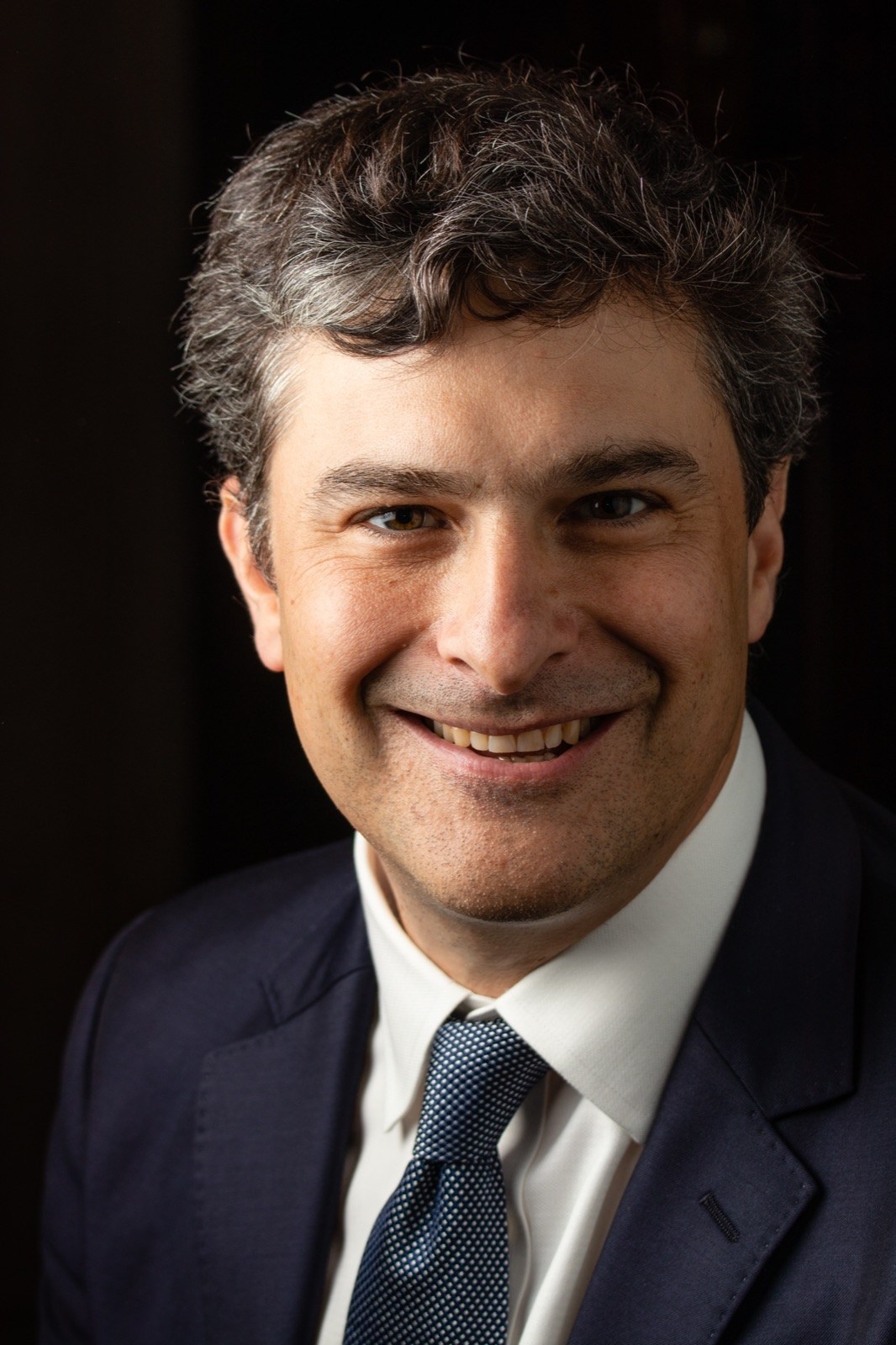
Ronen Bergman
Ronen Bergman is a New York Times investigative journalist detailing the high-stakes intelligence mission that preceded Operation Epic Fury.
Mark Mazzetti
Mark Mazzetti is a New York Times investigative journalist detailing the high-stakes intelligence mission that preceded Operation Epic Fury.
Episode Summary
How did a Holocaust-denying, hardline former president of Iran become the centerpiece of an Israeli plan to topple the regime in Tehran? Former head of MI6 Sir Richard Dearlove and co-host John Raine sit down with New York Times investigative journalists Mark Mazzetti and Ronen Bergman to detail the high-stakes intelligence mission that preceded Operation Epic Fury. They explain how Israel’s Mossad groomed former Iranian President Mahmoud Ahmadinejad into an intelligence asset, and how Mossad director David Barnea Ahmadinejad to the White House in February 2026 as part of a plan for rapid regime change in Iran. They also discuss the plan’s collapse within days of the decapitation strikes, why the plan to use Kurdish forces as a ground proxy was a non-starter, how the political fallout from the war may forever change US-Israel relations, and the electoral implications for both US President Donald Trump and Israeli Prime Minister Benjamin Netanyahu this fall.
(00:00) Legacy of the Iran War
(02:30) Origins of Ahmadinejad Plot
(05:10) Planning Iranian Regime Change
(08:08) Was Ahmadinejad a Double Agent?
(12:45) Why Recruit Ahmadinejad?
(15:34) Selling Trump on Regime Change
(25:12) Credibility of Kurdish Option
(33:27) War Planning vs. Reality
(35:32) Legacy of Ahmadinejad Plot
(38:55) Did Israel Manipulate the US?
(41:44) Mood of Iranian People
(43:58) Deal Prospects
(46:18) Maximum Pressure on Iran
(48:05) Impact of Israel’s Coming Elections
(49:03) Takeaways, Audience Comments, and Wrap Up
Hosted by Sir Richard Dearlove (former MI6 Chief) and guest co-host John Raine (International Institute for Strategic Studies)
Listen & Subscribe
- Watch on YouTube
- Listen on Apple Podcasts
- Listen on Spotify
Transcript
Cold Open
Mazzetti: Ahmadinejad is just one element of the larger legacy of this war and its impact on American-Israeli relations. Mossad sold the idea of this guy, this controversial figure, and the US went along with it. That's just one sort of emblematic element of the failures around the planning. The United States got brought into this war that is inconclusive and is going poorly and is incredibly unpopular because of Israel. Donald Trump was a willing participant, but the impact on American relations with Israel are going to be a legacy that's going to last for years.
Introduction
Raine: Hello and welcome to One Decision. I'm your guest co-host, John Raine.
Dearlove: I'm your co-host, Sir Richard Dearlove, the former chief of MI6. And one note for our listeners about In Brief — we're going to be dispensing with that for the time being, and we're going to focus on interviewing the excellent guests that we are having on the podcast and devoting more time to listening to them.
Raine: And on that we have excellent guests with us here today, so let's get straight into the interview. Earlier this year, the US and Israel launched Operation Epic Fury against Iran, and that was preceded by detailed war planning, and one particularly interesting element of that was planning around possible regime change. Now New York Times reporters Mark Mazzetti and Ronen Bergman were part of the investigative team which revealed a long-running Israeli campaign to recruit former Iranian president Mahmoud Ahmadinejad and to make him not only an intelligence asset but also potentially a replacement ruler in Iran. How did the Mossad succeed in flipping this one-time fierce opponent of the state of Israel and fierce proponent of the Iranian nuclear program, and also a Holocaust denier, into an intelligence asset? Here to help us answer these questions and explain how the plan was put together and how it fell apart, I'm delighted to welcome Mark and Ronen themselves. Welcome to the show, Mark, and welcome back, Ronen. Let's start with the Ahmadinejad plot, if we can call it that, Mark. It would be really helpful for us and for listeners if you could just recap for us what was this plot, and in particular how did it start and how on earth did the Israelis fix on Mahmoud Ahmadinejad as a potential placeman in Tehran?
The Ahmadinejad Plot — How Did It Start?
Mazzetti: Well so the plan to use Ahmadinejad for some future government of Iran goes back many years, where the, as we all know, the Israelis were thinking about a regime change in Iran for years, decades, something that Netanyahu has talked about for so long. And the question was, what might that look like? And Ahmadinejad is one of the perhaps most unlikely people you might have thought to be part of an Israeli plan for regime change. He famously was the hardline leader of Iran beginning in 2009. Famously anti-Israel, talked about wiping Israel off the map, denied the Holocaust, and was also a very instrumental part of building up Iran's nuclear program, which was the central threat to Israel. And so when Ronen and I first heard about this, we were shocked that the Israelis had sort of brought him into an effort. But it seems to go back really a few years in terms of when the Israelis tried to groom Ahmadinejad. I think for a lot of people their view of Ahmadinejad was that time when he was in office, as I said, this hardline leader. But once he was no longer president of Iran and he kind of fell out of the news, he did start to moderate his views and also tried to at least position himself as something more of a moderate or at least a critic of the regime. And this is around the time that Mossad started identifying him as someone at least they could recruit, someone who could be a source of information, not necessarily install in a future government. And as we report, the grooming process took several years, and it happened under the guise of these trips that he took. And during these trips is when Mossad met him and basically convinced him to become an asset. And this was before there was really even a plan in place to install him, because there was no real opportunity for regime change until the Trump administration came along. War Planning in Washington and Tel Aviv
Raine: Once they'd taken that decision, then, Mark, to groom him for something more than being just an intelligence asset, talk us through the plans that they then made around this critical period — the war planning is going on in Washington and in Tel Aviv. Where did Ahmadinejad and his candidacy fit in there? Was that something that Netanyahu promised Trump? Did he serve that up as an argument for sponsoring regime change to make it sound more attractive, maybe more certain than it really was?
Mazzetti: Yes, so the critical period of time when the decision making happened about the current war was January and February of this year. Obviously January was during the time of the street protests in Iran when Trump tweeted about coming to the rescue, and that he said help was on the way. The key moment in the decision making happened the following month in February when Netanyahu comes to Washington and basically they hash out the plan for the war. And during that meeting in the White House, the Mossad director, David Barnea, is on a video into the White House and he's kind of laying out a regime change plan, part of which involved Ahmadinejad. Now, this was surprising to some American officials, right? Who hadn't thought about Ahmadinejad in quite some time. And some were quite struck that this guy who they sort of had this vision of or perception of that was sort of frozen in amber from years earlier might actually be an Israeli asset and someone they were considering. Now during this time, Ahmadinejad is under house arrest in Tehran. He is someone who the Iranians were suspicious of, they didn't trust necessarily what he was up to, they didn't trust his followers, and so the plan had to be getting him out of house arrest, springing him from captivity, so to speak, during the early days of the war. And then Mossad would have him in custody and then he would be used at some future time as a part of a government that takes over after the collapse of the regime. But there's one big point I want to close on this part — it just shows there were really very shockingly different goals of this war between the Israelis and the Americans. I mean, the Americans were all over the place. You listen to Trump and his advisors, it wasn't clear what they wanted. Was it regime change? Was it just degradation of the nuclear program? Clearly the Israelis had a regime change idea in place and they tried to sell it to the Americans. Was Ahmadinejad a Double Agent?
Dearlove: When I hear the story and listen to your account of it, one thing I find, you know, as a former professional intelligence officer — I find it hard to accept that the IRGC aren't consciously on the other end of this. And, you know, given Ahmadinejad's sort of prominence as a public figure, the fact that he has IRGC security or some sort of security when he travels, he doesn't travel alone. Are we absolutely sure that — I'm not saying it's a double agent case, but what I'm saying is there must be some IRGC knowledge of what the hell's going on, and they're talking to Ahmadinejad about his contacts with the Israelis as well. I mean, is that feasible to believe?
Mazzetti: It is a central question that we're still trying to answer. Your impulse is of course right, which is how would they not know, and what game might Ahmadinejad be playing, right? And let me just sort of add one other set of facts to this, which is still part of the mystery, which might fuel some of your suspicions as well — which is that after the war begins, when there is a strike, an Israeli military strike on Ahmadinejad's compound that kills some of his bodyguards that have been keeping him under house arrest, Mossad picks him up, takes him away to a safe house, right? Sometime shortly after that, maybe within days, Ahmadinejad leaves. He leaves Mossad custody and goes back to the Iranian custody that he had been under. Why? Why does he do that? Surely he might have known the risks of that? And then he shows up weeks later at the funeral of the slain Supreme Leader, seemingly under close supervision, if not flanked by bodyguards — basically back under arrest. So was this part of it all along? Were they playing a game? Was he feeding intelligence back to the Iranians about what the Israeli plan is? That's still something that we need to better understand. And I'll let Ronen weigh in on this too.
Bergman: I must share something that happened to me with one of your former colleagues in your profession that you dealt with, an Israeli high-ranked official who was the chief of station, the chief of Mossad London Station years ago. And he called me after one of the stories that Mark and I and some other colleagues at the New York Times published about Ahmadinejad and he says, Ronen, you don't believe this nonsense. I said, describe the nonsense. Like the nonsense is that Mossad was pretending or saying it would be able to topple the regime in Iran and crown Ahmadinejad? Or whether I believe Mossad was able to do that. So he said, no, no, the former — I — you don't believe that they actually said that. I said, I'm sorry, I understand maybe the agency has changed since your time. But they did. They presented a clear, very clear goal at the first line of the presentation that was shown to the cabinet and later the English version to President Trump, which was that the goal of this war, the one single goal of this war, is to topple the regime. I think it's to think that as an intelligence agency, whichever intelligence agency you present, can topple the regime in a country of 90 million people in size like Western Europe — you need to have a lot of confidence in order to do that, and many, many answers to many, many questions that professionals would raise and say, listen, but how this works, how that works. Some of the questions were presented in the ongoing discussion prior to the attack, in the month before, by military intelligence. They even wrote a letter to the Prime Minister saying we don't think it works. But I think that at both sides of the Atlantic, the regime of deterrence towards government officials — they fear to express their opinion because if they continue to express their opinion and it contradicts one of the leaders, they will be fired. So you see the whole system is like a total collapse of all the oversight and counter ideas and balances and checks and mature grown-ups in both sides, but mainly in Israel, because Israel came with a plan that led to such a catastrophe.
Mossad's Confidence — Or Hubris?
Raine: Ronen, can I pick up on that? Mark gave us this really fascinating image of David Barnea briefing in to senior officials in the US this plan, and a lot of the US officials were surprised. Would not a lot of Iranians have been surprised if they knew that their next ruler was going to be Ahmadinejad? In that he had some support, but it was fairly boutique — some people have described it as a sort of cult around him. It wasn't a broad base, and he wasn't really an alternative to the regime. So was there an air of desperation in choosing him as a potential candidate?
Bergman: No, first of all, he was recruited before the plan materialized and was accepted by the cabinet, as potentially also someone who can supply information and also influence maybe. Second, I think that when the cabinet ministers in Israel heard that this is Ahmadinejad, in the last moment they were surprised. But you know, for intelligence professionals to recruit someone who feels that he's not getting what he deserves, which means to be the president after the legislative council disqualified him three times from running — bitter, frustrated, kept away from the Supreme Leader who was like a sort of a father figure for him — so all of that makes I think a perfect candidate. Someone that has a bitter past, but believing that he can be much more in the future. If theoretically you had Mossad planners sitting in my chair now — I'm sitting not far away from Mossad headquarters — if I just cross the road and I ask them for a comment, I assume that they will say no. But Ahmadinejad was not the only one. It was supposed to be a coalition from within the regime that, under the heavy pressure of the other Israeli steps — killing the Supreme Leader, the Kurdish invasion, massive influence propaganda campaign and destroying some of the energy infrastructure of Iran — all of that will create the vacuum into which such a council of leaders can proliferate into. But again, there were so many other questions. So it collapsed. In a way Mossad is right, or the Mossad chief at that time is right when saying we didn't fail. They didn't let us do it. We — they stopped at the beginning, so it was not tested. And in a way it's right because it collapsed at least in the mind and soul of the person who calls the shots, President Trump. It collapsed on the third day. So it didn't need the material.
Dearlove: So did Mossad really believe that they had recruited Ahmadinejad? I mean, I think that's the key question. Because, as you know as well as I do, it's not unusual for heads of intelligence services to meet some pretty odd people in a fashion which is deniable. We've all done it, we've all been there. But to actually believe that they had recruited the guy is a further step on. And I mean I just — let's be clear about this — you're saying that they thought that they were controlling the case, not the IRGC.
Bergman: Absolutely. I am giving you what they said they believed, but this is in real time. And not just that they believed, they made the whole Israeli system follow them, and then the American administration and the military following them. I think Mark said rightly that if you ask the American officials, they sort of fitted the goals retrospectively — that one of the goals, even higher than the nuclear project, was destroying the Iranian almighty navy. Because they destroyed the navy, so they added that retrospectively. But I think that at the beginning, though many, many caveats and many people were very, very — I would say — doubtful about the chances of this to materialize. But there was a goal, and the goal was to topple the regime. This is what convinced Trump. He thought this is another Venezuela. This is what Prime Minister Netanyahu brought to Trump. This is what Mossad chief Barnea described on February 11, when he was on the secure conference call with the Situation Room. This is what he promised, including to Trump in the presentation. And so of course they believe that they could do that and they believe that the main asset is in their hands. There's no other way. Was the Ahmadinejad Plan What Tipped Trump?
Raine: Do you think that was the tipping point for President Trump? Do you think that was the thing that decided him to sign up to the goal of regime change?
Mazzetti: Whether having the idea of Ahmadinejad, the idea that there was someone in place for after the regime — was this convincing to Trump?
Raine: Yeah, so there'd always been out there the prospect of Mohammed Reza Pahlavi, but he was sort of a joke figure. And then suddenly Mossad, no less, are serving up a quote recruited former head of government as a candidate. That's quite a thing. So was that what tipped Trump into signing up to that objective — the regime change objective?
Mazzetti: So I don't think we know yet how much of a factor it was that they had this idea of Ahmadinejad in their pocket — how convincing that was to Trump. It's always difficult knowing what things are most, you know, in Trump's mind, what are the things that sort of are the biggest factors in his decision making. It sometimes varies by the day or the minute, right? I think that he was quite convinced that the Israelis had a plan. And I think he was quite convinced that in the first days of the war, that plan could be executed. So if you just look at the language, the rhetoric of Trump — who, as we've all said, he's all over the map in terms of what this war is about, right? The very first day, he comes out and he gives a speech. This is after they believe that the Supreme Leader has been killed. And he used rhetoric that he never used basically since, which is that the people of Iran should basically take power and rise up and, you know, we've given you this opportunity, it is your government to take over. And you know, maybe not yet because it's still dangerous, but he clearly saw in mind that this war would end with a new government. And he clearly saw that there were elements of the Israeli plan that were going to be executed — and maybe he hadn't thought too deeply about it — but whether it was Ahmadinejad or a coalition of Ahmadinejad and others, there would be something in place that would replace the Supreme Leader and the regime. So he was convinced by something. Perhaps it was just Netanyahu's presentation and his own confidence. Clearly he believed that the war of the previous year, that so-called 12-day war, was a shocking success — obliterating the nuclear program — so much so that they needed to do it again nine months later, right? But it was that plus going one step further, sort of quote finishing the job. So he clearly had in mind that there was a plan in place. And that meeting was quite convincing — if not to the CIA director, John Ratcliffe, at that time, it was pretty convincing to Trump.
Bergman: And may I add that Trump himself, I think two or three weeks later, when mocking the British Prime Minister for being slow and not adapting to the speed of the events — he said that when he asked a British carrier to join in, the British Prime Minister said I need my assistants to get around this next week or something like that. And Trump recalls telling the British Prime Minister, what are you talking about next week? This is going to end in three or four days. So what war can end after a few days unless you have a very, very specific target you want to destroy, which is not the case here — or you want to change the regime and you crown someone like yourself, someone that obeys your orders, and in one swoop you solve all the problems. I still see a question mark, if I can allow myself to interpret, on Sir Richard's face where he doesn't believe that Mossad fell into that. I think maybe to try to explain — which is also what I said to your former colleague who called and said you cannot believe that Mossad actually believed that — I think what happened to Mossad was in a way that they started to believe what is said about them in the media. The Pager operation, which was mainly a Mossad operation, ensued by many other intelligence and operational successes against Hezbollah and against Iran attributed — most of them achieved by the media — to Mossad. Many of them were military intelligence. But the bottom line is I think some people in Mossad started to believe that if they are able to do something like the Pager operation, they can topple a regime. Now the Pager operation is very unique, very significant — sort of mind-blowing to anyone who thinks about the magnitude and the challenges of such an operation — but yet it's far away from toppling a regime in such a country. And I think some people in the Israeli administration sort of got confused. Is This an Unfinished Story?
Dearlove: But isn't this, Ronen, still an ongoing story? What I mean by that is the basic presumption is that Israeli coverage, intelligence coverage in Iran, is pretty remarkable. Whether they're running Ahmadinejad or not, we've seen the evidence that their coverage probably is rather good. So currently they must have significant insight into the state of the regime. And I cannot believe that the Iranian regime are not arguing amongst themselves about whether to do a deal or not. So there would be the IRGC hardliners who can, you know, knock out a ship in the Strait of Hormuz when they want to stop the negotiations. But there are definitely those who are saying, hang on a moment, we need a deal of some sort here, we can't go on indefinitely. And so I suppose what I feel is that your story, which is very remarkable and very interesting, is really an unfinished project. Because I still think that there is hope, maybe somewhere in Washington, maybe in CIA, and there is hope somewhere in Israel, that they will eventually get a different regime because of the strains now, particularly the economic strains, operating on Iran.
Bergman: Of course. As I said, the Mossad position — at least the previous director who retired a few weeks ago — was that this is not just an ongoing situation, it's an ongoing plan. The plan is still there and maybe it will come to fruition sooner or later. That said, the Mossad plan or the Israeli-US plan was not about doing something and waiting a year or ten years for it to happen — they were about doing that in a week or two weeks. But the basis, the essence of the whole plan was to encourage a Kurdish invasion. A Kurdish invasion cannot happen unless there's aerial coverage from the US and Israel, and this can happen only during wartime. So this is about a very, very short time frame, and the fact is, whoever's fault, the fact is it did not happen. But of course the regime has extreme, extreme challenges. And I think Israeli intelligence is monitoring the differences in opinion. They're also monitoring this process where the negotiators, Ghalibaf or Araghchi, say to the US we agree to this or that, but then comes a note or some kind of a sign from the pipeline that at the end is supposed to be Mojtaba. And I think there's not even clarity inside Iran by all the officials about who is at the other side of this line. Is it Wahidi, is it Mojtaba? How much of the decision-making process is making itself. But anyway, after some agreement is reached, he comes and says: no, reject that.
The Kurdish Option
Raine: Mark mentioned other elements in the plan. Clearly this was the most eye-catching element. But I think, Mark, one of those was also Mossad's intention to ally with the Kurds and encourage the Kurds to mobilize. And that I'd be very interested in your views on — how credible was that? Because it goes to the wider credibility of basically a Mossad pitch on regime change. And as you were saying, Richard and Ronen, you know, this is likely to come round again. So if part of your pitch is well, we can raise the Kurds in the north and they can march on Tehran — how credible is that?
Bergman: How credible in the sense of — if President Trump would give the order, would they have marched into Iran?
Mazzetti: Well, it raises the question, okay, if you want to do a regime change war without any ground troops committed — how do you do it? And is that in itself even possible or feasible, right? If you want to do this war to topple the government but not commit anyone on the ground, how might you do it? So they look for who are their proxy forces, who are their ground troops, and they're looking around. And the Israelis come upon this idea of the Kurds, who by no estimation of anyone we spoke to were going to march into Tehran and take over the government. The so-called Kurdish option involved — at the same time of airstrikes by the US and Israel around Iran — focused airstrikes by Israel in the northern part of the country that would sort of pave the way for a ground invasion by the Kurds, who would come in and basically claim territory, right? They would not be marching on the Capitol, they are not the next government of Iran, but they are claiming territory. They are tying up the Iranian military, the IRGC — they are basically what they call a force multiplier in the military to make it even more difficult for the Iranian military. Now that sounds good in theory. The Israelis had been secretly, or not so secretly, arming the Kurds for a period of time, running weapons into Kurdistan for this eventuality. But of course the Kurds are a very complicated actor in the Middle East, right? And the idea of them taking over parts of Iran doesn't sit too well with other governments in the Middle East who also get a vote, who might also be American allies. So the question is what exactly happened? And even that we're still trying to get to the bottom of. Because very quickly, within days of the war, as Ronen alerted to earlier, President Trump basically comes out and says, yeah, we're not doing that. This is not a feasible option, having the Kurds come in — you know, they'll get slaughtered, it's going to be complicated. And one of those reasons is that the leader of critical American ally Turkey, President Erdogan, doesn't want the Kurds to be flexing their muscle in Iran. He calls President Trump and makes his views known, right? Whether this hadn't been on Trump's mind, it hadn't dawned on him that this would be a complicating factor when he blessed this Israeli regime change plan — that's something we still want to know. But that's one of the things that short-circuited this other element of what was the quote regime change plan.
The Turkish Veto
Dearlove: Mark, I mean, that's fascinating. But you know, Erdogan would have gone berserk over the Kurdish issue. I mean, it wouldn't have just been an objection. It would have been far stronger than that. And if you cast your mind back to the war in Iraq, the original plan was for the British Army to go in to northern Iraq through Kurdistan, and the Turkish general staff just said absolutely no way. And you know, it never happened, which is why the British Army went in through Basra in the end. And so we've been around that circuit exactly. And I just cannot believe that Trump's advisers didn't understand the sensitivity of arming the Kurds of all people. It just wasn't a practical thing to do. And I would have thought that the Israelis would have understood that pretty well as well.
Netanyahu's Gamble
Bergman: I think Netanyahu, first of all, throughout his very, very long time being by the wheel, he sort of decimated much of the opposition, or anyone who can challenge his authority even inside the administration. So not someone competing to be a Prime Minister, but the others were intimidated, deterred from speaking out. That's one. And I think that after October 7 he changed and he became a gambler. And I think the one thing he was gambling on was the dynamic. So in June — June 25 — he went for full-scale war against Iran, declaring that Israel wants to destroy the Iranian nuclear project, but knowing that Israel doesn't have the capacity — not the planes and not the bombs to explode Fordow, the secret enriching facility under the mountain — and it needs the US. Now Trump gave him US consent to start a war, so Israel would start it alone. He didn't say they were going to join. But Netanyahu said with the dynamic and with success, he will want to join. And he was right. He gambled on the dynamic, and he was right. And I think the same thing happened here. It was so far from closing all the different questions and the coordination and the different agencies and militaries that are involved, but Netanyahu sort of shortened his way — he didn't wait. He saw an opportunity, which was the American military buildup in the Gulf. Convinced Trump. And believed the dynamic would lead the regime to fall and him, Mr. Netanyahu, to win the elections. It didn't go so far with this. And we see the outcome here. And by the way, the outcome also in Israeli domestic politics, because he lost — Netanyahu lost much of the voters that said they were going to vote for him before.
Bergman: And I think that you see signs in his behavior that he is expecting a loss in the coming elections. The Misalignment Between Planning and Reality
Mazzetti: I'm just going to add just one other element here, which I think is still sort of underexplored about the total failure — the failure in planning on this war — which was the misalignment between the sort of planning and the reality, right? So events are happening on the ground in Iran with much greater speed than the planning could account for. So Netanyahu and Trump meet in December at Mar-a-Lago to sort of begin planning for a war that was going to take place sometime in the spring, maybe early summer of this year, right? But then history gets in the way. The street protests then create this greater urgency for action and this idea that the regime might be weak, right — that this might be ripe for regime change because the Iranian people are rising up. So that then sets in motion — okay, let's accelerate. Let's accelerate the planning. We have an opportunity, act. But there's nothing in January when the protests are happening that would have really allowed the war to happen. There was no significant American military presence in the region, not enough to carry out a war. Nobody was ready, okay? But by the time they were ready, in late February, right? The rebellion had been crushed in Iran. The street protests had been brutally put down, mass slaughter of people on the streets. And so that window was gone. The regime had exerted its authority and the opposition was weak. So by the time this regime change plan was launched in late February, early March, the conditions weren't there anymore. And I think that's something that we still need to better understand — to see how, by the time, really a matter of weeks, that window, if there ever really was a window to change and topple the government in Iran, it was gone by the time the war started. The Legacy for US-Israel Relations
Raine: Mark, that's a really helpful point. Thank you. And I wanted to just widen this out slightly now and discuss the legacy of the Ahmadinejad plot in the US-Israeli relationship over Iran. So what has it done to that relationship? Has it left a legacy of distrust? Did it introduce more friction into the relationship? Or do you think, looking out in the coming months, that the US and Israel will somehow manage their way through this? Bearing in mind those couple of months include the midterms in the US and elections in Israel. So what's the legacy of this been?
Mazzetti: Not yet written entirely. I think Ahmadinejad is just one element of the larger legacy of this war and its impact on American-Israeli relations, right? The idea that Mossad sold the idea of this guy, this controversial figure, this frankly become sort of comical figure in the United States who was mocked in Saturday Night Live skits, etc. — right, that he was the guy who they had in mind to put in place, and the US went along with it. That's just one sort of emblematic element of the failures around the planning. And the idea that on a larger scale, which is playing out right now — this idea that the United States got brought into this war that is inconclusive and is going poorly and is incredibly unpopular because of Israel. And this is not necessarily a case of Israel dragging the United States in, because Donald Trump was a willing participant. He saw, as Ronen said earlier, he saw what had happened a year earlier in Iran, he saw Venezuela, he thought this would be quick and easy, and that this would sort of cement his legacy — doing something that George Bush never did, Joe Biden never did. He was going to once and for all end this regime in Iran. Ronald Reagan never did it, right? And he thought it would be easy. But it is also the exact opposite of what he said he would do as president. He had a base of support, has a base of support, of people who were sold on an idea that the post-9/11 wars in the Middle East had been a failure, had been costly, had dragged the United States into places it shouldn't go. And in part Israel was to blame for that. Whether that's reality or myth, that was what they believed. And Donald Trump just confirmed that for a lot of people and is losing support in the process. So, John, you asked about the legacy, and I think it's something that we're going to be talking about for a long time.
Mazzetti: The impact on American relations with Israel are going to be a legacy that's going to last for years. And we're seeing it in American politics now. One of the most important barometers of that will be two months from now when elections in the United States are going to be in part decided on, in some places, on this war — and what our candidates' views and beliefs about support for Israel, which is front and center in American politics right now.
Did Israel Manipulate Trump?
Raine: And given how much both of you have seen close up of this relationship operating under the stress of extreme security threats and war, do you think that Israel effectively manipulates President Trump in order to meet its security agenda?
Bergman: I think that we still need to know more about what happened in that meeting on February 11, and what exactly were the figures that were being given to the president. But I think — and this is not in order to relieve Prime Minister Netanyahu from his historical responsibility for that part of the war, hopefully the last part of the war, meaning the second war with Iran — as much as for the whole war, and as much as his major, profound share in the reasons that led to the October 7 strategic surprise. But you know, he did not meet with President Trump alone. There were advisors, there were counselors, there were other people around President Trump and President Trump himself. And if these advisors only spoke out very minorly, or didn't do what they needed to — or if it was President Trump, because this is how the American system works and he is the commander in chief of the armed forces, he said, I heard you but I completely disagree with all the objections and I go with my friend BB — then at the end it was his decision. And I think there were so many — you know, I asked one of the high-rank intelligence officials that was present in the discussions inside Israeli intelligence prior to the attack. You talked about the self-confidence that the Mossad official brought to the meeting that they can do that. They said, if the military would do as we ask in the first 100 hours — killing the Supreme Leader, killing other leaders, opening the aerial corridor, the corridor for the Kurdish invasion — we take it from there and we are able to topple the regime. And I asked this official who was present, I said, like, why didn't anyone stand up and say, what the hell are you talking about?
Bergman: And the same goes to the people present in the Oval Office or the Situation Room presentation. And I think that the way that these two administrations, the Israeli and the American, is dictated more than any period before in history by the personalities and the difficulties of the two people in charge. They fit each other. I'm not sure that they fit how an administration, how a system works. And we see the outcome. The Mood in Iran
Dearlove: At the moment, what is the sort of mood of the Iranian people? I mean, are they completely intimidated into silence because of the brutality of the suppression of the last uprising? Because I mean clearly this is not a normal war in a way, because we know that the Iranian people are clearly very unhappy with their current administration or government. But are they powerless? And the Israelis must have a finger on this pulse quite significantly. What is your reading at the moment — that they have any optimism at all, or have they got themselves into a sort of dead-end street militarily?
Bergman: I think — and I'm not an expert on Iran domestic, so what I'm saying is basically what is reflected by Israeli intelligence capabilities inside Iran — I think there is of course massive resentment. Resentment is not even the word that fits this — but hatred towards the regime. The massacre in January of course was just on top of everything that was there before, but it gave a very fresh look into the horrors and the war crimes that this regime is conducting. On the other hand, I think that there was hope when Trump said help is on its way — there was hope that help would be on its way. And that hope ended with Trump signing on the sort of MOU, the ceasefire. And the feeling of some people or many people in Iran was that instead of help is on its way, what they got was help to the regime, because this only gives better force. Such an MOU, if ever executed, will give just relief of sanctions and basically recognition of the American administration of the current regime in Iran. So they very much hate the regime, but they're extremely frustrated and angry with the US, and I think also disappointed by Israel — that's the person who sent the police and the armed forces to kill them in the streets in 2009. So they feel betrayed by everybody. Is There a Deal?
Raine: Ronen, do you think — and Mark too — is there a deal between the US and Iran that the Israelis would accept? Or are the ever-persuasive Mossad going to weigh in on every single deal and maybe wreck it?
Bergman: I think you don't need the Mossad. As long as Netanyahu is in power, he is calling the shots, and he will say to any deal — as he said before, he said to the JCPOA in 2015 — there should not be a deal with Iran. And I think that so far the gap between the US minimum terms for a deal and the maximum that Iran is willing to give, at least for now, are not bridgeable. So of course, between Israel and Iran, I don't see as something that the US and Iran will agree to that Israel will feel is not endangering its national security.
Mazzetti: And I think the question is would it matter, right? Would Israel's objection to a deal matter anymore? You know, Netanyahu is so out of favor among Trump's circle of advisors and the president himself to a degree, that you know there would be this question of well, who cares if BB hates this deal? He's fighting for his own political survival now in Israel. And we, the United States, have to get out of this war. Now, that's of course easier said than done, right? Setting Israel's objections aside, is there a deal that the Iranians would agree to — who hold so much of the leverage now — and that the Trump administration could at least sell as something of a victory? I mean, they can spin it any way they want, but it's hard to see any deal that would come away as an unalloyed victory out of this war for the United States and Israel. But something that at least the president could sell. And you know, the objections that Netanyahu might have are secondary right now in Washington, because of this view — whether it's reality or not — that the US bought a bill of goods here that the Israelis were selling, and it didn't turn out well. One Decision to Watch
Raine: Mark, Ronen, thank you very much. We're getting towards the end of our fascinating conversation. It's been terrific talking to you on this intriguing subject. But I have to ask you one question, which we ask all our guests. What is the one decision that you are watching in the weeks and months to come?
Mazzetti: Well I will say that one that is quite urgent right now will be that sort of decision on the new phase of the war being executed by the Trump administration, which is this massive economic sanctions as a way to try to bring the Iranians to their knees, in ways that the war itself hasn't. So this is what is happening — the Trump administration's new strategy this week and in the weeks to come is to bring what they have called maximum pressure, which is huge economic sanctions that will cripple Iran's economy and make the Iranians rethink this idea of whether there should be a deal or not. And frankly there is this deja vu to what is happening this week to what has happened years past. Recall the first Trump administration — the first Trump administration got out of the nuclear deal signed by Obama because Trump said it was a bad deal. And he said he exerted what was called maximum pressure, which was crippling economic sanctions, which did what? It led Iran to increase, accelerate its nuclear program to get into a position where the Trump administration decided that there needed to be a war because the nuclear program had been accelerated so much. And here we are in a war that's not going well. And what is our last best gasp? Crippling economic sanctions. So color everyone skeptical about what this might be, but this is the decision this week that is going to have an impact on the next phase of the war.
Raine: Mark, thank you. Ronen, any thoughts?
Bergman: Well, not in the terms of the first coming week, but coming weeks, I think the most important decision is going to be taken on October 27, and this is by the Israeli public — who is going to be Israel's next Prime Minister. I have a personal stake here because I live in Israel, but I think this will have a profound impact not just on the history of Israel but the history of the region, this way or the other. And this is by far the most important.
Dearlove: And do you think BB will lose?
Bergman: I made some bets in the past on this issue and I'm not going to lose again. So I'll take the fifth.
Raine: Okay. Mark, thank you. And we're glad you didn't take the fifth on our other questions. That was a fantastic conversation. Thank you very much.
Dearlove: Great talking to you both. See you again soon, Mark, I hope.
Post-Interview Discussion
Raine: Well, Richard, a fascinating conversation on a quite bizarre-sounding plot, but one with wide consequences. I mean on the plot itself and on the consequences — what was it that you took away from that?
Dearlove: Well, I still find it pretty hard to believe that Mossad could approach that relationship with Ahmadinejad with a degree of what I would describe as naivety — to think that they had recruited him. But Ronen seems pretty insistent that that was the position as they understood it. So I think that's the first point that I find striking. The second point that I find particularly disconcerting is the speed with which Netanyahu persuaded Trump apparently that regime change was literally a pushover, when it clearly never would have been. I think the third point is that this story is unfinished, because there's a lot to be played out. The war hasn't really come to an end. Okay, Trump's current position is maximum economic pressure, but I just wonder whether that is a bit of a distraction and that there is a further kinetic or military episode to be fought out. I've always wondered why there wasn't an American initiative to take Kharg Island. And if you really want to damage the Iranian economy, you take Kharg Island. And I would have thought that could be done — okay, it's not boots on the ground, it's boots on an island. It's heavily defended, but I think it could be done in a pretty clinical fashion by the US military. We've seen how formidable they can be. So there's an awful lot here. And I suppose the fourth issue really is these two crucial elections. You've got the midterms in November in America. The Democrats are in disarray, but on the other hand there's a lot of opposition to Trump. And it's not clear in Israel either, because I think Ronen would have given us a steer if he had been confident that Netanyahu would lose. So there's a huge amount wrapped up in this discussion which is potent.
Dearlove: And certainly going to determine aspects of the news between now and Christmas time.
Raine: I certainly agree with you on that, Richard. There were elements of the plot which sounded a little bit more circumstantial. Ahmadinejad had been out there for a long time as a critic — I guess that naturally drew him to the attention of those looking for an alternative. But I was trying just to imagine what that conversation was like between the head of Mossad, David Barnea, and Ahmadinejad, maybe in a hotel room in Budapest. I mean, is that something given your background that you could illuminate? It struck me as an extraordinary but not entirely improbable use of a head of an intelligence service. Quite risky. What do you think?
Dearlove: Yeah. Well, it certainly occurred to me in my career. I remember a very discreet meeting with Eduard Shevardnadze, who had been Russian foreign minister and then became president of Georgia. And I certainly remember having meetings with him, for reasons that I think people could imagine, given what was happening to the former Soviet Union at that point in time. I suppose the most famous, well-publicized meeting that I had was with Gaddafi in the desert outside a city in Libya, when we were discussing with him Libya's disarmament. As head of an intelligence organization, you find yourself in some pretty strange situations. I think those two I can freely mention and talk about, maybe others that I should be more discreet about. So I don't find it surprising at all that, you know, the head of Mossad flies to Budapest for that sort of assignment. But what I do find very strange in this story is someone like Ahmadinejad dumping his own — his own security. That somehow doesn't ring very true to me. And I would have thought that the IRGC would have stuck to him like a leech if they were suspicious of his behavior. And then, you know, if you read the full story, there are these two visits, the manufactured visit to Budapest and another one to Guatemala. I'm still not taking the whole story quite at face value.
Raine: So arguably he was on a long leash. But a leash.
Dearlove: I think so, possibly. Maybe on a long leash and out of control, and the IRGC gambling and seeing what they could get out of it, but in fact not really controlling. So the human element in this story is probably quite important. And I think the other point historically is that the IRGC are pretty sophisticated and good at handling quite complex intelligence issues — we professionals understand and know that.
Raine: Yes, I think between them and the Ministry of Internal Security you would have thought they'd closed down pretty tightly on a character like Ahmadinejad — but who knows? Well, Richard, now that we've given our comments, it's time to turn to our audience.
Listener Comments
Raine: We've had some terrific audience responses, in particular on the episode with Tim Weiner, who delivered a pretty bleak assessment of the current state of the CIA. We had one comment from McDibbon, who wrote to us with a note of optimism, citing the historic example — Richard, which will resonate with you — that after World War II, the British intelligence services were, quote, absolutely rotten with Soviet spies: Burgess, Maclean and Blunt. But this revelation shocked the UK and also the Allies, including the US. Nevertheless the relationship recovered and trust was rebuilt, unquote. And our commentator hopes that this will be the same for the US. So Richard, do you think that's right? After all the bad press — does it come good in the end?
Dearlove: Well, I think I've said this before — you learn from your disasters. Well, if you're a sensible organization you do learn from your disasters. And there's no question that after the penetration of Blake and Philby, there was a massive change and really the tables were turned. And I would say that the balance of advantage in the latter stages of the Cold War were generally to Western intelligence and in some cases to MI6 in particular. And some of those successes, like Penkovsky, Gordievsky, have been well publicized historically. But there's a lot of other stuff which hasn't been publicized and won't be. But on the other hand, if you've had a disaster, you can recover from it if you, as it were, understand the lessons and take full account of them and then reorganize and reassemble your forces. So yes, I agree.
Raine: I guess it's as true for intelligence services as anybody that you can be redeemed by future performance. Thank you, Richard, for that. And secondly, Tony P raises the interesting question as to whether or not there's a coincidence between the drawdown of US naval assets in the Far East for Epic Fury, which we've just been discussing, and on the other hand, a reported cyber leak from within the Tianjin National Supercomputing Centre in China, which suggested there were weaknesses and limitations in the People's Liberation Army armaments. So are these two isolated events, or is there some coincidence between a drawing down of US assets and the revealed weaknesses of Chinese assets? Richard, what do you think about that?
Dearlove: Yeah, I'm not sure I could comment on that. I think all I would say is despite the massive buildup of the PLA, particularly in terms of its own naval capacities, I think it still has some very, very fundamental weaknesses. And if you follow internal events in China, you will know that Xi Jinping has changed massively the general staff of the PLA. I think 18 or 19 of the senior generals and admirals have been shifted in the last 18 months to two years. My own feeling is — or my theory about the PLA in particular — is that there's something going on there that it's structurally weak. And that the new appointments probably have weakened it further in terms of command and control and experience.
Closing
Raine: Interesting revelations which correlate with the probable reality too. Richard, thank you for that, and thanks to our two listeners for writing in. If you have a comment or a question, please do leave us a YouTube comment or email us at hello@onedecision.com. And that's all for this episode. Please do join us every Thursday for more exciting conversations about world events that we hope go beyond the usual headlines. You can email us at hello@onedecision.com. Please subscribe to One Decision on YouTube so you never miss out on a conversation which puts the global news in a broader context. For more conversations with leading decision makers and thinkers, please check out onedecision.com where you'll find additional commentaries, conversations, and explainers. I'm John Raine. Thank you for listening.