Hosted by John Raine and Sir Richard Dearlove
Guest
Ian Bremmer
Ian Bremmer is the president and founder of Eurasia Group, the leading geopolitical risk advisory firm, and GZERO Media, a digital media company providing intelligent and engaging coverage of international affairs.
Bremmer is the New York Times bestselling author of eleven books including “Every Nation for Itself: What Happens When No One Leads the World”, “The End of the Free Market: Who Wins the War Between States and Corporations?”, and “Us vs Them: The Failure of Globalism."
Episode Summary
Will Trump strike Iran after the 2026 midterm elections, and is a wider war his way out of lame-duck weakness? Eurasia Group founder and president Ian Bremmer explains why the Iran war may escalate after the US midterms, what a Democratic “blue wave” would mean for Trump’s foreign policy, and whether Trump has passed his peak.
Bremmer also covers what a Democratic Congress would prioritize abroad, the investigations likely to follow the midterms, the future of Republican populism after Trump, and where the Ukraine war stands between Trump and Putin.
Thank you to Incogni for sponsoring. Get 60% off the annual plan with code "onedecision" at https://incogni.com/onedecision
In this episode:
(00:00) Iran War Worst Case Scenario
(03:55) Have We Passed Peak Trump?
(05:20) Trump Midterm Election Outlook
(06:08) Thwarted Trump Foreign Policy Risks
(08:20) Democrats Post-Midterm Investigation Strategy
(10:40) Trump's Vendetta Against Former Insiders
(11:05) Republican Party Populism After Trump
(17:39) Is Trump a Temporary Phenomenon?
(26:10) American Dream and Populist Pitchforks
(28:38) Democratic Geopolitical Priorities After Midterms
(31:16) Iran War: Best and Worst Scenarios
(38:00) Trump, Putin, and the Ukraine War
Hosted by Sir Richard Dearlove (former MI6 Chief) and guest co-host John Raine (International Institute for Strategic Studies)
Listen & Subscribe
- Watch on YouTube
- Listen on Apple Podcasts
- Listen on Spotify
Transcript
2026-10-29
Cold Open
[00:00:00] BREMMER: Well, the worst scenario is that Trump decides to go bigger and hits critical infrastructure after the midterms and that the Iranians in response to that go gloves off on the Gulf allies and hit not just energy infrastructure, so prices go way up. So we could be looking at 150, 200. And you also see them hitting civilian targets, desalination plants and millions flee the Gulf. That is a horrible, horrible outcome.
Introduction
[00:00:35] RAINE: Welcome to One Decision. Conversations about intelligence, statecraft, and the forces that drive world politics with people who have been in the room and on the ground. I'm your co-host, John Raine,
[00:00:46] DEARLOVE: and I'm Sir Richard Dearlove, the former chief of MI6.
[00:00:48] RAINE: Our guest today is the founder and president of the Eurasia Group, a leading political risk consultancy that serves as a geopolitical weather service, advising companies and investors about coming political storms around the world. In 2021, Eurasia Group named America's divided politics as its number one risk. And two days later, January the 6th happened. Now our guest has thoughts on the American midterms and what might come after them. Ian, welcome to One Decision.
[00:01:21] BREMMER: Thank you.
Peak Trump and the Midterms
[00:01:23] RAINE: Ian, may we start with the big event of next week? Do you think we're going to see finally the other side of peak Trump? Is this where it's all starts to turn?
— SPONSOR READ —
[00:01:34] DEARLOVE: I'm used to pretty intrusive interest in my private life given my profession. I was a field officer in Prague and when I left the city about 20 microphones were dug out of my house because that's what it was like behind the Iron Curtain. But that's a high degree of intrusion. And more recently, the Russians hacked my emails and spread those emails around the internet. And that's pretty unsettling.
[00:02:01] RAINE: Richard, you must have felt as though the Soviets were watching your every move. And now others are able to watch all your business online.
[00:02:10] DEARLOVE: They can find out a lot about you. Your private addresses, private phone numbers, financial details, banking details, details about your family, where your children are, patterns of daily life, your travel. I mean, there's so much which is vulnerable. And the worrying thing is that all that kind of information we just put out there almost routinely now. So, it's available for all kinds of scammers and fraudsters. This is why I use Incogni. That's Incogni. They have a wonderful opt-out request which they can send to more than 420 data brokers and they also have a people's search site facility which keeps your personal information and they can continue to cover those so that you don't get relisted. And the things that aren't on their list on the unlimited plan. The exposure scanner shows where you're exposed across the web. And if you click on remove me, the Incogni specialists can then handle that material and scrub it. And you can track exactly what they're doing from a dashboard to which you will have access as an Incogni.
[00:03:22] RAINE: That sounds very comprehensive and perhaps enables us all to protect ourselves like a former spy chief. And for that level of protection, go to incogni.com/onedecision and use code one decision for 60% off the annual plan. That's incogni.com/onedecision.
— END SPONSOR READ —
[00:03:43] BREMMER: I would say globally we've already passed peak Trump. You know, he tried to force the Chinese to capitulate on tariffs and failed, ultimately had to engage much more on a balanced footing, and that's been stabilizing for the global economy. He certainly tried to get his way with the Europeans on Greenland. He failed. He backed down. He's tried to get the Iranians out with this big sudden war of choice. He's failed and it's very unpopular in the United States as a consequence. And even with Canada, America's previously closest neighbor to the north, you know, the Canadians are pushing back because Mark Carney understands he's going to be in office a lot longer than Trump is and so is willing to take some short-term pain for the long-term political legacy of himself and his candidate and his government. So, I would say that globally we've passed peak Trump, but in the United States, not yet. Not yet because Republicans still are really beholden and feel beholden at least publicly to the president of the United States. And I think that will become considerably less true after Trump loses the midterm elections in November, which looks quite likely to me. Both the House, which is almost a foregone conclusion, but the Senate as well. And truly, I mean, his approval ratings have been blended at some 37% now for about a month and it's not that the Democrats are suddenly loved by the population, but the midterms are much more of a referendum on the sitting president, usually lower turnout, high-intention and information voters, and in this environment it's very hard to see that the Republicans are going to do well.
Will a Thwarted Trump Lash Out?
[00:05:48] DEARLOVE: Okay. Isn't there a danger in that a thwarted Trump that sort of lashes out and behaves even more irrationally on some of these key foreign policy issues? I mean, I'm thinking specifically of places like Cuba. You know, we see that but returning Machado to Venezuela. I mean, there's a lot of opportunity for him to still do some pretty extraordinary things.
[00:06:12] BREMMER: Well, of course, Richard, and I guess I would push back in two ways. The first is I would say when you say truly extraordinary, what's our bar for that? Given the last two years, it's not as if Trump has exhibited an awful lot of personal restraint or willingness to listen to advisers this time around compared to his first term. So, I would press you a bit on what does it really mean for him to be even more unconstrained? Because the consequences of being even more unconstrained would be severe for him as well. And the second point is that even if I accept that he might be more willing to engage in broader military strikes, for example against Iran, against the advice of his, you know, CIA director, the chairman of the Joint Chiefs of Staff, for example, others that are in the Situation Room with him, I do believe that a more unhinged Trump will also lead to a faster jump away from Trump among members of his cabinet and Republicans in positions of leadership in the Senate and House that are looking for an excuse to get on with their own careers, which they ultimately care a lot about. So, it could be if you're right and the post-election environment, midterm election environment leads to a cataclysmic effort of decision or two by Trump, that could also lead to a much faster unwind of his presidency and the lame-duck status. So, if we net net is over the next two years, is that a more disruptive or a less disruptive presidency? I could make that argument from either direction.
[00:08:03] DEARLOVE: Yeah, good answer.
What Can the Democrats Do?
[00:08:04] RAINE: I'm wondering how vindictive the Democrats will be. Do you think we're going to see personalized attacks? Maybe they don't for various reasons want to try to impeach the president again. But what about Pete Hegseth? What's likely to be the tenor of the attack against the Trump administration? Or put it another way, what can they actually do?
[00:08:30] BREMMER: They're going to tie these guys up in investigations every day. They're going to be calling them in. I mean, you're going to see Jared Kushner's cell phone with at least as much attention, probably a lot more than Hunter Biden's laptop ever got. And, you know, because for Trump, you know, the headlines, the narrative, the story is very important to him, he's going to have a hard time in an environment where the Democrats are making a lot more headlines. They're driving a lot more of the storyline because they can, because they're in charge of the House and Senate. It's not going to lead to meaningful legal outcomes, not least because the attorney general is Trump's former personal attorney. And so there is no independence of the AG of the Department of Justice anymore. That is a check and balance that is no longer meaningful on the sitting American president, which is a serious problem for the United States. So, I mean, Trump will still be able to operate in an extra-legal fashion and he could engage in preemptive pardons, for example, and there's nothing stopping him from doing that in the Constitution, and that undermines the American legal function and rule of law in the United States. But still there are consequences of that. There is a reduction of political power that comes from that. And of course, so many of these people, even if they're given pardons, you can still have civil cases against Trump and family and Lutnick and family and Witkoff and family in many, many states that will tie them up and cost them legal fees and cost them money. And, you know, I wouldn't be surprised if that leads to a more, again, significant egress of a lot of leaders. I suspect that will not persist for the next year. And, you know, when you asked me about vindictiveness, I, pardon me, but my knee-jerk thought was you were going to ask me about Trump's vindictiveness. Well, let's go there because Trump is particularly vindictive about people from his own administration that then leave and start spilling the tea, which they will do. And so, I think there's going to be huge storylines about the folks that right now are insiders that suddenly decide that they have had enough and they start writing books and talking to you guys and all the rest. And Trump will be far angrier at them than he is at the Democrats.
The Republican Party After Trump
[00:11:09] DEARLOVE: Taking your analysis, are we likely to see then a sort of flood away from MAGA towards the sort of Republicanism that someone of my generation would be more familiar with? Because there's the whole issue of who could be a presidential candidate for the Republicans and that would suggest that people start positioning themselves immediately after the midterms.
[00:11:35] BREMMER: I think a lot of Americans feel very differently about the political issues that exercise them. I think that what Trump ran on was actually quite popular, which is, you know, America first. It is no more global sheriff, no more forever wars, certainly not the presence in the Middle East, not the support for all of these countries and foreign aid. And these are things that Republicans of your generation, Richard, would have supported. A much tighter border security across the board and no free trade and instead tariffs and subsidies and industrial policy. And I think that those policies together with a drain-the-swamp orientation of Trump when he ran, people liked those things. And then it turned out that with the exception of him being tight at the border, that most of what he said he was going to do, he ended up not doing. You know, I mean, it was not just no draining the swamp, but enriching himself beyond the wildest dreams of anyone out there and also being in the pocket of deep moneyed interests in the private sector, which the Americans can't stand. And it was not only no forever wars, he's now started a war of choice in Iran, which is going on for, you know, coming up on a year that's costing Americans and everyone else around the world a lot of money. So I think the question is how does populism in the Republican party, how does it remake itself? Is JD Vance, who still has the support of Tucker Carlson, some would argue the outside of Elon Musk, the most important voice of right-wing populism among the grassroots in the United States. He said he's left the Republican party, but he still loves JD and he's super anti-Israel. He's super anti-Iran war. He's super anti-corruption. He's really focused on the Epstein files. I mean, is Vance going to try to pivot if Trump falls apart? He's got Elon, right, on his side. That could be interesting.
[00:13:43] And if that were to happen, because I mean, Vance, if Vance is perceived as the Kamala Harris for Donald Trump, that's not a winning solution. But if Vance can somehow become the real populist that isn't corrupt, that isn't focused on all the cash and is going to do what the average American person want to his Hillbilly Elegy JD Vance, which I mean I would be skeptical about, but I am not, you know, sort of a typical right or left-wing voter in the United States, then suddenly, you know, I think there's, in other words, I still think there's a lot of space and momentum for that. I think that the civilizationalism, which you saw in the national security strategy document written by Michael Anton back in December, which has really infused JD Vance's speeches, the nativism, the American by creed as opposed to by citizenship and the values and the culture, which Elon has been a big adherent to, and which frankly even Marco Rubio's speech in Athens was, you know, one could argue a more palatable version of that, but absolutely was in that direction. I think I would argue that those directions are more likely than a return to a say Reagan-Bush senior Republican conservatism. I don't see that.
— SPONSOR READ —
[00:15:14] DEARLOVE: I'm used to pretty intrusive interest in my private life given my profession. I was a field officer in Prague and when I left the city about 20 microphones were dug out of my house because that's what it was like behind the Iron Curtain. But that's a high degree of intrusion. And more recently, the Russians hacked my emails and spread those emails around the internet. And that's pretty unsettling.
[00:15:41] RAINE: Well, Richard, you must have felt as though the Soviets were watching your every move. And now others are able to watch all your business online.
[00:15:51] DEARLOVE: They can find out a lot about you. Your private addresses, private phone numbers, financial details, banking details, details about your family, where your children are, patterns of daily life, your travel. I mean, there's so much which is vulnerable. And the worrying thing is that all that kind of information we just put out there almost routinely now. So, it's available for all kinds of scammers and fraudsters. This is why I use Incogni. That's Incogni. They have a wonderful opt-out request which they can send to more than 420 data brokers and they also have a people's search site facility which keeps your personal information and they can continue to cover those so that you don't get relisted. And the things that aren't on their list. On the unlimited plan, the exposure scanner shows where you're exposed across the web. And if you click on remove me, the Incogni specialists can then handle that material and scrub it. And you can track exactly what they're doing from a dashboard to which you will have access as an Incogni.
[00:17:02] RAINE: That sounds very comprehensive and perhaps enables us all to protect ourselves like a former spy chief. And for that level of protection, go to incogni.com/onedecision and use code one decision for 60% off the annual plan. That's incogni.com/onedecision.
— END SPONSOR READ —
Neo-Trumpism and the Populist Moment
[00:17:24] RAINE: This sounds a little bit like neo-Trumpism, which would in turn suggest that you see the center of gravity of American politics migrating to the right. Do you see that? And that's something that's been also said by way of comparison by Israeli politics. Or do you think that actually we may see it going in the other direction and that there's a more familiar correction going to happen here, because I think for a lot of outsiders trying to understand whether or not Trump is a temporary phenomenon followed by a reset or the beginning of something which we just going to have to get used to, I think that's the big challenge.
[00:18:08] BREMMER: I think that Trump is a temporary phenomenon. I wouldn't call it neo-Trumpism because I don't think that Trump deserves a neologism. I think Trump is a unique animal. Remember, he used to be a Democrat before he was a Republican. And in reality, he doesn't care about his political party, which is one of the reasons why the Republicans will lose in the midterms because he has promoted loyalist Trump over people that can actually win for the Republican party. Trumpism to me is a manifestation of a unique individual who displays levels of incompetence, authoritarian impulses, and personalized corruption that we've never seen before in any presidential candidate, Democrat or Republican, consistently putting himself over the interests of the American people. Incredibly short-term and transactional. And I don't believe that anyone that becomes president in 2029 will reflect that impulse. So neo-Trumpism is dead with Trump in my view. In my view, but I think that there is a strong nativist impulse for real right-wing populism in the United States. And I think that there is a strong impulse for economic populism and redistributionism on the progressive left. And I think that they will jettison some of the woke identity politics that have worked out badly for them. They will jettison some of the pro-immigration, we don't care if illegals come over in millions of numbers that have worked out badly for them. But they are really anti-AI, really anti-data center, really anti-corruption, really anti-big money deep pockets. That's how you got Zohran Mamdani. They're really anti-Israel, right? Like why is the Americans spending billions of dollars on this advanced industrial democracy that actually has nuclear weapons and is killing a bunch of Palestinians? That's the progressive left in America right now. So, I don't know if there's more energy on the progressive left or the progressive right. And I also don't know what the actual candidates will be since there's only going to be two in 2028. And whether one of them will end up being more centrist, not because America's becoming more centrist, but because the candidate happens to be better, or because the math doesn't math for the progressive, because there are too many people in that lane. And early states, they knock each other down and the centrist ends up doing better, which is how you got Biden, by the way. Remember, I mean, there was a lot more momentum for the progressives but no one was breaking out, so they all came together, the centrist, and they said, okay, let's just make it a Biden win as opposed to like Bernie Sanders, who otherwise is going to take us out. So, I don't know the answer to that because the American elections are, you know, like a long-run affair and you're going to have 25 Dems running and if I'm right that Trump implodes after the midterms, and I don't have a lot of confidence in that call, I believe that will happen, but I don't feel strongly about it. I have a lot of uncertainty. But if he implodes, then you could see ten, 15 Republican candidates in 2028 as opposed to a few Munchkins and then whoever Trump wants. It might not be that. And Ted Cruz at the Republican mini-convention in Texas in the run-up to the midterms was creating a lot of space for Republicans in that non-Trump lane, saying, "I've done a lot more for you guys than anybody in the Trump side." And I think there are a lot of people that don't think that Ted's going to get the nomination, but see that this is a way to run. So, you know, again, it really depends on how much Trump is crushed in the midterms, how much he overextends himself and is therefore undermining himself as a consequence of that. How much does he focus on things that don't matter? I mean, when you look at his racist screed the other day against the Somalians and saying that 98% of Somali Americans are not in the labor force and they all drive Mercedes Benzes, right? Maybe this is something that usually only the inside voice of Trump says, but him saying that in public shows he's starting to lose his mental faculties, right? And there are very few Republicans, House or Senate, that are comfortable with a president of the United States that is promoting that level of overt racism. That is not the future of the Republican party in my view. In my view. And so if that's where he's going for the next two years, like Grandpa Trump who like take away the freaking keys, right? Then I think you're going to get a lot of Republicans running. I really do. And I haven't seen it, it's funny because, again, we're still away from the midterms, but I would have thought that there were a lot of Republicans. I was recently at a meeting of the top CEOs in America and I will tell you that privately the antipathy that they are showing for what Trump is saying and what he presently represents compared to even six months ago is striking. I do think that there's going to be some outrage of this guy, what he's doing right now does not represent me. This is beyond the pale. I believe that.
[00:23:38] DEARLOVE: That's a fascinating analysis and looking into the states from the outside one has this feeling that Trump is an aberration but on the other hand that he's also being a political catalyst. So this sort of balance between, you know, firing this extraordinary political change towards the populism you're describing and let's say the lack of anchors in the Democratic party and at the same time for people who are very familiar with the United States like myself, but look at Trump and think, you know, this isn't America. It's very little to do with what most of us who have close friends and are familiar with American society are about. But he has been the agent for this extraordinary sort of shift in the whole nature of American politics. I mean I find this, you know, quite a confusing analysis because you have to balance these two views.
[00:24:33] BREMMER: I don't know. I mean, when I look at Nigel Farage, he doesn't strike me as what I think of as the UK or Jeremy Corbyn. Although, you know, I've been to football matches, so I mean, I've seen that side of the UK. I know it exists. I know that not everyone is Eton educated, right? I mean, I'm much more comfortable with Rishi Sunak. Certainly, I think that these things all exist, that, you know, the United States has historically been a melting pot, but that over the past decades a lot of the people in the US who supported, willingly supported that idea felt like they were forgotten and that instead America today, to the extent that America stands for something, I think a lot of American elites stand for money. And if America no longer has its core values among its leaders and who are instead just trying to enrich themselves and if you go to an American bar and they say, "What do you do?" And what do you do really means, how much money do you make and how much status do you have? If that's what it means to be American today, I think a lot of young people say, "I reject that. That is not the American dream that I've been promised. And I want these guys out and I am willing to vote for someone that is going to put a knife to these guys." The pitchforks are coming. And Trump was a pitchfork and Tucker Carlson's a pitchfork and Marjorie Taylor Greene and JD Vance are pitchforks, but so is AOC and so is Zohran Mamdani and they're going to be a lot more of those. So, you know, the fact that 70% of Americans say they're fearful of AI, for me that doesn't make me feel like America's going down the tubes. For me, that is a necessary correction, that if 70% of Americans are saying we don't believe the American dream applies anymore, but we want it to and we're prepared to vote the bums out so that we have a chance for ourselves and our kids, I think that's ultimately a hopeful message. I don't think 70% of Americans suddenly hate technology. I think 70% of Americans mistrust that the leaders, the business leaders, the media leaders, the university leaders, and most important, the political leaders, they mistrust that they will use that technology in ways that will benefit the average American. And I think that they are correct in that assessment. So for me that's a hopeful thing. If the American political system has become coin-operated and short-term, as we see with the way that we address climate change, as we see with the way we address the deficit, as we see with the way we address technology, social media, and the rest, then there should be a response from young people who are saying, "What the hell is wrong with all of these geriatric assholes that are like refusing to care about the next generation?" And okay, it's more obvious in France because they have a culture of let's all go out and demonstrate every weekend, but it's happening in the US, too. It doesn't make me hopeless. It doesn't make me feel unmoored. Look, maybe part of this is because I grew up in the projects and my mom did not finish high school. And my dad died when I was four and he was an enlisted man. And my mom never would have voted for any of these establishment people. And she read the National Enquirer on the weekends that she picked up in this local Stop & Shop, the supermarket, and she wasn't educated, but she fundamentally understood that these political leaders were never going to help her raise her children. And she was correct in that assessment. The fact that there are far more Americans that now have gotten that math I think should not make us hopeless because ultimately my mother created me and my brother and I think a lot of these people that are voting outrage right now are going to create some great kids. I really do.
Democratic Priorities and Trump's Geopolitical Legacy
[00:28:39] RAINE: And what do you think the priorities will be for the Democrats? Let's assuming they have something of a blue wave at least in the House of Representatives. They have talked about having an aggressive 100-day policy with some immediate domestic geopolitical requirements. But what do you think in terms of Trump's geopolitical legacy? Do you think they might now try to overturn or reshape?
[00:29:04] BREMMER: It's hard to overturn foreign policy as the Congress. Now there's going to be an awful lot of investigations into Trump corruption and a lot of Trump's foreign policy has been pay-for-play. It has been monetizing the presidency. So to the extent that that gets a lot more scrutiny and pushback, that will have geopolitical implications. There's also the power of the purse that comes from Congress. And as much as Trump has been taking a more pro-Putin perspective on the war in Ukraine, I think that a Democrat-led Congress is not going to be interested in passing a budget for the DoD unless support for Ukraine continues to flow. Intelligence for Ukraine continues to flow. So that's meaningful in my view. But overall, I think that, you know, Trump, in terms of his disruption that comes from, you know, an ongoing war in Iran, I'm not sure that that can change much just because Democrats are in House and Senate. I think his willingness to engage short-term, constructively, long-term, perhaps destructively with the Chinese leadership is not going to change because the Democrats are in power. And I think that the lack of personal trust that so many allies around the world have in Trump, like that clearly persists as long as Trump remains in office. Again, he's quite old. He's 80. He's losing mental, you know, coherence. I wish that weren't true. It is clearly true from talking to many world leaders that have been sitting down with Trump over the past few weeks, and we saw how that affected the way the world looked at the United States at the end of the Biden administration. I think that that is absolutely going to happen with Trump as well.
Iran and the Gulf
[00:31:01] RAINE: Absolutely fascinating insights into what's going on deep inside the US. I wonder if I could try to just turn your gaze now back to Iran and the reason is because I think
[00:31:14] BREMMER: For something completely different.
[00:31:15] RAINE: Yes. Okay. It might be refreshing to the words of the US but also because I think so many people feel that this is the most macroeconomically sensitive global conflict at the moment and it's the one where people most desperately inside the US and outside want to find at least some sign of progress that we can get back to more normal business and oil flows. So what do you think the best thing is that we could hope for in the Gulf conflict as a result of both the midterms and some of those scenarios that you sketched as to how the post-Trump politics or the politics of Trump's declining years plays out? What's the best we can hope for? What might it look like?
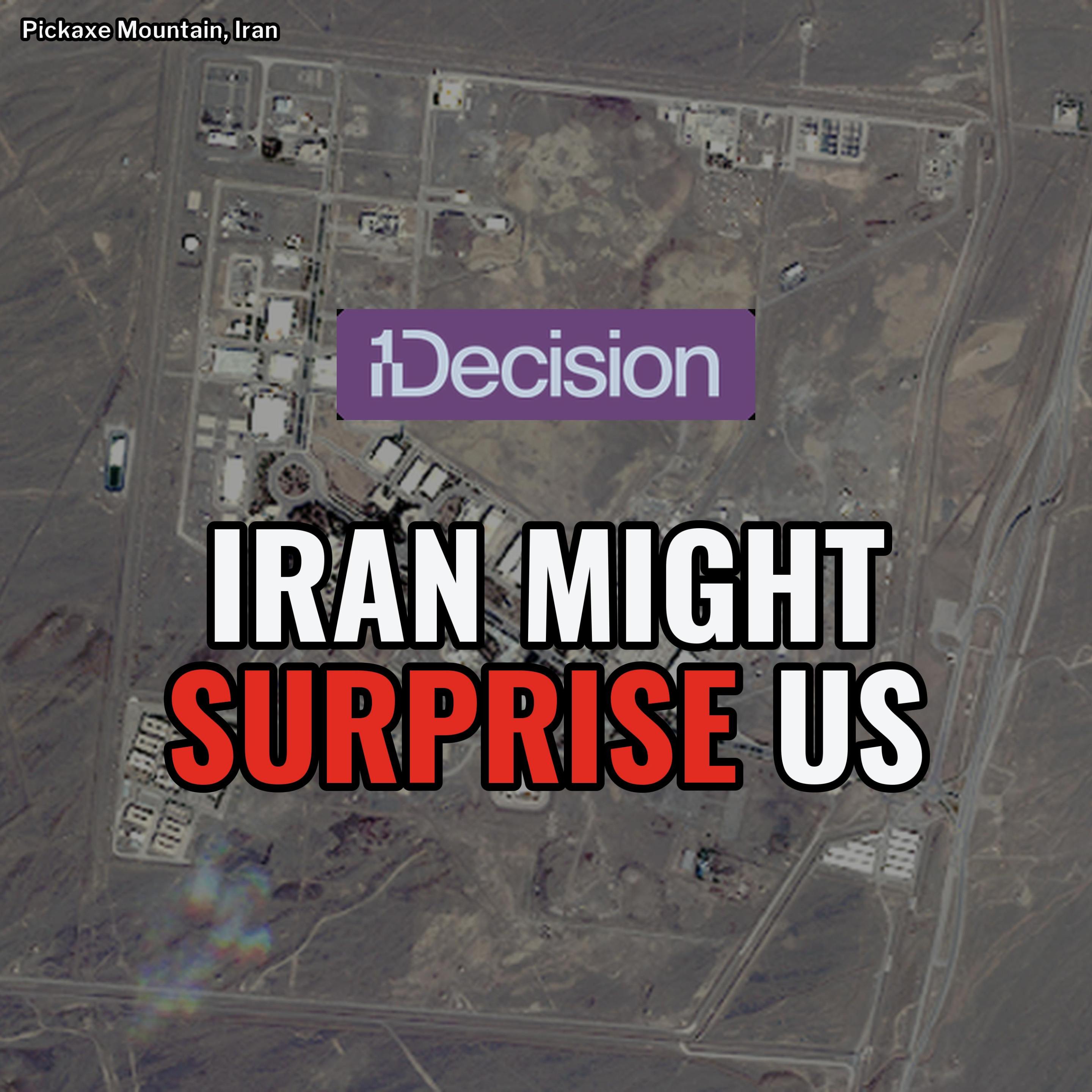
[00:32:05] BREMMER: Well, this is, I mean, look, this is an incredibly stupid, you know, own goal by the Americans. The antecedent, of course, was Trump unilaterally pulling out of the JCPOA, the Iranian nuclear deal, which was functioning perfectly well according to America's core allies and members of Trump's own cabinet in his first term. But because it was Obama's, it was unacceptable to him. And then he decided on the back of the war in Venezuela, the removal of Maduro, the military intervention, that he could do it again in Iran. Turns out, shockingly, Iran is not Venezuela. Trump did not know that. I think he's now sort of learned that lesson. But so here we are eight months in and enormous economic costs and enormous human costs in Iran and across the Gulf as a consequence of all of this completely on Trump and the Israelis. So what's the best scenario? I mean, the best scenario would have been for him to have recognized that early, declare victory, and get the hell out. A little late for that, but that's still the best scenario. The best scenario that is likely is that after the midterms he engages in some additional strikes to show that he can, including on some of the ballistic missiles that have been stockpiled and dug out and drone stockpiles, and maybe some of the nuclear targets like Pickaxe Mountain. And he probably launches off a mother of all bombs or five because he seems to be personally quite taken with that, as I've heard from members inside the White House. And, but these are military targets. There not a lot of critical infrastructure. There are not a lot of civilian casualties and no assassinations. The Iranians respond with something but limited. And then Trump declares victory and the Gulf States do their own individual deals with the Iranians that gives them some money but ensures safe passage through the Gulf and we start to rebuild supply chain and prices start coming down again. Not food, because we lost an entire year of fertilizer and crops, but plastics, you know, sort of, petrochem, oil, gas, you know, helium, all of that. That is probably the best plausible outcome over the next, say, three to six months at this point.
[00:34:41] RAINE: And short of that, at the other end of the spectrum, could it just continue to be an unstable, volatile arrangement with long-term damage to Gulf confidence?
[00:34:55] BREMMER: Well, the worst scenario is that Trump decides to go bigger and hits critical infrastructure after the midterms and does act as Richard suggested in a more unhinged and uncontrolled fashion and that the Iranians in response to that go gloves off on the Gulf allies, which they have not done heretofore, and hit not just energy infrastructure, so prices go way up, but all in an environment where the Chinese are picking up demand and stockpiles are considerably thinner. So we could be looking at 150, 200. And you also see them hitting civilian targets and desalination plants and millions flee the Gulf. That is a horrible, horrible outcome. That's a massive global recession, which we are not in right now. Now, it happens under Trump. So, the reaction to that is that the Democrats are much more likely to win in 2028 and that his precipitous decline in the United States becomes much more immediate. So, I mean, there is an action-reaction function, but nobody should be wishing for this outcome, right? This would be a horrible, horrible outcome. I don't think it's likely. I think that Trump is actually much more contained because he understands, that's why he doesn't send ground troops. Remember, he's threatened, he's threatened taking the oil, Kharg Island. He's threatened ending the civilization of Iran. He hasn't actually, even internally in his meetings, he hasn't really pressed for any of those things. And that implies that he understands that there's no fist in his glove. Kind of like after the Chinese hit him back, Trump can throw a punch, but he has a glass jaw. And he does. It's fairly consistent political impulse on his part that when he's facing someone who is actually tough and has the capacity to hit, he backs down. He backs down. And we see it whether it's with Putin or Xi Jinping or whether it's with the Iranians. And so, I mean, ultimately, I think that matters. Even Elon Musk, you know, I mean, Elon, I mean, it'd be harder to find a Republican insider that has hugged the third rail with a tighter embrace than Elon. I mean, after blowing up with DOGE, remember that? And then he said that Trump was all about the Epstein files and he was all over them, implying that Trump was a pedophile. And then said he was going to start his own and fund his own third party. And yet, you know, months later, he's back in the White House. Why? Well, because he's a lot richer than Trump and he's got a lot of social media presence and he owns X. It turns out that really matters to Trump. So you can get away with a lot with the American president if it turns out that he thinks you're more powerful than he is, right? And that really matters.
[00:37:48] RAINE: Well, the Iranians and the allies that do a good job of showing they can still pack a punch. So I think there's a lot in that.
Ukraine
[00:37:55] DEARLOVE: That could take us on to Ukraine. I think, you know, we talked about the most economically sensitive conflict and I guess if you're in Europe the most strategically sensitive conflict is the war in Ukraine and the extraordinary behavior of Trump in terms of his apparent sympathy towards Putin and I think this is the area in which most Europeans really do part company completely with Trump. Latest statistics indicate the Russians may be losing up to 38,000 a month, unsustainable in terms of boots on the ground but at the same time blasting the critical infrastructure of Ukraine in the hope that, you know, the will of the population will collapse, which if you've been in Ukraine seems to me absolutely unlikely or highly unlikely. So, how do you sort of explain, A, Trump's attitude towards Putin and, B, where do you think this might end up post-midterms, let's say? Are we going to see an adjustment because of a Democratic Congress and Senate?
[00:38:59] BREMMER: It's more about Trump's view on Zelensky and, you know, the fact that Zelensky, in Trump's first term, Trump sees as responsible for his impeachment. So, he really doesn't like Zelensky. By the way, Biden didn't like Zelensky either. I mean, Biden described Zelensky to me as a piece of work. When Zelensky first met Biden as president and basically said, "It's because of you that the Ukrainians couldn't get into NATO." And Biden's like, "What are you talking about?" And he's like, "Well, no, I know that if you supported it that the Europeans would go ahead." And I mean, first of all, the fact that Zelensky, little Zelensky, was talking to the president of the United States that way was very off-putting, right? And Biden was a massive Atlanticist and really supportive of the transatlantic alliance and relationship, but really didn't like Zelensky. So, I mean, the fact is Zelensky is an incredibly courageous leader, but also can be emotional and can be hotheaded, and, you know, is willing to give pretty hard against any foreign leader in service of what he wants. That has rubbed Trump a very wrong way. And so, Trump is more than willing to throw Zelensky under the bus, as we saw a year ago after they had met at the White House when he threw him out without lunch and suspended intelligence. So what we see happening now is Trump much less popular with an economy that's doing very badly, about to get destroyed in the midterms and he's trying to find anyone to blame because it can't be Trump. And so Zelensky is part of that blame because he wanted Zelensky to stop hitting the refineries and he said that privately to Zelensky and he said it publicly to Zelensky and Zelensky refused. So Trump said fine, screw you. I'm done. And that's it. That's where we are. And Trump has always, again, been more willing to engage with authoritarians that are strong. And Putin is a stronger authoritarian with no internal, you know, sort of significant opposition that matters despite the unsustainability of the casualties from a western perspective. I don't think that Trump is a Putin agent. I don't think that there is any intelligence that Putin has on Trump. It's Occam's razor for me. You don't need that explanation to explain why Trump would rather just do a deal with a stronger Putin, who also could help enrich Trump if the business could get turned on. Enrich Trump and his family and, you know, others around Trump's orbit who have been trying to get deals done in the Arctic and on Nord Stream, too, and a bunch of other areas. I think that that's all you need to explain the behavior as long as you understand that Trump doesn't care how much territory Ukraine loses. Trump wants the war over. He doesn't care who's responsible for the war. He doesn't care the Russians initially invaded. Doesn't bother him in the slightest. He is in disagreement with almost every European, not every, but almost every European on that issue. He's much closer to Gerhard Schröder than he is with any existing European leader. And I think if we treat him as Gerhard Schröder and we understand that, you know, sort of understanding of the transactionalism that this is about money, this is about me, this is about me being able to solve a war that I promised I was going to do and here we are five years into this war and it's still not solved and that makes me look bad. So I need the war over. It's much easier for me to beat on the Ukrainians. Let's face it, Trump will be much more likely to say the war is over if he forces the Ukrainians to surrender. It's the easiest way for him. It's not like the transatlantic relationship matters to Trump. It doesn't. I mean, Biden, the criticism of Biden, especially in the early days, was that Biden was not giving a lot of military support to Zelensky. He was very reluctant to do so. And one of the reasons for that is because Ukraine didn't matter that much to Biden. What mattered to Biden was the European relationship. And so he wanted to make sure that the Europeans and the Americans were in lockstep every morning. And if that meant that the Germans were a little bit more cautious, you know, than the French, for example, then that meant you were going to take a lower common denominator to keep that European-American relationship intact. And if that meant the Americans were going to go slower, they were going to go slower. That was fine because the Ukraine did not matter that much. And what's truly interesting about Trump is he's the first American president and actually Europe doesn't matter. The only thing that matters is me getting credit for ending the war.
One Decision to Watch
[00:43:51] RAINE: So we're going to ask you the question that we ask all our guests, which is what is the one decision coming up that you're going to be watching closely. I realize we've got a huge event coming up in the elections, in the midterms next week, but what would be the one decision that you're watching?
[00:44:04] BREMMER: I want to see when there is real pressure on AI valuations coming in the coming months, when suddenly it looks much harder for the AI leaders, to what extent do they work together and to what extent do the long knives against each other start coming out. That's the decision that I am most interested in, or should I say the series of four decisions: Sam, Zuck, Dario, and Elon. That's what I'm watching most closely.
[00:44:41] RAINE: Ian, thank you. That's the power perhaps we should all be watching. That was fascinating. Ian Bremmer, thank you very much indeed.
[00:44:48] BREMMER: My pleasure, John. Richard, really enjoyed joining you.
[00:44:50] DEARLOVE: Thanks, Ian.
Post-Interview Discussion
[00:44:51] RAINE: Well, Richard, I found that a really bracing appraisal of what's going on inside the US and indeed what might go on after the midterms. What was it that struck you?
[00:45:00] DEARLOVE: Well, I guess what struck me was the profound cynicism of his analysis of Trump. If you can call Trump as a statesman, maybe we shouldn't even use that phrase, Trump as the fact that he's president of the United States. But the sort of cynicism of his analysis of Trump's motivations, I think if you're non-American and not, as it were, thoroughly engaged in Washington politics, is pretty terrifying. I think as a non-American I would never go that far because one doesn't have enough of an inside picture. Ian presumably does talk to a lot of people in DC around the president, whether they're in the administration or not. That I found fascinating but actually thoroughly depressing. As someone who is quite an admirer of the United States as a country and as a civilization, I spent a lot of time there, went to school there, you know, I've served there. I've been there privately. I've got lots of American friends, because a lot of my life is tied up in things I do in the United States and I'm a big admirer of the country overall, and to see him talk about the country being in the hands of a personality like that, and a lot of it was about Trump's personality and behavior, is thoroughly depressing. Even if he's only half right, I'm still thoroughly depressed. But what did you feel, John?
[00:46:38] RAINE: I share some of that depression. I thought the cynicism, the callousness that he attributes to Trump is really disturbing, gives out onto a complete mismatch of interests, objectives, values between Trump and Europe. I also found fascinating too, but equally unsettling, his views on how the populist Republican right might reinvent itself, that the populist agenda has not yet been satisfied. It's still out there and that might stay with us for a while. Not, as he said categorically, in a neo-Trumpian way, but nonetheless in a way that perpetuates a lot of the traits of right-of-center US thinking under Trump. So I found that sort of medium time look at what US politics might be. I thought that was both very realistic, but also that's quite something for Europeans at least to get their heads around.
[00:47:51] DEARLOVE: Yes, I agree. I'm not sure I agreed with him about Vance. Because I think Vance has a track record which shows he can blow with the political wind and I'm sure he has ambitions to be the Republican candidate. The question is, you know, would he be a thoroughly populist candidate as Ian was suggesting or would he incline more to the, maybe it's wrong to say Republican center, but something which would be more recognizable as traditional republicanism. The other thing I disagreed with Ian about when he said, you know, if you're talking to an American in a bar and what do you do? The real question is how much money are you making? I think that shows quite a cynicism about his analysis of his fellow countrymen. I do actually have a high opinion of Americans than that, a significantly higher opinion. And there is a civic morality about the United States which I've certainly experienced personally which I think is much stronger than Ian Bremmer was suggesting. I just don't think that all Americans are worried only about, you know, making a fortune. But I mean, okay, he, his political commentary was hugely interesting, hugely entertaining, hugely depressing, and obviously hits a lot of bull's eyes, and I don't, you know, so I don't part company with him entirely.
[00:49:28] RAINE: Talking of Americans in bars, I was in a bar with a lot of young Americans who were studying in the UK and they were full of civic engagement responsibilities. You put it so well, civic morality. They're also getting steadily full of Scottish beer as well at the time, but it was very heartening insight into the next generation. And you and I were talking about these generational-based movements that are occurring all over Europe at the moment. You wonder why there won't be just something of that in the US, too.
[00:49:56] DEARLOVE: Yeah. And maybe it will assert itself and maybe, okay, democrats for a socialist America, whatever they call themselves, are pretty disconcerting given the nature of American politics and the fact that you haven't really had, let's say, a viable socialist party of any consequence, and suddenly you have this movement. But I just wonder whether it's more about civic responsibility than it is about left-wing politics. And the one thing that has always impressed me about the United States, which he ignores in his analysis, is the strength and integration of local government and local communities. And, you know, if you're at the sort of level of the township in America and you live in an American town, the way it's run, okay, there will be disagreements and there will be problems, but overall it's a pretty impressive way of conducting, you know, day-to-day life. You sometimes forget about that when we're talking about Washington, DC.
[00:50:55] RAINE: Yeah, it's true. You can. And indeed at the midterms, it's not just members of Congress that are being elected. As ever in the US, there's a very long list of other officials who will be elected. The Democratic habit goes deep.
Richard, thank you very much. That's all for this episode. Please do join us every Thursday for new episodes. Subscribe to One Decision so you never miss out on a conversation and leave us a comment on YouTube. Email us at hello@onedecision.com. And do check out onedecision.com for commentaries and explainers that you might have missed. I'm John Raine. Thank you for listening.