Hosted by Sir Richard Dearlove (former MI6 Chief) and co-host John Raine (International Institute for Strategic Studies)
Guest
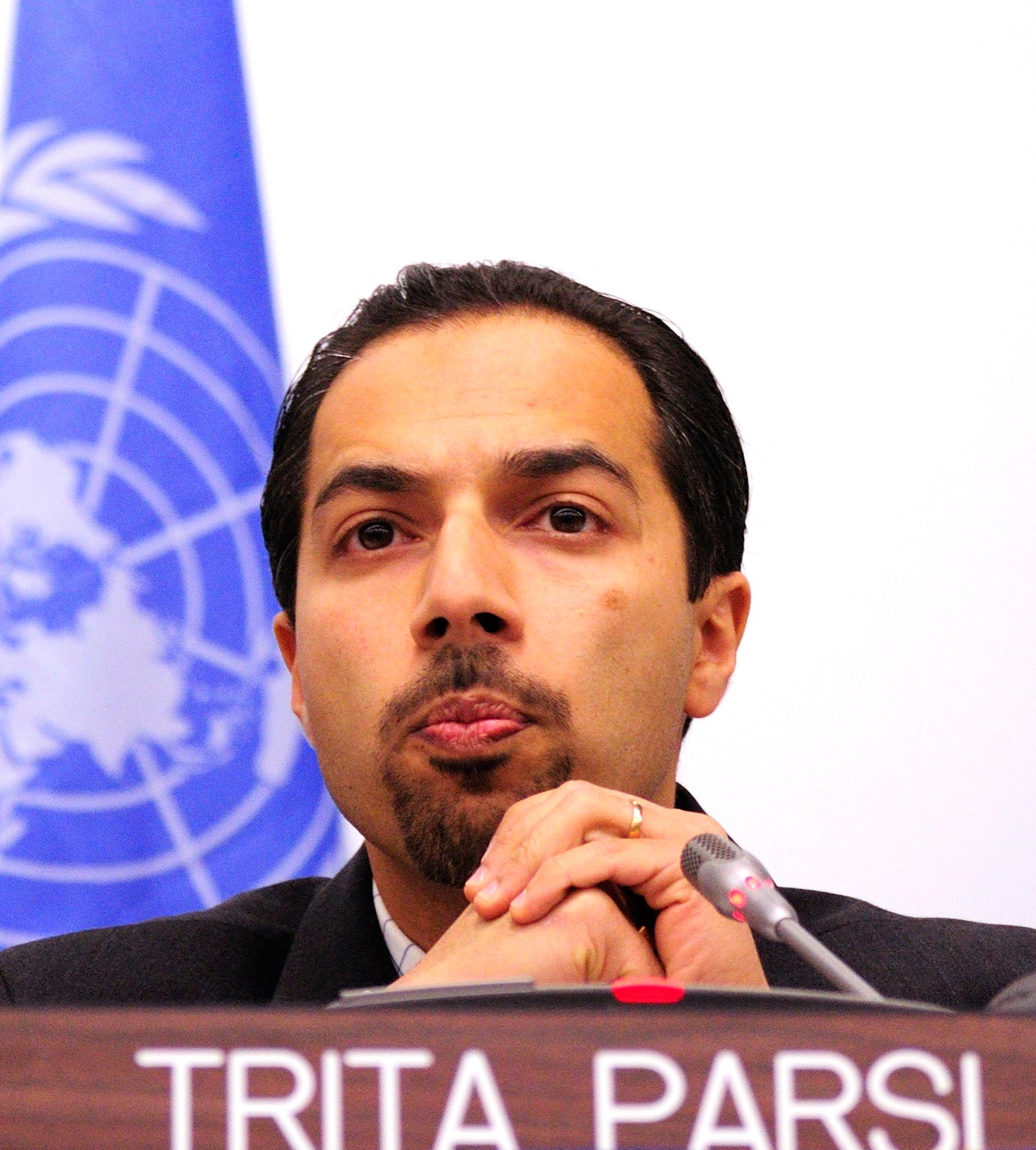
Trita Parsi
Trita Parsi is co-founder and Executive Vice President of the Quincy Institute for Responsible Statecraft, co-founder and former president of the National Iranian American Council, and author of four books on US foreign policy in the Middle East.
Born in Iran, Parsi grew up in Sweden after his family fled the country and later worked on the staff of the UN Security Council. He now writes about Iran and US foreign policy on his Substack, tritaparsi.substack.com.
Episode Summary
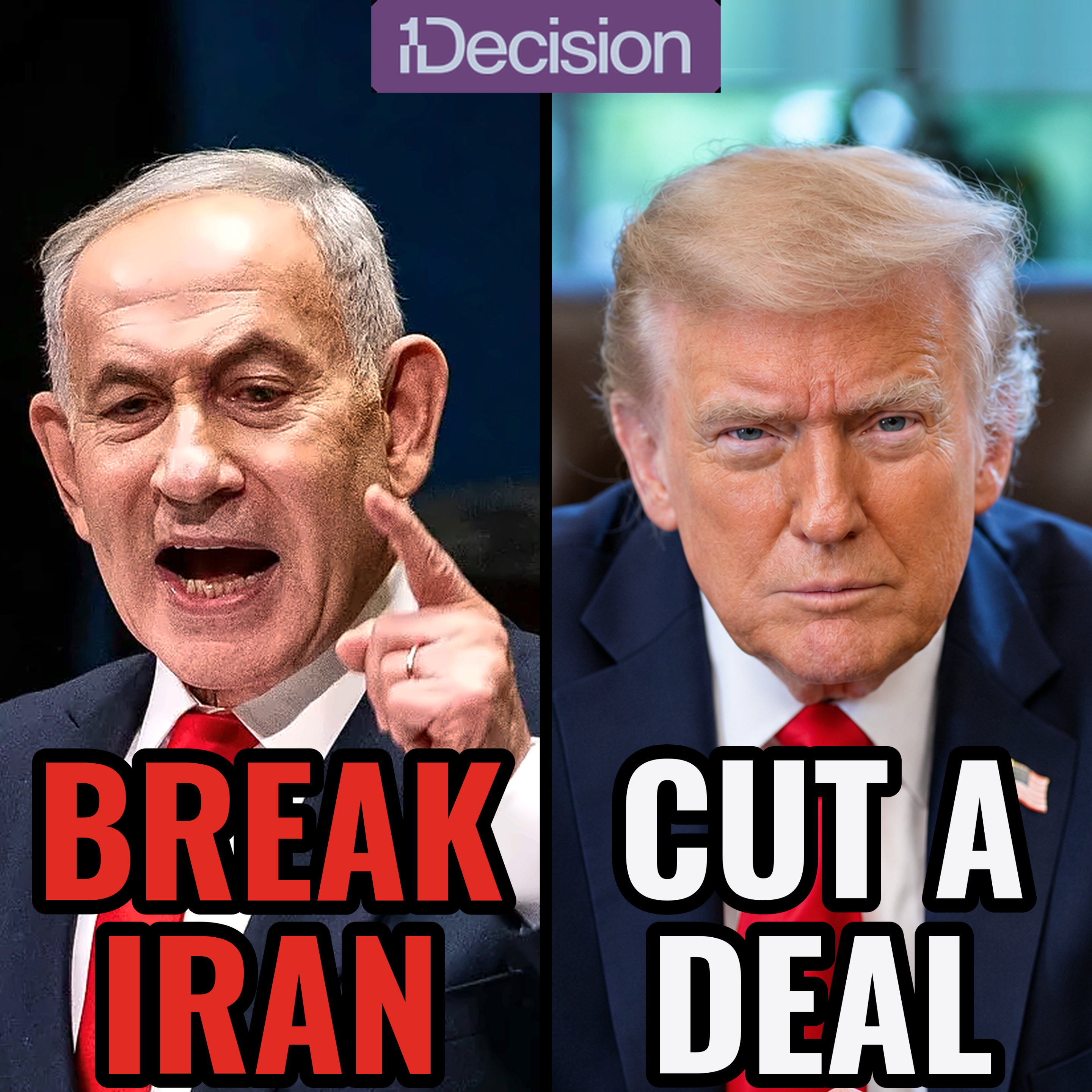
Will Trump make a deal with Iran, escalate, or walk away? Trita Parsi, co-founder and Executive Vice President of the Quincy Institute for Responsible Statecraft, tells Sir Richard Dearlove and John Raine that he puts the odds of a deal at less than 50% and that escalation is still possible. The most likely outcome, he argues, is a third option: Trump quietly lets the blockade and sanctions decay without any agreement.
One of our first guests after the Iran war began, Parsi told us in March that Tehran would drive up energy prices to swing the midterms against Trump. He returns to explain why the next four weeks are key, what “finishing the job” would mean for Trump, how Iran is cushioning the blockade, why the new Supreme Leader has rejected the gray zone between peace and war, and whether the Gulf states and China could anchor a new regional security order. Asked which decision he is watching most closely, he picks whether Pete Hegseth resigns or is fired.
In this episode:
(00:00) New Supreme Leader Rejects Gray Zone
(00:46) Trita Parsi Returns to One Decision
(01:54) Trump Three Iran Policy Options
(05:22) Nuclear Enrichment as Iranian Leverage
(08:50) Trump Legacy and Iran Vindictiveness
(13:42) Military Escalation Warning Signs
(15:28) What Finishing the Job Means
(17:36) Israel Mowing the Lawn Strategy
(21:58) Gulf States Pushback Against War
(23:44) Iranian Economy Under Blockade
(28:37) Why Status Quo Is Unsustainable
(32:31) Houthis and Regional Ceasefire Challenge
(37:04) Future Gulf Security Architecture
Show Notes:
Trita Parsi on Substack | tritaparsi.substack.com
Listen & Subscribe
- Watch on YouTube
- Listen on Apple Podcasts
- Listen on Spotify
Transcript
2026-11-12
Cold Open
[00:00:00] PARSI: The new Supreme Leader, the son of the previous Supreme Leader, has issued a statement in which he says there will either be peace or there will be war, but there will be nothing in between, which is a rejection of the policy that his father actually pursued, in which he de facto was pursuing neither peace nor war, just some sort of a gray zone in between, which is kind of where Trump is right now. Neither peace nor war, some gray zone in between. But the new Supreme Leader has actively, explicitly rejected that.
[00:00:26] RAINE: Welcome to One Decision, conversations about intelligence, statecraft, and the forces that drive world politics with people who have been in the room and on the ground. I'm your co-host, John Raine.
[00:00:42] DEARLOVE: And I'm Sir Richard Dearlove, the former chief of MI6.
[00:00:46] RAINE: Don't forget to subscribe and comment on who else you'd like to see on our show. We always welcome your suggestions. We are facing possibly a turning point, we shall see, in the war on Iran. The guest today is Trita Parsi, one of the first guests we had on the show after the Iran war started. And he told us what to expect, that the regime in Tehran was solid and built to survive confrontation. The regime would focus on driving up energy prices to swing the midterms against Trump in search of diplomatic leverage. He's now back to tell us what might happen next. Parsi was born in the Shah's Iran. His family fled to Sweden. He worked on the UN Security Council staff. Now he is a fixture in Washington, where he co-founded the Quincy Institute for Responsible Statecraft. You can find out more about his thoughts on Iran and the world at tritaparsi.substack.com. Trita Parsi, welcome back to One Decision.
[00:01:52] PARSI: Thank you so much for having me.
Trump Three Iran Policy Options
[00:01:54] RAINE: I guess the question everyone wants to know, to start big, is are we about to fork left for peace or are we going to fork right and go back to military confrontation?
[00:02:06] PARSI: I think actually we might do neither. Trump, I think, would love to get a deal, but he's also learned now that making a deal with Iran has a huge political price in Washington. He paid that price back in June. He actually has a very bad memory of the MOU, because the MOU only would lead to nuclear negotiations after 60 days, during which they would have to sort the issue of regional ceasefire and the status of the strait. For Trump, he paid an immediate political cost for striking a deal, but the political reward that it was supposed to bring about was deferred at least another 60 days. He does not want to have that experience any longer. He wants to make sure that he gets to the nuclear issue as soon as possible, if not immediate, because he's not known for being someone that is okay with deferring any reward. But that's not simply possible. He's not going to be able to get a deal in which, for instance, he will get massive nuclear concessions from the Iranians up front. It's just not going to happen. Now, at best, they have compressed those 60 days to two days in the current package on the table. But I'm still not convinced that Trump is in a mood in which he is capable of saying yes to it, given all of the different other repercussions it has. As you all recall, the MOU was criticized by many in Washington, including from inside his own cabinet, of having essentially been a capitulation document. And reality is, whatever deal is struck between the United States and Iran is going to reflect the reality of what happened on the battlefield. And that reality is not particularly flattering to the United States. So because of all of these different reasons, I still find it less than 50% that Trump will go for a deal. On the other hand, an escalation would be devastating. He's threatened to do it several times. He's backed off. We are still not out of the woods. He may still go down that path. But if he doesn't, I think it's more likely that he will go for a third option, which is essentially to walk away, but without retaining the blockade in place. Instead, you would see a slow, almost imperceptible decay of the blockade, of the sanctions regime. Strong enough so that the US can continue to say that the sanctions are in place, but weak enough so that the Iranians do not have any incentives to challenge the new status quo. And that will then be a scenario in which there is no real deal, but also there is no real risk of going back into war. Whereas if he keeps the blockade, which is an act of war, the United States would just continue to be on the verge of a major war with Iran continuously. And that would defeat the very purpose of the walk away in the first place. So the only walk away option that actually is effective and could work, although I personally think it's suboptimal to a deal from a US national interest perspective, but it has the benefit of him not having to make a deal that he will be criticized for. It has the benefit of it not manifesting the failure of this war through a deal that so clearly reflects where the new balance of power is. So I suspect that that may actually end up becoming the most likely scenario.
Nuclear Enrichment as Iranian Leverage
[00:05:22] RAINE: Trita, that's a very interesting third possibility, almost the kind of, as they call it, the Irish goodbye, where you just depart without announcing it. It's a very interesting possibility. I want to pick up on one thing, which is the nuclear file itself. Trump made a great deal out of this, and you referenced it as being something on which he still feels he needs to get a deal. And in his language, that deal's got to be better than the JCPOA, so on and so forth. Do you think there's a possibility that he actually quietly walks away from that too? Because the message in the midterms was not, Mr. President, you haven't done enough about the nuclear, was, Mr. President, you're ruining us financially through pump prices and the inflation that's thrown from that. So do you think that's an option for him? Or is he going to really hang in there and possibly even use coercion to get a result on the nuclear issue?
[00:06:20] PARSI: Look, the nuclear issue is absolutely central to him right now. He wants to get to 60% and he wants to get it up front, which I think is a reflection of him not understanding what the actual balance looks like. There is no reality that I know of in which the Iranians would give up their 60% up front in any deal. And for the reason for it is giving up the 60%, which is the main leverage the Iranians have at this point, is an irreversible concession. The Iranians are not going to get that 60% back. In the JCPOA, they gave up 98% of their low-enriched uranium. It was sent to Russia. The JCPOA has collapsed, but the LEU is still in Russia today. So it is, by definition, irreversible. None of the measures Trump can put on the table up front have an equal quality of reversibility or irreversibility. And this is an important principle that was established already back in the JCPOA negotiations, that any concession that has a reversible characteristic would be matched by one that is equally reversible. The most irreversible, fitting concession the US could give is something that Trump does not control, which is lifting sanctions in Congress. Congressional sanctions can only be lifted by Congress. They cannot be lifted by the president. Moreover, it is a process that would at least take nine to 12 months, if it ever actually would be successful. So you can't front-load such a concession. But he's asking for a concession of that nature up front. And this is part of the reason why there is a bit of a blockage in the negotiations. And by the way, the Iranians will have to give some concession on the 60%. It's impossible to see a deal in which the US agrees to lift sanctions or other types of measures without the 60% being addressed. But in what phase of the negotiations? How would it be synchronized with other concessions from the other side? That's a very tricky thing. Now, if Trump could get this, if there is a pathway for him to get it, I have no doubt in my mind that he would be willing to pay the political price, because he would be able to say, I have truly ended the Iranian nuclear program by taking out the material that the Iranians potentially could use for building a weapon. But getting to that point is extremely difficult. And as a result, I lean towards the higher likelihood, not certainty, but a higher likelihood that some form of a walkaway option may end up being the path that he chooses.
Trump Legacy and Iran Vindictiveness
[00:08:49] DEARLOVE: I mean, post-midterms, Trump really now is into the issue of his legacy, and that legacy is going to be determined probably by foreign policy rather than domestic policy. If you analyze the issues, there are three, I think, that will determine that. One is Venezuela, probably Cuba, and finally Iran. If the IRGC, you know, cocky IRGC can sit there and say to the world, you know, in effect, we won, which almost any deal that looks likely at the moment would allow them to do. I mean, this sort of tarnishes the whole Trump legacy. Does this make him more aggressive? Does this make him more likely to compromise? I mean, the possibility of vindictiveness probably is enhanced at this particular point in time.
[00:09:47] PARSI: I think you're quite right about that. And I've written about that on my Substack as well, that, you know, there is that psychological element this time around that did not exist back in February. In February, there was another psychological element, which was hubris. Because of the success in Venezuela, he was much more inclined to fall for the Israeli line that this is going to be super easy. It's going to take no more than 100 hours. Now, the psychological element that is really characterizing the situation is his sense of vindictiveness, his anger at what the Iranians have done to his presidency. He believes that the Iranians have deliberately dragged out negotiations to the midterms in order to destroy his presidency. And he believes that because the current Supreme Leader's daughter was killed, wife was killed, that there is a vindictiveness on the Iranian side that essentially will not allow for Trump to get any type of a face-saving exit out of this. And that all of that, as you said, may very well push him in the direction of an escalation. This past week, there was a meeting in the White House in which military options were presented to the president, but he chose not to take any of that. And I think there's been a bit of an atmosphere created ever since in which a lot of folks are drawing a sigh of relief, but potentially also miscalculating and thinking that just because he decided against it last week, it means that the risk of an escalation is truly receding. I'm not seeing clear signs of that. I don't think we have reached that inflection point yet. I think if nothing happens in the next four or so weeks, that's when we can talk about an actual receding of the risk of the war. And I say that because of certain deadlines that are going to start limit his maneuverability. You have the December 10th deadline of the US Congress having to renew the budget for the US government. And in that, there is now massive pressure by senior Democrats that there has to be language that none of the funding can be used for the Iran war. It will not in and of itself immediately prevent them from doing anything, but it will be a marker that the next Congress, only a month later, can start enforcing. Moreover, you have the situation in Israel, in which within a couple of weeks, we may have a new Israeli government led by Eisenkot. I don't think that the Israeli broader calculation vis-a-vis Iran will have changed. I think they still see Iran as an enemy and a country that they're in conflict with. But whether that conflict has to manifest itself in open warfare and a regime change agenda on Israel's behalf is not necessarily a given. Moreover, though Trump and Netanyahu do not have the best of relations, they don't seem to like or trust each other, they know each other and they know how to work with each other. Whereas Eisenkot, as I understand, doesn't even speak proper English. So there will be a huge learning curve for that relationship. All of these things are not prohibitive in the sense that they will stop the war, but they will complicate matters. The maneuverability of the president will start to shrink dramatically. If he wants to go for that escalation, his best couple of weeks are just right now, in the next three or four weeks. And add to that, incidentally, the risk of impeachment of Pete Hegseth. It will be difficult for him to start this if he doesn't have a Secretary of War. And incidentally, Pete Hegseth has been one of the elements inside the administration that has pushed the most for further escalation.
Military Escalation Warning Signs
[00:13:08] DEARLOVE: I'm sure you're aware, Trita, but this morning, the American tanker aircraft based here in the UK were dispersed, basically, to other airports, mostly, I think some in Scotland, but mostly on the European continent. It's being treated by the media as a terrorist threat, you know, destruction of capital aircraft, which would be a big media win, if not a strategic win for the Iranians. But on the other hand, if you're about to mount an attack, it's a very good idea to disperse your assets and not have them all concentrated on one airport, particularly given their vulnerability to drones and things. I mean, maybe you read it similarly to me. I sort of took it as an indication of an increased likelihood of an attack rather than response to a terrorist threat, bearing in mind that Trump's pretty good at deception in terms of saying things that are meant to mislead you.
[00:14:09] PARSI: No, this is precisely why I'm very careful not to think that we're out of the woods yet, just because the volume of threats or the language or other indicators have become more sparse. I agree with that. That in and of itself does not mean that the situation has fundamentally changed. And as you pointed out, the movement towards adding more assets to the region have not taken a pause. We're seeing a continuation of that. And what happened in the UK may very well be part of that. As you said, it's unclear what the actual motivation is for this dispersement of these aircraft at this point. So I'm not seeing any hard data points that convinces me that he has truly chosen not to go in the military direction. And frankly, I don't think there will be a complete reduction of that risk until there either is a deal or some sort of other arrangement that really indicates his disinterest to move in the direction of a military action, combined with the limitation of his maneuverability in a couple of weeks. So I would say that for the next couple of weeks, the risk is still there, even if the signs, we're so used to seeing such transparent signs of escalation, it's not necessarily going to be the case.
What Finishing the Job Means
[00:15:28] RAINE: You mentioned the military options that have been reportedly put in front of the president. We've all heard him talk about finishing the job. The question becomes, what is the job that he wants to finish? And what might be new in those military options that means this time around he can finish it? So if it's regime change or regime destruction. Well, you could always argue that has been tried with the combined force of the two most sophisticated, combat-experienced armies outside of Russia and Ukraine, and it didn't work. And if it is the economic squeeze, what does that mean? Are you now going to start destroying the economic civilian infrastructure? Or are we back to the nuclear? Is that the finishing the job? So what might be in that package? And what might be its purpose? I should very much take your line that we're definitely not out of the red risk area yet. It's a question of if that risk materializes, what does it look like?
[00:16:41] PARSI: So I think it's important at this moment to recognize that for Trump, the truly finishing the job means that he can declare victory. And what the Israeli argument has been is that the reason why he didn't succeed in bringing down the government or winning in the previous two rounds was because he was not willing to exercise the threats that he actually issued. He threatened to bomb Iran's oil infrastructure. He didn't. He threatened to strike at desalination plants. He didn't. He threatened to strike at critical infrastructure. He didn't. Let's be clear also, all of these things would be clear war crimes, but he didn't do it out of a fear of the Iranian retaliation, which would have been swift and it would have been targeting the oil infrastructure in the GCC countries, and we would have had a much, much worse energy crisis than we currently are suffering.
Israel Mowing the Lawn Strategy
[00:17:36] PARSI: But the Israeli argument is, that's why you didn't win, because you weren't willing to go all out. And in the second round, you were not willing to do so either, and nothing changed. I mean, it's really going to be an interesting study in a couple of years to understand what on earth was the second round of that war for. Because there was no new strategy, no new intelligence, no new method, nothing. Just the same thing as last time with the same negative result. Now, the Israelis wanted to go all out earlier on. They were the ones who struck at the desalination plant in Qeshm Island. They were the ones who struck at the refineries outside of Tehran that made it impossible for people to breathe in Tehran for two days. And the US was not particularly happy with some of those steps. But they're telling him that the only way to win is to do this. And yes, the Iranians will strike back. But if you kill enough Iranian senior officials, and if you strike hard and fast enough, the Iranian ability to strike back will be limited to a couple of days. And even though that cost will be very high for the global economy and for the GCC countries, it will be worth it if at the end of that process you have destroyed the Islamic Republic. That's essentially the Israeli argument. There's a reason why there's plenty of people inside the US government that are increasingly vocal against it. Because similar to the original Israeli argument that just kill the Supreme Leader and the Islamic Republic will collapse, this is fanciful. It's based on some sort of a mythology, and it's going to be devastating for the entire world, even if it works. And it most likely will not. But it's important to understand from the Israeli standpoint, even if it doesn't work, it will have worked from their vantage point. Because all they want to see is to see Iran be bombed back a couple of decades. As the Israeli defense minister himself said on Israeli TV, we need to bomb them back 40 to 50 years. At one point, he said the Stone Age. That is part of the broader Israeli strategy in the region, in which he doesn't believe that there is an actual coexistence and peace with many of its neighbors. All he can do is to just constantly keep them weak, bomb them every once in a while in this mowing the lawn strategy. And when you have done that, you give yourself a couple of years, perhaps a decade of some sort of a safety, and then you have to go back at it. But Iran is not Lebanon. It's not Syria. It's not Gaza. So it's not something that Israel alone can mow itself. It needs the United States to do so. So when the rest of the world looks at the horrific images of Gaza and we see the destruction, we see horror. But for many Israelis, they see strategic victory, because they set them back. Even Benny Gantz, who's supposedly on the more progressive or leftist side of the spectrum in Israel, in his campaign video for his bid to become prime minister, I think it was 2017 or '18, it showed footages of the damage he had inflicted on Gaza, because that in and of itself is the victory, is the strategic objective. I've never seen a single American politician or military official put up pictures of destruction in Afghanistan or in Mosul and pointed that as if that is the metric of success. But here's the huge difference between the American thinking and the Israeli thinking. And so from their end, if Trump does this, even if it fails to achieve Trump's objective, it will still achieve the Israeli objective of setting the Iranians back.
Gulf States Pushback Against War
[00:21:02] RAINE: What it will achieve also, in the tragic logic now of this conflict, is commensurate damage to the Gulf economies, who will be the target. I happened to be in Manama for the IISS Manama Dialogue a couple of weeks ago, and Gulf leaders were absolutely clear they did not want another round of hostilities and that they don't subscribe to the idea that you can destroy or topple this regime through military force or coercion. So it just makes me wonder where it all nets out in the White House, with the Israelis, the strong advocates for finishing the job, and those who are likely to be the victims, the Gulf Arabs, doing the best they can. We've seen very senior visitors to Washington recently to put the counter-argument. I mean, are they equally matched? Is it finely balanced?
[00:21:58] PARSI: They're not equally matched, of course. And I think it should also be noted that from the standpoint of at least some Israelis, that added damage to the Gulf economies is perhaps a bonus rather than a cost. Now, when it comes to the balance between where the GCC states are and their push and the Israelis, clearly it's, you know, the Israelis have had the upper hand for quite some time. But at the same time, their credibility has really taken a huge hit. Not just in the broader American society, on the American left and on the American right. Trump himself, in an interview with CBS, admitted that Israel is now unpopular amongst Americans. This is an astonishing statement, but it is also a true statement that has happened. The Gaza genocide is the key reason as to where things are where they are on the American left. But the Iran war is the key reason as to where things are where they are when it comes to Israel's standing on the right. The anger on the American right for Israel having pushed Trump in this direction, having, frankly, destroyed his presidency, destroyed his domestic political agenda, is really tangible at this point. And despite all of the different challenges that exist or has existed in Washington in terms of sensitivities about criticizing Israel, a lot of that is at this point gone, because the barrier has been broken. And we saw itself that Trump himself, a day or two before the midterms, thought that it would be a good political idea to announce that there would no longer be any military aid to Israel. Now, whether that is true or not, whether it's going to be implemented, let's set that aside. It's the point that something like that was said a day or two before the midterms because it was considered to be a positive political message tells you something of where the American public is right now in Israel.
Iranian Economy Under Blockade
[00:23:43] DEARLOVE: Trita, how badly is the Iranian economy hurting now as a result of the Bessent sanctions? I mean, they do look to have been much more damaging than previous sanction regimes. And with the blockade as well of Iranian energy exports, well, Iranian exports generally, the situation internally must be pretty desperate. I mean, what's your reading of that? Is it having any effect on the determination of the IRGC leadership?
[00:24:18] PARSI: So the economic situation in Iran is undoubtedly very, very bad. The blockade has undoubtedly added a tremendous amount of pressure to the economy. However, it's important to note it does not appear to be as bad as I think Bessent is describing it, and perhaps most importantly, even if it was, we have seen absolutely no signs that that type of economic pressure would lead to the Iranians becoming more flexible rather than becoming more aggressive. If the blockade actually was far more effective than it is, and I'll go into why it hasn't been as effective, but if it had been that effective, you would have seen the Iranians escalate throughout the region. Far more likely that they would have gone down that path than to go to the table and offer concessions to a person that they absolutely do not trust and who they do not believe is going to give them the sanctions relief that they're asking for. Showing flexibility because you want sanctions relief necessitates that you believe that the other side actually will be able to deliver it and sustain it. Because of the massive mistrust between the US and Iran, which goes both ways, that trust doesn't exist. And as a result, pressure doesn't automatically translate into a consideration of a more flexible option. But I think it's also important to understand that whenever these type of sanctions are imposed, and particularly when they are very painful early on, the Iranians tend to find ways around that in relatively short order. And that is also the case right now. There's a reason why there's a relatively high volume of oil coming out of the Gulf right now. The Iranians are shooting at some of the ships, but not shooting at all of those ships. Those ships are paying huge insurance costs and other types of the fees, and a lot of those fees are actually going to the Iranians. For ships that are not getting shot at, the open secret in the region right now is it's because they have paid off the Iranians. And the Iranians are right now collecting money based on other countries' oil at a far higher rate than if there had been an agreement on service fees to transit the Strait of Hormuz. And that is then cushioning the Iranian economy that counters the pressure that has been put on the economy through the blockade. So even though this is a cost to the Iranians, it is not working out the way that the United States thought that it would. And at the same time, I do think that the administration itself was well aware of a lot of these different things. But if it were to try to really clamp down on that, two things would happen. Oil prices would go up further, which is bad for the US, and the Iranians would escalate in the region. So this whole thing, this belief that this blockade would be some sort of a game changer, is this perpetual American search for a knockout blow against the Islamic Republic. And after 47 years, plenty of fantasy knockout blows have been dealt with, but not a single one of them have actually proven to be a real knockout blow, and neither was this one.
Why Status Quo Is Unsustainable
[00:27:27] RAINE: I think a lot of long-term Iran watchers would agree with you on that analysis. What you're saying about the tolls, so the revenue extraction that the Iranians are managing right now, that on the one hand, on the other hand, you've got, as it were, stabilizing volumes coming out as far as the market is concerned. Do you think it could be a kind of connivance in the status quo, and that it's extremely messy and precarious arrangement, just because it's manageable by all sides, that it stretches on and that we don't have that point at which we return to something that looks like normal commercial traffic and tolerably open seaways? I mean, it's a gloomy outlook, but just the sheer workability of this mess might mean that all the parties decide, well, it's not in our interest to take the risks and to hazard another knockout blow, which is to let this thing run on. It sort of plays into your theory that Trump might want that and then gradually just disinvest from it.
[00:28:37] PARSI: Well, but it's a huge difference, though. If you gradually disinvest from it and you stop implementing the blockade and the sanctions, it changes the pictures dramatically. But if you're keeping this current status quo and there is a blockade, with all of its flaws and holes in it, nevertheless, it is not sustainable for almost any party. It is not sustainable for the Iranians to constantly be on that verge of war with the United States. In fact, it's a very interesting shift that has taken place in the Iranian security establishment. The new Supreme Leader, the son of the previous Supreme Leader, has issued a statement in which he says there will either be peace or there will be war, but there will be nothing in between, which is a rejection of the policy that his father actually pursued, in which he de facto was pursuing neither peace nor war, just some sort of a gray zone in between, which is kind of where Trump is right now. Neither peace nor war, some gray zone in between. But the new Supreme Leader has actively, explicitly rejected that. So I don't think it's sustainable for the Iranians to stay at this high level of alert. Secondly, this is not sustainable for the Arab states in the Persian Gulf. This is too costly. They're eating a lot of the costs of the additional risk of getting the oil out of the straits, of taking much longer routes to get to the Asian markets, the lack of investment, the lack of tourism, all of these different things that are happening because of the instability of the situation. And it's not sustainable for the United States. The cost of the United States doing all of these military escorts of tankers getting out and all of these sorties of the airplanes, making sure that the skies are safe, that they're not going to attack by drones, etc., is simply not sustainable. And on top of that, it's also burning a lot of fuel. And fuel is the issue at the very core of this. So there's an irony in all of this. Let me add another irony. This administration is susceptible to the argument that the United States should actually play a much smaller role militarily in the Middle East, because it shouldn't shoulder the cost of security for the region. China is importing 40% of its oil from the region. And the United States has essentially been subsidizing Chinese oil imports for more than two decades now by shouldering the security costs of the region. Well, whatever that security cost was before, it is dramatically higher now because of this blockade and because of all of the escorting that the US is doing. So it is not sustainable for the US either. So that's why I'm saying that the only way that walk-away option actually potentially could work, and I want to be very clear, I think it is a suboptimal option, I explained why later, but the only way it could work is if you actually withdraw the blockade, the Iranians withdraw their de facto, their closure of the strait, the sanctions essentially turn into a Swiss cheese. Everyone pretends that it's still there, but the de facto reality is very, very different.
[00:31:37] DEARLOVE: Does that not just hand the Gulf back to the Iranians? It leaves them with a permanent strategic advantage?
[00:31:43] PARSI: They have a permanent strategic advantage thanks to this war. And if you want to change it, then you have to come back into war. And again, I mean, this is the reality. This is part of the reason why I think, as Sir Richard pointed out, any deal is going to reflect what actually happened in this war. And it's not particularly attractive to the American side. That's unavoidable at this point. But the reason I think we should also recognize that there's a huge, huge problem with this Swiss cheese walk away is that it will do nothing about the nuclear issue. So the proliferation risk is completely unaddressed. And I think that is going to create problems in many different places, including in Europe, that does have nonproliferation policies and concerns that are independent as to whether the state is Iran or some other state.
Houthis and Regional Ceasefire Challenge
[00:32:31] DEARLOVE: Trita, where do we now stand with the Houthis, as it were, the last bit of the axis of resistance that isn't badly damaged? I think recently they fired a couple of missiles, one of which hit a block of offices in Saudi Arabia. But they haven't really yet escalated. I mean, is the strategy with Iran to keep their powder dry in case there's a further round of conflict? Or are they just reminding us that, you know, they could, as it were, create another checkpoint in the Bab al-Mandeb?
[00:33:12] PARSI: I would suspect that the Iranians, who do not control the Houthis, but obviously have some influence over them, have been pressuring them not to escalate matters too much. I think the Iranians themselves are actually a bit concerned that if the Houthis escalate further, if this war breaks out, we will be in a position in which neither side can actually calibrate their escalation. We will be in a situation of uncontrollable escalation. And if we're very honest and look at what happened in the previous two rounds, as bad as it was and as problematic as it was, both sides were actually pretty good at escalating in a calibrated way. Trump at one point even hit Kharg Island, but he very carefully made sure that he never hit any of the oil facilities, for instance. So there's been a calibration that has been controllable. We may end up in an uncontrollable situation if things go too far. And the situation between the Houthis and the Saudis is definitely one of those areas that could trigger this. Now, I think the Houthis present another dimension of challenge to a deal, which is that the Iranians still insist on a regional ceasefire as a condition for a final deal. They did so in the MOU. That meant back then that the United States would put pressure on Israel for the Israelis to stop shooting at Lebanon, and the Iranians would have to put pressure on Hezbollah to make sure that they were not shooting at the Israelis. Today, a regional ceasefire also has to encompass Saudi Arabia and the Houthis. And Iran's ability to pressure Hezbollah is very different from its ability to pressure the Houthis. And the Houthis are probably not going to agree to a ceasefire unless they get their demand accepted, which is a lifting of the air blockade on Yemen that is implemented by the Saudis. So that element is now, the element of a regional ceasefire is now far more complicated than it was just a couple of months ago. And that in and of itself shows you, as this war continues, it's more and more variables added to it, which makes the resolution more and more difficult to be achieved.
Future Gulf Security Architecture
[00:35:21] RAINE: I think that's a really strong point. The entanglement of regional conflicts, which were hitherto kept separate, has created a major problem in getting a permanent settlement. But it prompted me to ask the question, really, about the likelihood and possible value of a local solution. So a combination of the Swiss cheese-Irish goodbye formula is that it is handed back to the local Arab Gulf states to conclude a regional solution. We've already seen the Omanis have had a go, and the Qataris are central to negotiation, and, of course, the Saudis have their own line to the Iranians. First of all, do you think that it is inevitable now that it gets handed back to the region? Does that work for Trump? And if it is handed back to the region, do we end up with a lot of bilateral deals between the respective Gulf countries and Tehran? Or might we see something almost resembling a new local security architecture or order that can also encompass the Saudi-Houthi conflict? We're getting into the, you know, how does it all end question here, but what do you think about a local solution?
— SPONSOR READ —
[00:36:50] RAINE: Check out onedecision.com for commentaries and explainers that you might have missed, and leave us a comment on YouTube. Email us at hello@onedecision.com to let us have your views.
— END SPONSOR READ —
[00:37:03] PARSI: So I do think that there's going to be elements of local solution, and some of them are already there. So for instance, my understanding is that there already is an agreement or a near agreement between the GCC states and Iran on the principle of service fees or some form of a fees for transit in the Persian Gulf, in the Strait of Hormuz. There are divisions and disagreements yet on exactly how that will be distributed. But on the principle, there appears now to be an agreement. That would mean that if you end up having a new deal between the US and Iran, the element of the strait would probably just plug in what the region already has negotiated. And from the American standpoint, at least in earlier iterations, what I was told is the American side can live with this. It's not loving it, but he can live with it as long as it has regional anchoring, that this is not an Iranian-Omani thing, but this is something that has the buy-in of the rest of the GCC. For many different reasons, this is easier for the US to accept, including, of course, that it's not then presented as Iran collecting fees alone, but this is actually something that is done by the others as well. I don't think it's a surprise that some of the regional states have come to this position. At the end of the day, they have eaten a lot of the cost of getting the transfer of oil out of the strait, as we already talked earlier on. This is a way for them to recapture some of that. So that will be one component of any deal anyways. And it already shows you the agency that now exists in the region and the manner in which the regional states are willing to take the responsibility for the region's security on their own shoulders and handle some of these things. It is not an easy thing, of course. We can very well end up, as you pointed out, a bunch of bilateral agreements. We may end up in the Mecca pact becoming a bloc rather than an inclusive arrangement. And I think personally that would just add to instability in the region. But there's also a potential for the Mecca agreement to grow, be inclusive, and as a result not function as a bloc, but rather something that would be closer to perhaps an OSCE or an ASEAN, but of course with some different characteristics to it. What I think is promising in all of this is I have not seen the regional political maturity to move in this direction to be as high as it is today. If we compare it, for instance, to how Europe reacted once Russia illegally invaded Ukraine, I think that at that moment, because of, of course, the tremendous threat that Europe perceived, there was also a degree of panic and there was also a degree of rushing into the arms of the United States, which has then led to the Europeans being less independent and capable of acting independently and intensify the dependence on the US. Whereas the GCC states, by and large, have come to the realization the American security umbrella is gone. It cannot be resurrected. You're not going to rush away from the Americans, obviously, but you have to start showing agency and setting up alternative plans. And the Mecca agreement is in and of itself a manifestation of that. So we're seeing greater agency from the regional states, and we're also seeing greater maturity from them. The conversation about a regional security architecture is now taking place in almost every capital in the region. Now, what it actually means, whether they know exactly how to do it, obviously those are questions that remains to be answered. But if this had happened 15 years ago, I would be far less optimistic about the chances of the region to be able to turn this crisis, this debacle, into something that gives an opportunity for a new order in the region that is actually more stable, that rests on the capacity of the regional states themselves rather than being dependent upon external actors. In some ways, same thing that happened in Europe after 1945, a massive debacle that forced a maturity that set into motion the creation of the coal and steel union and eventually led to the EU, an era of unprecedented peace in Europe. They've done that without having the same depth of the chaos and destruction that, of course, World War II havoced on Europe.
[00:41:35] DEARLOVE: Would you see Iran and Israel as part of that? Iran I can more easily see, but I'm struggling with how Israel would be part of it.
[00:41:41] PARSI: Yes, I think that's a very fair question, particularly when it comes to Israel, because I think you're right. There's a much higher likelihood that it will include Iran. I think the region recognizes if you couldn't balance Iran with the help of the United States, the region itself is not going to alone be able to balance Iran. Instead, you need to be able to entangle Iran into an arrangement in the region that also includes, just like it did in Europe, an economic dimension that makes it much costlier for the Iranians to ever consider this option again, that if they're attacked, they're going to attack all of the other countries in the region in order to spread the cost of the war. So I think you're going to see a movement in the direction that you have to include the Iranians. I think when it comes to Israel, it's a much more sensitive question, but it's also a more difficult question. At the end of the day, as problematic as Iran has been from the standpoint of many of the different regional countries, Iran does not have a security doctrine that says for it to be safe, everyone else around it has to be weak and unsafe. That it should be able to deter everyone in the region, but no one should have any deterrence against Israel. But that is the security doctrine of the Israelis. That is also written into American law by saying that the United States needs to uphold Israel's strategic qualitative edge. That's the very same thing, to make sure that the United States never sells weapons to anyone else in the region that is on par with the weapons that it sells to Israelis. It's in order to make sure that the Israelis constantly have that edge. So the transition in terms of security mind frame for the Israelis to come into an inclusive security arrangement is far greater distance than it would be for the, despite the many problems the region has with Iran's conduct. The main problem there, frankly, with the Iranians is to make sure that any such arrangement puts a complete end to the use of proxies and militias, meaning that the Iranians are not investing in movements in other countries in order to weaken their governments. Now, of course, other countries in the region are doing that as well. It's just that the Iranians tend to be better at it. But nevertheless, that has to be something that completely ends. Whereas with the Israelis, it's everything from the treatment of the Palestinians, the creation of a Palestinian state, but also the fundamental security outlook of the Israelis. Now, I hope, my personal belief and one proposal that we developed at one of the projects we have at the Quincy Institute called the Better Order Project, is one in which the region actually would go forward, establish this inclusive arrangement, but keep the door open to the Israelis all the time. But the ticket price for the Israelis to be able to enter this inclusive security order is the creation, not a horizon, but an actual creation of a Palestinian state that enables the Palestinian people to fulfill their right for self-determination. And that this potentially over time could become a powerful incentive for the Israelis to shift gear. They wouldn't do it right away. They would need to see the security architecture actually be in existence, something tangible, not a false or difficult promise such as normalization with Saudi Arabia. What does that even mean? But once they see that a security architecture is there, everyone else is included, it's working, it's integrating all of these countries in a security sense, and the Israelis are kept out, perhaps that will incentivize the Israeli voters to move in that direction. Of course, this would take time, and time is not necessarily a luxury that the region has right now. But it is not a proposal that says that you should wait for the Israelis in order to build a security architecture. On the contrary, it should start right away, but the door should be kept open for the Israelis if they are willing to make the significant changes that are necessary for them to be able to be an equal player in the region.
[00:45:22] DEARLOVE: You made a really striking point earlier, which I fully agree with. The importance of China now as a source of receipt for energy from the region, and it is obviously crucial to the Chinese economy. And the fact that imperceptibly over the last ten to 15 years, the United States in its own right has become one of the biggest energy suppliers globally. So it no longer has that umbilical attachment to the Middle East for, as it were, the supply of fossil fuels. I mean, expanding that thought, the logic of what you're saying is that China should perhaps play a guarantor role in a regional security operation, and that maybe it shares it with the United States because of the United States' loyalty to Israel. But on the other hand, if you take the sort of geopolitical rationale, it would seem that it's inevitable that China has to play a much more important part, however uncomfortable the West may feel with that conclusion. I mean, I'd be fascinated by your comments on that.
[00:46:37] PARSI: I would strongly agree with you. I wouldn't necessarily go as far as to say a guarantor for the security architecture. But I think that the Chinese, frankly, right now, they are playing a role behind the scenes in the negotiations. What they have not been willing to do is to step up and play the role of a guarantor for the deal in the same way that they did with the Saudi-Iranian normalization. The reason why that deal ultimately worked was because the Chinese stepped in, moved at the last ten yards before the goalposts, because of their role as a guarantor. Since both the Iranians and the Saudis had some degree of trust in China, but also knew that the other side was dependent on China, would not risk its relationship with China by violating the deal. What the Chinese have not been willing to do so far, to the best of my understanding, is to elevate their role from just being supportive and helping with solutions and working in the background to play the role of a guarantor for the deal between the US and Iran. And the thing that is holding them back is that they're not fully convinced that Trump himself is committed to a deal. But I do suspect that in order to really make sure that a deal can stick, there needs to be some other entity there that can bridge the gap of trust between the two sides and that can actually have leverage on both of them to make sure that they stay in that deal. We saw the MOU, I mean, fell apart within three weeks. Whenever there was a problem, no one knew what to do on how to address that. That needs to be addressed in the next deal. And if you actually can get the Chinese to agree to this role, I think that would be a very, very significant contribution that they could make.
[00:48:13] RAINE: One of the reasons this is such a hard conflict to understand is that one belligerent, Iran, is so opaque as a country. And it's really hard to understand what the mood is, what the dynamics are in the leadership. I'm just wondering, given your prediction, which proved, I think, pretty much right back in March, what their game plan was, which was to make sure Trump is punished at the midterms, how would you characterize the mood at the moment? I mean, are they feeling vindicated, that they now have the advantage, that they can capitalize it, that they're controlling the pace and direction of these negotiations? Or is it actually a little bit more chaotic than that? And the scale of what they're up against is actually alarming for them?
[00:49:08] PARSI: I would say my impression is mostly the former. The Iranians at this point, particularly after the midterms, are feeling very comfortable. They believe that the regional developments are going in their direction. If not, nothing changes. Iran's regional position will be stronger because of what the Houthis are doing, etc. Of course, there's a limit to that, as I mentioned before. If it's too strong of an escalation, it can get out of control. They're not as worried about the economic situation, because again, they have these arrangements right now that ensure that they are making money off of other countries. But it is not a sustainable situation. So you may well end up in a scenario, and I think this is part of the reason why the Swiss cheese situation is not optimal for the Iranians either, is that they actually have managed to fend off two nuclear weapon states, one of them a superpower, but not managed to get the actual benefit of the peace that should follow, because there was no real peace. And this, I think, is the challenge that I don't know for certain whether they have fully wrapped their heads around, that it just doesn't suffice to be able to have that deterrence. More is needed.
[00:50:11] DEARLOVE: Do you think they want to drive, as they have claimed, the Americans out of their bases in the Gulf? They watched them be pushed out of Afghanistan. They watched them be pushed out of Iraq. If they could keep this strategic role going, is that where they'd head?
[00:50:28] PARSI: I think at this, they definitely have been driving for that. They have been very clear about that. It's also very interesting to see, though, however, how that necessarily has not been to the detriment of the United States. Let's say that Bagram was still in American hands right now. It would have likely been destroyed by the Iranians, and the Iranians would have far more targets to strike at. And I'm not so sure how much of a value that would have brought to the American side if those bases were used in that war. Or if there were more targets in Iraq, the Iranians would have been able to strike at. I mean, we have seen the reality of having bases in the region did not give the United States a strategic edge. Every time the United States has attacked Iran, it first tried to empty its bases. What does that say to you then about the utility of those bases for that very purpose? I actually think that if the Iranians want the Americans to leave, they should not talk about this at all. Because I think there's a sentiment on the American side increasingly that what on earth are we there for? And particularly if it means that we have to now pay for rebuilding 17 or so of these 19 bases. It's not worth it. It was one thing to actually leave them, but to now actually go back and rebuild them and pay for it. So I think there's a natural progression that will take place in which a lot of these bases will essentially be phased out. But if the Iranians make too much of a fuss about this, it will make it more difficult for the Americans to let that natural process go forward.
Decisions to Watch
[00:51:47] RAINE: Trita, what's the one decision that you're tracking right now? There's a lot of political pieces moving in Israel and in the US, but what's the one thing you've got your eye on?
[00:51:59] PARSI: One of the things I think would be quite indicative of the direction we're going is if you suddenly have Pete Hegseth resigning or getting fired. If that were to happen within the next week or so, I think it would tell us about the direction that we're going. It would have a pretty profound impact as to whether there will be a third round or whether there will be a shift or something else.
Post-Interview Discussion
[00:52:21] RAINE: That would certainly be a development. Trita Parsi, thank you very much indeed. Richard, I found that very thoughtful and timely, given where we are politically. Yeah, I give a lot of support to his view that we're left with this long-term problem, a storm that could still blow very hard indeed, largely because of Trump's own temperament.
[00:52:42] DEARLOVE: Yeah, I think he may be right. If you analyze the various options that he laid out, the easiest one for Trump to embrace is not to embrace either of the extremes, and to let it run on in a way where he doesn't have to make any clear statements or any sort of clear commitments which look like another mistake. However, I would add to that that I do agree with him. I don't think that the danger of another attack has been removed. There is the aspect of Trump's character and the vindictiveness and the fact that this is an issue which could massively damage his legacy. So he's left with that particular weight pressing against him. And on the other hand, you've got quite a lot of evidence on the ground of troop preparations and having assets in the right place. I don't think that's a feint. I think it's to have everything in place because there's a real possibility of a further attack. But I mean, I just don't think we can't be certain of what the answer is, and we can't be certain of what the option is. And I think if I had to plump for a choice now, I'd go with his analysis. That's the first time I've heard a sensible long-term solution described with an indication of what the building blocks might be or could be.
[00:54:31] RAINE: Yeah, it's a very interesting observation on China, because with their equities in Iran and the Gulf and their longer-term ambitions, they are almost ideally placed to be like the guarantors of that new order, or in some way parties to it, which opens up tantalizing prospects of a US-light security order, particularly if the bases are wound down.
[00:54:57] DEARLOVE: But you couldn't have a deal without Israel being part of it. And part of the deal would have to be a Palestinian solution and a security guarantee for Israel. Otherwise, the pieces just don't fit together in the medium to long term. Let's put it like this. I don't think it's going to happen in my lifetime. But there might be initial steps in that direction as a result of this crisis, because I think one of the things I've learned is that if you're looking for radical change in some of these areas, one of the things that produces them is war and the aftermath of war.
[00:55:43] RAINE: That's all for this episode, I'm afraid. Please do join us every Thursday for new episodes and subscribe to One Decision on YouTube or wherever you get your podcasts, so you never miss out on a conversation. Leave us a comment too and email us at hello@onedecision.com. Check out onedecision.com for those commentaries and explainers that you might have missed. Thank you for listening. I'm John Raine.