Hosted by Christina Ruffini and Sir Richard Dearlove
Guests
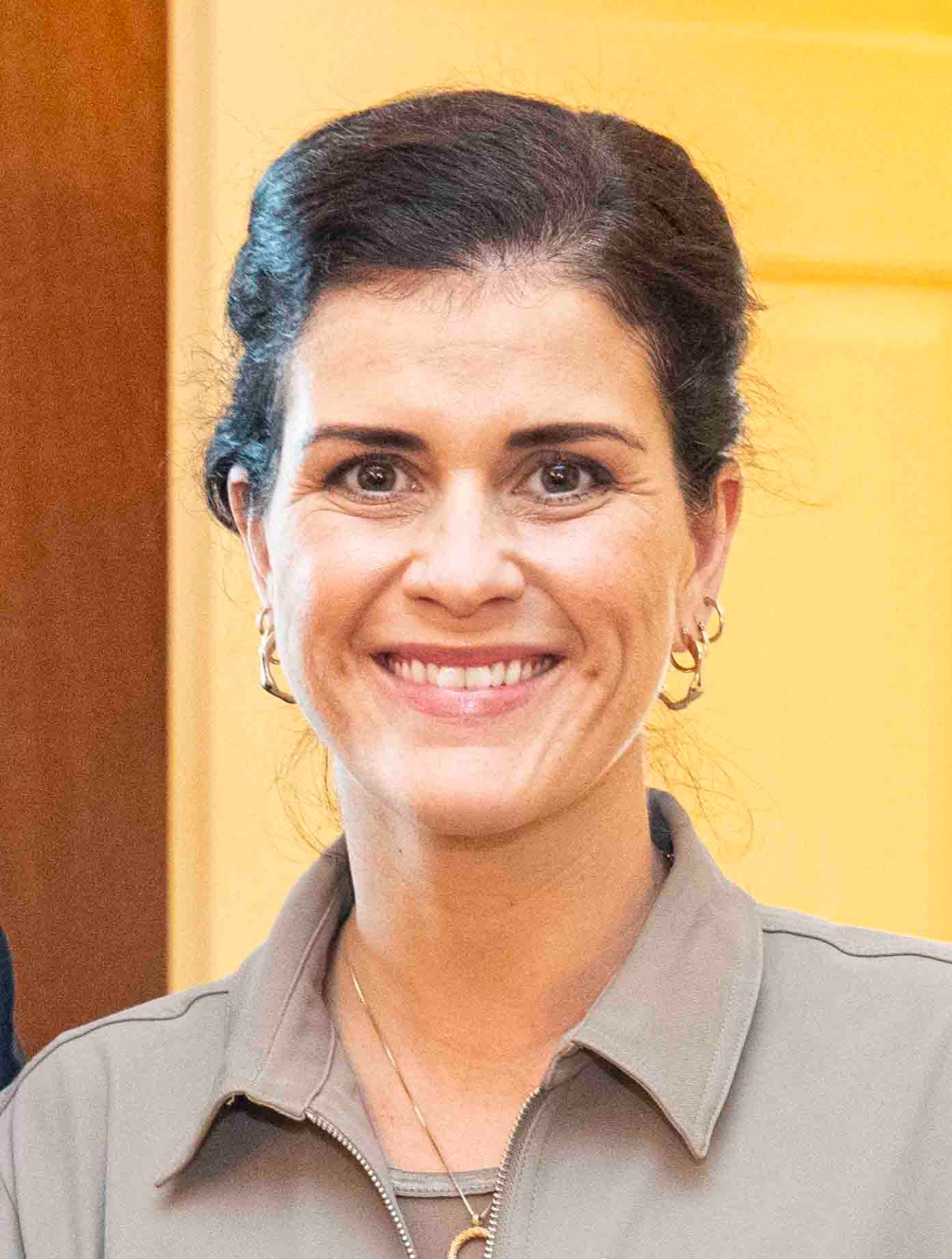
Baiba Braže
Baiba Braže is Latvia's Foreign Minister and a panelist in a live discussion exploring US President Donald Trump's relationship with Russian President Vladimir Putin and its influence on Ukraine peace talks.
Þórdís Kolbrún R. Gylfadóttir
Þórdís Kolbrún R. Gylfadóttir is a former Icelandic Foreign Minister and a panelist in a live discussion on US President Donald Trump's relationship with Putin, the role of the United States as a reliable ally, and Ukraine joining NATO.
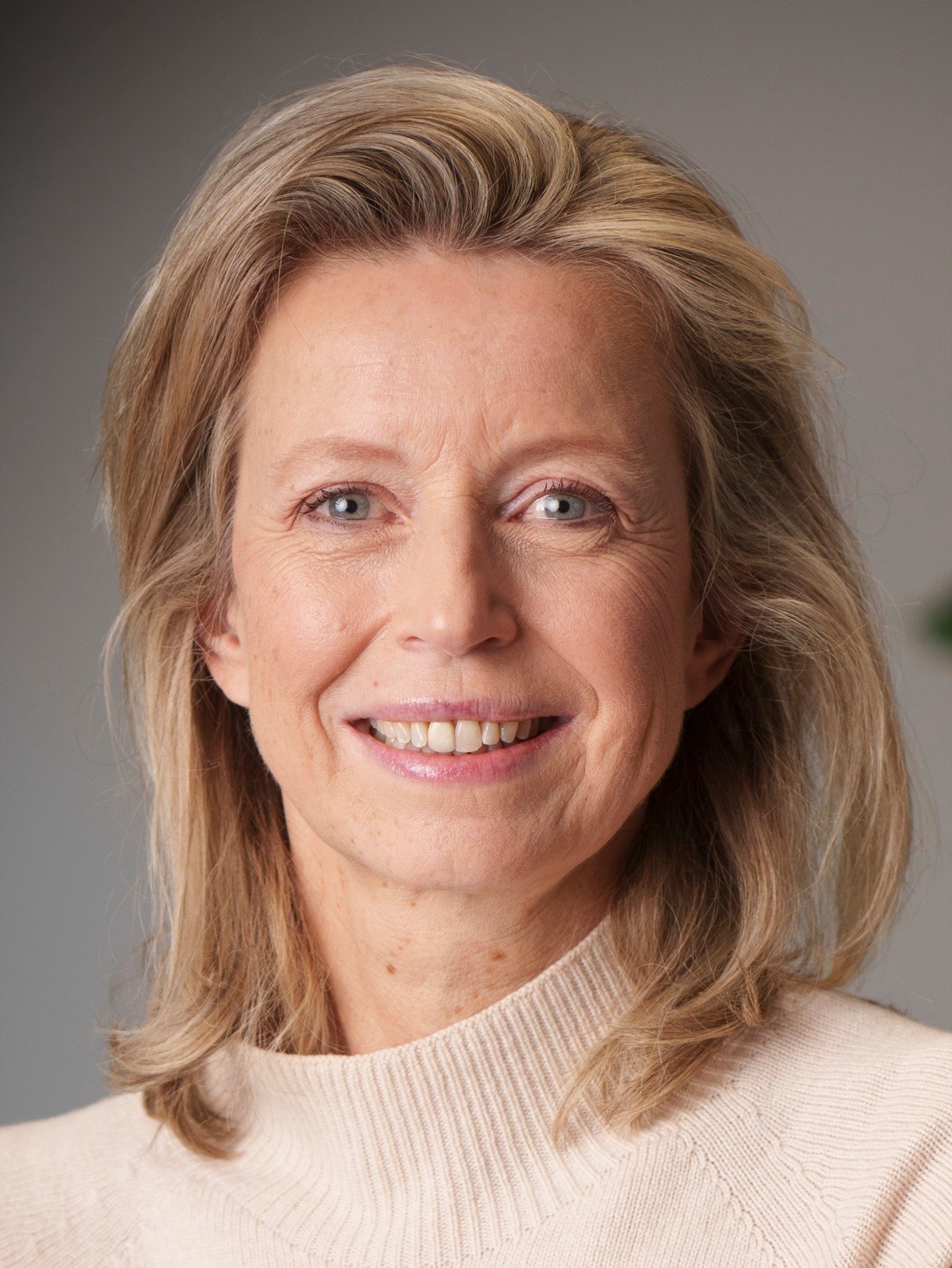
Kajsa Ollongren
Kajsa Ollongren is a former Deputy Prime Minister of the Netherlands and a panelist in a live discussion on how women leaders are shaping the current geopolitical landscape.
Episode Summary
Live from Munich—One Decision teamed up with German broadcaster Deutsche Welle for a live podcast official side event at the 2025 Munich Security Conference. Hosts Christina Ruffini and DW chief political correspondent Nina Haase lead a panel of global women leaders, including Latvian Foreign Minister Baiba Braže, former Icelandic Foreign Minister Þórdís Kolbrún R. Gylfadóttir, and former Deputy Prime Minister of the Netherlands, Kajsa Ollongren.
This episode is an edited version of the live panel discussion which explored US President Donald Trump’s relationship with Russian President Vladimir Putin and how it can influence peace talks for the war in Ukraine. The panelists also discussed the growing influence of tech mogul Elon Musk in American foreign policy, the role of the United States as a reliable ally, Ukraine joining NATO, and how women leaders are shaping the current geopolitical landscape.
Episode produced by Situation Room Studios. Original music composed and produced by Leo Sidran.
Listen & Subscribe
- Watch on YouTube
- Listen on Apple Podcasts
- Listen on Spotify
Transcript
COLD OPEN
Gudfinnsdottir: The good guys are not doing a great job on social media, the other guys are doing a better job. And it's true, I mean, lies and anger and hatred spreads six times faster than truth.
Ollongren: If you want to start a process of negotiations towards peace, then you don't start by concessions to your opponent.
INTRODUCTION
Kosinski: Thank you all so much for joining us. We really appreciate it. I know it's it's rainy, and welcome to sunny Munich. This of course is a collaboration between the One Decision Podcast and Berlin Briefing. And if you notice the leaders on our panel tonight have one thing in common because as the great poet laureate Beyonce once said, who run the world? Well, not girls, but these badass women we have in front of us. Given what's going on in the world and uncertain times, we wanted to gather these women together and talk about not only global issues and foreign affairs, but whether more women's leadership and leadership of a different kind apart from this kind of macho bravado can be kind of the antidote to to what's happening. So, with that, I'm gonna turn it over to Nina to introduce yourself and the rest of our panel.
Schulz: Hi. Yeah. Thanks very much for turning up here. Exciting times of course in the world, also in Germany, ten days away from elections. We've got a great panel. We've got lots to discuss and our focus tonight I think is going to be on European female leaders' reaction to the latest announcements from Donald Trump respecting his phone call to Vladimir Putin saying that the conflict can be ended but does that mean peace? We've got the foreign minister of Latvia here with us who has a very clear very clear opinion on this question. Thank you very much for coming here, making this time. Really appreciate that. Thank you very much. Also we have got Thordis Gylfadottir here who's Iceland's former foreign minister and has now taken up a new role as special envoy for the Council of Europe for the children of Ukraine. So that is definitely something where she will be busy. And Kajsa Ollongren, thanks very much for joining us from The Netherlands, former Dutch defense minister. So lots of questions for you as well in terms of where is Europe gonna go with all these latest announcements. But let's dive in because everybody wants to know from you. How did you react when you learned about Donald Trump calling Vladimir Putin and then informing Volodymyr Zelensky that he was going to start negotiations?
INTERVIEW
Brazinska: I was on the way to a live TV interview, actually. I learned about it five minutes before. But our position has been very clear, and I think it's very like-minded across all the allies in NATO and beyond. We all want peace. Nobody wants war, and it can be stopped pretty easily if Putin stops war. That is not happening. Whether this will actually lead to something, we will see. For now, the only things that we are seeing is more Russian attacks and all the instruments of power within Russia geared towards war. There is not one single indicator that they are changing anything. The economy is a war economy, the politics, religion, media, private sector. I mean, it's an authoritarian regime imprisoning lawyers of opponents. So it's not like suddenly something has changed. And therefore, yes, we all want peace, but it has to be peace on Ukrainian, with Ukrainian agency, on Ukrainian very clear understanding, but also peace doesn't affect negatively or adversely other countries' security. And here I speak, of course, about those countries from Norway to the Baltics, Poland, and so on who are actually on Russia's borders. And, you know, whatever arrangements we have afterwards, they have to be strong enough to ensure that Russia, which is an official threat as recognized by all the allies, thanks to the defense ministers and the foreign ministers and and our leaders, that Russia that is a threat actually stays within its own borders and actually is not restarting hostilities elsewhere. And for that, there are obviously certain things that need to be done. Russia has to be weakened on the battlefield. You know, there have to be certain guardrails afterwards. We will never recognize occupation of Ukraine's territories, you know, Ukrainian borders and territorial integrity in accordance with its international borders as sacrosanct. So there is a whole set of things that will be happening, but once it leads to actual peace, and it can lead to actual peace, it's, of course, what we all want. We want peace in Ukraine. We want Ukraine, strong sovereign country recovery, reconstruction, and everything. But to get there, from here to there, there has to be certain steps. So this is the beginning of the process we will see. And we also know that Putin's aim is actually changed European security architecture. He's been quite open about it in '21, '22.
Kosinski: But is getting from there to here, and I open this up to everyone, is that now more difficult if you have American officials, including the American president, giving away some of those huge bargaining chips before negotiations have even really begun? You know, if you're already saying Ukraine doesn't need to be part of NATO and no US forces, which would obviously make enforcing any kind of ceasefire really, really difficult. Is it done before it's even gotten started?
Brazinska: Again, when Baltic states wanted to join NATO, the first messages we were getting, no. It was a no to us. It only changed after 9/11, to tell you frankly, when it was a different geopolitical situation. So it doesn't mean that Ukraine has to give up its NATO aspirations. It's Ukrainian agency. They can still maintain its objective. Whether it becomes or not part of the outcome from the negotiations, I would separate that part from what Ukraine itself decides what is best for her. So I don't see that as giving something up, the same about the American troops in Ukraine. I mean, who is surprised about being that said in open? We all knew that was quite obvious, but it doesn't mean that there is no American support if there is international presence. That is a different thing. So there is a variety of ways to look at it, but again, prejudging something before the actual negotiation start, I would say it's too early. Last week with the Baltic ministers, we were in Washington and had long conversations there on the Hill, policymakers, also with General Kellogg, and it was very clear that General Kellogg is preparing options for the president to decide. And it will be president's decision and decision alone. That was very clear, that nobody else is gonna do that in his stead. Not even Elon Musk? So it's a beginning of the process. Who is that?
Kosinski: That's a very complicated question. I do not feel qualified to answer.
Ollongren: Any other reaction from, you know, what you're hearing out of The US as far as the association? Well, I happened also to be in Washington. We were attending the same event. And you do hear different things from Washington. But I must say it it hasn't become easier yesterday and today when one president to another in a phone call and the report on that, you cannot just erase everything that we have talked about before also in NATO with Ukraine, which is of course cooperation. We have a NATO-Ukraine Council. We have talked about the way forward.
Kosinski: Well, the policy of the Biden administration in the last NATO summit that we were all at in Washington was saying pretty openly Ukraine should become a member of NATO. Yeah. And I think we all said it's not the question if.
Ollongren: But of course, you know, every NATO ally has to agree to membership, and we know that because when Sweden wanted to join it took quite a long time because Turkey didn't agree, so that's all in the game. But saying beforehand that it cannot be on the table also in negotiations, of course, is not something that we have seen before. And I think we have to be honest about that. And I think also I read today Kaja Kallas's reaction to this and on behalf, of course, of the European Union, I think that was very fair. So to say if you want to start a process of negotiations towards peace, then you don't start by concessions to your opponents. I mean, normally, that's not what you do because, you know, you're starting on a back foot. You're starting your game, and you're two-nil or three-nil behind. That's right. You're making it more difficult. But I think that was the main problem that I had with what I read yesterday and heard yesterday. That's really about the war in Ukraine and how to end the war in Ukraine. I wouldn't necessarily conclude that US is less committed to NATO, but I do think if we don't get the right end of the war in Ukraine, it will weaken NATO because it will send a sign to all autocrats in this world that might does make right and that aggression against another country bordering your country for whatever reason you have for that aggression that it gets rewarded. And I think that's a very dangerous precedent, and I think we have to say that. And I was very glad to hear European reactions yesterday and today being critical of this path that President Trump has chosen.
Schulz: Can I ask you, Kajsa? You know, we've got the Ukraine contact group where essentially military aid to Ukraine is being coordinated from Germany, but it was run by The US until now. Then for the last meeting, it was The UK that ran it. What's the future of this particular group? Does anybody know? Is that going to still exist? Because it was quite helpful so that countries could actually talk to each other before sending certain weapons and say, okay, maybe it's a good idea for you to do this, and I can do that because Ukraine's missing this. This is a vital forum. What's the future of that?
Ollongren: Well, I think it's a very practical group with over 50 countries. It was always led by The US. Biden administration was very keen on that. But since then, I think we have institutionalized certain things in coalitions where certain countries lead certain coalitions. For instance, Denmark and The Netherlands lead the F-16 coalition, you have artillery coalitions, all kinds of coalitions, and NATO has also taken on a bigger role in coordinating the aid. So I think also without the engagement of being the chairman, etc., this group can go on and as I understand it, Hegseth hasn't said that they will stop their military aid to Ukraine immediately and I think by, you know, anticipating the way that the group has, it will be able to continue.
Schulz: Thordis, we haven't heard your reaction.
Gudfinnsdottir: I can only say that I do worry. I think that there are not many things in a very complicated world when it comes to geopolitics that are black or white, but the full-scale invasion is one of those things. Who wants peace more than Ukraine, than the Ukrainian people? Have been dying for that and not only for the internationally recognized borders but also for the society that they have already chosen to build, and that's not a mafia-run, you know, Russia, that's a different kind of society. And when has Russia shown that they value peace and human life? I mean it was not in 2014, it was not with airplanes, it was not in Bucha, it was not yesterday when they were bombing Kyiv. Of course you worry and even though you know when time passes the news gets, you know, lower on the list and people get tired and all of those phrases that we know very well, it does worry me that talking points and the lines that, you know, now we just should negotiate peace, even without Ukraine, we should say beforehand that they will never become a part of NATO, but still we're going to ensure that there will be peace there. How? I mean, the NATO umbrella is obviously the best thing to secure that, and if you're a country that is independent and sovereign with internationally recognized borders, you should be able to choose your future, and that also means you should be able to choose, if they want to belong in NATO, they should be able to do that, and they have already said that. Of course, the new administration, they want to come out as strong men and doing a good deal, and I know that there was or is some sort of, in certain groups, optimism that this would somehow disrupt this new administration and the new scenario would disrupt the situation now, and what could that mean? And I mean one can hope that that will mean something good, but what we're hearing isn't really that when, you know, the President of The United States has a very long and fruitful and positive conversation with Putin, and they're gonna visit each other, and they're gonna figure this out.
Kosinski: Is The US in its current state a reliable friend and ally? Can you count on The US to follow through with policies that have been made in the last administration, in the current administration?
Brazinska: Oh, yes. Absolutely. And we got the reconfirmation of that last week in Washington from everywhere. The Senate, the House, the administration. So it's pretty straightforward. Also, I got a readout from defense ministers today and, you know. So despite what you're hearing, you're not concerned. Messages of strong NATO is there. There's messages of full trust in NATO is there. Whether US wants Europe to take more responsibility, but also to put more resources in defense, oh, yes. But that's what we want in the Baltics also. We are moving towards 5% of GDP for defense, which was alright, you know, for quite a number of countries in the Cold War times. And currently, Europe, of course, has grown very attached to certain benefits that we all have, and, you know, it's very difficult to sort of go back into the crisis mode. We need to be able to have the forces, to have the capabilities, to have the deterrence, to have, if necessary, ability to defend. You know, NATO is not an attack dog. NATO is a defense alliance. It's a political-military alliance. But to enable our military to do their functions, they need resources. They need those capabilities, and that is what political leaders have asked them to do. And they say, okay. They have come back and said, okay. This is actually, you know, what we need, and this is gonna cost money. So and I think as political leaders, it's the obligation of European leaders to step up and do that.
Kosinski: But do you all have confidence that if there were a need for NATO to invoke Article Five, that America, this current America, would come defend Europe? Do you still have faith in Article Five under the Trump administration?
Brazinska: America doesn't have to come anywhere. America is in Europe. American forces are everywhere. So a premier Allied commander is American general, and he has two heads, European Command of The US and NATO's troops. The allied troops have already been under the transfer of authority given under SACEUR command. So, you know, there is what has been done already so that if necessary SACEUR seeing certain indicators, if he needs to move forces, he can do that without allies sitting around the table in Brussels. But, again, you know, that's why our military leaders have come back to political leaders and said, okay, actually, you know, the situation is serious, and this is a threat assessment, and this is what we have agreed, and these are the plans and the forces and the exercise, and this is a posture and prepositioning and everything that we need.
Schulz: So it's time to deliver, and it's around three and a half percent across the alliance, actually. So it's not even 5% of GDP everywhere, but across the alliance on average. How is Europe going to take part in the negotiations? Isn't that something where you have got criticism for the Trump administration? This phone call where Donald Trump calls Vladimir Putin and then informs Zelensky and everybody else in Europe learns about it in the press. Is that something that you can support? And if you can't, how does Europe take part in these negotiations? How do you get in?
Brazinska: I think we all in Europe have been very clear that Europe has to be part of the negotiation process. Who is that? Is the next question. There is very clear understanding. Yes. There is a role for Europe.
Kosinski: How to do that and who's gonna do that? And we know you have to run, so thank you so much for joining us. And if we could all applaud a very dramatic exit. Thank you all so much. Safe travels. Alright. I wanna circle back. Do the two of you have faith in Article Five? And is The US a reliable ally to its European and other allies around the world?
Gudfinnsdottir: I want to believe that The US is a reliable ally and will continue to be. I mean, The US is the most important ally to each and every European country. That's a fact and that has been the way for a very long time. So I want to believe that the system in The US is strong enough and has the will and the power to continue to be the leader of the free world, but you know, each and every, you could almost say days and definitely weeks, the development is quite fast and it's a bit chaotic so you know it's difficult to say where we will be in six months time or twelve months time but the last eighty years The US has been the strongest player and I just can't see a reality where The US would decide that they don't want to be the strongest player, that they don't want to have the power they've had and can continue to have, and there, you know, soft power is also power, and that's something that worries me, if they still look at soft power as real power.
Ollongren: I haven't heard that the Trump administration is saying that their commitment to NATO is less. Europe must step up. Europe must do more for its own security. That's not strange to ask, and not only Trump, but others have asked for it for a long time. We to live up to that expectation. Europe has to be responsible for more of its own security. And then in 2014, we agreed we have to grow towards those 2%, the 2% in 2024. Then we had, of course, to speed things up because the full-scale war in Ukraine started. But so I think that is something we can agree on. And the whole division of labor thing is a different question because that is a mindset where The United States says, you know, we are expecting more of engagement in the Indo-Pacific. We will take care of that, but you take care of Europe. And that we have never discussed in those terms before. And that is something we have to really think through because there Ukraine comes in. If the war in Ukraine ends badly for Ukraine and for Europe, that increases the possibility that there will be some kind of trouble also in the Indo-Pacific. But, you know, you don't know if there is much room for that type of debate because of the way that this new administration acts.
Schulz: If Europe wants to take part in the negotiations, then clearly Europe needs to speak with one voice. I mean you're sitting here and also Baerbock is sitting here and saying Europe needs to do more in terms of defense spending. At the same time, we've got lots of countries especially in Europe where voters don't see it that way and governments are struggling. How united is Europe at the moment? Because if Donald Trump has to take Europe seriously, then Europe needs to be able to speak with one voice. How united is Europe?
Ollongren: Of course, Europe has struggles to speak with one voice. Also, European Union. We're 27 countries. We have 27 parliaments. We have elections everywhere, every time. We have different coalitions. We have all kinds of different but I think that's not what's important. What is important is that overall we are united on wanting to have a secure Europe for our citizens. And I think we are, and you've seen it in almost all countries, we've reached the 2%, we have new goals and targets for defense spending over the whole political, you know, from left to right, at least, let's say, little bit left of center, right of center, we are in violent agreement that we have to increase defense spending because we want a secure future for ourselves and for our children. So I think we should be able to speak with one voice. We can. You know when there's a crisis Europe can act. We've seen it in the Covid pandemic. We've seen it during the financial crisis, something that is forgotten, but it's also an example of where Europe did act as one with one voice. So this can be overcome. So I'm not so worried about, you know, that we cannot if there is a negotiation, we will find a way to for Europe to attend it. Let's first get Ukraine at the table, and Ukraine will insist on having Europe there, and then we'll figure out who it has to be.
SOCIAL MEDIA AND DEMOCRACY
Gudfinnsdottir: How do we deal with the fact that Elon Musk is very, very active in the US government? The reality of social media is a huge factor and a huge change, and again, there is quite different views within Europe and The US on how to control that, and that again is a sensitive issue and we talk about freedom of expression and free speech. But it's not that complicated to say free speech and freedom of expression is a fundamental human right. Human rights are supposed to be for human beings. They are not for bots. So the fact that you can't have any rules on a new world that controls so much because it's a fundamental human right, it doesn't make any sense. The longer we don't have any framework or rules on how to live in a world where you have social media and misinformation and disinformation that is undermining the democracies. The good guys are not doing a great job on social media, you know, other guys are doing a better job, and it's true, I mean lies and anger and hatred it spreads six times faster than truth but what spreads as fast as those bad things is actually inspiration. We should maybe, you know, do a better job on those venues.
Ollongren: You know what Musk seems to be doing in Washington DC, we still have to see if it holds because it's very interesting of course there is a Congress and he is a non-elected person who, you know, he only seems to have one boss which is President Trump but he's not really accountable to anybody which makes it very complicated. And I think there is in Republican Party a strong support for, you know, to get rid of all kinds of things but when you talk to them and you ask them for examples so why do you have to get rid of almost everything of USAID, they give examples of projects of $6,000,000 in a country in South America promoting transgender rights. But I mean if that's your problem you don't have to get rid of, hold of USAID which is also supporting free speech in many countries, including Ukraine and Georgia and Moldova.
Kosinski: American power. I mean, there's a soft power argument that doesn't seem to be factoring in.
Ollongren: So that doesn't really make sense. So it can also be a sort of a shock and awe approach and in a couple of months we will wake up and see that you know sixty, seventy percent of the staff is back and the budget's back in place. But we don't know at this moment. But what scares me as a democrat, as a European democrat, is that it's so easy to put someone in this position who can just simply do as he feels like, as he likes, without having the checks and balances in place at that moment. I think that in my country, in European countries, is quite unthinkable, because their parliament would step in, or you would have a coalition that would not approve of this. And of course we are different countries and different types of democracies and there is this issue of a large group of people who are not happy or satisfied or worried or scared about things but I think and I can take my own country as an example where also a populist party has become the largest party in our parliament doesn't have a majority but it's the largest party I think that people by now are seeing that voting for this party and even having them in government doesn't necessarily bring them the quick results that they want and expect. So if housing is an issue in your country, like in my country and in many countries, it's not an easy to solve problem but it has to be done but you have to have perseverance you have to have budgets you have to have good plans and it's going to take ten years, something that people have difficulty in accepting, which I understand if you are the person looking for that housing, but it's also a fact of life. And seeing now with populists in coalitions that they're not delivering on their promises is hopefully going to make people think again when next time they can go and vote.
Schulz: But that's the risky path, right, for all the European countries because there are these two approaches essentially. One approach is okay, let them demystify themselves, let them get the power, and then people will see that they're useless when they're actually having to do something instead of just describing problems. And the other approach is, of course, to say, like the discussion that we're having here in Germany about potentially banning the far-right AfD party because we can already see that some of their members have the inclination, they do want to change our system in a way that would completely get rid of democratic pillars. So that is a tricky path, I think, for Europe. And of course, by the time that US courts will have decided on Elon Musk and whether or not it's legal what he's doing, he will already have got access to all the data. How worrying is that?
Ollongren: I think that is really worrying. I think then at that point you would have to conclude that the checks and balances are not working. I think that's extremely dangerous. I mean, the intelligence services, that is very, very sensitive information. But coming back to your point, this is going to be different in every country. In my country, my party didn't want to and has refused to cooperate with the populist, but other parties chose the other path. So it's going to be different in every country. And I think it's up to those politicians who really want to change actually change things and make things better and to make sure that people get the things that they need that the societies need to make our economies function and our societies function that they deliver on that and that is the only way and not to promise things that cannot be delivered.
WOMEN IN LEADERSHIP
Kosinski: In The US especially right now there is this kind of knee-jerk reaction to in some cases the last administration who was almost paralytically bureaucratic, you know, wanting to use government, wanting to go through the steps and balances to the point where the perception for a lot of voters was nothing was getting done. So is the antidote to that changing the people who are in these offices, changing the people who are in these coalitions, having more women participate at all levels of government? I wanna we pulled a stat from the UN. According to the UN, 107 countries, including The US, have never had a woman head of state. In 2024, women held only 27% of seats in national parliaments and 35.5% of seats in local governments. And as we kind of lean into this bravado bullying, autocratic style of leadership, is there another way to go about it and can women help?
Gudfinnsdottir: I mean, I think it's obvious that diversity and different kind of leadership would be a good idea. In Iceland, I mean, we were the first ones to democratically elect a president. Today, we have a prime minister that is a woman, foreign minister is a woman, Speaker of the Parliament is a woman, the Bishop is a woman, the Chief of Police is a woman, the President is a woman. You know, there is obviously a difference between, you know, men and women, but there are probably more differences within, you know, the women's sector and the men's sector than it is there in between, but I think with the world we live in now, I think it would be an excellent idea, a sensible idea, and a smart idea to increase numbers of women in power, because what comes with it is often new approach, different views, more compassion. I think that is what we need, and I actually think when we're talking to voters and our publics, I think we more often need to be basically just more honest, because there are too often show-offs. People are pretending they know it all, they're pretending they can fix stuff that they can't fix and they know it, but they still say it, and that is what also feeds populist parties where they can then have very simplistic solutions for difficult and challenging things instead of just say what you mean, mean what you say, acknowledge when things are complicated, try to explain why, talk like a human being, don't talk like a robot. And being a politician is you're offering to service something, you're there to increase quality of life or assisting in things that, you know, have to be done. You know, why not? It's not like we, you know, have all the solutions with the method that we've used, you know, since the beginning of mankind so it might be a good idea just to mix it up a bit and have more women.
Ollongren: Yes, well of course I was thinking about Iceland and then my own country The Netherlands we do seem to be in general in the world going a little bit backwards and I think we have to acknowledge that as well. So why is that happening? Why in The United States for instance I think the current Secretary of Defense has said that he doesn't really see added value to women in the Armed Forces because women cannot fight. I mean if that is your view you're going to have really a tough job. Because if I look at countries in Europe we want to have more people in our military, in our armed forces. We cannot leave half of the population out of that.
Kosinski: Or even close US allies like Israel where you know military service is compulsory for both genders.
Ollongren: Exactly and there are many countries and I've met lots of women in Ukraine who fight or who do the medical support on the front line. They couldn't fight this war without the women so I think it is very strange to have this idea which we should go back a couple of decades or even centuries to exclude women from certain positions but there is this tendency and I think we have to be also we have to be honest about that and ask ourselves, are men feeling threatened by women in certain positions? Okay, let's have that dialogue. Then why? Maybe we should do something about that instead of being opposed to one another.
Schulz: Yeah, I'm just thinking about the fact that all the populist parties in Germany are run by women, which is very interesting because it leads us to the point of essentially saying we need diversity in age and it is really not that much about gender but when you look at the lack of diversity, especially in US politics when it comes to the last presidential elections, we had two old men and here in Germany as well we have two men who are standing to be chancellor. I think we just need to be clear that it's not just man, woman. But of course, it can also serve the feminist foreign policy approach. It's something that Annalena Baerbock, the German foreign minister, trying to push a lot and she actually used it as an approach. She knew very well that there were lots of critics who said, okay, yeah, cute, okay, nice, you're getting together with all your girls, but she used it to get access to countries where otherwise she wouldn't have got access. She used, for example, the opportunity to talk about diversity and to talk about how wars affect children, families, etcetera, and how wars can be ended better if the women on the ground feel safe. Well, this is not going to be very popular in the next couple of years, I don't think. I can't see it. I don't know if you disagree.
Gudfinnsdottir: Things are moving so fast. It's really difficult to vision or see where we will be in six months time or in a year.
Kosinski: I think I agree with you, unfortunately. I remember, I can't remember who said it, but when I was trying to be a foreign correspondent, a war correspondent, I remember a woman, I think she's from the New York Times, she said, I always found being a woman in war zones to actually be an advantage. Because you can go into spaces your male colleagues can't go into. People are not threatened by you. You can slip into places more unnoticed. But when you have to deal with someone on a professional basis, for the most part, they will treat you like a professional and kind of put your gender aside most of the time. And she said, overall, she found it to be a net gain in journalism. I'm wondering in the foreign affairs space, how does that play? Have you had situations where you felt like, damn it, I wish I was just a dude? Or do you find being a woman for the most part is an advantage if you know how to use it?
Gudfinnsdottir: I think it's overall the second part, I would say. I think it's also a matter of mindset. How are you going to approach this? Are you going to somehow pretend you're a man to try to fit in the role better? And that goes with, you know, how you speak, what kind of words you use.
Kosinski: But do you think about this both of you when you're picking out what to wear, how much makeup you're putting on, whether you're going to wear heels, whether you're not, does that factor in? Yeah, it does.
Gudfinnsdottir: I mean, I never wear black in family photos, for example, ever. Always, always in colors, because the majority are men in dark blue or black. Instead of looking almost like them, I'm obviously not a man and I'm not yet old. What you see is what you get. It depends on cultures as well. In certain circumstances you can sense, maybe not by words, but you can sense that there's a difference.
Ollongren: I think it's an advantage. Yeah, well, when I was Minister of Defence, when I started out, I think there were eight of us in the NATO meetings. I think there are about three or four today. I think that you can use it to your advantage. That's absolutely true. But at the same time, in general, you know, you have to make an effort and sometimes more than men. Really I don't think so much about clothes. I do remember when I had two very very tall colleagues, one of them was called Mark Rutte. You're very tall. I always wore heels because I didn't want, you know, to be too much smaller than he was. But apart from that, not so much thinking. I agree with the family photo, that's also an advantage. It's only, I do notice it, that there are so few of them in these defence circles. That's really, I think that I don't really understand it. I've seen while I was there that it's become a more important position in most governments because of the war and because of security and defenses so high on the political agenda. And then women get, then there are fewer. So that was my question. Is that the reason that there are fewer women? Because now more of them are deputy prime ministers and we even had, you know, they used to transition from defense to foreign affairs and now they transition the other way around, which is also interesting. So, I'd have to look into it a little bit closer if it has any emancipation.
Gudfinnsdottir: But it's also interesting because in Iceland we don't have an army so when you're Minister for Foreign Affairs you're also Minister of Defence so I was the only one, you know, doing both of those meetings and it was often quite similar the numbers of women but then in the leaders meetings, you know, they were like three, so, you know, the level above.
Kosinski: Each tier up there are fewer. Yeah, so it's.
Gudfinnsdottir: If it doesn't change it will take, I don't know, one thousand years.
Kosinski: Well, the very least, I would like to thank our panel for a successful, at least this part was a success, right? And everyone who matters was here, so thank you all very much for joining us. And thank you to my co-hosts and our wonderful panelists and all of you for being here. Thank you very much for being here with us. And we all look forward to a great MSC. Hopefully.
Schulz: A turning point in a positive way to use the famous Caspar David Friedrich image that they showed.
Kosinski: Here's some more bright colors in the family photos. Absolutely.
Schulz: Thank you very much. Off to drinks.