Hosted by Christina Ruffini and Sir Richard Dearlove
Guest
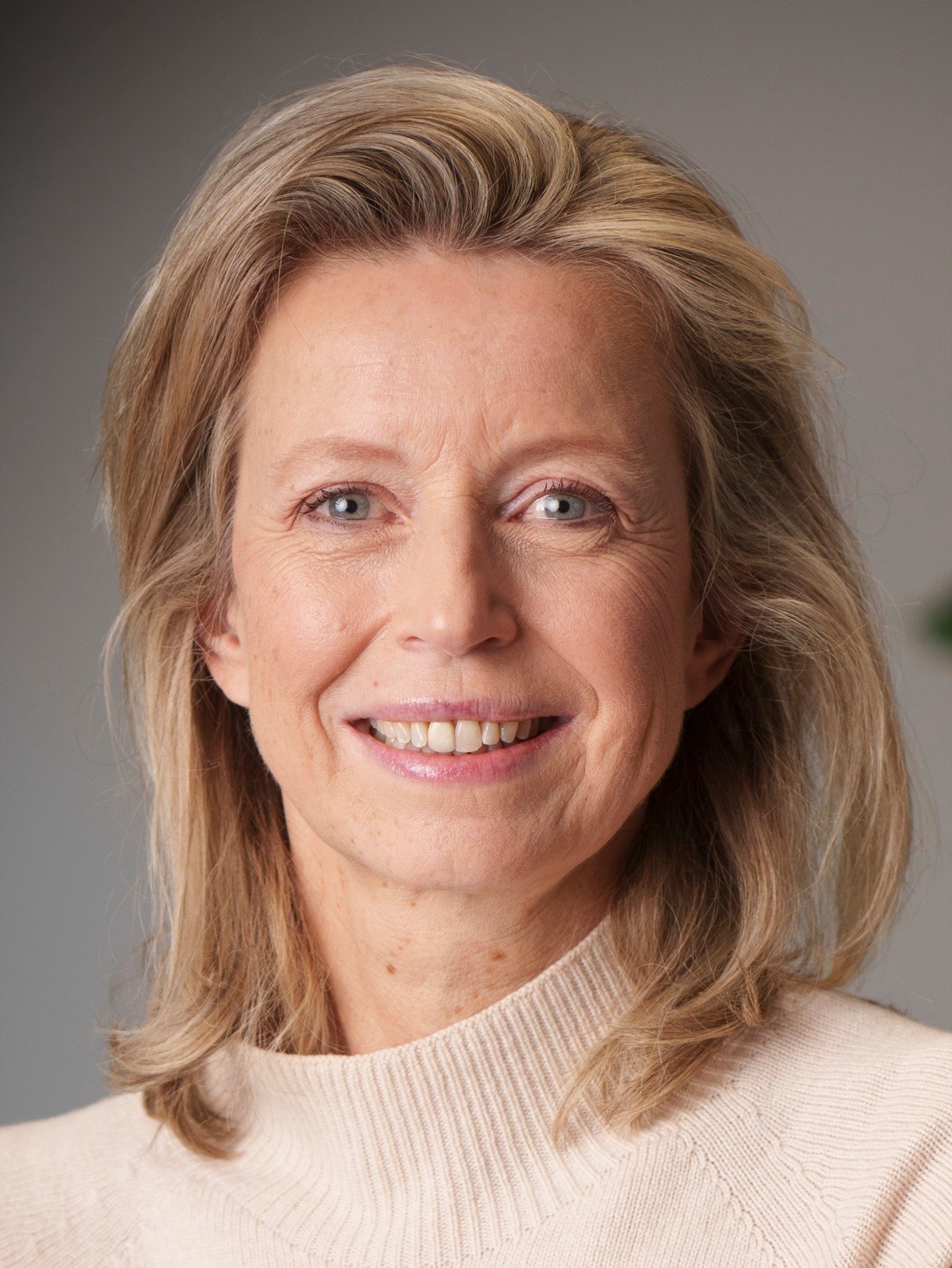
Kajsa Ollongren
Kajsa Ollongren is a former Deputy Prime Minister and Minister of Defence of the Netherlands and discusses how the European Union is approaching security and defense policy in the era of Donald Trump.
Episode Summary
In this week's episode, hosts Christina Ruffini and Sir Richard Dearlove, former head of Britain's MI6, sit down with Kajsa Ollongren, the former Deputy Prime Minister and Minister of Defence of the Netherlands. They discuss how the European Union is approaching security and defense policy in the era of Donald Trump and what the American president's style says about global diplomacy. They also discuss what to expect from NATO's June summit in The Hague and the ramifications of the erosion of the United States' soft power following cuts to foreign aid funds. Plus, Ollongren shares why gender diversity is important in foreign policy.
Episode produced by Situation Room Studios. Original music composed and produced by Leo Sidran.
Listen & Subscribe
- Watch on YouTube
- Listen on Apple Podcasts
- Listen on Spotify
Transcript
COLD OPEN
Ollongren: We cannot underestimate the importance of The United States for Europe, both for its security and for our economies.
INTRODUCTION
Raffini: Hello and welcome to this week's episode of One Decision. This week, my cohost, Sir Richard Dearlove, and I talked to an old friend of the show, former deputy prime minister of The Netherlands and defense minister, Kajsa Ollongren. She, of course, was on our panel in Munich, and we're taking advantage of her being here for another conference to have her into the studios to talk about everything from NATO security, the war in Ukraine, and frankly, how Europeans are dealing with or not dealing with the new Trump administration. Do you make friends, or do you make your own way? Let's listen in. Minister, thank you so much for being with us today. You've held a lot of positions in government. You were deputy prime minister. You were also defense minister. You have a ton of experience in government, and you also just have been around enough to know kind of what the vibe is right now in Europe. And when European leaders get together, as they are at a conference here in DC this week, what are they saying when it comes to The United States? What are they talking about and what are the big areas of concern?
INTERVIEW
Ollongren: Well, I think there are two big areas of concern. One is, of course, security and US commitment to NATO, US support for Ukraine, which is very important. And what is really The US strategy on security? Are we looking at, you know, more of a global power competition? Do they really want Europe to take care of Europe? Do they want to take care of the Indo-Pacific? So that's one part. And the second part, of course, is trade. And it's interesting to see if there's a trade deal with The UK. There has been a proposal from the European side, you know, zero for zero. So we are also interested in having a good trade deal. But there's a lot of concern about the effects of policy of tariffs and a lot of concern of how this will affect The US economy, global economy, European economy. So these are really the main areas. I see that lots of people go to Washington to try to have conversations, to try to figure out what is the best way forward.
Raffini: How are the Europeans approaching this? Are you mostly approaching it through the EU bloc as a united front? Or the longer this persists, could there be some defections, nations trying to make unilateral deals, and what does that do to your fighting power?
Ollongren: No. I think that would be very difficult because trade policy is one of those few areas where the European Commission is, you know, in control. It's their mandate. So the European Commission has to do this for us. And I think also that every European country realizes that we are stronger together in this and that our internal market and our competitiveness depends on the kind of trade deals that we make with The US and also with other countries. So we will leave that to the European Commission.
Raffini: You confident everybody will stay in line?
Ollongren: Yes. Because we have to. We've committed to that. So that's different from defense, for instance, where you can do it on your own. Well, we can do it on our own, but it's a national competence, and trade is not.
Raffini: What does this do for European relations, the fact that The UK now has a deal and Europe does not?
Dearlove: Well, I mean, we have the freedom of having escaped, as it were, this controlling force from Brussels. And, of course, the European Union, in terms of its trade position, is very much a cartel. Okay, it's quite a benign cartel, but it is protectionist, and it's very difficult to break out of that straitjacket. It's fundamental to the identity of Brussels and the European Union, that it has to, as it were, negotiate solidly as a bloc on these sorts of issues. It's fundamental to its identity. So, it'll be interesting to see where the relationship ends up with The United States on this rather crucial and important issue and to see what concessions. I mean, Brussels not used to making concessions. It didn't make any to The UK when we were negotiating Brexit. And I think that was a fundamental strategic mistake because we would have had a much better relationship now if there hadn't been so confrontational, that negotiation. The EU missed a trick in negotiating with The UK because looking back now, it's quite clear that our strategic importance in terms of defense and security to Europe is essential. We could have done some sort of bargain or deal. I mean, my vision for Europe is that we're the EU's closest ally and that we have a privileged relationship between ourselves and the European continent. Maybe over the coming months, we'll realize that vision. But at the moment, we've had to turn, as it were, back to the North Atlantic and do a deal with The United States. So it's a logical position for us, but I would like to see a logical position with Europe following it.
Raffini: Do you see Europe relying more on The UK, more on itself than The US, as we continue to enter this phase of uncertainty, unpredictability? Is this something folks are talking about, finding other ways to go about business rather than having to rely on America?
Ollongren: On many things, I don't agree with what's just been said. But I'm sorry, Sir Richard, to be so blunt. But that's perhaps because I come from a different perspective when it comes to Brexit. But where we are, that's where we are. So and I think that The UK and the European countries and the European Union are, you know, closer again than they were post-Brexit because of the security situation. And I know that The UK presence, let's say, in defense and security hasn't really changed. So Brexit did not change that. It had a huge impact in many areas, but not on that side. And now that The UK and this government also courageously is, you know, sort of leading efforts when it comes to Ukraine now in this difficult situation with the US administration, we are right there with them. And I think we're on both sides happy that we are really realigning in many ways. I think the trade deal is also good news for the EU. That is it's the first one, but it means that deals can be made, and the EU will also be eager to have a deal. And our economies are intertwined. So there are many reasons to cooperate in every area. You see the Starmer government taking, well, small steps, not back into the EU, of course, that will not happen, but realigning and finding ways. And I think that is all because of two reasons. The one reason is the war in Ukraine. And the second reason is the Trump administration. And we all, on the European side, we are very eager for partnerships. We know that we are not strong enough. Neither of our countries are strong enough by themselves. And we are much stronger if we act together and we have the same interests when it comes to European security. We know that. I mean, it's been like that forever. And the second world war was not different from that. We very much rely on, not on British leadership, but on British partnership, I think, in that way. So I don't worry much about this trade deal. I consider it really, really good news. And I hope that it's a sign that Donald Trump will be more willing to have deals with partner countries and speed that up because there are, of course, you know, every country is now knocking at the door. And I hope that the transatlantic relationship will also be prioritized in that way that you see the European Commission and also the European countries, you know, we compromise on things. And the compromise that the European Commission has now put forward is that we are going to deregulate and we are going to change some of the things in our energy transition, for instance, because we have to be more competitive. But that means that we are not turning protectionists. I think we are looking to be this global player, to be open to business and open to business with various parts of the world, including, of course, The US. I think that's the way forward for Europe if we want to stay relevant in the future.
Raffini: When it comes to dealing with this administration, are people fearful? Do people talk about how to game the approach? Because there are different approaches, right? You've got the Macron approach, which seems successful but maybe doesn't last as long as some of the other confrontational approaches. You've got that meeting with Zelensky. You know, as other leaders around the world are meeting and talking, do people talk about how to approach the Trump administration, and how do you think it's best done?
Ollongren: Of course. I mean, that's really the talk of the town, I would say. And you see those who have been successful, the secretary general of NATO, for instance, Mark Rutte, he's met with Trump three times since his election. I think Keir Starmer was quite successful. And I don't know. I hope that it was not only because of the invitation, the royal invitation that was issued again. Macron being successful. The Italian prime minister, Meloni. She's also successful. So everybody is looking for ways to connect. And I think those who have the experience of the first Trump administration probably know a little bit better. And I think the whole Zelensky thing was, hopefully, I mean, it was, I was really shocked when it happened. And I think the whole world was. But afterwards, I think we've seen some positive developments, the mineral deal that is there. I think the Americans and Trump is seeing also that the Russians are not moving. They're not making any effort towards the ceasefire or peace. It's proven to be repairable. And the only thing that is very different compared to any other administration, except for Trump one, is that he prefers to have these bilateral conversations. But that seems to be the way to connect. And I think we have to do that. But we cannot underestimate the importance of The United States for Europe, both for its security and for our economy. So that's what we will do. But we will also be frank. And we will also express our concerns about what we see happening here with America's soft power, for instance. What we see is a sort of a disrespect of the legal systems, the outcomes of the courts, that worries us. And I think that should also be part of the conversation.
ANALYSIS WITH SIR RICHARD DEARLOVE
Raffini: So Richard, what is your take on whether or not Europe and The UK are gonna start pulling away from The US and finding other ways to do at least some of the things? Or is there just really no viable alternative to American power and they're just gonna have to find a way to deal?
Dearlove: Well, my view is I think that they're gonna have to find a way to deal. I think the one thing that perhaps does worry me, and I'd like a much clearer statement from the Trump administration, is The US long term commitment to NATO. But if that commitment to NATO is reassured or restated, I think that the lesson of, you know, the last few months is finding a way to work with the Trump administration. Look, the style of the Trump administration for many of us is pretty difficult, and in individual instances even objectionable. And if Europe wants to move closer to The United States, we need a much more deregulatory outlook in terms of how many issues and relationships are conducted. And of course, the EU has led the world not in innovation but in regulation, and in a way that's one of its characteristics. If that's changing, I'm extremely pleased to hear. But look, we are faced with a massive security problem. Therefore, the ability to work together on strategic issues, particularly defense and security, is really the issue of primary importance. That includes The United States and I would just like some clearer statements, as I've already said. But on the other hand, I think the EU's future, or the EU country's future, is to work closely with The UK on these issues as well, and I'm sure that we will find a practical solution.
Ollongren: Well, there is, of course, the NATO summit coming up. I think everything seems in place to make a success of this summit. It seems that president Trump will attend it, that there will be a new target for the budget, you know, something between 3.5-5 percent or some kind of definition between the 3.5-5 percent. And I think that is very important. And it seems to me that Mark Rutte is doing a very good job in keeping everybody on board. And if we succeed in that, then maybe we have the assurance that we need as NATO allies.
Raffini: I mean, the thing about Trump's policies is there's usually a grain of logic or truth to a lot of them. And there is an argument to be made that Europe does need to take more control of its own security, does need to pay for it. Like, it's an argument Obama made too. He just didn't make it in quite the same way. But listen, you've been very involved in the war in Ukraine and very outspoken. And I wanna ask you what level of damage was done at the start of this administration with the pullback of American support, especially intelligence, providing intelligence and providing that kind of back end support to the Zelensky regime? Where are we now? Have they recovered from that? Or are they still on the back foot?
Ollongren: I think a lot of damage was done at the time. And then, of course, it was also apparent that the dependency is also very high by the Ukrainians on the American intel and other things. At the same time, so it's important. Of course, it is. And I'm glad that it's been restored. But at the same time, the Ukrainians are doing incredible things on their own in building those capabilities. Their, you know, their defense industry and especially in the autonomous systems in every area, it's incredible. And we have to learn from that. I mean, they are holding the line. That's what they're doing. We will be in a different place if they were losing. No, they're holding the line. And the second thing, of course, that happened at the beginning when after Trump was installed was that there was doubt about would Trump actually choose the Russian side. And there has been really language that we recognize as the Kremlin narrative out there. And that's also a concern now that, you know, if in any kind of deal or ceasefire, the Ukrainians would be forced to recognize the annexation of parts of their territory. They will never do that.
Raffini: Ukraine deep down probably knew that they weren't gonna get some of that territory back. I know at the beginning of the war, the line was we're gonna fight for every inch of territory. Realistically, at some point, the war's gotta end, and I think there was a way to do that without saying it. Right? And diplomacy language matters. And the fact that Trump administration said outright they're gonna have to recognize that as part of Russia. You know, that's different than saying it's gonna be a gray zone. It's gonna be contested, and it'll be a DMZ. You know, was there another way to do that that could have, the realism would have been that Russia controls that, but at least save some face for the Ukrainians?
Ollongren: Well, I think that will have to be the outcome for all of us because Ukraine cannot recognize the annexation of parts of its territory, but we can also not recognize it because we have to respect territorial integrity. And we cannot accept that, you know, might makes right and that a bigger country can just invade its neighbor and take over parts of that. So even in a ceasefire and even in a peace situation, the recognition of the annexation can never be a part of it. And what that means for the future, you know, that's also the third worry that I have is that, I've been at many NATO meetings with Ukraine, in the NATO-Ukraine Council where Ukraine has been promised NATO membership. The last NATO meeting of the Biden administration and the final G7 I went to with Blinken in Italy, from the podium, the leaders were saying it is not a matter of if, but when this will happen.
Raffini: Exactly. But then an election happened.
Ollongren: Yeah. And then an election happened. And, of course, you know, we know every country has to agree. Every country has a veto. Every country has to ratify. It happened with Sweden and Turkey. You know, they were difficult for a year and a half, but in the end, they agreed. So The US has that right. We know that. But for Ukraine and also for Europe and also for NATO, the only thing that really makes sense and the only thing that is a strong security guarantee is NATO membership and Article Five. And to take that off the table has really changed, I think, everything, and that is why we're now looking at alternatives to NATO membership. It's very difficult, of course, to come up with these alternatives.
Raffini: So, Richard, I'm wondering if you see Russian talking points coming out of this White House and where you think those are coming from.
Dearlove: Well, at the beginning, yes. One can see aspects of the Russian narrative being reflected in White House statements. And I think all of us who have been involved in strategic situations have found this not just worrying. We've been completely shocked by the fact that you could hear these sorts of statements from the White House. I mean, in my mind, I would go as far as saying they're almost unacceptable. I detect there's a change to an extent, not in the narrative, but at least in the policy and the approach of the White House. But on the other hand, to make concessions to Russia prematurely on a ceasefire, to make concessions in the giving of territory to Russia, I mean, these things are out of the question. We can accept that there will not be a movement of the line of truce or however you describe it, but there will never be a de jure recognition of the change of territory. That's just not possible. But you could have a de facto settlement similar to the line of truce that you've got between North and South Korea, for example. That's an armistice line, the last one left over from a Cold War conflict, and they can last for many many many years before they result. You have the division of East and West Germany, which most of us thought in our lifetimes, you know, Germany would not be reunited. But we were completely wrong about that. Thank goodness. And you now have a united Germany again.
Raffini: One of the other things we were talking about earlier this week was the degradation of American soft power, the almost complete elimination of USAID, this curtailing of the State Department, international outreach, international diplomacy just coming to a screeching halt because even my friends in the Foreign Service are afraid to move a muscle because they don't even want to be flagged. They don't even want to be on someone's radar for fear their job might get eliminated. What is the opinion in The Netherlands and Europe of what's happening with American soft power? And does it even exist at the moment?
Ollongren: I think we were all surprised by the, you know, just the elimination of USAID. I don't think we saw that coming. Of course, we knew that this administration would have a different approach to this. And if you don't like some, you know, some kind of, you know, I don't know, gender equality programs or something, you can eliminate them. That was what we were expecting. And now I think there are many in this soft power thing are probably, in my opinion, underestimated by the administration. But soft power is influence. And all those organizations that's dependent on US funding, they promote freedom of speech in large parts of the world where that does not exist. They promote democracy in large parts of the world where it does not exist. And as, you know, we know The US as the largest defender of democracy in the world in the beginning of the war in Ukraine. That was the pitch. It is, you know, it's democracy versus autocracy. And we try sometimes to get a little bit nuance in that because we also want some countries that are not completely democratic to be on our side. And if America doesn't wanna play that role anymore, who can step in? I mean, the EU and some European countries, we can do more, but we cannot take over everything that's being left behind now by The US. So I'm very worried about this.
Dearlove: I think that The US is taking a significant short term hit to its reputation, but let's move forward or imagine five years hence, do we really think that the reputation of The United States is necessarily going to be permanently diminished by what's happening with the Trump administration in the first hundred days? No, I don't think so. I think these are gonna be bruises. They're not gonna be wounds, and they're not gonna be fatal. It's a passing passage in international relations, is awkward and difficult, disruptive, but I don't think it's probably gonna do permanent damage.
Ollongren: I'm not so sure. Let's hope that that's correct. But normally, in your international relations, in your relations in other countries and other parts of the world, you have different instruments in your toolbox. And this instrument is not out of the toolbox. So then what that leaves, you know, military cooperation, it leaves trade. But you don't have the angle of the soft power by assisting, you know, human rights defenders, journalists, democratic movements in countries that are struggling. So I think if you lose out on that one, it means you're simply not part of that development anymore, and you leave it to others. And hopefully, like I said, the European countries will step in there. But you have seen also in my own country also turning down that little bit instead of up.
Dearlove: We have a left wing government which has cut our aid budget to reinforce military defense spending, which, of course, a right wing government could never have done in The UK. It is a pretty extraordinary set of circumstances. I'm not sort of saying I approve or disapprove either way, but it's a reflection of the times when one has to transfer money out of the aid budget into defense and security.
Ollongren: Yes, yes. And I understand this, and politically I also understand it, but it feels like we are leaving the poorest people in the world to pay for our problems that we have in security. And there are, of course, private organizations. But like I said, USAID was a very important and big player. And I'm sure you could have made it more efficient. And I'm sure there were several programs that were unnecessary and could have been skipped. This is so radical. It doesn't leave any time to adapt in those countries. So this has a cost. It comes at a cost.
Raffini: When you look at global leadership, when you go to these conferences, there are women there. There are strong women there. But overwhelmingly still, it's still men. There are women in the Trump cabinet, but, you know, the vice president, the economic minister, all of these folks are men. Why do you think at this point in 2025, women's leadership is still so underrepresented at the global level, at the principal level? And do you think if more girls were in there, it would help?
Ollongren: I like to think that it would help. When I was a defense minister and my very first NATO meeting in Brussels, I think there were eight women out of 30 countries at the time. And that was, you know, that's okay. It's not enough perhaps, but it's not nothing. But since then, it has steadily gone down. And I think, and the thing is, and I'm not sure that the analysis is correct, but the position of the Defense Ministry has increased in importance. It's become more important, more political. You saw the new Defense Ministers often being Deputy Prime Ministers. You saw previously, Defense Ministers became Foreign Ministers, and that was considered a promotion. And now you saw the movement the other way. So foreign ministers becoming defense ministers. I thought that really interesting. But at the same time, you know, more male colleagues. It's very difficult to explain. We've had strong female leadership in Europe, in several Nordic countries, for instance. We had Sanna Marin in Finland. We had Magdalena Andersson in Sweden. We still have a Mette Frederiksen, Kaja Kallas in Estonia. So it's not that it doesn't exist. But somehow, you know, when it becomes this, you know, who is the top dog fight? Apparently, the male competitors are better at playing this game. And I really am a believer, you know, you have to have everything in there, expertise, and there are a lot of qualified women. But I think we have to watch it and to try to, especially now with, you know, if I see what's happening in the Pentagon, in the US military, where women leadership seems just to be eliminated. And then I think we are really in trouble. You know, if female leaders who are just professionals and doing their job, they're kicked out just because they're seen as, you know, a sort of, I don't know, a result of diversity policy. I cannot imagine that happening in my country, even with the government that we have now. That is also pretty right wing.
Raffini: We usually like to have our guests share one kind of crazy or interesting or awkward diplomatic moment that you've had over the years, whether it was a culture clash, a terrible meal you were served. Our last guest told us about someone serving him a live turkey. We've talked about someone getting served processed cheese on a train in North Korea. Any moment stand out as just a really funny, interesting story that you want to share?
Ollongren: Okay. Well, I have been served in Japan some kind of fish that apparently, you know, once in a while, I don't know how many cases, it is poisonous. Anyway, they served me this. They told me that, you know, every once in a while, it's poisonous, but normally, it's fine. It's okay. I ate it. I'm still here. I was very proud of myself. But then again, I also asked myself, what am I doing?
Raffini: That's a really tough position to be put in because you have to eat what you're served on an official trip, but they're serving you something that could kill you.
Ollongren: Yeah. But I just thought, you know, they will not risk that they have to explain why this Dutch official did not return home alive.
Raffini: Well, I'm very glad you returned home alive, and thank you so much for joining us. So, Richard, thank you for beaming in from across the pond.
Dearlove: Great talking to you both and a very interesting conversation.
Ollongren: Thanks. Thank you very much.
Raffini: Alright. That does it for this week's episode of One Decision. I'm Raffini, of course, here with my cohost, Richard Dearlove. As always, for more exclusive content and key discussions with global leaders, be sure to check out our website, onedecision.com, and, of course, our YouTube. I'm Christina Raffini. We'll catch you next time.