Hosted by Christina Ruffini and Sir Richard Dearlove
Guest
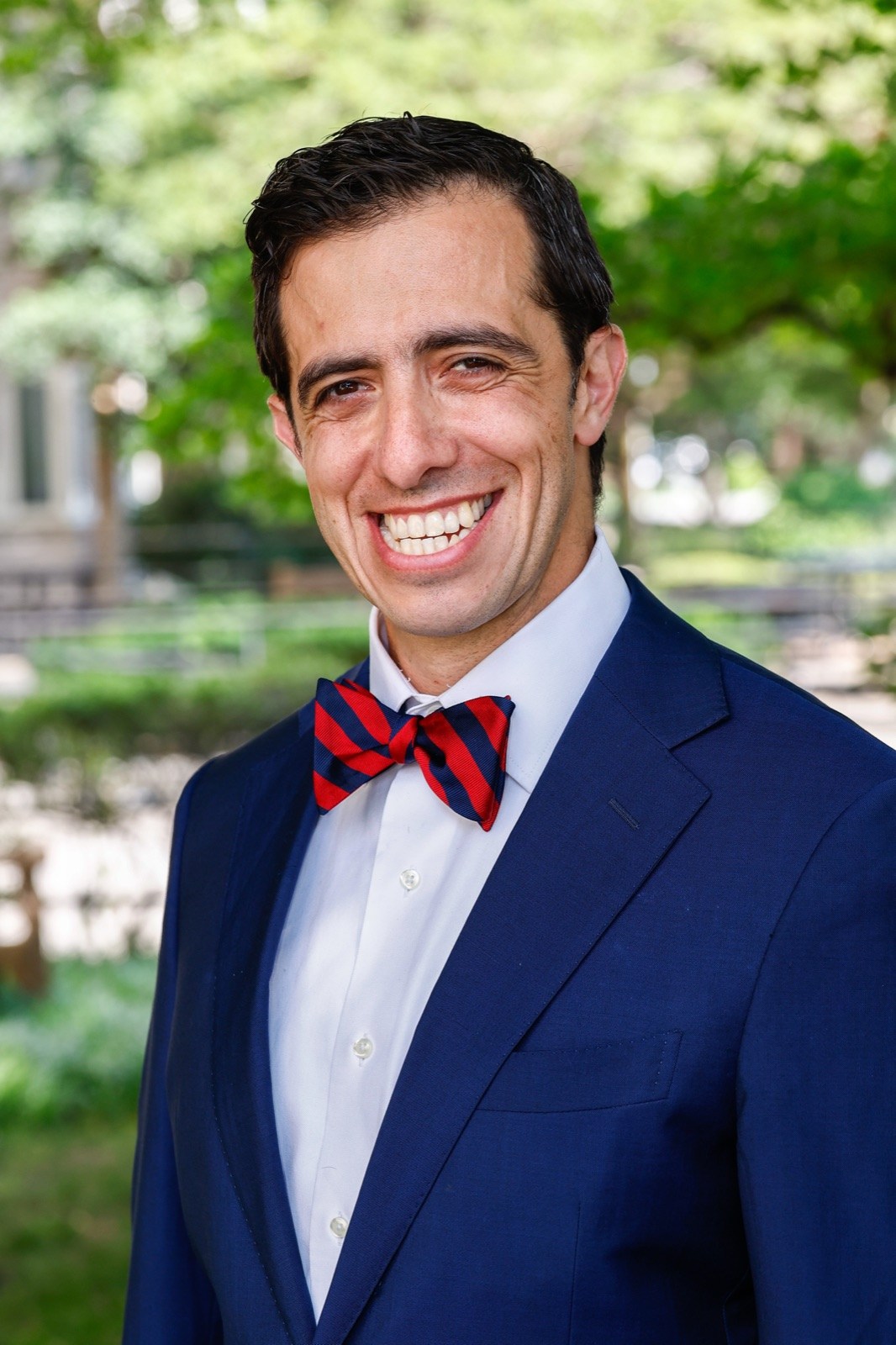
Jon Czin
Jon Czin is a former Director for China at the National Security Council and current Chair of Foreign Policy Studies at the Brookings Institution.
Episode Summary
This week on One Decision, guest host Mary Alice Parks and Sir Richard Dearlove, former Chief of MI6, sit down with Jon Czin, former Director for China at the National Security Council and current Chair of Foreign Policy Studies at the Brookings Institution. In this conversation, the group explores China's growing confidence and its shift from defensive to offensive strategy under the second Trump administration. They examine China's economic posturing, including Xi Jinping's reluctance to craft a stimulus package, Beijing's confidence in its technological advancements, and why tariffs have failed to gain the leverage Washington expected. They also examine the tension between Trump's trade-focused approach and U.S. lawmakers security concerns. The group debates whether China’s assertiveness reflects genuine strength or hides deeper vulnerabilities in its political and economic system, and questions what China’s recent confidence could mean for a potential Taiwan invasion in 2027. The conversation also looks at how China’s rise is shaping global order, including Europe's increasing dependence on China and the risks that come with it, and considers whether the West is truly prepared for what lies ahead.
Episode produced by Situation Room Studios. Original music composed and produced by Leo Sidran.
Listen & Subscribe
- Watch on YouTube
- Listen on Apple Podcasts
- Listen on Spotify
Transcript
COLD OPEN
Culver: What I've heard from Chinese colleagues, it's not that they don't see The US as having leverage in this bilateral dynamic.
Culver: They think that we don't have the appetite to use that leverage.
Parks: Are we really talking about taking all this confidence and actually parachuting boots on the ground in Taiwan in two years?
Dearlove: I don't quite subscribe to your inevitably rising part because I think that the situation could actually shatter rather more rapidly at some point that we don't know about.
INTRODUCTION
Parks: Welcome to One Decision. I'm your guest host today, Mary Alice Parks, joined, of course, by my cohost, Sir Richard Dearlove. Sir Richard, it's good to see you. Very good to see you, Mary Alice. And we're going to deep dive on all the latest China developments this week. In today's episode, we're speaking with John Culver. He was formerly the director of China at the National Security Council under the Biden administration, spent time at the CIA, one of the intelligence community's top China experts, and right now is the chair of foreign policy studies at the Brookings Institution. So, John, thanks for joining us.
Culver: Great. I'm excited to be here. Thanks for having me.
Parks: I'm curious to start with this military posturing that we've seen. I mean, just in the last few weeks, we saw US B-2 strategic bombers with Japanese fighter jets trying to do some joint drills, but that was after China and Russia bombers flew together. You know, what's your read on all of this? Is this a month that actually feels more worrying to you?
INTERVIEW
Culver: Yeah. I mean, I think it's part of a broader shift that we've seen from Chinese posture over the course of this year. Right? I think as we got underway with the new administration, they typically do this. There's a little bit of testing and probing from the Chinese part. And I think we did see that earlier in this year, and I think they were a little bit more cautious at the start of the year, because of the trade war and because of what they knew was coming from the Trump administration. But I think now, China feels very confident as they go into the final month of this year. And I do think that we saw going up to the Trump-Xi summit, you really saw this big move from the Chinese side where I felt like they were really shifting from playing defense and reacting to US moves over the past year to playing offense. And I think the main way that it's manifesting itself is not necessarily directly in the bilateral relationship. It's this pushing out that we're seeing across the region. And I think a big part of it or an important factor in their mind is that they don't think that they've gotten pushback from The US on the gestures that they have made throughout the region. So just to roll back the movie a little bit, the last time I was in China was right before Liberation Day and right before the tariffs dropped. And the Chinese at that point were in the middle of a major exercise in the Taiwan Strait and around Taiwan. Right? And there was very little pushback from the administration at that point. All the focus was really on trade issues, and I think China was very cognizant of that. And when they do focus on China policy, there does tend to be a certain amount of what I've been calling trade myopia or trade and technology myopia. Right? That those are really the core defining issues for the administration and concomitantly less focus on some of these security dynamics in the region. So I don't think it's the only thing driving it. China does things for its own reason, but I think they feel uninhibited because they've encountered not a lot of US response or pushback over the course of these years. They've made these moves vis-à-vis US allies and partners in region. I'm curious your take on this moment with Japan in particular.
Parks: Obviously, the stories right now in the papers sort of talk about that beginning moment with Japan's prime minister making the comments or blunt talk about Taiwan and what any kind of invasion in Taiwan would actually mean in the region, and then this huge sort of Chinese response. Do you view all this latest back and forth as really a part of the Taiwan debate or what you're saying, sort of a larger military expansionism that we've just seen in the last few years in the entire region?
Culver: Yeah. I think it's both. Right? Like, there is this longer term secular trend about pushing back, but I think how hard China pushes back when something like this happens, I think it is a function more of what they're seeing tactically in the moment. So, you know, absent Takaichi's comments, would they have done this to the Japanese? Probably not. But Takaichi having made those comments, which frankly, I just saw as an acknowledgment of reality, and I even think there could be a compelling policy case made that the US should have embraced those comments and said, yeah. This is the reality. This is a challenge. We want more countries and especially Japan to be focused on this, on the Taiwan issue and more explicitly. I think they felt like they could push back because they had the space to. And then you look at the sequence of events of how that played out subsequently. The read here in Washington is that it looked like Trump and Xi got on the phone. And then immediately after that phone call, Trump got on the phone with Takaichi, and if not asked her to walk back a comment, at least to tone things down, has been the public press reporting. Right? And I think that's kind of what Beijing's looking for, and I think that's what they feel they can do in this moment because they feel like they have the leverage in the bilateral relationship with Washington.
Dearlove: Yeah. I mean, you're making it sound to me as though China is in a pretty self-confident position, and I would have personally seen them as being aggressive because they're worried, if you see what I mean. And I'm just wondering how you strike the balance between those two positions.
Culver: I'm not entirely sure myself how easy Xi's internal position in China is at the moment. The problems are real, but I think the confidence is sincere. It's not just born of defensiveness. Right? And in the short term, what I would say is and what I've been hearing from my Chinese colleagues, I think especially Xi hosting the Shanghai Cooperation Organization and the military parade gave Beijing a lot of confidence going into the summit with President Trump. They really felt like they had the wind at their back. And it's important to rewind the movie to where we were at the start of the year geopolitically where China was really concerned about being isolated. Right? Biden administration had put in place a number of mini-lateral and plurilateral mechanisms that China saw as trying to box them in geopolitically. Those seem to have largely withered away. And then even after Liberation Day, you had the Trump administration talking about using these side trade deals as a way to exert pressure on China. And I think China doesn't feel like that ever really materialized in a really meaningful way. In terms of the domestic challenges that Xi faces at home, you're quite right. The purges in the PLA have been extensive. Right? But I really see this as a sign of Xi's dominance of the system rather than a sign of his weakness. He obviously has real concerns about what's going on in leadership, and I think it's multifaceted. I think there's real concerns about corruption. I think there's real concerns about intramural politicking more within the PLA than this being about the PLA opposing Xi in a meaningful way. I think they've been too broken since his first term politically to really orchestrate that kind of resistance to him. He's been too dominant for too long, I think, for that to be a real fear factor for him. And then on the economic side, yes, there are real weaknesses in China's macroeconomy. But again, I don't think it's just bluster. I think we have a pretty clear sense of at least the trajectory of China's economy. And the macroeconomic picture does have some real soft tissue there. Right? They are still dealing with the fallout in their property sector in particular. They do not seem to have found the bottom yet. But I think what's going on in Xi's mind is that these are challenges. They are real. Some of them are acute, but they are kind of short to medium term challenges and that they basically have an effective game plan for dealing with them going forward. And I think the clearest manifestation of this is twofold. Number one, in the short term, there has been a lot of talk, the last year, year and a half or so, expectation among Western observers that there would be some kind of stimulus package. And Xi has actually been quite stingy on this front. And I think the fact that he's been stingy about rolling out any kind of stimulus package, especially as the trade war got underway, is a sign that there's real confidence. I think if they were more anxious or more concerned, we would have seen something more sprawling. Right? Something more like what his predecessors would have done. It's a real shift from Xi and his predecessors who kind of reflexively rolled out a big stimulus package every time there was some kind of economic headwind on the domestic front. But I think you also see it more long term reflected in the Chinese Communist Party plenum that occurred just a week before President Trump and President Xi met, where they laid out their proposals for the next five-year plan that will go into effect next year. And what you basically see across the board is continuity. Right? And I think the fact that there is no major course correction either reflected in their short term fiscal policies or in their longer term game plan for what will lead into Xi's third term is a sense that they are on the right trajectory. And I think they have taken a lot of confidence from some of the technological breakthroughs.
Dearlove: The answer to economic problems that the Chinese Communist Party always delivers is stimulus. The problem with stimulus is there's no basic reform or change. It tends to make the next crisis worse when the stimulus effect has run out. And there's no new thinking by Xi in relation to the economy, which seems to indicate he's a prisoner of the system, that he can't reform, so all you have to do is shove another stimulus in. All I'm suggesting is that this postpones the problems. It doesn't actually make them better. Would you agree with that or not?
Culver: No. I think it's less that he's entered this kind of Brezhnev-like period of stagnation. I think that they do feel like they have a game plan going forward and that they will be in a stronger position on the other side of it. Right? And a lot of it is focused on the high-tech sector. And your point's well taken on the stimulus. I mean, part of the reason they haven't gone there is because there's diminishing returns, and they don't have the fiscal space to do it because they did have such massive stimulus programs previously. And I think Xi in particular is very cognizant of the downsides of those. But I think, you know, there's probably a lot of grumbling from people in the business community and people involved in the economy about the state of the macroeconomy. But I think from the political level, and I think from Xi in particular, there is a real sense that, no, we're on the right trajectory, and we are going to be stronger. And I think the fact that they just had a trillion-dollar trade surplus with the rest of the world last month, I think only puts wind in the sails of that confidence.
Parks: You're talking about this economic confidence. And I think that that was the read across Washington when it came to just the tariff back and forth and escalation over the summer, that the Trump team didn't look as confident as China continued to escalate and at least took each escalation in pair. You know, was that your read too that fundamentally they didn't feel like they could navigate any negative impact of the tariffs and that while there might be a truce right now, it's fragile and temporary, and they somehow still have the upper hand?
Culver: I think Beijing definitely feels that way. Right? And I think the fact that they were able to roll out a massive and very expansive export control regime in the just weeks before President Trump and President Xi were scheduled to meet, I think that was really such a key moment, like I said. I think that's really when we saw China shifting from playing defense to offense. There was a lot of talk in Washington about whether China was being overconfident or overplaying their hand. And my read on this was this was more of a calculated risk. I think they knew there could be blowback from this move, but I think the fact that they were willing to take the risk and then ultimately did it with impunity. Right? There was no retaliatory measure from The United States or even when President Trump threatened the retaliatory measure, like 100% tariffs. He said, well, we could do that, but it wouldn't be sustainable. Right? I think that only validated China's assumption that, yes, we can play this. And what I've heard from Chinese colleagues, it's not that they don't see The US as having leverage in this bilateral dynamic. They think that we don't have the appetite to use that leverage.
Dearlove: Can I then ask you the macro question? You have Merz, and some of us have been saying this for the last five years that, you know, Pax Americana is over. If one looks at international security, you don't have to be a rocket scientist to understand that global security is probably going to depend ultimately on some sort of deal between China and The United States. So Pax Americana becomes Pax Americana et Sericana, if you're a Latinist. What I'm saying is, do you think it's possible within the orbit of the sort of situation? I mean, we're talking at the moment about Xi and Trump, okay, one's got to think about the succession as well. Is the current relationship likely to evolve in a constructive direction in terms of global security, or are you pessimistic about that option?
Culver: I'm very pessimistic about that. Right? And I think from the Chinese perspective, they have very little incentive to it. I think this gets back into my assessment at least about their confidence. They do think that time is on their side. So why make a deal now when they're in a relatively weaker position if they genuinely think that in five, ten years, they're going to be in an even stronger position vis-à-vis The United States? And if you look at how China's position has shifted from the first Trump administration to the second Trump administration, you can see that they feel like they've gotten their act together, at least in terms of dealing with the tariffs and the trade war. Right? China was caught very flat-footed the first time around, and I think was not just not prepared from a policy perspective, but not emotionally prepared. So the other point that's disconcerting to me too is that if you want to argue that there was going to be some kind of sustainable détente, arguably, the price of it would have been big US concessions on the two issues that were most contentious, at least during the Biden administration, but I think even going back to the first Trump administration, and those were technology issues and Taiwan. And now we've had pretty major concessions from the Trump administration on both of those issues. And the Chinese seem to just be pocketing those concessions, and it doesn't seem to be moving them towards a feeling that there can be some kind of deeper and more durable détente.
Parks: Right? And I think part — I know I heard you. What do you mean though by a major concession from the Trump administration on Taiwan? I mean, I think that they would push back on that. You know, that sure, there's some, like you said, some posturing that's gone unmatched or people haven't responded in the same way. Obviously, President Biden was just frankly more vocal and more vocal in terms of pushing allies to also be more vocal on the issue. But there hasn't been a significant policy shift, has there? What would they push back on the idea there's been a concession on Taiwan?
Culver: That's fair. But I think the lack of responsiveness and the questions that Trump himself has raised about Taiwan and tending to see them through the prism through which he sees a lot of our allies and partners more as a drag on US resources, right, and them being a problem in all this. I think those are the things that are worrisome or even what we're talking about with the episode with the Japanese. Right? If that's really true that the president said, like, hey, let's tone it down. So I think from Beijing's perspective, even with those steps we've had from the Trump administration, I don't think that's going to change the mood. And I think part of that is their worldview. I think especially for Xi, but I think especially for a Leninist regime, frankly. Right? They are still going to see us through that ideological prism as a hostile competitor. And so any kind of rapprochement is going to be strictly tactical rather than fundamental.
Parks: But all of this confidence you talked about, from a military strategic standpoint, an alliance standpoint, from the economic standpoint, you kind of keep coming back to confidence posture from Beijing. What do they do with that confidence? You know, what does that look like in the next year? You can even just ask this question just in terms of Taiwan. Like, do they take all this confidence and is 2027 a real date? Are we really talking about taking all this confidence and actually parachuting boots on the ground in Taiwan in two years? I mean, I guess where do you see sort of the rubber meeting the road when it comes to their next short term goals?
Culver: Yeah. I don't think it's about one of the high-end scenarios like, you know, the million-man swim to Taiwan or something along those lines. Right? I don't think Xi wants to do that, but what they are able to do, I think in the coming years, is just steadily accrue patiently in a disciplined way that power and influence. Right? So they will build out that — they are in the process of cleaning house in their military, and I think they have developed more options over time. They will continue to do that. They will have more and more options for how to think about and how to deal with the Taiwan contingency. And at the same time, you'll have an analogous effort underway on the economic front as well. Right? Where, yes, I don't think it's a near-term crunch point, but it is about the economic and technological competitiveness of the West in the coming years. When we tried to pull the tariff lever, did it get the kind of response from China that we wanted? No. It did not. So what does our strategic position look like two, three, four, five years down the road when there's a specific issue we want to try to stop its behavior on or we want them to change course on a specific issue? We're going to have less and less of that leverage over time. Right? I think that's what the confidence is, and I think that's what it's feeding into. It's almost more about — and it can feel a little abstract — but it's about that optionality, and it's about that lack of leverage on the Western side of the equation. I think Europe is getting a lot of experience with this right now. Right? I mean, they are facing a lot of these challenges on their own home front, and they are struggling, I think, to identify solutions for how do we deal with this? How do we remedy what people are calling this China shock 2.0 on the home front?
Dearlove: I entirely agree with your comments about Europe dealing with these problems, but your basic analysis of the rising graph of Chinese influence and power, which is exactly what the problem looks like at the moment, is built on a political foundation in China which can, looked at closely, suddenly appear very brittle in certain circumstances. I'm not a sort of proponent of saying China's going to implode and China's going to collapse, but let's take the incidents that occurred after the Twentieth Party Congress at the end of the pandemic, when there was a continued lockdown policy, you suddenly got these massive demonstrations in China, the first since Tiananmen Square, objecting to Chinese policy. Within six weeks, rather extraordinarily, the government had changed its policies because clearly there was huge frustration on the part of the population. All I'm really asking you is how brittle do you see the position being in Beijing? You know, Xi has no obvious successor. He's knocked out everybody who could possibly succeed him. He won't be there forever. There will be challenges to him. There's a lot going on inside the party that we don't know about because there are factions and there are inevitably problems. I don't quite subscribe to your inevitably rising part because I think that the situation could actually shatter rather more rapidly at some point that we don't know about.
Culver: I think it's a fair point about the brittleness and dysfunction of the system, and I think it's something always to be attuned to certainly. Right? But I think part of the issue — and I wrote about this in a piece for Foreign Affairs recently — I think that Xi had his own perspective on this very much when he came into office. But what Xi is trying to do in the system or what he's been trying to do since his first term is something of a counter-reformation. Right? He sees the pathologies that accrued throughout the system under his predecessors in the first part of the century, you know, the endemic corruption and graft. Right? And a lot of the dysfunction, the fact that the housing market was such a bubble and he finally, perhaps unintentionally, let that implode. I think that he is trying to get his arms around this issue. And I think what he's obsessed with and we know about him is how the Soviet Union collapsed. Right? It's not just him. It's been the leadership writ large for the last thirty years. And I think it's fair to say at this point that China has, in fact, steadily caught up to The United States and the West since the George W. Bush administration. I think militarily, technologically, economically with some kind of ebb and flow. But I think across the board, if you look at their overall strategic position, just objectively, it has improved overall. They are in a much stronger position than they were five years ago, ten years ago, fifteen years ago. And so I don't want to just do a straight line analysis out, and your points are very well taken. But I think that has already been the story of the past twenty years.
THE CYBER THREAT
Parks: When we talk about malware already inside of power grids that feed US bases, I mean, obviously, Richard, I know that you've thought a lot about the cyber threat too. I mean, can it in any way be matched? Like, where are we?
Dearlove: It depends on who gets the quantum computing first. And in that race, is China ahead or not? I mean, for me, quantum computing is the answer to this question you just asked, but I'd be keen to hear what John thinks.
Culver: It's a fair point, and I was just talking about this with a colleague of mine. Yes. Quantum computing would be an important facet of this, but then for the government, there's always going to be the question of who deploys it more quickly too. Right? And what system can ingest it either to use it on the defensive side or on the offensive side, because that's not a given. Those things take time just in terms of procurement. And I think where we're left in the meantime is a very unsettling situation. Right? I mean, this is one of — when I talk about that trade and technology myopia, this is one of the issues that has been left unaddressed. The these massive cyber intrusions. I feel like because there were so many revelations about them during the transition period, it's almost like they got lost during that transition period. So this is one of the things where there hasn't been a US response. And not only has there not been a US response, but this was reported in the press a couple weeks ago, there was talk about a sanctions package, which is not perfect. Right? It's not going to solve the problem, but at least sends a signal that we're paying attention and we care. And even that did not go forward is what the reporting indicated. Right? So if we already have these massive cyber intrusions and even the things that we can do readily to at least send a signal, if nothing else, that we are taking this seriously, if that is not happening, I do find that disconcerting because this is a very challenging set of issues to get our arms around. And the perennial challenge with the cyber issue is who owns this? Who gets their arms around this? Right? I mean, the organizations that we do have in the United States government to deal with this, such as CISA over at the Department of Homeland Security, has been decimated this year. Right? So it's not — because you're going to need to deal with the private sector to get your arms around this. This isn't just going to be a USG problem. It's going to be about a wide swath of actors. And that is hard to do on a good day. But if you don't have the personnel in place to do that or those institutions are taking a hit separately, then that is really troubling.
Parks: You know, obviously a tiny cyber threat impacts the globe. From an American perspective, how interesting to insert this kind of split screen on this issue between Congress and the White House. China Hawks in the Republican Party still extremely worried about countering cyber threats, about whether cyber intrusions have gone unchecked and unmatched and unresponded to, like you mentioned, you know, the biotech concerns. So talk to me a little bit about that split screen that you see and whether the US Congress might actually try to really force this issue and kind of a larger security threat issue on a White House that so far has wanted to really focus on China in a different way?
Culver: Yeah. I think it's a million-dollar question. I think people have been educated about the threat and have really changed their mindset over the last few years. But if I have to just stray into the domestic politics of this a little bit, Trump does have the power to shift the conversation, right, and especially within the Republican Party. So even with this decision to sell the H-20s just last week, you have Republicans on the Hill saying that they're concerned about it, but I don't think anybody's going to want to get in the way of the White House. Right? And there's typically wide deference allowed to the executive anyway, especially from your own party on matters of foreign policy and national security. So I think it's going to make it challenging at least for the next few months as we are in the run-up to this meeting between Trump and Xi in April. Right? If that continues and we're on that trajectory, I think it'll make it hard — it will set limits to how hard Congress is willing to push on this issue. Maybe if things start to fall apart and they see that there's more space or there's a shift in tone from the White House. But I actually suspect that that won't be the case through the midterm elections. And I think this is what the Chinese are banking on too. And if you look at polling of the American population, you already start to see some shifts in the past year about public perceptions of China. Right? And one of the things ironically that you see highlighted from the public on China is concerns about the cybersecurity threat from China. But there has been, I think, at least one tick back, dialing back already in terms of the perception of China as an overall threat or challenge to The United States.
PREDICTIONS AHEAD OF THE SUMMIT
Parks: So what are your other predictions ahead of the meeting?
Culver: I think it's going to be a bumpy trajectory. Right? I think that's partially because of my understanding of what the Trump administration still has in the queue. I don't think that they're done unburdening themselves with various trade matters. The other question that's floating around out there too, and this is kind of wonky, but there is the Supreme Court decision about IEEPA, which is most of the tariffs that came down the pike on Liberation Day. Right? So if the Supreme Court overturns those in the coming year and the administration in effect has to reconstitute its tariff regime on China, I think the administration will probably try to argue, no, no, these are just — it's the same tariff rates, we're not violating the deal that the two presidents came to. But I think China will say, no, this violates the spirit of the agreement, and we are going to unleash retaliatory measures if you try to reimpose the tariff regime. So I think those are some of the things that I'm expecting to come up in the run-up to that meeting. Just because these things have not finished their natural storyline yet on the US side. I think if you couple that too with this idea that I'm worried about that China really is shifting from defense to offense in the coming year, that they're going to be pushing harder on our allies and partners in particular in the region, but also on The United States. I will say there are two analogs that come to mind watching Xi in that moment in the room at that meeting, as somebody who's watched him a long time. Number one, this felt a lot more like Xi Jinping's first term in office, right, where there were big muscle movements on the international scene. That's when the Belt and Road came out. That's when they tried to reclaim 3,000 acres in the South China Sea. Right? When Xi felt confident, that's when we saw him making these big kind of pushes that we were talking about at the outset of this conversation. So I worry about more of that and a big uptick on that front in the coming year. The other analog that stands out in my mind too is that this felt the way that Xi treated and the Chinese treated The United States in the run-up to that meeting, it felt like how they treated the Europeans in the run-up to the China-EU summit this summer, where they were very impolitic with them and pretty rough on them diplomatically and didn't really make any concessions. And it felt like the Chinese were treating The United States more the way they treat the Europeans. And traditionally, even in these moments of tension, they've been more ginger with The United States and with the Trump administration in particular. So I think they've changed gears a little bit, because they think that they can push harder with The United States when we do something that they don't like.
Dearlove: What I was just about to say about the European situation was the lack of coordination amongst the European nations in dealing with China. You have very different approaches in Italy, in Germany, in The UK. I think one of the major issues which I've been very concerned about, which I've been writing about quite a lot in our press, is the Chinese creation of dependencies within critical national infrastructure. To an extent that applies a bit in The United States, but not nearly to the same degree as it does in Europe. And, you know, a lot of what you're saying worries me because it does give a platform for the Chinese, let's say, aggressive diplomacy in a manner which perhaps doesn't apply so much in other parts of the world. They've clearly focused in Europe on building these dependencies. How do you see that from your perspective, particularly in relation to Europe?
Culver: I personally think it's a big problem for us. What I worry about is that I fear that we've entered this moment where the Europeans, but I think also us in some ways, are kind of stuck. Right? We have gone far enough down this trajectory of recognizing the challenge from China and considering them some kind of threat to our interests, but not so far enough along down that path that we're actually able to take the concerted effort that we need to reduce those dependencies or compete with China in an effective manner. Right? So that kind of precludes us from going back to the future. We can't really go backwards, and yet going forward seems to be quite complicated and challenging, if not possibly impossible. And I think we're kind of going through something similar right now in The United States where we are stuck. I think there has been this awakening, this recognition of the challenge, but the way forward is going to be quite challenging and probably expensive. So this is really kind of what, as a longtime China watcher, has been giving me the most angst recently. What I worry about from the US perspective is that this moment that we're in after the summit, I've been calling it friction without competition. Right? There's enough irritants in the relationship that it's going to create those friction points, and I forecasted some of those that are coming down the pike in the coming months. But it's not clear to me that we have gotten ourselves organized and disciplined in such a way that we really can compete with China in the next couple of years in the ways that we really need to. I don't think that for Americans in particular we have really emotionally come to grips with the challenge. Right? Everybody in The United States has grown up with The United States as the top superpower. It's almost putative. And no politician is going to run a platform of US as number two. Right? It's so encoded into our political DNA that I think it is very hard for people to come to terms with the nature of the challenge and how wide-ranging it is, that it's not just an economic issue or a cyber issue or a military issue. It's really all of the above.
Dearlove: That's a great note on which to conclude, and you have made me feel a lot happier about the issue.
Culver: It's not really endemic to our line of work.
Dearlove: I know. I mean, in terms of future policy construction on China, it's made me really, let's say, more pessimistic. I think we have a big problem on our hands.
Parks: Yeah. To Richard's point, you've left us with a lot to think about. Not sure sort of rosy sentiment heading into the holidays, but I appreciate the real talk, the tough talk. Thank you.
Culver: I really enjoyed this. Thanks for having me on.
Parks: That's it for this week's episode of One Decision, a wide-ranging conversation. Thank you again to our guest, John Culver. For more conversations with leading decision makers and thinkers like John, check out our onedecision.com page, our YouTube page where you'll find additional videos, commentaries, explainers, a whole lot there to dive through. I am Mary Alice Parks. Thank you for listening.