Episode Info
- Season8
- Episode5
Hosted by Christina Ruffini and Sir Richard Dearlove
Guest
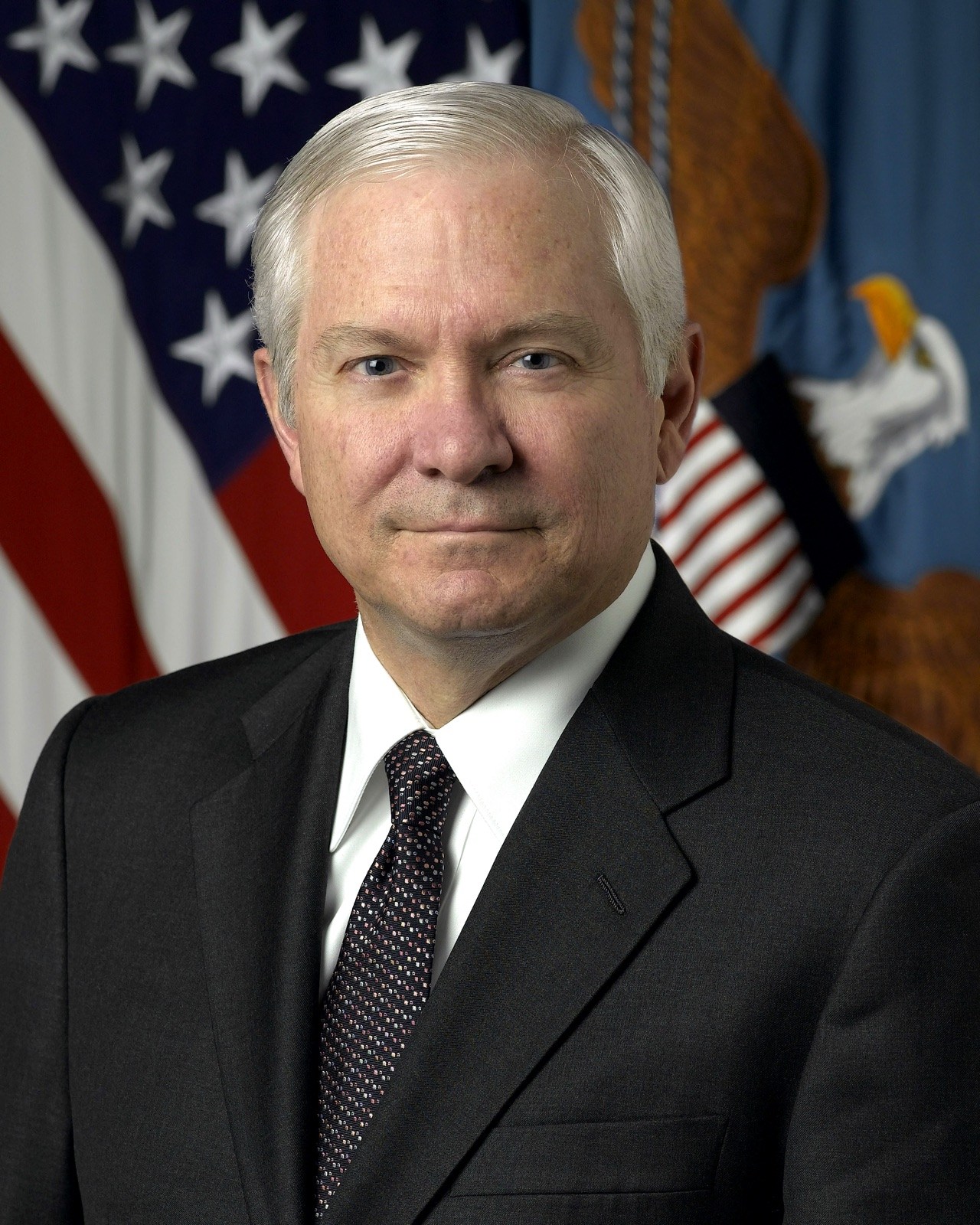
Dr. Robert Gates
Dr. Robert Gates is a former Defense Secretary and Director of the CIA and a longtime expert on the Soviet Union. Dr. Robert Gates shares predictions on how Beijing will apply lessons from Russia's war in Ukraine.
Episode Summary
Former Defense Secretary and Director of the CIA, Dr. Robert Gates, sits down exclusively with One Decision and shares his prediction on how Beijing is likely to apply the lessons Russia learned in Ukraine. Gates began his years as an expert on the Soviet Union, and led the Agency after the fall of the USSR. With host Sir Richard Dearlove, former Chief of MI6 and host Julia Macfarlane, Gates weighs in on the current conflict, with a warning for the west. While Macfarlane pushes both Gates and Dearlove on whether Iraq can be considered a success, and the consequences of our failure to secure the peace in Afghanistan.
Listen & Subscribe
- Watch on YouTube
- Listen on Apple Podcasts
- Listen on Spotify
Transcript
INTRODUCTION
Mcfarlane: Welcome to One Decision, the podcast that looks at the biggest decisions taken that have shaped our world, as well as the choices being made today and those that are yet to be made and will affect us all. We speak to leaders and decision makers around the world about why they made the choices they did and what choices they would make today. I'm your host, Julia McFarlane, and today we hear from Doctor Robert Gates, one of the top leaders in national security in recent years, one of only two secretaries of defense who've also served as head of the CIA. Naturally, he is an old contact of my cohost, former chief of Britain's Secret Intelligence Service, Sir Richard Dearlove.
Dearlove: Hey, Richard. How are you? Very well. It's a long time since we've seen each other. Yes, indeed. A lot of water has flowed under the bridge.
Gates: Way too much.
Dearlove: Yeah. Well I was trying to work out when we last saw each other I guess it was when I was chief station in Washington.
Gates: Maybe after that once or twice. I moved as far from Washington DC as I could get in the Continental United States probably doesn't make it any easier to reach.
Mcfarlane: Well, I am thrilled to be welcoming to the podcast today Secretary Robert Gates, former secretary for defense from 2006 to 2011 spanning two US administrations, President Bush and President Obama. The only defense secretary in US history to be asked to stay in office by a newly elected president. He was also director of central intelligence under President Bush from 1991 to 1993, that job no longer exists, but basically Doctor Gates, were head of the CIA and the equivalent to the Director of National Intelligence at the same time, I believe. Thank you so much for joining us today on One Decision. It's my pleasure. I wanted to start the conversation today because we've recently had the new National Defense strategy, which was released and it has interestingly reprioritized the threats facing The United States to a one plus one plus three construct, which has China described as the most consequential strategic competitor, followed by acute threats from Russia, and then the plus three is persistent threats, including those from North Korea, Iran and violent extremist organizations. Now there's a lot of interesting stuff in there, but I wanted to ask for our first question today, what is, in your opinion, the biggest security threat facing The United States today?
Gates: I think the actual greatest threat facing The United States right now, is found within the two square miles that encompass the White House and the Capitol Building. Because if we can't get past our paralysis and our extreme polarization, there is no threat from abroad that holds as great a danger for The United States as that internal problem. That said, I think that I wish that the administration had had and its predecessors, frankly, had understood the need for a global strategy before the Russians invaded Ukraine. It's been obvious since at least 2008 and the invasion of Georgia that Putin was an aggressive player and that Russia would be a challenge for The United States and its allies going forward. I think that the greater long term challenge is China because it's a multidimensional challenge. It's very similar, you know, when people say we're in a new cold war, my reaction is that I think that understates the problem and the challenge because the Soviet Union was really a single dimensional power. It had oil and gas, but mainly it had nuclear weapons. And its economy was not integrated with the rest of the world. It didn't have effective diplomacy or leadership. And China is a threat in a number of different arenas beginning with the economic challenge posed for the rest of the world. And the Belt and Road and, you know, part of Belt and Road is at this point, the Chinese own or manage several dozen of the most important ports in the world. So China's a much richer country, much smarter government than the Soviets had. And so I think we will find them a challenge on a number of different levels, including, for example, strategic communications. Hu Jintao in the early two thousands invested $7,000,000,000 in a strategic communications capability for China that we now see all over the world in various aspects. So I think in terms of a long term challenge, China is clearly the most important that we will face and the most difficult. But we should have recognized long ago that Putin was not to be written off. Obama dismissed him as a regional player, dismissed Russia as a regional player, a weak regional player. President Trump had this weird personal relationship with Vladimir Putin. And the Biden administration, when it took office, basically said they're gonna park Russia off to the side and not focus on it. And I think they all three seriously erred in underestimating Russia. So I think the revision to the national security strategy was, frankly catch up kind of effort. The previous drafts had all been focused on the pivot to Asia and on China. And they have to they've had to realize that they need a global strategy because for the first time since World War Two, we face powerful adversaries both in Europe and in Asia.
Mcfarlane: You've touched upon so many questions that I hope that we have time to cover in the course of this discussion, but since you mentioned the signs that we missed, I want to bring up an op-ed actually that you wrote back in 2014 when the annexation of Crimea took place and you wrote about President Vladimir Putin, he will not be satisfied or rest until a pro-Russian government is restored in Kyiv. You called in that same article, you called for investment in Russia to be curtailed, for Russia to be expelled from the G8, for Europe to reduce its reliance on Russian oil and gas, for US military withdrawals from Europe to be halted and for the EU to grant associate status to Moldova, Georgia and Ukraine. I think we'll agree that that assessment has aged incredibly well. Interestingly, today we hear that Olaf Scholz, the German chancellor has said that he backs granting candidate status to Moldova and Ukraine, which I think is a really important development. But I just want to ask, is the crisis today, would you say it is a direct result of the failure of Western leadership? And would you say that that in itself is a reason why those who advocate for non-interventionist foreign policies, who say that The US needs to stop meddling in the affairs of other countries might be wrong?
Gates: I think that we're seeing in Ukraine what happens when The United States doesn't take the leadership, and conversely, what happens when it does. So I think we ended up where we are in Ukraine because the West in general and The US in particular did not take Putin seriously and essentially let the invasion of Georgia, the cyber attacks on Estonia, the actions that they've taken in Ukraine in 2014 and so on, basically, let the Russians off with a slap on the wrist, and the Europeans really didn't wanna do anything. And if there's anything that's clear about Vladimir Putin, he epitomizes Lenin's approach that basically is you push and push and push. And as long as you can keep pushing and there's no resistance, keep pushing. And only when you run into resistance, only when you run into steel, do you then stop. And there was no resistance to Putin's ambitions, essentially, to restore the Russian empire. And I think a lot of people underestimated Putin's determination. I think the West in general dramatically underestimated the magnitude of humiliation felt in Russia by the collapse of the Soviet Union because it really wasn't just the collapse of the Soviet Union, but the collapse of the 400 year old Russian empire. And we just weren't listening to what they were saying. And or we thought it was just idle rhetoric. So I think that Putin's willingness to take these risks, I think our responses to his earlier actions contributed to him believing that the Western response would not be a strong one. And when I talked about the converse aspect of US leadership, what's really remarkable is how quickly, despite all of the comments about The US withdrawing and about The US not having influence and so on and so forth, how quickly the administration brought together the alliance and other countries, including Japan and Australia, and so on. And really the imposition of extraordinary sanctions, really nothing like it against a major economy in modern times. And so I think you saw a demonstration of, first of all, that The US still has the capacity to lead. And I think it helps deal with the argument in The United States that we shouldn't be the world policeman. We're not involving US troops. We're basically serving as an arsenal for Ukraine as are other countries in Europe. But the speed with which the administration was able to assemble this coalition and the actions they've taken is encouraging, given the history of the past ten or a dozen years.
Mcfarlane: So I think it's interesting, absolutely very important to point out how effectively The United States was able to rally other countries in its alliances in support of Ukraine. But at this point, I want to bring in my partner in crime, Sir Richard Dearlove, former chief of MI6, because the question I have is that what Doctor Gates, you're totally right in that, you know, the last few months we've really seen American leadership rejuvenated by this whole crisis, but before the day that Putin actually launched troops into Ukraine, the Biden administration was singing from the rooftops that invasion was imminent, and it seemed that not many people took the administration seriously. So why do you think that was?
Dearlove: Well, I'm pretty sure this is speculative because obviously I'm no longer centrally in the know as I would have been in the past that there were clear signs both at the tactical and strategic level from US and other countries intelligence probably The UK principally, which indicated that the buildup of forces was a deployment which was designed specifically for an invasion. I mean, for example, like where your military hospitals are sited and, you know, how much mobility your front troops have got. I mean, to be honest, I was skeptical. I thought that the Russians would do everything except take that really decisive step and invade. But I mean, as it turns out, the warnings that were issued were correct. And I mean hats off to the former analysts that Doctor Gates and I would have worked with that they got it right. I mean I think that you probably also have to speculate that it wasn't just observation. It just wasn't only analysis. I would imagine there was some human intelligence available in relation to the plans going on inside the Kremlin. I mean, I think to make that degree of accuracy and prediction, your coverage probably has to be pretty good, but that's purely speculative. I don't know. I doubt that Doctor Gates is, he might be, but specifically in the know either. But I mean, the intelligence community carried out an impressive analysis and got it right. And as we know from other crises, it's quite difficult to get these predictions right. You're not actually in the mind of Putin. And, you know, we've all heard that sort of statement. There are mysteries and there are secrets. This in a way, what Putin was gonna do almost had status as a mystery, But clearly, the preparation was such that, you know, they got the prediction exactly correct, and hats off to the people that did that.
Gates: Now I just wanted to add that, you know, I think that one of the toughest things in the intelligence business is predicting intentions. Intelligence is really good at measuring capabilities and technical qualities and so on, but measuring intentions is very difficult. The Soviets invaded Czechoslovakia on my third day at CIA, and the forces had all been aligned on the border of Czechoslovakia. But there were lots of reasons for them not to go into Czechoslovakia as well as to go in. And so I think people were surprised even though they knew that the Soviets could go in at any moment. They didn't have any information on whether, in fact, they would take that step. Exactly the same thing happened on Christmas, in Christmas 1979 with respect to Afghanistan. The analysts put together the pros and cons, and the cons against the Soviets invading Afghanistan were so overwhelming in terms of the problems they would face that there basically was a sentiment that they probably wouldn't do it. But then, as we know now, Brezhnev and a handful of others made the decision to go in. So I think one of the real achievements of this pre-Ukraine intelligence was not just monitoring the capabilities of the Russians, but actually getting intent right. And I think Sir Richard is right. Again, I've been away from it for a long time, but I think the odds are very high they had remarkably good human intelligence, and it must be driving Putin crazy to know that somewhere in his apparatus is a mole, is somebody who is leaking information. Because we're not just hearing about the big things such as intent to invade, but we're hearing about his behavior in meetings, about his actions and behavior toward his colleagues and so on. So I think this is a big achievement. One of the criticisms that's being leveled against intelligence now is that they didn't properly measure the will of the Ukrainian forces and the incompetence of the Russian military leadership and the Russian forces. In all honesty, in all the years I spent in it, I'd love to hear what Sir Richard thinks, but if measuring intentions is difficult, under the best of circumstances, measuring the will of a people or the incompetence of a military, I think, borders on the impossible. I think at certain point, policymakers need to understand there are limits to what intelligence can provide. And how you measure the will of the Ukrainian people or the will of their soldiers and how you measure courage and so on. I don't know how you do that. There's no single source or there's no, you know, polling or whatever options there are. I just think that that's not a legitimate criticism of intelligence.
Dearlove: And I think it's remarkable what the Ukrainian military have achieved in the face of pretty much overwhelming odds. Most of us assumed that the Russians would drive through to Kyiv in a month or six weeks and that, you know, the Russians would probably have the capability quickly to depose the government to put a puppet government in place. And yet, you know, they suffered down that northern valley down from the north. Horrendous military defeat. I mean, that's the truth of it. I mean, we have given great credibility to the Russian military in certain situations. But in this particular situation, they have performed appallingly badly.
Gates: If there's anyone that ought to be unhappy about the quality of intelligence he got, it would be Vladimir Putin. And, you know, just to illustrate expectations, we now know that the Russians who actually came down from the North and were headed for Kyiv had five days logistics support and actually had packed their ceremonial uniforms for the victory parade in Kyiv. That's how confident they were how fast they were going to get.
Dearlove: I was recently told that, yeah, I've recently been in Central Europe and someone told me that the Russians had paid off a lot of the local governments but the people that they had paid off who they expected as it were to side with them immediately were under the control of the Ukrainian services and had been told to act as though they were accepting the payoff and that they would get the balance of the money later and in fact the Russians were really suckered into thinking that a lot of the local administrations north of Kyiv would welcome them but in fact the opposite was true. And I mean if that is the case, I mean Bob you're absolutely right, the Russians were sort of suckered into believing that you know they could just drive through and there would be very little conflict and you're right they had their dress uniforms packed in the back of their tanks and expected to be in a military parade down the Central Street in Kyiv within five days.
Mcfarlane: That's extraordinary. I think the both of you have picked up on something very interesting and that is this potential shortfall or difficulty that the gathering of intelligence has and in failing to foresee the willpower and the morale of the Ukrainian resistance, as well as the incompetence of the Russian military. There was also a failure to foresee the lack of morale in the Afghan army that was so key to the Taliban being able to sweep through. I mean, is there a common failure here in the way the West handles intelligence gathering and what it does with information it gets on the ground that have led to these big holes in what we have understood to be the case on the ground, and then actually the reality ends up to be manifoldly quite different?
AFGHANISTAN AND IRAQ
Gates: Well actually what I think happened in Afghanistan was a policy failure, not an intelligence failure. The fact is our military predicted all along that if there was a complete withdrawal of American and allied forces from Afghanistan, that the Afghan army wouldn't last very long. I think we made an error in the way we designed the Afghan forces because we made them more like a miniature of our own in terms of being heavily dependent on logistics and technology and maintenance capabilities and so on, most of which are provided in Afghanistan by contractors who were there because they were protected by American and allied forces. And my view is when we pulled out altogether and the contractors pulled out, the frontline Afghan soldiers were not getting provisions. They weren't getting food. They weren't getting ammunition. They weren't getting helicopter support. They had no medical support. And if there was anything that was easily predictable, it was under those circumstances, the Afghan army would collapse. And our military told our policymakers that. They told President Trump that, and they told President Biden that. And the decision was made to move forward regardless of those likely consequences. So I think that quote unquote the failure to predict the collapse of the Afghan army is a canard. I think our military predicted it pretty much right on target.
Mcfarlane: Then does that mean then by extension you believe that the administration knew exactly what was gonna happen when it pulled out of Afghanistan?
Gates: I think that they hoped against hope and went against the advice of their military advisers. I think that Richard, all of us who've been in the intelligence business have a lot of experience with policy failures being characterized as intelligence failures.
Dearlove: Yes, you can say that again. I've been the butt end of those problems on several really famous occasions and it's a tough situation to be in. Yeah, I mean I really agree with what Bob's saying about Afghanistan. I think it was a policy failure and I mean when I left office in 2004 you know we actually had a rather different design for Afghanistan than the one that subsequently developed and I think that design which was rather more dependent on you know special forces, smaller units. I don't think it would have, let's put it like this, I'm not sure it would have been any less successful and it might have been more successful in the medium to long term but you know we all know the complexities of involvement in Afghanistan. We've all read the history and we all know what's happened to invaders since the nineteenth century if you take the Afghan point of view. But I think it was, in my view it was an unnecessary catastrophe what happened when we withdrew.
Mcfarlane: Well Doctor Gates I want to ask you because in your book Memoirs of a Secretary at War, you claimed that President Joe Biden has been wrong on nearly every major foreign policy and national security issue over the past four decades. I know that quote has been handed back to you several times in media appearances since then. You have stood by that claim since including recently when it came to the pulling out of Afghanistan, but the question I'd like to ask you is that what should we have done instead of unilateral pulling out? And also, does the ensuing instability and repression being carried out by the Taliban, in your opinion, does that mean it is likely that Western troops will one day have to return to Afghanistan?
Gates: I would be very surprised to see Western troops return to Afghanistan. If we were attacked from out of Afghanistan again by terrorists, you might see special forces go back in in small but very targeted ways to go after the terrorists specifically. But I think the likelihood of any sizable Western force going into Afghanistan again is highly unlikely. I think that our military argued with the administration that leaving four or 5,000 troops in Afghanistan, and probably there would have been almost an equivalent number of allied forces stay with us, that that would have been sufficient to sustain and keep the Afghan army in the fight, if you will. I think it's true that after we pulled out the bulk of our forces, the Taliban were slowly taking more and more of the rural areas, returning to rural areas where they'd been pushed out during our surge in 2010. But I think the outcome would have taken much longer and might have turned out differently had we sustained a small force in Afghanistan, as we have done in a variety of other countries around the world, we could have prevented the catastrophe that took place.
Mcfarlane: How did it make you feel personally to see those crowds of people trying to leave, the stories of Afghan interpreters, interlocutors, people who worked at the embassy being left behind and being forced to fend for themselves, many of whom had said they felt abandoned by their former colleagues, by the Brits, by the Americans. Personally, how did that make you feel?
Gates: Well, I was feeling pretty low for a few days and I couldn't figure it out, and then I suddenly realized that it was just both frustration and sadness at the catastrophe that unfolded and the suffering that the Afghan people were going to endure because of a policy mistake. And my belief that, like the Iraqis, our surge had given the Afghan politicians a little space in which to try and organize their country and to be a more effective government. You know, the reality is that as messy as it is and as flawed as it is, the Iraqi government is the only real democracy in the entire region. And the politicians are yelling at each other and not shooting at each other. And so the Iraqis in many ways took advantage of our surge. As messy as it all was and complicated and frustrating, they did take advantage. And I think the Afghan leadership, first President Karzai and then President Ghani, and all of the different factions really threw away the opportunity that they had been given. So I think it's also important as we're ascribing responsibility for failure, Afghan leaders themselves have to take a significant measure of that responsibility.
Dearlove: I think Doctor Gates is saying something really important because historically I'm pretty sure that there will be a big contrast you know let's say in ten fifteen years when historians look at Afghanistan and historians look at Iraq and we don't necessarily appreciate it now but I think those of us who've been closely involved in Iraq realize that Iraq actually might turn out to be a success in terms of what the end game will look like. I mean, if there is a political end game, whereas, you know, the policy failure in Afghanistan is clear cut and rather stark. And I would argue that Iraq was not a policy failure, but might actually be judged historically a success. And I think that's a very controversial thing to say, but I think it's really important to make that contrast. And I'd actually be interested to know what Doctor Gates thinks about that.
Gates: Well, I mean, I agree. I think that the book is still open on Iraq and it's interesting that the talks between the Saudis and the Iranians are actually taking place in Baghdad. And there is a role that the Iraqis can play. And, you know, it's not going to look like Vermont. It's always going to be very rough, very violent, but that's sort of the history of Iraq. But these three major ethnic groups are trying to figure out how to live with each other. The Sunnis, the Shia, the Kurds. And, you know, they haven't reverted to a dictatorship, to a military dictatorship. They haven't reverted or have not turned into a theocratic state. They're still having elections. The elections are pretty flawed. I think we probably are in no position to brag or to point fingers on problematic elections. But, anyway, I think Richard's right. I think that this story has not ended yet. But right now, where Iraq is, the contrast with where Afghanistan is, I think, is really stark.
Mcfarlane: I'm going to be a bit bold and say I disagree with both of you, esteemed gentlemen, purely just because I am still sort of shocked by how all Iraqi defenses and not just a military defense, but also in a societal sense, were just swept aside by ISIS in 2014, losing the you know the biggest city they had in the North and how long it took to reestablish their control in this area.
Dearlove: Well that was part of the sort of evolution of Iraq and there was a specific reason why it happened which was largely because in my view the disbandment of the Iraqi army and a lot of those people who you know could have been used to keep law and order in Iraq were actually sort of displaced and became almost a vagrant army and therefore were very susceptible to being picked up by ISIS. But anyway, that's an issue for historical debate and quite a complex one.
Gates: I would just say there's another factor involved in the collapse of the Iraqi army around Mosul, and that is that when we left, we had basically selected and trained most of the senior officers in the Iraqi military. And after we left Iraq, Maliki and the other political leaders in Iraq replaced all of those trained, capable senior officers in the Iraqi army that we had had a role in preparing, replaced them with political hacks and totally corrupt individuals. The soldiers all knew this, and they were not gonna give up. And the generals in the Mosul area were the first to flee, and those soldiers were not gonna give up their lives for a bunch of corrupt generals. So I think it's a more complex story than might superficially appear to be the case.
THE GULF AND THE MIDDLE EAST
Mcfarlane: I absolutely take your point on that. We have moved from Russia to Afghanistan, to Iraq, and you mentioned the talks between the Saudis and the Iranians going on in Iraq. And so I do want to ask you about the situation with the Gulf nations. Saudi Arabia, The Emirates have traditionally been counter terrorism partners with the West. Biden is going to be headed later to Saudi to try and patch things up with MBS after things soured over a number of things, the murder of Jamal Khashoggi, the resumption of the Iran nuclear talks and the lack of support for MBS's brutal war in Yemen. I mean, the Saudis are also pretty upset at the lack of US responses to attacks on its oil plants and its facilities in recent years by the Houthis. There's also the Gulf nations and their response to Putin's war, the sheltering of Russian oligarchs and Russian money post sanctions. And so, I wanted to ask both of you, is this part of the world still seen as important for The US to cultivate ties, or has Washington taken a back step, and perhaps wrongly, in its investment in the Middle East because of the threat of the East distracting the administration from it?
Gates: Well, first of all, three successive administrations have signaled that they want to be less involved in the Middle East. It started with President Obama. It continued under President Trump and has continued under President Biden up until now. And as the Gulf States saw The United States declaring, I mean, it was no secret that we wanted to be less engaged in the region, they began looking at their alternatives. And for the first time, they began looking to Russia to buy weapons, and they were concerned by the fact that the ally they thought would be there for them, particularly with Iran, was no longer reliable. And I think that the Obama administration's focus on the Iran nuclear deal was precisely the kind of grand bargain that had worried the Gulf Arabs all along, that The US would at some point cut a deal with Iran that was good for The United States, but not so good for anybody in the neighborhood. And so it's not been a surprise to me that these leaders in the region have put some distance between themselves and The United States. And for example, Mohammed bin Zayed was just furious when the Houthis launched missile attacks against The UAE, and The US did nothing. They didn't even call to express condolences or sympathy or what can we do to help or anything. And MBZ has been one of the strongest allies of The United States for a long time. And he wouldn't even take calls from the Secretary of State. He was so angry. He was afraid he would say something that would have permanent consequences. And granted both Russia and China are also cultivating good relations with Iran. But beneath the surface, as we've seen, as we've talked about, so are the Saudis, and The UAE has always maintained a back channel with the Iranians. So they're very concerned about Iran and Iran's meddling in the region. And I think one of the results of The US pulling back has been the success of the Abraham Accords. And now the Saudis becoming involved in that, sort of the Gulf Arabs buying into the enemy of my enemy is my friend. So you've seen really a sea change in the relationship between Israel and the Gulf Arabs. And so I think that whole region is more in flux than it has been in a very long time. I think the principal reason for it has been missteps by The United States.
Dearlove: No, I agree with that analysis. I mean, historically, there have only been relatively brief periods when The Middle East was at the center of US foreign policy and we've just been through that sort of period. You could argue, you know, it almost is an aberration. What we see now is a reordering of the pieces and I think Bob's analysis is absolutely spot on. And I think the Abraham Accords at the moment have changed the game and I was speaking recently to a Gulf Arab minister and I was absolutely staggered when he described to me the extent of the contact and discussion that was going ministry with Israel and I think this is very surprising and a few years back would be completely unthinkable. There's no question that the tectonic plates are shifting and we don't yet see quite how they're gonna reorientate themselves.
Mcfarlane: I mean, I think US foreign policy in the area is somewhat confused at the moment. But I think clearly the administration wants to get out of wars in The Middle East, but that doesn't necessarily mean abandoning maintaining important friendships and alliances, and what would one phone call have cost? And that's what I think is very interesting because what happens when there is that void left behind when this region feels The US is not their friend, fair enough if they want to stop their forever wars in The Middle East, but then there are ways to maintain strategic partnerships outside of a military sense, and then who else will step into that void? Doctor Gates, will it be Russia, will it be China, who do you think is going to replace The US in that space?
Gates: I don't think anyone in particular is gonna replace The United States. I think both Russia and China will be very opportunistic. And, you know, the Chinese are particularly interested because of their dependency on Middle East oil and gas. And so they have multiple interests in cultivating those relationships. I think the Russians will sell arms to anybody who will buy them. I mean, just to show you how things have changed, for the first time since 1973, the Russians are back in Egypt, and the Egyptians, Sisi, feeling abandoned by The US because of human rights issues and so on, is now turning for the first time since the Yom Kippur War and Henry Kissinger got him out of the region, are returning to Egypt with significant arms sales, and they're very active in Africa as well. You know, the administration, I think, has come to the realization that they screwed up in their relationship with the Gulf Arabs. And so you had Tony Blinken, Secretary Blinken, make a trip, and finally, MBZ agreed to see him. And Blinken did exactly the right thing. When he first sat down with MBZ, he said, We made a big mistake in not responding to your security needs. And now you have this security relationship or accord being negotiated between The US and The UAE. Who knows what that will look like and what kind of commitments it involves and whether it will be sustained under the next president. But I think there's been some recognition, including the trip to Saudi Arabia, by Biden that we actually need to cultivate a good relationship with these countries. Because even if we aren't significantly dependent on Middle East oil, the price shows that the supply is fungible. And so if The Middle East isn't producing or if Russia's not producing or being able to sell, the cost of fuel is going to go through the roof. And we've seen that, and that's, I think, the main reason Biden's going there is to see if they can open up the taps a little more. I think that they're trying to sort of make up for lost time and lost ground. I'm not sure how effective it'll be.
CHINA AND TAIWAN
Mcfarlane: Well, that remains to be seen. I want to turn to China because The US has been trying for more than ten years now to actualize this pivot to Asia, which was coined during President Obama's administration and you were Defense Secretary during the earlier years of this recalibration. One of the most important aspects of this I want to ask about is Taiwan. I mean, President Biden has stated that The US would come to Taiwan's defense militarily should the island be attacked by China. Although I think the official policy is a strategic ambiguity on such an event taking place. I also just want to quickly raise the worrying development this week that President Xi Jinping signed a directive allowing for non-war uses of the military, which is now raising concerns that it would pave the way for an invasion of Taiwan that would be categorized as a special military operation and not an outright war, we've heard of that one before quite recently, haven't we, with Russia's special operation in Ukraine, which is perhaps where Xi took his influence from. Doctor Gates, in your opinion, should The US go to war to protect Taiwan? And if it did, what do you assess would be its likely chances of success?
Gates: I actually think maintaining the policy that we have had for a long time, including strategic ambiguity, is the right place to go. I think we make a powerful signal if we enhance and expand our military sales to Taiwan and our training of Taiwanese. That basically sends, I think, a powerful message to the Chinese. I think Xi Jinping has to be looking at Ukraine, and one would hope absorbing some of the lessons. First, the question is how fast the West came together with crippling sanctions. Those sanctions would really have major impact on China. The second is he's got to wonder about if the Russian military is as incompetent as it has proved to be, he's gotta wonder about his own military. And then third, how the Ukrainians have resisted and what the Taiwanese might do. I think that the question of what you do if deterrence fails has to be basically situational. For example, there's a strategy the Chinese could pursue, which I call nibbling. So they could seize a few of the Taiwanese islands that are actually much closer to China than they are to Taiwan, and basically assert that this is, Taiwan does belong to China, and we've just shown it by taking these islands. Neither The United States or Taiwan are gonna go to war over a few islands. Another option is quarantine to basically stop any resupply of weapons and so on to Taiwan, at least by sea. So there are a number of intermediate steps short of a full scale invasion. I personally think the likelihood of a full scale invasion is very low. The Chinese have never undertaken an amphibious operation. It would look something like D-Day, and it would have to be huge, and it would require a lot of softening up. But the other thing is, and here's where I think both Putin and Xi, where Putin made a mistake and one would wonder if Xi is learning from it. Xi can bring enormous pressure on Taiwan without ever firing a shot through cyber and through economic measures. He could bring Taiwan to its knees and create huge incentives for Taiwan to have a very different attitude toward China. So I personally think, first of all, you cannot mount that kind of an invasion of Taiwan without triggering every intelligence system in the world. You will have a long lead time in terms of preparing and whether it means rearming, giving significant new arms to Taiwan and so on. So I think there are a variety of steps militarily and in cyber that Xi could take that fall well short of an all out assault on Taiwan that could result in the kinds of economic consequences that the Russians are facing and without the kind of global opprobrium that would come.
SUPERPOWER RIVALRY AND A NEW COLD WAR
Mcfarlane: I have one final question for the both of you, and that is, well, as a student of Soviet history, Doctor Gates, you scrutinized what was essentially a rise in rivalry and eventually stalemate of two world powers going head to head. The risks and stakes involved which went as far as potential outright nuclear conflict and we're now seeing a slow moving but very real rivalry emerging with that of China which last year overtook The US as the world's richest country. At what point does the Chinese superpower become the world's superpower? How should America handle that transition, and how is it possible to avoid a new cold war against the East?
Gates: Well, I think there are a number of areas in which The United States still leads China, and I think that two great powers can coexist. I think that the integration of China's economy with the rest of the world has an influence in terms of decision making. I would just offer up the fact that the Chinese banks, for example, are adhering to the sanctions against Russia. The Chinese are being very careful not to get crossways with any of the sanctions that have been imposed against Russia. So when it comes to their economy, which is under significant pressure, and this year, for the first time in more than twenty years, US GDP will probably be higher than that of China. They have a lot of pressures on them. And so I think the world can accommodate having these two huge powers in a competition. And my concern, and what I've written a lot about, is that if as we were able to with the Cold War avoid a major direct military confrontation with China, then we are going to have to up our game in a number of arenas, whether it's strategic communications or something to compete with Belt and Road. But I think we can compete, and we and our allies together in particular can compete effectively with China and basically show that liberal democracy actually over the longer term is better for everybody than authoritarianism.
Dearlove: I won't repeat Bob's analysis with which I agree, but I'll add one further point. Your question is predicated on China's continued rise. And what I mean by that is the power structures in China I think are extremely brittle and China is far more prone despite what Bob said right at the beginning of this interview to a really severe political crisis than The United States in my opinion and one shouldn't just sit there and assume that China's growth is gonna be an ever upward graph because there will be fractures in the power structure at some point in the future and these could make China's development very very problematic both economically, socially, militarily. And I'm of the view that you know China is not going to follow this steady upward graph and I also have a firm belief in the fundamental strength of The US economy and its ability to be entrepreneurial in a way that an authoritarian state cannot be, but perhaps I'm a little bit naive in making that judgment, but it's a good note maybe on which to conclude.
Mcfarlane: Well, it brings us back to what we said at the beginning actually, because I think we are seeing America's institutions being very, very tested, and what you said Doctor Gates at the start, where you posited that perhaps the greatest threat to America may lie in its domestic turmoil. And I promise this is the last question I'm going to ask. Doctor Gates, I want to ask your view on the 2024 election and if President Trump were to announce that he were to run again for office, would you support that candidacy? Do you think it would be for the good of American national security or not?
Gates: Well, you know, I worked over the past half century for eight different US presidents of both political parties. And one thing that made that possible was that I kept my personal politics to myself, and I see no reason to change that half century of experience at this point. I will say this, since we're having a final question. There is, in my view, a glimmer of hope, and ironically, it is provided by Putin and by Xi. Those two men have accomplished what no other human being alive today has accomplished, and that is they have brought both Republicans and Democrats together on Capitol Hill in the Congress. There is a broad consensus in the United States Congress from left to right on the need to respond strongly and powerfully and toughly to both Putin's depredations and to China. And there you have a foundation for restoring a bipartisan foreign policy for The United States, which was central to our success in the Cold War. We had a consistent policy through nine different presidencies. And if you can build on the bipartisanship of hostility to Russia and China, it may be that that serves as a foundation for bipartisanship to grow in other areas.
Dearlove: I have confidence in the American polity to deal with its own problems, much greater confidence than China.
Mcfarlane: Let's hope so, let's hope so. Doctor Gates, thank you so much for your time. Sir Richard, thank you so much for joining us in this discussion. Really appreciate having both of you on today. My pleasure. Richard, it's great to see you. Very nice to see you, Bob. That's it for this week's episode of One Decision. Don't forget to subscribe so you don't miss our new episodes every week. Next time, we're live from the Spanish capital Madrid and the upcoming NATO conference. To give their takes on the tough choices facing the alliance in a time of war, we'll have a former secretary general of NATO, the head of Chatham House, and the defense editor at The Times. Sign up on our website, www.1decisionpodcast.com. See you there.