Episode Info
- Season22
- Episode4
Hosted by Christina Ruffini and Sir Richard Dearlove
Guest
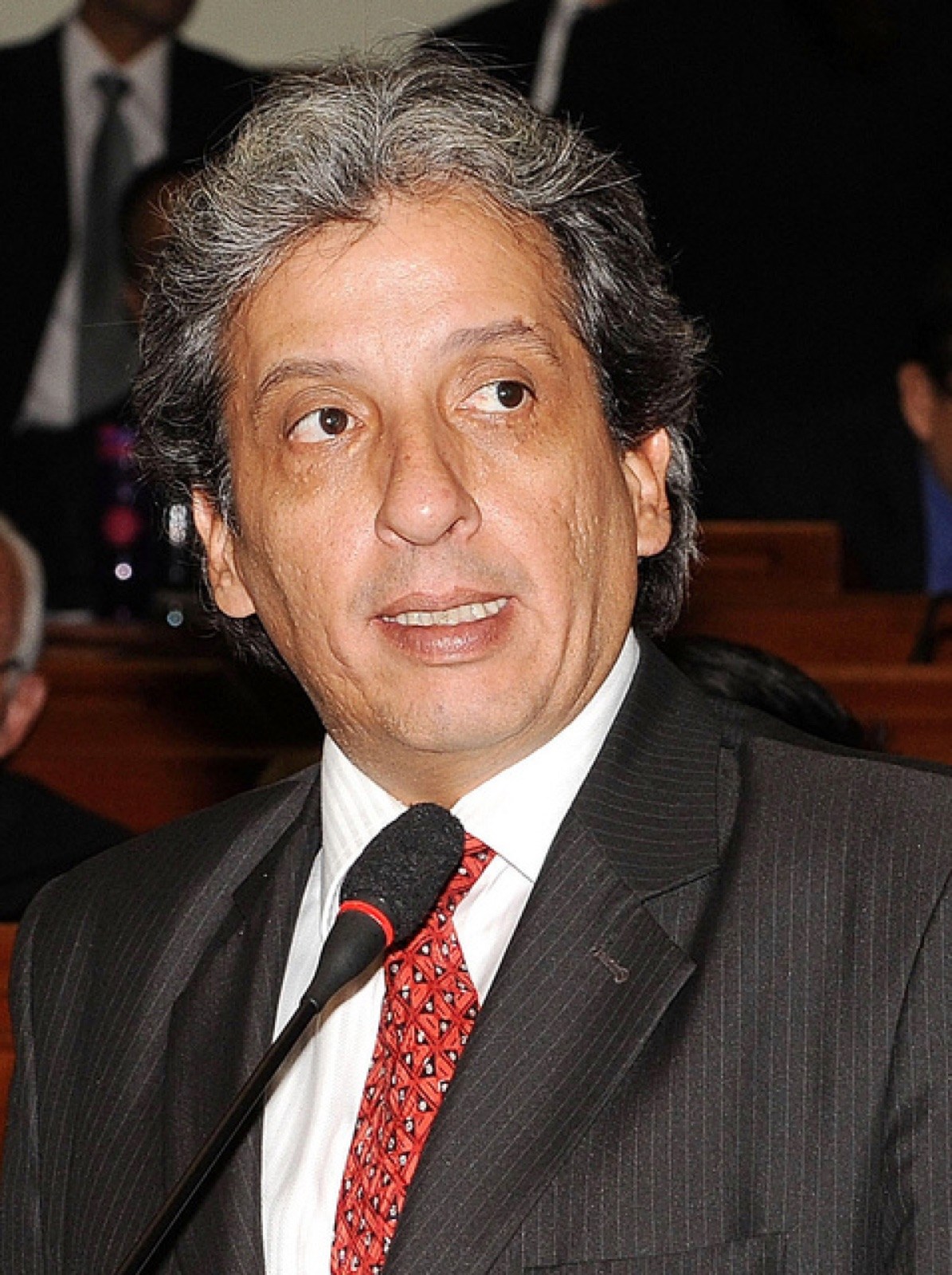
Manuel Pulgar Vidal
Manuel Pulgar Vidal is a former Peruvian Environment Minister and COP 20 President assessing international progress toward the Paris Climate Agreement.
Episode Summary
How's the global transition to clean energy going? The team behind the top global affairs podcast, One Decision, brings you "Power Decisions," a new energy series that explores the world's energy sources and the politics and power behind the clean transition. On this episode, guest host and journalist Liz Landers speaks with former Peruvian Environment Minister and COP 20 President Manuel Pulgar Vidal to assess the international progress towards the Paris Climate Agreement. Vidal explains what countries agreed on at this year's COP summit in Dubai. He also discusses China's monopoly of critical minerals needed for clean energy power sources and weighs in on a recent pause from the Biden administration on liquid natural gas exports.
Listen & Subscribe
- Watch on YouTube
- Listen on Apple Podcasts
- Listen on Spotify
Transcript
INTRODUCTION
Landers: Welcome to Power Decisions, the energy series that explores the world's energy sources and the politics and power behind the clean transition. I'm journalist and correspondent Liz Landers, and I'll be your host today. NEWS CLIP [0:13] The United States will withdraw from the Paris climate accord. We can't build a future that's made in America if we ourselves are dependent on China for the materials that power the products of today and tomorrow. We must NEWS CLIP [0:33] look for ways and ensure the inclusion of the role of fossil fuels.
Landers: This is a pivotal moment. Our action collectively or worse, our inaction will impact billions of people for decades to come. My guest today is Manuel Pulgar-Vidal, who serves as the global leader of climate and energy at the World Wildlife Foundation. He was Peru's minister of the environment and the president of COP20 back in 2014. We talk about the recent COP28 summit, China's role in the clean energy transition, and a new Biden administration pause on liquid natural gas permits. But first, I asked about the groundbreaking COP28 meeting in Dubai. And for the first time, there was an explicit mention of moving away from fossil fuels that was part of the final text. And if he thought that went far enough.
INTERVIEW
Pulgar-Vidal: I think that in some way, we have to celebrate that we have decided, the world have already agreed on a clear vision towards the 1.5 and the net zero, but that is not enough. We have to see how much we are able to move that statement into real implementation in different countries. And that means first, that we have to continue pushing countries to release their long term strategy, because it is the long term strategy, the way in which every country will define what is their vision towards 2050, and they have to be clear on how much they will transitioning away from fossil fuels in that time. Second, we have to continue pushing to have enhanced and strengthened NDCs or climate plans to be more clear, because the current ones are not enough. I believe that we have to define what does it mean to invest in sustainability, as it is happening in Europe with the taxonomy. The taxonomy, I think it is a good way to give guidance to investors on what does it mean to move towards sustainability. But also, it is important in this implementation of the phasing out of fossil fuels, if we don't have mechanism to track progress, to point at some countries that are not fulfilling, this will be extremely difficult. So I hope that in this evolution of the climate regime, we can be more clear in defining those ways to track progress, and to say to those countries that are not fulfilling, you have to do it, because this is also about the economy, it is about the people, and it is about the planet.
Landers: You mentioned financing there, and I know that a lot of these developing countries tend to be the least responsible for climate change compared to developed nations, but they need the most help financing towards those cleaner energy sources. Where do you think that money is coming from? You mentioned global banks, potentially the UN. Is there a number that you think individual countries should be contributing to this?
Pulgar-Vidal: It could be any number. The point it is that those numbers will be peanuts. Let me put the example of the 100,000,000,000. As you know, in Paris, the world decided to define this pledge to allocate 100,000,000,000 per year since 2020. It's amazing that even by now, that pledge, it has not been fulfilled. We still are waiting to see when we could say it's ready, let's move into the next. But also we know that 100,000,000 is nothing, the cost for the energy transition, it's about trillions, it's about 3,000,000,000,000 a year. So we cannot move this forward with those kinds of pledges. We have to really reform the system. And unfortunately, in many countries of the global south, there is a strong dependence of fossil fuels. I am from Latin America, and we know how much in Latin America many countries are dependent on oil and natural gas. And unfortunately, many of those countries have never released their long term strategy, so they don't have clarity on how they are going to evolve into phasing out fossil fuel. And in my point of view, what it is so important, it is to tell to those countries, the Paris Agreement has not included ways to punish any country, but it is about the economy. If you are not able to fulfil with this transition, by the half of the century, you will lose structurally 25% of your GDP. So it is important to start to transmit to the global south that this is about the economy. Remember that we are in the half of the decisive decade. So it is extremely important to act now.
Landers: I want to talk with you about natural gas because that may be one of the ways to help countries phase off of fossil fuels. How critical, I guess, is natural gas to supporting this transition, and will we ever phase out of using it completely?
Pulgar-Vidal: Natural gas, it has been always a bit confusing because it is a fossil fuels. It is emitting greenhouse gases, and the point it is how soon we have to phase out even natural gas. Many people is saying that natural gas, it is a transitional gas, so that we have to have the use of natural gas as a way to transition to renewable energies, but we have to have clarity on what is our timeline to phase out even natural gas. I think that by now the only country that it has just announced a phasing out of natural gas, it is Colombia. Colombia recently has announced that by 2040, they will phase out natural gas. But it's fantastic because it is the first country that it is saying when we have to count with the financial sector to avoid to have them allocating resources to more oil and gas exploration and exploitation. Something that fortunately has already happened with some multilateral banks, but not enough. That is not happening with bilateral banks or with commercial banks. It is something that we have to continue checking how can we define a clear deadline for the natural gas, but we have to continue working on that. But to continue strengthening renewable, that is the only way. We have progressed extremely with renewable, but not enough to replace immediately what is happening with natural gas. And my last point is about conflicts. We have seen in Europe how much the Russia, Ukraine war has affected the energy transition. But it is also interesting to see how much many of those countries have bet a bit more on promoting renewable energies, So this situation of conflict has helped to define or to accelerate the process toward renewable. So we are in a time of conflict, it is not only about Russia and Ukraine, even Israel and many other threats around the world, that it is affecting natural gas. But I am optimistic that if we are able to keep the vision towards 2050 and to define a clear transition by strengthening renewable sources of energy, we could get the 2050 with a real natural economy and with a clear phasing out of fossil fuel.
Landers: Okay, let's get into what the Biden administration did. They announced last week that they are delaying the consideration of new natural gas export terminals in the United States. Environmentalists applauded this, but critics also commented and said that this plays into Putin's hands since US exports of liquid natural gas have helped keep Europe and Asia powered during this war with Ukraine. Do you think that the Biden administration made the right decision here?
Pulgar-Vidal: Look, it is about a postponement, but I think it is a good signal because what we have, it is to continue exploring the way to define alternative to the use of natural gas. In case of the US, we have to recognize that all this debate about natural gas and pipelines to transport it, it has moved as a pendulum. So we have had, since the time of Trump and now with Biden, the pendulum moving from one side to the other, and we are entering into a time of elections, nobody know what it could be the result of those elections, and we don't know how much the pendulum could move again to the opposite side. So by now, to have this postponement could give the time to continue exploring alternative way to provide or to supply good renewable energy, and we have also to consider that decision against the Inflation Reduction Act, that in some way it is moving the economy of the US. So we have to see how much the geopolitics are affecting decisions in relation to phasing out fossil fuels or to take decisions around natural gas.
Landers: You mentioned the US elections. Do you have concerns about how the outcome of our elections here in November could affect US policy towards a clean energy transition and also just overall acceptance of climate change and the science behind climate change?
Pulgar-Vidal: Yes, I am worried. But not because of that, I am losing optimism. I remember that when former President Trump announced to have the US withdrawing from the Paris Agreement in the Rose Garden, that it was just in the beginning of his mandate, I used to say at that time, don't be worried because of two reasons. First, we have clarity on what is our destination towards 2050 and since the beginning of this process, we knew that it wouldn't be road without accident, without obstacles or without limits. We will continue having these kinds of difficulties. But in my point of view, that won't affect the destination.
Landers: You had mentioned earlier some of the global conflicts, Ukraine. There's also this war that's happening in the Middle East right now, obviously a region where oil is their main export. We're seeing disruptions to the global supply chain of oil with this conflict and how it has spilled over into the Red Sea. How do you see increasing geopolitical tensions playing a role in the impact on the clean energy transition?
Pulgar-Vidal: Geopolitics and conflict will continue affecting the debate, but that is why we have to continue betting to pushing towards COP, but even beyond COP, because COP are just a single element of a bigger ecosystem in which G7, G20 bilateral and multilateral trade agreements can continue supporting the climate debate. I used to be president of COP, COP20, and since that time I am used to saying, in this process, every step counts, and that is true, so every decision that you can take in any of those forests will contribute to the process. Now, regulators are playing a key role. I am in the environmental sector for almost forty years and I remember that in the past, the US used to be the main actor with regulation, with law and with all of that. Now it is Europe. Europe, it is moving the needle, now with decisions, with European decisions that are framing the new way in which the economy will behave, but it is fantastic. And I think that we have to have those kinds of regulators defining ways to not only achieve our objective, but also to avoid greenwashing, to avoid laggards, all of that could affect the process. So yeah, geopolitics could affect, but there are good signals that also can happen in the same way.
Landers: You just mentioned something interesting about Europe is now leading the way with many of these regulations. I wonder as an American, should we be embarrassed that the United States is not doing more right now? And is the US losing some of its credibility in terms of our impact on the global environment? I mean, are we kind of losing our footing as a global leader in this regard?
Pulgar-Vidal: I can say that you have to feel embarrassed and why? Because the United States, it is facing political difficulties. The United States, it is facing polarization, there is not full clarity on what is the role that citizens could play to move governments to take decision, and it is part of the process that it is affecting the economy. And that is why I appreciated so much what President Biden did with the IRA, the Inflation Reduction Act, because it's amazing and probably we are not fully aware on how important it is that under the title of fight against inflation, most of that regulation, it is about climate, and it is about inclusion, and it is about renewable energies, but it is clear that the IRA has done much more to make America great again, and that is something that you have to have in your mind. It is not about coal, it is not about open old factories with obsolete technology, it is about of understanding that this planet, it is now a planet that it is framed under a climate economy, and that is starting to happen, and we have to consider that element of the economy because it is about a different level of development.
CHINA AND CRITICAL MINERALS
Landers: We can't really have this conversation without talking about China and the actions of China. But I want to ask you about their critical minerals. They have a real monopoly on critical minerals and those are a lot of the same minerals that we in the United States need to transition to electric vehicles, other forms of renewable energy. How do you see their global dominance of this supply chain either affecting the clean energy transition or the potential for a trade war or a war with Taiwan affecting their export agreements with the United States and with other nations?
Pulgar-Vidal: It is something that we have to follow closely. It is something that we have to face under the principle of antitrust. We have to give opportunities to every country despite of their level of development, because if not, we will enhance the gaps, the differences, the lack of equity of the world, when the principle it is to bring all the world towards having a level of development under new consideration. And it is true, it is happening with energy and it is happening with mining. I am Peruvian, in case of Peru, is a discussion because of a China investment in an energy supply company and how much that could affect our antitrust regulation. So I hope that by using those kinds of principle, we can face the point that we don't need to have those kinds of monopolies bringing all the resources just to one country, but to try to share it because of the new model that the world is developing. And because critical minerals, it is something that I hope can bring to the world a different way to develop mining operation. We used to have mining operation with a lot of environmental difficulties, pollution, social conflict, access to land. And the idea with critical minerals, is that it's a new opportunity for the mining operator to show that it could be made in a different way.
Landers: I guess the problem right now is that China controls about 60% of the critical minerals in the world. So I hear you that Peru is looking at alternative ways to mine. I know the United States is looking at ways to extract our own critical minerals so that we are not so reliant on this. And I think that that's something that former President Trump talked about a lot, as well as the current president not having to rely on China for everything. But for right now, do you think that China could potentially disrupt this transition to getting more of the actual minerals that we need for these electric vehicles specifically? Because that is a big part of that Inflation Reduction Act and some of the green policies that the Biden administration has tried to put forward.
Pulgar-Vidal: More than seeing how much a country can disrupt the process, it is a process in which we have to define ways to bring all the worth toward the same objective by coming together. So I am pretty sure that if there is this belief or feeling that there is kind of disruption of the process, the process could be able to bring some principles to avoid that disruption. Because this is a global process, sometimes we don't have the accurate tool to fight against this kind of disruption and we have to develop international rules or rules during this COP process or in any other fora to avoid to have this kind of situation. When some people ask me in the last two or three COP, do you think, Manuel, of having so many people from the lobby sector of the oil industry? My point it was, this is not a process that could exclude anybody, they have the right to participate for sure. The point it is that the process must be enough strong to avoid to have them imposing their position, and that is the way in which we have to continue pushing the process to be strengthened, as a way to avoid those kinds of disruption that it could be related to critical minerals, fossil fuels, nuclear sources of energy or any other topic.
Landers: Sort of similar to what you were just talking about with the optics, I think of COP and having lobbyists around and stuff like that. COP this past year was held in Dubai, a big part of the oil production part of the world and they're an OPEC member. And does it lend credibility to COP to have a big environmental conference like this in a country like the UAE?
Pulgar-Vidal: Since the beginning of the process many people ask me about UAE and oil, a country that it is extremely dependent of oil industry. But the UAE is a country that on the other hand, it could be seen as a very progressive in the sense of looking for the future, looking sustainability, looking alternative, and in some way that UAE consensus, the outcome of the COP28, has shown that that was the way that the UAE planned to organize the COP by sinking on the future. And we don't have alternative because the only way to have the world taking decision, it is by countries well representing by their own government, that is a way of the multilateralism. So the point is how can we continue pushing those decision makers to take the accurate decision? And again, we have the role of the normal state actors, we have the role of the civil society, we have the role of the academia. Fortunately, the science is playing a key role in making this process to progress. So yeah, there is lack of credibility, it is true, even the Pope Francis in a letter that he released some weeks before COP28, he was talking about this lack of credibility and also he was proposing or thinking on some kind of democratic multilateralism. He has not proposed how that could work, but that even the Pope that it is now more vocal in the climate debate, it is thinking that we have to do something. It is true, we have to do something, but by now there is no alternative to the multilateral process. Fortunately, COPs that used to be two weeks in a single process within a year, now it's becoming to be just a piece of a bigger ecosystem and that is fantastic. So climate debate and climate decision are happening in many other forests. But second, COPs that probably until the adoption of the Paris Agreement used to be a political process, it is now political, economic and even social process. And that is good because of the economy and it is because that demand of citizens and consumers that we could make this process to be stronger and to be what it is needed by the current level of crisis that we are facing.
Landers: Minister Vidal, thank you so much for joining us. This has been a really insightful conversation. I appreciate your candidness too, especially there at the end. I think that's really important for our listeners to hear.
Pulgar-Vidal: Thank you and a pleasure to be with you today and to share all of these reflections.
Landers: Likewise. Hope we see you here in the US or maybe at a global summit sometime soon.
Pulgar-Vidal: Thank you.
Landers: Thanks for listening to our special energy series where we explore the world's energy sources and the politics and powers behind the clean transition. We'll drop new episodes here every month. I'm Liz Landers. See you next time.