Episode Info
- Season27
- Episode1
Hosted by Christina Ruffini and Sir Richard Dearlove
Guest
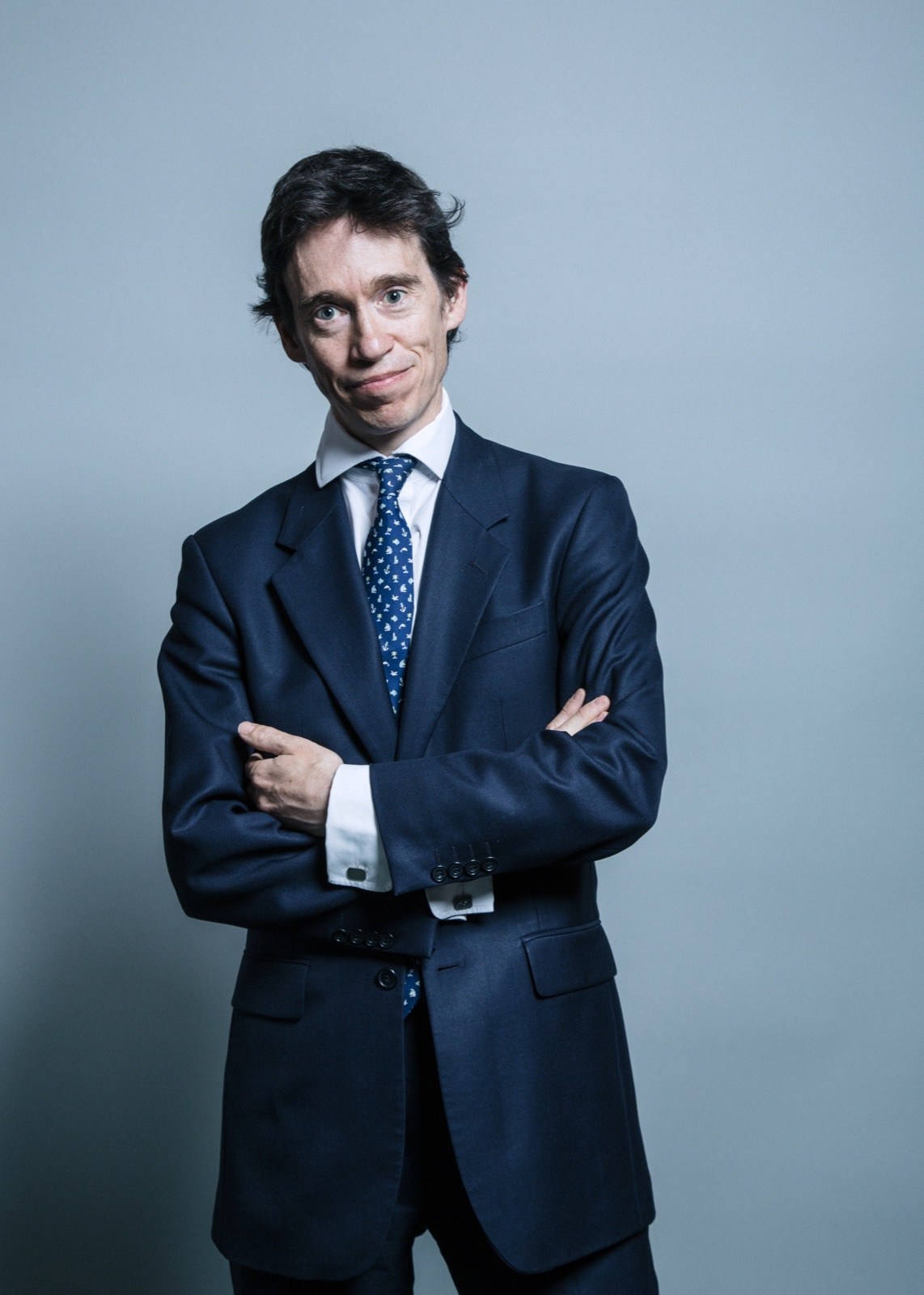
Rory Stewart
Rory Stewart is a former minister, diplomat, and bestselling author reflecting on the root causes of recent UK riots and social media's role in unrest.
Episode Summary
Former minister, diplomat, and bestselling author Rory Stewart reflects on the root causes of the recent riots and attacks in the United Kingdom that have targeted ethnic minorities, immigration services, and police officers for a week—leading to calls for the Prime Minister to recall parliament. Social media has fanned the flames of unrest, with Elon Musk inserting himself and his role at Twitter/X into a national debate about the regulation of social media and the influence of disinformation and radicalisation online. Stewart discusses all of this and the recent developments in the US presidential election with hosts Julia Macfarlane and former MI6 Chief Sir Richard Dearlove.
Sign up on our website at onedecision.com for access to exclusive content and real-time updates on news, and high-level discussions shaping global perspectives. Don't miss out—join the conversation.
Listen & Subscribe
- Watch on YouTube
- Listen on Apple Podcasts
- Listen on Spotify
Transcript
COLD OPEN
Stewart: Think he's a silly, vain egotist who seems to believe that Britain is in the grip of some sort of Islamist frenzy and that we're about to loop into civil war. And this is common amongst enthusiasts for Donald Trump.
INTRODUCTION
Mcfarlane: That was Rory Stewart speaking there about Elon Musk, who's recently criticized the UK government for how it's responded to an unprecedented wave of unrest and violence targeting minorities and police officers that erupted a week ago. You may know Rory Stewart from his podcast, The Rest Is Politics, the top charting British political show that he hosts with Alastair Campbell, the former spin doctor for Tony Blair. Or you might know him as a prominent former conservative politician, or from his memoirs about his time in Afghanistan and his incredible walk from Herat to Kabul at the height of the US occupation in 2002. You're listening to One Decision, the podcast that looks at the choices made that shape our world. I'm your host, Julia McFarlane. And together with my co-host, Sir Richard Dearlove, the former chief of Britain's MI6, we, and the world it seems, are looking this week at the scenes of stunning violence in the United Kingdom. All of this started a week ago when a horrific attack took place in a northern seaside town, and a man used a knife to murder three young girls. What happened shortly after was a deluge of lies, false rumors, and disinformation. Users on Twitter, which we are supposed to be calling X now, made up stories that it was a Muslim asylum seeker who committed the crime. It turns out it was a British citizen, born in Cardiff to Rwandan Christian parents. We caught up with Rory, who has been critical of Elon Musk, the billionaire owner of X, who has been wading into this crisis in the UK. Many have accused him of making things worse, of deliberately stoking unrest. Even the prime minister, Keir Starmer, has been targeted by Musk online, who has publicly speculated that civil war is inevitable.
INTERVIEW
Mcfarlane: Rory, what are your thoughts on how the state is handling this crisis? What needs to be done?
Stewart: Well, think the state is doing what it needs to do in the first place, which is being very tough. I mean, think you cannot have a situation in which people are trying to burn men and others alive in hotels. I mean, it's extraordinary these, for international listeners. Some of these groups managed to attack asylum seekers' hotels and literally set them alight, so the police had to evacuate them. And we cannot allow people to destroy property and threaten lives on this scale. And a lot of these attacks seem to be extremely offensively racist. There's a strong sense of Islamophobia. Again, for international listeners, this started because there was a horrific incident when some children were stabbed, and immediately a rumor was put out that it had been done by a Muslim who just got off a boat, which then led to people trying to burn down mosques. It turned out pretty quickly it hadn't been done by a Muslim who just got off a boat. Had been done by somebody who wasn't a Muslim and who'd been born in the United Kingdom, but this was enough to spark a whole section of riots that have been going on now for nearly ten days. So I think the government is doing the right thing, being very tough. The bigger question, of course, is where does this come from? What are the root causes of it? And how seriously do we take it? Because sometimes riots come and then they vanish. Sometimes they're signs of deep problems in society. Sometimes, unfortunately in Britain, they can be signs that it's the summer, it's not raining very much, and people haven't had a few drinks.
Mcfarlane: Rory, a lot of people have been talking about the impact and the influence of the far right. And certainly there have been a lot of discussions we've heard about Nigel Farage, the Reform leader who is now a member of the British Parliament. He's long been an agitator on the right. He's anti-immigration, anti-EU. He's long been accused of stoking the so-called culture wars. We've also seen this character Tommy Robinson, whose real name is Stephen Yaxley-Lennon, who's a founder of a banned group, the English Defence League, which is a far right organization that campaigns against Islam in the UK, against asylum seekers. Are these characters, are they riding a wave, or is this really been driven largely by them? I mean, how much do you see this? You mentioned that there are a lot of things at play here, but we've been talking a lot about the far right. Are they playing a central role? Is this a problem that is gonna continue to get worse until our authorities tackle the threat from the far right?
Stewart: One thing that we should say from the beginning is that we don't know enough about these demonstrations. The first thing that happens is people come along in a few months' time and they say that we've misunderstood them completely. We've probably got the demographics wrong, we've probably got the motivations wrong. There seem to be four types of people turning up. There are some people who are associated with far right, almost neo-Nazi groups. There are locals turning up who are worried, including elderly women who are worried about cost of living and immigration. There are people who are there for a fight. And finally, because it's the holidays, there are teenagers and other people who are just coming along for the fun. In fact, people have been inviting their kids along. And the balance of these things changes all the time. And of course it's very difficult to get a clear picture because there's also anti-far right demonstrations happening at the same time. So something that might be familiar with listeners from the US. So you have crowds of people outside asylum hostels saying, we need to stop the boats, stopping the boats about stopping illegal migrants coming, control our borders, then there'll be other groups of people waving flags, pushing for progressive causes. Part of this is just technical police crowd control, and part of this is about problems of how the police keep people at a distance and deal with them. The bigger problem with the far right in Britain, I think it's there, but it's also a problem that social media creates an environment in which, you know, hundreds of thousands of people are lazily sympathetic with what's going on without understanding it very well. So you'll see if you go on Facebook groups for people who like horses, people sort of vaguely saying, well, you know, they've got a point and, you know, you know, we should think about all communities. And then you've got people like Elon Musk suddenly getting involved, challenging the British prime minister. So it's a very, very muddled situation. It's one that's also taken us all by surprise in the same way, I think, that some of the demonstrations in the US in 2016, 2017 surprised a lot of people.
Dearlove: I think what Rory is saying is very important. I don't think this really carries the stamp of political organization. There's a certain amount of anarchy there, and there's certainly social media there. But the idea that there's some sort of, you know, directing power behind the demonstrations. Obviously, you know, there's an element of extreme right politics expressed in these demonstrations. I think we all accept that. But I think there's a certain amount of chaotic coming together, motivated in all sorts of different ways. And one of the interesting things about riots in the UK, they usually happen in the summer. They usually happen in June, July and August when you have long daylight, you have a lot of people drinking in pubs in the evening, and, you know, people are not so keen when the weather's different. But, you know, maybe I'm being a bit complacent by pointing to that fact.
Mcfarlane: Richard, it was quite a few years ago now that counterterrorism police announced that they had ranked the threat from the far right and the extreme right. And said that they'd ranked it as the fastest growing threat to the UK's national security interest, growing much faster than the threat from radical Islam, which for a long time had been seen as posing the biggest threat to the UK's national security interests ever since the war on terror. To what extent do you think these riots might instigate the conversation about what we as a country need to do to tackle this threat?
Dearlove: Actually, I have to say I totally disagree with this aspect of far right terrorism. There are incidents, and most of them are driven not by conspiracies but by individuals. So there is not a sort of organisational terrorism of the far right, not in my book anyway. I mean it does exist in Europe and I think it's a problem in Germany. If you speak to the German Security Service, they will point you in that direction. That's certainly the BND analysis. And then you get in Scandinavian countries, the sort of Hells Angels aspect which goes beyond ordinary criminality into, yeah, terrorist violence. I don't think that that's something we have in the UK. I'm not saying it doesn't exist, but not nearly to the same degree. And we've never had seriously or not in recent times conspiratorial far right organisations organising large scale terrorist attacks. So I think one needs to be quite careful in the sort of statements that you make. And I've always disagreed with the police when they said that they needed to explain it more thoroughly. And I'm pretty sure if you spoke to the security service, they would agree with me, but maybe not.
Mcfarlane: Well, it's interesting because Rory, the director of public prosecutions here in the UK has said that he is considering terrorism charges. I mean, is that an overreaction? Is there a danger that this might play into some of the conspiracies and the attacks from the far right?
Stewart: The way that the Terrorism Act is drafted, the legislation, you can characterize some of the acts that people have taken within the very broad definition of terrorism in the law. And actually it's pretty broad, that act. And it talks about disrupting, talks about trying to change government policy through violence. So you can imagine that you could say that some people involved in this are involved not just in riots, but terrorism. But I think Richard's distinction is a really important one. I mean, and I think the public would instinctively feel that there is a difference between Al Qaeda or ISIS putting significant training and resources into mass atrocities and what's going on at the moment. So the DPP, Director of Public Prosecutions, may, on a technicality, be able to describe what's happening as terrorism, but it certainly wouldn't meet the bar of the type of international terrorism that we're normally concerned about.
Mcfarlane: Right. I mean, what the counterterrorism police had said at the time was that the threat from the far right was the fastest growing threat, not necessarily the number one organized—
Stewart: Well, these statistics, Julia, one's always got to question what that means. I mean, does that mean fastest growing from a very low starting point?
Mcfarlane: Very possibly. But I think there is a discussion needing to be had. There is a blueprint. There is protocol. There is textbook guidance for how to protect the nation from other forms of terrorism, other forms of threats to national security. But the far right seems to be one that the UK has struggled to even articulate. We had the government's adviser on radicalization, Sara Khan, saying some of the things that our politicians have said recently have contributed to these divisions. And we've had—you've written about this extensively in your book, Rory. You've talked about it. How there has been a problem with your colleagues in government at the top of our public life failing to call out racism and things like that. And it is interesting that this is all happening at a time when we are seeing violence spilling out on the streets in this completely unbridled way that it is. And a lot of people are feeling like their police, their government are unable to protect them day after day.
Stewart: It's very, very disturbing. I mean, it's deeply disturbing and it's extremely depressing and humiliating for Britain to have this number of riots breaking out in this number of towns and to see people openly attacking the police and dozens of police officers ending up in hospital. One of the most disturbing things in it is there are clearly a lot of people who seem to have a profound problem with Muslims. Obviously, the whole story is a little bit like an anti-Jewish pogrom in late nineteenth century Russia, by which I mean this: an atrocity happens, a rumor goes out accusing a particular community. In this case, they claim the Muslims had done it. And immediately somebody tries to burn down their places of worship, they're attacking libraries, etcetera. So I think it does obviously cast the light on the fact that there are a considerable number of people in Britain who seem to have, expressed or otherwise, a problem with Muslims. And there's a bigger problem behind that, which is that there are hundreds of thousands of people not involved in these demonstrations who are vaguely sympathetic towards it. So in that respect, Julia, it does resemble other forms of political activism. You know, as we've often pointed out, you know, there is a spectrum amongst people's views on, you know, terrorist actions in Iraq or Afghanistan, where you can have hundreds of thousands, millions of people vaguely sympathetic towards what's going on without knowing much about it or thinking much about it. So there is something here which helps us to see ourselves as others see us. I mean, it's an interesting way of revealing some similarities. But I still stick with Richard's point that in the end, structurally, structurally, this is different from what Al Qaeda's doing or what ISIS was trying to do.
Mcfarlane: What do you make of how Keir Starmer has been handling it? And it is very interesting because the last time we saw this kind of instability and this violence on the streets in the UK was in 2011 when there were those widespread damaging riots in London. And of course, at the time he was the director of public prosecutions. He put a lot of those people who broke the law into prison. He is now in the position of prime minister. What do you make of how he's responded in the last few days?
Stewart: I think he hasn't yet found his stride. I don't think he's found the tone of voice. I don't think he's found the communication style. He's still sounding a bit dry and technocratic. I think this really is a moment where politicians need charisma. They need communication skills. They need to be able to get out on the streets and show that they understand. The normal thing that you would expect for a political leader at this point is for them to turn up immediately, effectively in a high-vis vest at the police tape, talking directly to people, calming things down, addressing things, demonstrating what they're doing. And I think he has taken a slightly, you know, understandably, he's still behaving a little bit more like a director of public prosecutions than as a political leader.
Dearlove: He sounds very much like a DPP to me. Can I just add one point? You know, we're not used in the UK, thank God, to street violence. It isn't part of our society, or if it was, it disappeared in the nineteenth century historically. And you know, we've actually lived in very law abiding circumstances generally speaking. I mean, having lived in France, can tell you that street violence is a pretty common occurrence in other democracies. And you know, it's very interesting that if you live in Paris, a lot of issues in Paris, and you will remember the gilets jaunes, you know, have been fought out in the most terrifying demonstrations. You know we start off as peaceful demonstrations then turn into something really really serious and sinister. And we are having, I think, to adapt ourselves to seeing something rather similar beginning to occur in our own society. And one of the problems we have is that we don't have a police force which has generally developed the skills to deal with this sort of violence. And you know, we don't have the Gendarmerie Mobile, we don't have the CRS, which of course the French have in spades. And which the government uses, I would say ruthlessly. So maybe we're going through—I don't know whether Rory agrees with me—maybe there is a sort of social shift occurring in the UK and we're becoming more like our continental partners. I mean, I feel terribly sorry for our police. They're doing a fantastic job. It hasn't been emphasized in UK police training hitherto is what I would say. It may be in future. And you have to learn by doing, unfortunately. You have to go through a lot of riots to remember how to do it again. And you need a certain type of police officer, and you need a certain type of training.
Stewart: And, you know, we learned some of these lessons with the death of PC Blakelock in the 1980s, including the distance you needed to keep and when you start using plastic rounds. But this stuff is now in the distant memory for most police forces. So yeah, there's a lot of technical stuff that needs to happen with policing.
Mcfarlane: Well, that technical stuff, is that the kind of thing we should be reopening the book on again? Plastic bullets, water cannon, all this kind of stuff?
Stewart: Yes. I mean, if we're going to consistently have this type of violence, unfortunately, we need to protect property and we need to deal more effectively with demonstrators. That unfortunately, as Richard says, does mean doing things that traditionally we've had the luxury of not having to do. But of course we have a lot of experience with Northern Ireland. In some ways, Richard's right, that what we're seeing is France coming to Britain, but we're also slightly seeing some of the elements of Northern Ireland coming to Britain. If you go through the barriers on the Falls Road at the moment, you will see images of a child who's gone missing and who the Catholic community, I think, believed the Protestant community abducted this child. And there have been demonstrations and riots, very much of a similar sort. I mean, it's got a similar kind of feeling to it, of conspiracy theories and a horrible tragedy being blamed on another community and people going after that. But as Richard says, it's not something we see in England, Scotland and Wales. And in fact, actually these riots haven't really happened in Scotland or Wales.
Mcfarlane: Rory, we've seen a number of international governments—Malaysia, Indonesia, my neck of the woods actually—changing their travel advice for the UK. Obviously, this is really damaging to the UK's public standing overseas. A terrible advertisement for our nation right now. I shouldn't really laugh because it's not funny at all. It's awful. But I mean, is that an overreaction? How damaging is this to, you know, at a time where Britain is wanting to play a bigger role in the world?
Stewart: Well, it's not been covered enough in our media. You're right. Many people in the Muslim world are paying a lot of attention to this. And in the Middle East, there are a whole series of conspiracy theories now blaming foreign governments for instigating violence against Muslims in Britain. So I think it is worth bearing in mind that none of this stuff sort of stays at home. It spreads very quickly and often very misleading images. I mean, the reality is if anybody from Malaysia or Indonesia is listening to the show, that Britain is extremely safe and you are not actually at any risk. But I can see why if you were Indonesia, you might be tempted to do that because we were perpetually, when I was in Indonesia, slapping travel advisory bans on British tourists when things weren't very dangerous for them.
Dearlove: I was gonna say, Rory, it's reciprocal. The foreign offices are always slapping travel restrictions on other countries. So they've started doing it to us when there's a reason, which is justified, I think.
Mcfarlane: Rory, you've worked as prisons minister for a while, and, of course, we're in a very serious situation here in the UK with a very broken criminal justice system. Our prisons are full. We've had some very apocalyptic warnings from the prison service. You worked hard when you're a minister on things like short sentences and reducing them. What do you make of the current crisis, first of all? And secondly, how should the criminal justice system deal with a lot of people who will be entering it now after these riots?
Stewart: I think the first thing is that you need to get the right balance. So you need to be strict where you need to be strict, and you need to be thoughtful and moderate where you need to be thoughtful and moderate. And to do that, you have to carry the public's confidence with you. So the challenge for Keir Starmer is leadership. Is he able to stand up in front of the British public and say, here are a bunch of wrongdoers, and we're gonna come down on them like a ton of bricks. I'm gonna sort this out. And here's something else that we're doing in terms of sorting out the prison system. Because the whole thing seems like a muddle. There's not enough investment. Prisons are filthy. They're drug ridden. They're violent. They're far too overcrowded. But equally, we need exemplary sentences if we're gonna have any hope of getting on top of the violence that's happening in the streets at the moment. So I think this is something where we get stuck in a problem in politics, which is politicians default to either emphasizing how compassionate they are or emphasizing how ferocious they are. What we actually need is a sense of experienced people. And Keir Starmer should be able to do this. He was the director of public prosecutions. Communicate competence, clarity, being authoritative, and restoring public order.
Dearlove: Rory, can I interject a question which sort of, you know, maybe lies behind these riots? It's not, in my opinion, the issue of immigration, it's some of the public's perception of the issue of immigration which may be a driver for some of the people participating in these riots. I mean how does the new government go about trying to shift this perception so that it's sort of diffused as a burning political issue? And I'm making a distinction between immigration per se and how people actually regard it.
Stewart: It seems to me that this government, like every government in Europe, must demonstrate that they are in control of their borders, must demonstrate that they have an immigration policy which they're running. They're not simply at the mercy of anybody being able to come to the country whenever they want. And the way of doing that, I think, is to set very clear numerical targets. So you can say we're gonna take asylum seekers. I would suggest point 05% of the population every year you can take as asylum seekers, and you target people who really need it, female judges from Afghanistan, for example. But equally, you say we're not going to accept people coming over on boats from France because France is a safe country, and we have no obligation to take people from France since they're not in danger of their lives in France. And at the same time, I think it's ludicrous to bring in one and a half million people into the United Kingdom over the last two years. I mean, this was a massive, massive problem. And it's a problem caused by the fact that we didn't understand one of the advantages of the European Union system. Under the European Union, a lot of these jobs that we've now imported families full time over for were occupied by young Spanish and French people coming in for three, four years to work in kitchens, cut vegetables, cut crops, and going back. We now have a situation where that one and a half million people are responding to businesses saying, we don't have anyone to cut the vegetables in the kitchen. We don't have anyone to collect the fruit. We don't have anyone to work in the care sector. We don't have anyone in the NHS. And instead of being able to rely on a pretty flexible EU workforce flowing in and out of the country, we are now bringing one and a half million people from India, Pakistan, Nigeria, Bangladesh. And this is not manageable, partly in a country that's struggling to put up a 100,000 homes a year, a 100,000 new homes a year.
ELON MUSK AND SOCIAL MEDIA
Mcfarlane: You brought up Elon Musk in one of your previous answers. Keir Starmer has also recently been attacked by Musk, who has been roundly accused of spreading disinformation on Twitter about the stabbing attack in Southport. I mean, Musk responded to a video showing the scenes of the riots saying that civil war is inevitable. Starmer struck back against that, saying that his comments were unjustifiable and that the UK government was continuing to call on social media platforms to prioritize taking down criminal material, which they're arguably simply just not doing. I mean, if anything, these platforms are promoting, and particularly Twitter is promoting, because a lot of the disinformation has been spread by blue tick accounts whose posts get promoted heavily on the algorithm. You waded into this on Twitter. You replied to Elon Musk's tweet saying, seriously, since when have you claimed to understand British communities or British politics? Why did you weigh in? And what do you think should be done about Elon Musk and his role in all this?
Stewart: Well, firstly, I find it extremely offensive that when the British Prime Minister makes a serious address at a moment of major national crisis, that some billionaire in California thinks that it's appropriate to start mocking the prime minister and second guessing him. I just think it's rude. And also it's a sign of somebody who has no real sense of what they know and what they don't know. No sense of courtesy, no sense of humility, no sense of self knowledge. I don't claim to understand the details of everything that's happening in these communities. I was a member of parliament in North West England, and I know something about Cumbria, and I know something about the part of Scotland that I live in, and I know something about London. But the idea that I'm going to claim that I understand all the details of Rochdale would be grotesque. But the idea that somebody living in California who to my certain knowledge has not spent, you know, a nanosecond even going to those places—I at least visited those places—thinks that he can hold forth on the fact that he thinks there's a civil war in Britain is just grotesque. And it's part of the whole problem in our culture.
Mcfarlane: Well, what do you think he's doing? What does he mean by it? He's been commenting quite a lot on it. What's he trying to achieve here?
Stewart: So Elon Musk, as far as one can tell at the moment, has a particular worldview. He thinks there's a woke mind virus that he's fighting, which is partly to do with the fact that one of his children is transgender and he's very upset about that. There are incredible sort of personal psychological problems in his past and with his father, which we don't wanna touch on, but it somehow manifests itself in obsessions with white replacement theory, with Islamophobia, with civil war in Europe. And he just keeps spewing this stuff out. And there's an echo chamber of people who agree with him. So, you know, I challenge him on Twitter, and sure enough, there are, I don't know, it must be a thousand people replying to me all on his side, saying, He's a genius, Rory. You know, how can you question him? He's made much more money than you have. You know? What do you know about these communities? Well, I mean, the whole thing is ludicrous. I mean, I'm not posing as a great expert on these communities, but I am British. I did spend nearly ten years as member of parliament. I was a member of parliament for a northern constituency. I mean, Elon Musk has none of that experience.
Dearlove: I think it's one of the great failings of our time that we take seriously what people like Elon Musk say on any subject on which he shoots off his mouth. I mean, god, Rory is so right on this. If he's talking about electric car manufacture, one might listen to him. Even on that I have my doubts.
Mcfarlane: As Rory says, he may have his own personal reasons for being interested in what's going on, but that's more than what is happening. He has been replying to videos. He has been tweeting about this. He has been posting things. And every time he posts anything, millions of people see it. Now there are a lot of people who say that, you know, rage tweets and hate sharing on Twitter is good for the app from a business sense. And whenever there is a breaking news story or some calamity happening, Twitter is still the place where people go for this kind of thing. He is trying to monetize Twitter. Do we think it is a stretch to say that he perhaps has a reason for trying to keep people engaged in what is happening in the UK? Could one go as far as to say that he might be stoking this as much as any of the other characters that we've mentioned in this conversation?
Stewart: I mean, I think the phenomenon of riots of this sort is not remotely new. As I said, you know, you can see parallels with things that happened a lot of the nineteenth century and happen across the world all the time. We've had riots in Bangladesh. We've had riots in India. We've had riots. But I think what is interesting about Facebook and Twitter or X is the way in which information can travel very quickly between different communities. So what was interesting about the Arab Spring is that somebody setting themselves alight in a small town in Tunisia could so quickly lead to uprisings happening in Libya, Egypt, Bahrain, Syria, Lebanon, Yemen. I mean, this is what it does. So what social media is doing, and it's not just Twitter and Facebook, it's also the way that WhatsApp operates and Telegram operates, it does suddenly provide the opportunity for these very unstable coalitions, which as Richard says, have no central organizing principle. I think that's what social media has done.
Dearlove: It has made—you know, it has diffused power away from central government and put, you know, massive communications power in the pockets of individuals. I mean, most of us grew up with a GPO that had a total monopoly of all types of communication. And what we can do now with powerful computers in our pockets is completely unthinkable in the past.
Mcfarlane: You know, the people who say that Musk is having a role in fanning disinformation and fanning this violence, do you agree with that? I mean, what should be done?
Stewart: I think he's a silly, vain egotist who seems to believe that Britain is in the grip of some sort of Islamist frenzy and that we're about to loop into civil war. And this is common amongst enthusiasts for Donald Trump. You know, you get echoes of it from jokes that you can hear from J.D. Vance at the moment. And I think it's a phenomenon. If you become the richest man in the world and set up three very successful companies, it's very easy to convince yourself that you know what's going on all around the world. And he's just bought himself an incredibly expensive toy. He spent $14,000,000,000, purely so that he can become a pub bore and sound off his cranky views at the world and have 20,000,000 people looking at them.
Mcfarlane: But do you think he is deliberately fanning the flames of violence? Do you think he's making it worse?
Stewart: I think he's sounding off. I think he's an egotist who gets on his stupid machine and has spent $14,000,000,000 buying a toy so that he can rant at us all, and we're supposed to take him seriously.
Mcfarlane: You've said that these riots are nothing new. We've had this sort of thing before, even if they haven't been quite so quick to materialize and social media has enabled that. I mean, this online safety bill has been years in the making. It's slowly working its way through parliament. A form of it was passed last year, which basically is going to give the UK's media regulator Ofcom the power to fine social media companies up to 10% of their global turnover if they're found in breach of the law, doesn't have enough teeth to tackle a situation like what we are having at the moment. And, you know, we may be looking back at this period like the time before cigarettes were regulated as a public health hazard. I mean, what are your thoughts on all this, Rory, as someone who has been in government when this was being worked on?
Stewart: I tend to agree with Richard that we should see this basically in terms of power shifting, the collapse of hierarchies. And I think it's an incredible mechanism for polarization. It's an incredible mechanism for spreading ideas very quickly through unorganized groups of ordinary people. And I think it's no accident that the rise of the particular modern forms of populism and authoritarianism coincide with the founding of Twitter and Facebook. I don't think this is a pure coincidence. And I felt it as a working politician. I felt all the time the way that we were drawn to make more and more provocative statements on social media as part of our campaigning. And, you know, Labour has just won an election where most of their spend or the key part of their spend went into very, very savvy social media campaigns. So it really matters in politics, and I think regulating it really matters in politics. And I think there's a lot these companies could do, not to use their algorithms to promote the most extreme material, but instead to promote more interesting, consensus material. There's no reason for X to become a cesspit of offensive madness. There are many, many more positive ways that you can approach Twitter. Right? If you're me, you can be following threads on Roman archaeology. If you're my wife, you can be watching videos of pandas falling over. You could be talking to people about new makeup products. You could be studying walks in Northern England. All that stuff is there and it's lovely on social media, and it's not really promoted. I mean, my algorithm's not really throwing that at me. What they're throwing at me is angry rants by people accusing each other of being traitors, liars, cowards, etcetera.
Dearlove: Look. The history of regulation, particularly of important technologies, usually takes significant number of years. I mean, road safety, tobacco, I mean, all the things that we now have in our lives, which are heavily regulated and controlled. And I'm sure that we are on a road towards heavy regulation of social media. The trouble is, it has an international dimension, which is a bit like, you know, trying to make some sort of international regulatory agreement. National boundaries are irrelevant when one starts looking at these issues. So it's very complicated. But I guess there are strides being made. I mean, I think this is the one area where the EU have actually been doing a rather impressive job, will influence what happens globally if they get it right.
THE US ELECTION
Mcfarlane: One final question from you, Rory. I know you have to go, but we do wanna have your thoughts on that US election, how it's shaping up. Vice president Kamala Harris is now the Democratic nominee. She's chosen governor of Minnesota, Tim Walz. We don't know much about him. Obviously, we all wanna know what her foreign policy is gonna look like. It's kind of hard to detect that at this early stage in the campaign. But where do you think the race is going? Is she likely to be the next president? And if so, what do you think her foreign policy priorities ought to be?
Stewart: I think it's a very good question. Certainly, Kamala Harris and Tim Walz are doing well in the polls at the moment. But remember that Walter Mondale was 18 points ahead in the polls at this stage and managed to lose the election when November came. So they shouldn't be complacent in any way. I think if she does become president, one of the things to notice is this is a team with very little foreign policy experience. Generally, you would bring in a VP with some foreign policy experience to balance somebody who'd been so domestic focused. But these are not politicians who spend any time at all, really, worrying about international security architecture, serving on the key committees, developing those foreign contexts. Even as VP, she's not been a particularly foreign focused VP partly because the president saw himself as a foreign policy specialist. So I think this is gonna be very interesting, very difficult to judge because it was easy to know what President Obama's views on foreign policy were. It was very easy to know what Joe Biden's views were. It was very easy to know definitely what George W. Bush's views on the world were. Much more difficult to be certain what Kamala Harris and Tim Walz will do.
Dearlove: If she keeps Blinken and William Burns, she's at least got two people who I think are, you know, sensible with a good track record, with a lot of knowledge. And it would seem to me that to dissolve Biden's foreign policy team would be an error, given what you've just said, Rory, with which I agree. Because, I mean, there is a hole in her experience.
Stewart: Thank you both very much for having me on again.
Mcfarlane: Thank you so much, Rory. Thanks, Rory. All the best. I'm Julia McFarlane. Thank you for listening to One Decision. You can sign up on our website, onedecision.com, to get access to exclusive episodes, articles, as well as real time updates on the latest news on global affairs. Stay connected with us on 1decision.com.