Episode Info
- Season26
- Episode3
Hosted by Christina Ruffini and Sir Richard Dearlove
Guests
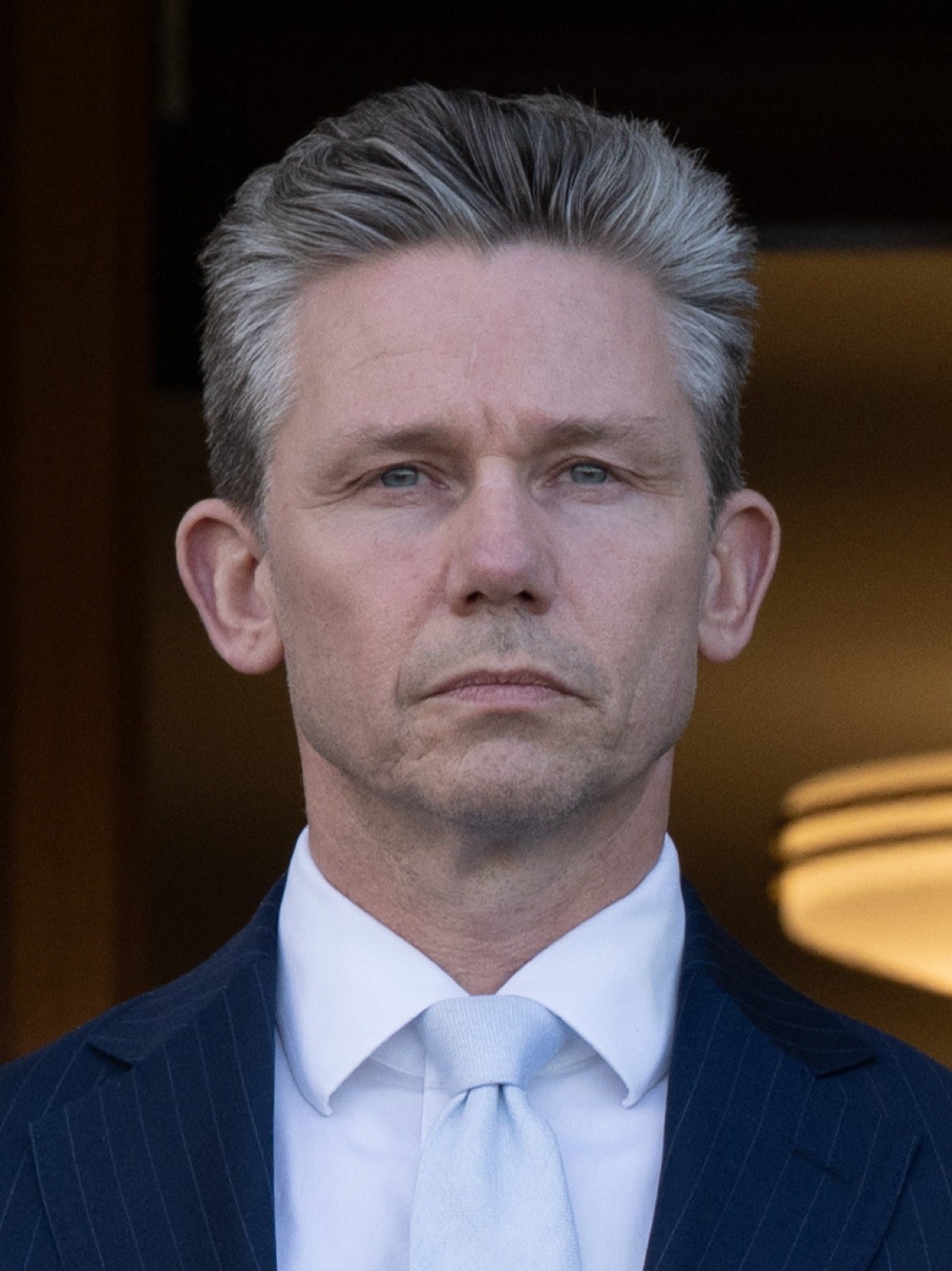
Pål Jonson
Pål Jonson is Sweden's Minister of Defense who discusses the significance of Sweden and Finland joining NATO and smaller member countries increasing their contributions to NATO's defense spending.
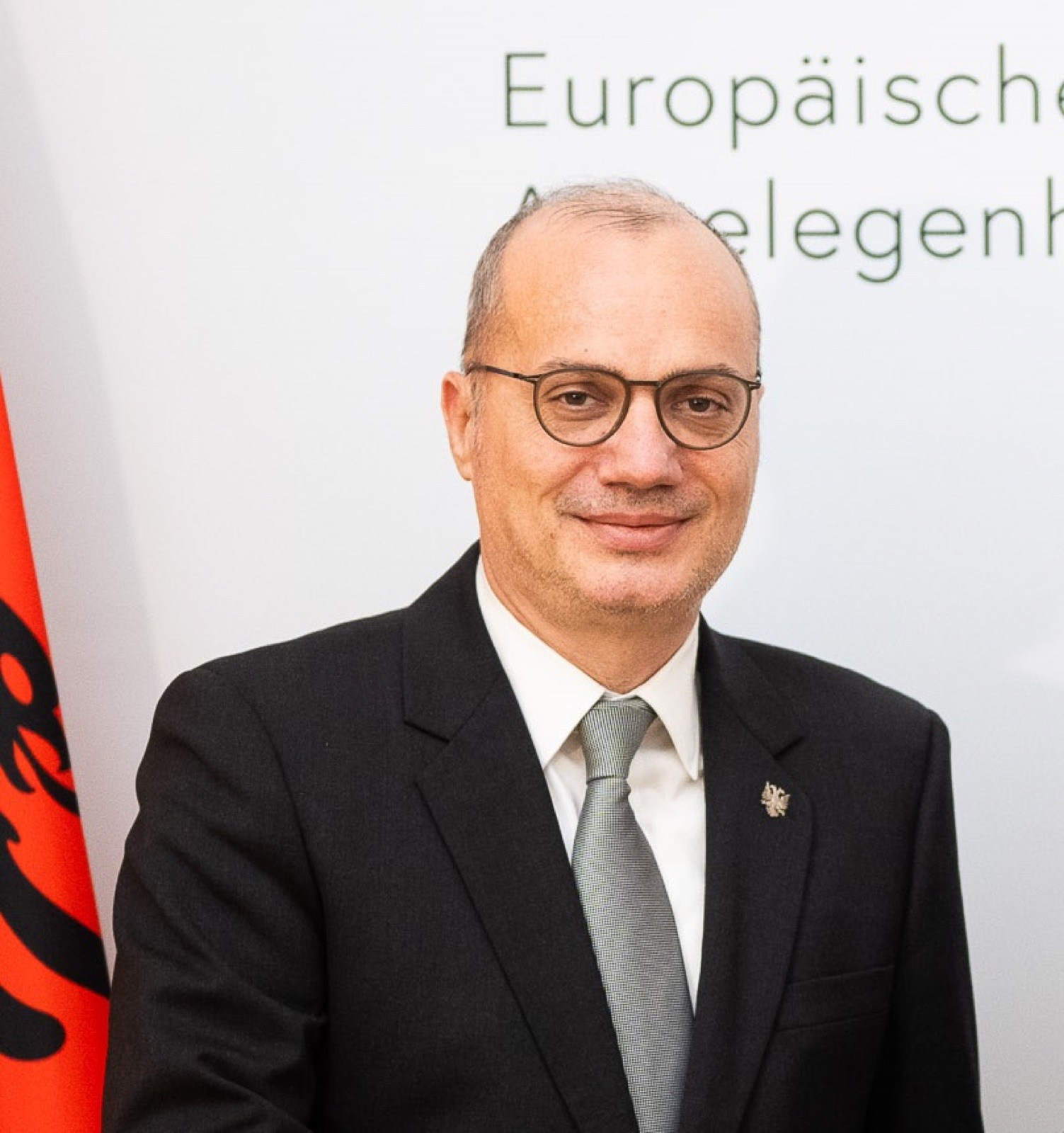
Igli Hasani
Igli Hasani is Albania's Foreign Minister who discusses the significance of Sweden and Finland joining NATO and smaller member countries increasing their contributions to NATO's defense spending.
Episode Summary
The NATO alliance solidified support for Ukraine's defense against Russia's aggression, pledging an “irreversible path” to membership once the war ends. Guest host Christina Ruffini and One Decision co-host and former United States Defense Secretary Leon Panetta spoke with Sweden's Minister of Defense, Pål Jonson, and Albanian Foreign Minister Igli Hasani on the sidelines of the summit in Washington. They discussed the significance of Sweden and Finland joining the alliance and smaller member countries increasing their contributions to NATO's defense spending.
Listen & Subscribe
- Watch on YouTube
- Listen on Apple Podcasts
- Listen on Spotify
Transcript
COLD OPEN
Panetta: Sweden's entrance along with Finland to become a part of NATO, I think, is extremely important to NATO's ability to be able to provide what I think is the strongest defensive force and alliance that we've known. That capability of having NATO countries come together to make clear that we are going to preserve the values and the rule of law and our freedoms is probably the most important message to send, not just to Putin, but to other autocrats in the world.
INTRODUCTION
Raffini: You're listening to One Decision, the podcast that looks at the choices that shape our lives. I'm your host, correspondent Christina Raffini. Each week, we explore some of the biggest choices and issues that have global impact. We hear from the key players and influencers making, informing, and shaping the decisions that affect us all. This week, we were joined by One Decision's new cohost, former US secretary of defense and CIA director Leon Panetta, for a series of interviews with world leaders on the sidelines of the seventy fifth NATO summit in Washington DC. We spoke with Swedish minister of defense Pål Jonson about what it's like to be NATO's newest member, and Albanian minister Igli Hasani spoke to us about the alliance's support for Ukraine and how to combat Vladimir Putin's war of aggression. It was an uneven summit for US president Joe Biden. Coming off a very weak debate performance that was watched by the whole world, on the sidelines of the summit, other than Ukraine, his health and competency for the presidency was the only thing everyone was talking about. Combine that with his mistake of introducing president Zelensky as president Putin, and it seems like he would go into his first big press conference in quite a while on his heels. However, after surmounting yet another gaffe in his first answer, confusing vice president Kamala Harris and calling her vice president Trump, president Biden picked up the pace. He took questions for about an hour from reporters on a wide range of topics, stuck to the topics, and covered a broad base of foreign policy. He also became very animated at one point talking about US gun control. The headline from the press conference, as he stated over and over again, is president Biden says he's not going anywhere. He believes he is the best person for the job, and he's the best candidate to win and beat Donald Trump. Towards the end, a reporter asked a very pointed, concise question saying, if your staff came to you with polling data saying vice president Kamala Harris would fare better in a matchup against Trump than you, would you drop out? And president Biden said no. Unless they come to me with data that says I cannot win, I'm staying in this race, leaving Democrats and world leaders with an even more complicated path forward towards November. But it wasn't all bad news. Allies we spoke to, when we spoke to more than a dozen leaders from all different countries, were really on the same page in a way that's been very rare for these summits about the goals of the alliance, its direction, and its need to continue support Ukraine. Let's listen in to our interview with the Swedish defense minister. Mister defense minister, thank you so much for joining us at this gorgeous embassy.
INTERVIEW: SWEDISH DEFENSE MINISTER PÅL JONSON
Jonson: Thank you very much for having me on, and great to be on your podcast.
Raffini: So you and Finland, of course, are the two newest members to NATO at the seventy fifth anniversary summit this week here in DC. How's it going so far? Good decision? Bad decision? What do you think?
Jonson: I think it was a very good decision because it means that Sweden is safer and NATO is stronger by having us inside the alliance. And we like to think we have assets and capabilities that we can actually contribute to the alliance to make it stronger as well. We have lots of experiences on operating on the Baltic Sea, we have experience in working in the Arctic environment, we have a defense industrial base for being a small country where we push above our weight, and we have a great Russia expertise as well. So feels great to be inside the alliance and I think it's good for the whole northern flank of the alliance that we're in.
Panetta: We welcome you because you're really one of the countries that pays attention to its security and to its defense, and what you present are a lot of great assets that can help NATO.
Jonson: How is Sweden reacting to being part of NATO now? Well, all the opinion polls indicate there's a solid public support for NATO accession where, of course, it's almost 70%, and this is a big shift for a small country, of course. We're leaving behind two hundred years of military nonalignment and neutrality. And, of course, what's the reason for that? And that was, of course, Russia's full scale invasion into Ukraine. And I always say that if Putin had one objective with Sweden and Finland, it was to keep us outside of the alliance. And now we ended up, of course, with a 1,300 kilometer longer border with the alliance due to his illegal aggression against Ukraine, and that has changed the whole geopolitical dynamics up in the North. And I must also say that also we've been doing Nordic defense cooperation for a long time, but now when we all have the same kind of security arrangement in peace and crisis and wartime, there's so much things we can do now which we couldn't do before. And now we also have NATO's common defense planning, which is the backbone on how we're working. So I think there's a lot of win win by Swedish accession into NATO.
Raffini: What do you think precipitated that public opinion change? Because I understand that, you know, Russia's invasion changed the calculation. Do you think it's an actual tangible realistic fear of invasion by the population, or do you think it's just a desire to want to present more of a united front, you know, in case the dominoes start to fall?
Jonson: Well, you saw the opinion polls changing as soon as the full scale invasion started. So that, of course, is a catalyst for it. I think two things I think is very important to keep in mind, and that is we were a partner to NATO and we were a good partner and committed partner, and NATO supports its partners. But Ukraine was also a partner, and we looked at Ukraine, and NATO was crystal clear: we support our partners but we defend our allies. And if you want to have access to Article five, if you have access to NATO's common defense planning, you better join the alliance. I think that was one thing. So it really was the Article five because like you said you already had close cooperation, so that's the thing you were getting now that you weren't before. Yeah. But there's a difference between partnership and membership and that became very, very clear for us when the war broke out, of course. And the other thing I think where we made a big impact was also foreign minister Lavrov when he sent his infamous letters to all the capitals in Europe stating there will be no further NATO enlargement and NATO had to withdraw all its assets and capabilities to 1997 borders. Two things were very important for Sweden with that. One was we had a lot of international defense cooperation and if NATO would have withdrawn its assets, we could not maintain that kind of cooperation. And the other one was, of course, blatantly saying that Sweden and Finland are not free countries, we don't have the right to choose, and we're part of Russia's sphere of interest. That didn't go down well. It's not gonna go over well in Sweden. So I always say a Swedish and a Finnish NATO membership, that's the mother of all unintended consequences for Russia's strategic thinking. So I think that the Russians really had it coming by their own behavior like that. And there are differences in the systems. There are people like myself. I've been working for this for decades because I think the world is a much better place when North America and Europe collaborates. And there's no other place, of course, where Europeans and North Americans meet around the table like this to grapple with security problems. I think that's a great strength. But that was one thing. To have a really impact on the public, I think the power of example and that the full scale invasion broke out, I think that made a big impact in the Swedish public.
Panetta: I have to tell you that with secretary of defense at the time, Sweden was a great partner in the Libya war. That was, you brought some tremendous assets to bear. I remember working out of Naples, which was the command center for that. And the commanders there were very complimentary about your air force, not only the quality of the planes, but the quality of your pilots. Let me ask you something. You also have a very strong industrial base in Sweden as well. So you can in fact produce some of the weaponry that is essential to your security. Is that right?
Jonson: Yeah, there is. I think for being a smaller country we punch above our weight. There's no other country of 10,000,000 who has the ability to produce their own fighter jets and submarines. That's of course based on a lot of collaboration across the Atlantic. We operate our own Gripen fighter, but half of the sub suppliers come from the United States because we have a lot of defense cooperation and great technology transfers, sometimes actually going both ways. I think a lesson learned from the war in Ukraine is that this is a war of warehouses and a war of attrition. So that means having a strong defense industrial base, that's actually part of credible deterrence these days. And we can contribute to that, to the alliance. Especially in the underwater domain and what we do, these electric submarines, fighter aircrafts, we have good sensors and good electronic warfare capabilities. And then of course, a lot of collaboration and a big footprint for Saab also here in the United States. It's an asset for us that it's all originals. We have a strong STEM culture, as we call it, traditions in engineering. We make cars and we have Ericsson and so forth. So innovation and industrial production is an area which is very important and I think it's becoming increasingly important also within NATO.
Panetta: Mister Minister, what's your sense of where Putin is right now? I mean, it strikes me that Putin has become much more aggressive. He's conducting not only the war in Ukraine, but threatening other NATO countries. And in addition to that, Russians are now engaging in sabotage in different NATO countries, which is pretty bold of Russia to conduct sabotage at the same time that they're conducting a war. What do you think is motivating Putin right now?
Jonson: Well, I mean, we've been following Russia for hundreds of years due to our location and our whole intelligence community is very much centered on following Russia. And what we take note for is the low threshold for Putin and Russia to use military force. And of course, the full scale invasion that was just a continuation of the war that started in 2014 with the illegal annexation of Crimea. And then you had 2008, of course, in Georgia and so forth. But a low threshold for the use of military force and a great propensity to take political and military risks, I think, is some of the things that we take note of. And also high ambitions to reconstitute these forces. And he's saying that by 2026, they should be able to have 1,300,000 soldiers again. The Russians hasn't been impressive, to my mind at least, in Ukraine, because they control still less than 20% of the area. They thought they would be successful in maybe five days. Right, considering the discrepancy between the sizes of the army, you know, they should have been able to perform better. Tactically and operationally, not been impressive, but they've shown a few things. They've shown determination. They keep on going. We were a bit surprised also that they were able to revamp their defense industrial base about six months to twelve months ago, and we take note of their industrial production going up as well. And they show a degree of resilience and tenacity as well, which we take note of. I mean, they have well over probably 350,000 casualties and they still keep on going as well. So even though they're not impressive, they have resilience and endurance. Another lessons learned from this war, this is about scale and volume as well, that we in Europe also need to think about when we strengthen our armed forces as well. Of course, you know, most of the Allies now are above 2% and so forth, but then we also need to show that we need to have the capacity to both fight tonight, as we say, inside NATO, but also have the ability to have a fight that can continue sometimes for years as well. So it's exposing us to new lessons learned due to the Russian aggression against Ukraine.
Raffini: The Heritage Foundation, which is a conservative think tank here in the US and not known for necessarily being aggressively pro NATO, called Finland and Sweden model NATO members and said other members could learn more from some of the things we've just been talking about, the defense industrial base, your, you know, history in combating Russia. What you just spoke about, the 2% threshold, is that enough for Europe to keep up with Russia's ability to rearm, especially in light of help it's getting from places like China and of all places, North Korea?
Jonson: Yeah. No, it's not. I mean, 2% is the floor, but it's not the ceiling. And we're getting new capability requirements from the alliance right now because we have these new regional plans. We're very lucky to have General Cavoli right now, SACEUR, and he's laser focused now making sure that we have the strength in NATO's ability to deter and defend and that we have executable regional defense plans. And now we're filling up those capabilities with assets and capabilities and then we need to invest more. Another challenge what we're having right now with the defense industrial base inside Europe is also that we have long times for deliveries right now. It's not available here and now, and also that prices of course have been going up. This is now the time for the seller market, and therefore we find that 2% isn't giving us nearly enough. So Sweden now has a trajectory up to 2.6% by 2028 and I see many allies now who are significantly above 2%. This year we're at 2.2.
Panetta: I've been arguing that in dealing with Putin, particularly in Ukraine, the only thing he really understands is force. Even though there are those that hope for negotiations, the reality is unless we are aggressive and unless the Ukraine is successful at stopping Putin, that the message that comes out of Ukraine would be the wrong message if Ukraine was not successful. What's your view of how important it is to be able to have Ukraine successfully stop Putin?
Jonson: Well, secretary, I couldn't agree more on that. And I think that we know the expression that peace comes through strength, and NATO now have to exercise strength and unity, of course, but we also have to continue supporting Ukraine. And we do that because, of course, it's both the right thing to do and it's the smart thing to do. And of course, it's morally right because Russia started an illegal aggression. It doesn't make discrimination between civilians and military targets. It's been deporting Ukrainian kids to Russia. It shows a degree of brutality, which is really mind boggling. But it's also, of course, about standing up to values and interests that are important for us. For us, it's important with international law. We're a smaller country and we want a rules based international order. And by supporting Ukraine, we stand up for the rules based international order. We don't want a Europe where might gives right or we don't want a Europe of gray zones and buffered states. We tried that before during the Cold War, and we're not going to go back there. We don't want our kids to grow up in that. But it's also about investing into our security because to my mind right now, Ukraine is the shield against Russian military expansion. If Putin would be successful in Ukraine, I think that military pressure on particularly Moldova and Georgia would increase, but also of course us as well. So it's really also doing whatever it takes to make sure that it's the Ukrainians and not the Russians to win this fight. And can it be done? Yeah. If we make sure that we're determined, we have the economic might, but we have to transform our defense industrial base. So the Ukrainians also have access to new deliveries because we are running low on our stocks in this regard, and making sure that we cross the Atlantic also collaborate on providing Ukrainians with new defense equipment.
Raffini: Something that the war in Ukraine has shown, and a lot of this is also due to inaction in the US Congress, but there is even when there is a political will, there's a supply chain delay. Right? Those deliveries do not come immediately even within the alliance. But there's also a slight delay in the political will, especially when it comes to Article five. There's this idea that it's gonna take a little while initially to enact Article five if there is an invasion, if it needs to happen. So I was reading, can you explain to us about the total defense plan that Sweden has where every citizen from ages 16 to 70 can be called up to help the nation in preparation for war if necessary? And is it your thought that every country in Europe should have a similar plan in those intervening days that it would take to call up an Article five action?
Jonson: Yeah. So every citizen in Sweden between the age of 16 and 70 are demanded in the case of war if this breaks out to support the Swedish society. And we have a total defense concept because what we learned also from the Ukrainians, it's very important to have resilience if you're exposed to an armed attack. I think one of the fascinating things with Ukraine, I've been there several times during the war, is that the trains keep on going, that the mail keeps on going and wages are being paid, and that creates this resilience so people can endure the hardship. So that's a way of preparing. So you make sure that your societies are strong and resilient as well. And therefore, civil defense is something we've been working on a lot. I think the gold standard within the alliance is provided by the Finns there, because we had a very strong civil defense during the Cold War and then we dismantled it and the Finns kept on. So they're really the star in this, but we are also building it up as well. We did something drastically in 2017. We sent out a folder to all households in Sweden saying, this is what you do in case of a crisis or in case of a wartime situation. You are expected to have food and other necessities for one week to handle without the support of the state. And this is your closest shelter and so forth. So it's tailored to individual neighborhoods, and this is where you go? Exactly. So you sent that to all households all over Sweden. And what we said was this is in case of a war or a crisis, because if your society is so strong that it can handle the demands of war, then you're much better prepared also in times of crisis as well. I mean, the US has been exposed to many natural disasters, of course. I think a lot of them say the same mechanism, both in a war or a crisis, to make sure that you're resilient, that you can handle disruptions in supply lines, that you can handle priority and allocation and so forth as well. So for us, having this integrated approach between the crisis or wartime situation and strengthening the resilience of societies has been useful for us. And just an example, we have for the first time in over seventy years, we actually have a special minister for civil defense right now. So he's in charge of civil defense and resilience and cybersecurity as well. And it works well for us. And making sure those trains run.
Panetta: Well, I commend you for that. I think the United States, frankly, needs to be much more aggressive in terms of our ability to recruit the soldiers we need. We're not meeting our recruitment targets right now. And I've argued that what we need is a national service system that requires young people to serve in some capacity so that they in fact understand that they have a duty to country. And I think that's what Sweden is talking about.
Jonson: Well, thank you, secretary. And we have a conscript system as well. And this is also another lesson learned that in 2009, we laid the conscript system dormant to go on an all volunteer force. And it's very important to have standing forces as well that you can use to have a greater availability. But for doing recruitment, you need conscript systems as well. What I like with the conscript system is it doesn't matter where you're coming from, it's where you're going and everybody's equal there. We get people who, well, choose life as an engineer or a doctor or a mechanic, and then they, for one year, they're in the military service and, oh, I like this, so I'm going to continue as a soldier, a sailor, or a non commissioned officer, or a reserve officer, or an officer. So, for us, it's indispensable for recruitment at the time when we need to grow because our armed forces are too small and we have underinvested in them for decades. But for personnel, the conscript system and national services is really the backbone.
Raffini: We're running a little bit short on time, but I do wanna ask you briefly. We are in the US. I don't know if you've noticed this. We had a bit of a rocky political time here in America lately, so I know it's not gotten a lot of reporting. I'm wondering the view from abroad. Do you think of the US as a reliable ally, either bilaterally or within NATO? Do you depend on the US to be there in four years, eight years? Or is that one of the reasons we're seeing European nations stepping up and taking their security into their own hands?
Jonson: Listen, the kind of leadership that the United States have provided for Europe over a decade has been indispensable. The leadership that you showed when the war broke out, what you did before the war broke out also with warning us about the problem was that there wasn't a lot of capitals inside Europe who wanted to listen to the messages then. Including France? Yeah. Exactly. And I always say I was thinking about the nine eleven commission, of course, was the, they called the failure of imagination. You don't want to absorb these kind of messages. And it keeps me awake at night, you know, the failure of imagination that an armed attack against NATO could not happen. In order to preserve the peace, we need to be strong in that regard. I was at the Munich Security Conference where Zelensky spoke. Everyone at the conference was saying, oh, the US is, you know, saber rattling. It's not gonna happen. And then we woke up the next day and it happens. But both the leadership within the alliance, but also what you've been doing for Ukraine. I go to the Ukraine defense contact group in Ramstein every six weeks, and the leadership that secretary Austin has provided. And, you know, he gathers the 50 flags around the table, the leaders of the free world supporting Ukraine. I think that's been tremendously important. But we get it. We need to do our share when it comes to transatlantic security. Secretary, you reminded us as well that burden sharing is indispensable. And we do that to go up the 2%. We do that in order to preserve and strengthen the transatlantic link because we want to continue further developing. Because when we set our mind to it, the Europeans and North Americans, I think there's very little that we can't do. But we just have to continue investing into it. And we have to take a larger responsibility both when it comes to supporting Ukraine and when it comes also to assuring that we have a strong alliance together.
Panetta: I have to tell you that on behalf of the United States, Sweden's entrance along with Finland to become a part of NATO, I think, is extremely important to NATO's ability to be able to provide what I think is the strongest defensive force and alliance that we've known, really. And I think that capability of having NATO countries come together to make clear that we are going to preserve the values and the rule of law and our freedoms is probably the most important message to send, not just to Putin, but to other autocrats in the world.
Jonson: Couldn't agree more, sir. And I think also we go quite often to Shangri-La Dialogue, and we Europeans know that in order to be a good Atlanticist, we also have a common Indo Pacific agenda. So for the second time I went to Shangri-La Dialogue, went to Australia, went to the Philippines. We've been drafting our bilateral Indo Pacific strategy because of course Ukraine today could become Indo Pacific tomorrow. And the US leadership for Europe has been extremely important in what is probably the most dangerous time in Europe since the end of the second world war. There's one thing that brings us together there. I think it's unity, and I hope that the next couple of days also is gonna display the strong unity within the alliance. So thank you.
Raffini: Thanks again to minister Pål Jonson. Next we caught up with the Albanian minister Igli Hasani at his Washington hotel as he was rushing between meetings. I'm sure you can hear the lovely elegant background music of the interview, but it didn't stop us from getting down to the subjects at hand. We're very grateful for your time. First of all, I wanted to ask you, how supportive is your population of Albania's entry into NATO? I saw that when you first entered, it was like 98% of the country supported it. Has that support degraded over time, or is it still pretty secure?
INTERVIEW: ALBANIAN MINISTER IGLI HASANI
Hasani: Well, thanks for this wonderful invitation. I'm really, really happy to join you early in the morning at the start of this engagement at NATO. The Albanians and Albanians support to NATO continues to be at very high levels. The numbers continue to be more than 95%. There are polls that show even 98%.
Raffini: Why is it so high?
Hasani: Because we have suffered so much in our past. We have suffered so much under several dictatorships. We have suffered so much during the communist regime. We have suffered so much during both world wars, but the people have always tried to continue to keep the identity of being Europeans, of being part of an architecture that is providing democracy and security for them. And at the fall of communism in 1991, the North Korea of Europe, very importantly, became one of the most thriving supporters of the integration of the country into Euro Atlantic structures. It's a matter of a population that has suffered but is willing to continue to thrive for its best. And for us, NATO and the European Union are the two families where we share democratic rights and fundamental freedoms. These are not groupings of countries based only on geography, but first and foremost on the values that unite us.
Panetta: Mister minister, you're here for the seventy fifth anniversary of NATO. The critical issue is Ukraine and the ability to continue to have a unified NATO, strongly support Ukraine. How important is what happens in Ukraine to Albania?
Hasani: What happens in Ukraine is happening also to us. What is happening in Ukraine will soon, in a way or another, will come to different parts of the world if we don't respond as we are responding and if we don't enhance our support towards the Ukrainian people and the Ukrainian government. There is a war of aggression against a sovereign country. There is a war of aggression that is willing to change the perspective of a nation that is willing to join this family that I described a few minutes ago, that we, Albanians, wanted to become part of it, and the Russians are not willing to let Ukrainians do that. And we have to continue to support our friends, people that are willing to join our family, and this should continue to be our most important thing. If we let that fail, others will follow. And we know very well that we have a major aggressor that doesn't stop easily no matter what.
Raffini: There are some people who think that that's a facile argument that Russia wouldn't really go past Ukraine, that this is a one off. You don't buy that.
Hasani: Well, I cannot predict, but I can read history. And the thirties of the last century tell us a lot. We had a Nazi regime, very aggressive towards its neighbors, and everybody thought that by appeasement things would have been different. And history showed it very differently. But there is another discussion that we should also consider and we were touching upon with secretary Panetta earlier. We're talking about the clash of democracies with autocrats. We don't share the same values. We don't share anymore the same way of thinking. We don't see anymore facts from a different angle. We see facts from opposing positions. Therefore, we have to continue to support those that are willing to be part of the club, the family of liberal democracies based on the rule of law and free market economies.
Panetta: How critical is the United States leadership in trying to keep a unified NATO and do the right thing in Ukraine?
Hasani: The United States are the heart and the soul of NATO. The United States have been the only factor that kept Europe democratic. The United States have been there for decades and should continue to be with us because it's thanks to you and your presence that countries in Europe, be that Western, be that Eastern, have become more and more democratic and belong to the family of values that I described earlier. It's all about this relation, and this relation should not disappear. This relation is the one that has been preserving a set of commitments that we all are binding.
Panetta: What worries you the most right now in terms of the stability of NATO? Is it the unpredictability or uncertainty of the political situations in Europe?
Hasani: There are many influences coming from the East. There are negatives. And it's not only the Russian Federation. It's China. It's Iran. And there are different realities that are putting our security at stakes. What is happening in the Red Sea, what is happening in the Middle East, what is happening in the Indo Pacific are things that are of major concern and the role of the United States is crucial and fundamental in all these aspects to continue keeping the boat going into the right direction. I come from the Western Balkans, an area that has produced sometimes more history than it could have consumed. But it's important to understand that thanks to the mechanisms that we willingly joined with the help of the United States and others, now we're talking about different realities in the Western Balkans. Think of the Western Balkans, I don't know, thirty years ago, twenty five years ago, twenty years ago. We were in the middle of the wars. Now there is cooperation. Now there is integration. Now there are positive steps of development that are bringing our societies more and more closer to where they want to become. If we lose that touch, many question marks will follow.
Raffini: One of the criticisms of the alliance, not just from conservative politicians in the US, but also the UK and France and Germany, is that smaller members don't pull their weight. There's a long running debate about whether or not Europe was contributing enough to its 2% threshold. There's been a lot of progress in that in the last year, two, three years. But how would you counter the argument that countries like Albania benefit more from being in the alliance than the alliance benefits from having them?
Hasani: We all have tried to do our homework, and there has been a major and fundamental political change even in the alliance from 2014, from the first war of aggression of the Russian Federation towards Ukraine. Up until then, NATO had become more of an expeditionary force trying to fix and resolve issues that were not really concerned with its own borders and its own territory. From 2014 on, things have changed.
Raffini: Because they were looking more at the horizon. No one was really thinking ground war in Europe again. I mean, exactly.
Hasani: And this came also with obligations from all of us. Albania has reached, at least now that we're talking, we have reached the 2.03% of our GDP dedicated to defense spending, and this is a trend that is more and more visible at the so called small countries of the alliance. The small ones are really committed to continue to show and to contribute to the realities that we are facing, and we should continue to do so. Let's not forget how much it means for Albania and similar countries to Albania, the membership to NATO, the set of reforms, the set of military engagement, the set of political influence.
Raffini: Right. Because people forget it's not just about military contributions. Exactly. This is what Ukraine is going through right now is they have to meet this anti corruption threshold. They have to meet economic thresholds. So it helps.
Hasani: Yeah. Things that countries like Albania and others have gone through and have been positively checked and have had. We have had our own stories of success in many of these areas, and things will continue to be so.
Panetta: How important is it to be able to build a bridge for Ukraine to become part of NATO?
Hasani: That is a natural thing for Ukraine and the Ukrainians. We will continue to help and support the Ukrainian people to materialize their dreams. And if this is the dream of the Ukrainian people, they will be more than happy to join the alliance. Therefore, the alliance should be also more than happy to have them as soon as possible. There is a set of requirements and realities that we have to follow and to fulfill, but the reality should also be checked with the willingness of their own people.
Raffini: If you had to convince an average American or an average UK citizen or an average French citizen who is skeptical on NATO and is saying, look, we've got problems here. Why are we spending all this money on other countries, on this alliance? We could be focusing on our own defense. We should be going on our own. What is the best argument that you could make for anyone being a member of NATO?
Hasani: Pick anybody from any country in Europe and ask them if they remember when the American soldiers, diplomats, and statespeople went there and what did they bring. They brought hope. They brought democracy. They brought future. Pick any. My grandfather lived in a detention camp from 1947 to 1991. A good man. He had done nothing except being an anti communist. Being a critic of government. He always, always, no matter what, no matter the conditions, used to follow the Voice of America and Radio Free Europe.
Raffini: Those values are enshrined in all the work that we do every day. Thank you to the Albanian minister. That's it for this very busy week's episode of One Decision. We drop new episodes every Thursday, and next week, we'll be bringing you more from our conversations at the NATO Summit. Like and subscribe so you never miss an episode. Drop us a line. Tell us your thoughts. What decisions have impacted you where you live? You can write us. Our email is onedecision@onedecisionpodcast.com. From the team and all of us here at One Decision, thank you for listening, and we'll see you next time.