Episode Info
- Season26
- Episode5
Hosted by Christina Ruffini and Sir Richard Dearlove
Guest
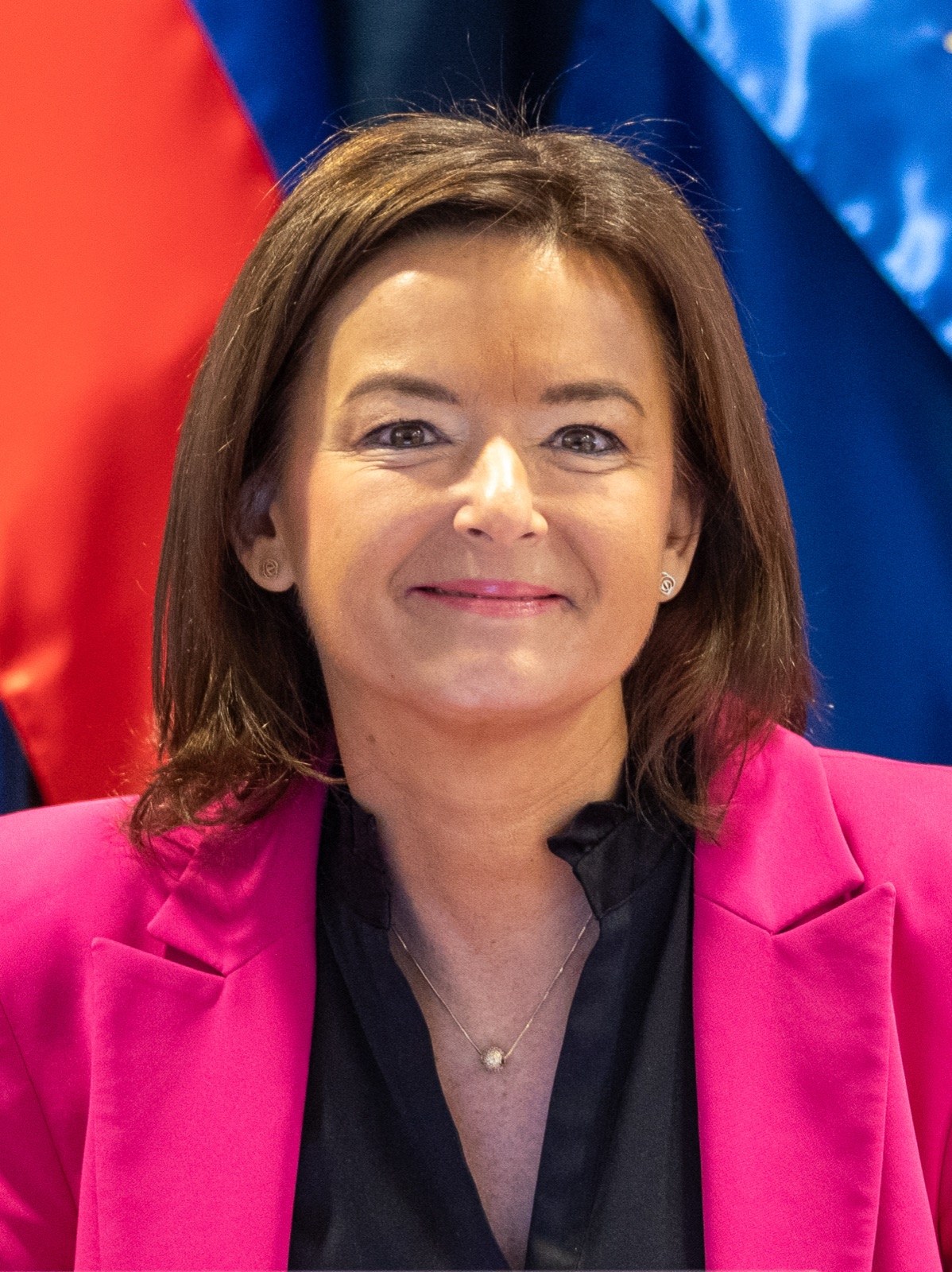
Tanja Fajon
Tanja Fajon is Slovenia's Deputy Prime Minister discussing NATO's ability to respond to increasing global conflicts and the growing threat from Vladimir Putin.
Episode Summary
As Washington focuses on the upcoming 2024 presidential election, guest host Christina Ruffini talks to One Decisions's resident spymaster, Ex-MI6 Chief Sir Richard Dearlove, about Joe Biden's decision not to run for president, Israeli Prime Minister Benjamin Netanyahu's visit to Washington, and the latest news on the investigation into the assassination attempt on former President Donald Trump. Plus, Christina and former CIA Director Leon Panetta caught up with Slovenia’s Deputy Prime Minister, Tanja Fajon, from the sidelines of the NATO summit in Washington a couple weeks ago to discuss NATO’s ability to respond to increasing global conflicts and the growing threat from Vladimir Putin.
Listen & Subscribe
- Watch on YouTube
- Listen on Apple Podcasts
- Listen on Spotify
Transcript
COLD OPEN
Harris: In the days and weeks ahead, I, together with you, will do everything in my power to unite our democratic party, to unite our nation, and to win this election. You know, as many of you know, before I was elected as vice president, before I was elected as United States Senator, I was the elected attorney general, as I've mentioned, of California. And before that, I was a courtroom prosecutor. In those roles, I took on perpetrators of all kinds. Predators who abused women. Fraudsters who ripped off consumers. Cheaters who broke the rules for their own gain. So hear me when I say, I know Donald Trump's type.
INTRODUCTION
Raffini: That, of course, was vice president Kamala Harris, now the probable possible Democratic nominee for president after president Biden stepped out of the race on Sunday. You're listening to One Decision. This is the podcast that looks at the choices that shape all of our lives. I'm your host, correspondent Christina Raffini, and I'm here with former MI6 chief Sir Richard Dearlove. Sir Richard, what a year this week has been.
Dearlove: How are you doing? How are any of us doing? Well, you know, a week is a long time in politics. It's a very, very long time in politics if you're in The United States at the moment, which I am, by the way. So it's been extraordinary to observe, you know, the speed at which things have evolved and developed.
Raffini: I hope you didn't bring this chaos with you. This week, we've got a really intimate, interesting interview with myself and Leon Panetta and the Slovenian Deputy Prime Minister. But first, sir Richard, I wanna just run you through a couple of these headlines. First, obviously, the biggest thing is Biden dropping out, Harris is in, but also Netanyahu is here for a visit, and the head of the secret service resigned. So since we talked about it at length with secretary Panetta last week, I'm wondering, following the shooting, the Trump rally, which, of course, killed one bystander and injured two others, should the head of the Secret Service, in your opinion, have been allowed to resign? Should Biden have fired her? Well, that's a good question. I think maybe she should have been fired.
Dearlove: I mean, it was a real terrible lapse of security when you learn the details of what actually happened, not to secure a roof with a direct line of sight. I mean, all the things that we now know about from the media coverage, I think Biden should have just turned around and said, you're out. You know, this is such a significant failing. And, you know, maybe it isn't immediately her fault that some field officer out there who was in charge, she wasn't, but she's still responsible. And if you're head of that organization, you've got to carry the can. So I'm not sympathetic at all to her being sort of let off. I think you just can't accept that sort of huge failure. And, I mean, let's face it. You know, he was half a millimeter or a millimeter from being shot in the head. Yeah. Had he not turned his head, this would have been a very different discussion. It would have been a different discussion. Indeed. Would have.
Raffini: Some Democrats and some security officials I was talking to said that it was the right thing to do, not just ethically, for Biden to fire her because, of course, you know, she put his political opponent at risk and it was a failure and she just should have been fired. But also, politically, it was kind of a slam dunk, and it was confounding to some people why he didn't do it. But apparently, he was busy making another decision instead.
Dearlove: Well, clearly, he had his mind on something else. And, you know, what a relief for us all that he stepped off and realized that, you know, he isn't physically, mentally up to being the leader of the free world. You know, you're sitting in The UK, you know, watching Biden, you just gasp that this man has managed to survive politically for so long. I mean, team must have been protecting him. Personally, from what I know from speaking to friends, I mean, condition's miles worse than it's appeared to be because they've managed to cover up for him. And interestingly, you know, debate, one saw just how bad his situation is. I mean, is a precedent for this because in his last weeks or months in office, Reagan was in pretty bad shape by all accounts. But, you know, he wasn't trying to stay in politics. He was just trying to survive his term. And I mean, if only Biden had said early on, look, you know, I'm gonna stand down graciously. I mean, he would have left with a reputation more intact than it's gonna be because he seemed to be hanging on by his fingertips, which I think is ridiculous.
Raffini: I think a lot of people voted for him the first time. I mean, he never said it outright, but the assumption was because of his age, he would be a one term president, right? He was gonna unify the party. He was gonna pass the torch to the next generation. But for all intents and purposes, Harris, in the last four years, has not really become a player. She hasn't really distinguished herself. They've given her a couple different policy tasks, and, you know, from a reporting standpoint, I haven't really seen them going anywhere. So it's interesting to me the level of enthusiasm that came after this announcement. I mean, Dems raised a $100,000,000 just in the hours after she was announced. And here's a fun fact, viewership of the HBO series Veep, which if you've watched, has a very similar plotline for its kind of fundamentally flawed political protagonist. The viewership of that show has spiked something like 300% since the announcement. Why do you think there has been such a groundswell of enthusiasm?
Dearlove: Well, I think it's relief of Biden's departure. And I mean, overseas, well, certainly this is true in The UK, Kamala's had a really terrible press. I mean, she hasn't been complimented at all. And, you know, even some quite balanced political magazines, you know, have written about her in a really uncomplimentary fashion. I have to say I was incredibly worried about her being the alternative presidential candidate and thought that she probably wouldn't make it. Well, what's being clear is, you know, someone like me has been proved completely wrong in that judgment. And okay, she's only into her presidential campaign by thirty six, maybe nearly forty eight hours.
Raffini: A minute and a half, but yes.
Dearlove: But I think, you know, the first speech I heard her made, thought, wow, this is dynamic. And it's clear if you look back at her CV she's obviously a very clever woman, she's a clever lawyer, phenomenal record in California as attorney general and city prosecutor and all the other positions she's held. But now I've seen her make today's speech speaking at this sorority commitment that she had at Howard University. Again, wow, that's impressive. She's clear minded, great message, great soundbites. Maybe she's gonna prove to be quite a formidable presidential candidate. Actually, what I also think is exciting, you know, we all thought that the first, you know, black woman to run for the presidency might be Michelle Obama. We thought the first woman would be Hillary Clinton, but it's not. It's going to be this rather extraordinary lady. So I'm feeling pretty enthusiastic about the lines. I thought one of the best things that she said was, look, when I was a prosecutor in California, you know, prosecuted frauds, you know, misogynists. Right. That was a great trick. And then she managed to say, well, you know, and my opponent's a felon, and I prosecuted people like that. And I think that's a great line. I mean, that's a powerful line. And all those people out there who were thinking, oh god, I can't fight for Biden because he's over the top, now are thinking, well, we've got someone who, you know, maybe. And I think when she stands up to debate with Trump, Trump maybe could be terrified of her.
Raffini: It's certainly a very different opponent than they've been preparing for, and there are these reports now that the Trump campaign is also regretting having picked J. D. Vance because they picked him because they thought they didn't really need to appeal to minority voters. They didn't really need to appeal to those middle American voters because they had the Republican vote so locked down. They were expecting high turnout. Democrats were not enthused about Biden. There was this real enthusiasm gap, and it was just about getting people to the polls, and they were confident enough that they could win out and pick this middle aged white guy, and now they're gonna have to run a very different race. The other thing that's gonna be interesting is watching who Harris picks for her VP. There's already this meme going around, where it's that picture of her on the phone that was with her and Biden when the election was called the first time, but they've changed the caption on the bottom and it says, hello, is this the Midwestern, middle aged white guy emporium? Because everyone is hyper aware that in order to win over these swing voters, that's who she's gonna need. Do you have any picks for VP? Any recommendations? Anything that you think that she would need? Well, she clearly is going to have to pick very carefully.
Dearlove: I don't think my knowledge of, as it were, US politics is sufficient to immediately focus on who it's going to be. I mean, that's fair. Half the names that have been floated, I think most Americans don't know, but they will shortly. They yeah. They will. They'll pick somebody who can, you know, pull in the people that Kamala herself isn't going to get the support of. So I think you've put your finger on it. The republicans are gonna be completely wrong footed by this event. And what Kamala can say is, look, I'm a young woman running against an old man. I mean, suddenly the tables are turned. I mean, Trump, what is he? 78. Look. I'm not an enthusiast for Kamala's politics personally, but I'm an enthusiast for her candidature because it looks as though there's a possibility that Trump will not, as it were, win the presidential election, which many of us are beginning to think was inevitable. And okay, I'm looking at it not from the point of view of domestic policy in The United States. I'm looking at it from the point of view of global foreign policy. If people like Blinken stay on, which they might well do with Harris, then she's gonna have a really, really powerful foreign policy team because, you know, he's a class act. And I think a lot of the Republicans think he's a class act as well. So, you know, I'm feeling more optimistic than I have been since I arrived in The States a few weeks ago.
Raffini: Well, the other interesting thing is there's a real groundswell from young people who've been kind of checked out of this election, and there's all these memes going around. There's one about the coconuts, and then there's this other one. So on that note, Sir Richard Dearlove, I have to ask you, are you brat?
Dearlove: I have no clue what you're asking me. What's brat?
Raffini: So this is this thing the Internet has dubbed Harris. It's based from a singer called Charli XCX, and it's like a youth culture term. And she defines it as that girl who's a little messy, who likes to party, and maybe says dumb things sometimes, but who feels herself, and then maybe has a breakdown but parties through it, is very honest, very blunt, a little bit volatile, does dumb things, but like, it's brat. You're brat. That's brat. So this is this term of endearment that youth culture has dubbed on Harris for this campaign, and she's so embraced it.
Dearlove: If you use the word brat in The UK, which is quite popular slang, you're really talking about a rather nasty, badly behaved child. Well, you guys might have to, you know, adapt that definition because you're gonna be hearing it a lot over the next few months. Okay. Well, that's a good bit of education for our listeners because it means something completely different in The UK. And it's quite widely, you know, your neighbors come around with their kids, and one of the kids has badly behaved and, you know, messes up and, you know, chucks stuff around, and you say, gosh, little brat.
Raffini: We've just now expanded the definition to this, you know, cool, hip, messy, well intentioned woman.
Dearlove: So, all right. Well, political vocabulary is always evolving, so I accept that.
Raffini: And on a more serious note, Harris will not be present at Prime Minister Netanyahu's joint speech to Congress. She has a prior engagement. What is your take on the timing of this visit from Netanyahu? Obviously, it was scheduled before the Biden announcement, which was on Sunday. The timing was never great in between the middle of the conventions right in an election year. Why would he be doing this at this time? Well, think Netanyahu's famous for his political insensitivity.
Dearlove: Let's put it like that. You know, it's extraordinary that he's come on this visit. I think most people in his position would have phoned Washington DC and said, Well, I think I'm going to postpone whilst you get things sorted out, then I will turn up. I think it actually illustrates a note of desperation on Netanyahu's part. And, you know, he's worried. He desperately needs American support. He is conscious that it's leaching away. And, you know, this was an invitation to Congress, I think. He's addressing Congress.
Raffini: Yes. And it came from the Republican speaker of the house, not from the White House, which is — So it's not a state visit.
Dearlove: You know, you would have thought anyone sensible would have said, hang on a moment. I'm not coming. Let's wait a few weeks, a few months, then I'll come. But I think Netanyahu is just under massive pressure from all directions. So he probably felt on balance, his best option was to come anyway.
Raffini: But it's a bizarre thing to do. And I mean, as we are recording this, I think he's making a speech to Congress. It looks like he's sticking to some talking points we've heard before, mostly talking. Now, this is his first trip out of Israel since October 7, and he's referring to it as September 11, which we've heard before. And the quote is, These monsters raped women, killed babies, killed children and parents in front of their children. He also talks about the hostages, saying Israel has brought home 135 of these hostages. Now, there are hostages in the gallery. Some came with Netanyahu as a show of support, but also some are there to protest him. And I was listening to an interview on the BBC with a hostage family this morning that was very upset with him in general and said basically, You have work to do at home. Why are you getting on a plane?
Dearlove: Yeah. And I mean, there was an extraordinary interview I saw this morning on the BBC World News with the mother of a hostage. And it was really very moving indeed. And it shows the strength of feeling in Israel against Netanyahu on the hostage issue because the general belief is that they're very close to some sort of deal with Hamas, but they can't get it over the line, and they largely can't get it over the line because of Netanyahu's intransigence. I mean, that's my interpretation. I'm not absolutely clear about that. And, you know, what a mess. You know, the sort of carnage that continues in Gaza, the exploitation of the Palestinian people by both sides, by Hamas using them as a shield, by the Israelis being completely sort of insensitive to the vulnerabilities of those of the population that are being used in this way. I mean it's a mess. It's a real mess. And of course Netanyahu's position politically in Israel is weakening every day. You know polling now shows him with less than 30% support. It's clear that his political days are numbered, I think. Unpopular with conservatives and liberals, ironically.
Raffini: Conservatives are mad because they say he's the national security candidate. He had one job. That was to keep us safe. He failed. And others are very upset with his human rights record. You know, the whole issue here in The US is very unpopular, especially with Democrats. And that was hurting Biden in states like Michigan. There's this interesting article talking about how Netanyahu is unlikely to ever find a more stalwart ally than Biden, who's almost intransigent in his support for Israel and is old school in that way. And he's really gotten nothing for it from Netanyahu. To go back to what you're talking about, the negotiations, every time The US has urged them to accept something or hold their fire or come to the table, they've basically been given the proverbial middle finger. And the author was arguing that it makes it less likely they're gonna get cooperation from American officials in the future because they've seen they don't really get anything out of — No. Well, I think it was Hamas originally that was saying no, but it's now Netanyahu that's saying no.
Dearlove: And, you know, he's intransigent. And, I mean, having, you know, dealt with the Israelis on difficult issues they can you know show this point of intransigence where they really won't move until they think they're in exactly the position that they want to be and I think that's what we're seeing now. But I mean it's quite clever of Kamala, I think, not to be available to meet Netanyahu. That's already for me an indication that there might be a shift. There's still going to be obviously the main Israeli ally, but perhaps much more critical, much more demanding, and not so accepting. So your comment about Biden being the best deal that Israel is gonna get and that it's a deal that's passing them by. Think I agree with her entirely. I mean, she's Kamala's gonna meet him, I think, later in the week. Yeah. They're gonna see that I have a separate meeting with Biden and a separate meeting with Harris. She'll be meeting him on her terms, not on his terms. And I think that's a sensible, smart move, and they've clearly thought that through quite carefully. This is high level politics. These things don't happen by accident.
Raffini: She's lucky she's got another appointment today, which she said she made as vice president and she couldn't break. She's got a thing, sir Richard. It's only like a mile down the road from where the speech is, but it's a very important thing, and she can't break it. Yeah, absolutely. Very good excuse. On that note, I think we want to turn now to the interview we did with our other spymaster contributor. It's getting quite spooky around here, former CIA Director and Secretary of Defense Leon Panetta. And we spoke with the Deputy Prime Minister of Slovenia, Tanja Fayon. We talked about the threat to Europe posed by Putin's war in Ukraine, you know, this rise of far right politics even in her country, and the role of disinformation and dezinformatsiya in democracies, and whether she thinks America still has a strong leadership abroad in Europe and around the world. As for your comment on spookiness, we understand the ways of the world. It wasn't a derogatory spookiness comment. Was just saying I'm feeling very, I mean, I think unqualified all of a sudden. I'm surrounded by spymasters. Alright. Let's take a listen to the interview.
INTERVIEW
Panetta: How much of a threat do you see Putin being? My sense is that, and I've watched Putin a long time, that he's obviously become much more aggressive. He was willing to invade a sovereign country and destroy their democracy, something we haven't seen since World War two. And now he's conducting sabotage on NATO countries and being aggressive in terms of other intelligence going after these countries. How do you view Putin as a threat?
Fayon: Certainly, we are especially speaking with our neighbors like Poland or Germany or even Baltic countries, two new members of a new NATO alliance that shows that there is a growing fear. Also provocations that we are seeing breaking the airspace or every day some provocations have come, not in Slovenia. You know, in Slovenia, traditionally, we had rather good relations with Russia being dependent on gas and oil. Of course, this is not the case. Now we completely change our attitude, but Russia will stay European neighbor. And this is very tricky and maybe challenging to say, but this is the fact. So we'll have to think about our future Europe Russia relations at a point when the conflict is over and the war is over, how to establish — I mean, Russia is finally the biggest nuclear power. So it's, we not going to move. It's a huge risk. So I just was visiting Brazil a few days ago. And what worries me traveling a lot around and speaking with different partners globally, that quite often they push us a little bit into West against the rest and criticizing us about double standards. But I throw the ball back, you know, you are supporting and working together in a very pragmatic way with Russia as if nothing happened. So, it's a very, very challenging times we are living in and where the multilateralism or the world order that we knew for the last seventy five years, it's not anymore the way we used to know it. We have to deal with very authoritarian, dangerous authorities. So, this is a challenge where you have to see as a diplomat how to find a political solution to replace it to the military one. What does it mean to conduct a dialogue with someone who is an aggressor?
Panetta: Well, the approach has to be from strength, not from weakness. Right? If you're gonna deal with Putin or if you're gonna deal with adversaries, then you better be in a very strong position from a security point of view so that he'll pay attention.
Fayon: But now you can imagine, and now I will speak what I hear quite often with my fellow citizens back at home. We are a small country. And today you see that the world is competing also in a military way, you know, who is having more defense budget and these people are becoming sensitive. And these are also for us politicians and the governments, not an easy debate, I would say nowhere, but in a small country, maybe it's more challenging.
Kosinski: Do you think NATO is positioned to deal with some of these new challenges? Because it's not just Russia, it's also China. It's also, there's issues in The Middle East that are being addressed and have different sides within the alliance. I mean, you've been very upfront with your opinion on the war in Gaza. And I'm wondering how that's landed with your NATO allies and why you thought it was important to take that approach.
Fayon: I want to emphasize even more. That is why we have to stay committed to our shared values. Human rights. Human rights, UN charter, multilateralism, international law, nothing shall be above that. And we are very strongly traditionally as a country committed to it. And this is also our line that we are now using in a Security Council. These values we have that are our common shared values of our alliance to really strengthen. You can't be fighting for human rights in Ukraine and not in other places in the world. You have to be consistent in foreign policy everywhere around it. Currently we have around, I believe, 55 armed conflicts around the globe. That's right. How to run consistent policy to each one of them being from different side of the world. So, this is where I say the global values or the shared values we live are important. And then finding alliance. We have partners that are very much like minded in many parts of the world. We have to strengthen these ties. I think it's in human nature that at the end of the day, we want to live in peace and stability. I mean, this is also our responsibility to our young generations.
Panetta: Finally, we have to protect what we build upon. No, it is. And it is about those fundamental values that you just talked about, human rights, the dignity of the individual. But do you agree that we live in a world now in which autocracies, whether it's Russia, China, North Korea, Iran, all virtually helping each other now are confronting the democracies of the world?
Fayon: I would quite agree with that. I mean, in terms that the world is dangerously changing and rapidly changing. I mean, just look to the European continent. I don't have a one single or simple question what is happening with the European elections, that you have extremist nationalist extreme right on the rise. What are they telling us? What are they telling to the governments? What dissatisfaction people that live in peace for generations? And Europe is a peaceful continent with strong values and quite good quality of life, maybe bigger inequalities, yes. But still, I mean, sometimes I say to my friend, and maybe this is not very politically correct, but we, my generation, we grew up in peace with everything around. Then look somewhere else around the world and you are growing in wrong place in wrong time and you maybe have few days of a survival. So, how to protect that? And still people on our continent are dissatisfied with the governments and extreme right is on the rise. Is that right? It's also maybe the consequence of disinformation. So, you know, it's a big challenge for the role of media finally and the influence the media have on our people.
Kosinski: What do you think that dissatisfaction is capitalizing on? What do you think is really driving it? Do you think it's racism? Do you think it's economic inequality? Do you think some of it is coming from Russian disinformation efforts? Or is it all of the above?
Fayon: All of the above and most probably some more than that. That's why it's not a simple answer why people are unhappy, why are they voting against the governments because this vote in European elections was mostly against the governments, be it left or right, but mostly against the governments. So, could be dissatisfaction with the economic situation, be the Russian aggression, could be the Russian disinformation, but still the politicians and the governments are responsible at the end. So they have to be capable of informing people, telling them what they plan to do and so on. But it seems that we are failing on that.
Raffini: Well, that's just as journalists — it's not easy to be a politician these days. It's not easy to be a journalist either.
Kosinski: Would say just as our industry is frankly kind of failing to combat disinformation, do you feel like NATO, do you feel like European countries are equipped to address these issues, this discontent in these populations?
Fayon: I believe it's very important that we are talking to each other, no matter from where you come, that we have this dialogue, that we are hearing each other, listening to each other, and trying to find solutions together. For me, was an amazing privilege and experience when I was last year for the campaign for the Security Council. Slovenia has a small diplomatic network traveling around the globe. That was this confidence building in very personal relationships, very important.
Panetta: With my wife, we have a public policy institute in which we teach young people, try to inspire them to lives of public service. And I tell them that in a democracy, we govern either by leadership or by crisis. If leadership is there and willing to exercise the tough decisions that are involved with leadership, we can avoid crisis. But if leadership is not there, we'll govern by crisis. That's true in America. It's true in America. And I think it's true elsewhere. And so when democracy does not look like it's able to deal with the challenges that are there, then the simple solution becomes autocracy. And that's, I think what I see going on is that democracies in many ways have to prove that they have the leadership to be able to do the right thing.
Fayon: You are very much right because the leadership in my eyes is also that you don't just sit on the wave of a democracy or on the wave of a public opinion, but that you show that you can be capable of going against it if you believe this is right. And this is a strong leadership and that I can sometimes feel — I was twenty years very active in European politics. We lack strong leadership.
Kosinski: Do you think America currently has strong leadership?
Fayon: You're above to have the elections. I think we are following very closely.
Panetta: And it's gonna test our democracy.
Fayon: It is a huge test of democracy. The messages we are getting from to Europe are not very encouraging, at least not for one of the candidates, Trump, I can say that we are worried about the comments and the narrative. But on the other hand, I'm very much aware that America seems to be very deeply polarized. Society has to somehow engage in an active way, what maybe recently happened in France, to be frank. Have you been disappointed in this administration's upholding of its own alleged democratic values in places like The Middle East? And following quite with the concern sometimes our European debates, and let me start here because we are neither united. We might speak the same messages, but then the speed is completely different and the angles are completely different.
Raffini: Right, a lot the same words come out of different —
Fayon: You play and towards reaction in Gaza. And this, I think we, it's pretty much, I could say, goes also for American administration.
Kosinski: From your perspective, looking at the alliance, can you tell us one thing you think the alliance is currently doing really well? One thing that really works really well? And one thing where you really think it needs to improve or it's not working?
Fayon: Tries to unite as many people at the table, as many allies together and really try to build on values. And I think this is very important to have also these three sixty degrees approach. It's very much important to look all what is happening around, to really be in the lead. So that's something you think is working? I think this is the right direction and it's a positive thing. On a negative, difficult to say, I would say that I miss sometimes in the discussion, especially currently when we have a lot of wars and conflicts and polarized world, this political dimension of the alliance. When we come to how to protect, again, I will say the same democracy, the rule of law, the shared values, the humanitarian international law. So this political dimension, because currently we are of course discussing how much money, how much military defense, how to build our capabilities. But for a simple citizen to understand why we are together, why this alliance is important, it's not only military, it's a political alliance. It combines our values and strengthen our resilience.
Panetta: Because these challenges that we talked about, what's happening with regards to the political side of things and the changes that can take place in many ways, that means that an alliance like NATO has to be much stronger to be able to resist the kind of ups and downs of the political sphere. And that's gonna be the challenge.
Fayon: It's a challenge and the challenge is simple situation that the world has just from the beginning of Russian aggression in Ukraine so rapidly changed and so much changed that we are really living so fast with so many challenges around that it's not easy to handle them if we are not consistent and somehow united with our messages.
Raffini: Madam Minister, it's good to have you join us. Thank you very much. That's it for this week's episode of One Decision. My thanks to Slovenia Deputy Prime Minister Tanja Fayon and, of course, Sir Richard Dearlove. From the whole team, thank you for listening, and we'll see you next week.