Episode Info
- Season13
- Episode1
Hosted by Christina Ruffini and Sir Richard Dearlove
Guest
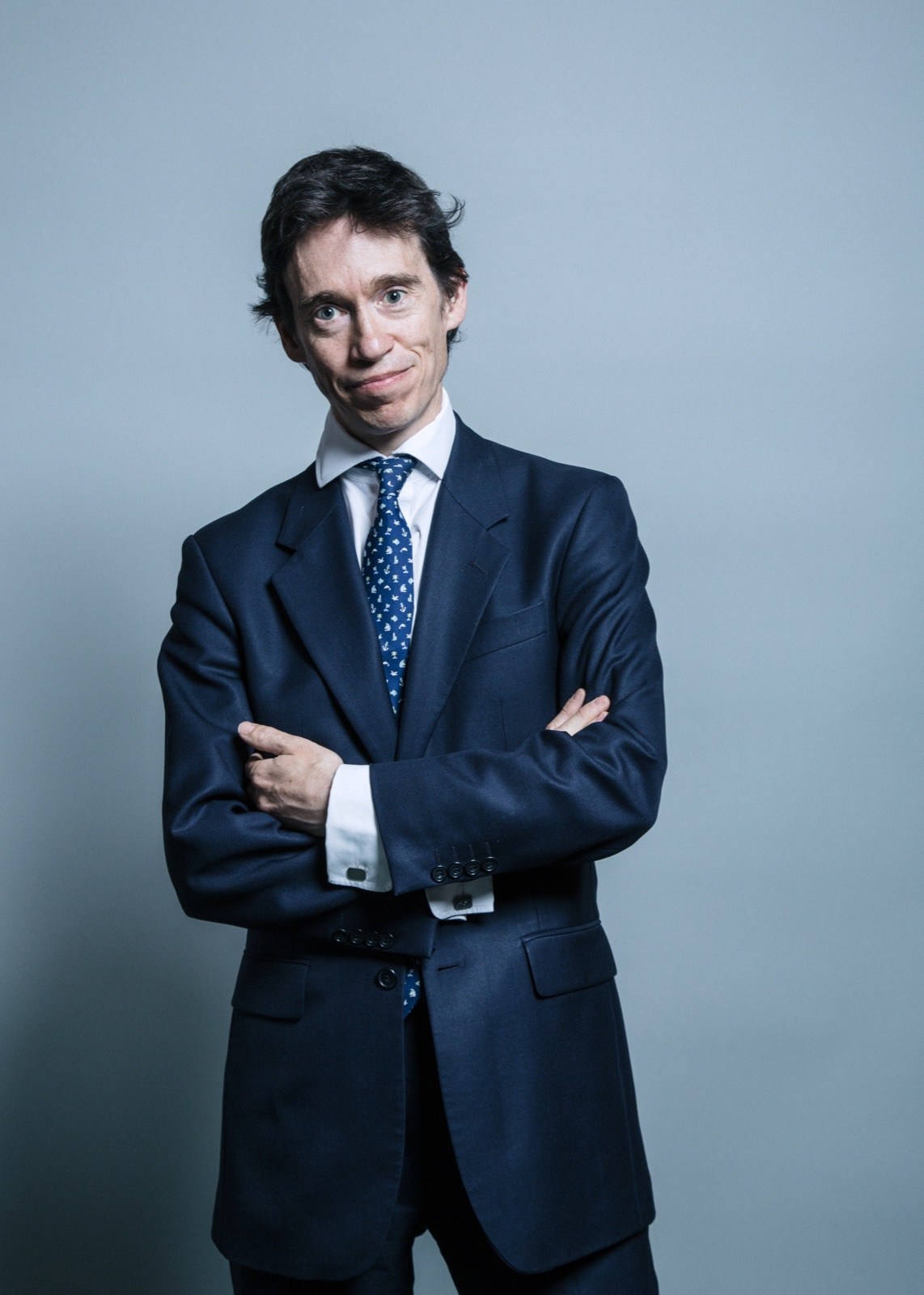
Rory Stewart
Rory Stewart is a politician and diplomat known for challenging Boris Johnson for Conservative Party leadership and traversing Afghanistan on foot despite Taliban pursuit; Stewart now leads GiveDirectly international charity.
Episode Summary
Rory Stewart caused a buzz when he challenged Boris Johnson for leadership of the Conservative Party. He did not win the leadership, but he won widespread support for his ‘Rory Walks’ campaign across the United Kingdom, from Brits of all political stripes. He is also known for his walks across Afghanistan, where he was hunted by the Taliban in the mountains between Herat and Kabul at the height of the United States occupation in 2001. Stewart has been a diplomat, a politician, a soldier and - some say - a spy. But you’ll find him today championing one of his biggest passions - international aid, as the head of GiveDirectly, one of the biggest international charities in the world. One Decision’s Julia Macfarlane and Sir Richard Dearlove talk with Stewart and discuss whether the United Kingdom’s handling of its aid and soft power has seen better days, and what it means for Britain’s place in the world.
Listen & Subscribe
- Watch on YouTube
- Listen on Apple Podcasts
- Listen on Spotify
Transcript
INTRODUCTION
Mcfarlane: You're listening to One Decision, the podcast that looks at the political choices made that have shaped our world. I'm your host, Julia McFarlane. Rory Stewart became a household name in the UK when he ran for the Conservative Party leadership back in 2019. He dropped out of the race, eventually won by Boris Johnson, but not before he emerged a surprising front runner, having attracted attention and positivity from much of the British public on all sides of the political spectrum with his unorthodox savvy social media campaign. He's also, dare I say it, a cohost of another podcast, The Rest is Politics, which he hosts along with the former Downing Street comms chief Alastair Campbell. He was Tony Blair's spin doctor. But before all of that, he was the Secretary of State for International Development and more previously, a long time foreign office staffer, and particularly one who's had to combat rumors around Westminster that he also served as an officer for Britain's secret intelligence service. Since my cohost, Sir Richard Dearlove, is a former chief of MI6, I know better than to ask him to comment on those rumors. However, I am delighted he was still able to join the conversation. We wanted to talk to Rory about the massive changes that have happened to Britain's foreign policy. Most importantly, the merging of its international aid department along with its foreign office, something that's led to, critics say, a suffering of the UK's development and soft power. Overseas aid is very close to Rory's heart. He's now the head of GiveDirectly, a charity that was recently named as the world's fastest growing nonprofit, having raised nearly $1,000,000,000 of international aid. Rory, it is so great to have you joining us on One Decision today. Thank you so much for finding the time. We've got a lot to talk about this afternoon. But before we get into the meat of our main discussion today, which will be on international aid, soft power, and Britain's place in the world, I do want to introduce you to our listeners, those of whom who are not from the UK and who may not be familiar with your backstory. Because it is a very interesting backstory and I wouldn't be the first to observe. It's quite difficult to put you in a box because you've had quite a few hats over the years. You've served in army, you're a civil servant, a diplomat, a walker slash adventurer. I've seen you often described as the Telegraph glowingly dubbed you as the modern day Lawrence of Arabia, which is one of the most Telegraph things one could possibly read, I think. You're an author, a former politician, and now you're a podcaster. Have I missed anything out?
Stewart: I think you've got it all, Julia.
Mcfarlane: I'm not allowed to ask you, Rory, if you have ever worked in MI6, and I'm certainly not allowed to ask Richard if you've ever worked in MI6. But Rory, your father is known to have been quite high up in the secret intelligence service. And he wrote a book about the business of intelligence called Why Spy? He was also a very interesting chap. He was the secretary of the JIC, the Joint Intelligence Committee. He was a civil servant in Malaya after the war. I believe you were born in Malaysia, now present day Malaysia, but then you worked in the British embassy in Jakarta. So first of all, I have to ask you, as someone who's born in Jakarta, who makes the better rendang?
Stewart: That's a very, very controversial question you've got there. I think we'd have to go I think I'll have to go and be loyal to Indonesia there.
Mcfarlane: That is a correct answer. We may proceed with the rest of the conversation. Now you were Secretary for International Development, which given your background must have been quite a dream job for you. It's a job that of course no longer exists since the department was folded into Britain's foreign office. It was a decision that was made under the Boris Johnson government in 2019. And the UK has had for a number of years, this commitment to spend 0.7% of GDP on international aid as an important part of promoting British interests abroad and promoting its soft power. And in recent years, that pledge has rather fallen by the wayside. And I just wanted to very briefly, if I may read out a short paragraph from an advisor to DFID in the Pakistan office just before that move happened. And it's by Omar Muqtar Khan. And he wrote, Over the years, I witnessed DFID becoming a household name among ordinary citizens, as well as in Pakistan's corridors of power. With this merger, the UK government has abolished a brand that firmly linked it to many of the improvements made in public services across the globe. The era of soft power is over for now, at least. What would you say to that, Rory?
INTERVIEW: INTERNATIONAL AID AND SOFT POWER
Stewart: Well, definitely would say that it's been devastating. I do a lot of work in Africa. I'm now the president of GiveDirectly, which is a charity that works providing support to the very poorest. And one of the strange things is to find ourselves increasingly spending more than Britain. We're larger than a bilateral donor now in many of these countries, because Britain has totally destroyed its international development spend in those countries. Countries where, when I was Secretary of State, we were spending, you know, for example, in Yemen, where we would be spending 280,000,000, I think we're spending 70,000,000 this year. Some significant African countries, we've got budgets now of under $20,000,000 a year, which really is not enough to do very much. And it isn't just a question of what's happening on the ground in Africa. It's true in Washington too. Our position at the World Bank, is very weakened. We can't participate in the way that we used to in contributing to World Bank requests. Britain's international reputation was strong and high not many years ago, and people are still imagining the Britain that doesn't exist anymore. And it's very, very sad what's happening has happened actually to our Foreign Office since since '97, but also what's actually happened to international development more recently, because let me finish with one figure. Richard began his career in the foreign office in Africa, but even when I began in '95, we had 26 UK based staff in Zambia. By the time I returned in 2017 as the Africa minister, we were down to two UK based staff from 26, and that had happened in my rather short working life.
Dearlove: When I served in Kenya in the 1960s, gosh, there must have been maybe forty fifty home based staff in Nairobi. The high commission was was massive. And, actually, I agree with what Rory is saying. Our retreat from Africa in particular in terms of general diplomatic representation and engagement and also knowledge, understanding, specialization in the sort of aid and foreign policy area has been it's been decimated. And I think you're right to draw attention to that, particularly now.
Stewart: In a way, you know, Africa coming back onto the political and economic map in a really significant manner. And it's very sad. I mean, one of the things that I picked up when I was in government is when I would say, why don't we have any information now on this country or that country? Increasingly, the answer was either, oh, well, we don't need information on that country anymore, why would how would we use it? So that was partly about our general move away from collecting political information towards focusing almost exclusively on terrorism. I found myself as a minister chairing these big meetings with the secretary general next to me, talking about pontificating about South Sudan or the Central African Republic or Somalia. And in many of these cases, when we're talking at the UN about Burundi or the Central African Republic, we actually have literally nobody on the ground. But in other cases, we used to have people on the ground, but we've cut it back so much that we can't talk with authority.
Mcfarlane: Do you think we need someone on the ground in every single country in the world?
Stewart: Maybe not in every single country. I mean, I think there are countries where, even when I was in the office, let alone when Richard was in the foreign office, we didn't have big embassies in Francophone Africa. And I think it's not realistic to expect us to start opening big presences in Burkina Faso or the Central African Republic. But I think it's very sad in somewhere like Zambia, where Britain had a very strong presence, and where a US ambassador would have said even ten, fifteen years ago that Britain was definitely the second most influential country on the ground to see how much we retreated.
Mcfarlane: I mean, the reason why I asked that slightly facetious question is because part of the argument given for merging these two big departments, or rather having the Department for International Aid and Development folded into the bigger department of Foreign Office was that there needed to be some kind of alignment between the aid that Britain spends overseas and its political priorities, strategic priorities. Because we can't, as you say, we can't have someone on the ground in every single country in the world. And so how should we make those priorities? How should Britain think international aid? And it is interesting because I believe you still identify as a conservative, although you are at odds with many of of their policies. But one interesting thing about the last decade in British politics is that there has been this erosion or perhaps a kind of rowing back from investing in Britain's soft power. There's been the axing of funding for the BBC World Service, which by many people has been described as the most powerful aspect of Britain's soft power abroad. I mean, you think the government really understands soft power and is soft power really something that should be in the conversation when it comes to international aid rather than the philanthropic aims of a nation to help contribute to eradicating poverty worldwide?
Stewart: Well, I think the idea of thinking carefully and coordinating the different things that a government does is a good idea. So I think if you're spending a lot of money in somebody's country, I think it makes sense to try to work out how to tie in with the other bits of the government. Because sometimes in the past we did trip over each other's feet. And it's also true that the connection between good development and politics is very close. The most obvious example of that is one of the reasons why we often fail in development is corruption, and corruption has a great deal to do with politics. And if you don't understand the politics of a country, it's difficult to do good development. It's also true that a big development programme gives you a relevance. If you're writing a £400,000,000 cheque to a country every year, there's a reason for the government to pay attention to you, perhaps more reason than if you're giving them a £20,000,000 cheque. But there's a limit to this, because remember that countries are increasingly nationalistic, and there's a naive idea that some of my colleagues have that you can somehow use international aid as a sort of threat to force people to do what you want. That doesn't work. For a start, we're never giving enough money for that really to be plausible. And even countries that do give enough money for that to be plausible, like the United States, which was able to remove a billion dollars from Tanzania, even that didn't have much impact because Magufuli, the president, still felt sufficiently nationalistic to tell them to take a running jump. So it's important to understand that soft power works when you're not trying to use it to blackmail someone. Almost by definition, if you're trying to use development aid to twist someone's arm or bully them, it's not really soft power anymore, you're trying to turn it into hard power, and then it tends to fail.
Dearlove: But Rory, don't you agree there's a more fundamental problem here for the UK? Because over time, and I observed this during my career, you know, the Foreign Office has been run down by successive governments. So that natural expertise that the UK invested in, good linguists, good area specialists, significant representation, particularly in countries which with which we had a historical attachment, has been just decimated over the years. And, I mean, particularly now, you know, we're meant to be launching Global Britain, for which I do have a certain enthusiasm, isn't it time to reinvest, you know, in that overseas expertise, which we enjoyed so much in the past?
Stewart: Yes. I think it absolutely, absolutely should be. And I think it's heartbreaking. I mean, really heartbreaking what's happened. I mean, the loss is extraordinary. We had, as we, you know, most people, many people listening to the show, remember we used to have very, very distinguished Arabists, for example, who spoke very beautiful Arabic very beautifully, knew the country very well. And, you know, my father, spoke very beautiful Chinese, the British government spent two years training him in Cantonese and trained him in Mandarin, and he continued speaking throughout his life. And that used to be something that distinguished us from other countries. And we were able to leverage it because linguistic expertise, cultural expertise, political expertise builds relationships, finds us opportunities, and that information is vital. But it's a very, very sad, sort of long drawn retreat, Richard, because, I mean, one of the things we're only just coming to terms with is that some of our expertise, of course, related to the end of the British Empire. So you arrived as a diplomat in Kenya only five years after Kenyan independence. There would have been many, many, many people there who knew Kenya very, very deeply. My father got to the embassy in Kuala Lumpur in 1963, but of course he'd been a colonial officer from '45 to '57 in Malaysia. So he had all the relationships built up over well over a decade, well before he returned to the embassy. That world of course has vanished very, very quickly, and rightly so. But what Britain didn't do, particularly over the last twenty years, is invest in developing a sort of non colonial form of expertise. I think in a sense we overreacted. We should have been more confident about saying there's a way of being thoughtful and knowledgeable and sensitive to other countries, and knowing a lot and speaking languages well, which needn't get bound up in our head with anxieties about empire, which is actually a gesture of respect to study other people well and understand them well.
Dearlove: This brings me on to make what's gonna be a controversial comment about, you know, we put so many of our diplomatic eggs into the European basket that I think that, you know, this became a primary concentration for the foreign office's expertise, and the resources that we put into that were enormous.
Stewart: That's right. But there's also been another version of this after Brexit, which has been a desire under the latest strategic defence review, the integrated review in Britain, to say that the only thing that matters in the future is China and the Pacific, which has also led to a terrible draining of resources from Africa and the Middle East, and indeed from Europe itself, which left us very vulnerable with Putin's invasion of Ukraine because of this insane belief that we could somehow predict that the entire future somehow lay around East Asia. And that was daft, I thought, in two ways, because of course, if we're going into a proto Cold War with China, it makes sense to balance them in Africa, not simply think about trying to confront them in East Asia. And that of course was true, that when we were confronting the Soviet Union, we balanced throughout Africa and the Middle East. We didn't think that the only way of balancing the Soviet Union was to concentrate on putting our resources all the way around the edge of their territory. So it's very, very odd. We've learnt from talking only about Europe to talking only about China, but in the process, places where we ought to have an interest, like Africa and the Middle East, often get left behind, And I think probably contributes to some of the cynicism that you see in many African countries about their relationship with the international community, because their memories are often much, much longer than the memories of British or American politicians.
Mcfarlane: Rory, you mentioned the strategic defence review and this whole, the pivot to China and the UK pulling back from a lot of the countries in which it previously had influence in. Why do you think that is? And you have mentioned Brexit. Do you think that there is a sort of a disconnect between what has been for large parts of the Brexit debate. And I do know that you and Sir Richard are on different sides of the Brexit argument. There has been a little bit of a disconnect between some parts of the Brexit debate that was more insular looking, slightly more populist. I really dislike making any comparisons to Trumpism, but making Britain great again, that sort of thing. And the disconnect between that kind of global Britain that Boris Johnson said he was in favor for. And I do think it's interesting that at the time that DFID was folded into the foreign office, prime minister Boris Johnson, who I know you have very little love for, Rory. He asked why the UK gives as much or more to places like Tanzania and Zambia as it does to Ukraine and the Western Balkans, for example. And he was in favor of choosing certain priorities rather than Britain expanding its influence in a lot of its traditional places.
Stewart: Boris puts in a total muddle. I mean, I worked for him when he was foreign secretary. I was his minister of state. And I absolutely hoped that his talk about Brexit and global Britain would translate into more resources to do more thoughtful things around the world. But actually what he did was the reverse. He found it very difficult to concentrate on foreign policy. He was very frustrated as foreign secretary. He found the question of trying to manage Britain's influence internationally frustrating. He found diplomats frustrating. I mean, diplomats are frustrating people, but they're particularly frustrating for Boris Johnson, whose style could not be less diplomatic. I mean, anyone less inclined towards sort of subtle, thoughtful understatement, difficult to imagine, but he also didn't have the patience for it. His eyes would glaze over if you tried to, you know, he would say to me, my great Boris conversations, he'd say to me, you know, the morning meeting in the foreign office was extraordinary. We'd do these meetings on a Monday morning. He's foreign secretary, he'd go into his office, and he'd say, right, what we're getting on with, and you get our little white card today, is Iran. I'm very worried about Iran, and its nuclear program, and Saudi Arabia, I'm worried about the crown prince of Saudi Arabia, North Korea. North Korea's got a bomb, we must do something about North Korea, and I really think we need to, Libya, Rory. Libya. Libya, that's a bite sized British problem, isn't it, Rory? You sort out Libya. Right? And so I'd say to him after the thing, Boris, listen, Libya, I mean, we don't have an embassy in Libya at the moment. Our ambassador is based in Tunisia. I mean, if you want to do something in Libya, this is what the Italians are doing, this is what the Egyptians are doing, this is what the Turks are doing, this is what Qatar is doing. This is what we might. But as soon as you begin saying that to him, he gets bored. I mean, he's not interested in that level of granular detail.
Mcfarlane: It sounds like a scene from Yes Minister.
Stewart: Well, that's true, with me in the position of being Sir Humphrey, you're right. But that's the problem with Boris. You're perpetually put into the position of being the boring one.
Dearlove: I mean, I think you and I, despite being maybe on different sides of the Brexit debate, agree on an awful lot of things. And I particularly agree with what you said about refocusing resources sort of post Brexit and thinking carefully about how we would then exercise our sort of release from common foreign policy as expressed by Brussels, which I always had strong reservations about. But, I mean, are you optimistic now that a government can, as it were, find the focus and the resources and the patience to reposition the UK, which clearly it needs to do and hasn't done yet successfully. Okay. We've had huge distractions like a pandemic and a war in Ukraine. So there are good reasons why it hasn't happened. But, I mean, I would like to think going forward, you know, in my declining years that, you know, we could get our act together again when it comes to foreign policy because it's something that I think you and I really care about.
Stewart: Declining years.
Mcfarlane: Richard, these are your glory years.
Dearlove: Well, that's the way things have turned out for the moment. And we do have a significant audience, so it's a good opportunity to ask, Rory, this rather fundamental question about the UK.
Stewart: So I think the obvious comparison for the UK is always France. France spends twice as much on its core foreign office, compared to us. France is about to get up to 0.7 on its international spend. France was able to do a largely unilateral unsupported deployment to Mali, which Britain has struggled to do for a very long time to do that kind of operation. President Macron has visited Africa, I would say, 20 times during the time that he's been president. So one of the questions is what is it that makes France different from Britain? Certainly not the size of its economy. And I would say it's a question of willpower. There's no reason at all why Britain shouldn't be able to play a significant global role, be a global power, but France seems to want to do that more than Britain does at the moment. And I think there is a sense that France continues to have a sort of very grand concept of itself, which Britain is in danger of losing.
Mcfarlane: I just have to push back gently on you, Rory, because you use France's intervention in Mali as an example. And maybe they spend twice as much as we do, but that's hardly ended up as a success, has it? I mean, they were kicked out by the government who are now working with Wagner mercenaries.
Stewart: Yeah. So Mali was not a success, nor were Iraq and Afghanistan a success. But the final point that I'm trying to make is that the French were able to deploy without the United States initially, and they were able to move a relatively small number of troops around the world very quickly in a way that we would have been very hesitant to do, and then build an international coalition around them. So yes, you're right. In the end, that operation did not work. Although I think to defend the French for a number of years, what they were doing was extremely important in terms of preventing radical Islamists from seizing major parts of the capital city. But, yes, you're right, it's not ended well. But Russia is another example. I mean, Russia has an economy considerably smaller than that of Britain's. And yet you've just pointed the fact that Russia is playing an influential part in the Central African Republic, playing an influential part in Mali, totally reshaped the destiny of Syria, and that's before you get on to the horrors of what they're currently trying to do.
Mcfarlane: It's nothing to do with our GDP that prevents us from doing this. It's that for some reason we lack the confidence to do it. I think that's a really cogent point. I do want to talk to the both of you about Iraq and Afghanistan, but I just have to ask the question, Rory, because I think a lot of nations, in very similar economic waters at the moment will be asking themselves the same thing, which is, at a time when there are many British citizens riding buses all day because they can't put the heating on at home or parents sacrificing meals so that their children can be the ones that eat. What do you say to people like that when they ask for a justification for their tax money being spent on overseas aid? And I do wanna ask you about Afghanistan, a country that relies a huge amount, a huge proportion of its economy is reliant upon international aid. And at a time when a lot of that aid infrastructure got up and left in 2021, and that's now very difficult to facilitate. What would your argument for keeping that pledge, keeping that spend be to people who are going through extraordinarily difficult economic times right now?
Stewart: Julia, it's true that people are hurting at home in the United Kingdom, but they're hurting much more in Afghanistan and Ukraine. You can't begin to compare it. And we are a generous country, and it's true, we're going through a tough time. But the people that we're talking about in Africa are in conditions that people in Britain cannot imagine. I mean, the communities that I visit, people are lucky if they can eat meat once in a year. People cook stones in pots to send their children to sleep, to give them the impression that some food is coming. Most of their children in extreme poor communities can't go to school. The communities that I was working with in Afghanistan, one in five children were dying before the age of five, and adult life expectancy was 37. So, yes, things are tough, but they're much, much tougher elsewhere.
Mcfarlane: I heard you recently on your podcast, you were quite disappointed, to put it mildly, because it seems now both parties are now rowing back from this commitment to spend 0.7% on international aid. And you cited David Lammy as you were a little disappointed that he also seemed to hint that Labour would not meet that pledge. I mean, what do you think the impact of that is going to be?
Stewart: Well, I think it's very sad because it's as though a cross party consensus for retreat and isolation is developing. And as I say, I mean, this is where I do agree with Richard, the best case to be made for Brexit was supposed to be that Britain was going to play a larger role in the world, rather than a sort of little England retreat from the world. But the problem is that it's become conflated with a sort of an isolationist, let's look after ourselves first, we can't afford to do anything abroad. I mean, we are still, for all our problems, the fifth largest economy in the world, with extraordinary international assets. The city of London is still enormous. Our financial investments around the world are enormous. We're one of the biggest trading nations in the world, one of the biggest service nations in the world. We have one of the finest professional armies in the world. We have an extremely impressive intelligence service. We have the remnants of a very fine foreign office. And yet we're behaving as though we're somehow a country of 6,000,000 people. I sometimes think that we forget our size and scale, and we're sort of giving up. We're behaving as though, I don't know, we're Portugal.
Dearlove: Why do you think, Rory if I can just interject a question that we suffer from this almost self deception, and yet we seem to sort of constantly beat up on ourselves when things go wrong at home, and, you know, wish to retreat in a way which doesn't really reflect the reality of our economic, political and soft power status in the world, even if it's dented and damaged at the moment, it's still significant. And I mean, why are we going through that? Do you have an explanation for this sort of crisis of self esteem, as it were?
Stewart: I think it's unfortunately that a very, very powerful part of what's happened in contemporary politics since, I think since the problems in Iraq in 2005, since the 2008 financial crisis, all these different things were blows to the credibility of, broadly speaking, the establishment. And a populist politics has emerged all over the world, hyper driven by social media, Twitter and Facebook, which is very, very anti elite. And the problem is that many of the arguments made for international security and defense are traditionally quite, are arguments traditionally made by elites. So in the United States, that kind of chat is very much and as you remember from your time in Washington, Rich, is very much something that, you know, goes on to the Council on Foreign Relations and the Brookings Institution and universities and earnest people in the Department of Defense and the CIA all sort of sitting over maps and thinking about, you know, what's happening in Uganda and these kind of questions. And when you move to a politics that is very, very suspicious of establishments and expertise, it's very easy for it to drift quite quickly into isolationism. And there's a basic idea, I think, amongst the public that the promise of the post 1989 world that there would be this wonderful era of globalisation and democratisation and universal human rights, failed, and that income stagnated from 2008 onwards, and people don't feel better off. And the temptation therefore is to think that all of that was a luxury, and to just give up and concentrate on home.
Dearlove: Yeah. That's a fascinating explanation.
AFGHANISTAN AND IRAQ
Mcfarlane: Rory, you mentioned Afghanistan. And I just wanted to ask you because 2021 must have been quite a difficult year for you. You've spent a lot of time in Afghanistan. You took this incredible walk across several continents, not all in the one go, I should say, but you walked where was it from? From sort of Nepal through India, Pakistan, Afghanistan. And there was this book that you wrote called The Places in Between was about, you had this little gap missing because you did this long walk in chunks, and you had this gap missing between Herat and Kabul. And you went back to try and complete the line after the invasion. You had quite the adventure sort of winding your way through the Afghan mountains and hiding away from the Taliban. You actually went to my school in Perthshire the year that that book came out to do a talk to us, us impressionable young girls. And it was after that talk I phoned my dad and said, daddy, I want to go to Afghanistan. And so he blames you for my career in journalism, by the way. But Afghanistan and the withdrawal must have been very difficult for you. Do you blame Biden or do you blame Trump for that? Or who do you think is at fault for that whole debacle?
Stewart: I blame Biden. Biden squarely. There was no reason that Biden was forced to do that. I think he did it because he was obsessed with the slogan of ending the forever war. I think there may be issues around the death of his own son and his own relationship to those wars, but it was a completely unnecessary act. A few thousand American soldiers who were in very little danger, There'd been no American casualties in eighteen months leading up to the withdrawal, no British casualties since 2014. There was nothing driving that decision. And they effectively cut the legs of the Afghan air force out under them by removing all the US contractors and everyone who did software updates in those planes, rendered them inoperable, isolated these soldiers in forward operating positions, destroyed their morale, and handed the country completely unnecessarily over to the Taliban. And the blame for that must sit at Biden's door.
Mcfarlane: Do you give any blame to the Brits for how we handled our withdrawal? Because, you know, that some of the stories that emerged, the Brits themselves didn't tell their Afghan colleagues that they were leaving, packed their things in the dead of night, didn't help a lot of their colleagues and people who worked for the Brits in Afghanistan, safe passage out of the country. And our resettlement program is shockingly low. Only a handful of Afghans have been able to settle in the UK since. I mean, do you fault us at all for how we dealt with it, or did the Americans leave us no choice to do it in the nature that we did?
Stewart: I think this goes back to the heart of what we've been talking about with you, Julia, with Richard today, which is that, of course, a more confident Britain could have handled itself in a very different way. A more confident Britain could even have worked with other NATO allies. Turkey, France, and others were very interested in the idea in staying in Afghanistan. In fact, Turkey agreed to take over the airport. And it would have been possible actually to replace the US presence if we'd started talking to them two, three years in advance and planned it carefully. They could have provided a lot of the infrastructure of the support. They could provide a lot of the technology backup. They could have kept their contractors on the ground to maintain the aeroplanes, but we could have given Biden the opportunity to take his troops out, and we could have replaced them with NATO troops. That would have been an option if Britain was still interested in playing a responsible independent role in the world. But the problem is we've got into a mentality where if the US decides to do something, we almost don't bother to think about whether it's possible to put a coalition together to do something without them.
Dearlove: What next for Afghanistan now, Rory? I mean, it's clear that you almost have a conflict on the ground between ISIS and the Taliban, although I don't think that the Taliban are threatened. But should we have a more, indulgent attitude towards the Taliban, or do you think they're beyond the pale in terms of helping them economically, the suffering of the Afghan population, which now seems to be extreme?
Stewart: I think we have to be able to deal with them because they're not going anywhere. The central problem is that people are starving, and it doesn't make sense to punish the Afghan people in the pretense that that's gonna change the Taliban's behavior. We can get support directly through to the people without putting it through the government. The World Food Programme's doing that. Other NGOs can do that. And I think we need to recognize that the Taliban are there for the time being, and burying our head in the sand is not gonna change the situation in Afghanistan.
Mcfarlane: Rory, I wanted to ask, you wrote another book called Occupational Hazards, which detailed your time in Iraq. And it's interesting because you were initially quite supportive of the war, but then you grew to be very disillusioned by it. And you described some pretty torrid times in that book. You observed the amount of corruption almost sort of necessary in order to do anything with the local officials. There were failures in diplomacy between the many warring sects in the country at the time. You nearly died when you came under siege in the compound that you were staying in while you were deputy governor in Iraq. And of the invasion and the intervention you said, I think the basic problem with Iraq is that people simply didn't understand what they were doing. They had fantasy in their minds of a country that didn't exist. I have to ask, since you do cohost a podcast with Alastair Campbell, has he ever read your book on Iraq?
Stewart: I've yeah. I've encouraged him to read the book and look at it. It's a difficult question, actually. It's a difficult conversation. I think he gets a bit he gets, very, very irritated and bored, I think, with people perpetually raising the Iraq war with him. But it is definitely, an awkward issue in the room because my sense is that, you know, it's very different being on the ground and working there than it is the perspective that he had and trying to bring those two things together. I think it's one of the things that is at the heart of some of the things we've been talking about, which is that ground knowledge is vital, and we live in a world where it's too easy to think that somehow we have information at our fingertips, that everything can be virtual, that you don't need people on the ground, that you can work out from 10,000 feet how to build a nation or do development in Uganda or reconstruct Liberia. And the truth is the only people who can really tell you that are the people in that country, or people who spend a very, very long time in that country alongside them, and who have some beginnings of a sense of the limits of possibility.
Mcfarlane: I think that's true. Richard, as the former chief of MI6, you ran an organisation that was geared towards trying to understand countries. Nowadays, we're so tempted to just Zoom each other and do things remotely and digitally, but there's really no replacement for on the ground observation, communication, building relationships. And that's as true of intelligence as it is diplomacy and all sorts of walks of life, surely.
Dearlove: Yeah. Well, I absolutely agree with you. And the fact is Rory's already mentioned the Foreign Office's previous expertise in Arabic and the Arab world. And in the past, we had things called political residencies. And you had people who spent their whole lives in various countries and became massively expert on the language, the culture, the politics, the personalities. We just don't really have that dimension anymore. I think one of the tragedies about Iraq was that some people in the US administration had a rather ideological view of what they could achieve and what they would do, and really took no notice of the evidence that they would have to treat the country differently. And I think there were such fundamental mistakes were made like Bremer dissolving the Iraqi military and sending them all home. I mean, the things that happened at the time on which the UK were not consulted, And I won't go into detail, but, you know, I had some extraordinary meetings in Washington when we tried, as it were, to deploy our historical knowledge of Iraq and, as it were, mold a direction for US policy which took account of Iraq's past and the nature of the tribal relationships. And I spent hours in certain cases talking to very senior officials in the administration who always took careful notes, but it had no impact on policy over time whatsoever. And I think what was frustrating was that although we were a major player with the Americans, we weren't a major influence. And I should think Rory's experience might replicate something of what I'm saying.
Stewart: 100%. 100%.
Mcfarlane: We are running out of time. I just wanted to very quickly ask you, Rory, do you see yourself going back into politics?
Stewart: I think the answer probably is no to that one. I think I'm well out of it at the moment of time. I'm a recovering politician and pretty pleased not to be part of that anymore.
Mcfarlane: I would like to encourage you to say yes, Rory. Maybe we can conclude on that note. Thank you, Richard. Well, lovely to see you all, and thank you so much for your time. Thank you so much for your time, Rory. Great to talk to you. Enjoy Paris. Take care. That's it for this week's episode of One Decision. You can stay up to date on all our latest interviews and analysis by subscribing to us wherever you get your podcasts. From me and the team, thanks for listening. See you next time.