Episode Info
- Season27
- Episode2
Hosted by Christina Ruffini and Sir Richard Dearlove
Guest
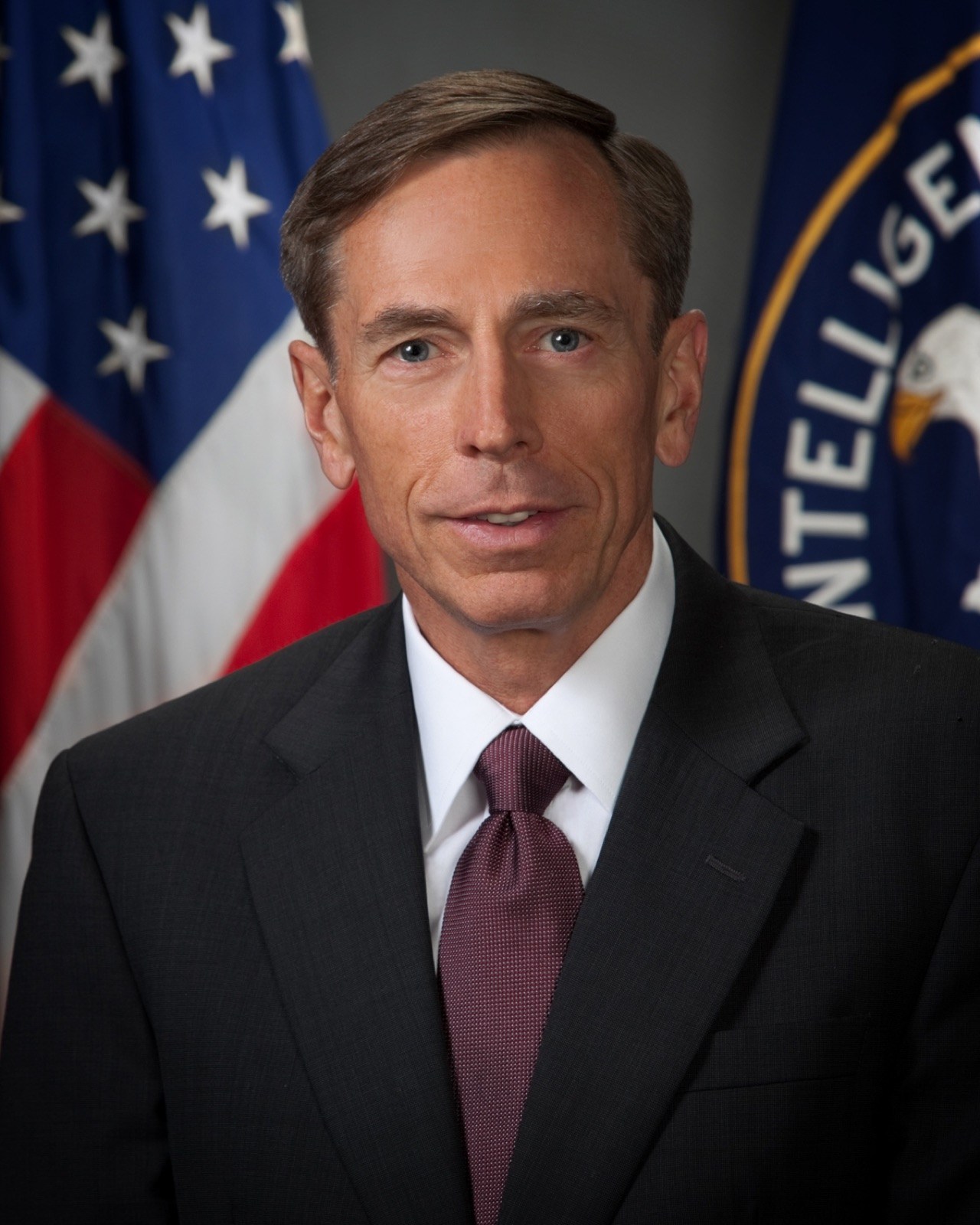
David Petraeus
David Petraeus is a retired four-star general and former CIA Director who commanded United States forces in Iraq and Afghanistan. David Petraeus discusses Ukraine's surprise attack on Russian territory and Tehran's potential response.
Episode Summary
Retired four-star general and former CIA Director David Petraeus sits down with One Decision's Christina Ruffini and former MI6 Chief Sir Richard Dearlove to discuss the ongoing conflicts in Ukraine and the Middle East. General Petraeus, who commanded United States forces in Iraq and Afghanistan, discusses Ukraine's surprise attack on Russian territory, Tehran's potential response against Israel after the killing of a senior Hamas leader, and how he ranks the Afghanistan withdrawal among top foreign policy failures. Plus, General Petraeus shares a notable interaction with a world dictator.
Listen & Subscribe
- Watch on YouTube
- Listen on Apple Podcasts
- Listen on Spotify
Transcript
COLD OPEN
Petraeus: It's really surprising that Ukrainians have been on Russian soil for a week now, and the Russians still haven't even really stopped them, much less actually respond to them in a kind of organized and clear manner.
INTRODUCTION
Raffini: You're listening to One Decision, the podcast that looks at the choices that shape our lives. I'm your host, correspondent Christina Raffini, and the voice you just heard was retired general and former CIA director David Petraeus. This week, he sat down with me and former MI6 chief Sir Richard Dearlove to talk about Russia, Iran, Israel, how the fall of Afghanistan has continued to impact foreign policy, and his favorite stories for meeting the world's dictators. Let's dive in. General David Petraeus, thank you so much for being with us. I think we want to start right off with the news of the day or the week, which is Ukraine's push into Russian territory.
INTERVIEW: UKRAINE'S INCURSION INTO RUSSIA
Petraeus: So here's a case where elements of four entire brigades, so not just armor and infantry, but also artillery, electronic warfare, air defense, all the logistics, the sinews of war, were able to assemble right on the Russian border and then attack and achieve such surprise that the very modestly equipped and trained and entrenched Russian defenders were overwhelmed very, very quickly. But how does that happen? Because someone asked me that very question and I couldn't answer it. No, they said that they were doing a training exercise and seemed to be doing that. And I think it was a case, not unlike some other intelligence failures in recent time, including the one with Hamas on October 7, where the Russians in this case couldn't conceive that they would actually do this. Never before have they done it. In the past, it was done by these elements called the Legion, which are essentially Russians who are fighting against their country on behalf of Ukraine and they typically do a raid and then pull back out. This is again four brigades worth or elements of four brigades plus all the assembled enablers as they're termed. And some of these are quite elite forces. Some had actually been pulled out apparently from Southeastern Ukraine and so forth, despite the pressure by the Russians. And I think it was just something the Russians couldn't conceive in the same way that, you know, 9/11, who could conceive that someone could actually gain the controls of jumbo jets and fly them into the Twin Towers and the Pentagon and so forth. And again, Richard's very familiar with this kind of situation where the intelligence community or the military just can't get its head around what could happen, can't imagine that it could happen. So you have a failure of imagination, as you did very much in the case of Israeli intelligence, Israeli military in terms of readiness, and really even the Israeli policymakers. And that's a little bit of what took place here. And this is much more significant, I think, than people recognize. First of all, it's cut a major rail line. Keep in mind that for the Russians, the way they push everything around that vast country is on railroads. And they've cut the line that connects Moscow with the Russian forces down in the Southeast. So they now have to have a much more circuitous route that's much more challenging. They control the area around a major gas metering station. Now they've said they will not interdict or interfere with the flow of natural gas, which goes through their country and into Europe. I think that's a wise choice, but that is very significant as well. According to General Syrsky, the Ukrainian commander of military forces, they control over a thousand square kilometers of Russian territory, and they're continuing to push out. They have not really been totally stopped just yet. They've captured hundreds of Russian soldiers, which are really good for prisoner swaps and this kind of thing. It's a huge morale boost, obviously, for the Ukrainians after nearly a year of being on the defensive following the unsuccessful offensive that Ukraine conducted in the southern part of their country last year. So this is a very, very significant endeavor. It's not clear, I'm not sure it's even clear to the Ukrainians at what point they stop going farther, try to entrench and stay and use that area, even the area as a bargaining chip. Or if they recognize that they can no longer stay, then they have to roll their forces back and do a withdrawal under enemy contact, which is tough. And that's a really challenging, that's a big decision because they could actually get cut off as deep as they are into Russian territory. Noting that of course, this is the first invasion of Russian territory of any size since World War II.
Dearlove: And it's in a very historic area, the location of the largest tank battle in history. David, I haven't been in Ukraine recently, but I've been there during the course of the war, is that the Ukrainians have understood that the Russians like to fight a war of attrition on their own terms. But what they have failed to do in this instance, and I think what they can't do, well, they don't seem to have the officer capability, is to fight a war of maneuver. They seem to be completely incapable of maneuvering against the Ukrainians. Now they've invaded, which makes them extremely vulnerable.
Petraeus: Yes. Well, the problem is, of course, that in the past, what they did was once they realized they needed to have an ability to just stop the Ukrainians. Because remember, by the way, Syrsky is the same commander who, when he was not the overall commander, he oversaw the very impressive counter offensive in Kharkiv, not quite two years ago, as I recall. And I think the Russians learned from that and said, you know, what we need to do is entrench everywhere. And you had General Surovikin who oversaw the establishment of the so-called Surovikin line in Southern Ukraine and Zaporizhzhia in particular. And that's where the Ukrainians wanted to break through. But by the time they actually had the wherewithal, or at least most of the wherewithal, we didn't provide all of that to them in sufficient time, M1 tanks, Leopards and other systems, but they had enough to have a go of it. Those trench lines, minefields, barbed wire, concertina, I mean, these rivaled World War I kinds of fortifications, heavily manned and overseen by drones that made it very, very difficult for the Ukrainians to do anything that wasn't seen. So they then resorted to some night stuff, but you just couldn't make the kind of progress through miles deep minefield. So you're exactly right. Once again, they're showing that they lack the agility on the battlefield. They still haven't actually established a coherent chain of command and organizational architecture for responding to this particular offensive. They tried using their national guards and their police forces. Putin, for some reason, put the minister of emergency affairs in charge of this in Moscow, rather than a coherent military chain of command. So this is all very ad hoc and it's not successful so far. It's really surprising that Ukrainians have been on Russian soil for a week now, and the Russians still haven't even really stopped them, much less actually respond to them in a kind of organized and clear manner. They have apparently now been taking some forces from Southern Ukraine. I think they're loath to do that from the Southeast because they want to continue the pressure in Donetsk in particular, where they've been achieving incremental gains with essentially human wave attacks, extraordinary losses. Your Ministry of Defense, for example, said that the Russians are losing over a thousand soldiers a day. That's inconceivable to me. Those are just staggering losses. And yet the Russians still seem to be able to sustain them, but they don't have the agility and the ability, as you know, to conduct real maneuver warfare.
Dearlove: Quality versus quantity.
Raffini: Yes, exactly. Yep. As you know, a lot of the Russian military corps these days comes from rural provinces, comes from poor families. Anybody with any education are saying can buy their way out of the military. It is not a place the country's best and brightest are going, so they floated a little bit under the radar. Now you are seeing images of Russians being forced to leave their homes. There was this extraordinary Zoom call with Putin where the governor of one of the areas said 28 communities have been forced to leave, and Putin shut him down and said, Let's leave numbers to the military, don't talk about numbers on this call. But strategically, I'm wondering if you think this moves the needle with public opinion about this, quote, special military operation or if that even matters to Putin. Does it make a difference whether the Russian people support this or not? And will this change their minds?
Petraeus: Well, the way that they've been able to maintain public support is basically by buying recruits, staggering enlistment bonuses in rural communities where this is a year or more salary and huge death gratuities if the son comes home in a casket. And that has been enough so far. And they have at least a four to one manpower advantage over Ukraine. They have a 10 to one economic advantage over Ukraine. So those are the realities of this situation. But it has not produced, again, really impressive maneuver capabilities and the rest of this. They just basically go right at the enemy. The enemy responds, they bludgeon, they destroy, and then they take over the rubble.
Raffini: It's not very sophisticated, just kind of like brute force tactics.
Petraeus: Pretty much, although they're pretty sophisticated in their use of electronic warfare, of drones, of glide bombs, which have been particularly pernicious and terribly damaging. There are thousands of pounds of explosive in a bomb. It's not unlike the dumb bombs we took and put fins on them and they are actually very accurate, except that they're much larger and they've been flying those. You can glide those for 50 to 70 kilometers. So you can release them well behind the front lines, even in Russian aerospace. It's going to be interesting to see if the F-16s can do anything about that, by the way. This needs to be very carefully pursued. And it's a very small number of F-16s right now. They need to build out the capabilities. The pilots have to get really comfortable with the capabilities that they have. And the new pilots, Lindsey Graham was in Kyiv this week saying, If you're a retired F-16 pilot, come on over, we'll put you to work. Yeah, we'll see how that turns out. But so far, again, Russia's mothers and fathers and wives, because talking about men here, have not yet said, Not our son, not my husband. Will that moment come? It's really hard to say. Again, the casualties have been staggering, but you have not yet seen that kind of backlash. And as long as you don't, Putin could care less about casualties. I assure you, he's not writing letters of condolence to Russia's mothers and fathers, every night the way coalition commanders did in Iraq and Afghanistan. So that's the situation. In fact, what has been also impressive in this war, especially on the Ukrainian side, has been the use of technology to compensate for the much smaller forces that they have. Again, generally very outnumbered by the Russian forces on the front lines. And so what they've been doing is launching thousands of drones at the Russians every day. Their idea, their objective is to produce a million drones. These are largely cheap, one way suicide first person view drones that just fly right into the hatch of a tank or into a trench line, into a window and blow up inside a building, whatever. They want to produce a million drones in twelve months. And I think they may actually achieve that. Every garage and cellar is being used to produce these. It's an extraordinary mobilization of all of the skills and talents they have there.
Dearlove: David, I got a request earlier today to write a piece for the media in the UK on the hollowness of Russian power. And it made me think very specifically about my own career and experience. Because, of course, during the Cold War, we had this vision of the Red Army and its ability, you know, to roll across the northern European plain and the constant military threat. But it seems to me now on a more general point, let's put it like this, the half hearted support that we started with in Ukraine has been enough to hold the line against this vaunted military force. And it seems to me there's something fundamentally wrong in Russia. And I'm not talking about the rocket forces, and I'm not talking about their underwater capability. But in terms of their conventional military, it seems to me that something is seriously wrong in the heart of Russia.
Petraeus: Yeah, I think that's true, but I would note that they have made changes. They don't have the kind of ground up innovation. They don't have the kind of mindset that we tried to foster, say in the surge in Iraq, where one of my imperatives on the counterinsurgency guidance said, promote initiative. In the absence of orders, figure out what they should have been and execute aggressively. They don't have that culture. It's very top down. They don't have the courage — I don't think that's generally encouraged in Moscow. No, not at all. I mean, we don't want that kind of — But that said, again, the Surovikin line, the defenses that they established were very, very formidable. And no army in the world could have cracked those without air superiority, which is what our doctrine requires. And yet somehow we thought maybe they could get through this just because of what they'd demonstrated before. Again, their innovativeness, entrepreneurship, initiative and so forth. So you do have to give them credit. They have also figured out ways both around sanctions, getting support from the North Koreans, a million rounds of artillery and more components from China to help revive their military industrial complex. Although they are bringing, you know, even old T-62s from sort of early Cold War days out of mothballs at this point in time. And they've lost at least half their tank fleet and have a hard time to replace that. But their electronic warfare usage. Again, if the human wave attacks work, who's to argue with that if you don't care about casualties, which Putin does not? Ukraine has to. And by the way, the other big dynamic to watch — and I would not characterize what we've done as half hearted. I think it's much, much more than that. It's not all that I would have liked to have seen. And most significantly, some of the critical decisions were delayed far too long. F-16s, long range Army Tactical Missile System, and even in Congress, the six month delay in passing. But what was in the end of the day, 61,000,000,000 worth of assistance, that's more than most European defense budgets. But again, there was a point where we all thought, gosh, the Russians just can't get it right. They couldn't take Kyiv, they bumbled around, their training was terrible. So many different deficiencies, their communications were so abject. We have frequency hopping FM, because you don't want to transmit to the whole world, encrypted communications. The Russians have HF, which goes to everywhere. Anybody can pick it up with a police scanner, non secure single channel. So anybody with a police scanner can find it and you either record it if they're criticizing their officers and put it on social media or —
Raffini: Wait, wait, wait, wait. If I brush up on my Russian and get a radio and go stand where I was in Poland, I can literally just listen to the Russian military's communications?
Petraeus: Poland might be a bit longer, certainly if you're, say in Kyiv, in your apartment and you have a police scanner, you could pick up what the Russians were saying. And so what they were doing is they were jamming their communications. You just transmit on top of it. And then that's why the Russian leaders are being picked off so much by snipers that by the way, were trained by the Americans because their commanders get frustrated. They can't find what's the nature of delay. Why aren't we moving? They're in these columns, they're all stacked up. So they get out of their vehicle, they go up to the front and snipers would pick them off. Now, a lot of this, they remedied this, they worked their way through it. But there was an interesting period where then they transitioned from their radios to cell phones. Then the Ukrainians denied those cell phone prefixes access to the Ukrainian cell towers. Then the Russians started stealing Ukrainian iPhones. And then the owners of the iPhones would do find my iPhone and give the location to the Ukrainians and they'd take it. I mean, it has been very interesting. But again, I think that would be a mistake because the Russians have made changes. And when they do make a change, it's top down and everyone is going to observe that change. So again, I highlighted some of the areas in which they've done this particularly effectively. The use of glide bombs has been devastating. The use of precision missiles and even larger drones against the energy generation of Ukraine, literally blowing up hydroelectric plants. I mean, you're blowing up dams and that is generating massive quantities of megawatts and you can't repair those overnight the way you can repair some of the other damage that's being done. It's going to be a very cold, hard winter for Ukraine this year, unfortunately.
Raffini: What does the US do about the fact that it has said US weapons can't be used in Russia? They are currently being used in Russian territory. At some point, do they have to say stop it or this turns into a bigger conflict? Do they wait to see how Moscow responds or do they stick with this?
Petraeus: No. What's happened here first of all, the White House has already said we're fine with what's going on right now. I don't wanna get into the details of this. The restrictions on weapons, I think are wrong. I think they're somewhat unconscionable, but it's a very discreet subset of all the weapons that we have provided. I'd like to see those lifted. I guess there were concerns about escalation or something, which I think should no longer be a big concern. I think there were justifiable reasons at various junctures for caution and providing particularly sophisticated stuff, even at the outset. Are they going to really fight or is this going to be like Afghanistan and all of our very sophisticated shoulder launched air defense systems are going to end up in the hands of the enemy and deployed at the end of Heathrow Airport or something like that. You think that was the big delay? Look, I was at the Munich Security Conference literally the week before the invasion. I was too, we were both there. Yep. And so there was a parliamentary delegation from Ukraine that requested to see me. I was over at the Viktor Pinchuk's gathering that he does every year and I was on stage and afterwards they asked if I'd join them and they said, Do you have any questions? I said, I do actually have questions. The number one question, and I said, I think your soldiers are going to fight by and large that are in uniform right now. Because I'd actually spent time with them in the Donbas. Some of those are just waiting for a fight. But what about the rest? Again, is this country really going to mobilize? Are your sons and daughters and you going to fight? Or is this going to be like Afghanistan? And they said to a man, to a woman, we are going to fight. And they proved it. But I think, again, given what we went through in Afghanistan, it's not unreasonable to have some questions about that. Then there were concerns about, again, will this cause escalation? Again, I think those are generally overblown. There was a degree of self deterrence there that was not warranted. But again, having sat at the actual situation room table, it's a lot tougher to sit there and think about what could go wrong if you're overly aggressive than it is to sit where I am here across the Potomac River in Arlington, Virginia. And so, but then I thought it went too far. Then, the M1 tank decision, again, it was inevitable. You're going to have to do this. I understand why there's reasons that the M1 is difficult. It's hard to maintain. It's a jet engine, not diesel. It sucks fuel. It's 10 tons heavier than the heaviest of European systems and so on. But look, it's got to happen because otherwise a Leopard decision. The Army Tactical Missile System, it's going to happen, just do it. F-16s, there's no alternative to Western aircraft. So some of these, I think far too long. Again, the restriction on one system in particular right now, when it comes to use in Russian soil, again, I'd rather not see it, but it's being very effectively used in plenty of other places, most notably by the way, Crimea, which is becoming almost unlivable for Russians. Those air bases have been hammered. The Black Sea Fleet headquarters has been hit directly. They're going after the structures around the bridge that goes across from Crimea to Russia. At some point in time, I think that's going to be rendered impassable. And even some of the ferry sites and other infrastructure that supports communications there will be damaged. So again, I'd rather not see it, but I don't think it's a massive, massive restriction, except in as much as in some cases, it could be used effectively to take out some of the aircraft on the airfields within reach inside Russia that have been flying the glide bombs at them. But frankly, the Ukrainians have been going at those pretty effectively themselves with their longer range drones and so forth. And you will see if the F-16s can at least push the aircraft back a bit and take them out of range of most of the Ukrainian cities.
IRAN, ISRAEL, AND THE REGION
Dearlove: As we seem to be at the point of imminence for some sort of Iranian response to the killing of the leader of Hamas in Tehran. I mean, anybody with an intelligence background will understand how complex it was for the Israelis to pull that off. I mean, I think at the present time, you and I probably agree that Iran is not likely to escalate to a full blown war with Israel. So what are their options if they want to avoid? Because they have to make a response, for obvious reasons. But on the other hand, how do they measure that without provoking Israel into a full conflict?
Petraeus: Look, I think this is very, very difficult. I think it's much more difficult for them than it was for Israel to respond in the wake of the first ever attack from Iranian soil directly on Israel with cruise missiles, ballistic missiles, and drones. Threw well over 300 of them, which Israel defended brilliantly against, helped with the Americans who took down at least a 100 of those and even some other countries in the region integrated into that in various ways. And the Israelis responded brilliantly. Basically one major missile lands at an airfield, so it penetrates the sophisticated Russian air defense system. And that airfield is in Esfahan, which is surrounded by three, or the site of three of the major nuclear facilities of Iran. It showed Iran what Israel can do, and I think was very, very effective and yet did not have escalatory consequences. This time it's much more difficult. I think Iran actually would be relieved if Hamas would agree to go to the negotiating table and actually reach a cease fire, whether temporary or longer, because they've said, if that is the case, we will stand down. I think Hezbollah would feel the same way. So again, I think this is much, much more difficult. I think that's why they have been hesitating. I'm sure they're considering all kinds of options. Do you really have to respond to the assassination, apparent assassination, because Israel has not acknowledged that one. They have acknowledged the one of the Hezbollah leader. Do they really have to respond with, again, hundreds of drones, which could lead Israel to say, okay, great, we're going to take out your nuclear program or that which we can, and possibly even draw the Americans into this in some way? I think the unknowns here are very considerable, and I think they're quite seized with those. You have a brand new Iranian president, he's not the decision maker, the supreme leader is, but he's not without some influence. And he came in hoping that he could reestablish some kind of dialogue with the West to get Iran out from under all of these different sanctions and so forth. So I think there's a lot of debate and discussion behind the scenes in Tehran. They clearly haven't settled on certainly what the response will be at this point does not appear. They might be relieved not to have to do it, or it could be that they actually do something that is much more in kind, perhaps somewhere in the world or in the region. Again, an assassination is carried out such as that which was sustained in Tehran and also in Beirut. But this is a tough one for all involved. We've watched as Hezbollah has essentially constrained itself, both in the geographic area where it has been active, noting that yes, that still has required the withdrawal of 60,000 Israeli citizens from their villages in the North. So that's not trivial, but the numbers they've employed every day, the distance of the systems they've used has not been anywhere near what it could be, noted that they have as many as 150,000 rockets, missiles, drones, and other projectiles, they can overwhelm the very sophisticated layered air and ballistic missile defense system that Israel has, but they're going to get hammered in return. They know that. I think, you'll recall that in the war of 2006 between Hezbollah and Israel, the initial assessments by the intelligence communities, the initial assessment was essentially that the Israeli Air Force had over promised and under delivered. And then over the subsequent years, first few years later when I was at Central Command, then a few years later when I was at the CIA, there were reassessments done and a recognition that the damage was much greater. Well, Israel could do even more damage now if they are brought to that, but Hezbollah can do more damage to Israel as well. Same perhaps true of Iran, although they still need to prove that they can actually generate the numbers of systems and munitions and missiles and drones that could truly overwhelm the Israeli system. And if they do, they're going to be on the receiving end of an awful lot of Israeli capability. So that's the conundrum they face, and it's a very real one.
AFGHANISTAN AND ITS AFTERMATH
Raffini: We're coming up on the third year anniversary of the US withdrawal from Afghanistan. I know you've been critical of it. I've covered it. I've been critical of it. I think most people have been. I'm curious to know, first of all, where you rank that on historical US foreign policy failures, top 10, top five. And secondly, looking at its impact on the events that have happened since.
Petraeus: Sure. Let me start with the latter. You'll be familiar, Andrew Roberts, you're a great historian and biographer, and I wrote the book Conflict, it came out mid October last year. One of the points we made in the book was that what happens in one place in the world influences events in the other, it reverberates. And I remember in fact, the red line in Syria that turned out not to be a red line. I was in the office of the prime minister in Singapore at the time. He said, you know, General, that will reverberate out here in the South China Sea. And of course, keep in mind that wherever you are, deterrence rests on two elements, the potential adversary's assessment of your capabilities on the one hand, and your willingness to employ them on the other. And these undermine the assessment of a potential adversary about your willingness to respond. And I think the withdrawal from Afghanistan was at least one of the elements that led Putin to think that he could get away with what he was about to do in Ukraine. He also thought he could do it much more rapidly and that the US would not respond forcefully to it, which we did. I think the US administration did a very impressive job of marshaling the rest of the world, rapidly moving in these sophisticated shoulder launch anti tank and anti aircraft systems and all the rest of that. And then of course, Ukraine surprised them by their extraordinary initiative, valor, bravery on the battlefield and all the rest of that, denying them Kyiv and so forth. So I think that was a factor. I think the decision to withdraw was a terrible one. The agreement that we reached with the Taliban, that has to rank with the top five or 10 worst diplomatic agreements in our history.
Raffini: I was there for that signing. There was no one from the Afghan government there. It was me and a Wall Street Journal reporter and a bunch of Talibs in a row in a ballroom in Doha. It was one of the strangest things I've ever witnessed in my career.
Petraeus: Yeah. And we agreed with the Taliban to force the Afghan government, not at the table in agreement about their own country, to force them to release 5,500 Taliban detainees who were not supposed to go back to fighting, but of course, went right back in the ranks and enabled the conduct of the simultaneous offensive operations that brought about the collapse of the Afghan forces. By the way, keep in mind, the real withdrawal that mattered most was not even the US forces or the coalition forces, which were nearly three times the Americans at that time, it was the 17,000 Western contractors required to maintain the overly sophisticated US helicopters that we insisted on selling them instead of staying with the Russian or the old refurbished, which I was still getting when I was the commander. And once the readiness of these aircraft declined very rapidly, especially in the face of a lot of ground fire, once the Afghan commandos could no longer get out to reinforce those on the front lines, those that are out there realize there's nobody coming to the rescue, there's no close air support, there's no emergency resupply and aerial medevac, you wouldn't fight either. They took, I don't know what it was, 16 times the casualties that we did over the years or more, and they showed a willingness to fight absolutely and die for their country, but not if nobody's coming to the rescue. There were corruption issues and other challenges, but by and large, that situation was so vastly better than what you could foresee happening. I said, I predicted actually, I said, first of all, we're going to regret making this decision. And then I fear a catastrophic collapse of Afghan forces when they realize nobody's coming to the rescue. That is exactly what happened. But again, it has condemned Afghanistan to a sort of a ninth century interpretation of Islam, at least by half of the leadership of the Taliban. Should note, they're not unified. There's the Kabul Taliban, which are a bit more pragmatic, and then the Kandaharis, who are the really tough holding the line on girls going to high school.
MILITARIZATION OF INTELLIGENCE
Dearlove: David, can I ask you a theoretical question? We're coming, and it isn't meant to be indiscreet. And I'm just interested in your view, because you have been both on the intelligence side, and of course your career is military. But one of the things that has concerned me, I'm a pure intelligence product in terms of my career with no military experience, is that the impact of warfare on organizations like CIA is to drive them in a direction towards militarization. And my own view of intelligence services is that there is actually a significant difference between what you know MI6 did, CIA did, and then special forces. But this sort of pressure to militarize intelligence services is something that I find concerning in terms of my profession.
Petraeus: As someone who saw it from both sides, I'm much less concerned by that than some of the critics are, frankly. Yeah. We had the capacity to do that. I'm not going to get into details of what we were doing. The agency did counterterrorism far better than our best counterterrorism forces. The quality of the people is just unequaled. They stayed for a decade in some cases in the same positions, in the same organization that dedicated to this. Some of them refused to leave, even if it cost them a promotion because they were so determined to stay with it until they got, again, you fill in the blank, Osama bin Laden, many others of these that were the most dangerous extremists in the world. We figured out how to promote them in the end, by the way, as well, attribute to the flexibility of that great organization. But at the same time, we were still recruiting extraordinary human sources. There's a lot of old sort of CIA guys and they hadn't been inside the place for ten or twenty years, but they were all writing op eds for the Wall Street Journal. The CIA didn't know how to recruit sources anymore. And I wanted to bring them in and take them into the little closet that existed for just one human source who was so unbelievable that there was nothing electronic in it. There were no digital records. And this is inside a sensitive compartmented intelligence facility, which was inside a building, which was a sensitive compartmented intelligence facility. So again, can we always do that better? Absolutely. Are there some parts of the world, some countries where that's exceedingly difficult? Absolutely. Is it more challenging with the ubiquitous surveillance of today's day and age where you have to go through customs and your fingerprints or iris scans or facial recognition are used? Yes, all of that is exactly right. The trade craft that worked in your day, or even in my day does not work now, but there's other ways around it. And again, as Bill Burns, the director of the CIA has a whole project on trade craft in an era of ubiquitous surveillance and a lot of other initiatives in this regard. So, can you overdo it? Can you over militarize it? I guess that's possible. We tried really hard to keep it in balance when I went there. But again, I think I knew better than anyone else because I had all of our special mission units and counterterrorism commands under me on the military side, working very closely with the agency. And then I could compare and contrast the architecture of the organizations that were overseeing these operations and the agency was incomparable in what it had. It needed to do that, I think. Again, you got to keep it in perspective. It can't overtake Langley, you know, the campus at which CIA is located. You've got to maintain the focus on other areas. It was appropriate also to increase the focus in the Indo Pacific, try to reduce somewhat the focus in the old war zones and all of that took place. But I was less concerned about that than were others, and also less concerned about these accusations that, you know, CIA can't do human source recruiting anymore. It just depends on satellites or cyberspace or something like that. That's just not true. I never believed that.
Dearlove: Good. Oh, I'm glad to hear it. What a fascinating response to an important question, as far as I'm concerned.
DICTATOR STORIES
Raffini: You bet. General, we're reaching the end of your time, but before you logged on, Sir Richard and I were comparing our favorite dictator stories. Mine was Lukashenko, his was Qaddafi, and we were wondering if in all your time, if you have an enjoyable anecdote or a wacky dictator story.
Petraeus: I do. Okay. I do. In fact, I was just with the Uzbekistan ambassador to the United States last night. I wanted to get his take on what's going on in his country in the wake of Karimov and so forth. He's the one I'll recount, the story about the greater Central Asian states, the relationship with Afghanistan, ISIS, and so on. We had a great conversation, but I recalled for him, there was a period where President Karimov, who of course had been president of the Soviet Republic of Uzbekistan, and then kept the job. And he was in it for another — Like you do. Another fifteen years by the time I met with him. And he got angry at the US because the State Department, he'd been a real good partner early on in Afghanistan. Karshi-Khanabad was our big base and everything else there from which we launched the initial operations, the guys on horseback and the CIA guys with footlockers and money. And then he got mad at us because some State Department official criticized him over some seemingly religious freedom, but it was actually extremists. He wouldn't meet with any American. It went on for something like a year and a half. So the ambassador never met Karimov. And I needed to get Uzbek approval for the Northern Distribution Network. So we had another route into Afghanistan besides the two that were controlled by Pakistan. They really had us over a barrel in that regard. So finally they said, If you'll go there to Tashkent, he'll meet with you. So I went in, took the ambassador with him, took my ambassador from Central Command, Pastor Gefella with me. We sat down, Karimov lectured me for the next hour and twenty minutes nonstop, at which he took a breath and I said, Mr. President, may I just say what a pleasure it is to be able to meet with you? And he laughed. Then but during that conversation, part of the lecture was and he said, You tell President Bush, never hold an election unless you know the outcome in advance. And I have shared that with some American leaders, including President Bush, I might add, which usually elicited a woeful chuckle.
Raffini: That's it for this week's episode of One Decision. Many thanks to General David Petraeus and Sir Richard Dearlove. From the whole team and myself, thank you for listening. We'll see you next time.