Episode Info
- Season27
- Episode12
Hosted by Christina Ruffini and Sir Richard Dearlove
Guest
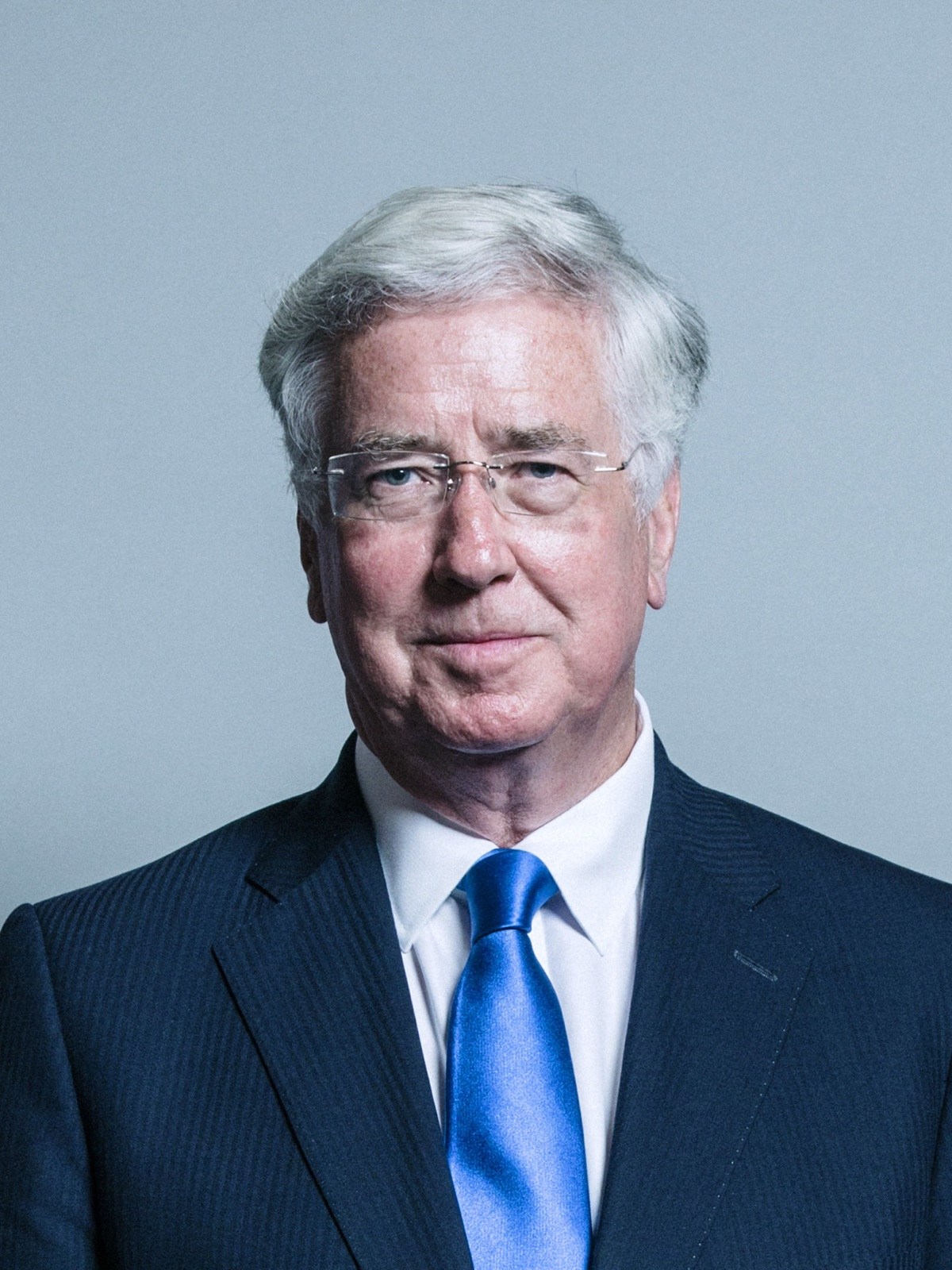
Sir Michael Fallon
Sir Michael Fallon is the former United Kingdom Defence Minister who served under Prime Minister Theresa May and discusses how today's global conflicts mirror those from a decade ago.
Episode Summary
In this week's episode, One Decision's Julia Macfarlane and Sir Richard Dearlove, the former head of Britain's MI6, sit down with Sir Michael Fallon, the former United Kingdom Defence Minister. They discuss how today's global conflicts mirror those from ten years ago when Sir Fallon oversaw British defense during the conflict between Israel and Hamas in Gaza, as well as Russia's invasion and subsequent annexation of Crimea. Sir Michael, who served under Prime Minister Theresa May, told One Decision that it is not "morally right" for Russian tourists to travel across Europe and supports a travel ban so the middle class can feel the impact of Vladimir Putin's war. They also talk about the dangers of military underspending and the growing threat of social media disinformation.
Listen & Subscribe
- Watch on YouTube
- Listen on Apple Podcasts
- Listen on Spotify
Transcript
COLD OPEN
Fallon: This is a long term pattern. You see the Hamas leaders received in Moscow, you see Iranian weapons being deployed against Ukraine, and you see the after effect of the Hamas Israeli conflict. You see that in the attacks on British and Western shipping and you see crystallized what I think the Americans had originally called the Axis of Evil, but you now see North Korea, Iran, Russia and even China supplying components. Those four countries now seizing this opportunity to foment these various conflicts. So we are less safe than we were even ten years ago.
INTRODUCTION
Mcfarlane: The words of Sir Michael Fallon, the former British defense secretary between 2014 and 2017. We caught up with him recently to discuss the current state of global affairs and why for him it seems eerily familiar to his time in office. You're listening to One Decision. I'm your host Julia McFarlane and I'm joined today as always by my co-host Sir Richard Dearlove, former chief of Britain's MI6. Sir Michael Fallon, former Defence Secretary of the United Kingdom, welcome to One Decision. Thank you so much for joining me and my colleague Sir Richard Dearlove today. Sir Michael, are you perhaps having a little sense of deja vu in a way? Because when you were appointed Defence Secretary back in 2014, we had two very pressing international conflicts on your entry. There was a war between Israel and Hamas in the summer of 2014, and then, of course, there was the annexation of Crimea, which began just before then. What are your thoughts on how things are?
INTERVIEW
Fallon: Well, there was a third actually, which was the rise of Daesh, the Daesh terrorist group that swept across Syria and Iraq during that period and posed a very direct threat to cities in Western Europe. Part of my time was not only getting the British Army in there to help train up the Iraqi Army to recapture their own country and to carry out air strikes in their support, but also to deal with some of the terrorist cells that were plotting operations either in Britain or on the European mainland and authorizing various airstrikes to deal with them, which some of my successors have had to subsequently keep authorizing. So, you know, this is a long term pattern, and I think what's alarming now is that these three different types of conflicts seem to be merging.
Dearlove: But what's surprising, as it were, is that these conflicts hitherto are also geographically contained. I mean, links are economic trade, supply of weapons, expression of sympathy, maybe quite significant technical support, but the actual conflicts on the ground have remained surprisingly isolated. Historically, if you look back to the Cold War, we never imagined that we could have a major war on the European continent, actually was contained within a tight area. And that's what's happened in the Ukraine conflict. I mean, I find this very surprising.
Fallon: Well it may be contained for the moment although you know it does seem to be escalating in the Middle East and as I said we've had attacks on British shipping as a result, you know, back in the Strait of Hormuz. So you know it's showing every sign of spreading and of course if Putin wins in the Ukraine there is the, you know, the further danger this conflict will spill over into Georgia or into Transnistria and Moldova and further threaten, you know, the Baltic States or the High North. So unless our leaders really can work harder to de-escalate, there is every chance I think this conflict will continue to spread because it is being fed now. It's perfectly true those four countries I don't think are operating as any kind of formal alliance, but it is true that Iranian missiles are now being taken to Ukraine. It is true that Chinese and North Korean components are being supplied to Russia, and you know we've now seen the effects of this escalation in the Middle East.
Mcfarlane: So Michael, Richard points out that for now there is a sense that a lot of these threats are geographically constrained. It is interesting that the NATO Allies, which are exceeding the minimum defence spending, some even as much as 3%, those countries are all to the East of Berlin. They have a closer proximity to the threat. Is that a weakness of Western European allies, including the UK, that it is not really until we face a direct threat that perhaps there will be new impetus into thinking of our defence spending?
Fallon: Well, there's two big issues there. Let's take the alliance first. We agreed ten years ago, ten years ago this month, at the Wales Summit, that we would all spend 2%. Every NATO country signed up to that. And by the way, we said we would do it within ten years. That's now. And only 10 of the 30 have actually made it last year, and perhaps a few more this year. But as you've correctly pointed out, you know, if you take away the United States and the United Kingdom, all the others, the capitals that are East of Berlin, they're all on the Eastern frontier. And some are spending massively more. Poland is spending nearly 4%, for example. Now, I think, you know, this failure to live up to the commitments made at the Wales summit ten years ago has, you know, weakened our relationship with the United States. They clearly don't see why we haven't fulfilled our commitments. And you've heard that it was a commitment by Obama, by the way, not by Trump. You've heard that from successive American presidents. And I think it has also, you know, weakened our locker in the Middle East. We've had Western shipping attacked, but very few Western navies have been prepared, as we have been in Britain, to get out there into the key shipping lanes and do something about this. Only France has been carrying out, alongside the United Kingdom, some of the strikes that have been necessary to deter the Houthis, for example. And overall, you know, we've not shown the willingness to increase our defense expenditure to where it should be. 2% was the minimum that we agreed ten years ago that we should be at now. Now, where are we in our own question? We, as a conservative government, were committed to reaching the 2.5%, and we said we would reach it progressively up till 2030 over the next four years. Labour have not committed to that. So I am concerned that somehow they will wriggle away from that because they've not put any date on it and it could simply become a long term aspiration. And secondly, I'm concerned that it's not therefore really focusing their own defense review on making the necessary priorities. Unless you set off with some fixed target on what you're likely to spend, then you will never get the three services, for example, the four commands, to actually prioritize what they want to spend their money on, the kind of kit that they want to commission. And I'm worried therefore that the review will go off course unless they set out that firm timetable.
Dearlove: So there's a tension between the overall commitment to get to 2.5 and of course the Treasury's viewpoint, which is there is no timetable and therefore it's not absolutely important as to how you get there.
Mcfarlane: Before the election, you said that defence for the Labour Party isn't quite the priority for them as some of the other issues they've put in their manifestos and that's disappointing. Do you still feel that way?
Fallon: I still feel that way. You had a speech from the Foreign Secretary about climate change. Now I don't want to disparage that. He's right. Climate insecurity does drive a lot of the disturbance that we're seeing in Africa and indeed in the Middle East. But you know Ukraine probably committed to the Paris climate change targets. I'm sure they wanted to get to net zero, you know, but the fact is that defending your country properly has to come first. You can't do anything else. You can't spend more on social care or on getting to net zero or on much better infrastructure or skills or anything else unless you can keep your people safe. And, you know, we're not safe at the moment. We've got these wars raging right across the world and we're underspending on what's needed to be sure that we are properly safe.
Dearlove: Michael, I agree with you that, you know, we are underspending but in terms of other European countries, we've had a forward position on defense. And we have actually spent relatively strongly in relation to European partners. It seems to me that at the core of the problem of European expenditure lies Germany. I mean, you had Scholz saying in February 2022 that Germany would raise its defense expenditure by €100,000,000,000. And if they had done or if they were definitely going to, it would make a huge difference, not just to NATO but to European security. And this problem seems to be sort of frozen in German politics, and there's a difficulty of implementation and agreement. I mean, the expression of willingness has been made, but nothing's happened.
Fallon: Yes. I mean, I talk to German politicians all the time. It is a coalition government. I think you have to recognize that. They'll have an election next year. And if they did get to 2%, as you pointed out, Richard, it would make a huge difference because it's a massive amount of money. But I don't think we should let the others off the hook. There are very wealthy countries on the Western side of Europe that are significantly underspending and nowhere near the 2%. Until last year, I think half the alliance was under 1.5%. There are countries that could be doing far more in spending on defense and supporting United Kingdom and the United States when they're doing stuff internationally. Trade routes through the Strait of Hormuz or through the Bab al-Mandab Straits, they affect the whole of the European economy and it shouldn't be left to Britain and the United States and others. You know, we've had the Australian Navy helping to protect that trade route. In the summer, we had Japanese and Australian forces on exercise with NATO forces in Europe. Well, where are the other democracies? Where are France and Denmark and Spain and Italy?
Dearlove: But it seems to me, in the current climate, particularly amongst Western politicians, they will not campaign on the issue of national security when you could argue in the current state of the world it's one of the most important issues. I don't think a major speech was made in our general election by either party about the importance of defense spending. I mean, it seems as though this has evaded this electoral issue because it's going to be unpopular with the voters. I do find this really, really concerning. And similarly in the United States at the moment, you're not hearing much about defense spending as a sort of mainline issue in the presidential election.
Fallon: Well, the United States are still spending a lot more than we have. Well, of course they are, which is important. Now, you know, some of us tried to get this debate on defense spending going before the election. And to some extent, you know, we've got the 2.5% target up there. I think everybody recognizes that we need to be well above 2%. And I think 2.5% is a useful thing to aim for. But obviously, when you come to a general election, there are other priorities and this takes leadership. And as I say, you can't do anything else unless you are safe as a country. And at the moment, you know, we are underspending.
Mcfarlane: I want to specifically talk about Ukraine and Russia. And recently, the former prime minister Boris Johnson and five former British defense secretaries, Grant Shapps, Ben Wallace, Gavin Williamson, Penny Mordaunt, and Liam Fox, recently all made a joint public call for the Ukrainians to be granted permission to use Storm Shadow missiles on Russian territory. The foreign secretary David Lammy said no war is won with any one weapon.
Lammy: No war is won with any one weapon. That is the case. But this weapon might make any difference. And it's important that we support the Ukrainians to continue to repel Russia in the Black Sea. It's important that they can deal with the huge challenges in the air that are being mounted by Russia and, of course, that we support them. And we have with training of their own men and women on the frontline, 45,000. We've trained more than, I think, any other nation. And there's no dispute about the fact that there has been a lot of No one weapon wins any war and has won any war. But he did make it clear that discussions were going on, clearly deferring to prime minister Starmer.
Mcfarlane: Sir Michael, five defense secretaries made that public call. How come you weren't one of them?
Fallon: Well, they didn't ask me. Yes, nobody asked me. I did tell Tim Shipman, I think who wrote the story afterwards, I did text him and say, well, you didn't ask me. I have previously called for the use of Storm Shadow. And I think we need to be very clear about this. It's perfectly legal for Ukraine to ask for help from its neighbors. Putin himself is using Iranian missiles. He's using Chinese technology, so it's perfectly legal to do it. But I think there's also a moral issue here. It can't be right that you let Russia use glide bombs from fifty, sixty, 100 miles away to target civilian infrastructure or children's hospitals. And you said to Ukraine, you can't target at least the military targets that these bombs are being launched from. That can't be right morally, so that's something that needs to be addressed now. My only slight quibble with all this is I'm not sure this is something you need to discuss too publicly. I think it would be far better, you know, if some of these weapons started to be supplied and I think Starmer was wrong to sort of headline it before he went to Washington because then he was asked why he hadn't secured it.
Mcfarlane: So the idea that striking Russian territory is a threshold that we don't want to be seen to be endorsing or crossing is in reality being crossed in Eastern Ukraine. But is it perhaps the fear that some allies, particularly in Washington, they fear a collapse of the Russian state, and that might be forming part of their considerations when it comes to perhaps giving Ukraine what they need to win the war?
Fallon: No, I don't think it's that. I think they are still nervous about unnecessarily nervous about Russian escalation. By the way, we had this right at the beginning in 2014. I wanted to send they were desperate in Ukraine for anti-tank weapons, weapons of all kinds. They pleaded with us at the Wales summit. They pleaded with us and the Germans and the Americans and the French to send them these weapons. And I was refused permission to send these weapons by our own cabinet, and the other countries didn't want to do so either. That's why we started the training program in Ukraine. But each time we've had this kind of fear of escalation, nothing has actually happened. We were told that Putin would retaliate when the Ukrainians used weapons in Crimea to attack Russian shipping there. We were told, you know, each time that if we gave them F-16s or we gave them tanks, there would be some kind of escalation, and there hasn't been.
Mcfarlane: You talked about this with the Sunday Times back in 2014, 2015. I and the ministry wanted to do more. We were stymied and we were blocked in cabinet from sending the Ukrainians the arms they needed. Some in the cabinet felt extremely strongly that we should do nothing to further provoke Russia. I felt that was absurd. The Russians didn't need any provoking. They were already there sending people across the border. I mean, who was stymieing you in the cabinet?
Fallon: Well, it was a coalition government. I can't go into the individuals, but let me just say it was a coalition government and bits of the coalition were unhappy with it. It wasn't just the British. Obama was very reluctant to supply the Ukrainians with weapons, so were the Germans, so were the French. So, you know, it was not us alone, it was a consensus that we didn't want to take the risk of the conflict escalating. But how many lives would have been saved, particularly down in the Donbas if they'd been given the weapons that they needed to actually push the Russians back to the border? And who knows, the final invasion in 2022 might not have started if they'd seen us react much more strongly, not just by supplying weapons, but by having serious sanctions against oil and gas, which were excluded from the sanctions in '14, and by enforcing those sanctions properly.
Mcfarlane: You served two British prime ministers who had to deal with escalating threats from Russia, Prime Minister David Cameron and Prime Minister May. How different were their approaches when it came to Russia?
Fallon: You know, I don't think there was a big difference between them. Obviously David Cameron had started in an era where we were trying to be friendly with Russia. Putin was invited to the G8, we and the Germans and the French were developing our trade relationship with Moscow. I saw that when I was energy minister. We were trying to we wanted to believe, I think. We were the kind of shadows in Plato's cave. We wanted to believe that Russia really was different and that if Russia had really changed and if Russia could be admitted to these various international frameworks like the G8, then Russian behavior would be different. And that was clearly a mistake. You've seen from what Putin has written that all along he has been obsessed with the idea of recapturing the bits of the Soviet Union that were lost. And so I think David Cameron and other Western leaders felt deceived by the original invasion of Crimea back in 2014. I think that was a big disappointment. Theresa May obviously came into office in '16, where it was very clear what Russia was up to, and you know she absolutely backed us in what we were doing to try and train up the Ukrainian army, but that of course was before the later invasion of 2022.
Mcfarlane: I mean, the Salisbury poisonings happened shortly after you resigned as Defence Secretary, but you did stay as Member of Parliament. Tell me what you remember from those days. That was quite a moment for UK Russian relations, even after 2014 and the annexation.
Dearlove: I think that the relationship started going downhill long before then. I mean, Skripal was But it was a moment. It was a must line that had been say with Tony Blair, you know, we thought that we could do a deal and talk to Putin. And for a brief period of time after 9/11, there was quite an interesting exchange. But the moment that we got to the point where the Russians wanted to start, let's say, the extradition of Berezovsky was a case in point. And I actually went to Moscow to say to the Russians, we have something in England called the rule of law. If you want to extradite Berezovsky, you make an application to the courts. The answer was, no, no. We want you and Tony Blair to put him on an airplane flying back. I said, well, it doesn't work like that. My last visit to Moscow just before I retired in 2004 was extremely frosty and difficult. Things were going badly wrong already by then, and you can actually trace it back a long way. And I mean, by the time we get to Skripal, things are, you know, desperately awry already.
Fallon: But nonetheless, Skripal, I think, was still a shock. Skripal was a shock for Theresa May and the government. There was always a set of rules that they dare to do this in one of our cathedral cities. Absolutely. And I think the reaction was right to expel and to get allies to expel diplomats and to look again at sanctions because the sanctions weren't biting. And, you know, the sanctions regime until that point wasn't nearly broad enough. It excluded far too much and wasn't being properly enforced.
Mcfarlane: Can I ask your thoughts on how the British government, following the all-out invasion of Ukraine in '22, the attitude to sanctions, and this six month lead up to expulsion of assets and sanctions, essentially giving Putin's cronies and oligarchs a chance to divest out of the UK before being penalized? What were your thoughts on that?
Fallon: Well, I still think the regime is too weak. It does not properly crack down on Russian oil and gas, which are being supplied all over the world. Russian oil is getting out. It's being retankered. It's coming out through the Bosphorus. It's coming out through the northern ports as well, and it's earning Russia money on the international exchanges. So the sanctions clearly aren't tough enough. Some of the financial sanctions clearly aren't working. The Russian economy is growing. It's growing quite rapidly. It's growing more rapidly than our own, actually. If you look at the statistics, they've changed it a bit to a war economy, but sanctions are not biting in a way that they might have bitten. And we've not really made the Russian people, and our war is not with the Russian people, but we've not made them feel really the impact of what is going on. Russians can travel still freely across Europe. Russian youngsters can lie on beaches right across Europe while young Ukrainian youngsters are out there fighting for their country. Do you think there should be a travel ban? I do. I do. You know, we're not taking on the Russian people, but I do think it important that the middle class in Russia do share or do accept or understand some responsibility of what is happening in their country. Now, I know that's unfair. They can't change their government. I know they've got a very biased media. They're not getting the full picture. But nonetheless, I don't think it's morally right that the Russian middle class should be able to continue to travel freely across Europe. And we need to look at the finance as well. There is too much Russian money still being washed through London. Are we addicted to Russian money in London? Well I think we were. London was one of the great capitals, it was the laundromat for an awful lot of Russian money which of course originally was a tribute to the fact we were a major financial center. We had all this expertise in professional services, whether it's in dealing with banking and estate agency and all the rest of it. But it isn't right now because a lot of this is fueling the war machine and is making it easier for Russia to prolong and intensify the war in Ukraine.
Mcfarlane: Richard, what are your thoughts on the sanctions?
Dearlove: Well, we got ourselves into a difficult position with the Russian community in London. It's been rebalanced by the events in Ukraine, but I think some of us were extremely worried by the extent to which Russia favored London as a destination for its elite. I mean, what's also extraordinary is the number of children of the Russian elite being educated in the British educational system. So it has many aspects to it. What thinking should be done about that? Well, it's been done really, the rules have been put in place. But as Michael's saying, I agree with him. We haven't perhaps been tough enough in imposing them. And the follow-up has been slow. I mean, it's easy to take decisions and to say we're going to do this, that, and the other. Implementation, in my experience, in these areas gets very tricky and very difficult because there are all sorts of legal snags. And there are very clever lawyers arguing, let's say, on behalf of the enemy as well. But we have a complete change of mood. We have a complete change of political atmosphere. And we have a different attitude. And let's face it, we're in a gray conflict. We're in a gray war with Russia at the moment. We may not feel we are. The Russians certainly think they are with us. So it's a difficult and serious situation. And the government needs to take a hard line, in my view. But I'm very keen to ask Michael about, I mean, we have our own defense review now, which is just starting, I guess. What do you think might be the lessons of the conflict in Ukraine for our own defense capability? I mean, defense reviews are really complicated and difficult things to conduct because you're trying to anticipate how to spend your money, how to increase your resources against a future threat rather than fighting the last war. But it seems to me there are lots of implicit lessons in terms of modern warfare now in the way that the Ukrainian conflict is working out.
LESSONS OF UKRAINE AND FUTURE DEFENCE
Fallon: Well, I agree with that. I think there's a great temptation with defense reviews to look back at the previous ones and say, we've got to fill that gap and we can reverse what happened before. And to some extent, I did that in 2015 because my review was the one after the great cuts of 2010. And we reached 2%, and we were able, therefore, to increase the defense budget again. So we had the service chiefs sitting around the table carving up a bigger cake, if you like, and choosing the priorities. But clearly, we've got to look at the technology that's been deployed in the Ukrainian war and indeed in the Middle East, and we have to be spending much more on some of the newer kit, whether it's drones, whether it's cyber, whether it's hypersonic or whatever. We clearly need to look at those technologies and spend more on them. And that means, I'm afraid, we've got to look at some of the more traditional areas of defense and ask just how relevant they are. Are some of the army battalions under recruited? Do we have the right ships? How many new aircraft do we actually need? And we've got to look at that with a fairly clear eyed approach to ensure that we can make the military more capable than they are at the moment. And I think we've now learned that actually we all need to be part of this. And that means involving our national infrastructure, whether it's our supply chains with pharmaceuticals or food or water or whatever, making sure that critical infrastructure is properly protected and ensuring that our citizenship is involved in this as well.
Mcfarlane: There's a lot more talk about cybersecurity and digital defense, but I wanted to ask about other threats involving propaganda, subversion, and those sorts of things. And I find it interesting and disturbing that in the US, you see in many places, a lot of Americans sort of responding to Kremlin propaganda, saying the Ukrainians are Nazis and Putin's got a point. And, you know, do we really want to defend Ukraine? How do we protect against disinformation and propaganda?
Dearlove: I think you start with awareness of the problem and you start with education of the population, because we're living in a world which has been transformed by information technology, particularly by social media. And I think we're only in the foothills of understanding as societies and governments how to control social media and the extent to which that crosses paths with freedom of the press and freedom of speech. So it's a very complicated issue in a liberal democracy because we don't suppress information. We don't suppress the media. So I think the answers to this are very, very complicated. Awareness seems to me one of the crucial points because I think a lot of people involved in using social media daily do not understand the dangers, do not understand the threats, do not understand the sophistication of, let's say, the Russians and the Chinese in using these areas. And if you were involved in the Cold War, which some of us were professionally for long periods of time, you will understand that the Russians, the Soviet Union had an infrastructure for disinformation long, long before we in the West imagined that this was a major problem. And we learned how to deal with that aspect of it during the Cold War over time. But I think that the social media dimension, which is transformative, has put us in a different situation. And we are only beginning to see now the EU being the lead in the regulatory approach to these problems. The US in massive dispute, thanks to Mr. Musk and others. Who has American national security contracts? Well, of course he does because of the I mean, you can be a libertarian in the United States, which he clearly is, and have government contracts in your businesses.
Mcfarlane: Do you agree with that? Do you think the Pentagon should be signing multibillion dollar contracts with Elon Musk's Starlink when he's tweeting about assassination attempts against Kamala Harris and Joe Biden?
Fallon: That's the balance that you need to strike. It's a very complex area and I think we've got to understand better what we mean by social media. Social media isn't social by the way, you know, it's individual. If anything it's anti-social media. We really need to think harder about what we're losing which is mainstream media, that mediation where we have trained journalists with respect like you interposing, if you like, between the public and the politicians and the other institutions. We really need to understand what we've lost by the collapse of mainstream media in getting this culture of balance and make people understand and think about the media that they're receiving.
Mcfarlane: But I mean, do we need to start thinking about this more as part of our defence strategies overtly? There are other countries out there who have troll armies and cyber warriors as part of that.
Fallon: Yes, we've started that. The army has started that. They have their various groups now that are looking at the media and working out how to do this without necessarily involving preparation for the battlefield or anything else. So that is beginning. But yes, that needs to be part of our defense.
Mcfarlane: And with regards to Elon Musk, what are your thoughts on a character like him? Someone who has a lot of power, a lot of influence and government contracts. And yet a lot of people say he is stoking instability. A lot of people accused him of doing that this summer with the riots in the UK. Is someone like Elon Musk a threat?
Fallon: Concentration of power like that is always a potential threat. And there are threats, you know, we've had RT, for example, the Russian television network, operating here. And as Richard says, there's a balance to be struck in the kind of freedoms that we're prepared to tolerate and those that we don't want to tolerate. And we start to draw these lines and you've seen that with protections against child abuse and really harmful pornography and so on. And maybe we need to look further at that.
Dearlove: Citizen Kane, William Hearst. I mean, it has a long history. It's just that the means, the vehicle now is so potent. And I agree what Michael says about social media we use as a catchall term, but it isn't really social at all.
Mcfarlane: There were recent discussions, not just in the UK, but around Europe, about conscription, and there have been other European and NATO allies either considering or drawing up plans to introduce or expand conscription, given the rising threats from Russia. What should the UK do, in your opinion?
Fallon: Well, I think we need to think about this in a very intelligent way. When you talk to the military about conscription, they hate it. They think it's a huge cost. They think they're going to spend a lot of time training people for a year or a year and a half, who they'll then never see again. And it's a potential waste of everybody's time and probably will put a lot of people off the military. But if you look at what some other countries in Europe are doing, they're making it selective. They're making it a badge of honor for your age group to get through the tests and to be chosen to be in the armed forces for a year or whatever, which makes you much more employable. So it's seen as a form of graduation, if you like, something that young people aspire to. Now, I think David Cameron looked at this with his concept of a citizen service, which didn't really take off. And certainly, the Conservatives were looking at it just before the election. And I hope they will look at that again because as I said, we've got to stop thinking of our armed forces as the best in the world, thoroughly professional, but nothing to do with us. We see them when there are floods, they'll help out, and we've seen them on television doing their thing in Bosnia or Afghanistan or whatever. We've got to get over that, you know, defence is all of our business, and it matters particularly for young people too.
Mcfarlane: Sir Michael Fallon, thank you so much for joining us on One Decision.
Dearlove: Thank you very much, Michael.
Fallon: Thank you.
Mcfarlane: Thanks for listening to One Decision. If you enjoyed this conversation, you might be interested in a recent interview we did with the former British Finance Minister Kwasi Kwarteng.
Kwarteng: I came back and I was sacked essentially on Twitter. It was a kind of Trumpian. Yes, because you were at an IMF meeting. That's right. And I was called back a day earlier. So I was due back, I think, on the Saturday morning. And I came back on the Friday morning, and I was driven to Downing Street, and I was essentially sacked.
Mcfarlane: We talked about that infamous mini budget, his relationship with former prime minister Liz Truss, and the Conservative Party's struggles with racism and division. You can access exclusive content, get timely updates on crucial global events, and listen in on our insiders conversations with world leaders and power players on 1decision.com. Thank you for listening.