Hosted by Christina Ruffini and Sir Richard Dearlove
Guest
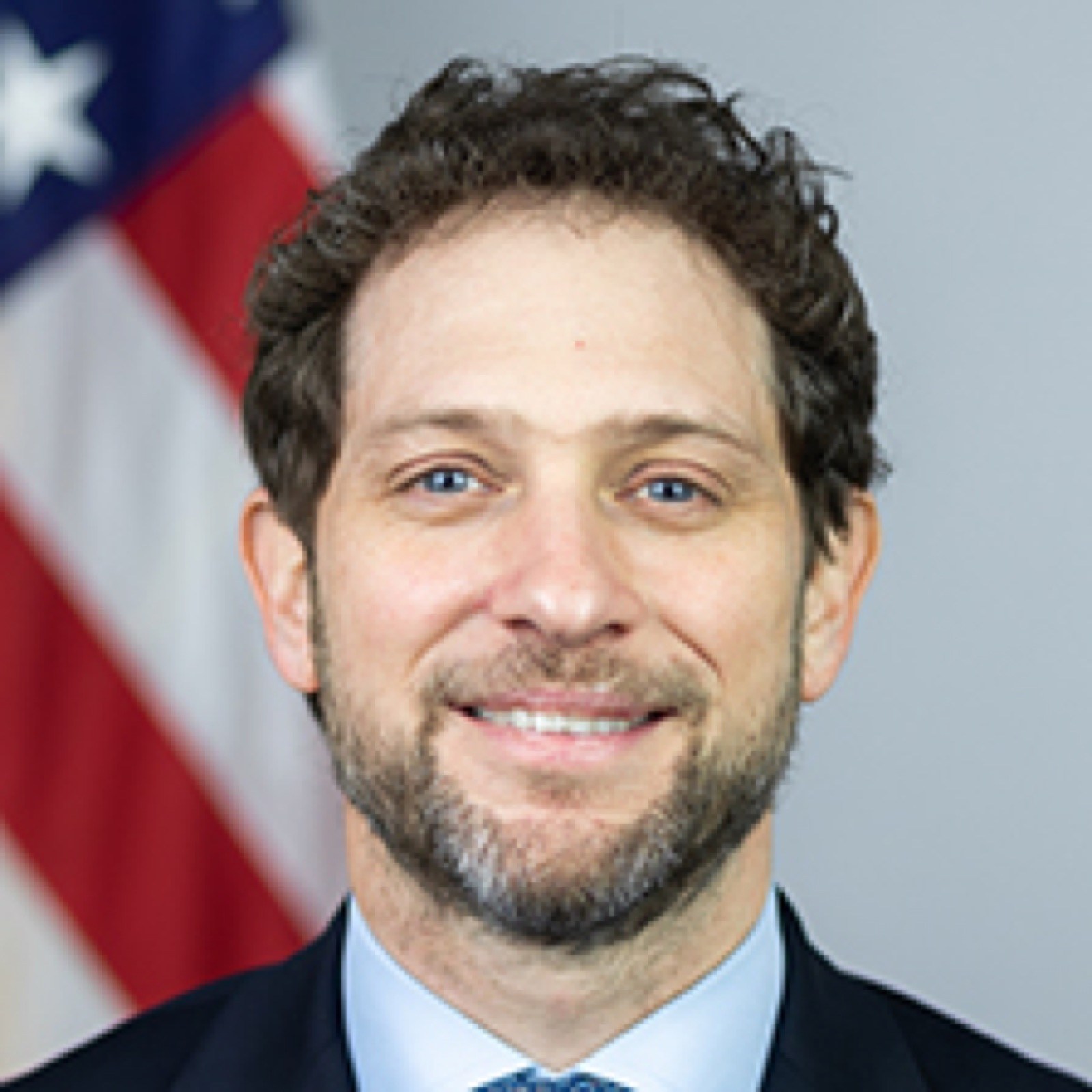
Jon Finer
Jon Finer is a former U.S. Deputy National Security Advisor who discusses his pivotal role during the first few weeks of Russia's invasion of Ukraine and his role in ceasefire negotiations.
Episode Summary
In this week’s episode of One Decision, host Christina Ruffini and co-host Sir Richard Dearlove, former head of Britain’s MI6, break down how a group of cabinet members from the Trump administration inadvertently revealed classified national security information to a magazine editor. The information, detailing a military attack on Houthis in Yemen, was shared in a group chat on the messaging app, Signal. Later, former U.S. Deputy National Security Advisor, Jon Finer, joins the podcast to discuss his pivotal role during the first few weeks of Russia’s invasion of Ukraine, shares insight into the United States’ role in ceasefire negotiations, and why he’s fairly optimistic about the outcome of the war in Gaza.
Episode produced by Situation Room Studios. Original music produced and composed by Leo Sidran.
Listen & Subscribe
- Watch on YouTube
- Listen on Apple Podcasts
- Listen on Spotify
Transcript
COLD OPEN
NEWS CLIP [0:00] Really something having to do with security. Security like, will somebody be able to break in? Are people able to break into conversations? And if that's true, we're gonna have to find some other form of of device. And I think that's something that we may have to do. Some people like Signal very much. Other people probably don't.
INTRODUCTION
Raffini: Alright. So welcome to this week's episode of One Decision. I'm Cristina Raffini here, of course, with Sir Richard Dearlove, former head of MI6. Alright. If I say to you, new phone who dis? Does that make any sense to you? Do you know what that phrase is?
Dearlove: New phone who dis?
Raffini: Sort of. But you better give me a little more explanation, I think. Alright. So, you know, if you're if you're texting someone and they haven't saved your number and you wanna, like, do a a you wanna cover for the fact that, you know, you haven't bothered to save this person's number, you kinda say, oh, new phone who dis? But the joke that's going around on Twitter this week is new phone, who this, H-O-U-T-H-I-S. Who this. And the the origin of this rather witty inside baseball meme that's gone viral, especially in nerdy DC, is the fact that over the last couple days, the editor of a very prominent outlet here in The US called The Atlantic had been inadvertently added allegedly by Mike Waltz, the head of the NSC, to a Signal group chat that was a bunch of Trump cabinet officials, including Pete Hegseth and Tulsi Gabbard, reportedly planning a bombing attack on the Houthis in Yemen, but doing it not in a SCIF, not over classified communications, doing it on commercial phones on Signal. What are your thoughts on that, Sir Richard?
Dearlove: I was shocked when I heard this story in the middle of the night, I think, of the World Service between sleepless moments and I'm very familiar with all sorts of communications. I use Signal myself but I never would have used Signal professionally when I was in office. And it just is a measure of the casualness of these people towards the issue of secure communication. I mean there's no excuse for it and it shouldn't happen. I'm shocked.
Raffini: It was shocking even to me because look, I mean I've I've had a clearance not while I was a journalist in a former life, very low level clearance. But even as a journalist, there are things that we do, stories that we deal with, even between ourselves, even with an editor that I would not put into writing, even on a phone. You know, if I'm dealing with a very sensitive source or there are sometimes when a principal, a president, a cabinet secretary will go on a trip to a war zone. Right? Like when a president goes to Iraq, we know about that weeks in advance, but we're under an embargo. We're not allowed to talk about it. And it's so sensitive because if it leaks, lives are at risk. Right? We wouldn't even put that in a text. Like, I wouldn't even write that in Signal. I would signal my boss, like, call me about the thing, and then we would talk on the phone. I I feel like even the journalists are being more careful. Jeffrey Goldberg, who was given these messages, initially, he thought someone was punking him. He thought someone was trying to ruin his credibility and make him think he was in this chat so he would report it.
Dearlove: Well, it's it's extraordinary because if you're in a secure building or in going to be in a secure building and you have a mobile phone with you, I mean, the rules normally would be it goes into a Faraday pouch and you leave it at the entrance. I mean you can't take this kit into areas where there is secure discussion. What the hell were the staffers doing? Why did they let this happen? I mean don't tell me there weren't staffers around. Were they doing this from their private homes? I mean I'd like more of an explanation as to what the hell was going on, you just don't use. And they all have other phones. They have NSA supplied secure phones with cipher systems built into them. Okay, they're quite clunky and annoying to use, but then on the other hand if you're discussing something really important, that's what you use. It's a horrible insight. Well, I suppose if you appoint a Fox News reporter to be secretary for defense, the guy has certain ingrained habits from his time at Fox News. But I don't know. It's not good. It's terrible actually.
Raffini: My thought is this is endemic with a group of people who openly do not respect the institutions they're representing, right? And they also, no one in this administration is telling anyone else no, right? So even if a security official had seen this, I wonder if they would have felt empowered to say, Secretary Hegseth, you're not supposed to be doing that because the odds are they would have just gotten dismissed from their job.
Dearlove: Yeah, but that's not a good reflection either because it's often the staff that control the security environment and should make sure that their principals are behaving properly. I mean, I've ticked off politicians in the past and says, hang on a moment. You just can't do that. And can I explain to you why and then explain to them in detail?
Raffini: Well, of course, we also talked to this week's guest about this. Former deputy national security adviser John Finer, who worked for the Biden and Obama administrations. He talked to us about Ukraine, Israel, and, you know, the decisions that are made when you are trying to weigh political messaging versus keeping intelligence methods and sources secure. So let's take a listen to that interview.
INTERVIEW WITH JOHN FINER
Raffini: Alright. So first of all, thank you so much for joining us. John, can you I mean, you're at NSC, very high up at NSC. Can you explain to us what the procedure is or should be for having those kinds of conversations? I I would assume one of the things about being a journalist is you're always looking for people like you going into a building late at night, assuming that if something like that is happening, you've gotta go into a SCIF, a secure facility to do that. Is that always the case?
Finer: Yeah. Look. There there are two ways to have these kinds of conversations, in the normal course of business, the more secure course of business. One is you have the meeting in person, and we strive to do that to the greatest extent possible. If if an event develops during the course of the business day, you'd wanna bring people in, have them sitting around the table in the Situation Room, which has has no devices in it. It's got no windows. It's a secure space for a reason, so you can have the most sensitive conversations that the government conducts. And, you know, everybody can feel comfortable speaking about anything in in that space. And and so that's best practice. Sometimes these things happen at odd hours, you know, late at night or while people are traveling, and then you have to bring them in remotely. And that can be a combination of of a secure phone call, or a secure video conference, some people in person, some people on the screen, some people by phone. You do the best you can in a pinch, when people are scattered all over the world in different time zones.
Raffini: So, John, what is that line between, you know, you're a policy person who sometimes has to live in the real world. How did you guys, when you were in office, try to skirt that line between, for lack of a better term, getting shit done when you need to get it done and making sure you're not putting it out there for everybody. Like, you know, did agency folks come in and lecture you? Was there ever pushback, or did you just kind of take it as each individual case?
Finer: No. Look. One thing the government is not great at is developing technologies to facilitate, enable, you know, easier, quicker, more reliable communications. It's it's cumbersome. You know, I I probably chaired almost a thousand secure meetings during the course of four years in the Situation Room, on the phone. And in every one of those, you know, you have to drag people out of what they're doing. You know, sometimes drag them back to the office, sometimes wake them up in the middle of the night and have them walk to facilities that they've got in their house or drive into the office. And so you've gotta make a call about whether the topic that you're discussing really merits that because even though, you know, we're all signed up to do these jobs no matter what happens, there's a human element to this too and you can't, you know, you can't conduct a meeting every five minutes just because there's some new wrinkle in the news. So part of this is exercising some judgment about what warrants pulling people together.
UKRAINE
Raffini: I do wanna move forward a little bit and talk about some of those policy concerns that one might want to signal someone about in the middle of the night. The first one obviously is Ukraine. Look. We've got the Trump administration saying they're having negotiations with both sides. And recently this week, Steve Witkoff did a a podcast interview where he basically seemed to be kind of mimicking the Kremlin's talking points about the Donetsk region and saying, you know, these these areas are Russian speaking, and there was a referendum, a very contentious, largely discredited referendum after Putin had already rolled into these areas. It seems like they're setting up this negotiation to give those territories back to Russia. I'm wondering watching this, John, what your take is on these negotiations, whether they're going to work. Walk me through how this is all looking from your end.
Finer: Yeah. So sometimes when you're dealing with such a kind of frenetic pace of policy activity, it's hard to distinguish and differentiate between what is actually acceptable, normal course of business, things that frankly shouldn't outrage people and alarm them, and what is warranting kind of more scrutiny and more concern. And I think this negotiation is a good example where there are developments on both sides. It's not a terrible thing that this administration wants to sit down and talk to Russia about ending the war in Ukraine. In fact, I think most Americans probably rightly would support diplomatic efforts to end the war in Ukraine. I think had Kamala Harris become president, there's a pretty high likelihood there would have been a big diplomatic push in in her administration to try to bring about an end to the war. But the problem is it matters how the war comes to an end and on what terms. And what I think concerns some of us who are involved in this policy over the course of the last several years is they seem to be sometimes prioritizing getting this done as quickly as possible. And the fastest way to get the war done is probably the way that they are doing it. Figure out what Russia's bottom line is and then try to take Russia's bottom line and impose it on Ukraine. But the problem with that is it's gonna lead to an outcome that is not stable because at the end of the day, Russia's bottom line is gonna enable Russia some years down the road because Ukraine will not have sufficient security guarantees, and Russia will still be present on large swaths of Ukraine's territory to resume fighting if they choose to do that. The other way to go about trying to end the war, of course, would be to work closely with our partner, at least our traditional partner in this conflict, Ukraine, find out what exactly their bottom line is, which may not be the full maximalist demands that president Zelensky and and others have made. I think the administration is probably right that every single one of those demands can't be met. But find out what their bottom line is, and then go to the Russians while you're continuing to support Ukraine so the pressure stays on Russia and try to the greatest extent possible to impose Ukraine's bottom line on Russia instead of the other way around. And that will ultimately, if they did it that way, take longer possibly, but lead to an outcome that is more durable, more sustainable, and even more important than any of that, frankly, more just since it's Russia that has decided to just go into Ukraine and and lop off a a big piece of it. They don't seem interested at all in doing things that way in part because they seem to be prioritizing, and they say this quite openly. Steve Witkoff says it, the president says it, building a better relationship with Russia over finding a just and durable solution to the war.
Raffini: Do you think that Biden was too early to vocally say there will be no US troop presence in Ukraine? Do you think that empowered Putin to go into Ukraine?
Finer: I think president Biden and, frankly, president Trump shared at least one insight about the American public and the war between Russia and Ukraine. And that is, I think both of them very strongly believe that the American public did not want The US to become a direct participant in that conflict. President Trump has been extremely clear about his views on on that topic, since the days of the campaign. Still obviously quite clear on that. But president Biden also believed that, you know, after two decades in which The United States was embroiled in in various conflicts around the world and, you know, president Biden played a the the the key role in ending the longest of those in in Afghanistan, the American people did not want to rush back headlong into another conflict thousands of miles away in another part of the world. So what did president Biden decide that we needed to do instead of that? Because he really needed, and he knew this, American support if The United States was going to back Ukraine to the extent that we did. And I don't I think as much as there's been a debate about how much we did or didn't do and how fast we did it, what we provided, what we didn't, I think that if you had told anybody who's now making those arguments before the war that The United States would provide tens of billions of dollars in security assistance that would lead to the deaths of and quite directly lead to the deaths of thousands, tens of thousands of Russian soldiers on the front lines, hundreds of thousands of Russian casualties, and would do that without bringing The US into direct conflict or NATO into direct conflict with Russia and in a way that enables Ukraine to retake a large amount of its territory and keep Russia more or less at bay in the eastern part of the country, we would have taken that outcome in the very early days of the conflict because we had multiple interests here. We obviously had a strong interest in standing up for Ukraine and pushing Russia back. We've been unequivocal about that in the course of the last administration. We also did not want a direct conflict between two nuclear powers, or between NATO and a nuclear power, because that, I don't think the American people would have stood for, would have supported, would have been a bad thing for the world, certainly a bad thing for Europe. And I think we succeeded in both of those goals, and that was not preordained before the conflict started.
Raffini: Was there a debate behind the scenes about how fast to get this aid out, whether or not to trigger sanctions before the invasion? I mean, I remember I personally was was yelled at a little bit by president Biden at at a NATO press conference when I said, you know, last time you did sanctions, they didn't deter. So what makes you think anything you do here today is gonna make a difference? And but was everybody behind the scenes united, or was there a debate about this, and and how did that play out? Can you tell us, you know, what the what the back and forth kind of was?
Finer: US sanctions alone on Russia only ever would have been, I would say, modestly impactful. The United States economic relationship with Russia by the time this major invasion took place in in February 2022 was pretty limited. There was some commercial activity, but not nearly on the scale and on the order of European commercial ties to Russia when it comes to energy and and other areas of trade. And so for these sanctions to work, it required unified action between The United States and Europe. So a big part of our strategy and by the way, people forget now, you know, we decided that it was very likely Russia was going to invade Ukraine by the fall of 2021. We had intelligence that showed that. We made a very difficult decision that was debated quite intensively among my colleagues, Richard's former counterparts in the intelligence community about how far we could go in saying what we saw and what we knew. We decided to go very far, both publicly and in more private conversations with key partners, in large part to make sure that they were on board to impose sanctions the minute that the invasion took place. Because if we had waited, if we had said, well, let's just see what happens, and once Russia does this, then everybody will come around, it would have then taken months following the February invasion to actually get sanctions in place. So we started that work months in advance. We were able to do sanctions in the first week after the invasion and then intensify them over time. And I think that was a very important way in which we used the time. Frankly, we never thought it was very likely that we would be able to stop, persuade, deter Russia from going into Ukraine. All the intelligence that we had suggested they were dead set on doing this and short of a direct US conflict with Russia and who knows where, had we put that on the table, things would have escalated, and we were not willing to do that because we did not think we had the backing of the American people for that. We knew that ultimately all we could do was raise the costs, and the key two ways to raise the costs were one, sanctions that the Europeans joined that had real economic impact on Russia, and two, arming the Ukrainians to be able to push back on whatever Russia did. And I think we succeeded in both of those areas.
Raffini: But that was really interesting because I was in Munich when this all happened. Right? I was there for when Zelensky left Ukraine. We thought it was gonna be the last time he left the country. He gave the speech in Munich. He went back, and the war started twenty four hours later. And you guys had released that intelligence before the Munich Security Conference saying Russia is gonna invade. I understand your perspective, but from a journalistic perspective, we would say, okay, how do you know this? Like, prove that this is gonna happen. And you guys would say, well, we that was the line. I guess we can't disclose how we know, but we know. So from our perspective, it was hard to just give you the benefit of the doubt. We were still reporting it. But I had colleagues in Ukraine who were saying the Ukrainian government didn't believe it, and a lot of the Europeans at Munich didn't really believe it. So how did you convince the partners that you convinced that it was real? Were you able to show them more than you could obviously show us, or did you have people who would just trust you and go with it? Like, where was that line and where did it fall with different allies, and how did you have those conversations?
Finer: There were two real risks we were worried about in pursuing this strategy of probably broader disclosure of of sensitive intelligence than I've ever been associated with in the US government. But the two things we were most worried about is is one, you know, sources and methods. That's what you're always worried about when you're talking about intelligence. Are you going to disclose something that prevents you from being able to gather intelligence down the road because the adversaries determines how you got it and shuts down that access or that endangers a person who is providing that information. We're obviously worried about all of that but we decided in this case we could do it in a way that protected sources and methods, and I think we were largely right about that. The other thing we were worried about, and it kinda goes to your question, is our own credibility. I mean, what we didn't wanna be was, candidly, the the George W. Bush administration going to the UN and saying Iraq's got weapons of mass destruction. But there were really big differences between this example and that one. One is we were not trying to justify starting a war. We were trying to stop a war or at least raise the cost of another country that was going to war. So we felt much more justified in using intelligence for that purpose. And second, at the end of the day, I kept thinking we kept thinking, well, what if we're wrong? If we're wrong and Russia doesn't invade Ukraine, like, I can live with that outcome. You know, that's a pretty good scenario because it means the next several years of our administration are not gonna be sucked up with this terrible, catastrophic, world changing event.
Dearlove: Someone should write a history of intelligence warnings because, you know, there are some that have been a disaster. There are some that have been highly successful. I mean, I can think of a situation during the war in the Balkans when the prime minister in The UK, when Blair was desperate to say that his policy of bombing Serbia was working. We we absolutely, in the intelligence community, did not want him to say anything because it would have immediately indicated to the Serbians that we knew in detail what the hell was going on there. And, you know, in the end, we came to a compromise, but he did say something publicly because it was so unpopular in Europe and in the press that we should be bombing a European civilian well, they were they were military, but, you know, you remember the Chinese embassy was hit and various other things happened which were pretty difficult and disastrous to deal with. I I think in terms of recent history, what John is talking about in relation to Ukraine is really important because it worked, and it worked perfectly from a policy point of view, and there weren't any wrinkles. And whichever way it came out, you were you you were ahead of the game. I mean, whether they did or they didn't, you were still gonna win on the policy issue. So it was very successful.
Finer: This was not a bunch of White House political appointees sitting around saying, oh, we wanna release this intelligence or that intelligence. These were very intensive, very rigorous conversations between people like me on the policy side, who I'm not an intelligence professional like Sir Richard is, and the intelligence professionals at places like the CIA and the NSA, and the director of national intelligence deciding what could be done safely, responsibly, again, with regard to sources, methods, and other potential consequences in the world. There were some things we didn't ultimately release and probably were less convincing to journalists as a result. Look. I I'm a former journalist, so I I covered the Iraq war. I have I have a healthy degree of skepticism about things the government says too. So I I I came to this job with that mindset. But but in this case, I think we enhanced our credibility quite a bit by being right.
GAZA AND ISRAEL
Raffini: I do wanna pivot a little bit and talk about Gaza and Israel because a ceasefire deal that was reached towards the end of the Biden administration right before the Trump administration, it's kind of a jump ball as to whose deal it really was. Obviously, the Trump administration is taking credit for it, but, you know, we had ambassador Barbara Leaf on the podcast. We were talking about how it's also not a secret. This was essentially the same deal that the Biden administration had been working on since I think February. It kind of got across the line. But now you're in this very strange circumstance where they got through phase one, phase one ended. They never actually got together to have the negotiations to hammer out the specifics of what phase two would look like. So the thought was they would just extend phase one and continue with these hostage releases. And now that seems to be falling apart. And you've got Israel threatening this week to take more and more hunks of Gaza unless they give up the hostages. But from a Hamas perspective, those hostages are the only bargaining chip they've got left. Do you guys think the strategy makes it more or less likely that these poor people are gonna get released or that this is just all gonna fall apart again? My guess is it's gonna fall apart.
Dearlove: Netanyahu's government hanging together depends on the military defeat of Hamas, which is more important to him, unfortunately, than the release of hostages despite the domestic pressure he's under. So I think, you know, the rubber's really hit the road in terms of this issue of finally rubbing out Hamas militarily, not ideologically, but militarily, so that there is no role for Hamas in the future government of Gaza, whatever arrangements are made. So my own feeling, I suppose I'm a bit cynical about this, is that there was never going to be a second ceasefire agreement. There was never gonna be an extension because politically, Netanyahu couldn't agree to it without, as it were, losing his coalition. So I'm not surprised, and I think we're gonna see a very devastating, violent continuation of the war until Hamas is, well, almost wiped out.
Finer: Well, look. It's it's hard to disagree with what Sir Richard just said in part because he laid it out very persuasively, in part because if you're betting on the more cynical outcome in The Middle East, you you tend to be right. So I I say what I'm about to say with a grain of salt. But I do think there are at least some reasons for I don't wanna call it optimism, but for a belief there can be a better outcome than just ongoing grinding conflict in in perpetuity. One is that there aren't all that many real military objectives left for the Israelis. There are a significant number of Hamas fighters and some number of of leaders of those fighters. But unless what Israel's goal is is to literally eradicate every single member of Hamas from Gaza, which by the way, I think would be a a good question to put to the IDF is whether they think that is a militarily achievable goal. I think their answer to us often was they do not think that's a militarily achievable goal. Then I think there are going to be real questions raised as to what exactly they are still doing militarily inside Gaza. The other is that the hostages have, their families have, political force and valence inside Israel, by the way, inside The United States too. And they are not going to go away and go quietly while their loved ones are still in this absolutely appalling situation, and that's gonna lead to pressure on the government of Israel to find a way to get them out, and frankly, on our governments too. We felt that pressure. The Trump administration will feel that pressure. The third thing, though, and the the big wild card is, like, what does Hamas actually want? Because at the end of the day, unless Hamas is willing to agree to a deal that gives up, as you said, a significant bargaining chip, this is not gonna get done. And so, you know, while, sure, both sides play a role in ultimately bringing about a successful negotiation, what we found in the last period of our administration was that it was Hamas much more often than Israel that kept adding conditions, kept adding terms, and kept raising questions in our minds about whether they actually wanted a deal at all. If they ultimately decide they don't, that's a reason more in in Richard's column for why this could continue indefinitely longer than than anybody would like. There is no good, clean, easy outcome here in terms of ending this. If there were, we would have been out screaming about, you know, how it had to be imposed and implemented. But at the end of the day, nobody has an answer to two big questions that that go towards how you end the war. One, who governs Gaza? Who is the civil administration inside Gaza? Israel doesn't wanna reoccupy. There are some people who do, but but not, I think, the government policy, and I don't think anybody else wants that. It would be a very bad outcome. Countries of the region are not lining up to to to roll in and and govern Gaza, and nobody wants Hamas to be in charge. And it's not clear the Palestinian Authority, which maybe is the most obvious answer, present mostly, if not entirely in the West Bank, is ready to deploy to Gaza or or particularly wants that outcome itself. So nobody has answer to that and nobody has an answer to who, if not Israel, will provide security for the population of Gaza, of of Palestinians in Gaza and to prevent additional threats to Israel if the IDF isn't gonna do that. So until we have answers to those two questions, it's going to be very hard to definitively end the war.
ANECDOTES
Raffini: You know, you you've had this job. I don't know. How many countries did you go to while you were in this post? Do you have any idea?
Finer: I I mean, between this time and and the last time when I worked in the Obama administration at the State Department, well over a hundred.
Raffini: Any anecdotes? Is there any trip in particular that stands out either because it was just odd or crazy or, you know, anything funny that that comes to mind?
Finer: I I tend to sort of spoil milestone birthdays with with work. My thirtieth birthday, actually spent in Baghdad in Iraq in the Washington Post Baghdad bureau by myself because I was the person on duty. I was a a reporter, as I said earlier in my career, covering conflicts a couple years in Iraq. So that was that was 30. 40, I spent flying from Washington DC to Indonesia, which when you fly on a government aircraft, I was flying with John Kerry, who was secretary of state, requires two stops to get to Indonesia. And so that was more than 21 out of the twenty four hours of my fortieth birthday on that plane, from Washington to Indonesia for a trip where we did not spend the night.
Raffini: So you just landed and came back?
Finer: We went for a Jokowi inauguration, and so it was a it was a short short hop and then off to somewhere else.
Dearlove: I do recall Y2K. Do you remember this great story about Y2K? And I remember deciding that I would not celebrate the millennium, but I would sit at my post in case Y2K blew the world apart. And it was the most overhyped problem. There I sat, nothing happened. So in the early hours of the new millennium, I crept home quietly to bed.
Raffini: Alright. Well, I've got a as Richard knows, I've got a milestone birthday coming up at the same time we're all supposed to be at the NATO conference this summer. So if anyone wants to have a toast with me overseas, John, we'd be more than happy to have you come over and and come talk to us again. Thank you so much for spending time with us today.
Finer: Thank you.
Raffini: Bye, John. Alright. That'll do it for this week's episode of One Decision. A special thank you to our guest, former deputy national security adviser, John Finer. And if you like this episode, be sure to check out a previous episode featuring Senator Mark Warner, chair of the Senate Intelligence Committee who had a back and forth about that exact Signal text exchange with some officials on Capitol Hill today. Now in the episode, we break down the last time The US experienced a troubling leak of private national security information better known as the Discord leaks.
Warner: I think it's brought into focus though something that in the intel community in America we've known for a long time. We way over classified. There is always a default to a classification level that may not often be needed. There's no public interest test, and that then drives the fact that we have in America over 4,000,000 people with security clearances.
Raffini: I'm Cristina Raffini. If you want more content, be sure to go to our website, onedecision.com, and our YouTube. That does it for us this week. Thanks for listening.