Hosted by Christina Ruffini and Sir Richard Dearlove
Guest
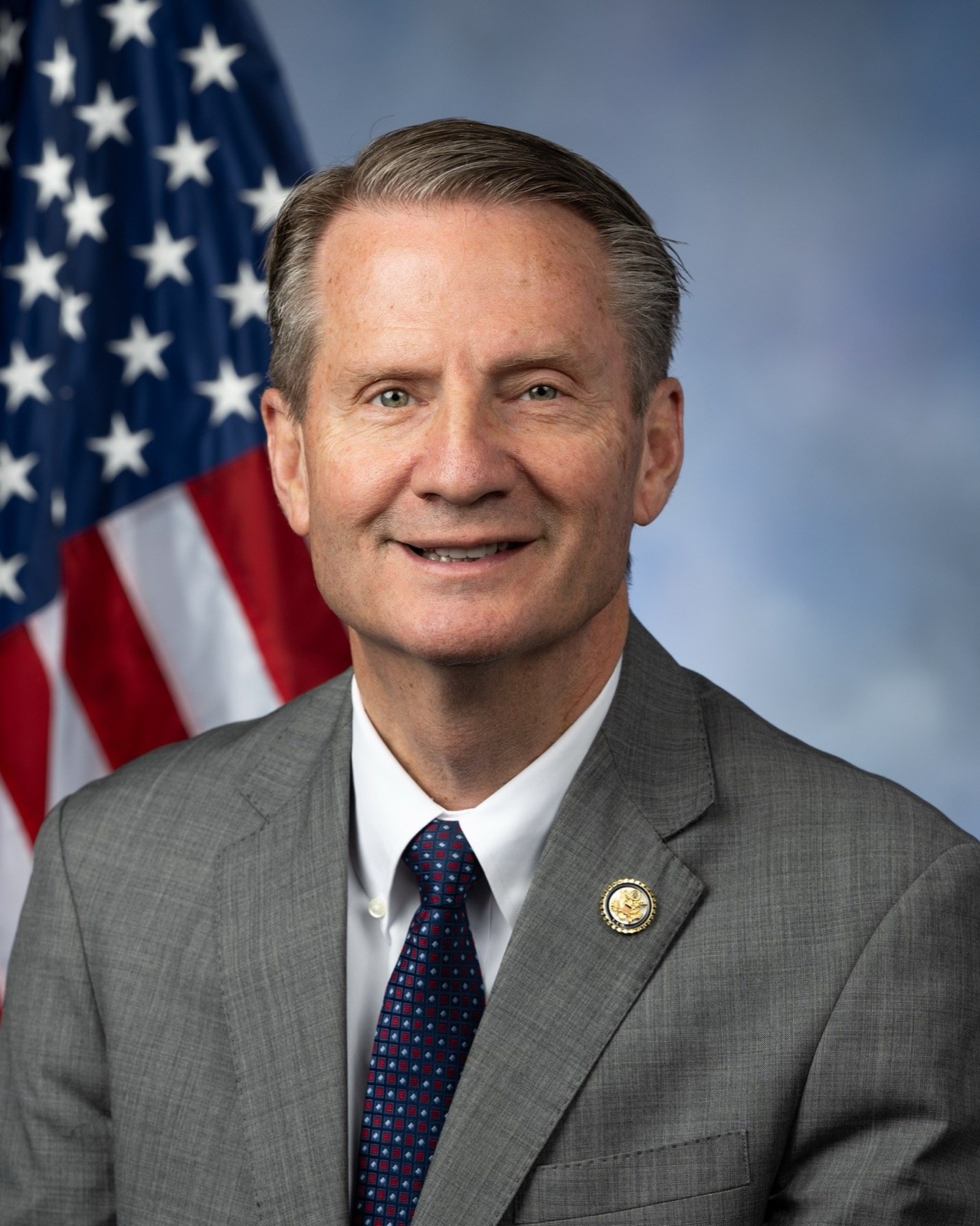
Tim Burchett
Tim Burchett is a U.S. Representative who weighs in on the strategic importance of U.S.-Greenland trade and on Putin and U.S. aid to Ukraine.
Episode Summary
This week, Christina Ruffini and former MI6 Chief Sir Richard Dearlove unpack the proposed Iran nuclear deal discussed in Rome, following Trump’s exit from the JCPOA. They also reflect on Pope Francis’s recent death and the Catholic Church’s ties to intelligence agencies. Later, Rep. Tim Burchett joins to weigh in on the strategic importance of U.S.-Greenland trade, his views on Putin, and U.S. aid to Ukraine.
Episode produced by Situation Room Studios. Original music composed and produced by Leo Sidran.
Listen & Subscribe
- Watch on YouTube
- Listen on Apple Podcasts
- Listen on Spotify
Transcript
COLD OPEN
Burchett: I don't trust Putin as far as I can throw the dome off the capital. I mean, let's let's face it. He's he's Russian intelligence. He's a KGB. He's he's rotten to the core.
INTRODUCTION
Raffini: Hello and welcome to One Decision. I'm your host, Christina Raffini. This week, Sir Richard Dearlove and I are gonna be speaking with Republican Congressman Tim Burchett. We're talking about a whole host of global issues because as you know, as it always is these days, it's been a really busy week, when it comes to global affairs. One of the big things driving the news right now is another possible deal with the nuclear negotiations between The US and Iran. So to start off, my cohost, Sir Richard Dearlove, former head of Britain's MI6, and I talked about the Iran deal. And I asked him what his thoughts are on these two camps, whether it's a good deal, and who he thinks will win out in the end. Alright. So here in DC the last week, everybody, it's it's been a lot of things. It's been a lot of economy, a lot of tariffs, a lot of pope. Did you ever meet the pope? What was your relationship with the Vatican?
Dearlove: I did have a relationship with bits of the Vatican. There's a structure inside the Vatican, which is really quite fascinating. And, of course, during the Cold War, it was pretty important because they were very well informed on countries like Poland because of the inherent strength of the Catholic Church, and not to be toyed with. And they had some very serious people. Since I retired, I've not really had any interface with that part of the Vatican at all. But, so the current pope I know only by reputation, and I didn't meet any of his predecessors. I was working at a few levels down. These matters are handled by a sort of discreet cardinal who runs what effectively used to be a Vatican intelligence service. And there is a serious intelligence structure in the Vatican, let's put it like that.
Raffini: That's very interesting because obviously we're talking about Ukraine and Russia, especially this week, because negotiations are maybe happening, maybe not happening, possibly happening. We're not really sure. But it got me thinking because of the Pope's death, the role some of these churches have in wars and politics and peace. Because obviously when Ukraine and Russia went to war, there was this big schism between the Ukrainian Orthodox Church and the Russian Orthodox Church. And the Russian Orthodox Church has for years been accused of being a tool of the FSB of Russian intelligence. How accurate is that?
Dearlove: Pretty accurate. My very first trip to Moscow after the end of the Cold War, they gave a banquet in my honor. This was the then remnants of the KGB becoming the SVR. I think the FSB were also present. It was held in the Danilov Monastery, which is one of the main homes of the Russian Orthodox Church in Moscow. They also took me on a tour of various monasteries outside Moscow. I met several of the Archimandrites, who clearly had a close relationship with the people organizing my visit. So I don't think there's any doubt whatsoever that the Russian Orthodox Church was quite significantly integrated. And what was very amusing too was a sit down for dinner with these first chief directorate KGB officers, who were an interesting bunch. And they had all switched their Lenin badges for Orthodox crosses in their buttonholes.
Raffini: So they usually had Lenin badges and they'd swap them out?
Dearlove: Well, would have had Lenin badges in the old days, but the regime had changed. They had their Orthodox crosses instead. So, I mean, it was blatant, really. And it's an instrument of the state. And they rebuilt that huge — one of the first things that happened after the fall of communism was they rebuilt that massive cathedral in the center of Moscow, where there used to be a swimming pool. You know, they put the cathedral back. It's a fundamental part of the Russian state.
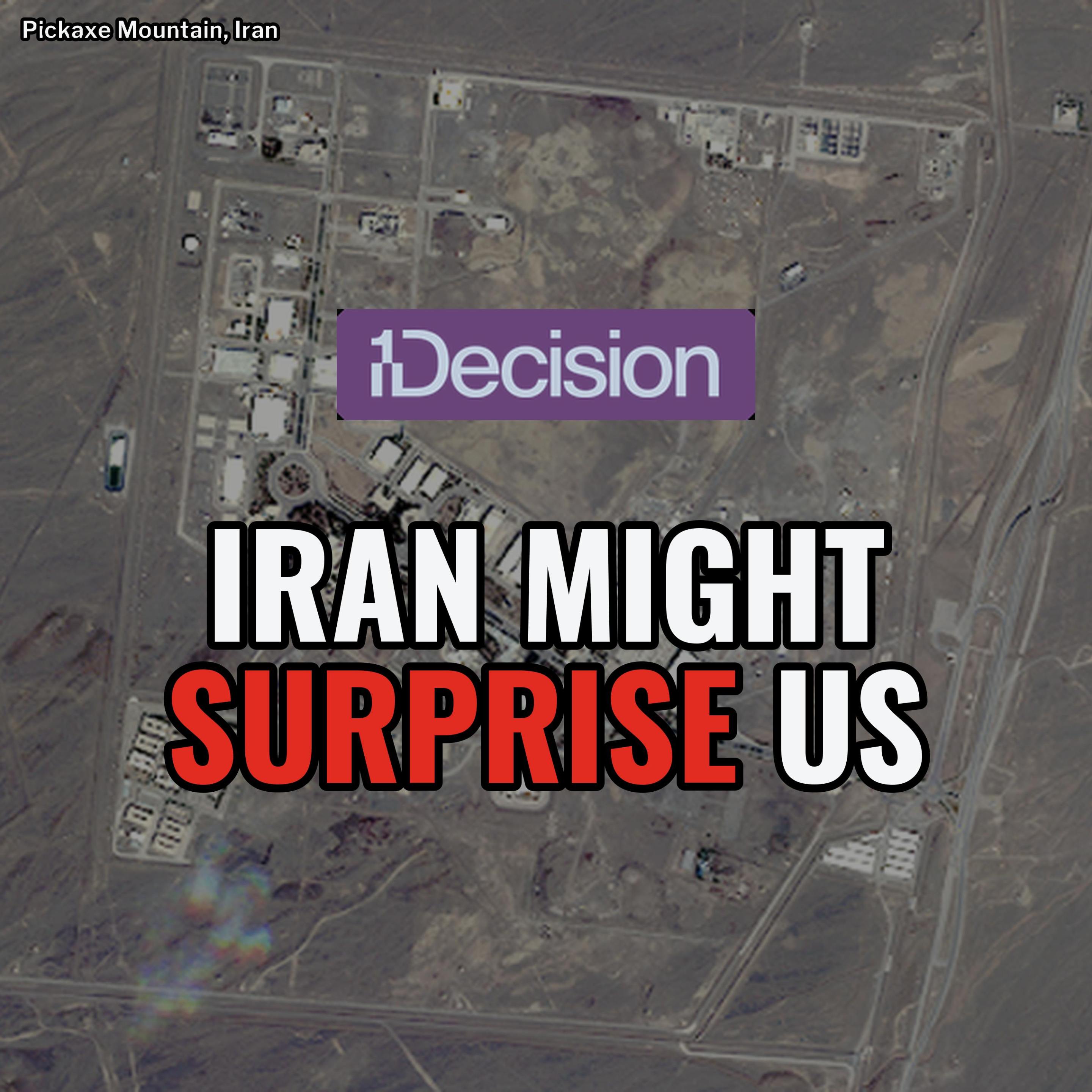
Raffini: I also want to talk to you about Iran. The Trump administration has said, you know, we got a lot of deals going on right now, Sir Richard. We got tariff deals. We got war deals. We got Gaza and Israel. And now the Trump administration has been engaging with Iran. You know, they're not for the most part in the same room. They're in different rooms. The Omanis are being the interlocutors and going back and forth, essentially passing notes. Is there any prospect for peace here? The thing that gets me is I covered the Trump administration the first time, and they just kept talking about how it was the worst deal ever made, and The US pulled out of it, and, you know, Iran couldn't be trusted. And it seems like they're coming to a kinda similar deal framework.
Dearlove: I'm concerned. I mean, I thought the JCPOA was a bad deal. It was a bad deal because once the Iranians had signed it, they regarded it as having given them a sort of laissez-passer to behave badly doing anything else except nuclear across the Middle East.
Raffini: Right. There's an argument that it gave them cover to kind of fund the IRGC and set up these proxies.
Dearlove: Yeah. I was rather hoping that the situation at this point in exchange with Iran was basically going to be sort of absolutist. You've got to abandon your nuclear program, which you don't need because you don't need a civilian nuclear program, and that the Trump administration wouldn't compromise on this being driven by the Israeli position.
Raffini: Within the administration, there's two camps. The original thought from the president and I think Mike Waltz and others is closer to what you were hoping for and what the Israelis wanted, right, which is a complete denuclearization, get rid of your nuclear plan or we're not talking to you. Then they kind of backed off of that and got regulated by another faction within the White House, including, apparently, J.D. Vance, who thinks — you know, Iran said that's a nonstarter, and Vance and others have said, like, we think there's room for negotiation. Maybe we can work on — you know, and this is where we're getting to something that sounds more like the JCPOA, you know, more regulation, longer breakout times, all that. Which of those camps do you think is gonna win out?
Dearlove: Well, I hope it's not the second because my experience observing Iran and its respect for these agreements is that it doesn't necessarily break them overtly, but it's very good at running a dual policy. So you have a part of Iranian policy that appears to agree with the agreement, and then in the background, life carries on behind the scenes in the way that it always did. And I just don't believe that you're gonna be able to regulate a civilian nuclear program effectively by inspection because the Iranians are so practiced at cheating, which is what they certainly did in the past. Okay. It might slow the program down. I would have thought it's much safer for the Trump administration, given where they must have started off, to say, look, absolutely no programme which could lead to a weapons programme. So, I mean, I just think that once you get into this detail, which the Iranians exploit to the full, and that's what they did in the JCPOA.
Raffini: Well, I mean, that's what The US, the Trump administration said Russia was doing too with the INF treaty and these other treaties, and they pulled out. And now the president seems to be willing to go to the table with Russia and give Putin the benefit of the doubt. One of the things I think is interesting is we're gonna play our interview with Republican Congressman Tim Burchett of Tennessee, who's a very strong proponent of the president's. But pretty consistently, even with Republicans on the hill, they seem to have a different feeling about Vladimir Putin than the president does. Right? They will say, we are — they're skeptical of Ukraine aid. They want the war to end. They don't think we should be funding it. But, you know, when you ask them, is Putin a good guy? Almost categorically, they'll say, no, they don't trust him. Why don't you think that same messaging is coming from the president? And is that dangerous?
Dearlove: It is dangerous, and it's the thing that most worries me about the Trump administration. I can take a hell of a lot of what Trump is doing, although it's pretty extreme. But the one thing I can't take is his indulgent, apparently personally indulgent attitude towards Putin. I think it's misplaced, and I think it does Trump actually significant damage, because Putin's track record in relation to many issues, but Ukraine in particular, is really appalling. I mean really appalling. So, for Trump to have this apparent degree of acceptance that he's dealing with a political leader who has some degree of respect because he's the leader of Russia. That for me, it's the point beyond which he goes too far. And I just don't get it. You're right. All the other people in the Trump administration I've talked and spoken to myself have said pretty much what you would expect them to say. This man is totally untrustworthy. This man is dangerous. This man is a threat to global security. And, you know, that's what we don't hear from Trump. Does Trump really feel that because he hasn't, as it were, damaged his so-called personal relationship, it gives him a better chance of a deal? I just don't believe that.
Raffini: What is the view from across the pond of the Trump tariff war? People seem really concerned, especially about the dollar taking a dip. The IMF is meeting this week for their spring meetings in Washington. The IMF chief economist revised down his economic expectations. As with most Trump policies, there are legitimate concerns about how China has treated other economies, about China cheating on things like trade deficits. But is this the way to go about it? And are you guys nervous that this could impact your economy as well?
Dearlove: Well, I think there's a degree of nervousness. And I think that there's very little sort of expert sympathy or support for the extremism of the policies that Trump is following. Ironically, The UK, you can't find any commentators that are saying, look, this is a great idea. There are certain points of sympathy for Trump in certain areas like — you know, the EU is a cartel and very protective in terms of its own trading position. So why shouldn't there be reciprocity with the EU? I think, you know, and The UK because of Brexit, I think there is quite a lot of support for that view. I think there's quite a lot of support for tariffs aimed at China, which are, let's say, driven by political rather than economic motive, i.e. we've allowed China far too much freedom and the whole relationship needs to be reset. In terms of the consequences globally for the tariff policy, I think, you know, there's puzzlement and concern that everybody's going to end up being damaged. But The UK is so far in a rather unusual position. It's sort of escaped anything specific. And, you know, we're in the process of, I think, negotiating a trade deal, which might single us out as a very privileged partner of The United States. There are very mixed feelings, but you won't find a serious economist saying, wow, this is a brilliant idea, these tariffs.
Raffini: The president does seem to really like The UK. He's really into those state dinners. So just have a couple more state dinners, and you guys will get a great tariff deal, I'm sure.
Dearlove: Well, he's coming — you know, he's supposedly coming on the second state visit, unprecedented, with King Charles, which has never happened before, and he clearly likes that. But do remember that — I find this really still a surprising fact. His links with The UK, his mother was a Scottish American socialite and philanthropist.
Raffini: Yes, I think they're emotionally really close.
Dearlove: She was born in pretty modest circumstances in Scotland. I mean, his antecedents are very recent. He is an extraordinary phenomenon. What I think we're learning about Trump is his style is to overplay and exaggerate every hand he starts with, and then retreat. But the question is, do you retreat to a line of acceptability or do you retreat to a line which is still over the top? And I think in a lot of these situations they're being played out in front of our eyes, and we're not sure where they're going to end up. I mean, the Chinese are gonna have to negotiate, aren't they? They're gonna have to come to the negotiating table. And in a way, if he forces them to do that, something better than what's happened in the past might eventually come out of it, but the passage to get there might be very damaging.
INTERVIEW WITH CONGRESSMAN TIM BURCHETT
Raffini: Well, there's a lot more topics to talk about, and we did get to speak to an ally of the president, Congressman Tim Burchett, Republican from Tennessee. We talked about possibly taking over Greenland as a new state, Russia, Ukraine, and how he views Trump's policies on China. So, let's take a listen. Thank you for joining us. Let's start with the news of the day. You know, we've got Secretary of Defense Pete Hegseth, and his love, I wanna say maybe, of using Signal chats is back under fire again. What is your take on SignalGate 2.0? I feel like at this point, even some of his supporters are starting to say, maybe it's time to move on. But what's your take?
Burchett: I don't know if it's time to move on or not. I think it's a double standard. I remember under the Biden administration, when we pulled out of Afghanistan, 13 Americans lost their lives. And matter of fact, a neighbor of mine, I live on the Rutledge Pike Highway, and he was one of — he was a staff sergeant in the army. He got blown up over there. He was actually the very last person to die in Afghanistan, American in a combat role. In our committee, we asked the Marine Corps sniper if they'd ever had the suicide bomber in their sights, and he told us not once but twice. And they called back to military intelligence, which I feel like is sort of like congressional ethics. It really just doesn't exist. And they had this guy on their sights twice, and they were called down twice. And yet nobody seems to say anything about that. But Pete Hegseth has a conversation with his wife, the military experts of — yeah, he messed up. He shouldn't. We just know that now. No. Don't talk to anybody about anything on any social media site because every one of them — I have a couple of sites I'm on that people send me information, and they think that nobody is monitoring it. If a government agency isn't monitoring it, some 12-year-old kid in a garage somewhere has figured out how to crack into it, you know, hack it. So I would tell people unless it's a smoke signal, which would not be easily interpreted, I would say just don't trust any social media.
Raffini: You know, I know you're a supporter of the president. At some point, do you think Hegseth, whether or not you agree with this or not, is becoming a liability, a distraction to the president getting what he wants done at the Pentagon at DOD?
Burchett: Honestly, I don't. I think it's a distraction from the media. The media is just — I think the public is pretty much numb to anything the media says right now because it is so biased. I just clicked on — I always click on Yahoo in the morning and just read the news sites, you know, of this actor who doesn't like Trump and the views point. You know, the president doesn't really respond too well to pressure from the media. I mean, he responds very well. He just ignores it and does his job. I guess that's the good thing about being really term limited. You can kinda do your own thing. And, yeah, they're gonna squeal at the Pentagon. Look. In the last audit, they have not passed, and I guess I should say they have not even completed the last eight audits. They cannot account for a half $1,000,000,000,000 right now in assets. That's an aircraft carrier, ma'am.
Raffini: You've been an advocate for The US — now help me on this. Do you think The US should take control of Greenland? You think The US should have more assets in Greenland? What do you think we should be doing with Greenland?
Burchett: Well, it's rare earth minerals is what we're after. Making it a state, I don't know what that entails. You've gotta — I think a large portion of that population lives in public housing, and I don't know that that's something that we should take on. I think, honestly, I think ultimately we're just going to open up more trade with them. But as it turns out, a lot of those rarer minerals, maybe not as rare as we've been led to believe. For instance, in Minnesota, they've been working almost thirty years to get a mine permitted that has cadmium which is important, and you know we're going overseas to get it, and the Chinese are using slave labor. You see the pictures of kids up to their necks in this milky water that's laced with cadmium, which is a horrible carcinogen. I would hope that we would pursue every avenue here. With the new head of EPA, I suspect we'll be doing that more. But I suspect anytime, like, when we're talking about trade with Ukraine, trade with any of these other countries, Iceland or what have you, it's about rare minerals. And that's what we're trying to get. You know? And Trump understands — you know, his book, Art of the Deal — and I understand negotiating too. And I always give this example, but it is a perfect example. I raised the speed limit in Tennessee. It's 70 miles an hour now on the interstate. I asked for 85, but 70 is what I really wanted. So you go in there, you say all this stuff, and then you pull back and say, hey, how about we just do trade? And they're like, hey, that's a great idea. That's money for us. So I tend to think that's more in line of what he's thinking.
Dearlove: The treaty with Denmark pretty much gives you a free hand. The US treaty with Denmark goes back to the early twentieth century and gives you free hand for military bases. And I bet you it gives you a free hand because the Danes haven't got the money to exploit the rare earths, which The United States have. So I think you've got a deal before you've even started really.
Raffini: The Ukrainians are meeting in London with European officials this week. We've had some overtures this week from Vladimir Putin saying he is more willing to make a deal. Do you trust Putin? Is he a reliable actor? Do you think this is gonna come to fruition? And, you know, you've been critical of Ukraine aid. Where do you think this all goes?
Burchett: I don't trust Putin as far as I can throw the dome off the capital. I mean, let's face it. He's Russian intelligence. He's KGB. He's rotten to the core. And it's not our war. We put $250,000,000,000 into this thing that even the president of Ukraine has said he doesn't know where 100,000,000,000 of it went. Again, I have smelled some corruption there. You know, we've had incidents where we sent our missile defense system over there, then we had to replenish ours with a no-bid multibillion dollar contracting. Members of both parties own stock in those companies. And, you know, I've been saying this for months, if not a couple of years now, and nobody has ever refuted me on any of that. I just think we need to sit this one out. We put enough in there, and I would hope that there'd be peace. I don't trust Putin. I never have. I don't like him. It's a horrible situation. I hate it for Ukraine. But we basically, in my opinion, we've sold out America to the Chinese. We allow them in our commissaries. We've allowed them to buy property around military installations, to buy agriculture land. They've basically infiltrated our institutions of higher learning and our research institutions. You know, they're into organ harvesting and concentration camps. Nobody's raising a finger to stop them because we're in bed with them financially. And that's why Trump did the tariffs on China without asking Congress, because we're the ones that caused the problem. We sold America out. Trump knows that. If he were to ask for a bill to come through Congress, it would be so watered down, it'd end up being a report on something.
Dearlove: There's a huge problem with corruption with Zelensky's government. And I mean, this is one of the things that's so hard to accept. So much money has gone astray. And there are good people in Zelensky's government who feel as strongly about that as you and I do. I think it's very worrying though, I think, if you're sitting here in Europe as to where we're going to end up if we make too many concessions to Putin in doing a deal. I think the war has got to end, but on what terms? Do you think Russia's close to really accepting a ceasefire at the moment? I see no moderation at all on Putin's war objectives. He still wants to make Ukraine back into a Russian vassal state.
Burchett: I agree with that. But I think the one thing we need to realize is Putin's immense ego. He's got to leave the table with some sort of win, and I don't know what that is. Is it territory? Is it assets or what? But PR wise, I think in Russia it's probably a brutal war. I mean it's not popular but when you control the media, I guess it's a little different. And making comparisons to him and Hitler I think is a little — it is way out there. We don't — in my office, we don't make any comparisons to Hitler or the Holocaust unless it's Hitler or the Holocaust. Yeah. I keep an eye on it, but America has put a lot of assets over there. I just see us inching towards American boots on the ground, the adviser role, and then if we're not already.
Raffini: I'm wondering if as you look at foreign affairs, if you look at Washington, does anything work? Does anything give you hope? Is there anything that you look at and think we need to do more of that?
Burchett: Well, God's in heaven, and I talk to him on a regular basis. And people ask me, do you love — I bet you love Washington. And I said, if your congressman loves Washington, you probably need to get another congressman. Because I'll be honest with you, ma'am. I live here on a little farm with my wife and daughter, and I can have the best week I've ever had in my life, I can pass bills, can get a call from Trump or whatever, and things are going good. And they banged that gavel on a Thursday or Friday, and I'm smelling jet fumes. I'm coming home back to Tennessee. I don't think it was ever designed to be the way it is today. It's gotten too big. It's gotten to be too much, and we've just got to address it. But that's what happens when 15% of eligible voters go vote, and you get what you get. The one thing I wished we could get ahold of, and the rest will take care of, is the debt. The debt situation is what — we're 36,000,000,000,000 in debt, every hundred days, another trillion. I just can't say that enough. I say that's the most evil —
Raffini: Are you gonna vote for the Trump budget bill?
Burchett: I voted for the framework, which allowed — which I had 1,500,000,000,000. I met with the speaker. I talked to the president about it. And, you know, that's a start. You know, you're going down the interstate. You gotta go the other way. You'd literally — the laws of physics, you have to get to zero at some point before you can turn around and go the other way. So we're basically at zero, and now we've got to start making some real cuts. And if we just went back to pre-COVID spending levels, I think we could make a real move in the positive direction. Even the liberals can't name me one program we've added since COVID that has made their lives better. It's greed. It's — we don't have the guts. I mean, it's human nature. The bill's gonna come due pretty soon, and if America collapses, I'm afraid it could really have a negative impact on the world. And we've gotta look at our role as a world leader, and we gotta take some responsibility on our own spending and looking after our own people.
Raffini: Would you vote for a tax hike on the wealthiest Americans to pay down the debt?
Burchett: I don't believe I would, ma'am. Because if I — I think what we ought to do — you know what we'll do if we tax more money? We're gonna spend more money. What we ought to do is make the cuts. Make the cuts. Quit demonizing wealthy people because, you know, I was in the legislature, and I remember I sat next to this lady, and she was very part of the left. And she said, we just need to put a nickel on a can of beer. And they'd asked me, you know, do some math. I was always handy with a pencil and paper. And we do the math. All we gotta do is put a nickel on a can of beer, and that'll take care of it. And my point there is the rich will just pass it on to us. You know, the guy selling fancy automobiles, he's not gonna eat that. He's gonna pass that on to the cost. And guess what? Then his mechanics and his salesman and everybody else suffers. So we're not going to tax ourselves into prosperity.
Dearlove: Fascinating hearing your black and white view of the world. I agree with a lot of it. Practical solutions, though, are another matter.
Burchett: So Richard, that won't get you anywhere in Washington, DC, agreeing with Tim Burchett, I'll tell you that. And it's an honor to meet somebody that's absurd.
Dearlove: I do agree with you that the big problem is getting our relationship with China right. We've just let them — we've let them far too much latitude, too much freedom. We've let them into our homes. We've let them into our universities, and they've exploited every opportunity.
Burchett: Yes, sir.
CLOSING
Raffini: Thank you so much for joining us today. That's it for this week's episode of One Decision. A special thank you to Congressman Tim Burchett. If you enjoyed this episode, be sure to check out another conversation we had with US Senator Jeanne Shaheen, where we talked about her recent visit to Kyiv, meeting Ukrainian officials and Ukrainian citizens in Bucha, Ukraine. None of us had been to Kyiv since the war had started.
Shaheen: It was compelling, disturbing. It showed the resilience of the Ukrainian people. They're willing to resist, and it showed just what a murderous thug Vladimir Putin is.
Raffini: Of course, for more exclusive content and interviews with world leaders, visit our website, onedecision.com and our YouTube page. I'm Christina Raffini. Thanks for listening, and we'll see you next week.