Episode Info
- Season26
- Episode4
Hosted by Christina Ruffini and Sir Richard Dearlove
Guest
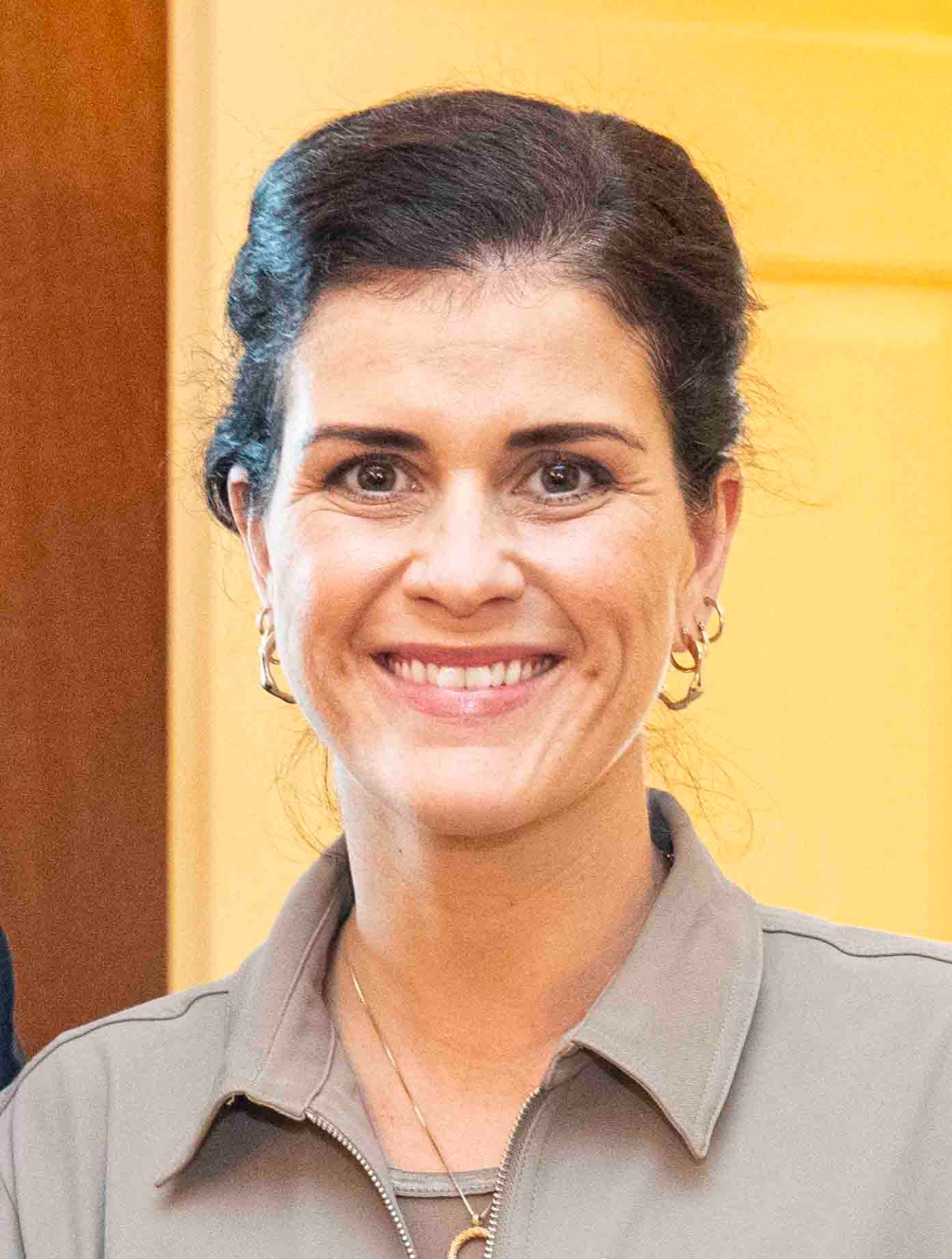
Thórdís Kolbrún Reykfjörd Gylfadóttir
Thórdís Kolbrún Reykfjörd Gylfadóttir is Iceland's Foreign Minister discussing the challenges faced by NATO in the face of Russian aggression.
Episode Summary
Guest host and correspondent Christina Ruffini speaks with One Decision's resident spymaster's—Ex-MI6 Chief Sir Richard Dearlove and former CIA Director Leon Panetta to get their take on this week's shocking assassination attempt against former President Donald Trump and Europe’s anxiety over Trump choosing Ohio United States Senator JD Vance as his vice president, particularly in light of Vance's isolationist views and the potential impact on Ukraine's ability to win the war. Plus, Christina and Secretary Panetta's conversation with Iceland's Foreign Minister, Thórdís Kolbrún Reykfjörd Gylfadóttir from the sidelines of the NATO summit in Washington on the challenges faced by the alliance in the face of Russian aggression.
Listen & Subscribe
- Watch on YouTube
- Listen on Apple Podcasts
- Listen on Spotify
Transcript
INTRODUCTION
Raffini: You're listening to One Decision, the podcast that looks at the choices that shape our lives. I'm your host, correspondent Cristina Raffini, and we're here with former MI6 Chief Sir Richard Dearlove and former CIA Director and Secretary of Defense Leon Panetta. We have a great interview coming up with the Foreign Minister of Iceland that we did on the fringes of the NATO Summit. She had a lot of really interesting things to say about the alliance, about the future of European security. However, there has been quite a bit of news this week. So we definitely would have been remiss if we didn't address it. So, gentlemen, obviously, I want to ask you where you were when this shooting happened at the Trump rally and what your initial thoughts were. And I am kind of curious because I'm more familiar, I think we're all a little bit more familiar with the Secret Service, FBI side of this. But what do the intelligence agencies, what do the departments of defense do when something like this happens to a high profile American political individual?
THE TRUMP RALLY SHOOTING
Panetta: Well, there's no way I could experience what happened with the attempted assassination of former president Trump and not have it fit into my over fifty years of public life, which has covered increasing political violence throughout that period, going back to the assassination of John Kennedy, Martin Luther King, and then followed by attempted assassinations of president Reagan, president Ford, right up to the present with what happened to Paul Pelosi, Nancy Pelosi's husband, and also what happened to Steve Scalise and the attempted threat on him as well. So we clearly live at a time of increasing political violence in The United States. And it's been heightened by obviously the rhetoric of the campaign, the personal attacks on both sides have really made political violence something that, certainly with January 6, it's pretty clear that this country is living at a very fragile time for our democracy. And to have what happened to Donald Trump, where a shooter can climb on a roof at the event with a weapon and be allowed to shoot at the former president. I mean, for me as a former chief of staff to the president, there's a horrendous breakdown in security here that took place. That should just have never happened, to have somebody be able to have access to a roof and be able to fire directly on someone. What happened? Why did they not prevent something like that from happening? It raises serious questions about the level of security. And I know that'll all be investigated. But beyond the investigation of what happened, I think it also raises questions about where we're going as a country and whether or not this will only increase greater political violence as we move towards the election or whether both candidates, Donald Trump and Joe Biden, whether they decide that it really is important to try to get this country to reject that kind of violence and be more unified in our approach to dealing with politics. I would like to believe that that path is still possible in this country, but considering the history we've just been through and what we've seen happen, I'm afraid we're headed in the wrong direction, not the right direction.
Raffini: I've covered dozens, possibly hundreds of these political rallies. And it was shocking to me that there was an empty rooftop within line of sight of the candidate because I was doing BBC coverage as this was happening. And what I was trying to explain is when you go to these as a member of the press, you have to be there sometimes five, six, eight hours in advance. All your gear is swept. EOD bomb dogs go through everything. You have to be in place. A lot of times they have TSA there manning, you know, mags and you have to go through mags and you have to show them what's in your bag. And, you know, the fact that there was an empty roof within line of sight was shocking to me because I'm so used to looking around a rally and seeing guys in green pajamas with big scary guns anywhere you could potentially take that shot. So what struck me is when the Secret Service sent out the statement, it said the building was outside the venue, but it didn't say that it was outside the perimeter, right? It seems like it was within the security perimeter. And to your point, I think that's going to be investigated. So Richard, I'm wondering what the view on all this is from abroad. Secretary Panetta and I spent a week at NATO talking to European leaders who are already pretty nervous about the state of politics in The US. I don't feel like this is gonna help that at all.
Dearlove: No. I don't think it is. I have to say, I was maybe taking a European, strictly British view, shocked, but not surprised. I mean, the problem, you know, when you look at The United States, which I swear I spend a lot of time, you know, you have this ubiquity of gun culture, and, you know, you have this security problem, you know, which presents itself in different formats politically and socially in the most devastating way, the mass shootings and incidents that occur. And unfortunately, you know, if you look as Leon has already said, the presidential record over the last fifty-sixty years, there have been a series of more serious incidents and threats and of course, you know, you've had three presidential assassinations in Lincoln, Garfield, I think, and Kennedy. I mean it's interesting to compare it with The UK because we don't have this gun culture but I'm not saying we don't have a threat of violence towards politicians, maybe not to the same degree but there is huge concern in The UK at the moment about the safety of MPs because there have been attacks in the last parliament, two MPs I think were actually killed, not by gunshot, but this is, you know, assault with knives or that type of thing. And I mean in The UK, attacks on the government have actually been terrorist attacks. The two famous ones being the Brighton bombing of the hotel in which the Conservative Party leadership was assembled, which of course was massively damaging and injured various conservative politicians and their families. And then of course there was the famous incident where the IRA tried to fire a homemade mortar to hit Downing Street and got pretty close to being successful. So I'm not saying that, you know, we are spared the threat of violence. It's of a different nature, a different type, but I think, you know, you can make a distinction between what's happening. I don't think our politics at the moment are so polarized. We've just had a general election. Actually, what was quite striking about the general election was the civility of the leadership of both parties to each other, the smoothness of the handover of power. And although, you know, I wasn't too happy with the results of election, I was quite proud of my country to see that it could conduct an election in such a dignified and successful manner. So, you know, there are many, many facets to this. I mean, I was sitting in the airport waiting to fly to Boston when this occurred, and you know, I think we were all thoroughly shaken. And then these extraordinary photographs that were produced where you could actually see the bullet passing close to Trump's head. And of course, you know, he came within millimeters of death. If I can make a personal comment, his ears don't exactly stick out from the side of his head. It's pretty extraordinary what happened to him. I mean, I'm just sort of gasping. My God, it could have been so much worse.
Raffini: You know, millimeters are the difference in history in that day.
Panetta: It's particularly disturbing because of what we found out, that the intelligence community provided information to the Secret Service that there's a heightened threat from Iran, an assassination threat from Iran on former president Trump as well as others. But they, as a result of that, supposedly increased the deployment of secret service protection. And if that's true and they still failed to be able to establish a perimeter, I mean, the excuse that somehow this is outside the perimeter of the event is nuts.
Raffini: Well, they said it's outside the venue, but they didn't comment whether it was outside the perimeter. And to me, based on reports that there were people staffed inside the building, it seems like it was inside the perimeter. They just for somehow hadn't cleared the roof. And, yes, I read the report in the Times about the increased threat from Iran. And of course, officials like Pompeo and Brian Hook, who ran Iran policy under Trump's administration, have been getting ongoing threats for the killing of Qasem Soleimani. But I have heard from sources within the Secret Service that Trump had been assigned a CAT team, which are those, you know, guys in all black with the extra big guns, only two or three days ago. And I'm wondering if that's what is being referred to there, not necessarily more of a bigger presence, but these specialist CAT team guys who wouldn't necessarily have been the ones clearing the roof. I wonder what your takes are on that.
Panetta: Speaking from my own experience, our purpose in protecting the president was to make sure that there was a secure bubble around the president, and that it included every area from which a possible assassin could strike. And what you do is you look at every possibility within that area and try to make sure you secure it. And that's why you put these snipers at a high position, to make sure that they're constantly looking at where possible assassins could strike from. And that's what really puzzles me is why, whether their sight was somehow interfered with or what. Here is a guy with a gun climbing on the roof of a building within 150 yards of the former president.
Raffini: And witnesses who were on the BBC said they saw him and were flagging him to law enforcement.
Panetta: Yeah. You know, what it really raises is the failure of the Secret Service to do what they're supposed to do. And we are now going into the heart of this campaign. And there's going to be a number of events, a number of rallies, a number of political events of one kind or another. And they had better quickly learn what went wrong in order to make sure that this doesn't happen again. Because I think the message from what took place is that somehow their guard was dropped and they failed to provide the protection that they're supposed to provide to both President Biden as well as former President Trump.
Dearlove: Well, I'd just say, I think the practical difficulties of, you know, 100% security. We all understand, those of us who've lived in this sort of environment, to sort of seal off every possibility, particularly in an urban environment, is incredibly difficult and challenging. What was the IRA saying? You have to be lucky every day. We only have to be lucky once.
Panetta: Yeah. Sure. That's exactly it.
Dearlove: I mean, it's a very good statement. You know, the terrorists only have to succeed once. You stop them 500 times, and then they've gained what they want to do. And I would have thought that the threat comes from, you know, wild individuals. Whether the Iranians have that capability, I'm not so sure, but of course you have to take the threat seriously. And Trump did pull off that extraordinary assassination of Qasem Soleimani, which actually many of us felt was a justified decision given the trouble internationally that Qasem Soleimani had extended in fighting these extended arm's length wars on behalf of Iran and he was clearly the in-house expert for that. But the Iranians are peculiar, I mean they recently sanctioned me, God knows why. It's a bit of a badge of honor. For a while around DC people were wearing literal badges that said sanctioned by Iran or Russia, yeah. I mean, Leon will understand this. You know, when you get hacked by the Russians, you know, years after your retirement and then sanctioned by the Iranians, you must be saying some of the right things to the right people.
THE RNC AND THE J.D. VANCE PICK
Raffini: I wanna pivot a little bit to the RNC. Obviously, the big news after this was Milwaukee. Trump is there with his little pillowed ear bandage on, which we're now seeing other Republicans are replicating in solidarity. They're wearing their own little Trump badges on their ears. But the big news is, of course, his vice president selection, who is J. D. Vance. He's a senator out of Ohio. He's 39, and he's known as one of the stronger isolationists in the Republican Party. He tends to be pro Russia. He's anti aid to Ukraine. He's basically said he would leave Ukraine to fight that out. And he said he wouldn't necessarily pull out of NATO, but he's been very critical of European security and says Europeans need to do more. So Richard, I'd like to start with you. What's your take on this pick and how influential do you think he's gonna be?
Dearlove: I think clearly he is gonna be influential. I mean, I'm interested in J. D. Vance because very, very early on, I read that book he wrote, Hillbilly Elegy. Which I think was a brilliant book and gave extraordinary insight into an aspect of American life. And I bought lots of copies and gave copies of that book to a lot of my friends because I thought it was so incisive and striking. I had no idea, you know, how his politics had actually evolved. And now, you know, I'm very, very worried from the European angle that someone with Vance's apparent attachment to isolationism should be in such an important position. And, of course, you know, it raises the whole question of support for Ukraine. This raises huge anxieties because someone like Vance who strikes me as being actually pretty intelligent and switched on and looks like something of an heir apparent from Trump, doesn't he understand the, you know, the threats, the problems with global security? Doesn't he understand the role of The United States as, you know, the dominant superpower? And I find this very, very concerning indeed. And, you know, I'd love to sit down with someone like Vance and sort of argue it through with him because, you know, it seems to me he's got a blind spot when one's talking about the obvious, and to let Putin emerge if this were to be the consequence from the Ukraine conflict in a position where you can claim some sort of victory, it's going to be massively damaging to global security and to the security interests of The United States. So you know this is indeed a troubling development. I mean, it has been suggested to me. And I mean, Boris Johnson met Trump during the Milwaukee convention and actually said afterwards that Trump had given some pretty interesting sort of guarantees about his continued support for NATO and European security. I mean, I do agree, when American politicians get up and say Europe must do more for itself. Of course, they're right, but we're in a different situation now from where we were when Trump's first presidency because there's been a massive increase in defense spending. And, you know, you can't really run the same accusation of NATO members that they were trading, you know, on American protection. This situation has developed hugely and I think people like Vance need to take account of it. You know, I'd love to sit down and debate with him this issue because I think it's incredibly worrying that he has these quite extreme isolationist views which have never really been appropriate, you know, internationally for the role of The United States, but I'm sure Leon has some insights into this too.
Panetta: Yeah. You know, look, we don't really know what Vance is really about. He's been in politics for less than two years, and he's moved very quickly from a position he took, basically being very critical of Trump. He was a never-Trumper. And so, you know, I'm just not quite sure. I think he's an opportunist. I think he basically takes positions based on what will gain an advantage for him in terms of political position, and he does it pretty well. But I'm not sure deep down where the hell this guy is. And, you know, I think, you know, for purposes of Sir Richard, I think the bigger concern is somebody we really do know where he's coming from, which is Donald Trump. And he clearly is an isolationist. He clearly is projecting America first. He clearly has said that, you know, America needs to withdraw from the rest of the world. That's what happened in the first four years of the Trump administration. And I suspect that that's where Trump is going to go if he's elected president. So I worry more about Trump because I think Vance just basically tries to mouth where Trump is when it comes to foreign policy and defense policy. I'm just not sure whether or not deep down this guy really has a there there. So I would worry more about Trump and his position than Vance.
Raffini: Well, I think Republicans and the rest of the country will likely find out what he's about here in the next few months to come. Thank you, gentlemen, both very much, and I'm sure there'll be a lot more news we'll go over in the weeks to come on our own. Thank you both.
Panetta: Thank you. Thank you, Christina.
INTERVIEW WITH ICELANDIC FOREIGN MINISTER THÓRDÍS
Raffini: We wanna turn now to an interview Secretary Panetta and I did with Icelandic Foreign Minister Thórdís on the fringes of the NATO Summit last week. She had some really interesting things to say about European security and also how smaller countries can pull their weight within the larger NATO alliance. Let's take a listen. Madam Foreign Minister, thank you so much for making time for us. I don't think a lot of people realize, and I didn't till I was reminded, how long Iceland has been a member of NATO. Can you tell us a little bit about why that's important to your security and what Iceland brings to the table?
Thordis: Absolutely. Yes. Well, Iceland is a founding member of NATO, which is something that I don't think a lot of people know. At the time, it was, you know, 1949, and we, at the same time had bilateral defense agreement with The US. And of course, that connects for us to be a founding member of NATO. And at the time, our strategic location was strategic then, has been ever since, and will continue to be. And you add the Arctic and the High North, and you can just see how important that is. So literally our, you know, location is a contribution. They say in real estate location is everything, location, location, location.
Raffini: Yeah.
Thordis: We worked very closely with The US ever since NATO was founded. And at the time, I mean, it was controversial at the time in Iceland. It was, because it was just very much debated whether we should be a part of NATO or not. Military alliance. And of course, we had, you know, US military up until 2006 in Iceland, that was also controversial, but the support of NATO has been very strong. Of course, it has increased after twenty twenty-two February, but it has been quite big. But it was controversial, but thank God we had courageous, forward-looking politicians at the time who made that decision. And it has been crucial for us, obviously. I mean, in the Second World War, we literally saw ships coming. And we knew that, you know, it was also a strategic location for Hitler. But we got the British first and then The US right after.
Raffini: What are the challenges that you see for NATO right now?
Thordis: Well, now, first and foremost, Russia. If we just look a decade back, a lot of things have changed. And the good changes, of course, are the fact that I would say that NATO has probably never been as strong as it is today. We've been united. We have increased defense spending. We now have two thirds of countries with at least 2%. We have countries with more than 2%, even countries with more than The US per GDP. But of course, you know, the world has changed both in geopolitical tension, but also with new challenges, you know, hybrid warfare. We have undersea cables and we have to be ready to adapt to that. These are very uncertain times. So even though, you know, we're celebrating seventy-five years of NATO, it's, at least for me personally, it's kind of weird to use the word celebrating. But of course, we are celebrating both, you know, the history and the commitments for the future. But it is, you know, a shadow over us with the situation as is. And ever since 2008 with Georgia, 2014 with Crimea, but especially 2022, you know, we've been moving in the wrong direction ever since. Not in our reactions, but just if you look at the world. And it is quite an experience to be a Minister for Foreign Affairs of a small population, not a small country, but at least a small population.
Raffini: It's 400,000, is that right? Yeah. Almost.
Thordis: We're counting. It's almost 400,000. And also, as a person from my generation, I mean, my generation was literally promised that these things that are happening now in Europe as a continent would never happen again. We thought we had created peace.
Raffini: But it was the McDonald's theory, right? That no countries that both had McDonald's had ever gone to war with each other, and that was thrown out the window when Russia invaded Georgia. And ever since, that theory has been proven not true.
Thordis: Yeah. Which also tells us, and I actually made that promise to myself, that all the fundamental values that we share and that we think that when they're there, they're just there for good. They're never there for good. And it's so much easier to break them down and take them away than it is actually to earn them or fight for them. So we always have to fight for them. And for me, NATO, which of course, you know, it's clear, so in the text that it's not only about tanks and weapons. I mean, it is about commitment. It is about values, about what kind of world we want to live in. And now, you know, we're literally holding the pen and it's being decided what kind of world we are ready to fight for and what kind of world we want to live in.
Panetta: The most unifying thing that happened to NATO was the decision to unify and try to draw a line on Putin in Ukraine. How do you view the importance of what's happening in Ukraine in terms of democracy in Iceland?
Thordis: It's absolutely fundamental. And I know and I can sense, you know, from just general public in Iceland that they feel, which they are, I mean, they're further away from the front lines, they're further away from the war, but it's crucial for everyone to understand. It's not a cliche or a phrase when we say the fight in Ukraine is also our fight. They're fighting our fight. Less even than in the Nordics, because the Nordic countries are very tight and close. Everyone, you know, has friends and relatives and all of that. But when you look at the difference between the discussion and debate and the fear from the Nordic countries and then Iceland as a Nordic country, you can still feel the difference. But it's still moving in that direction. And when I say Iceland does not stand a chance in Putin's world, nobody would argue with me about that fact. But we just need to be ready to do what has to be done so that, you know, Ukraine wins the war and Russia loses it because they have said so themselves, the Russians, that they will not stop in Ukraine. I mean, they're already in Moldova, in Georgia, and full scale invasion in Ukraine. And when you listen to them, I mean, they don't even think the Baltic States are sovereign and independent. That they're just part of their territory. And the reason they haven't, you know, invaded is because of NATO. So the NATO umbrella, it's so obvious that it works. So that's why it's also obvious that's why Ukraine wants to join and should join.
Panetta: When you look at the security threats to Iceland, tell me what you're concerned about the most.
Thordis: For now, we can see that the development when we see some kind of escalation, when we see new types of hybrid warfare, it's still in the Baltic States, in the Nordics, it hasn't really concretely reached Iceland. But why wouldn't it at some point if it just continues? If they're testing and they get away with it and they continue? And then of course we have cables, which are crucial for our society. We have also, you know, misinformation, disinformation. And then worst case scenario would happen again. We are in a very strategic location. It's not that I think that that will happen, but you have to know that it's a possibility. And for Iceland, we've been sovereign since 1918. We've been independent since 1944. That's not a long time. And I sometimes say that it's not even a given. It's not a given to be, you know, fully sovereign and independent. So you also have to be ready to fight for that and to be a reliable ally and a true friend, you know, when the future is being decided upon. You're not going to just sit back and say, well, you deal with that and we'll just see. We have a role to play. I mean, a sovereign and independent nation with self respect, of course it contributes and of course it has a clear stand, both politically, symbolically, because often Iceland can say things which are more complicated for countries like The US and other big countries to say. You know, we're not a threat and we have a different role to play than the biggest countries, but we definitely do have a role to play.
Panetta: Do you define the world that we're living in as a world in which autocracies are competing against democracies?
Thordis: Absolutely. In the most simple terms, I would say that this war, other conflicts, the development is in simple terms about that. It's about democracies and the rule-based orders. I mean, we do have countries that definitely support the rule-based order, that do support the obvious thing that internationally recognized borders should be respected, and it's not okay to invade another country, that you wouldn't necessarily describe as fully democratic. But it's definitely a competition or a fight and it's being decided whether the autocratic world will win and control our rule-based international system.
Raffini: Have you seen any kind of uptick in Russian incursions and testing limits in the High North Atlantic in your territory? Have you felt any more of a physical threat from Russia or is that not really happening yet?
Thordis: We have submarine surveillance operated from Keflavik Airbase from The US in the region. And we have seen since 2014 increased traffic, not necessarily so much increasing after 2022. But then, of course, we know that part of their fleet, which operates in that region, is still strong and they are investing tremendously in it. It's not used in the full scale invasion in Ukraine. So we definitely have to be vigilant. We have to have a clear overview of what is happening. And even though we definitely do want to be able to say, you know, low tension in the High North, which is the phrase that we all agree on, but we cannot be naive about it. I mean, if there are changes, we have to understand them. We have to know about it. And of course, we have to be sure that there's nothing that would happen that we don't want to happen, even just as a misunderstanding or something that is more likely to happen when tension rises.
Raffini: We've been talking a lot about individual countries meeting that 2% threshold and whether everyone is pulling their weight. But I'm wondering, I'd like your perspective on, has there been a shift in impetus among European countries to step up more since, I think the biggest example was this last year, the Ukraine aid bill getting stalled out in Congress for six, seven months. Was that a bit of a wake up call? And are you feeling a difference in the alliance in European countries wanting to do more and take their own security more into their own hands?
Thordis: Absolutely. If we just look at the development since February 22, you can see how much defense spending has increased. And then, I mean, when you see that the time that it took to send those weapons, I mean, it was costly in lives and in the development in the war. You see it by the numbers, and you also sense it in the debate. So even though it doesn't come from a good place, still it's the right thing to do, and it's fair that we share the burden. Everyone has to step up.
Panetta: How do you view the leadership of The United States? Obviously, it plays a very important role in terms of the integrity of NATO. But should that leadership change, is NATO strong enough to be able to survive that?
Thordis: I believe so. Yes. I believe it's strong enough to survive that, and I think it's important for us to keep the focus on the most current challenge we're facing today. I wouldn't say that that's democratic elections in any country. It's the fact that Ukraine is fighting a war, and they need our support. They need weapons. They need economic support, humanitarian support, political support, and they need the unity from the free world. And that's where we should be focusing. And I do believe that NATO is strong enough to survive any kind of temporary challenges or leaderships. That's just something that we need to work with because I often say that democracies are messy. They are, I mean, they're complicated. They are messy. You have all the problems, the small ones and big ones, just on the table and we're trying to figure it out. It would be easier, it looks easier to have just an autocratic state where you just hide the problems until it fundamentally breaks. And that's not what we want. So we also just have to work with the fact that democracies are messy. And you have domestic politics and results from the people within those countries, and that's their right, and that's the decision, and then we work with that. And especially now with everything that's happening and going on, I definitely do believe that NATO is definitely strong enough.
Panetta: So when you look at the future in terms of the most important goals for NATO, you really mentioned self reliance. I mean, the ability of NATO to be able to survive and to be strong in itself. And secondly, is NATO committed to making sure that Ukraine can succeed in stopping Putin? Do you believe that that commitment is there?
Thordis: I do believe that commitment is there.
Raffini: Are you sensing any kind of political fatigue, especially as governments are changing and shifting a little bit?
Thordis: I mean, this year is huge in that regard. I mean, almost every individual on the planet as part of the democratic world is voting this year. And of course people get tired or they look at the increased... I mean, you use political credit when you're increasing defense spending. I mean, we have countries that have raised taxes, cut down in education, and other projects that they truly want to be able to do better in to increase the quality of life. But when the foundation is being attacked, and if it would break, we would miss the times when we were fighting whether we should put this money or that in education systems or free trade agreements or something because, you know, what's the worth of a free trade agreement in a world where you can't trust the, you know, rule-based order? It's understandable in a way that people would start to get tired or ask questions. But what I see, I mean, it's better than I dare to hope because people are smart. I mean, they do understand. And I believe that enough people understand that it's better to pay your insurance, hoping that the worst thing will not happen, rather than not paying the insurance, increasingly likely that the worst thing will happen. And what will you do then? It will be so much more expensive, you know, financially and also in the quality of life and in lives literally.
Raffini: And, of course, we have to remind ourselves that when we think that we are tired of a situation, the Ukrainians are still fighting. They're spilling their blood and actually trying to protect their democracy. Yeah. I mean, do you have a take on, so Orbán had this meeting with Zelensky that reportedly... But one of the proposals that came out of it, which is a bit of a nonstarter in Ukraine, is that there should be a cease fire and then they should go to peace negotiations. And obviously, the problem with that is that that would allow Russia to basically hold the territory they're already holding and recruit and increase weaponry. And resupply. So how do you see this conflict ending? Do you see this conflict ending? And what, where do you think the fighting would need to get to in order to start having those conversations?
Thordis: First of all, for me, it's fundamental that it's on Ukrainians' terms. And no other nation has the right to negotiate on their behalf because they are doing everything that they can to win the war and they are literally fighting with their lives every day. So for them there's no other option, meaning that while that's the case there's no other option for us either. Second, I would say that just with a previous question on what could happen if leadership in certain countries would change and how will they send, and what possible negotiations would it mean in territorial integrity, NATO membership? All those things. Up until now we've said, you know, those questions are there, but our primary focus is to support them, for them to be able to win the war. And while we are not doing enough in that regard, we haven't reached the point where this question basically deserves an answer. Because what they deserve is the support from us. They should get it. And we answer these questions by saying, you know, we're going to wait with that because the primary focus is to support them.
Raffini: What more do you think they should be getting? You said we're not doing enough to support them.
Thordis: Well, they obviously need more weapons faster. And they are not asking for boots on the ground in Ukraine. They're asking for the weapons to be able to defend themselves and for them to control within international law how to fight back and how to protect their country and their motherland and their people. And when we're not doing that enough, not fast enough and not just enough, that's what I mean when I say we have to do better. Of course, we have to, you know, keep the unity as well for their sake, but also for our sake. Because our lack of unity is just an invitation to test things that we do not want to be tested.
Panetta: The hospital was hit by Russian missiles. And it does indicate that we have to do a better job of giving them the air defense systems that they need. If we could take down 300 missiles from Iran going to Israel, then I'm not sure why we can't take down the missiles that Russia's firing at Ukraine as well.
Thordis: Yeah. I definitely agree on that point. And it's, you know, it's just devastating to see that it's not even a coincidence. I mean, the timing isn't even a coincidence. So when you sit here at NATO meeting and you think that there are families in Ukraine that, you know, lost their loved ones because we're meeting to discuss... He just supports every time. He probably thinks he's scaring us or something. It should work the other way. We have a work to do. We have a role to play, and that's what we should be discussing and deciding on and then doing it fast enough.
Raffini: That's it for this week's One Decision. Our thanks to the Icelandic Foreign Minister and our analysts today, Sir Richard Dearlove and Secretary Leon Panetta. From the whole team, thank you for listening, and we'll see you next time.