Episode Info
- Season24
- Episode2
Hosted by Christina Ruffini and Sir Richard Dearlove
Guest
Norman Roule
Norman Roule is a veteran of 34 years in the Central Intelligence Agency, managing significant programs related to the Middle East, and served as National Intelligence manager for Iran from November 2008 to 2017.
Episode Summary
Norman Roule served for 34 years in the Central Intelligence Agency, managing significant programs related to the Middle East, including his role as National Intelligence manager for Iran at the Office of the Director of National Intelligence from November 2008 to 2017. Roule joins guest host and journalist Christina Ruffini and One Decision's resident spymaster, former MI6 Chief Sir Richard Dearlove, to discuss the new security threats in the Middle East after Iran's unprecedented drone and missile attack against Israel. Roule says Tehran will test the limits of the "new red lines" to keep Israel, the United States, the United Kingdom, and others under pressure in a quagmire in the region. They also discuss how the crisis will change U.S. Middle East policy, the status of Iran's nuclear program, and predictions on the Islamic Republic's next steps.
Listen & Subscribe
- Watch on YouTube
- Listen on Apple Podcasts
- Listen on Spotify
Transcript
INTRODUCTION
Raffini: You're listening to One Decision, the podcast that looks at the choices that shape our lives. I'm today's guest host, correspondent Christina Raffini.
Dearlove: And I'm Richard Dearlove, former chief of British intelligence, otherwise known as MI6.
Raffini: Each week, we explore some of the biggest choices and issues that have global impact. We hear from key players and influencers making, informing, and shaping the decisions that affect all of us. Richard, it's great to be with you.
Dearlove: Thank you for having me back. It's great that you're back, and I look forward to this interesting and very topical discussion.
Raffini: Yes, because today we're going to speak with Norm Rule, who served for thirty four years in the Central Intelligence Agency, managing significant programs all to do with The Middle East, including he was National Intelligence Manager for Iran at the Office of the Director of National Intelligence from November 2008. Norm, thank you for joining us. We're hoping you can shed some light on the complications we've seen this past week. First of all, as you look at the events that have happened in Israel and Iran and Syria, what is your initial impression on the danger level the world is facing right now?
INTERVIEW
Rule: Well, thank you for having me. It's always an honor to speak with you and Sir Richard. I think what we've seen is the collapse of deterrence. Over the past several years, every red line that Iran could cross, eventually it crossed and didn't face substantial consequences, hostages, piracy of ships, terrorism in The United Kingdom and The United States or terrorism attempts at least, surrogates who fire weapons at the global economy. And now we've seen both October 7, which is a proxy empowered by Iran that ignited that conflict and April 13. At this point, it's difficult to think what red line left that could cross where it might actually face punishment. Where I think that's a danger is, if you're sitting in Israel and you put this long list of red lines that have turned pink, you've got to now think of the nuclear weapon question very differently, and what options you need to undertake to address that since it's unlikely the world will respond given its past performance.
Raffini: So Richard, why do you think there has been a hesitation to respond kinetically to Iran's actions in The Middle East, whether through proxies or what we saw this week with the direct assault on Israel?
Dearlove: Well, I've certainly taken the view up till now that there is a reluctance amongst all parties for the conflict to escalate. I mean, what I find quite surprising, and I think this applies to Ukraine as well, is that you have a really serious conflict which is contained, and there's almost a tacit agreement between the proponents not to go beyond a certain point. Obviously, the Israeli attack on the Damascus consulate of Iran was an escalation. But of course, the sort of escalation that has happened frequently in the past, and one has seen sort of Hezbollah restraining themselves, and I think being restrained. I almost thought that the Iranian response, I don't know whether Norm agrees with this, looked almost as though it had been choreographed before it was carried out, with the allegation that Erdogan had warned and that there was a certain amount of pre-preparation that Iran was going to have to do something. But what it did was almost demonstration rather than, you know, a damaging attack on Israel. But maybe the fact of the attack that it happened was enough. But, I mean, these are complex issues. And I think, Norm, you probably have the insight, you know, given your experience and knowledge to give us an interpretation.
Rule: Well, I think when we look at the Iranian attack, a couple of issues need to come out. First, it looked exactly like a drone, land attack cruise missile, ballistic missile attack should roll out. Its profile were quite similar to what we see the Russians do against Ukraine. Even the same type of drones that we're seeing in Ukraine. Indeed, that's quite true. Next, we also had an advantage that the Iranians probably understood that based on public reports, I can say that we have a tremendous geospatial capacity of following their movements in country. And it would take some time to develop preparations, those preparations would be noted. And that would be a psychological pressure, and a pressure to allow Israel, The United States and Europe to sort of squabble together as to how to contain this and how to move forward. I think when we look at the attack itself, we need to keep in mind a couple of things. About half of Iran's missiles failed, and they failed because it's not great technology. The Iranians touted, but it's not great technology. All of the drones were shot down, and nonetheless, there were some very modest damage inflicted upon Israel, but it was focused on the Nevatim Airbase, the airbase that holds Israel's three F-35 squadrons and significant logistics capacity for the Air Force that would be involved in any follow-on attack against Iran. So it looked exactly like an attack would roll out, but they just had bad luck. They had a lot of US and other support to bring down their weapons. The attacks punch was finally minimized by the time it reached Israel. I don't know if Iran could have predicted all of that.
Raffini: But that's my question is, was it bad luck? Because it seems to me Iran knew The US would respond. Iran knew Israel has strong air defenses. They gave days of warning and this ridiculously long lead time, you know, we were all tracking these incoming drones for hours getting into Israeli airspace, or they actually most of them didn't get into Israeli airspace because they were intercepted. It seems to me that that was more of a show than an actual attack. Is that correct? Or do you think that's incorrect?
Rule: I think it was an actual attack, but I also think it was an actual attack by an adversary who understood certain realities. The United States was present. This was a chance for it to demonstrate a punch not only to Israel, but they've sent a powerful message to the Gulf Arab states of what Iran could do against their economies and infrastructure if they ever chose to do so. In terms of The United States as well with this action, they needed to do a large attack if they were having any hopes of getting through. It may just come down to how you define success of this operation. If success is defined as a single piece of Iranian ordinance touching Israeli territory, just a single piece to show there's a hole in the ground, well, they achieved that, they hit a runway at Nevatim, and they may have damaged a C-130. Think if your view is they conducted this attack, despite the US President saying don't, they did. If they conducted this attack in the face of all of this American, British, and Israeli weaponry, and they did, again, that's not an insubstantial success and it sends a powerful message on Iran in the future. In any case, we're in a different Middle East. The last red line that neither Iran nor Israel, in this case, would attack each other's territory from their own, that's gone. And that can be repeated anytime in the future, likely at a smaller scale, but nonetheless, we're in a different world.
Dearlove: I understand that actually the Jordanian and Saudi air forces were also engaged in contributing to the defense of Israel. So you've got this sort of anomalous situation where you've got two important Arab players actually, you know, shooting down some of the Iranian projectiles.
Raffini: But the Jordanians were very specific to say they shot them down to defend their own airspace. They're walking a very fine line there between saying we shot them down to protect Israel. No, no, no. We shot them down because they were, you know, a risk to our own Jordanian airspace because obviously the king of Jordan has his own problems with a very pro-Palestinian population and being a close ally of The US.
Dearlove: Yeah. But you could also say this was, you know, at least in practice, the Abraham Accords working in a strange way. I mean, Norm, what do you think of that?
Rule: I think that's true and I think it's actually beyond that. The United States and The United Kingdom have worked for many years to build robust military relationships with Saudi Arabia and Jordan in this case. We saw the fruits of those years of investments in technology and training and military partnerships. It's absolutely true that Jordan and Saudi Arabia have an obligation to defend their airspace from missiles and drones flying through from a country, especially like Iran. And for all they know, those missiles might have had alternative targets and might have alternative targets in the future. And last, I think for each of these countries, whatever their views on the Gaza issue, and they've both been quite clear that they believe the Israelis have gone too far in Gaza, it is in their interest to contain regional conflicts. A broader regional conflict would be devastating for their economies and their political stability.
Dearlove: But the big issue as far as I can see now, well, lay you aside the tactical or the immediate level, is what happens next. I mean, I was talking to someone earlier this afternoon in the British MOD, and I think the theory is that the Iranians are stacking up their kit ready to do another show or another attack. But, obviously, that would depend on, you know, how the Israelis react. I can't see the Israelis not doing something. But in my view, it would be more characteristic of them if they, for example, went after some members of the leadership in Tehran using their obvious technical aerial capability to do that.
Rule: So if you're in Israel, and again, I went through the list of all the red lines Iran crossed, and even if you look at the April 1 attack against the annex building at the Damascus Embassy compound, I think maybe that requires a little perspective as well. I'm not sure I would have endorsed such an operation had that ever been placed in front of me. But let me give you the following scenario. Seven individuals who are responsible for years of terrorist attacks against Israeli citizens, hundreds in recent weeks and months, played a role in the October 7 attack. Not to mention they have the blood of thousands of Syrians on their hands. They're holding a meeting where they're going to discuss upcoming operations to kill Israeli citizens and others in Israel. You have an opportunity to eradicate those individuals and in essence, confuse the bureaucratic structures, reduce the efficiency of the bureaucratic structures of their services and save Israelis and other lives. Now I get the impetus for doing that. I'm not sure I would have chosen that particular location, but it is what it is. Nonetheless, Iran attacked Israel with an extraordinary package, the largest drone attack by any country on another at one time in history. This is beyond even what Russia has done against Ukraine in any one package. The missile layout, as I said, had the missiles not failed, that might have been a different work as well. If you're Israel, you need to set deterrence. So within the Israeli cabinet, there's a conversation going on where they're looking for, in essence, the Goldilocks solution. Enough for deterrence, not enough to start a conflict, enough to keep The United States, The United Kingdom and other partners there for air defense, and enough to allow this new plateau of reality to continue. I think that sort of action will be difficult to define. It's a weird chemistry. The Iranians may interpret it differently. If the Iranians are smart in such an event, they would limit their counter-retaliation to something that allows the world to say, you know, the Iranians held their guns. It was a smaller attack. It shows restraint. We're still on this new plateau, but we're not in a regional conflict. And my last point that I'd like to make is I think that it's important to recognize two other realities. No actor in the region until this point has had a strategic driver for a conventional conflict because doing so would undercut their domestic political and economic ambitions significantly. But Iran continues to have multiple incentives for it and its proxies to maintain the current violence and pressure on The United States, The United Kingdom, and Israel in the region. So there are a lot of different ingredients playing against each other.
Raffini: But wait a minute. You said nobody in the region has an incentive for a wider conflict. You don't think Netanyahu has an impetus to start a wider conflict with Iran given the amount of criticism he's been getting in recent weeks about the humanitarian situation in Gaza, about the killed aid workers, and then all of a sudden there's the decision to make this strategically questionable strike against Iran in Syria knowing that the Iranians would have to respond? Doesn't seem to me like they're doing something to stay away from conflict with Iran.
Rule: I would disagree. Their actions in Lebanon have been surgical and highly focused on reducing specific individuals and capacities from the battle space that erode Hezbollah activity but do not provoke this all-out conflict involving Hezbollah with its robust missile force. Netanyahu's political position is somewhat fragile, but a concept we're talking about conventional war. I'm not talking about violence. There's a lot of violence in the region. And by the way, Israel is attacked on any given week simultaneously by Iranian weapons fired from Iraq, Syria, Lebanon and Yemen. So they've already got a conflict. The question is, does he want a broader conventional war? And the economic consequence in Israel to a broader conventional war could be devastating. Imagine a successful missile attack on the Israeli economy, what that would mean for foreign direct investment, tourism, success of his government, Abraham Accords expanding, a lot of different things are put at risk. So as I say, I think they're looking for a Goldilocks position, and I think that's where the security cabinet in Israel will land.
Dearlove: Norm, there's one other issue which I think might be relevant, which is, as it were, the brittleness of the regime in Iran. The fact that there is a succession issue looming, the supreme leader has no obvious successor. We all know there are huge problems, suppressed problems of opposition to the regime within Iran. I would have thought at this moment in time the Israelis must be looking at that aspect and wondering if, as it were, their repost could be, as it were, politically relevant within Iran, not just militarily relevant to the future of the country.
Rule: I'm sure that point has come up. It becomes one of those unknown issues. Does the increase in the price of gas, does the horrible killing of a woman for a hijab issue provoke regime-threatening unrest? It's difficult to predict that. And I'm sure it's even the Iranians are wondering what happens if there is an Israeli strike. What would that mean for their population? A couple of counterpoints. There's no question that the Iranian regime is hugely unpopular, more unpopular than any time in its history, and even its most ardent supporters really look at revolutionary ideals the same way that I think you and I saw the Soviet people and apparatchiks look at the propaganda of the Soviet Union in its final years. It's also fair to say that a large portion of Iran's population has stayed out of this unrest. And it's difficult to say, but it must be admitted that there is a portion of Iran's population which does support the regime. There's no information of defections or erosion of security services. Indeed, they look like they were held back in some of the recent protests from what they could have put forward. And last, I would say the opposition remains somewhat divided, and there's not enough cohesion between political and economic oppositionists inside and outside of the country. But this is one of those things where a revolution in Iran may be unpredictable, but when it happens, everyone will say it was inevitable. But until that time comes, anyone who can do that, you should ask about lottery numbers first and give me five minutes warning.
Raffini: How is the regime still paying for all this? There's been crippling sanctions. Is this still mostly funded by getting Iranian oil onto the international market through different ways, the Chinese, through different nations that will still purchase that oil? Or how are they funding all of these actions still and keeping their proxy groups loyal? Costs money.
Rule: Well, when you look at the issue of sanctions, the question always comes down, are sanctions impactful or not? And the answer is they're absolutely impactful. But impactful doesn't mean that they end a threat. Even under the greatest sanctions, Iran continued to provide funds to its proxies and missile forces. But there's no question that when sanctions were most seriously applied, the amount of funding that went to those proxies and missile forces was significantly reduced. And to be clear, less money to Hezbollah means less lethal capacity. More money means people die. We just need to be upfront on that. So if you look at Iran's economy right now, it's changed a bit over the last decade. And certainly in the last couple of years, Iran exported the largest amount of oil in March 2021 than it's exported in five years, 1,800,000 barrels of oil. Much of this oil goes to China, although China pays a reduced price. It negotiates for hard discounts. Iran also exports some commodities. There are some raw materials, and it has practiced an economy of resistance. Nonetheless, the economy is in a terrible place. Rent inflation is 83% a year. I mean, your rent going up 83% every year. Food inflation is as much as 60 percent, 70%. Overall inflation 50%. The Iranian rial, which is at a historic low prior to the Israeli attack of about 660,000 to the dollar, has gone to as much as 700, touching, moving towards 800,000 to the dollar. This is a regime where macroeconomic failures, corruption, just a terrible, terrible set of economic decisions just continue to erode against Iran's economy, even when sanctions are not fully executed as they're not being fully executed at this time.
Dearlove: I mean, those are staggering figures that you quote in relation to the economy. And I agree with what you're saying about, you know, there's a certain durability. But I would have thought that if this conflict were to escalate regionally, say that it's no longer following the sort of rules, and maybe that's the wrong word, but the restraints have clearly been in operation up until now, I would have thought that that does put the regime in Iran in a really, really, I mean, it's in a difficult place already, but it puts it almost in an impossible place. I mean, they're taking a huge risk with making this escalation. And I read something recently in the last few days saying, have they really lost their judgment? Because they're doing more than threatening Israel. They're really putting their existence on the line.
Rule: I agree, and I think there are a couple of themes that are clear. First, as I stated, Iran and other actors, The United States, United Kingdom, Saudi Arabia, etcetera, etcetera, no one wants a war, a conventional war, full-blown war, because they say it would disrupt all their economic and political ambitions. Iran is going through a leadership transition. And that transition is going to bring to the table a relatively young generation. It's often stated that Iran is led by old men. It's not really true. Yes, the supreme leader is, I think he's about 85 this year, the head of the Assembly of Experts, the organization that chooses the supreme leader, he's in his mid-90s. But the Iranian president is about 63. The heads of their intelligence services and their Revolutionary Guards about sixty two, sixty three. The finance ministers, early 40s, they're not going to go into the grave with the Supreme Leader when he goes. So the next form of leadership in Iran is going to be people who didn't really participate in the Iranian revolution, but they have endured Iran since 2003, and they've seen how the West has responded. They've seen how Iran has been able to push back in the region, and they have this sense that an assertive, occasionally aggressive foreign policy against a West that is simply unwilling to make Iran pay a significant price allows for power projection and influence. I think they may take that too far and may make it a mistake. At the same time, I would not want to be in charge of Iranian internal security right now. They're going to have a heck of a job in their hands just making sure that this isn't spinning out of control. But I would say they have devoted significant resources since 2009 to managing the opposition in a very cruel, highly resourced fashion. And it's allowed the regime to survive huge, unprecedented turbulence and protests since 2017.
Raffini: It does remind me again of how The US and Europeans are treating Russia in Ukraine, right? Russia walks right up to the line, literally occasionally the border with NATO and does what it can. There seems to be a real reticence from The US, from the Europeans to engage with Russia directly. It's the same with Iran. As you said, nobody wants a war with Iran, including possibly Iran. So what do The US, Israel, Saudi, Jordan, what do all these nations do to push back against Iran to contain Iran without forcing it to really go to the mat and start a full-blown conflict in the region?
Rule: I think it might be a little more than that. Under the second Obama administration, was it the belief of The United States and Europe that there was a military solution to Yemen by Saudi Arabia and The UAE? No. Okay. Under, since the Biden administration came to power, was it their belief that there was a military solution to Afghanistan? No. Is there a belief that taking the war to Russia from Ukraine other than defensive is profitable? No. Is there a belief there's a military solution to Rafah? No. Well, it's not inconceivable that Iranians may be thinking there's a certain sense in the EU and The United States that there's not a military solution to anything, and that allows us great opportunity. That also provokes multipolarity in The Gulf. And by the way, left out, there's no military solution to Yemen. They've shut down the Red Sea, and we've not really conducted deterrent activity against the Houthis with dramatic consequences, not always catastrophic, but dramatic around the world in the global economy. I think if you're in Iran, this offers opportunities, but if you're Jordan or The Gulf States, you also see, again, there are no red lines where The United States and Europe will automatically say we are going to do something simply because whatever is done militarily against Iran is often included in the sentence, and then this leads to the third world war.
Dearlove: I agree with Norm's analysis. But I think what I would comment is that what the Iranians have achieved over the last ten years is a phenomenal ability to fight what I would describe as arm's-length wars through proxies. And the IRGC has really been the agency which has refined that skill. And, of course, the most potent example is Hezbollah. And I was certainly in Israel after the conflict in 2006 when the IDF came off rather badly. I mean, I had retired, the Israelis invited me to really a post-war wash-up. And clearly, what the Israelis had failed to do was to strategically understand Hezbollah's intentions and Hezbollah's capacity. It seems to me Israel may be repeating that mistake to an extent. Certainly with relation to Gaza, the idea for control of footed. And I'm really quite surprised that Israel hasn't, as it were, over a long period of time, learned more lessons about the IRGC's skills and capability, because they have become the main destabilizing force, in my view, across the Middle East. And it still seems that there's no clear answer to management of this problem, despite the alignment of most of the Sunni Arab states in the West against Iran to, you know, deal with this problem. The other issue, which of course is potent, and I'm out of date, and I don't know whether, Norm, you can give us any insights what stage now the Iranian nuclear program would be at. I mean, the issue always has been how long to weaponize. And they're approaching a situation like North Korea where they build nuclear deterrence now into the sort of state policy so that they become a very prickly, difficult nation to handle, which reduces even further the options that we're hinting at in terms of dealing with the capability of the IRGC, which here in The UK, it hasn't even been designated a terrorist organization, which it should have been in my view, but that's another issue.
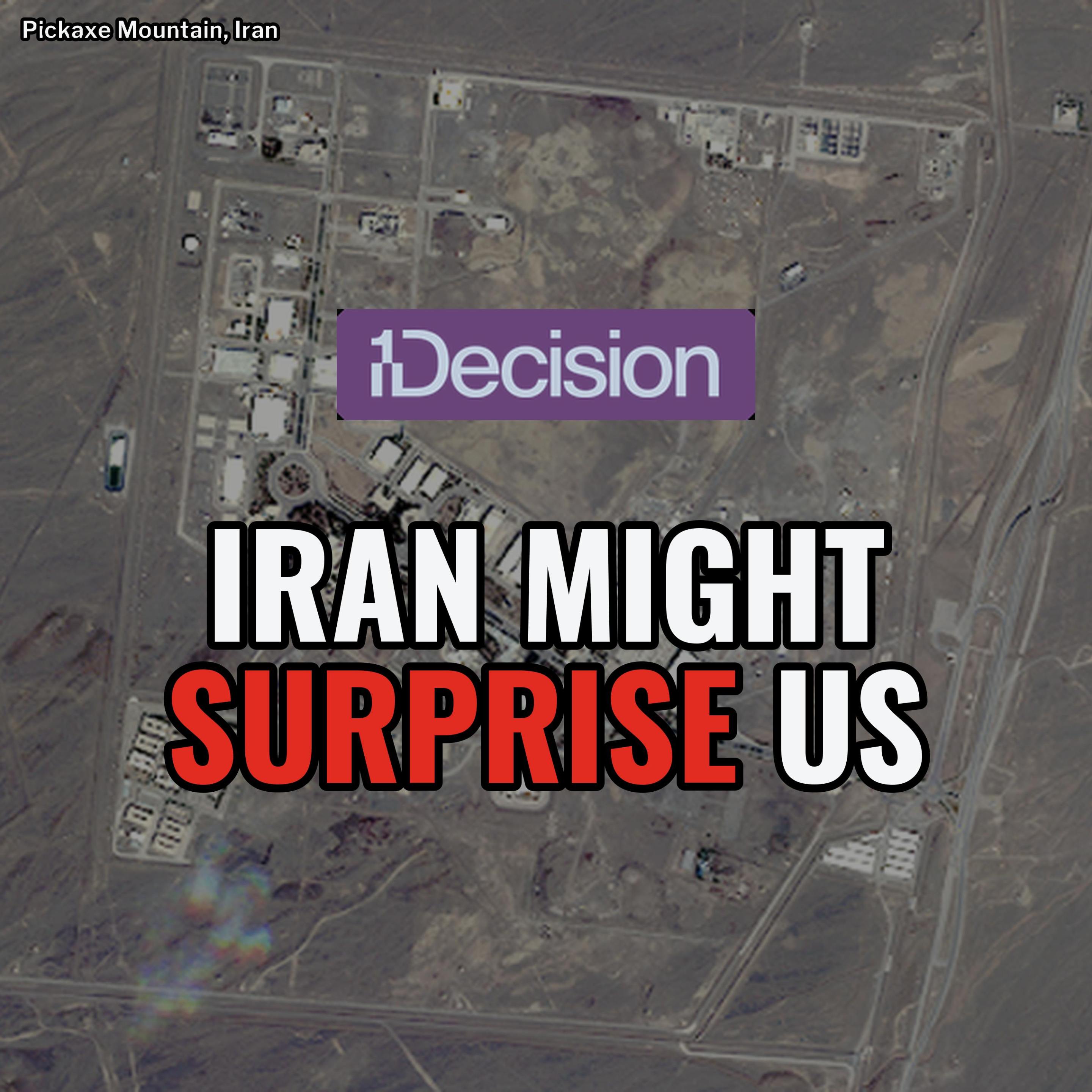
Rule: I think you have two issues here. The first is, what is the status of Iran's nuclear program? The simple answer is Iran's nuclear program looks exactly like what a country would do if it wished to creep towards a nuclear weapons capacity. Iran is currently producing a limited amount of 60% enriched uranium. At that level of enrichment, there is no civilian use that Iran would need. There is some medical isotope possibilities, and there's some military naval propulsion possibilities for which Iran has no capacity. So if I'm saying that Iran is producing enriched uranium at a level beyond civilian capacity, have I just said that Iran is producing uranium at a military-grade level and that Iran is a military enrichment program. Iran has denied the IAEA access, has denied the IAEA information, it has arrayed centrifuges in a way that looks as if it's trying to think about how to more rapidly progress. And last, it's also touched metallurgy. All of those are terrifically bad signs. And the international response was to declare this a crisis until the Iranians were unwilling to negotiate, and then we declared it's no longer a priority. And I go back to my, what message does that send to Israel and the region? But then what does Iran get with a nuclear weapon? And I can't help thinking, and this might be counterintuitive, and Richard, you might have a different view and you could probably be right, you're much wiser than me, that Iran may not need a nuclear weapon to achieve what it seeks. By just holding the program at this point, the entire world is under this sort of Damocles sword, and the world is told if you push Iran on the region or terrorism or hostages or piracy, etcetera, etcetera, they'll make that last 15-foot dash. Better not push because if they make that dash, we then have to do all these other things. All these other decisions land in front of us. So Iran is able to use the current status of this program as a shield against attacks from all these other crimes that it routinely commits.
Dearlove: I agree with this policy of brinkmanship. You don't actually need to weaponize if you're close to weaponization to get the same effect. I still want to ask Norm one last question. I mean, given your knowledge and insight, what do you think happens next? And I'm talking about the short term.
Rule: Israel will conduct some activity it believes to be a Goldilocks zone activity. Iran will test the limits of the new red lines it sees. It's conducted this attack. What other attacks can it do to continue to keep The United States, Israel, United Kingdom and others under pressure in the quagmire in the region? We're going to have to devote a lot more political, diplomatic and military bandwidth to the region. The region has reminded us that The Middle East is in the middle. And it's not just trade, communications, cables, energy, North-South issues. This has pulled the world back into the region. Maybe a good thing.
Dearlove: Norm, it's been a pleasure hearing your analysis. Thank you very much. Very, very interesting indeed and some great insights.
ANALYSIS WITH SIR RICHARD DEARLOVE
Raffini: That was a very in-depth and slightly terrifying conversation. So Richard, what stood out to you the most talking with Norm?
Dearlove: Well, I think of brilliant combination of current analysis and insight into what's happened, some clear predictions about what may happen going forward. But I think the most important thing that Norm had to say was his point about red lines at the beginning and the crossing of red lines. And really, the implication of that is, we have a new security situation in The Middle East, which changes many of the equations on which we've depended since the last major crisis, which I guess was the war in Iraq. And I was also struck by what he said right at the end. And I've made this comment in the past. I mean, what was unique about the period after 9/11 was that The Middle East became central to US foreign policy. And historically, The US had never taken that closer interest, that degree of involvement in the Middle East. What Norm is actually saying, because of the crisis with Iran, make it more general than just saying Gaza because it's a crisis with Iran, that puts The Middle East back into the center of US foreign policy. If that's correct, which I think it probably is, this is a very significant development. I mean, it also means that foreign policy in Washington has to be conceived on two fronts, because it's Ukraine and it's The Middle East. And I think one of the striking things from my own career experience is that even the best and biggest resourced governments in the world find it difficult to handle two crises at once. And that worries me deeply. And I think that personally there is a symbiotic connection between these two crises. It's not a coincidence that Gaza happened whilst Russia is fighting a major war on the European continent. I don't think you can detach the two, and I don't think you can view them separately, although, of course, in terms of logistics and planning, bearing in mind that, you know, war is 90% logistics to crises like this.
Raffini: Even the US government will find it difficult to get its mind around both of them. It reminds me of our conversation with representative McCaul where we were talking about the changes in US foreign policy over the past few years. And when you have a US government that says out loud it doesn't want to send troops into different regions, right, we didn't want to keep forces in Afghanistan. President Biden said right away there will not be US boots on the ground in Ukraine. When there is that vocalized reticence to deploy US forces, do you think it dulls the impact of US objectives overseas because Iran knows that The US doesn't want to send forces to the Middle East again, and Russia knows The US doesn't want to send forces into Europe?
Dearlove: That's true. But what I would say is that we have two formidable, militarily competent allies, which is Ukraine and Israel. What we need to do is to give them the support and the backing that they need to fight effectively. And I mean, it's not just logistics and ammunition supply and resupply at the right time. It's also intelligence coverage. It's also supporting because that's where The US has a formidable capability. Because with US overhead and intercept and all the other stuff, and The UK is not in the same league, but it's not bad, you know, there's a big contribution that could be made which makes a massive, massive difference. And you know, right at this moment there'll be people in Washington watching precisely what Iran is up to. And they will know that better than anybody. But, you know, will the benefit of that be deployed? I'm not so sure.
Raffini: That's it for this week of One Decision. We drop new episodes every Thursday. Like and subscribe so you never miss an episode. Drop us a line, tell us your thoughts, what decisions have impacted you where you live, and you can write to us. Our email is onedecision@onedecisionpodcast.com. For me and the team, thanks for listening, and we'll see you next time.