Episode Info
- Season27
- Episode20
Hosted by Christina Ruffini and Sir Richard Dearlove
Guest
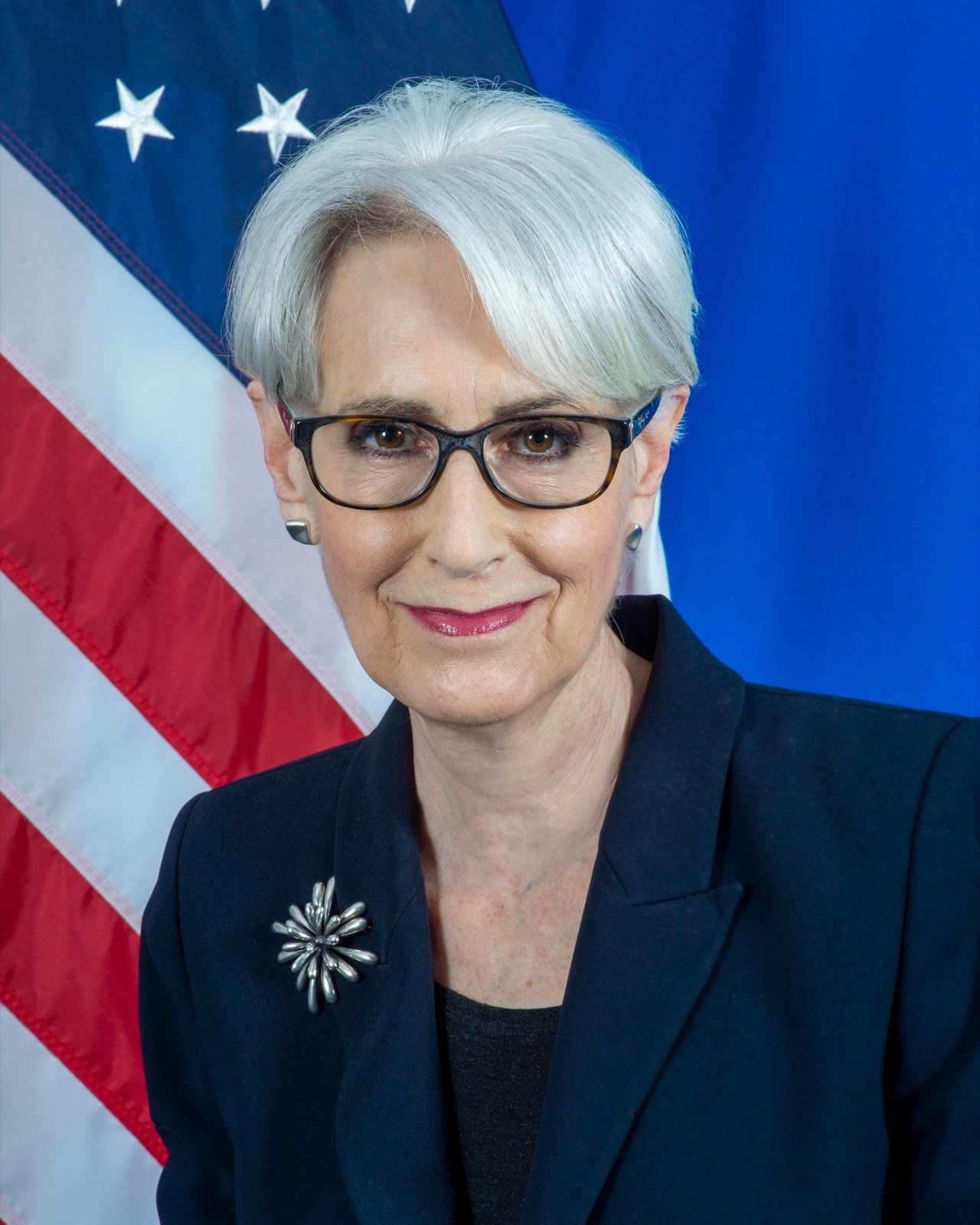
Ambassador Wendy Sherman
Ambassador Wendy Sherman served as the United States' last Deputy Secretary of State and is currently a Joint Senior Fellow with Harvard's Belfer Center and Center for Public Leadership.
Episode Summary
The man who used to be known only as C, Sir Richard Dearlove, analyzes the stunning fall of a half century Assad family rule in Syria. He shares insights on who was behind the successful final push to remove the dictator in Damascus and what's next for the nation. Plus, the former spymaster and co-host Christina Ruffini travel to Harvard University in Cambridge, Massachusetts, for a conversation with Ambassador Wendy Sherman, who served as the United States’ last Deputy Secretary of State. She is currently a Joint Senior Fellow with Harvard's Belfer Center and Center for Public Leadership. They discuss what's driving the recalibration of the world order and South Korea's marital law crisis. Ambassador Sherman also shares behind-the-scenes stories from her diplomatic visits and negotiations all around the world, including the unforgettable incident involving a Chinese spy balloon that was detected in the United States.
Listen & Subscribe
- Watch on YouTube
- Listen on Apple Podcasts
- Listen on Spotify
Transcript
COLD OPEN
Sherman: We want there to be a fair playing field. There's no question that Xi Jinping has said, I want the way I operate in the world to prevail. I want a world order that better reflects my interests and less the interests of the West. And the West has to work together to make sure that that fair playing field stays and that the world order that has managed peace for all these years after the Second World War does not disappear.
INTRODUCTION
Raffini: Welcome to One Decision. I'm your host, Christina Raffini, with Sir Richard Dearlove. That voice you just heard was Ambassador Wendy Sherman, who served as the US deputy secretary of state under the Biden administration. We sat down with her at the Harvard Belfer Center to get some behind the scenes stories from her diplomatic visits and negotiations all over the world, including that time a Chinese spy balloon showed up over the US one day before the Secretary of State was supposed to visit China. But Sir Richard, before we get to our conversation with the ambassador, I want to talk to you about what's going on in Syria. Obviously, anyone who was following the news this weekend saw the somewhat stunning fall of Syrian President Bashar al-Assad's regime. Syrian rebels seized the nation's capital, Damascus, putting an end to thirteen years of civil war and fifty years of Assad dynastic rule, a rule that included murder, torture, and the brutal repression of its own population. One of the most shocking things is how the regime fell with almost no resistance as this rebel group known as HTS, an Islamist militia, rolled through Damascus. Assad fled to Moscow, while the Prime Minister stayed surprisingly and said he would help facilitate transfer of power. Reporters from international television networks, many of whom have been unable to report from Syria during the war, flooded back in to see jubilation on the streets of Damascus. One of them is friend of the show CNN's Clarissa Ward, who was even offered trays of sweet treats and baklava from cars as she's walking down the street asking Syrians what this means for them. Tell me what this feels like. This is absolutely amazing. NEWS CLIP [2:00] After all of these years, we are live on the international TV. This is, this is amazing. This is unspeakable. After fifty years of darkness. This is us after fifty years of, of death. This is absolutely amazing.
SYRIA AND THE FALL OF ASSAD
Raffini: So, Richard, how did this happen so quickly? What do we know about this group, and who is backing them?
Dearlove: Well, I'm pretty sure that the primary backer of the group from Idlib is, I mean, it's Turkish. This is, this is definitely Erdogan. It's Turkish military. It's Turkish intelligence. And they saw their opportunity and, I think, unleashed HTS with all the resources that they needed. I think the timing, obviously, is dictated by the evident decline of Hezbollah and the difficulty that Hezbollah's got since the Israelis took out most of their command structure. And if you go a little bit further round, I mean, obviously, you know, there are a number of related events like Ukraine and Russia. I mean, there was no one there to come to Assad's support or to, to save him.
Raffini: Right. His big backers were Russia, Iran, and Hezbollah, and all three of them have bigger things to deal with right now.
Dearlove: Yeah. And they haven't got the resources and probably not the inclination. But, I mean, I think it's fascinating because I don't think any of us would have predicted that Syria would have imploded quite so quickly and quite so fast. I mean, obviously, Assad's regime was extremely brittle. I mean, that's no question. But not so brittle that we expected it to shatter in a matter of days, which is what it's done. I mean, there are reports of the military taking off their uniforms, chucking them in the hedge, and, you know, and slipping into the civilian population. And clearly, there was no resistance. I mean, they drove down the road to Aleppo. They went down the road to Hama and then on down to Damascus.
Raffini: And the big losers are Iran and Russia, I think, initially, at least. Does it worry you, this particular group that has taken over? Because I think people need reminding this is not the SDF Kurdish-led rebels that the US was helping funnel weapons to at the start of the war. This is a completely different group that is a kind of rebrand of the Nusra Front, which is an offshoot of Al Qaeda. And there's an interesting moment in, Clarissa Ward from CNN was out on the street and one of the rebels would not speak to her until she put her headscarf back on, which I thought was an interesting indication of possibly where things could go.
Dearlove: Yeah. Well, it's a movement that, as you say, sprung out of Al Qaeda and the al-Nusra Front, and its past credentials are extreme Islamists, not just Islamists. So I think that's worrying. The question is, do we take at face value the leader Jolani's statements about incorporating all groups into the future of Syria? I mean, I listened to an interview that's just been given where there's even talk by, I think, one of the military leaders saying that they're gonna hold elections. But it's all very well in Syria to say these things. In practice, to do them is altogether a different issue. It's got such a complex makeup. I mean, Kurds and, of course, you've got to think heavily about the Kurdish element in relation to Turkey. You've got significant Christian minorities. You've got the Alawites in Latakia, which was the heartland of the support for Assad. You've got Sunnis, and then you've got a proliferation of extremists and, and sort of militant groups. So how you pull all that together? But I think one maybe should start off with a degree of optimism. At least HTS has said some of the right things. And certainly in the UK already, there's discussion of whether the government should reclassify them because they're listed as a terrorist organization. But my advice or my public statements have been proceed with caution and wait and see a little bit longer how things turn out before you start changing anything.
Raffini: I also wanna know what you think of these moves by Israel to conduct what they're saying are security strikes along the border, because it is true that Assad didn't control large parts of Syria for quite a while. But now it looks like the Israelis are also seizing some disputed territory on the border. Is that good for stability, bad for stability? What's your take on that?
Dearlove: It's unsurprising. Look, what they've done is they've occupied this strip in the Golan, which divides militarily IDF from Syrian forces. So it's not a very big chunk of land. It's a sort of area of isolation, which was part of the original agreement. So they've obviously taken that over. I think more interesting and perhaps more serious are the hundred plus airstrikes that the IDF have mounted across Syria to take out a lot of the military capability. The Israelis have taken out pretty much all of the Syrian naval ships. They've taken out some of the facilities for manufacturing chemical weapons. I mean, they've attacked a number of logistical military bases where equipment is stored. I think they're taking their chance at this particular point in time, putting down a marker. Look, I'm a cynic a little bit in these areas. I think that Mossad and the Turkish intelligence would have spoken to each other. I think there is probably a degree of, not coordination, but understanding between the two. I mean, to believe there's no contact between them is completely naive. Of course, there are contacts, and of course, they're talking to each other. But where they end up, they're taking prophylactic measures. I think that what Israel's doing has probably got a pretty significant downside in terms of the future, but let's wait and see.
Raffini: How so? What do you mean by that?
Dearlove: I mean, if HTS has a significant part of its Islamist roots there still, the attack by Israelis is a very provocative move for them. So they're not exactly gonna sit down and take a benign attitude towards Israel's interventions. But at the moment, I guess that what the Israelis are thinking, look, our military action is changing the complexion of the Middle East. I mean, that's exactly what's happened. I mean, it's a, it's a great cliche, but the big changes politically often take place either as a result of warfare or as a result of revolution. You know, historically, if you look back, you've got many examples. And, I mean, I think it's incredible the way that the cards in front of us are being reordered. The big question now for me, okay, is how Syria plays out, but what on earth's gonna happen in Iran? Actually, there's a lot of sleepless mullahs at the moment in Iran wondering how quickly they might go down.
Raffini: I've seen a couple, it's memes, it's the internet, but I have seen a couple of things saying Khamenei is next. And I wonder if there's even, is there enough of an organized opposition left in Iran to pose a serious threat? Or is that just something the West wants to believe in and never really formulates? I mean, I think about the Green Revolution, I think about these protest movements that just seem to get beaten down every single time.
Dearlove: Yeah, I think there isn't, basically. I think you're right. I mean, there is opposition sitting across the border in Kurdistan and bits of Iraq, but, you know, where they have protection from, you know, Sunnis. The idea they're gonna roll across the border into Iran, I think, is, is not realistic. But the problem for the theocracy is, is enough of the population come out onto the streets, even that the militia that they've got, which is pretty brutal and pretty extensive, is not necessarily gonna keep the peace. So, I mean, if there were one of these more general uprisings, I think, particularly if the Israelis give it a bit of help, which is possible, not probable.
Raffini: I also wanna ask you what this means for Russia, because I don't wanna draw too strong a line here, but it does seem to show an indication that Moscow is overextended. Assad has flown to Moscow. I can only imagine maybe he's hanging out in an apartment with Julian Assange and the former leader of Ukraine at this point with all the other exiles. But, what does this say about the power of the Kremlin and whether or not Russia is stumbling a little bit?
Dearlove: Yeah. I think it is stumbling. Well, look, Putin was an opportunist. Obama's policy towards Iraq created an opportunity for him and let the Russians in. The upshot was, okay, they became the power that kept Assad in place during that post-2014 sort of uprising against him. And I think Putin probably was optimistic that he had a permanent foothold in the Middle East and never banked with the idea that Assad was as fragile as he is. And I mean, interestingly, you know, there's an intelligence aspect to this because although the SVR, formerly KGB, are very good in certain circumstances, they're also quite good at telling the Russian leadership what they want to hear in a crisis rather than what they should hear in a crisis, and there is a track record of that. And you would have thought maybe that Putin was warned that their position was fragile in Syria. I think it's absolutely fascinating what's happened because things at the moment are going to an extent Putin's way in Ukraine. But at a very moment when the cost to Russia economically, in manpower, in almost every measure, so the measures are bad and poor for Putin, but at the same time, they're occupying more land. So Putin is almost at a point of, let's say, a tipping point in Ukraine, where he could pull it off militarily in terms of gaining significant territory. But the balance is pulling the whole Russian effort in a direction which looks extremely negative at the moment. So I think it's fascinating. And he clearly couldn't afford to put any resources into supporting Assad at all. No doubt, once the cards started falling over, his intelligence people were saying to him, you know, it's irretrievable. Don't bother.
Raffini: Yeah. They seem to have accepted it because there's reports now that they're trying to work with the new leadership because they need so badly to keep their military bases there. They're essentially accepting it and saying, okay, okay, just let us keep our forward operating base. The Russians need those bases for other places like Libya, like other places in the region. They need to have access to those air bases there.
Dearlove: Yeah. Well, I mean, I think in a way, actually, Erdogan will be the person who decides whether they stay or not. You know, we know that Erdogan's relationship with Russia is equivocal. Let's put it like that. It varies from being accommodating and supportive. But if it doesn't suit the Turks, they can be very tough in the other direction. So I think Putin's on thin, on thin ice. Well, there's not much ice in the Middle East, but you understand. So I think they're, they're in a precarious position in terms of both the air base and both the, the naval base on the Mediterranean as well.
INTERVIEW WITH AMBASSADOR WENDY SHERMAN
Raffini: Alright. So, Richard, let's turn now to our conversation with former deputy secretary of state Wendy Sherman. Ambassador Sherman, thank you so much for joining us.
Sherman: Delighted to be with the two of you.
Raffini: Let me ask you both. As you're looking at this semi-crumbling world order, I mean, I'm thinking about what happened in South Korea. I'm thinking about what's happening in Georgia. What is driving that beyond just globalization? What is driving the disintegration or recalibration of the global order and where do you see this going?
Sherman: Well, actually, I think what happened in South Korea is a positive in the sense that the guardrails of democracy held.
Raffini: Yeah. I agree. So to clarify for anybody, the president declared martial law and basically members of parliament from both sides, including some very chic woman in a leather jacket, jumped the gates, grabbed guns out of, out of the hands of military officials and basically voted it down and he's taken it back now. Right.
Sherman: Yes. Because the constitution in South Korea says that if the president declares military action and the parliament overrules him or her, then the president has to accede to that judgment. And that's what happened here in spite of his declaring in the middle of the night. Went on through the night. It was a remarkably awful misstep, and he will surely be impeached if he doesn't resign first. Even the head of his own party has now said and supported impeachment of the president. So in my view, this was just a terrible mistake by a president who couldn't get his budget through, couldn't get the things done he wanted done. Someone advised him to take this remarkable and really egregious action, and now he's going to suffer as a result of it. But the guardrails of democracy held. It was a great lesson.
Dearlove: It was tantamount to a military coup. Yes. I agree with the ambassador. I mean, it's actually a good outcome because the parliamentary system held.
Sherman: It's a very young democracy. And, yes, it has had a lot of issues around corruption, and its presidents have gone to jail. But this was, as Richard said, this was a good example of democracy holding. I've spent an enormous amount of time in South Korea, spent a lot of time as the deputy secretary of state working with South Korea and Japan for a reconciliation, an ongoing trilateral. That relationship is incredibly critical to the security of Northeast Asia. Quite frankly, as bad as it's been domestically for President Yoon, internationally he's done a very good job. He's had a strong relationship with the United States. He agrees with us on the approach to China. He personally was very engaged in this reconciliation with Kishida, who was prime minister of Japan. He supported us on Ukraine privately at first and now that North Korean troops are there, more publicly. So domestically it's been horrible for him. Internationally, he's done a pretty good job. So I don't think he will last. I think that the Democratic Party will likely prevail. He will either be impeached or resign. There will be an election within sixty days and I suspect that the Democratic Party, which controls the National Assembly, their parliament, will prevail. But we'll see. Korean politics are very complicated. You never know until the last minute who's going to win.
Dearlove: Moldova fits the pattern of it turning out okay in the end. Okay. It was a close-run thing, but there's no question that the Russians are trying to shape the political environment in these countries and interfering heavily because they've got, you know, the, the links, they've got the traditions, they've got the connections in terms of what was left over after the Cold War. And they can exploit them, and they're very good at doing that. But they're having problems. And I mean, you know, Serbia.
Sherman: Well, they've also created new relationships with Iran, with North Korea, with the People's Republic of China. And although I think many analysts are overreaching in saying this is a new alliance of adversaries, I don't think it's gone quite that far yet. But we are seeing different linkages. And so we should share some of your concerns about what's going on. We do. We do. Okay, okay. We're not gonna change the system in China. The United States has said quite directly, both Republican and Democratic presidents, you are who you are. We're not doing regime change in China. We couldn't if we wanted to, quite frankly. I think that would be quite an overreach, but we want there to be a fair playing field. There's no question that Xi Jinping has said, I want the way I operate in the world to prevail. I want a world order that better reflects my interests and less the interests of the West. And the West has to work together to make sure that that fair playing field stays and that the world order that has managed peace for all these years after the Second World War does not disappear. That's a hard job, but one that I think we, UK, others are quite committed to.
Dearlove: If you look for the bigger issue in international relations, it's working out what the West's relationship with China is, what's the new security system that replaces Pax Americana, because, you know, that's what we've lived with since World War Two. Broken. It's gone. And we can't not have a relationship with China. What's going to be the nature of that relationship? I think that's the absolutely fundamental point. No one's really cracked that, because the Chinese at the moment are very difficult to deal with, if not impossible. I think Xi is very, very difficult.
Sherman: Yes. I think it's very difficult, but I don't think it's impossible. In the time that I was at the Department of State this time, we actually made progress in building a floor. The floor is made of plywood. It's not mahogany or oak, but there is a floor and there's now a mil-to-mil relationship, which is absolutely crucial. Absolutely crucial. We've made some progress on fentanyl, the precursor chemicals that come out of China that then get assembled in Mexico and, send fentanyl into the United States. We have a diplomatic conversation that is ongoing and, we've really moved past the most difficult place, which was after that surveillance balloon came across the United States.
Raffini: One of the most extraordinary moments. Quite the day. I was at the White House.
Sherman: Quite the moment that I had at the Department of State calling in the Chinese. Secretary Blinken was due to go to Beijing, get on an airplane that night. I actually was going with him, it's quite unusual for a deputy secretary to go with the secretary, but I was the first senior official to go to China in the Biden administration. And so I had to call in the most senior Chinese person who was there, who was, I think, political counselor as I recall, there was no ambassador at the time, the chargé was out of town. That poor guy came in, woman came in I think it was, and I demarched her, told her that we knew it was a surveillance balloon, that we were going to postpone this trip by the secretary. Then we had engineered it so the secretary would walk into my office and repeat the demarche. That poor Chinese official then had to go back to the embassy and report, through the echelons of China about what happened. It was a very difficult time and things were frozen for a while, but we got past it. So I agree with you. It's a very difficult relationship, but I also agree with you, Sir Richard. It is essential. It's essential. No option. The first time I met with my counterpart in the European Union, Stefano Sannino, to do the US-EU China dialogue, we couldn't discuss Taiwan. By the third meeting, we not only were discussing Taiwan, but it was in our press statement.
Dearlove: So we've come a long way in sort of meshing together our approach because, in fact, there are economies in Europe which are incredibly dependent on China. Totally. And this is why it's not the Cold War. I mean, it's a completely different situation because there was clear separation during the Cold War between, let's say, the Warsaw Pact economy and the West. But China is not like that. We're intertwined.
Sherman: Yes. We're intertwined. We're also in a technological age where AI and quantum and biotech are going to really rule our future. And China is absolutely critical to that because it holds critical minerals, it holds chips, semiconductors that are important to what we do. It's why we are onshoring and nearshoring, trying to anyway, all of these elements of the future that are critical for the United States, critical for the UK, critical for Europe, critical for the entire world.
Raffini: One of the things I think has been interesting about covering the China policy under the first Trump administration, the policy itself was actually fairly consistent. It was the rhetoric that seemed to change. What do you foresee Trump 2.0's approach to China being and where are your concerns about how that relationship might go?
Sherman: China is and has been a bipartisan issue on Capitol Hill. I think putting export controls on some of the high-tech exports to make sure that we can compete is critical. I'm glad that the European Union has followed suit, maybe not all the way, but to a large extent.
THE JCPOA AND IRAN
Raffini: I know Sir Richard wants to pick your brain about the JCPOA negotiations and how that went down.
Dearlove: Yeah. I'm just, well, I'm very interested in the JCPOA. I'm not an enthusiast.
Raffini: That's the Iran nuclear deal in case you're not as big a nerd as the people at these tables.
Dearlove: Yeah. Why? You know? Because when I was head of service in that period, I mean, it was Hans Blix's IAEA inspections and all of that. And, I mean, my perception of that period is that we had tremendous run around with the Iranians just trying to cheat and mislead us. It was very, very difficult to see that there was any real sincerity at that stage in their negotiating position, because all they were doing was, as it were, going along with the inspection regime, but breaking it in every possible way that they could. You know, we had a means of trying to make Blix, as it were, a more efficient inspector.
Sherman: Though the JCPOA put on monitoring technology that hadn't existed in the time of Blix. That technology would have given us an incredibly early heads up if in fact they went out of what they had agreed to. For instance, on what's called uranium accounting. When the uranium comes out of the ground and then goes through the process, there was a way to monitor whether what came out at the end matched what had gone in at the beginning. And that uranium accounting, as I recall, went on for twenty five years. So there were a lot of controls and a lot of technology that allowed us to know what they truly were doing, very different than the time of Hans Blix. We worked very hard, not only with the European Union, but with Russia and China, to get the Joint Comprehensive Plan of Action. Then Donald Trump was elected president and he withdrew. And from there, things have gone from bad to worse in that they now are up to 60% in enrichment and probably could get to 90% and enough for a nuclear weapon, quite quickly within perhaps two weeks, enough enriched uranium, what we call breakout time. So we're in a really bad place. But it's very interesting to me. Just the E3, that is the UK, France and Germany, met with Majid Ravanchi who's the Deputy Foreign Minister who was one of my counterparts. The current Foreign Minister in Iran, Abbas Araghchi, was also my counterpart during the negotiations. So I know these two gentlemen extremely well. Spent twenty-eight days in a hotel with them. So the E3 met with Ravanchi. The report out is obviously they talked about how to begin negotiations again. And the interesting part is part of the Joint Comprehensive Plan of Action, which has never been derailed completely by the E3 or Russia or China, has a backstop in October 2025 when what's called snapback can be used at the United Nations to throw out the deal and reimpose everything on Iran. So it puts pressure, if there's going to be a negotiation, for that to happen between now and October 2025. And, the president-elect has said that he wants to negotiate with Iran and get an even better deal than we could. I can't wait to see that. It takes a long time to do these deals. They are very complex. And now there's a lot of pressure that if there's a negotiation, it's not only a negotiation about Iran's nuclear program, but about their presence in the Middle East, their actions in Syria, in Yemen, in Gaza, in Lebanon, their proxies. To do all of that is even more complicated and more difficult. And when you negotiate with all of that on the table, it means that Iran could say, well, we'll give a little less money to Hezbollah, but we want an ability to do more on the enrichment side on our nuclear. So it makes it a much more complicated negotiation.
Dearlove: Iran's sort of strategic position has massively weakened over the last eighteen months. The sort of arm's length wars that they've been conducting through proxies have really had their bluff called in a manner that I think none of us quite expected to happen. I mean, the other thing about the JCPOA, which I didn't like, was I felt that the Iranian theocratic leadership felt, right, we've done a deal with the West on the JCPOA. We're off the hook. And then they shoved all of this, you know, strategic effort into the Hezbollah, Hamas, you know, driven by the IRGC. So they took it as a sort of laissez-passer for total mayhem, and they have been the source of mayhem in the Middle East. Suddenly, that strategy has been pulled apart, perhaps not with the Houthi, but certainly with the other two movements. So I think now, probably, the leadership in Iran is feeling extremely vulnerable. The last Israeli attack, you know, in response to their attack on Israel, took out some very strategic assets. And I think they're probably beleaguered. And if there were another exchange between Israel and Iran, goodness knows what would happen to the Iranian side because their air defenses are down. The Russians can't replace them. Kharg Island is vulnerable. The leadership is probably vulnerable.
Raffini: Would you have withheld weapons from Israel in order to force their hand on humanitarian access?
Sherman: I think that's very difficult to do. We have an alliance with Israel. We have a commitment to Israel. And we have a commitment to help them in their defense. And so I think that would be very difficult. We did hold back on the 2,000 pound bomb and that in and of itself caused a tremendous pushback. So I think it was very difficult for the Biden administration to do other than they did. What I do wish we had used some levers for was to increase the humanitarian access.
Raffini: What was the worst diplomatic meal you were ever served? Or the best.
Sherman: The most difficult was when Madeleine Albright was Secretary of State and I was her counselor, we went to Pyongyang, we went to North Korea. And we had a banquet in which they served fried pigeon brain. And one must always taste, so that I would say was the most challenging meal that I had to face.
Raffini: What did it taste like?
Sherman: I don't even remember. I tasted as little as possible.
Dearlove: So, that might win. I was with Tony Blair after 9/11 when we went to Saudi Arabia. The plane was late, and there was a state banquet with the king and, you know, all the royals. And the state banquet had to be held, so we sat down at the table. And every time a plate was put in front of you, you picked your fork up. The plate was whipped away, and the next plate arrived because everything was late. Everything was late, and they wanted to get through the banquet.
Sherman: Listen. They served you that banquet. You can't say you didn't have the banquet. So sometimes we eat for our countries, and sometimes we starve for our countries. We don't eat our countries.
Raffini: That was perfect. Thank you both so much.
Sherman: Sure. Take care.
Raffini: Thanks for listening to One Decision. Make sure to subscribe and give us a review on Apple or Spotify.
Mccabe: If you like the conversation, check out a previous episode with Sir Richard Dearlove and former FBI director Andrew McCabe. I'm always more concerned about the Russians because they think they kind of forge the path. Right? This is not new. Their interest in just simply selling chaos and division and polarization, that's, if they can do that, it's a win. If they can actually hurt a candidate they don't like or help one that they do like, that's an even bigger win. Of course, to unlock more exclusive content, get timely updates on crucial global events, and listen in on meaningful conversations with thought leaders, be sure to check out onedecision.com.
Raffini: I'm Christina Raffini. Thanks for listening.