Episode Info
- Season27
- Episode16
Hosted by Christina Ruffini and Sir Richard Dearlove
Guest
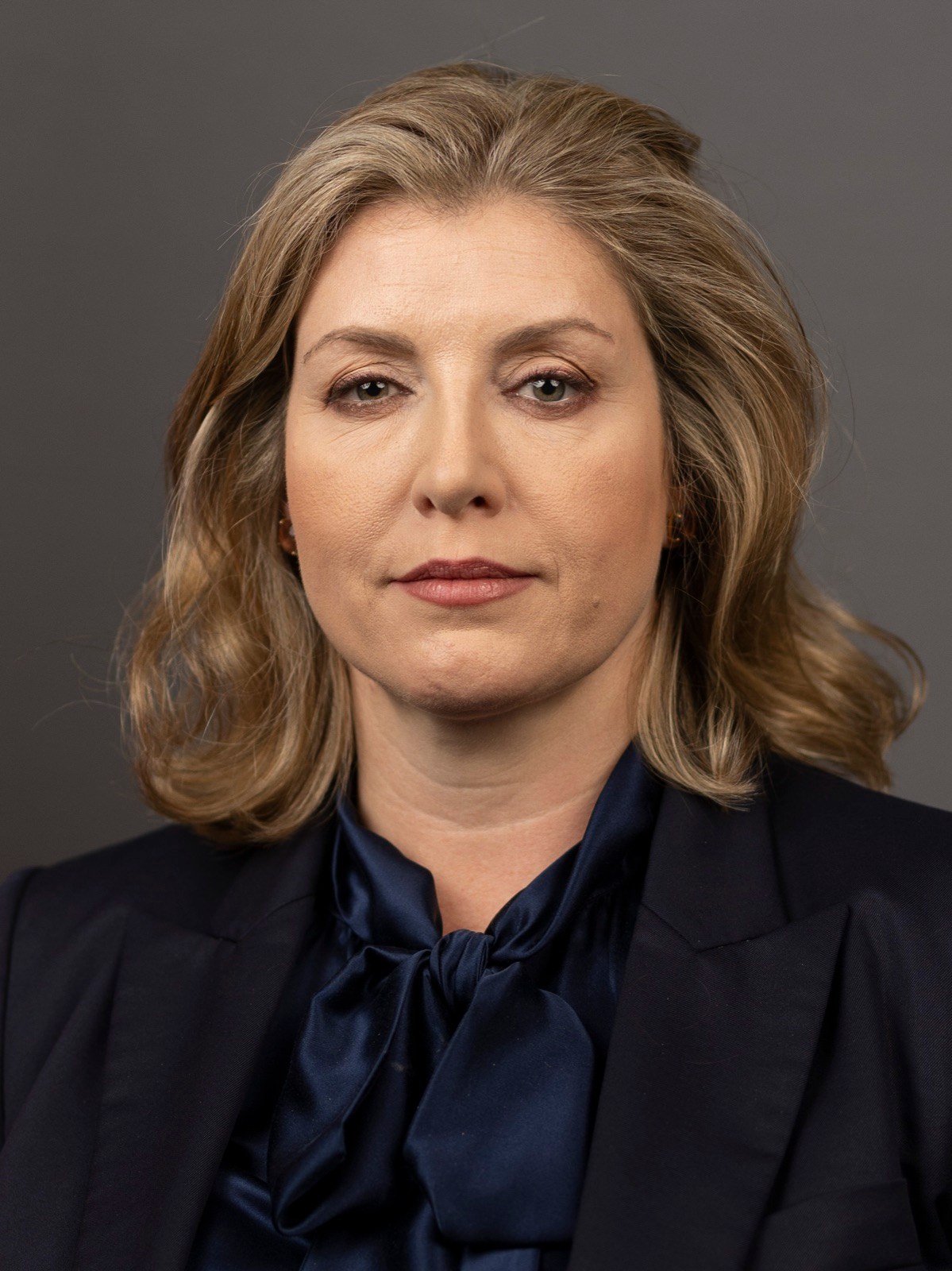
Penny Mordaunt
Penny Mordaunt is the UK's former Secretary of State for Defence who played a key role in King Charles III's coronation and advocates for Ukrainian defense spending.
Episode Summary
In this week’s episode, One Decision’s Kasia Madera speaks with our resident spymaster, former Chief of Britain’s MI6, Sir Richard Dearlove, to talk about what President-Elect Donald Trump’s next term could mean for relations between the United Kingdom and the United States, and what his Cabinet picks could mean for the future of global affairs. Plus, the UK’s former Secretary of State for Defence, Penny Mordaunt, joins the conversation to discuss the state of the UK’s Conservative party, the importance of defense spending for Ukraine, and the case for Israeli defense. Mordaunt played a key role in King Charles III’s coronation and shares her thoughts on the significance of ancient English traditions.
Listen & Subscribe
- Watch on YouTube
- Listen on Apple Podcasts
- Listen on Spotify
Transcript
COLD OPEN
Mordaunt: You need to trust the Ukrainians to defend themselves in the best way they can. And it is it is not right in my view that you tie their hands in their ability to prevent strikes being taken against their civilian population. You deny them the ability to stop that happening.
INTRODUCTION
Madera: That was Penny Mordaunt, former UK Secretary of State for Defence and former Conservative candidate for prime minister. Now we recently sat down with her to discuss the current state of global affairs, including the war in Gaza and the war in Ukraine. But since that interview was recorded, the United States elected its forty seventh president, a return for Republican Donald Trump. So before we get into that conversation, I want to catch up with my cohost, former head of British MI6, Sir Richard Dearlove, to discuss what the recent US presidential election could mean for diplomatic relations between the US, the UK, and the EU. So, Sir Richard, what does a second Trump term mean for that special relationship between the UK and the US? Because as you and I both know, every British leader regularly refers to that special relationship which was coined by Sir Winston Churchill after the end of the Second World War.
Dearlove: Well, possibly very well is my view, and that may surprise you. Certainly, it worked extremely well during the first administration, whatever people may have said who didn't really understand what was going on behind the scenes. And the other point I would make, which I think is really important for the UK, is that neither Biden nor Harris, as far as I know, were, and certainly not Obama, were particular friends of the United Kingdom. Trump's attitude towards the United Kingdom is really quite different. You have a sort of nostalgia on his part, not just that his mother came from the croft in Scotland, which I always think is a rather remarkable fact. You know, his affection for the Queen, the success of his visit, his fascination with the royal family. I mean, there are a lot of things that play in the UK's favor, and I think one should, as it were, look at this partly as a challenge, but also as a pretty positive opportunity.
Madera: But, of course, the first time around, we had a completely different government in the UK. We had a Conservative government. This time around, we have a Labour government. And already, we know that the current Foreign Secretary, David Lammy, when he was a backbench member of parliament back in 2018, he described Donald Trump as a tyrant, as a woman hating neo-Nazi sympathizing sociopath. He's not backing down in the sense that he hasn't apologized. He's describing this as old news. But going forward, those kind of comments, will that work for Donald Trump, or will he take it personally?
Dearlove: Yeah. Okay. Lammy does carry quite a lot of baggage. He was fond before he became an eminent politician of shooting his mouth off and saying some pretty idiotic things. The other point I would make is that when foreign secretaries visit Washington DC, they don't necessarily see the president. In fact, they rarely see the president. That is, as it were, a meeting that takes place at the top level. I mean, Blair to Bush, Starmer probably to POTUS forty seven as he now is.
Madera: So are you concerned about what we're seeing in terms of Donald Trump's appointments? Yet to be confirmed, but arguably, we're seeing the Florida senator Marco Rubio will become the Secretary of State. Now, we're seeing a shaping of US foreign policy to come under Donald Trump, because let's face it, Marco Rubio, he was hawkish when it comes to China. And he was really quite adamant that there would need to be a negotiated settlement when it came to Ukraine.
Dearlove: Trump is not one of the fighting parties. He's the, if you wish, he's trying to put himself between them as a moderator. There won't be an agreement unless Ukraine agrees to it, and there won't be an agreement unless Russia agrees to it. We have to bear that in mind. I do see Rubio as, at least in terms of this European conflict, as something of isolationist, and I think that's problematic. But we did have a podcast with Rubio because I did ask him about Ukraine.
Rubio: I think Trump, based on what I know about him and what I know about him now, would view an all-out Putin victory in Ukraine under his watch to have been a failure, to have been a a show of weakness. And so I don't think, no matter what the rhetoric may sound like, and he's been pretty opaque about what it means, and I think deliberately so, I don't think he is someone that sort of views that any sort of Putin victory in Ukraine would be something that he would be in favor of.
Dearlove: I think one point that it's important to make about Trump is that does Trump want to start his administration with a foreign policy catastrophe on his hands as Biden had in Afghanistan? And I mean, let's face it, Biden was determined to get America out of Afghanistan. Okay. Inherited a deal which had been partially negotiated with the Taliban by Trump's administration, but it was a mess, and his reputation suffered very badly. So I think the point that Rubio is making is interesting because Trump will not, I mean, he'll want to portray himself as a tough, strong president. So maybe we have to wait and see how he's gonna play his hand in relation to Ukraine. We all have to accept that at some point there will be a negotiation. This conflict cannot end, in my view, with a military victory.
Madera: I wonder, are we seeing a general move when it comes to incumbent governments, incumbent administrations, an anti-incumbent wave just happening across the globe? Because it's not just in the United States where the Democrats lost. It happened here in the UK. The New Zealand Labour Party didn't win. Japan, we saw the same thing. South Africa, we saw the same thing. I wonder this idea of voting someone out or voting a party out rather than voting someone in. It's an act of almost punishment for the incumbent. Can that encourage good leadership if regardless whatever you do, if you're a good leader, a good party doing good things, the punishment is you get voted out.
Dearlove: Well, I think, yeah, we've certainly seen that happen in the UK with the vote against the Conservative Party, bearing in mind the right wing is split between two parties. And I think in the United States, well, the thing that I've, and I'm reasonably a frequent visitor to the States, but I mean, the thing that I found most striking when I was there in the summer was the inflation, particularly inflation of day to day food prices. I've always, you know, considered, you know, living in the States, which I've done quite a lot, the everyday needs are quite competitively priced. There's been a massive, although you've got this reasonably successful economy under Biden, for ordinary working people, the price in the supermarkets is absolutely stunning. And remember that the minimum wage in the States is really low in comparison to what it is here in the UK. So I think the recipe there for Trump's victory was pretty obvious, and I was not surprised by what happened at all.
Madera: So is it the economy stupid?
Dearlove: Well, it's certainly the economy stupid when it comes to the ballot box. Yes. And bear in mind that not many American voters are worrying too much about what's happening overseas. And most people, when they vote, they're not thinking about foreign affairs. I mean, you know, I'm a bit freakish in that respect if you compare me with an American voter. I'm worrying about that all the time. But they're worrying about the dollar in their pocket and going shopping at the supermarket and, you know, what their electricity is gonna cost and their rent and the petrol in their cars.
Madera: So Sir Richard, you mentioned there, consumers and the goods that they have in their shopping baskets. And that kind of brings us nicely to this idea of what will happen once Trump is in the White House when it comes to the UK. What kind of agreements will we see? Are there trade deals? And obviously, you and I both know that a lot is spoken about when it comes to the standard of foods in particular in the United States, and arguably a lot of people are worried about chlorinated chicken.
Dearlove: Yeah. Well, it's all been sort of focused around this previous debate about chlorinated chicken, which seems to me rather a distraction.
Madera: So just to explain, chlorinated chicken is basically washing chicken or washing foodstuffs in chlorine. There's concern that it's used to hide poor hygiene practices.
Dearlove: Now the UK has banned chlorinated chicken and also hormone injected beef, and is committed to not removing those bans in any trade deals. If you look at the opportunities under Trump, it's much more likely that UK gets a trade deal. Look. The first thing that Biden did when he got into office was to suspend the negotiations with the UK over a trade deal. He hated it. Trump's attitude is completely different, and I've already seen reverberations from people who are gonna hold office under Trump saying he's gonna put this back on the table immediately. The UK is gonna be faced, or Starmer's gonna have a very difficult choice. Whether we orient ourselves in terms of privilege trade towards North America and the idea of sort of North American Free Trade Association, which presumably would incorporate Mexico and Canada, and to an extent, the UK. But it holds out big benefits for the UK in terms of, let's say, the non-realization of the Brexit opportunities. And there's no question that Trump and Trump's administration regards the EU as a rather tired, unimpressive trade cartel, and we have the benefit now of being outside it. I think the problem for Starmer is gonna be how, if he's trying to improve relations, particularly on the trade side with the European Union, but he's gonna have a clear choice to make. And I think it's easy to see which the best choice is going to be. And, I mean, we could end up with, you know, more of a vision of post-Brexit, which I would call Singapore on Thames, which is what the Europeans were absolutely terrified of, was to have a low tax administration in London, particularly in terms of corporate tax, trading with the US as a privileged partner.
Madera: Just in terms of that kind of one big decision that president-elect Donald Trump will face once he's in the White House, what do you reckon, Sir Richard?
Dearlove: I think the big issue, the big decision for Trump himself is trade and tariffs. That characterizes him as a politician. And if you look at his political career, he has been completely consistent on the issue of how he views trade. And the idea of, you know, 60% tariffs on China, 20% on everybody else, I think that's a negotiating position. But it's going to sort of characterize most of his transactional relationships with, let's say, the important economic partners of the United States. Now I think that's the, if you say one decision, that's the one decision which is going to be focused on in the White House.
INTERVIEW WITH PENNY MORDAUNT
Madera: Sir Richard, let's get into our conversation with the UK's former Secretary of Defence, Penny Mordaunt. Now just to add, this conversation was recorded before the key presidential election of the United States. Penny Mordaunt, welcome to One Decision. What is life like after politics?
Mordaunt: Well, I've discovered I have these things called evenings, which is rather nice. I was usually at my desk in the House of Commons until, god, midnight most nights. So that's very nice.
Madera: When it comes to the direction of the Conservative Party, of course, we've gotta talk about the person that appointed you as the leader of the House of Commons. Of course, it was the former prime minister Liz Truss. How is the Conservative Party coming back from the mini budget, the mini fiscal event that basically included the biggest tax cut since 1972, and then it ended up in a bit of a nightmare for the UK economy. That's to put it mildly. Kwasi Kwarteng was talking to One Decision in a previous podcast, and he admitted that mistakes were made during that period.
Kwarteng: And it was clear to me that, you know, her pitch to the members was we can't keep doing the same thing as far as the economy is concerned. That was pretty much her central message. And I think what happened was having won pretty decisively the leadership campaign, I think that was the moment when we should have really slowed everything down in the way that you go, but I think we went the other way.
Mordaunt: So, look, I think that the support that Liz Truss had during the leadership contest was, to a very great extent, built on her complete focus on growing the economy, on really doing the things that are going to unleash the talent that we have and also enable us to have the security we need to have the prosperity that we want. I think the party membership bought the arguments that she was making. But what then happened was something that I think you can't blame the whole of the party for. And it's very difficult because not even the whole of the cabinet sees what's in a budget before it's published. You're not taken through it line by line. I apologize for what happened at the time. I think it was a terrible thing. It is going to take a long time, I think, to build back from that. What is going to win that trust back is our actions. It's demonstrating the reforms that we want to see, demonstrating that we're listening to people that are subject matter experts, the business community in particular, who we've not really been the party of business, I think, for a long time.
Dearlove: Penny, now that we've actually seen the latest Labour budget, which is pretty stunning, the irony is that Liz Truss's budget doesn't look so bad, if you see what I mean, when you put the two side by side. The markets have reacted well with significant restraint and, to a degree, with suspicion to Rachel Reeves's budget. So it looks to me as though the whole debate really is shifting because there was nothing to compare Liz Truss with, where you had that disaster. But I mean the disaster was in the markets really, wasn't it? It wasn't a political disaster initially.
Mordaunt: With any budget you need prepare people for what you're doing within the confines of the rules around the budget. But I think you also have to ensure that giving some hope bluntly to whether it's the city or whether it's a small hospitality business in Portsmouth. I think the Labour budget that we just had, it was a very significant event because even though lots of people were saying Labour have had a very rocky start with what they did on things like the winter fuel payment, with a lot of the criticism about being tough on thuggery, I think amongst the public, they were okay with the action that was taken, that getting really tough on people who were basically doing thuggish behavior on our streets. What the budget has done, I think, is to confirm for everyone that this is a socialist government through and through. On any measure, on anything that you're wanting the numbers to go the right way on, they're gonna go the other way in a short space of time, highest tax burden and slower growth. And that's not what the nation needs now. So I think the budget was very significant because I think the public were kind of keeping faith with Labour until that point.
DEFENCE AND UKRAINE
Dearlove: Penny, can we go on to another issue which you know a lot about, which is defence and defence expenditure? And obviously it's of huge interest to me given my background. I mean one of the things that really worried me about this new government is the slowness with which they're picking up the defence issue. It's clear that we need to increase defence expenditure, and there seems to be an indication of willingness to do that. But by the time you've had a defence review, the time the expenditure's been increased, it's going to take several years to have any impact on, let's say, the size and capability of our armed forces. So it seems to me that this crucial issue, given the state of international security, particularly in Europe, is being, I can see politically why, but I would have thought one of the first duties of a government is the security of its nation. And this seems to me to be being pushed down to second place.
Mordaunt: Yes. It is hugely concerning and I think we've got a sort of holding line. But you're right. It's a holding line. It's the status quo while a review is done. And we really can't afford to hang about on this. We've got some very serious capability gaps. And as you know, our armed forces do an amazing job trying to plug those gaps via other ways and working with our partners and allies. But it's also about the message we send to the industries that support our defence sector. And even a small delay, that's a delay on investment. It's a delay on innovation, which is so critical. We've got to transform some of the things that we do in defense by just an immeasurable amount. I have to totally rethink how we approach some of these issues. And so any delay to that, any delay in assurances about the budget, not just in the next year but in future years as well, is problematic. You can't hang about on this. It's a message that is said almost every day in every broadcast, in every newspaper. We are at an inflection point and we have to keep driving that message home to those that are now in power. We have to invest in defense. It's necessary. And it also is a smart thing to do in terms of your economy.
Dearlove: Is there a specific area of defense where you identify a really urgent and serious shortfall?
Mordaunt: So I think across all of our platforms, I've always said this, that there's not enough resilience. Building resilience, that's the most immediate and critical thing. But we have to double run. We have to really invest in new capabilities and new innovations whilst keeping these things going. I've long spoken about the overlap between defence and the humanitarian space. There were lots of organizations that would be able to ensure we had a good volume of ship visits, that we could cover off humanitarian and disaster relief support, all of those things by government enabling other people to do those particular roles. And that could be through some shipbuilding guarantees, helping underwrite projects, but also just providing a mechanism that enables these partnerships to happen more easily. If we think we wanna carry on doing those, we just don't wanna do them with the public purse. We have to enable others to pick up that and to be able to do those things.
Madera: You get a sense of your frustration when it comes to delays over defense spending. Also, I know that you're openly frustrated about the fact that the UK hasn't given permission for Ukraine to use those Storm Shadow missiles within Russian territory. Now Mark Rutte, new head of NATO, has said that it's up to individual NATO allies to decide how weapons are delivered into Ukraine, how they can be actually used. So I just wonder when Ukraine received these Storm Shadow missiles from the UK back in May 2023, why wasn't that permission given then?
Mordaunt: I can understand people's concerns about how things are going to be interpreted or escalation, but I just think we need to get real about this. I know that other colleagues and former colleagues who have held positions in defense share this view. You need to trust the Ukrainians to defend themselves in the best way they can. And it is it is not right, in my view, that you tie their hands in their ability to prevent strikes being taken against their civilian population. You deny them the ability to stop that happening. And if you keep people's hands tied in that way, this is not going to be a good outcome at the end of this conflict. You have to do things which create the best conditions possible for this to end well. And I think allowing a degree of flexibility for the Ukrainians in that is critical. They are the most immensely stoic nation. I was recently in Kyiv. Every other night you would get up at two and go to a bomb shelter. Everything's running. Restaurants are running. Businesses are running. And that's fine in Kyiv because they have enough warning that they can do that. But every single day there are other parts of their territory who have no decent warning are being targeted and with, I'm afraid, considerable numbers of civilian casualties. The only way to stop that is to allow the Ukrainians to stop those strikes taking place. And so I think we should be more flexible.
Dearlove: But looking ahead politically, I mean, you've got, in Germany, Scholz's government falling apart politically. You've got the threat in France of Marine Le Pen maybe being the next president, but certainly her party being important in future French politics. And then if you put Trump on top of that, you could have three countries in which the enthusiasm for support for Ukraine is going to be significantly diminished politically. And I mean, I think it's that that worries me or people like me, in that our firmness and the firmness of many members of NATO to support Ukraine, we risk losing some of the most important players?
Mordaunt: Well, we have to work hard to keep that alliance strong. I think we are going to be having to prioritize geographic areas as well as capabilities in the defense review. It makes sense that that should be our top priority, I think. That's fairly uncontroversial. And America will probably want us, Europe, to do more heavy lifting in that respect. I mean, NATO, I think, has gone through a bit of a reinvigoration because of what has happened. And we just need to build on that. Britain is well placed to be making the case and showing the leadership that we have historically in that alliance. I'm probably a bit more optimistic than you about that, but it has to be a priority. It won't happen by accident. It needs to be a clear plank of our foreign policy going forward. And I think if we can do that, it will help us with the US too. I mean, the other thing I would just say is whether it's on defense or other aspects of our foreign policy and development, I think the UK needs to make sure that we are still in step and working hand in glove with the United States. I think there is a trend under this current government to break away from that. And I think we need to keep that strong. So even though we might be focused on slightly different geographic priorities, our policy, our doctrine, our shared vision, our partnerships, that needs to be maintained with the United States.
THE MIDDLE EAST
Madera: I wonder if we could just touch upon the Middle East and how this plays into what we're seeing globally as well. Because of course, we know the situation on the ground, whether it's Gaza or Lebanon, it's a really complicated and a difficult situation. How do you resolve that?
Mordaunt: How long do we have left on this podcast? Look, we know that this is pragmatically incredibly difficult because if you have a route map to how this can be resolved, the key decision makers in it are highly politically constrained. And so this is very difficult. But I think the thing that we just have to bear in mind in all of this is how those attacks on the October 7 dramatically changed the course of action that Israel was taking. They very understandably and rationally decided that if they were not going to have that happen again, they needed to take a course of action. And that is playing out now. At the heart of resolving this, de-escalating this, is the recognition that Israel has to have that security. We've obviously had seen terrible scenes. Enormous numbers of lives have been lost. Israel is a nation that cares about international humanitarian law. After every previous conflict, it's published its policies. It's published its actions so that they can be scrutinized. Nations that don't give a stuff about those things don't do those things. But it is now in a space where it believes that unless it takes these actions, it cannot secure its people. And I think that just has to be recognized in any plan for this to be resolved.
Dearlove: Penny, the last Israeli strike in response to Iran, I understand, took out most of its air defenses. It seems to me that this exchange between Iran and Israel is probably unfinished, and that, you know, there is a window there which Netanyahu will probably exploit before you have a complete change in the US government or change in US government policy. You know, this latest deployment of B-52s to the Middle East too is rather worrying. So it seems to me that we're sitting still on the cusp of an escalation. It may be that there's an opportunity here for the West, motivated by Israeli policy, to think, start thinking about regime change in Iran? Am I overplaying this?
Mordaunt: Well, look. I think that we recognize and are absolutely in step and understand why Israel is doing what it is doing. It is addressing some of the issues which have been in the sort of too tough in tray for us and our allies for a long time. And I think in moments like this, there are opportunities. But what I think you also have to recognize is that this is not a situation that is going to be resolved through military action. I mean, just to give you a sort of brief statistic, the capability that Israel has eroded since it started this action has degraded about 50% of Hamas' stockpiles, the hardware that was potentially going to be used against it. But it has made a tiny dent in the number of operatives, the number of people who wish it ill. This is about an ideology as well as hardware and those capabilities. I have been a staunch supporter and have defended the actions that Israel has taken because it is a rational, a terrible, but a rational response to the threats that it faces. Just like a lot of things that we did in the Second World War, which had immense numbers of civilian casualties in German cities, were a rational response to a situation that we were facing. But I think we also need to recognize that it is the degrading of that military capability and that terrorist capability is only part of what is required for Israel's security. They know that. But they are very understandably taking this course of action in response to that atrocity.
THE CORONATION AND ANCIENT TRADITIONS
Madera: Penny, I have to ask you, as leader of the House of Commons, you also had what's described as an ancient role, Lord President of the Privy Council. Now, just for an audience who perhaps don't understand what that means, just talk us through it because you were very much center stage of King Charles' coronation. For anybody who's seen the images, you were there walking ahead of him carrying a sword, a sword that if anybody hasn't seen it, it's just it's encrusted with diamonds, rubies, emeralds. I mean, give us a glimpse of what that was like.
Mordaunt: What a shift I had. It was the most amazing time. The Lord President role is in effect you chair the King's Council of Ministers. So that council performs all sorts of roles. We swear ministers in. We make them Privy Councillors. We do all sorts of other business. We tried to have a Privy Council with the Queen and the following day, she passed away. And we'd identified the moment that we lost the monarch as a moment of real peril for the country. It was actually in our national security document, the integrated review, as a moment of real danger for the nation. It wasn't a foregone conclusion that the King would be accepted. We didn't know how it was all going to work out. And so the accession council for me was a rather pressured day because this was before the period of mourning, the funeral, and then that incredible outpouring of love that we saw for her late majesty. And so after I delivered the accession council, I came outside into St James's Palace yard and I was tucked behind a pillar with Sir Robert Buckland. And we were watching the proclamation the King had just commanded be delivered for the first time, which set off that cascade of proclamations across the country. And then the guards there did three cheers to the King. And as they were cheering the King, I could hear over the palace wall thousands of people who were lining the Mall all across St James'. It was at that moment I knew it was going to be alright. I don't know how I knew, but I just thought, no, this is going to be alright. And both Sir Robert and I shed a tear because it was a moment of immense relief. And of course what followed was wonderful. And I think the King was welcomed and felt very supported through that whole period of very public grief for him and his family. And then at the other end, the coronation, which was just the most remarkable day. I just felt very honored to be part of it. I was very struck that these traditions and ancient ceremonies, which sometimes very unmodern and out of date, these things really help us through traumatic times, turmoil. And I think that these traditions help us as a nation move forward. They help us modernize. I think they're really important to our culture, but also our ability to move forward with the times as well.
Dearlove: How many hours did you spend in the gym preparing to carry the sword of state, which I've told weighs ten?
Mordaunt: Ten, as a Royal Navy reservist, sword and drill training. I used to stand on Whale Island on Tuesday nights in the pouring rain and be saying to myself, why am I doing this? And on that day, that question was answered.
Dearlove: Well, you were a national hero, if I might say so.
Madera: You touched upon the fact that these are ancient traditions and they help a country through. Sir Richard, you were obviously knighted by her late majesty, the Queen. Just explain the kind of feeling that you have when you are in this kind of process that is so historic, so old, and it's happening to you within that moment.
Dearlove: Well, it's a very special moment indeed. But I so much agree with what Penny is saying, this mix of preserving tradition in a country which is going through huge social, technical, political change. And to have those anchor points, I think, is very important for our national identity. And I think the majority of the population really understands and appreciates that, particularly at times when you might say there are sort of tensions which penetrate socially and cause problems. So it's really important that we retain this mix, and I think it's a very successful blend, and, thank goodness it's still there.
Madera: It's been an absolute pleasure to hear those reflections and memories from both of you. Sir Richard, thank you. Penny Mordaunt, thank you very much for speaking to us here on One Decision. Thank you. Thank you, Penny. Thanks for listening to One Decision. If you enjoyed this conversation, check out a previous episode with Sir Richard Dearlove featuring senator Marco Rubio.
Rubio: So I think we have to find a policy moving forward that doesn't deplete us and at the same time preserves our credibility on the world stage and does not allow Putin to be rewarded in a way that would encourage others to take similar action.
Madera: To unlock more exclusive content, get timely updates on crucial global events, and listen in on meaningful conversations with thought leaders, be sure to check out 1decision.com. I'm Kasia Madera. Thanks for listening.