Hosted by Christina Ruffini and Sir Richard Dearlove
Guest
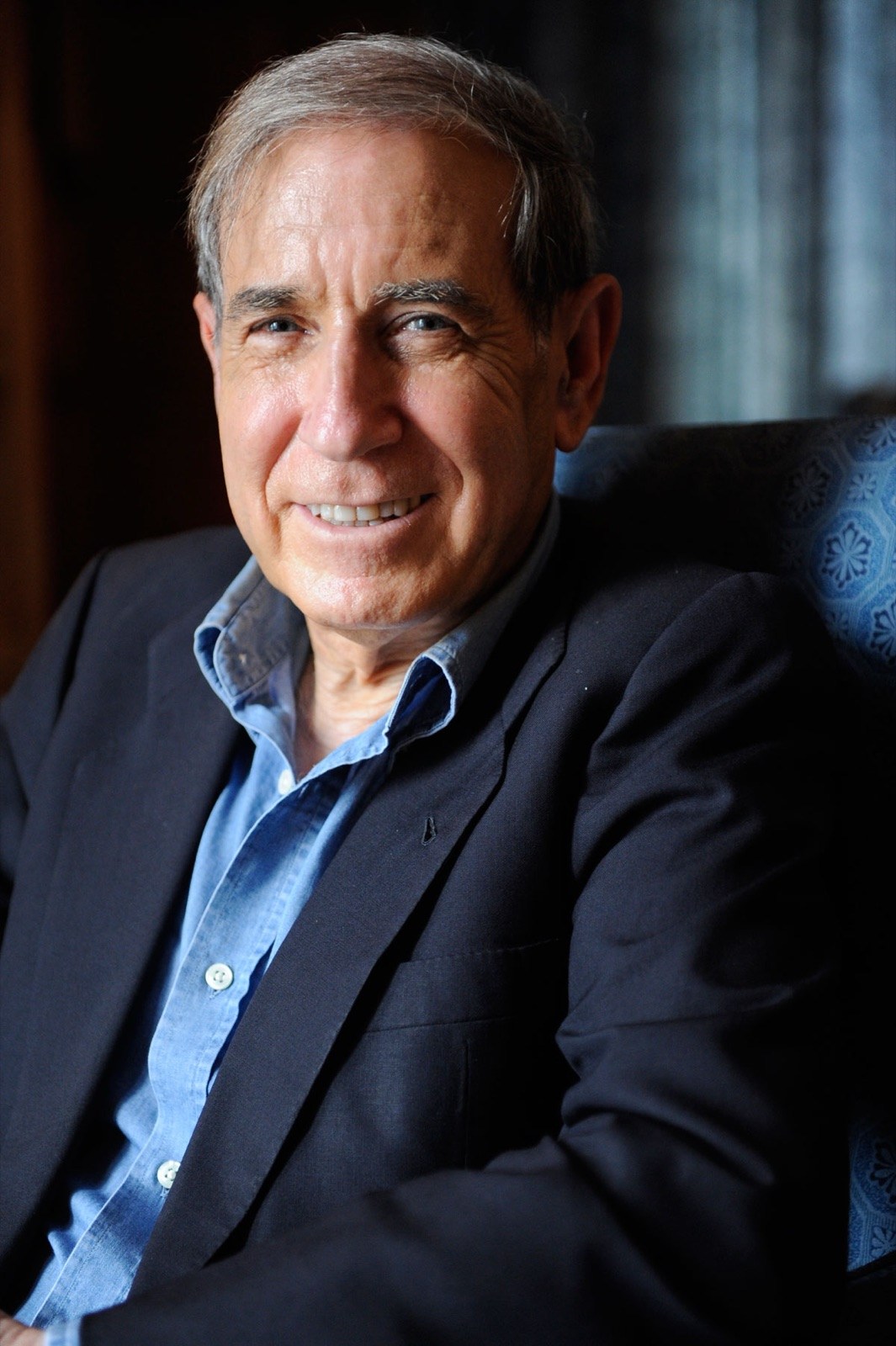
Shlomo Ben-Ami
Shlomo Ben-Ami is a former Israeli Foreign Minister who was a key figure in the Camp David Summit of 2000. Shlomo Ben-Ami discusses why a potential peace negotiation between Israel and Hamas has taken so long and what could lie ahead for Gaza.
Episode Summary
In this week’s episode of One Decision, host Christina Ruffini and resident spymaster Sir Richard Dearlove, former head of Britain’s MI6, sit down with former Israeli Foreign Minister Shlomo Ben-Ami who was a key figure in the Camp David Summit of 2000. They discuss why a potential peace negotiation between Israel and Hamas has taken so long, what could lie ahead for Gaza, and how the landscape of Middle Eastern politics could change in the wake of a new Trump administration. Plus, Christina and Sir Richard dissect the political ramifications of the new ceasefire deal, including the hostage situation, the role of foreign intelligence in negotiations, and President Trump’s unprecedented foreign policy transition.
Listen & Subscribe
- Watch on YouTube
- Listen on Apple Podcasts
- Listen on Spotify
Transcript
COLD OPEN
BEN AMI [0:00] They didn't want to face the rage or the unpredictability of Donald Trump. And I think he was a major factor. It was that Trump effect, in my view, that did the job here.
INTRODUCTION
Raffini: That was Shlomo Ben Ami, former Israeli foreign minister. We recently sat down with him to talk about Israel's foreign policy following the attacks of October 7, what the options are for a permanent solution in Gaza, and how the landscape of Mideast politics could change with the new US administration. I'm Christina Raffini and this is One Decision. Since the recording of that conversation, Hamas and Israel have reached a tentative ceasefire deal. The agreement is not drastically different from what the Biden administration proposed back in May. However, in an unprecedented move this time, representatives of both the outgoing and incoming US administrations were involved in the talks, something President Biden acknowledged when announcing the deal from the White House yesterday.
Biden: I knew this deal would have to be implemented by the next team, so I told my team to coordinate closely with the incoming team to make sure we're all speaking with the same voice
Raffini: because that's what American presidents do. The agreement, which still has to be finalized and ratified by the Israeli parliament, involves several stages including an initial release of about 30 hostages as well as Palestinian prisoners, a partial withdrawal of Israeli forces from Gaza, and a surge of desperately needed humanitarian aid. Shlomo Ben Ami was a key figure in another Israeli Palestinian negotiation twenty five years ago at Camp David during the Clinton administration. He's intimately familiar with this issue and talked to us about why a peace deal has taken so long and why Netanyahu, despite his reluctance, has finally agreed this time around. Let's take a listen.
INTERVIEW WITH SHLOMO BEN AMI
Raffini: What is the impetus here? Because for so long, he has been one of the obstacles to getting this peace agreement. What has changed in the last month, two months? Is it he's afraid of what Trump might do when he comes into office? Because he seems like he has a strong ally there. I know he's getting pressure from the Biden administration, but, you know, so what? They're out of here. What do you think has moved with Netanyahu's calculation? BEN AMI [2:16] You know, we have here the case of a presidency that started before it start. All the regional actors are getting ready for Trump. They preparing for Trump the best Middle East they can produce. So you see the Saudis and the Qataris and the Turks now engaged in Syria in the reconstruction of Syria. The Qataris finally started to put tremendous pressure on Hamas because they were those who financed Hamas with Netanyahu's consent, by the way, with Netanyahu's encouragement. And the headquarters of Hamas are in Doha, in Qatar. And therefore you could see all the actors, including Egypt, coming to the moment of truth. They didn't want to face the rage or the unpredictability of Donald Trump. And I think he was a major factor. It was that Trump effect, in my view, that did the job here.
Dearlove: Shlomo, if you separate the politics, I know this is artificial, the sort of politics of Israel from, you know, the events in the Middle East. I mean, Netanyahu, in his sort of extraordinary determination, has, let's face it, turned the Middle East upside down since the October 7. So the consequences of the conflict that he initiated and he has led has really almost completely changed the political outlook in the Middle East. Is this an achievement? Is it an accident? Is it I mean, how has this actually come about? BEN AMI [3:59] Yeah. Yeah. You're right. You're absolutely right. But I think it is the iron law of unintended consequences. You cannot explain Syria without Gaza. What happened or in fact, not only Gaza. You can't explain Syria without Israeli military exploits against the ring of fire that the Iranians built around Israel. That was an extraordinary success, militarily speaking. And the weakening of Iran, I mean, Iran itself was humbled by Israel's air force. Today, Iran is practically exposed to Israeli air attacks. And therefore I think that this has weakened Iran in its capacity to help the Syrians. Russia, for different reasons, is busy in Ukraine. And Turkey did a good job in preparing the militia of Jolani. And you have here the case of Turkey. To me, it's fascinating. The case of Turkey is of a major power that was snubbed by Europe. And after being snubbed by Europe, it came to the Middle East in search for a role. It wasn't given a role. I mean, the parties, the Egyptians and others didn't want to let Turkey play the major role that Erdogan had in mind as the broker of an Israeli Palestinian peace probably, or a player in the major conflicts of the region. Don't underestimate the fact that there is here a conflict or a divergence between the fact that the Middle East is an Arab Middle East, and you have Turkey, Iran, and in a way Israel that are non Arabs. That are three major non Arab powers in the region. You know, in the 1950s, Ben Gurion, the founder of the State of Israel, created what it was then called the Alliance of the Peripheries. That is, we had an intimate alliance with Turkey and Iran. The idea then was that we need to strike a deal with the minorities in the region in order to protect ourselves from the majorities. Now, the whole concept of peacemaking is the other way. We need to make peace with the majorities, and we are in conflict and tension with the minorities, with Turkey and Iran, but in peace with the Abraham Peace Accords, with the Arabs. The only stumbling block for an ideal Middle East is the Palestinian problem.
Raffini: Yeah, but that's a large block, right? That is the block. That is less of a block and more of a boulder mountain sized behemoth. BEN AMI [6:57] It is. It is indeed. It is indeed. Contrary to some of my colleagues, I don't think really that Donald Trump is a hip shooter. I mean, he looks like a hip shooter. He behaves like a hip shooter, but there is an idea behind what he is trying to do. I think that globally speaking, he is a sort of traditional American isolationist, speaking always about the Monroe Doctrine and now Greenland, you know, he has his own near abroad. That's Greenland, that's Panama, that's Canada, etcetera. I think there is an idea behind it. And in the Middle East, he has the legacy, he has produced the legacy of the Abraham Peace Accords that Biden wanted to develop further and did not succeed. Even in the conflict with China, he represented a shift in American foreign policy. In the Middle East, we see him trying to extend the Abraham Peace Accords to Saudi Arabia. The condition that the Saudis would put is that they want to see a solution to the Palestinian problem, precisely because of the Gaza war. The Gaza war has given a greater volume to the Palestinian issue. And the question is what kind of a solution it would offer to Palestine.
Dearlove: In the light of what you're saying, how is this three way relationship going to work out? I was thinking between Saudi Arabia, Egypt and Turkey, with this sort of revival of Ottoman presence in the Middle East, which is, as you know, a pretty extraordinary event. Are they gonna cooperate in finding because those three powers really would be the makers of a Palestinian settlement of some kind. And I mean, what I find extraordinary since the October 7 is that the Saudis and the Egyptians have been almost completely silent. They haven't done and said anything. They just kept out of the way. BEN AMI [8:53] I think that they were silent because they were praying in silence for Israel's victory. I mean, Hamas, the Muslim Brotherhood, is their enemy, and the Muslim Brotherhood is closer to Qatar and Turkey. So these are more or less the camps that developed around the war. But now it seems to me that the parties are coming, in my view, are coming to their senses. And I explain what I mean by that. Let us start with Turkey. You see that it's not only that, you know, until very recently, there was a struggle between Russia and Iran who would get the lion's share of the business pertaining to the reconstruction of Syria. Now we have the answer. It is Turkey and the Saudis. And it is so extremely important for Erdogan to have Syria as a stable satellite or client state as it were, that he is trying to reconcile with the Kurds inside the PKK. He has started a couple of weeks ago.
Raffini: Yeah, but he's getting a lot of pressure from the US government to play nice with the Kurds. That's something that they've been Yeah. Absolutely. BEN AMI [10:11] But he also understands that if he has a problem, the conflict with the Kurds intensifies. This creates a problem for Jolani because there is no way that Jolani can govern, can rule without the minorities, without some equilibrium among the minorities. And the Kurds are a very important minority in Syria. So I think he's trying to sort of smooth the way for Jolani because he needs a stable Turkey. And the Israelis on their side are also challenging the Sykes-Picot order. I mean, the century old political border system in the Middle East. The main problem is how is he going? How is Trump going to square the circle? Extend Abraham Peace Accords to include Saudi Arabia and find a solution on Palestine that Israel could live with. You see, a Palestinian state, as the Palestinian would like it, a sovereign Palestinian state on the borders of 1967, frankly, I don't see any political constellation in Israel that can live with such a solution. And given the experience from Gaza, the requirements that Israel might have on security issues in such hypothetical Palestinian state would be such that would make the Palestinian wonder what the hell is this? Is this a sovereign state? I don't see that intrusive security arrangements that Israel would insist on with regard to the Palestinian state would be such that would be difficult for the Palestinians to digest. But it's not only the question of security that there were so many issues that all US presidents and prime ministers since Rabin have struggled with and were not successful in resolving. Maybe the Saudis would accept a formula that says that we are going to go now as a first step to the reconstruction of Gaza and open horizons of discussions for the future Palestinian state without having to commit Israel at this stage on divisive issues such as borders and Jerusalem, not get yet into the details of daunting, really, process.
Dearlove: But the logic of what you're saying, Shlomo, in the longer term, and I really mean in the longer term, is really a one state solution. Is that completely dead impossible? BEN AMI [13:02] I think that one state solution is a suicide for Israel. I think you will see, in my view, there are others that idealize the one state solution. If I have to give a prediction, I think what we would see at some point, if Israel has in a year or so a center left government, I can see a situation whereby such a government would try to negotiate a two step solution. If it reaches the same dead points as we have reached when we negotiated, and it sees that it cannot find a workable solution, a viable solution for both parties, I can see such a government conducting a unilateral disengagement from the bulk of the West Bank, a convergence plan when you dismantle much of the settlements and bring them back into the borders of the wall. If this happens, Jordan would be drawn into the business of West Bank. If Israel fails to reach a settlement with the Palestinians, it should withdraw to secure and non recognized borders. So the secured part will be implemented, but not the recognized part. And this is something that Israel would have to discuss later on at some point with a Jordanian Palestinian state.
Raffini: I did want to ask you, you wrote recently, and tell me I'm getting the gist of this wrong, but Israel's current policy trajectory is putting its relationships with Europe, with the US, with support from especially young Americans and Democrats at risk. Do you think Israel's action last few months has made it safer in the long run or has put the self determination and the status of the Israeli state in jeopardy? BEN AMI [15:03] It has done the two things. I think it has made her safer in the region, in the Middle East, because I think that the performance of its military on the one hand, and the unacceptable brutality of her offensive in Gaza, the Carthaginian destruction of Gaza is of such a dimension. Thousands upon thousands of Palestinian civilians that were killed is such the message that Israel conveys is don't mess with us.
Dearlove: The reordering of the Middle East hasn't yet finished because the big question now is what next in Iran? And that almost is the key piece if you're talking about Sykes-Picot and, as it were, whether that arrangement of the Middle East actually works. It's only really worked when Iran and Saudi Arabia were both allies of the West. Now what next for Iran? BEN AMI [16:05] Well, I think that that's a question that should be put more to Donald Trump than to the Israelis. I don't think that the Israelis will dare attack the nuclear installations without a green light from Donald Trump. And I don't think that he's going to give such a green light. I think that he's thinking of a new, a different nuclear agreement with the Iranians.
Raffini: I don't know about that. I covered the last Trump administration. They are the ones who pulled out of the JCPOA. They were very into sanctions and deterrence and not so much into wanting to talk. I mean, it's always possible that ball has changed a little bit, but I haven't heard anything different from Rubio, at least not yet. He'll be the incoming secretary of state. BEN AMI [16:51] Yeah, you are absolutely right. But you see, this is my interpretation of this guy. He's a deconstructivist. I mean, he deconstruct in order to presumably construct. I mean, that has been his way. Now, he managed to deconstruct by withdrawing from the nuclear deal, but he didn't have the time. I mean, four years is the term that he had. He disengaged from the agreement in 2018 and he left office in 2020. Now the conditions exist for reconstructing. And I believe that this is his ambition. You have here one of the most unlikely figure for an American president, on the one hand, that would like the legitimacy. I think that he wants to see the enlightened communities to grant him the legitimacy that he deserves. And I truly believe that he is dreaming of a Nobel Peace Prize, probably. I mean, he thinks that the Abrahamic support, some sort of interim stabilizing agreement on Palestine and a new nuclear deal with Iran. So if he manages to put together another nuclear deal, I think we are in a different Middle East, in a new Middle East for the better.
Dearlove: Well, Shlomo, I think you've given us the most cogent and extraordinary analysis of the way that the tectonic plates in the Middle East have shifted so significantly since October 7. And, you know, you've certainly helped me have a clearer view of what the future options might be. And I think it is an extraordinary situation, particularly the way that the Ottoman presence politically has been revived in the Arab world. I find that probably the most extraordinary development, particularly given that Erdogan was the carrier of the torch. And in my view, he's not the most admirable of politicians. But having nearly lost the last election, he seems to have ended up in a rather favorable position politically.
Raffini: I joked when Turkey wanted Patriot missiles, the US wouldn't sell them to them. So then Turkey went out and got these S-400s from the Russians, and it was a big thing because they had the F-35 program. And NATO was saying it's a security risk, you can't keep, you know, working on the F-35s if you have these S-400s. And I was asked to explain what was going on. And I said, well, basically, it's that scene from the Julia Roberts pretty woman movie where she goes into the boutique, and they won't let her shop. So she leaves and goes to the other store and comes back with all the bags and say, you wouldn't let me shop here. Big mistake. Huge. And walks out. And that was like, it's a bit of Erdogan's, you know, foreign policy approach, lack of nuance in Julia Roberts reference. That's an embarrassment of riches. BEN AMI [19:46] Israel is the only country that doesn't have that embarrassment because Israel without the West, and this is why Netanyahu's performance is so disastrous for Israel. Without America, we don't have an option to play between powers. We are with the Americans and behaving the way that Netanyahu behaved towards Biden and the Democratic administration is self defeating in the long run.
Raffini: Alright, gentlemen. Thank so much for taking us through all that. BEN AMI [20:23] Well, thank you very much.
ANALYSIS WITH SIR RICHARD DEARLOVE
Raffini: All right. So Richard, we've been talking about these negotiations, which have been on and off, on and off, on for months. And one of the things I keep hearing from sources in the room is that when they negotiate with Mossad and get a deal with Mossad, that's more reliable than what happens when that interlocutor goes back to Tel Aviv, presents it to the government, and that's where it all falls apart. Have you been in any kind of these negotiations where intelligence agencies are involved? Can you explain to me the role they kind of play in something like this? It's a little confusing.
Dearlove: Well, the answer to your question is yes. I have been. But there are often what I would describe as different levels of diplomacy, particularly when you're involved in negotiations with enemies. Do you see what I mean? So in terms of negotiating over Gaza, I would imagine that the intelligence links, let's say, between Qatar, Israel, then the dialogue that would go on between Mossad and Saudi Arabia, the Egyptians. I mean, it's well known that these links exist, but I think that they gain huge importance when traditional diplomacy, which isn't often that discreet, it's got this sort of public dimension. When you need other channels, then those channels can become highly influential. And usually, they run pretty much from well, in the UK, it's maybe the chief talking to the prime minister with other people present. I certainly found myself in some very extraordinary situations when I was chief, which were fascinating and thoroughly enjoyable. And the other advantage of that link is the government can sort of deny that it exists, and they don't have to admit to it. So there's sort of dimension for discussion, which is off the map, but can be very influential, particularly in times of sort of crisis or conflict.
Raffini: But it seems to me there are two ways. If you're a head of state and you're trying to negotiate with an adversary, there's two ways to use your intelligence arm. Right? You can do it the way that the Israelis have been doing it a little bit in the Middle East is to have your head of the intelligence service go and be the one doing the negotiation, or you can have someone like you in a back room when you need to go get a check on the BS you're being spun at the table, run back, you know, try to get the lay of the land and come back. Is one of those more effective than the other? Does it depend on the situation?
Dearlove: Well, I think it depends on the situation. They both run in parallel. And, you know, you might be there to say, well, you know, that's bullshit. And then the other thing, you excuse my language on the podcast. But I think the other thing you've got to remember is it's quite possible in these very tense and high risk situations that there may be intelligence sources involved which are bearing down on day to day events.
Raffini: How do you mean?
Dearlove: Well, I'm gonna have to leave you to interpret that. Surely, you'll pick it up. So there may be aspects of the negotiations where you're well aware of what the other side's position is, and it isn't necessarily being stated perfectly.
Raffini: I mean, but then what is your role? Is your role to be there in the room to call bullshit, or is your
Dearlove: Very seldom you're gonna you're hardly ever gonna be in the room.
Raffini: Okay. No. No. No. So it's one of those I know that you know that they know, and we know they know we know, but we're gonna say the thing anyway. I mean, and I, you know, I can think of all sorts of situations. Give us one anecdote that you think you can share about some sort of similar situation. You can change names and locations in decades.
Dearlove: Well, various events in Serbia and during the bombing of Serbia by NATO, there were some quite tense and difficult situations around that in which intelligence played an important role. And I'm not gonna go much further than that. I'm gonna have to leave it to your imagination.
Raffini: Oh, fine. When you look at this potential agreement, are there elements of it that stand out, and are there elements to you that seem to be missing?
Dearlove: Well, the one thing that I'm not clear about, and this came out when we were talking with Shlomo, which he made this point about the essence of Israel's commitment to its citizens and their recovery, you know, from kidnaps or points of crisis. Does this agreement cover all remaining living hostages or not? Because if it doesn't, it falls short on that principle, and the risk must be that, you know, it won't meet anybody's expectations if there are still going to be hostages held inside Gaza.
Raffini: I mean, talking to state department officials, US intelligence officials, they don't wanna give a number. They never like to give numbers. You know? If an embassy is under siege, they don't like to give a number. With hostages, they've given us estimates. I'm not sure they have a do you think they have a hard number? Do you think they know every single person who was taken on that day and their status?
Dearlove: No. I don't think they do. I think they will be down to a margin, but there will be a margin which lacks clarity. But the whole thing about this ceasefire I mean, I have been skeptical it will hold. But in terms of what we've just heard, maybe we are at this point. Of course, it's only going to be a forty day, forty two day agreement, isn't it, initially? And I mean, I was quite surprised by what Shlomo was saying about Israeli withdrawal. I mean, that sounds to me incredible.
Raffini: I am still wondering other than the incoming Donald Trump, I can't think of what else would make the Netanyahu government, which has been incredibly resistant to these kinds of agreements and these, you know, these particular capitulations, what would make them all of a sudden agree. Can you?
Dearlove: No. I just don't see where that comes from even if Trump's pressing hard. Because I think it's pretty clear that if this agreement goes through, it's gonna collapse Netanyahu's government.
Raffini: I mean, has someone made the calculation that that's a fait accompli?
Dearlove: I don't know. But I mean, that, you know, that's the because if Shlomo hadn't said that, my next question was, well, you know, it's gonna collapse the government. So what the hell is it gonna happen after? Netanyahu has the option to put together a new coalition, but I wouldn't have thought that's going to be feasible possible.
Raffini: There's also the question of what comes after not just in Tel Aviv, but in Gaza, and that doesn't seem to be a discussion. I mean, the Biden administration, Blinken had kept saying one of the reasons he made all these trips to the Middle East, I think partially to cover up the fact that nothing really was moving as far as negotiations was to, he said, talk about what comes after day one in Gaza, how they rebuild, who's paying for it. There's been almost nothing tangible coming on that side. And as we were just discussing, there doesn't seem to be a realistic one state solution. There doesn't seem to be a realistic two state solution. There doesn't seem to be a solution unless you know, there's something I'm missing.
Dearlove: No. You have some sort of frozen policed conflict. You know, there are precedents. You've got a situation like that in Cyprus. You've got a situation like that in Korea. You are probably gonna have a situation like that in Ukraine. To an extent, you've got a situation like that in Ireland, almost, in that the sixteenth and seventeenth century still identify the shape of the two parts of Ireland. And, you know, there was never a solution. There was an agreement, but it didn't actually solve the problem of integrating these two communities. So, I mean, I think that there are historical precedents that give you maybe the concept that there could be some sort of geographical physical arrangement on the ground, but no actual political solution other than some sort of security guarantees.
Raffini: We are six days now away from the Trump administration. They're building the risers behind me on Capitol Hill. It seems like I don't remember an incoming administration that has changed foreign policy before even taking office to this extent. I mean, I've been talking to ministers from various countries. They've almost all come in to meet with Keith Kellogg, to meet with Rubio, to meet with Brian Hook, to meet with these officials who are going to be shaping foreign policy for the next administration. Is that unprecedented to you? Does that seem normal, or is that explain that to me. Why do you think that's happening?
Dearlove: Well, it's totally abnormal. That's a really good question, and, actually, it's quite a difficult question because the surprising thing about Trump to Biden first time around I mean, there was continuity in aspects of Trump's foreign policy. So I think what we're witnessing is international anxiety about the unpredictability of the Trump administration and the peculiarities of some of the people being recommended for key positions. And, okay, if I were in office still, I you know, I'd be rushing around trying to make sure I had my foot in various doors so that I was gonna be reasonably well positioned when the music changed.
Raffini: So you think this is even happening between intel agencies? You think they're doing something similar, we're just not seeing it? Or you would be, at least.
Dearlove: Yes. I would definitely be. I would make sure that I had, you know, already spoken quietly. But I mean, in a way, the UK has a unique opportunity in Washington because it has the sort of arrangements for access that aren't really offered to many other countries because of the special relationship, the keystone of which tends to be through the intelligence and security agencies. So they have the ability to talk in ways that maybe other bits of the government you know, the two governments don't.
Raffini: I heard a very Oxbridge sounding BBC reporter at the start of the Biden administration say Americans were sick of exciting. They wanted the presidential equivalent of smooth jazz, something they could put on in the background, set it, and just forget it. And to your point, I guess we're back to rock and roll.
Dearlove: It's unbelievable. I mean, it's a, you know, it's a political upheaval.
Raffini: Well, get your dancing shoes ready. Sir Richard, we'll talk to you soon.
Dearlove: Yep. Yep. And we're gonna have, you know? We're gonna have plenty to talk about. I think it's gonna be a busy year.
Raffini: Thanks, everybody. That's it for this week's episode of One Decision. If you enjoyed this conversation, check out a previous one Sir Richard Dearlove and I had with Doctor Majid Al Ansari, advisor to the Qatari Prime Minister. AL ANSARI [31:48] We will not be used as political bags. We will not be blackmailed within the process of mediation, and we do not want to be a force for prolonging this war rather than ending it.
Raffini: And of course, to unlock more exclusive content, get timely updates on crucial global events, and listen in on meaningful conversations with thought leaders, be sure to check out onedecision.com. I'm Christina Raffini. Thanks for listening.