Hosted by Christina Ruffini and Sir Richard Dearlove
Guest
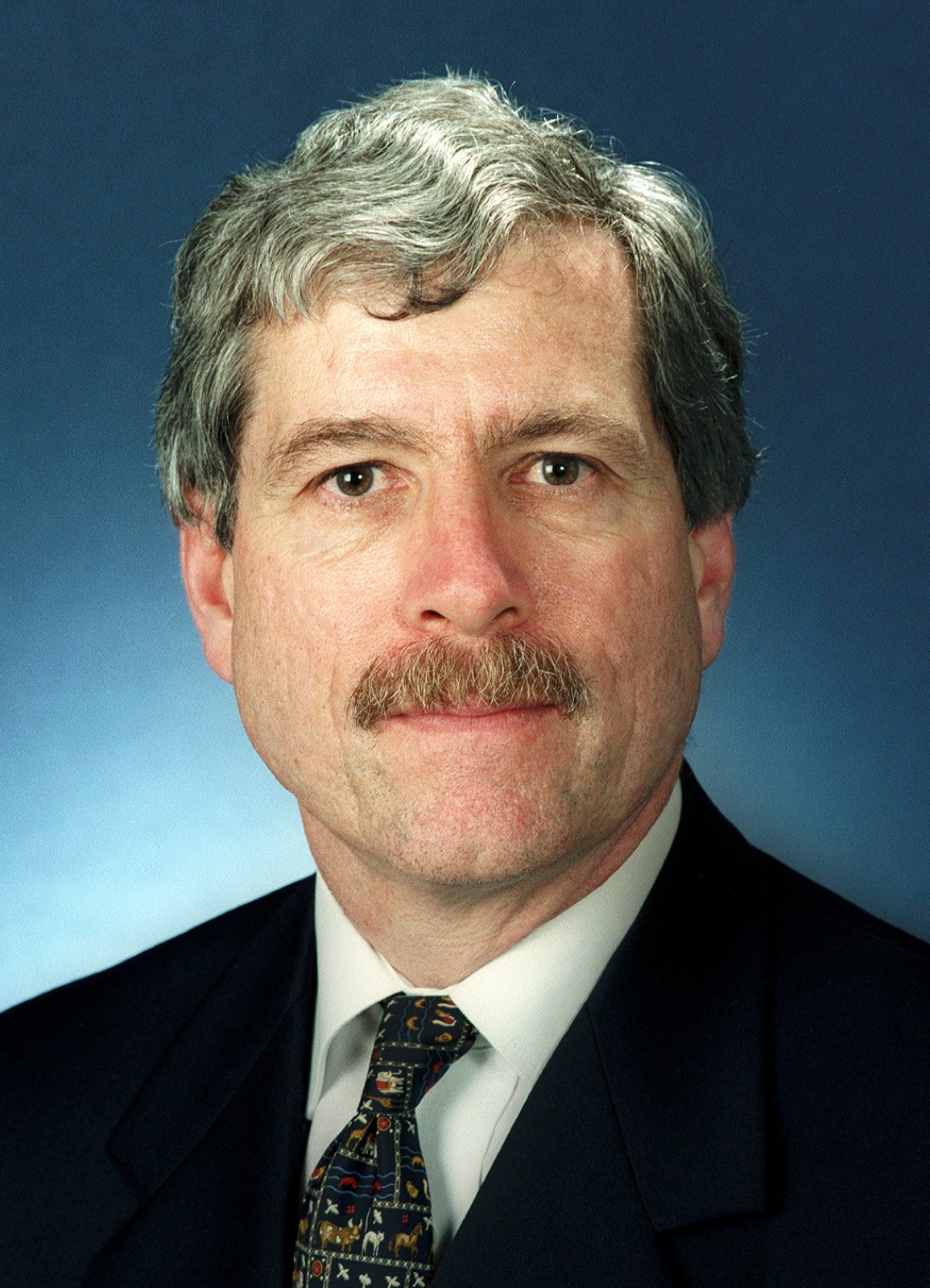
Nick Warner
Nick Warner is the former Director-General of Australia's Office of National Intelligence (ONI) and discusses the emerging presence of the Australian intelligence community, its role in countering Chinese surveillance operations, and unpredictable black swan events.
Episode Summary
In this week’s episode of One Decision, host Christina Ruffini and resident spymaster, Sir Richard Dearlove, former head of Britain’s MI6, discuss Israeli Prime Minister Benjamin Netanyahu’s recent visit to the White House and President Donald Trump’s latest plans for Gaza and the Middle East. Later in the episode, the hosts are joined by Nick Warner, former Director-General of Australia’s Office of National Intelligence (ONI) to discuss the emerging presence of the Australian intelligence community, their role in countering Chinese surveillance operations, and the unpredictable black swan events that could rattle the geopolitical landscape this year.
Episode produced by Situtation Room Studios. Original music composed and produced by Leo Sidran.
Listen & Subscribe
- Watch on YouTube
- Listen on Apple Podcasts
- Listen on Spotify
Transcript
COLD OPEN
Trump: You have to learn from history. History is, you know, just can't let it keep repeating itself. We have an opportunity to do something that could be phenomenal. And I don't wanna be cute. I don't wanna be a wise guy, but the Riviera of the Middle East, this could be something that could be so bad. This could be so magnificent.
INTRODUCTION
Raffini: This is One Decision and I'm your host, Christina Raffini. That sound was President Donald Trump on Tuesday this week in a press conference with Israeli Prime Minister Benjamin Netanyahu, or as we diplomacy nerds often call him, Bibi. They were at the White House, but even Bibi seemed to be surprised at the President's idea that the US should take over the rebuilding of Gaza and that all its current residents, about 1,700,000 Palestinians in the North, should probably go elsewhere until that happens. Now Egypt and Jordan have said this is a non-starter, they're not going to take these people in, but Mr. Trump wasn't deterred saying, you know, we'll see. While the rest of us wait and see what exactly this means for the fragile ceasefire agreement, the landscape of Middle Eastern politics, and the self-declared non-interventionist president's foreign policy doctrine, you know, as it develops. Our co-host, Sir Richard Dearlove, is with us. Good morning, Richard. It's been a busy week here. How's it looking over there?
Dearlove: Well, much the same as it's looking over there. We've been watching these events. You know, we can hardly believe what's been happening. It's quite extraordinary. It's as if someone's tossed a stick of dynamite into the situation in the Middle East, blown up all the traditional exchanges and barriers, and said, hang on a moment. I've got a different idea. And, of course, most of the time over here the idea is being rubbished. But thinking about it, if it's a vision rather than a plan, do you see what I mean? It might be the start of something different.
Raffini: For our listeners, we actually have a really fascinating guest this week. We've got Nick Warner, who's the former director general of the Office of National Intelligence for Australia. And he's gonna tell us all about the history of the Australian Secret Service, what role it's playing in countering China, you know, how they've kind of beefed up their capabilities through alliances like the Five Eyes working with the US and the UK, but also have done a lot to increase their own spying capability and counter threats in the Asia Pacific and abroad. But before we get to that, Richard, I do wanna play you that clip where Trump kind of announces his vision in front of Netanyahu, and I want you to watch Bibi's face and kind of describe it to our listeners who can't see it.
TRUMP'S GAZA GAMBIT
Trump: The US will take over the Gaza Strip and we will do a job with it too. We'll own it and be responsible for dismantling all of the dangerous unexploded bombs and other weapons on the site, level the site and get rid of the destroyed buildings, level it out, create an economic development.
Dearlove: But, by the look, trying hard not to look nonplussed, he's saying, am I really hearing what I'm hearing?
Raffini: Yeah. At one point halfway through, he kinda glances at someone off to the side too. Like, are you hearing this? Are you hearing this?
Dearlove: Have I got this right, or am I having a bad dream? Or maybe a good dream. I mean, it's quite extraordinary.
Raffini: I mean, it's a fundamental shift in any US policy to this conflict going back, you know, since the beginning of the conflict.
Dearlove: Well, you can see what Trump's doing because successive presidents have not, as it were, got to grips with this problem. They've come up to the brink. You know, you nearly had the Camp David Accords and all the things that we know about historically, but they've always slipped off the edge. And when it slipped off the edge, it's got worse and worse and worse again. And this time, of course, it's got profoundly terrible. So maybe Trump is looking, what he is looking for, a completely new idea. I mean, the global press, the press here in the UK, of course, are rubbishing it, saying this is ridiculous. But I'm just wondering whether it's quite as ridiculous as he thinks, because if you're gonna rebuild Gaza, you're gonna have to ship the population out of Gaza for periods of time unless it's shipped around Gaza while they rebuild different sections of the destroyed cities. The problem is that there'll be a lot of people in the Middle East attracted to the proposal who will not dare say publicly that they are because they don't want the Palestinians on their territory. Egyptians don't want them. The Saudis don't want them.
Raffini: Jordanians have said no. Exactly.
Dearlove: But I don't know. I mean, what's extraordinary about Trump is his ability to trigger these completely new ideas, which people think are crazy, then something happens to make them look a little less crazy. I mean, look at the passage of the introduction of tariffs with immediate folding of cards by both Canada, Mexico, and Colombia as we discussed the other week. It's pretty extraordinary.
Raffini: Well, I mean, yes and no. I mean, to switch for a minute, I was speaking to folks in Mexico in the Mexican government and the Canadian government, and, basically, the things they announced, I mean, they put more money behind it, but were things that were already in the works. You know, Mexico already was literally in working group talks with the Trump administration on these very issues and then were completely taken by surprise that these tariffs were announced because they thought that's what they had been meeting about. I think there is a correct similarity here in that these crazy threats make more outlandish, previously possibly impossible foreign policy ideas seem tame by comparison. Right? So I think what the fallout from this could be is you may see, much like we saw when Trump tried to pull back from NATO, when we saw the Europeans step in and kind of rescue it. You may see regional allies, Gulf allies, who, much to the frustration of the Biden administration, have been very reticent to get involved, to put money behind it, to come up with a plan for day one. All of a sudden, for lack of a better phrase, this might light a fire under their ass to come up with their own solution before it's the United States of Gaza annex. You know?
Dearlove: It's an extraordinary way of catalyzing these discussions and giving them momentum to an extent. I accept what you're saying about Canada and Mexico, but it does sort of inject a note of urgency into the proceedings. It makes the discussion different. And by having a president who's willing to say these almost ridiculous things, well, they are ridiculous in a way, but on the other hand, we have to agree they have a grain of content. Whether it's talking about Greenland, talking about Panama, and Chinese control of the canal, all of these things have a little bit of element of truth in them, and they do reflect neuroses and anxieties that I know exist in Washington DC. And, you know, we've never had an administration before who had the balls to make these extraordinary pronouncements. But, I mean, what I find quite amusing here in the UK is the extent to which they wind everybody up. And the liberal elite go completely bananas when Trump says these things. Then they get a bit more reflective, and they cool down. I think, well, I do, I think, you know, I think there's a bit of vision in it, but there isn't really a policy in it. And it energizes and ramps up these discussions. Extraordinary. Extraordinary.
Raffini: The other issue I see is, you know, this is not an argument. It was interesting because Trump said this a couple days before, maybe a day before this press conference. He first floated the idea. It was in one of those, you know, crazy frenetic Oval Office talkbacks where reporters were shouting, and he said, oh, you know, we ought to clean them out. Clean the Palestinians out there. And then reporters were pushed out. And so they tried to follow up with national security adviser, Mike Waltz, before Netanyahu's visit, maybe an hour or two before he had an avail with reporters. And officials were trying to do damage control, and they were saying, he's not saying, like, clean out the population. That's not what he means. He means, like, we've gotta clean it up. There's rubble. There's unexploded ordnance. You know, this is a human rights issue. This is what they were trying to spin this into, a we are concerned about the safety of the people of Gaza, and we think they should get out of there while we make it safer. And then that got thrown out the window as soon as, you know, Trump comes out and says, no. No. We really do want it. We want them out. We wanna rebuild it. This is our plan. But you've not seen him make that same argument in places like Syria that have been shelled out and people have gone back to homes almost immediately, or Raqqa, you know, after the fall of ISIS. People went back. That city was in just shambles. People went back. He's not making that same argument for parts of Ukraine, you know, whoever he wants to go back there. He's not saying it's unsafe. We gotta clean it out. He's only making that argument in Gaza where his longtime ally, well, most of the time ally, Netanyahu, is and, you know, this very fraught issue is. And I think that undermines, if there is any, the objectivity of this argument here.
Dearlove: Yeah. Well, I don't honestly think you can disperse the Palestinian population around the Middle East and then end up with having a luxury holiday camp off the coast. Gleaming Trump Towers as far as the eye can see. Yeah. I mean, it's a nice idea. But there is an issue behind this, which is a lot of the Sunni leadership in the Middle East are completely fed up with the Palestinians, particularly when they've been motivated by the Iranians, destabilizing politically the whole area, which is just what's happened. So although there is this pan-Arab commitment to a Palestinian state, on the other hand, there's an awful lot of people behind the scenes who are deeply fed up with the Palestinians and want to see, as it were, a different attitude on their part, a different disposition towards Israel, a different relationship with Iran, all these things which have, as it were, been thrown to the forefront of Middle Eastern politics again by the events of October 7.
Raffini: Well, and it's unclear, you know, we've moved from a possible two-state solution to a possible one-state solution to what is this? We don't know what this is. But it is also unclear. You know, I was on BBC and they had an academic who was an expert in Palestinian affairs on, and even he couldn't really say who is strong enough or in a position to govern this population because the PLO is a shell of what it used to be. There is no one really who has stepped forward or can step forward to form a government. So that's another issue in addition to the physical rebuilding. If they want autonomy, it's not clear at the moment who can do that. But I also, to your point, I don't think moving an entire population out is gonna be tenable. The other issue here is this could compromise the ceasefire. Right? Because if you're saying to Egypt, to Jordan, to these nations that you desperately need on side to commit to phase two of this operation, that your plan is to push every Palestinian out of Northern Gaza, that's not gonna fly, and that's gonna make them much more reticent to come to the table and give concessions and capitulate on other issues that they're gonna need to keep this very fragile agreement going.
Dearlove: I think the other problem, what is inherent in the ceasefire agreement, is the determination of the Trump administration and Netanyahu that Hamas can't be any part of Gaza's future. You know, there's still rot inside the apple, which they haven't, by any means, got rid of. Look at the graphics of the exchanges with these guys coming out of their rabbit holes in their Hamas uniforms and mobbing the hostages as they're being released.
Raffini: I do have a question. I always wanna know where these groups have their color three-d printers. Because even ten years ago, I was in Hezbollah-controlled areas of Lebanon. They always have these, you know, big backdrops with graphics and pictures of their leaders. And during the exchanges, if you notice, the hostages all had lanyards with, like, very printed laminated IDs. I wanna know, you know, in these terrorist organizations, who is running their printing because it does seem to be very efficient. But, anyway, I'm sorry. Continue.
Dearlove: No. Actually, that's a good point because it shows there's a certain amount of infrastructure which has survived. And somewhere in these blinking tunnels, you know, they're running their three-d printers, and they're running their graphics laboratories and still doing that sort of stuff. So they aren't completely ejected. There's still bits and pieces left and bits and pieces which are able to function. But the Israelis are not really gonna, you know, it's clear the one thing that is not gonna happen is Hamas is not gonna be part of Gaza's administrative future. You might say you can't get rid of them. Of course, you can't completely, but they're not gonna be running, they're not gonna be running Gaza in any manner or fashion in the future. That's for sure. And none of the Sunni Arab leadership will want them there either because they're completely compromised by their former links with Iran. I mean, former in that those, I think, are really probably very stretched at the moment.
Raffini: The other thing that stood out to me last night is Republicans have been harsh on the Qataris during these, especially the initial negotiations. They've said they are colluding with terrorists, everything else. The Qatari government seems to have done a good job of reaching out to the Trump administration. You know, the prime minister was out saying, you know, he wants to make the Middle East great again and using language that appeals to Trump. I saw, a friend of the show, Dr. Majed Al Ansari, the Qatari spokesman, was on Fox News. Dr. Majed was saying, on Fox and Friends when asked to react to this, you know, he thinks it's too soon to respond to any plan like this. They're focused on phase two, which was kind of a way to skirt the issue. But we have seen statements from the French who are decrying it. We've seen reaction from Jordan, Egypt saying it's a no-go. The Saudis also issued a statement that said, you know, we support a Palestinian state. I think to your point, even if behind the scenes these leaders are very frustrated with the status quo, with Hamas, with what's going on in Gaza, it's, we talk about this all the time, but even in foreign relations, all politics are local, and they have to sell it back to their population, and this is just not something they're gonna be able to sell back home. So then what do you do?
Dearlove: Yeah. What do you do? I mean, somewhere in this is a compromise. But I do believe that what will happen is that if we get beyond the ceasefire, still in a state of ceasefire, if you see what I mean, and it doesn't break down, then there will be some sort of initiative to move sections of the population. Now whether those sections are physically moved out of Gaza, I mean, you can perhaps imagine the Egyptians building a fenced enclosure on their side of the border. I don't know. But there could well be something like that, so that the restoration is done in sections. It's so, I mean, logistically, it's so complicated. And, of course, everybody's expecting the Saudis to pay for it, not to put too fine a point on it. So as we, we've got this boom, the final boom in carbon energy supplies, Saudi Arabia is awash with money at the moment. It's lacking investment opportunities. So, logically, there has to be some deal with Saudi Arabia and the Trump administration. And as an extension, you know, sort of sub-packet clause in the Abraham Accords, you can see what the shape of it might or could be.
Raffini: Well, that's the other thing that's on the table is this normalization agreement with Saudi Arabia that was almost across the line before October 7, which, again, was always really funny covering the State Department because the Biden administration State Department would not use the phrase Abraham Accords. You kinda drag it out of them, but it was one of the real successes from the Trump era and it was continued and it was something they were really working on within that framework established by the Trump administration. They were very close to a normalization agreement when October 7 happened. And like we said, that has complicated it because although there are reports that the Saudi government has denied that bin Salman said, I don't really care about the Palestinian cause, but my people do. It kind of goes back to what you were saying. They still, from the optics of it, they can't commit to what Trump is saying. They can't agree to move the Palestinian population out of this homeland and give it over to Israel. It's just not gonna sell. So where is the mediation? It's gotta be somewhere in the middle, right, so that the Saudis will agree to pay for it in return for what? What does Israel have that would make it worth it to the Saudis other than just general normalization, commerce, economic ties?
Dearlove: Well, I mean, I think it's the commerce and the general economic exchanges. If you talk to the Bahrainis, which I had done when the, as it were, Abraham Accords were booming in terms of their initial introduction. I mean, the Bahrainis were getting a fantastic deal out of the Israelis. No one was publicizing it, but the exchanges, scientific exchanges, educational exchanges, all sorts of things going on below the surface were a big, big deal, particularly for Bahrain, who basically needed what the Israelis could offer them. And the Saudis do too, for that matter. They're not, you know, super sophisticated in the way that the Israelis are in many of these areas. So there is an incentive to drive that. But, I mean, what you're saying is absolutely right. It's impossible for this to be driven as a big public initiative when the Palestinians continue to look like victims. There's gotta be some deal. But, otherwise, the street won't buy into it. And let's face it, Arab rulers are pretty nervous of their streets.
Raffini: I think they're not the only ones based on conversations I've had with several foreign leaders this past week. I think we're gonna leave that there for now and turn to Australia and Nick Warner and pick up on our conversation about Australian national intelligence, counterintelligence, what they're doing in the region. Let's take a listen.
INTERVIEW WITH NICK WARNER
Raffini: All right. First of all, thank you for joining us. We really appreciate it. In your long and very distinguished intelligence career, I'm curious to know what you think, how the intelligence sharing has evolved between the US, Australia, and the UK. You know, now we have this more official AUKUS or kind of arrangement and Five Eyes, but, you know, can you talk us through how that has changed and morphed over the years?
Warner: Look. Really, it's always been close, but I think over the last fifteen years, it's got closer. It's got closer for a whole range of reasons, one of which though is Australian agencies have become more capable. As the security situation in our region or around the world has changed and various governments, maybe starting actually with the Howard government, has put more money into Australian intelligence organizations, capability has grown. As capability has grown, we've been able to work more closely, more seamlessly with British and American and to some extent Canadian and New Zealand counterparts. And that remains the case now. These are really, really close, fundamentally important relationships, certainly for Australia, and I like to think for the UK and the US as well.
Raffini: As you're looking at, you know, the intelligence agencies now, is there a central focus that Australian agencies are really driving their funding, their focus behind? Is it cyber? Is it, you know, operations? Where is the focus and where do you think the focus should be?
Warner: For the last ten years, increasingly, it's become China. As China has grown, maybe it's from or just before the time that Xi Jinping became General Secretary of the Communist Party in 2012. This is not my phrase, but I think it's a good one. Australia became the sort of canary in the coal mine. We came across Chinese interference. We became worried about Huawei before the United States did, before the UK did. We became concerned about China in the South China Sea, China as a cyber threat, probably before any allied country did. Increasingly it's become about China. We need to understand China. We need to understand China's objectives. We need to understand China's activities very well. And so that has seen in the last, maybe it's less than ten years, certainly five to seven years, quite a refocus of our attention.
Dearlove: But Nick, what I find extraordinary about Australia's policy towards China is that, in a way, you have shown other countries a direction because you have this very intense trading and mercantile relationship with China on the one hand. But on the other hand, you've taken an enormously tough line with them on security issues. Okay. It has, in certain areas, made your trading relationship tricky and difficult, but it hasn't actually, as far as I can tell as an observer, fundamentally damaged it. I mean, what's the sort of secret that you would recommend? Because I think there are a lot of lessons here, particularly for the UK, in how to handle this relationship.
Warner: Richard, I'm going to disagree with you to some extent. I think sometimes we've handled our China relationship and that very difficult balancing act very well and sometimes less well. Really, that's depended on the politicians who had been running Australia at the time. I think the advice of policy departments, our foreign affairs department, our defense department, and of the intelligence community has always been pretty much the same, but the policy approach has been different, as it has in the UK. At the moment, with a Labour government and a very good foreign minister, a very good defense minister, we've been adroit in walking that very narrow pathway by looking to, in their terms, stabilize the relationship. So we continue to be tough on China where necessary, cyber attacks, activities in the South China Sea, concern about Chinese activities in the Southwest Pacific, but not in a shrill, aggressive way. The problem with the previous government, the Morrison government, was they, in my mind, they talked too loud, they were too aggressive in their rhetoric, and that led to Chinese punishment on the trade front, which amounted to many billions of dollars. As the rhetoric of this Labour government has changed, those restrictions have fallen away. But it is still a very narrow path that we have to walk.
Raffini: This is not a new issue. I mean, this has been going on for centuries. But why do you think Europeans, Americans, Australians, even in the intelligence agencies, even, you know, people who've been studying China for their entire careers struggle so much when it comes to creating policies on how to deal with China? Is it because you have to bring the political apparatus into it as well? Is it because it's a cultural issue? Is it all of the above? Like, talk us through why there's such a disconnect there and why administrations across the map, across the globe have struggled to come up with a successful policy.
Warner: Well, China's a big, hard place to understand. You need real experts, people who have lived there, people who have the language skills, people who've studied at university about the makeup and intricacies of the way the Communist Party works. And those skills are hard to acquire and therefore the number of people who had them is in small supply. We have had them in the past, not in the numbers we need them. I think that's the first thing. The second thing is I think a lot did change in 2012 when Xi got the top job, and I think all of us were actually slow. We'd got used to Deng Xiaoping's hide and bide policy, Xi abandoned that. But it was in the early years, despite what he was saying, in 2012 he was talking already about the rejuvenation of the great Chinese nation, which really is a bit like Make China Great Again, at about exactly the same time. Donald Trump was walking into the trademarks office in New York to trademark MAGA. Xi Jinping was doing pretty much the same thing. But I think we didn't really understand at the time that Chinese assertiveness, which was already apparent, was increasingly becoming, in a whole range of areas, Chinese aggression. So because trade for us, for the UK, for the US, with China, and for everyone else really, is so important, there's a fundamental battle going on in your mind. Things are changing strategically, but we've got this brilliant trade relationship. How do we balance it? And sometimes we and you have been successful and sometimes we've been less successful. I think it's just the dilemma posed by the size, the rapid growth of China, and the fact that Xi has sort of changed the nature of the game by the change in his approach.
Raffini: Are there any operational incidents, spying incidents that come to mind when dealing with China that you can point to as either a real success for the Chinese or a real success for Australia or the UK countering their efforts?
Dearlove: The issue of Chinese espionage and the characters of Chinese espionage are actually quite complex and quite difficult to explain to people because it's not, or hasn't been, entirely what we understand espionage to be in the West. I think what's happened over the last two or three years, it's mutated into something which is more understandable. And there are a number of cases. There are a number of US cases. There are a number of UK cases. But you've got a variety of different Chinese agencies, and the recent incidents in the UK have been all related to the activity of the United Front Work Department, which is this huge bit of the Chinese Communist Party, which is not a conventional spying agency, but carries out work which, in terms of infiltrating political life, is hugely important. So what I'm saying is, the question you've asked is almost the subject of a book if you want the layman to understand what we're talking about. But there are more cases now which are conventional, which concern Chinese military intelligence, the PLA, and also the Ministry of State Security, which are the two main spying agencies. But it's still not massively publicized, it's still not well understood. And what's tended to happen in the UK, at least, and to an extent in the US, there have been general warnings to put people on alert to understand the phenomenon, but there haven't been many examples which have been put in the public domain. I don't know whether Nick agrees with that.
Warner: Yeah. Well, I do agree with that. Look. If you go back fifteen, twenty years ago, the Ministry of State Security, China's main intelligence body, was enormous and had some capability and was fairly active. Now, it remains, of course, enormous, way bigger than any of our intelligence agencies probably combined.
Raffini: And when you say bigger, do you mean like personnel capacity or both?
Warner: So it seemed to have some but fairly limited capability. Now it's got the mass, but it's got the capability to go with it. A lot more sophisticated is what I'd say than they used to be. Hard to talk about human operations for the reasons Richard talked about, but easy to talk about their cyber operations. In the US, look at Salt Typhoon and Volt Typhoon, recent massive cyber attacks into the US, either traditional espionage, that is getting into your telecommunications systems in an extraordinarily successful way, or laying in your infrastructure, whether it be pipelines or water systems or ports. Laying down for the eventuality of conflict at some stage. Again, highly sophisticated skills that they didn't have and that both of us would be jealous to have. So it's all part of the growth of China as a great power and on the road to becoming a real superpower. Their military capability is growing and becoming more sophisticated as their economy grows and becomes more sophisticated, and so is their intelligence capability.
Raffini: You know, we're coming to a new year. We're coming to a new administration. The world seems largely on fire. But I'm wondering if when you look at the grand scope of things, if there's any hotspots or areas that you think are gonna be really crucial in the next year and what your biggest predictions are in the intelligence world and the security world for the next year, month, to two years, something like that.
Warner: Very big question to end on. You know, look, I'll put it this way: the world we're living in is vastly different to the one Richard and I were working on fifteen years ago. It's much more complicated. It's more fraught, and that's because I think of the combination of a whole range of transnational issues that are impacting on it, like the tech revolution, nuclear proliferation, climate change, that's a long list, together with the changing geopolitical great power scene with Russian nationalism, Chinese aggression, American political polarization and sometimes dysfunction, and all of that against the backdrop of a lack of real leadership in the world. So that combination of factors isn't gonna go away. Some of that is rusted on. It just means that the world we're dealing with is more fraught. Not necessarily more dangerous yet, but potentially so.
Dearlove: The second coming of Eurasia, I'm referring to Mackinder's book about geopolitics written in 1904. But the second coming, Ukraine, Iran, China, North Korea, I mean, what some people now call CRINK. I mean, what's interesting is that you have these autocracies which are geopolitically linked in one way or another. And I think if you look at that as a sort of aggregation of both complexity geopolitically, but an aggregation of, you know, threats to the values of Western liberal democracy, probably what we're talking about will center around that in 2025, but I'm sure there will also be several black swans that will fly out of nowhere and cause severe problems. The question is how to predict those as well.
Warner: So much depends on the Trump administration, and there are real opportunities and there are real risks. Trump has the chance of bringing about some sort of bargain, some sort of arrangement, some sort of deal in the Middle East, including in Iran. He has the chance of doing that in Ukraine as well. China is always going to loom large, but he's got a chance there too. Whether he takes those chances, whether it works out in the next twelve months depends how he handles it.
Raffini: One thing we've talked a lot, on this program with our different guests is there is something to the unpredictability of Trump foreign policy. Anything is on the table and everything is on the table and that unpredictability can be good.
Warner: I think there are real advantages in unpredictability, but it depends. You know, this can go either way. It depends on what his objectives are and his cleverness in pursuing them. And unpredictability, I think, is, as I say, can be a positive influence.
Raffini: Gentlemen, thank you so much. I learned a bunch. Hopefully, our listeners did too, and we really appreciate you taking the time. Thanks for listening to One Decision. That does it for us this week. Now next week, we're gonna do it a little differently. We're gonna preview a live event we're hosting at the Munich Security Conference. It's gonna be a panel of all women world leaders, and we're gonna meet to talk about the usual things, security, Ukraine, the Middle East, America's new foreign policy, but also what role women's leadership needs to have in changing global norms and the impact they can have on foreign policy. So please tune in to that. Of course, if you're looking for more exclusive content or wanna get timely updates on crucial global events or listen in on meaningful conversations with thought leaders, be sure to check out 1decision.com. I'm Christina Raffini, from the whole team. Thanks for listening.