Hosted by Christina Ruffini and Sir Richard Dearlove
Guest
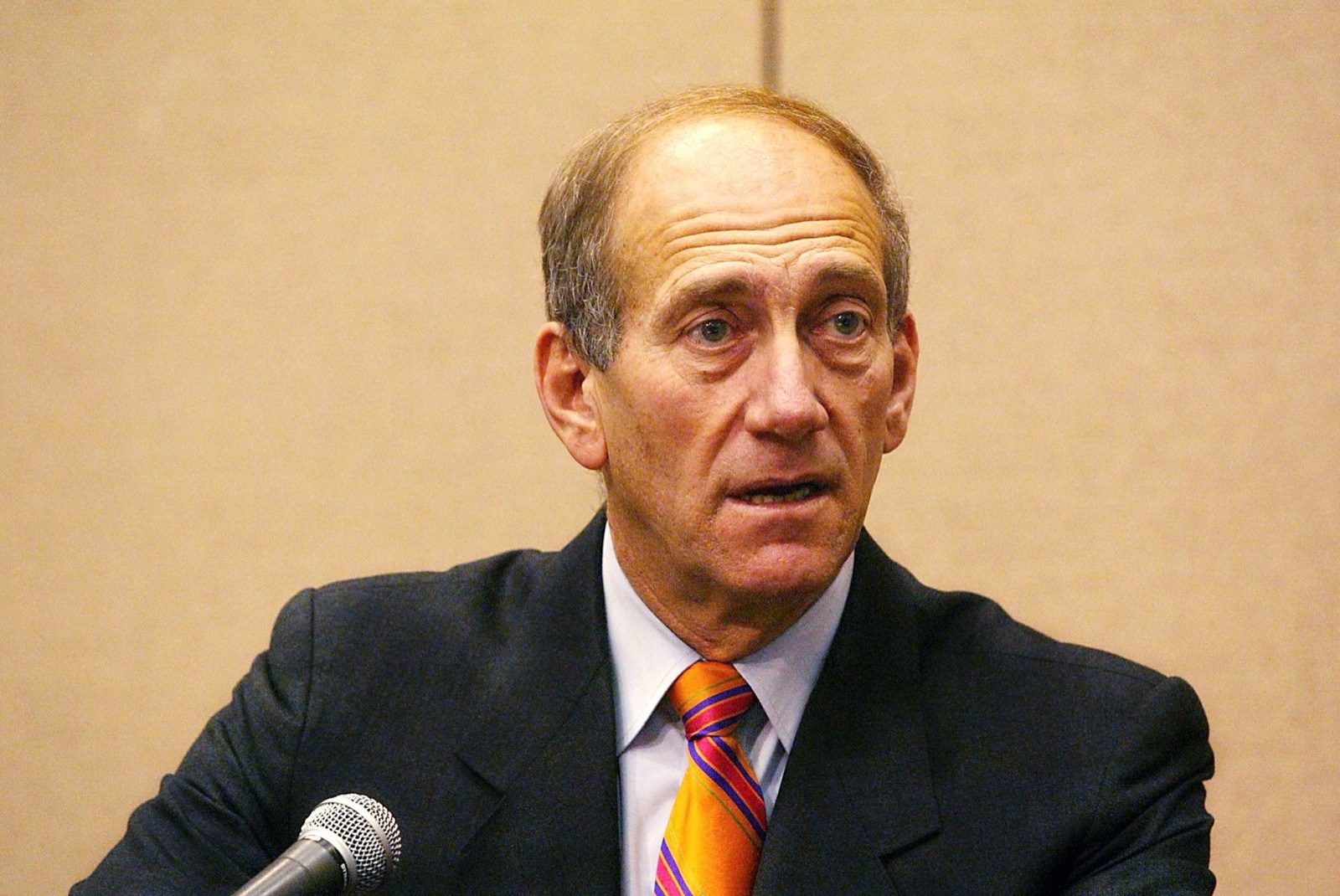
Ehud Olmert
Ehud Olmert is a former Israeli Prime Minister.
Episode Summary
This week on One Decision, host Kate McCann welcomes Sir Ben Wallace, former UK Defence Secretary, to the podcast as a co-host. They discuss the recent Israeli strike in Qatar targeting senior Hamas officials and the repercussions of Israel attacking a country that’s directly involved in peace negotiations between Hamas and Israel. Later, they welcome Ehud Olmert, former Israeli Prime Minister, who shares why he believes Israel’s pursuit of “total victory” in Gaza is both unrealistic and dangerous. He recounts why Israel’s top military leaders reject Netanyahu’s strategy, warns of a mounting diplomatic backlash that could extend to sanctions and even sports boycotts, and insists only Donald Trump has the power to force a change of course. Plus, Olmert reflects on his own efforts to revive a two-state solution with Palestinian leaders.
Listen & Subscribe
- Watch on YouTube
- Listen on Apple Podcasts
- Listen on Spotify
Transcript
COLD OPEN
NEWS CLIP [0:00] One person holds the key to everything. This is Donald J. Trump. He has the power.
INTRODUCTION
Mccann: Hello, and welcome to One Decision. I'm Kate McCann, and I'm joined today by Sir Ben Wallace. Hi, Ben. And today, you are not officially a guest being interviewed, but you are a co-host. This is your first One Decision podcast in the big chair. Welcome.
Wallace: Hi. Hello. Yeah. I've been a host on a podcast before, so, yeah, here we are.
Mccann: Well, you are here for the first time and hopefully many more after this because it's great to have your insight. A few days ago, we spoke with the former Israeli prime minister, Ehud Olmert, about the implications of Israel's total victory strategy in Gaza and what he describes as a widening rift between the government and Israel's security establishment. But Ben, before we get into that conversation, I think that we should talk about some of the developments that have happened since we spoke to him, because there has been quite a lot. I think the most significant one is the IDF strike on Hamas, or a Hamas target at least, in Qatar. Can you talk us through what exactly has happened?
Wallace: What it seems is there was a meeting of Hamas, or the remaining leadership of Hamas in Qatar, including the very people who were engaged in discussing the ceasefire proposals that had been put to them by both The United States, I think in the past, and others. And it is understandable that they were meeting in Qatar because Qatar has tried over the years to play the role of being the sort of Geneva of the Gulf, being where spies and spooks and also nations of war meet. The Taliban, the political wing of the Taliban would be there. And, you know, we had to engage with them and we were trying to obviously evacuate Afghanistan. So, they were meeting and, of course, no doubt there were some pretty toxic and dangerous individuals in that Hamas gang. You know, you have to, sadly or not, you have different elements of regimes in those type of sort of neutral countries. They're sort of countries where you're trying to forward peace, that, you know, even the UN, you know, there will be members of the North Koreans and government in New York and that's what happens, right? So I think, yes, there clearly was a target of opportunity that the Israelis felt they could, in their view, finish off Hamas, and they were going to take that action no matter what. And if that involved entering the sovereign airspace of another nation and killing those people, then they were prepared to do that. That's, I think that's a very high risk and a very, I think, silly or stupid strategy. I don't think it helps Israel's cause at all. We've seen the quote from the White House and Donald Trump saying exactly that. It doesn't help peace and it doesn't help Israel. And, you know, Qatar, you know, we need a stable Gulf, right? We need Saudi, Qatar, Bahrain and UAE to be stable. We don't need them pulled in. And, you know, Israel must really understand that if it wants a sustainable long term peace, it's gonna need these countries at the very least neutral, and at best on their side.
Mccann: I mean, I think one of the problems that strikes me about what Israel has chosen to do here is that they haven't actually managed to succeed in killing those senior Hamas officials that were meeting to negotiate. They may or may not have killed a relative of, I think the son of, somebody very senior, but they don't seem to have actually taken out the people who they'd intended to take out. And what they have done in the process, as you say, is launched an attack on the state of Qatar where, you know, huge American base in that region, considered an American ally, considered an ally of The UK, put those nations in a position now where they are forced to basically say, we don't agree with what Israel has done. Now, Israel is unrepentant, evidently, and does not seem to have a problem with doing this and has indicated that it may well do it again. But, I mean, the problem — let's take the Americans first, Ben, because there is this huge base. Qatar had clearly indicated to the Americans that Iran was going to strike that base in June. They felt that they'd done The US a favor. They will now feel a little bit frustrated that the US has not been able to repay them by warning them about this Israeli strike.
Wallace: Yeah. And look, we don't know what planes were used in this strike, but, you know, the force would have been about 10 to 15 planes, if there were eight to 10 impacts, as had been reported. Means a significant effort with ground crew and everything else. And if they did use F-35s, then of course that data all goes back via America anyhow. So it'll be interesting to know how much America really knew in advance. You know, with the CAOC, as it's called, that big international airbase and international coordination center, I visited it myself. That is the airbase that we all prosecuted war on ISIS from. It was the controlling center when we had to take strikes in Syria or parts of Iraq, that's where it's from. So in the past Mossad would have done its traditional thing, right? A sort of covert attack on high value targets. We saw it, if you remember, in UAE where they posed as tennis players and they murdered, or killed, assassinated, actually the right word, a Hamas individual there. Remember they used British passports, which was pretty affrontive to us, but doing it in such a high profile way also humiliates another country. You know, you've flown into a sovereign airspace of another nation, a nation you're not at war with, a nation that you — you know, this isn't Iran where Israel and Iran have a long history of this. And you've publicly, in front of the world, bombed that country who was at the very moment trying to host some form of peace talks and flown out again.
Mccann: You know, countries don't like being humiliated, and why should they? But in terms of The UK response, the prime minister, Keir Starmer, this week has been meeting with the president of Israel, Isaac Herzog. Now very, very different role to Benjamin Netanyahu, and everybody can separate those two positions. But what do you expect The UK to do here? Do you think Keir Starmer will summon the ambassador? Do you think he will read Herzog the riot act? What do you think will happen next?
Wallace: Well, I think when you're dealing with someone like the current prime minister of Israel, I think, you know, every action has to have a reaction and a response. I think if the United Kingdom government feels that what has been done has been not only an affront to one of our allies, Qatar — and we are friends with Qatar, we work well together with Qatar — and we want to send a message, then ultimately the message is we should just get on and recognize Palestine now, right? We should stop saying, if you don't do it, we'll do it in September. It is the autumn now anyhow. If all the international law gets ripped up by Netanyahu, then why are we all sitting around doing nothing about it? And, you know, a lot of us getting more and more frustrated. So we can only speculate what is going on in the minds of the prime minister of Israel. I suspect Benjamin Netanyahu thinks, we'll get one state, we'll annex the West Bank, we'll occupy Gaza. It doesn't matter how many bridges I burn. It doesn't matter how many enemies I make. The great people of Israel will thank me in a hundred years. Well, I think he's wrong.
Mccann: Well, Ben, we will keep an eye on what happens and develops with that particular attack, the IDF, in Doha over the coming days. But I think let's move now to listen to our conversation with Ehud Olmert. He is of course the former Israeli prime minister. He was prime minister in the mid 2000s and he is a centrist. He comes from a different place to Benjamin Netanyahu. We recorded this conversation with Ehud Olmert before this strike that we've just been talking about. But the really fascinating thing for me is everything Olmert is saying is incredibly relevant even after that attack. He talks about why he believes that Netanyahu's Gaza strategy is counterproductive, how it could disrupt internal Israeli politics and his reputation on the world stage. Plus, he talks about the world leader that he believes plays the most significant role in Netanyahu's decision making. So let's take a listen.
INTERVIEW WITH EHUD OLMERT
Mccann: I'm delighted to welcome you to the One Decision podcast today, Ehud Olmert. Thank you so much for joining us. Now, I think a good place to start is thinking about where Benjamin Netanyahu stands currently, because so much of this conversation revolves around the decisions that he is making. So in your view at the moment, where does he stand? How secure is he in his position?
Olmert: I'm delighted. I belong to a very large group of people who are trying to comprehend what lies behind the decision making process. There are certain things which are quite obvious, that are extraordinary, unprecedented, I think, in Israel's history. He has the chief of staff of the Israeli army and the highest command of the current army, but also all the former leaders of the Israeli military, you name it. I mean, the former prime ministers, defense ministers, IDF commanders, generals, heads of Mossad, the heads of the secret service, they all say the same thing comprehensively, that regardless of the obvious fear that moving now forward to what is called conquering Gaza completely, eradicating Hamas totally, will probably risk the lives of the hostages. But let's assume that someone can say, okay, I don't care, you know, another 20 lives being saved or not, there is a much larger issue here which touches the very basic strategic interests of the state of Israel for the future, and we have to deal with it. No one accepts that there is any chance that the military operation, after almost two years of fighting, will achieve any goal that can come close to what is called total victory, total eradication of everyone that is still alive that can hold a gun or an RPG or a hand grenade. And therefore, the army doesn't want to carry on. The chief of staff says, look, if you want to have someone that will obey without thinking of what he's doing, you have to look for someone else. He said it the other day in the cabinet session. And now you ask me, so what is Bibi up for? I think that Bibi feels that all hell will break loose if he doesn't carry on now with the military operation, that the government will collapse, the fears, the troubles, the disasters that he's trying to run away from will come close to him, and that he's been swayed in an uncontrolled way towards a national disaster.
Mccann: What is it then that's motivating him? Is it saving political face? Is it power? I mean, what do you think is driving him forward at this point?
Olmert: Look, you measure other people or you judge other people by what you think is right, what you think is wrong, what you believe is achievable, what you believe is unachievable, what you think is good for your country, what other thing is reasonable, and so on. So by these standards, when I look at what's going on now, there is only one steady thing that is quite obvious, that there is a very large part of his cabinet, the crucial part of his cabinet partners, the group of thugs, you know, who truly, genuinely, wholeheartedly believe that we have to take over Gaza entirely. And the first step towards, obviously, at the end, expelling all the Palestinians from the West Bank and creating an entirely new reality of a comprehensive annexation of all these territories to become part of the state of Israel. And maybe somewhere, somehow, under the pressure of his immediate surroundings, family members, his wife, his son, his partners, that he has fell into this belief that this is the only way to guarantee the future of the state of Israel, and he's, you know, going with this belief to, I don't know where, not to a good place.
Wallace: Something that sort of strikes me as a politician. What I think is partly the thing that drives him is a similar thing that drives both Putin and Trump. The most dangerous phase of any politician is legacy. As in, they'll thank me in a hundred years type mindset. And, you know, that makes them do all sorts of reckless things. I think when politicians get in legacy mode, that's when they should be encouraged to leave the stage. And you see it in some of these other leaders. I think what's been really interesting was the point I had pointed out, which was there were 550 of some of the most experienced generals, security experts in Israel who wrote this letter recently. It got very little coverage in the Western press. People who have forged their experience in war and in failure and success saying, we cannot understand this. The people you should always listen to as a prime minister and as a military lead, you should listen to this collective knowledge, saying exactly as Ehud said, what is the point? Where are we going with this? And the only rationale I can think of why the current prime minister of Israel is ignoring them is because he's in that sort of rather dangerous legacy mode, which will do no good to anyone in my personal view. There's a similar line there with, you know, President Putin, who doesn't really matter how many of his own he's killing in his ego trip on Ukraine. It's a sort of correction of history. That's what I think is part of Netanyahu's motivation.
Olmert: You know, Ben, I can't disagree with you because I think more or less you have wrapped it up with one word, legacy, which is more or less identical to what I've been trying to say, which is his belief that this guarantees the future of Israel, the historical opportunity bestowed upon him now to guarantee that this will, for sure, provide Israel with what it needs in order to face and challenge all the threats and enemies and whatnot. Maybe, but we judge Putin in a certain way. We still, I think, on a daily basis, are amazed when we hear the tweets of the president of The United States of America, but none of them have yet reached that point that Bibi is already there. As you say, I was prime minister for few years. I was fighting Lebanon for what was then considered to be a very long war. It was thirty two days, which then brought seventeen years without any one single military event in the north part of the state of Israel. I was in charge of many security challenges, and sometimes there were disagreements and criticism. And, yeah, former generals and former, you know, experts were saying this is not acceptable or this is crazy or this is dangerous and so on and so forth. Nothing is close to what you have described. Indeed, yes, the international community is not even aware of the depths and the extent of the opposition which is building up. I don't know how to measure it by numbers. Okay? Although, for a very long period of time now, for maybe two years and more, there was not one single poll in Israel which showed that the government of Netanyahu and the coalition parties of the present government have a sufficient support to build up a new government after elections. Okay? They are lagging behind massively. But let's say that this is divided half half. What is the substance of the half which I represent for that matter? Okay. It's made up of all the academics, of all the high techs, of all the generals, of all the security experts, all the warriors, and you just look at it and you say, I mean, this is crazy. The government is run today by a couple of ministers who haven't even served in the army because they were suspects to be terrorists. Two of them were indicted and convicted several times because of being involved in terror. They are the inspirators and supporters of the hilltop youth, which are committing terrible crimes on a daily basis in the West Bank, which is heartbreaking even just to read about it and know that this is done with the government. So you have to ask yourself, I mean, what is it that crosses the mind of a person? I don't know.
Mccann: Do you think that Benjamin Netanyahu has lost touch with reality? Do you think that he can be reasoned with? Is there any point in any of the world leaders who are lining up to say, please stop what you're doing? Is he able to listen to them now?
Olmert: He is able to listen to one person. One person holds the key to everything. I've already a while ago, I decided there's no reason for me to carry on, you know, personal appeals or personal attacks or personal criticism to Netanyahu. It's entirely immaterial. Nothing will happen. There is one person that can make a difference, and this is Donald J. Trump. He has the power. You know why? Because there is not one single world leader other than Orbán in Hungary and maybe the president of the Micronesian Islands that will still support Netanyahu. As you go across Europe, everyone — I mean, Macron. I know Macron. I've been talking with him several times in the last year. He's a friend of the state of Israel. British prime minister, Starmer, is a friend of the state of Israel. They are not enemies. You hear what they say, you hear the rage, you hear the emotion that is expressed by them, and you hear what's going on across Europe and in America and North America and in Canada and all of these places. There is only one person. All of them, all of them can say whatever they want to say. They can go to the UN and call this conference, and I was part of, you know, the preparatory conference in Paris a few months ago to build up the concept of what I support and I proposed when I was prime minister, two states and so on and so forth. No one cares if it doesn't come from Donald J. Trump. If he will say to Netanyahu, enough is enough, trust me, it will be enough. But he is not inclined to do it yet.
Mccann: Well, he did say, didn't he? He made some comments — Trump did — about Israel's actions in Gaza, about what Israel was doing, and it didn't seem to make very much difference.
Olmert: When Trump will want Bibi to obey him, he will say it in no unclear terms that there will be no misunderstanding about what he means. And I'll give you an example, by the way. If you will recall, he set up this ceasefire with Iran after the Israeli attacks in Tehran and the American attacks on the nuclear sites, which was a very impressive operation, I have to say, they all deserve a certain credit for it. It didn't bring out the outcome that was anticipated, all that nuclear and so on and so forth, but it was very impressive. It was set for 08:00 Monday morning or Tuesday morning, doesn't matter. And there were Israeli planes on the way to Tehran for another blow. Trump called Bibi on the phone in front of the television cameras and telling Bibi, get the planes back right away. And what did Bibi do? He got the planes right away back because then he spoke to him in no unclear terms. That's what I mean.
Mccann: Ben, I want to bring you in here. What is the appetite for trying to persuade Donald Trump? How much is The UK doing? How much is Germany doing to try and persuade Donald Trump to step in here and stop it?
Wallace: Well, I think the European tactic seems to be trying to effectively bribe Donald Trump in one way or the other with goodies to do things that will make him have a positive disposition to our requests. We see that all the time. We saw Keir Starmer and the state visit. And, you know, I think we've already seen conversation about the open golf going to Turnberry and constantly feeding the child with a toy. And that's not going to work. Donald Trump will do exactly what's right for him, not necessarily America, but right for him at the time that's right for him. You know, he, in a sense, many of his opening salvos around the world in geopolitics have encouraged these adversaries such as Hamas and others, and indeed now Netanyahu, who's not an adversary, but have encouraged them or given them permission. You know, he started off, if you remember, in Israel saying, look, you know, we can turn it into real estate and all the Palestinians could go somewhere else. And even if he rowed back from that, those type of statements give people a sense of permission. You know, he started off in the White House saying that, you know, Ukraine started the war, that he was a dictator. In those two sentences, whether it applied to Gaza or whether it applied to Ukraine, he gave hope to people, and hope is very, very powerful in any conflict. And instead of doubling down and saying, I'm gonna be Mr. Peace, don't you dare to everyone, he did the opposite. And it doesn't seem to work giving him lots of sweeties and trying to make him feel a better disposition to us or anyone else. I think he's made a calculation when it comes to Gaza that, well, in fact, when at the Munich Security Conference, there were members of the Trump entourage talking about encouraging investment into the redevelopment of Gaza as a coast strip. Right? Well, if you track President Trump's record in Atlantic City, the last thing you wanna do is invest in a Donald Trump inspired resort. They tend to go bankrupt. But, you know, I think that is one of the biggest problems. And I think if you couple that with Benjamin Netanyahu's views, you get into a very difficult space. You know, I pleaded with Israel when I was in office to help Ukraine. You know, Ukraine was under an attack by an aggressor. It's the only other nation on earth with a Jewish president. Right? I mean, and a friend of Israel, right? And I am a deep friend of Israel. I want Israel to be successful. And you know what they said to me? They said, oh, we don't want to upset Russia. And I said, but Russia is spending half a billion dollars a year with Iran on the drone program. Right? You will pay for that. You will pay for the consequence of that. And sure enough, they have. So I don't know what's going through the mind of Benjamin Netanyahu when it comes to logic, because it is illogical what they're now doing. And exactly as Ehud says, friends of Israel across the world are finding it really hard. I mean, I passionately want Israel to be a success and remain a success, but I see the wonderful Israeli wisdom, and it is or was a deep wisdom that guided them through conflict after conflict, playing off the power of, in the old days, Egypt, Iran, Syria. They were all balanced. They knew how to balance. They knew how to form alliances. It seems to me that all that wisdom in Netanyahu's government, not in the rest of Israel, is just being trashed. And that's really sad for supporters of Israel.
Olmert: I think at some point, and I don't want to even suggest what it is that will develop, the price that we will pay will be such that Trump will understand that the only way to stop it is to save Israel of itself by forcing Israel to do what now it is entirely impossible, which is to stop the expansion of this military operation.
Mccann: What do you mean when you say it will pay a price? What are you talking about there?
Olmert: You know, I'll give you one example. The Israeli national basketball team is playing now in the European championship in Poland, and it's doing quite well for the time being. They even defeated France, which is a big success. Now there were already rumors that Israel will be forced out of international competitions as Russia is, by the way. As you remember, now Russia is Russia. They can afford themselves. Once Israel will be expelled from UEFA, FIBA in basketball, like dominoes will be thrown out from every international sport organization almost immediately. This is just one example of what the accumulation of sanctions can do to the sense of confidence that Israelis have.
Mccann: How damaged is Israel's international reputation, and how long do you think it would take to heal? Well, you can tell me better.
Olmert: You look at it from the outside. You know, I look at it from the inside. Of course, I am devastated. I am terribly, terribly, terribly worried. It will take years and years and years to change it. I speak everywhere I can, like, you know, trying to show to the international community that there are other voices in Israel, using my background as a former prime minister of the state of Israel and saying, hey, guys, the voice of Israel is not just Ben-Gvir or Netanyahu or Smotrich. There are other voices, and I represent millions of Israelis that are opposed to the government. So I think it's very important that the international community will hear that there are other voices in Israel and that Netanyahu doesn't represent the entire country, that there is a battle here. And one of the things that I advise our friends, including the leaders of the European countries, including Keir, saying, don't punish Israel. Punish the Israeli government. Don't punish Israel. Help us in a way to carry on this combat against the Israeli government rather than punishing the Israelis, which may cause a different reaction in Israel.
Mccann: We've talked a lot about Israel's reputation and how Donald Trump might be able to help the situation. But we're talking at a time when there is a shift going on. China, India, Russia meeting for a conference. We've seen Narendra Modi, President Xi of China, a relationship that many people didn't expect to see, or at least not to see in that way, you know, Modi holding hands with Putin. Where does Israel fit in what's happening now? And what do those changes mean for this conflict?
Olmert: In the past, we were in a much better position to be able to answer such questions because we knew what we can expect from the leaders of the international community, particularly what we could expect from The United States of America. I mean, obviously, Israel depends largely, almost entirely, on The United States of America. Nothing of what happened over the last couple of years couldn't have happened without the basic commitment of The United States to the security of the state of Israel, to the supplying of arms, supplying of weapons, to the supplying of political support, to the supplying of vetoes in the UN Security Council. So what is America now? Are we sure that we know? We don't know. And therefore, you know, it's very hard to anticipate how things can happen in this very volatile and unstable and shaky reality.
Mccann: Ben, can I ask you the same question or a similar one, in that you asked directly for help from Israel for Ukraine, and the response was, well, no, but concern about Russia? What is your reading of that current situation and where Israel may or may not stand?
Wallace: Before I was defense secretary, I was the security minister and the economic crime minister, and one of the challenges around Russian dirty money was where did it all go when the Ukraine war happened? And some of it went to Israel. A lot of the super yachts turned up as well at one stage. So I think there is a worry there that Netanyahu's fear or dependency on Russia being at the very least neutral towards them makes him make odd decisions. This is the worry that I have about the current government of Israel. It's also the optimism because all governments come and go. I still think, you know, at its core, Israel's a democracy. It's got a wonderful group of people, wise people, academic, educated people, who, while they are deeply troubled and quite rightly by the current government of Israel, that will drive hopefully coalition and change. And I think eventually, you know, politicians don't last forever, you know, nor do their governments. But in the meantime, it's very important that we don't beat up our friends. We are a truly globalized world now. Globalization is here. You need friends. You know, it's no coincidence that India jumped on a plane after Trump's tariffs to go to China, right? Despite all their personal differences, they don't want to be isolated and alone, and only people who don't have their country's interests at heart are happy to be isolated. It's not in The United States's interest to pull up the drawbridge as Trump is currently doing, and it's not in Israel's interest. Israel's friends are the ones that are quite similar to Israel. Democracies, rule of law, separation of powers. Israel and Europe has a lot of friends. Israel and Europe nation states. I often think Israel looks more European than it does The United States. So ultimately, where do we go? Well, we need to get back to a situation where the starting point is not bash the friends, it's take on our adversaries. And this is going to be the problem for both the prime minister of Israel and The United States, is when they want to row back from their positions. If they had friends, they'd have rowed back into the heart, the bosom of Europe and the bosom of their trading partners. Well, the problem is Donald Trump started with tariffs on his friends, not on China. That's gonna be a very hard breach to mend. And it's a bit like a marriage. You know? Once someone's cheated on the marriage, you can patch that marriage together, and many people do, but it's never quite the same. And that's going to be the biggest problem for The United States and Israel.
Olmert: Part of the present battle that we have is that there is a serious challenge by the government against the democratic nature and the democratic institutions of the state of Israel. I don't know if you are even aware of that because, you know, you obviously are outside of Israel. You focus more on Gaza and the attacks and the bombings and the mushrooms of smoke and fire every day on television. You know that the minister of justice formally and publicly says, I don't recognize the president of the supreme court of the state of Israel. I don't recognize him. He was elected against the law, and I don't accept his decisions as in judgments. It hasn't yet arrived to the point where the government is not obeying the orders of the supreme court, but we are very close to it. So the crisis is going deeper inside the state of Israel that can perhaps explain the present, at least, confidence that the government has that they can somehow deal with it because they will be protected also by the force that they use against the basic democratic nature that will stop them.
Mccann: Are you worried about democracy in Israel?
Olmert: I'm worried. I think that we will prevail. I think we will win. But it's already a serious battle, very serious battle, and it's going to be even more serious. But I think the world — we will prevail, but nothing is going to be easy.
Wallace: Kate, the thing we should be worried about across the West, and I include Israel in that, you know from our own media, the significant attacks on our judiciary. We see in The United States, the over politicization of their judiciary, the use of social media to undermine them, identify them, and who are they? When they were a student at university, were in the labor party. I mean, I saw that only yesterday in mainstream media. I didn't like getting many rulings against me as a defense secretary. Right? Sometimes I lost cases in the courts on the department, the Ministry of Defence. And yes, there are things we need to do to make sure the balance between the parliament and the judiciary is always in the right place. But it's a fundamental tenet of our freedom, our judiciary, and we should not, as politicians, undermine the judiciary and undermine the rule of law. And it is a worrying trend that we see, even adopted in mainstream parties, to go for the judiciary. And if we lose that, then we are on a very, very sticky slope.
Olmert: So we are right now in the middle of this, in the heat of this battle.
Mccann: And it's growing in Britain as well. Do you have hope that those who are in Gaza, those who are loyal to Hamas, those who do not see your point of view, do you have hope that they and Israeli citizens can ever reconcile their differences and live as neighbors? Do you believe that that is ever likely to happen?
Olmert: I'm engaged already for more than a year in an initiative together with the former foreign minister of the Palestinian Authority, Dr. Al-Qidwa, the nephew of Arafat, which is very significant, in a joint effort to promote the end of the war and the beginning of negotiations on the two state solution on the basis of what I proposed to Dr. Mahmoud Abbas, the president of the Palestinian Authority, when I was prime minister. Had I not been optimistic, had I not believed that this is the only possible solution, I wouldn't have spent days and nights running across the world as I do now while I am not in any official position, because I do believe in it. So you ask me, is it possible when you think about the mushrooms of smoke and fire that you see in the buildings that are destroying Gaza now? Is it possible that the people that were subject to this will one day — I don't know. I don't know. But first of all, I think that we have to offer a horizon and a different horizon, which we refrain from — I mean, we, the state of Israel, the government of Israel, refrained from doing it for the last couple of years in spite of all the requests and the pressures and the expectations and the demands coming from every corner of the world. Okay, what are you up for? What is your vision for the day after and so on and so forth? So this is the vision for the day after, and I believe in it. And I think that we have to fight for it and labor for it and join forces with everyone. I don't know if this is the wiser thing, to recognize a state that doesn't exist. Okay. As now Macron and Starmer and Carney and the others are trying to do. But definitely, this is the only possible political solution that has to be labored for and worked for. And this is what we need to do. So this is one thing. In the event that, in spite of all these efforts, the reconciliation and rapprochement between us and Palestinians will not come to the point where it can change dramatically, we are strong enough to defend ourselves. We don't need to be in Gaza, and we don't need to be in the West Bank in order to be able to defend the existence of the state of Israel. We're an enormously powerful nation. We can destroy Tehran when we want to do it, and we just have presented it and proved it only a couple of months ago. So the contradiction between the enormous power that we possess to defend ourselves against Iran and the fears that a couple of thousands of terrorists in Gaza or in the West Bank can threaten the very existence of the state of Israel is ridiculous. We should aspire for a rapprochement, for a change of mood, for a change of attitude, for a change of emotion, and work for it. But at the same time, we are strong enough to deal with the possible threats for the state of Israel even if it will not happen.
Mccann: Ehud Olmert, it seems like as good a place as any to end our conversation, which I'm sure we could continue for quite some time, but it's been really fascinating speaking to you. Thank you so much for your time.
Olmert: Thank you very much. Thank you, Ben. Thank you, Kate. It's my honor.
Mccann: And that is it for this week's edition of One Decision. For more conversations like this one, with leading experts in their field and world leaders too, you can check out onedecision.com and our YouTube page, of course, where you'll find additional videos, short stuff, commentaries, and explainers. I'm Kate McCann. Thanks for listening.