Hosted by Christina Ruffini and Sir Richard Dearlove
Guest
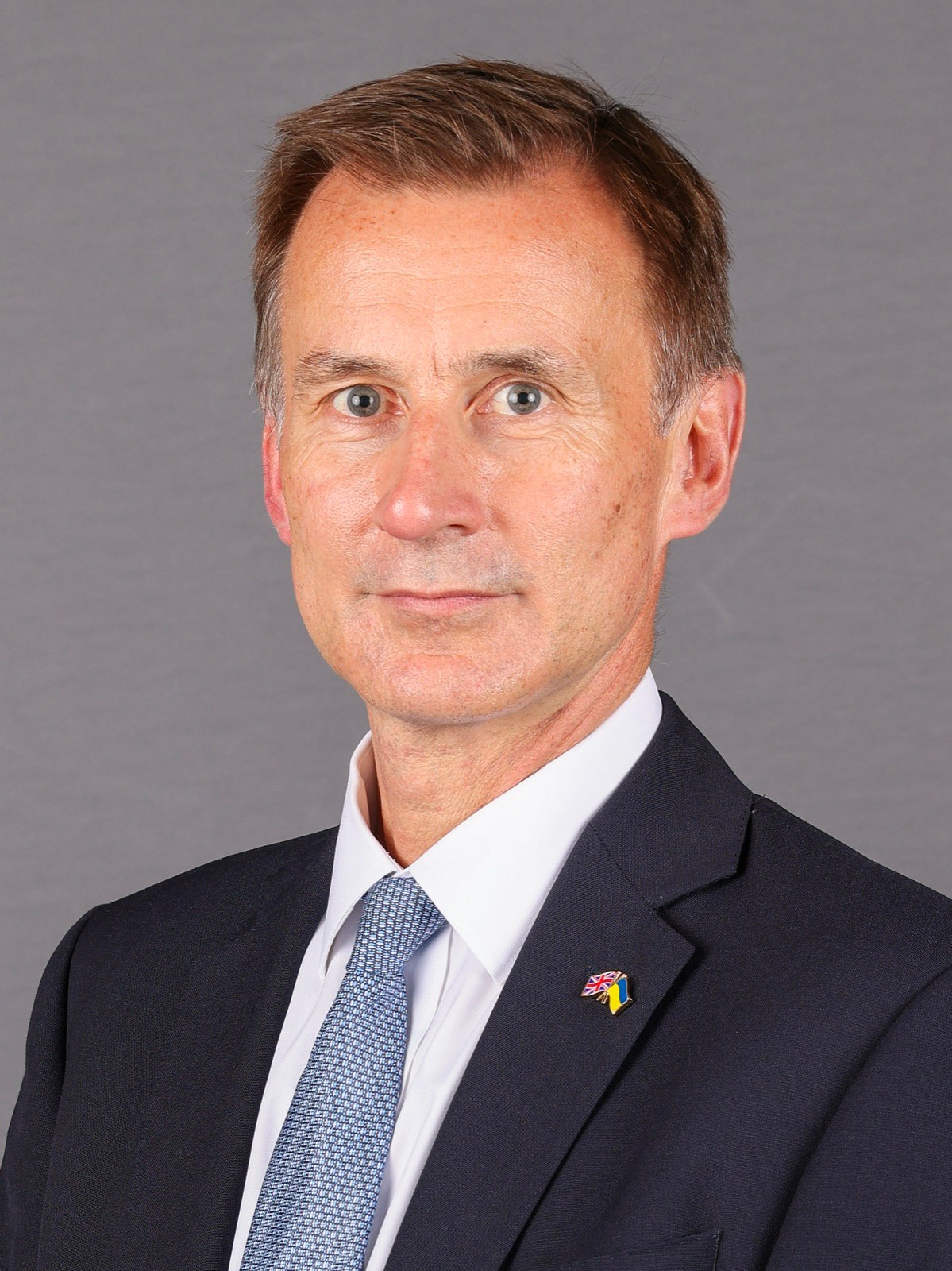
Jeremy Hunt
Jeremy Hunt is a Conservative MP who has served as the UK's Chancellor of the Exchequer and Foreign Secretary and discusses Britain's 'crisis of self confidence' and what NATO must do to contain Russia and China.
Episode Summary
In this week's episode, hosts Kate McCann and Sir Richard Dearlove, former chief of Britain's MI6, sit down with Conservative MP Jeremy Hunt, who has served as the UK's Chancellor of the Exchequer and Foreign Secretary. They discuss what Hunt calls Britain's "crisis of self confidence," what NATO must do to contain Russia and China, and how global instability - from Iran to Taiwan - is reshaping foreign policy. Hunt also reflects on Donald Trump's leadership style, reforming migration policies, and behind-the-scenes moments from Liz Truss's resignation.
Episode produced by Situation Room Studios. Original music composed and produced by Leo Sidran.
Listen & Subscribe
- Watch on YouTube
- Listen on Apple Podcasts
- Listen on Spotify
Transcript
COLD OPEN
Hunt: If we want democracy, freedom, open societies to win the argument this century, it is not just about confronting Russia and China. We've got to be honest enough and say we need to reform the plumbing of our own democracies.
INTRODUCTION
Mccann: Hello and welcome to One Decision. I'm Kate McCann and I'm joined as always by Sir Richard Dearlove. And today our guest is Jeremy Hunt. He's the former chancellor of the exchequer, a former foreign secretary, a sitting conservative MP, and he's spent a lot of time in government. During our conversation today, we talk about his new book, which is all about Britain's confidence in the world. We discuss China and Russia and why the leaderships there might be weaker than you expect and how the government here might be able to take advantage of that. It'll also let us into a couple of secrets about Donald Trump and his time at the first NATO meeting and we discuss whether or not the American president is a force for good or bad on the world stage. Jeremy Hunt, welcome to the podcast.
INTERVIEW
Hunt: Thank you.
Mccann: So we're delighted to have you here today to talk to us and we thought we would start with, I mean, your book Can We Be Great Again? It really focuses on the idea that the world needs Britain and one of the things that we are grappling with here in this country at the moment is can our government really fix some of those big, big problems? What do you reckon?
Hunt: Well, I think we've had a crisis of self confidence, and the reason I wrote the book is because when you become foreign secretary, you go into this amazingly grand office, and I think every foreign secretary has the same thought. Is this a sort of imperial delusion? Are we just trying to impress foreigners in a sort of fake way when actually we're like the Wizard of Oz behind the curtain and we don't really have any power at all? And so I decided to write this book when I stepped down as foreign secretary to actually look at how much influence Britain has today, not the old imperial power, but actually today. And what I found is actually that we still have a lot of influence. I'm very realistic about the challenges we face. But what's happened, I think, is that we've lost perspective in The UK and we've forgotten that other countries also have very big challenges. And my argument in the book is not that Britain is in any way superior to anywhere else, but I'm just saying the world has suddenly in the last five years become incredibly dangerous. And I think this is a period when countries that do have influence should use it.
Mccann: And yet we seem to have been crowded out by some of these leaders who are a bit more like Donald Trump. You know, do you think that democracy can only really work when it is led by a figurehead like a Trump?
Hunt: I don't, but one of the arguments I make in the book is that if we want democracy, freedom, open societies to win the argument this century, it is not just about confronting Russia and China. We've got to be honest enough and say we need to reform the plumbing of our own democracies. We've got to make them work better than they have. And one of the reasons for the loss of self confidence, which by the way is as true in America and Germany and France as it is in The UK, is because electorates have started losing confidence that the people they elect are actually able to solve the big problems we face, and we do need to be honest about that. And let me say this about Trump, just to cut to the chase. I mean, he is never going to be someone who we admire for his espousal of democratic values, to put it at its most polite. But he is trying to show the American people that he can change things, and I think that actually is impressive. And I think in some ways he has had an impressive start. He's a problem solver, really. He wants to solve problems. I profoundly disagree with him on Ukraine, for example. I profoundly disagree with the way that he's tried to subvert the judiciary in The United States. I mean, there are lots of very big differences in principle. But the thing I don't disagree with is his energy and drive. And look at illegal migration. It's fallen right down over the Mexican border. I mean, that is a real success. And compare that to the sort of helplessness of the British government.
Dearlove: We had, in terms of the European problem of migration, I mean, I can show you documents that I was sort of given on my retirement which are like CIA papers. They aren't classified. You know, warning about the movement of populations basically from the poor South to the North, particularly in Europe. We had stacks of time to prepare, and yet, you know, we sat and just looked at the problem. And I can remember sitting in those PUS meetings in government. The heads of all the government departments meet with the cabinet secretary once a week, usually on Wednesday mornings. The advocation of the importance of immigration for the economy was a theme if you only go back like ten or fifteen years. People were still insisting, and we all know the positive aspects of immigration, but no one seemed to take account of the negative aspects of migration as it's now perceived, and we are, you know, in a terrific mess.
Hunt: My rule as a minister was I always tried to say, what is it that I want to change that I will be proud of when I'm long gone from this job, you know, five, ten years hence, and I always had a small list in my mind of a few things that I really thought mattered. And I think what happens too often is that, you know, there's a storm over this issue or over that issue, and you get deflected. And that's what you really need the civil service to do, to make sure that, you know, at least half of ministers' time is spent dealing with the big long term challenges. Now migration is one that we are not gripping, but let me give you an example of one that I think has begun to be addressed, and that is Europe is finally starting to spend more on defense. And, you know, we've just had a NATO summit, which was a very, very dangerous moment for the world. I was sat around the table. I'd been foreign secretary, in fact, for three days, and I had to go to the 2018 NATO summit in which president Trump, in his first term, nearly pulled America out of NATO. And I saw him have this huge set-to with Angela Merkel, and it was absolutely terrifying. His top staff general, John Kelly, his chief of staff flew over from DC to dissuade him. John Bolton was there, and there was a very big moment. And this time round, there was a very big moment, and I think Mark Rutte did a very good job, actually. I think Keir Starmer did a good job too in heading that off, and the result is that I think NATO is more or less secure, and that is very important.
Mccann: But do you feel comfortable with the way that we've headed that off? Because if you were Mark Rutte, for example, you know, he was fawning over Donald Trump. I mean, he called him daddy, and let's not get into politics of the word daddy because I don't think any of us can work out the sort of logic there at the end of it. But you're right. We did avoid a very dangerous moment. But the cost of that, to go back to your original argument, Britain's lost its identity. The world needs us to be confident in ourselves. Is that confident?
Hunt: Not particularly. And I'm sure, you know, Mark cringed when Donald Trump released that message. But, you know, he has done something that no secretary general of NATO has succeeded in doing for very many years. He's got European NATO countries to agree to spend three and a half percent of GDP on defense over the next ten years. I'm actually very interested in your view, Richard, on this, but to me, there is a very dangerous scenario in which Putin gets something he can describe as a win in Ukraine, and China thinks that they will have a crack at Taiwan while Trump is still president because they don't think in a month of Sundays he would actually send American troops to defend Taiwan. If that happened, it would potentially be technically a world war because you could have conflict in, you know, Europe and in Asia at the same time with a whole set of alliances behind Ukraine and Taiwan and another set of alliances behind China and Russia. And we won't be talking about three and a half percent of GDP on defense. We'd be talking about eight, nine, 10% of GDP on defense. And so I think the really challenging thing for ministers is to try and put their head above the parapet when it comes to these issues and really crack them.
Dearlove: I think my views align almost identically with yours, and it's important that Putin doesn't emerge being able to say he has a victory in Ukraine. And that actually is quite complicated, and at the moment, you know, Ukraine, I wouldn't say is in a parlous position, but is in a difficult position. So, you know, one's not sure that we've actually crossed that security bridge fully, but we have crossed it partially. I mean, Trump's achievement really, you know, is to bully the Europeans, particularly Germany, because if Germany ups their defense spending, that is just massive. All the signs are that Merz is a different sort of chancellor to his predecessor, Scholz, who wasn't really able to implement what he said he was gonna do and nothing really happened. So on balance, I'm feeling more optimistic on this issue, which you correctly point to as an achievement, than pessimistic. But we aren't quite there yet. And of course the Russians already think they're in a gray war with the West, I mean undeclared war, and are behaving in that fashion. We're not behaving really yet with sufficient urgency.
Hunt: I was trying to think that fantasy politics, Richard, if I was still foreign secretary and you were still C, what advice you'd be trying to give me about the situation we face? Let me run this by you. Obviously, I'm out of government. I have no idea if this is the actual advice that David Lammy and Keir Starmer are receiving. I think what they would be likely to be advised is it's very clear that Trump doesn't want to defend Europe and doesn't believe it's his job to defend Europe. But we know that we cannot defend ourselves because we're totally dependent on The US military presence in Europe, and Ukraine is completely dependent on US military support. So therefore, the most important thing is to play for time because what would be catastrophic is an immediate American withdrawal of support. We could perhaps cope if they withdrew it in five or ten years' time while we ramp up our own defensive capabilities, but the most important thing is therefore not to do anything that provokes an immediate withdrawal. And I just wonder if that's the reason why when Trump started his Liberation Day trade war, the EU was uncharacteristically emollient to America, you know, compared to China which immediately slapped on retaliatory tariffs, because in the back of VDL's mind is this thought that actually we've got a much bigger issue here, which is the security of the continent.
Dearlove: You are right in suggesting that we play for time, but we play for time also in the relationship with Trump because there's no question in the last eight to ten weeks that some of the worst things that we thought might happen in relation to Ukraine aren't happening. You know, although there's a reduction in support, there's not a cutoff of support. And of course what the Europeans need to do, and I include us in the Europeans, is to build our capability as fast as possible. But I mean, we discussed this when we were in The Hague, and it's quite easy to decide I'm gonna spend 3.5% or whatever of GDP over the next ten years. The question now is how you're gonna spend it and what kit you're gonna buy, and actually how you're gonna reorganize NATO's capabilities, given that we have a war laboratory staring us in the face, which is in Ukraine, and the nature of conflict is changing.
Mccann: I mean, you two both have expertise, albeit you didn't work together at the same time. But as foreign secretary and as former head of MI6, what do you think this country could be doing now if the West were to switch its attitude towards Russia and adopt a Russian mentality? If Russia thinks it's in a gray war with us and we know that it's using cyber attacks, we know it's using different kinds of strategies against the West, that we are not really doing at the moment, could we? Should we do that?
Hunt: Well, I think the big lesson — I remember actually one of the biggest privileges of my time as foreign secretary was a cloak and dagger meeting that I requested to meet Oleg Gordievsky, who was, you know, probably the greatest spy of the Cold War, MI6's greatest triumph, I think, in the Cold War. He was briefly KGB station chief in London, and he was spying for us during that period. And I went to meet him, and the thing that he said to me which really stuck in my mind was this thing that the only thing that Putin respects is strength. So I think from our point of view, we absolutely do need to show that we're serious about our military capabilities. We don't tempt him to think maybe I could make a play for Estonia while NATO is in chaos. That doesn't mean to say we need to match what they're up to. The only thing that I would balance that with is perhaps another person I was very privileged to meet during my time, my brief time as foreign secretary, that was Henry Kissinger. And he always imprinted on my mind the idea that actually dialogue is very important with your adversaries. And I think one of the reasons the world has become dangerous — there's a bit of a pet theory, this, but I think the pandemic was really bad for international relations because Putin and Xi didn't meet anyone for two years. They were, you know, stuck inside. And the trouble with not meeting anyone from the outside is that conspiracy theories take root. For example, Kissinger said to me that when Ukraine was invaded, some very senior people in the Communist Party leadership in China thought the West was trying to provoke an invasion of Taiwan, because they thought we wanted to sanction China like we were sanctioning Russia. Absolute nonsense. Russia is the worst for conspiracy theories. I mean, Putin, there is a side to him that thinks that, you know, the West is out to get him, and attack is the best form of defense. And so I think you have to balance, you know, ramping up your strength with enough dialogue to make sure you don't have misunderstandings that lead to war.
Dearlove: I believe in dialogue as well. And I mean, one of the things that you do sometimes on behalf of the foreign secretary if you're head of MI6 is conduct dialogues which, let's say, are deniable. I mean, you know, you meet certain people who, let's say, ministers, probably it's not a good idea that they're seen to meet them, but you need to talk to them. And I think talking to one's opponents, and actually Putin is probably a good example. I mean, I think that we should have a dialogue with the Russians, however tense and difficult the relationship is, because if you do, there's a chance you can avoid some problems. But I knew Henry very well and stayed in touch with him for a long period of time, and we forged quite a close bond. And he was the sort of ultimate foreign affairs pragmatist. And basically, by talking to people, I mean his achievements I think are extraordinary in foreign affairs. And I mean the story is he did give Trump a whole lot of lessons, I don't know whether you know this, when Trump initially arrived in power in his first administration. So he was taking tutorials from Henry, who was getting in his mid to late nineties by then, but he was still completely compos. But I also think that building one's strength, that's what the Russians respect. And one of the benefits of having good armed forces and very serious intelligence and security capability is that they treat us as, I mean, a serious, serious opponent.
Mccann: There's a story around recently that Russia is flooding the Internet with articles designed to be picked up by AI large language models. Not because they want to influence us as people, but because they want to influence these AI systems into thinking things about Russia that are not accurate. I mean, that for me, that's another level of thinking about the future which I just, I don't know, but it feels like in this country we are not. But they're very — the Russians are really good at that sort of stuff. But we don't seem to —
Dearlove: Do we need to be? If we were mentally more in a state of conflict, but we're not.
Hunt: We, I think, are waking up belatedly to the really big challenges we face, and I couldn't agree with Richard more. I think if we want to avoid a world war or a really huge conflict in which we're an active participant, then the safest thing is to be strong enough so that our opponents don't feel they can take the risk of taking us on. So I do think that's important. But we shouldn't also underestimate the profound weaknesses in both the Russian and Chinese regimes, and there are two in particular that I don't think get talked about enough. One of them is economic weakness. So the Russian economy is technically larger than it was pre-Ukraine, but it is a wartime economy and, you know, a huge — twenty, thirty, 40% of that economy is revolving around the Ukrainian war effort, and that is not sustainable. And the Chinese economy, having gone like the clappers for the last three decades, has really hit the buffers. About a quarter of it is linked to the property sector. You've got huge ghost cities in China and a very, very angry Chinese population because of the fact that they've been really feeling this economic weakness. So that's one. But the second one is that these are regimes where the leaders are not being told the truth by their immediate inner circle because, you know, Putin was wrongly told by his generals that Ukraine would be an easy thing. It'll take us twenty four hours. Xi Jinping is thinking, I wonder if I can trust what my own military are telling me when it comes to Taiwan or other issues. And this is, I think, the big flaw with strong leaders. They surround themselves with yes men. I think it's a risk, by the way, in Trump's White House as well. You really do need — and this is where the British civil service system, when it works, is brilliant. You need people who can tell ministers in confidence that what they're thinking of doing is absolutely barking mad. And if you have a good relationship with your civil servants, they will tell you that.
Mccann: Did they tell you that?
Hunt: I actively encouraged it.
Mccann: What was the thing you wanted to do that they said was mad?
Hunt: Oh, there was probably one a week. I mean, this is — when you're trying to solve problems, you think of all sorts of crazy ideas. I actually never allowed them to call me, you know, chancellor or foreign secretary, and insisted on them calling me Jeremy, and this is sort of something that had a bit of a bad name after Tony Blair's, you know — but I did it for a very deliberate reason. I wanted them to feel that they could chew over an idea with me and we could bat it around and there weren't any barriers and I think most of the time it worked.
CHINA
Dearlove: We're supposed to be having, you know, a China audit, or the government having a China audit which hasn't appeared yet. But I mean, do you have a secret solution, or do you have a personal solution as to how we look? We have to have a close relationship with China. How do you actually handle China, basically, when often it seems that their motivation is not at all beneficial to our national interest?
Hunt: Well, I think it's very similar to what you said earlier, Richard, which is you talk to them, but you talk to them from a position of strength. We have to talk to China, they are a nuclear power, they're one of the five permanent members of the Security Council, it's not possible to make progress on issues like climate change without engaging with China, so it's very, very important to talk to them, but you need to do so with your eyes open and so I think it's absolutely right that we avoid technological dependency on China because, you know, we don't know whether that could ever be used.
Mccann: Is it too late for that?
Hunt: No, I don't think so. I remember sitting around the cabinet table having endless discussions about the role of Huawei and whether we should be allowing them to do our 5G rollout, and we got to the right place in the end, but it took a very, very long time to get there. So, no, I don't think it's too late at all. I don't think China is wanting any kind of global conflict now. In fact, I think China is actually very conflicted about what's happening in Ukraine because from a Chinese domestic standpoint, their biggest priority is to restore the authority of the Communist Party by getting the economy back growing again, which it hasn't been. And therefore, for them, global conflict in Ukraine or The Middle East is a big worry because of the impact it could have on the Chinese economy.
Mccann: And there was a question recently, wasn't there, about whether Iran would close the Strait of Hormuz and the impact that that would have on China and China being reasonably sympathetic to Iran but definitely not wanting that to happen?
Hunt: Yes. I mean, it's very noticeable how China and Russia have done nothing to support Iran.
Dearlove: I was talking to someone yesterday who is Iranian with relatives in Iran, and now there's a sort of bush telegraph amongst Iranians that Khamenei is completely out of touch, but he doesn't really know what's happened. And his appearance, you know, on TV was completely scripted, and that he's actually sort of — he's really not sort of compos and doesn't understand what's happened. Pretty extreme example of autocracy. I mean, I don't believe that myself, but on the other hand, it just shows when, you know, you have isolated autocratic regimes.
Hunt: But they do have a, I think, a big crisis in Iran. I mean, I traveled to Tehran when I was foreign secretary to try and negotiate the release of Nazanin Zaghari-Ratcliffe, and it is fascinating dealing with the regime because I think what is often not understood is that there's quite a vibrant democracy inside Iran. Now the people you're voting for, the government that you're voting for doesn't have any control over the security apparatus, the IRGC, and you're not voting to elect the supreme leader. He is there for life. But what the supreme leader does is he uses those elections as a way for people to vent their frustrations. So there's always this tension between the modernizers and the conservatives inside Iran. Now that formula seemed to be working alright because the supreme leader would sit above it all, and then they would have these general elections in which people would feel they were having their say. But it's completely broken down now because this conflict that Iran is in is a security conflict, which ultimately has nothing to do with the elected government. It's all to do with the military and the supreme leader.
Mccann: You're talking about potential instability in Iran, China, and Russia not necessarily being as strong as people think. We haven't mentioned Israel, but Benjamin Netanyahu is in his own difficult position. I mean, position of strength, yes, still, but in a reasonably difficult position. How do you think this government could grip that and project itself into the image that you say we need to project?
Hunt: Well, this is how I would say, and by the way I would make the same argument to an audience of Australians or French or Germans or Americans. I'd say let's look at the big problems. In the book, I look at what I think are probably the six or seven biggest problems the world faces from European security to the future of democracy to climate change to migration, to AI, human rights. And in all of these areas, ask yourself honestly how much influence do you have. Now on European security, notwithstanding Brexit, The UK is the preeminent military power in Europe. The Germans actually spend slightly more than us now, they've just overtaken us. But the fact is we use our military and we have been projecting power for the last seventy years in a way that hasn't been happening with the German military for historic reasons. And so, you know, when we signed up to 2% of defense spending in 2014, we were one of three that did it, and after that, it's now 23 NATO countries that do it. So we have a big influence there. On the future of democracy, we have more soft power than anyone in Europe. When it comes to technology, The UK is — not a lot of people know this, but we're the third largest tech ecosystem in the world, mainly because of the strength of our universities after The US and China. So that's a big area. I'd say let's get out there and use that influence. Doesn't mean it's going to be easy, but if we retreat and say this is for others to solve, I think you've got to ask yourself who? People would say Donald Trump potentially. And is Donald Trump going to actually address things like the future of democracy or the issues around climate change or how to deal with the global migration crisis in Europe and The Med? You know, the truth is Donald Trump is actually — he's been quite good in his foreign policy, if you look at his first term, in slightly surprising ways with the Abraham Accords, definitely an extraordinary triumph to get, you know, The UAE to recognize Israel. So he will be mercurial. He's not gonna be predictable, but there are big issues where you need to put together a global coalition. And I would say that there's a natural European coalition, The UK and the EU as we think about how to support Ukraine, but there's another natural coalition that we have with countries like Canada, Australia, Japan, and South Korea, which are countries that believe in free trade, and we could be working very closely with them to stop this drift to protectionism. You know, I just think it's time that we put Brexit behind us and started recognizing that we are not a superpower, but we are a significant medium sized power, and we should roll up our sleeves.
POLITICS AT HOME
Dearlove: It's a seductive message. How's it gonna be expressed politically? Because my, I suppose, my final question is on the center right is split with the rise of Reform, and if we don't sort of mend that split in some way, it's difficult to imagine a government embracing the sort of agenda that you're talking about. So I'm not sort of asking you the direct political question, but do you think it's possible to have a cohesive center-right political grouping, which can perform strongly in an election, because if it's split, given our first-past-the-post system, we will see what happens.
Hunt: Well, it is definitely true, and you're too polite to put it this way, but the Conservative Party share price is very low at the —
Dearlove: Exactly. It's a good time to buy.
Hunt: You know, if you're Warren Buffett, you think here's an opportunity. And I think this is the oldest political party in the Western world and has a very strong instinct for survival. So I think it's far too early to write off the Conservative Party, and I believe that you need a strong Conservative Party, whether or not you vote conservative or not, because unlike the populist right and unlike the left, the Conservative Party is obsessed with the mechanics of wealth creation, how you grow a strong economy. There are more business people going to the Conservative Party than any other party, and you do need that voice to be a loud voice in British politics. And I think in the end, just to give a much more general answer, where I think democratic politics has gone wrong is that big chunks of the population across Europe and North America have felt that they don't really benefit from the liberal capitalist system that we have. And they feel that they don't really have much say in what happens and it might be helping others, but it's not helping them. And I think the question we have to ask ourselves is how do we give people a sense that opportunities are being spread evenly across our economies and across our countries. I don't think that what Trump is doing in America with tariffs is actually gonna help his Rust Belt heartlands, and I'm worried that they will end up disappointed at the end of a Trump term. But at least he's trying to solve the problem, to his credit, and Boris Johnson tried to do it with the leveling up agenda, and, you know, that didn't in the end, I think, really come to fruition. But that is the central issue. You know, if you take The UK, you've got the most prosperous region in Europe in the Southeast, and some of the poorest regions in Europe outside the Southeast. And that is not a recipe for social stability, and I think that thoughtful politicians of left and right need to confront that issue.
Mccann: But it is a recipe for division and political polarization, which is what we are seeing with Reform.
Hunt: Absolutely, and that's why politics has become more unstable and more unpredictable, and that's why I think this generation of politicians needs to confront our failures in that respect. I mean, I think the great tragedy of what Trump has done is that he has blamed it on free trade and, you know, globalization, which has now become a dirty word, when actually free trade and globalization have been the biggest engine for prosperity in the history of humanity. But where we failed in the advanced democracies is to spread those benefits evenly, and we're now paying the price.
Mccann: Do you think there is a time when it will become logical for the Conservatives and Reform to become one unit?
Hunt: All I would say is I don't see that happening because Reform have decided they want to kill the Conservative Party and so, you can't really have any kind of partnership with a party that wants to kill you off altogether. So I think this is not really on the table.
Mccann: Would you be comfortable if it were?
Hunt: I think, you know, it depends what the situation was, it depends what the policy platform was, it depends what the alternative was. I think it's too early to say. I mean, at the moment my feeling is that Reform is an irresponsible party. They are promising to expand the welfare state when the biggest crisis that we have — they want to get rid of the two child cap. And the biggest problem we have in The UK at the moment is this massively expanding welfare state, 11% of GDP and rising. They're promising, you know, £80,000,000,000 of unfunded tax cuts. And I became chancellor because my predecessor, Kwasi Kwarteng, had a mini budget which were less than half of that amount and Reform are planning to double up on what Kwasi Kwarteng was doing. So I don't see this party as sincerely trying to offer solutions, and I think that's where the gap in the market is in British politics. But maybe a coalition into which, you know, the Conservatives could inject a lot of good sense. You can never say never, because, you know, I don't think any of us were predicting we were going to go into coalition with the Lib Dems in 2010, but I have to say I think it's unlikely.
THE END OF THE TRUSS GOVERNMENT
Mccann: Fair enough. You mentioned Kwasi Kwarteng, I have to ask you, you did write in your book about the end days of that Liz Truss government, and it was for a lot of people almost unbelievable watching it happen. And there was a particular moment that you write about which is essentially you having to tell Liz Truss it's time to go. Can you just describe that moment because, you know, as a political reporter during that time it was incredibly febrile and I know that we often use that word but it was a time I've never experienced anything like that in British politics. It must have been a real moment for you to have to step into that room and explain to her, look, you are going to have to go.
Hunt: Yes, it wasn't quite like that. What happened was that I became chancellor on a Friday evening. Then we had a sort of weekend of trying to calm the markets and then, you know, I reversed most of the measures in the mini budget on the Monday. And then I knew that we were going to have to bring forward an autumn statement which did involve the Office of Budget Responsibility. And so I had a regular meeting with the Prime Minister, Liz Truss, on the Thursday morning. So I'd been chancellor at that point for six days. And then the night before, we had a problem with the vote in parliament and the chief whip resigned and it was pretty chaotic. I then got a message through from Number 10 that Liz Truss wanted the meeting with me to be one on one. And so I thought, and it was quite early in the morning, it was sort of half past nine or something like that, and I thought, I wonder what she's going to say, and then I thought, what do I need to say? And I thought it would be about her future, and I thought the thing that cannot happen now if she resigns is that we have another three month vacuum while the Conservative Party goes through a leadership contest. So that was when I — and I had thought it through, and when she did say that she wasn't sure she could go on, I then said, well, look, let's talk about the national interest here. If you are going to go, you must make sure the Conservative Party can choose a successor within a week. And in order to say that with any credibility, I had to say to her, and by the way, you need to know I will not put my name forward, so this is not about me. It's about the markets and it's about stability, and you have done some very difficult things since you appointed me as chancellor, but you've always tried to act in the national interest. This is the national interest now. And I then had a meeting with the chair of the Conservative Party and I spoke to the chairman of the 1922 committee, Graham Brady, who both had a big role in the election. And I said to both of them, do not announce anything until you can say this will be done and dusted in a week. To their credit, they went along with that, but that could have been a very, very bad moment for the country if we'd been plunged into another three months of chaos.
Mccann: How did she react in that moment with you?
Hunt: I mean, I think she was quite broken at that point, but, you know, I have to say that it's very fashionable to knock Liz Truss, but every single bit of difficult advice I gave her in the six days before she resigned when I was chancellor, she accepted. And I think that did take some courage.
Mccann: Is that decision around the future of the Conservative Party, the future of the government in that moment, do you think that's the biggest one that you made, that you have made during your time in politics? The one that really could have changed things the most?
Hunt: I think it is right up there as one of the biggest ones. The thing that I would probably always remember most, more than any of those, actually, was my time as health secretary. We were talking about this just before we started. I was a very unpopular health secretary. I focused on trying to reduce avoidable deaths and, you know, I had a year long junior doctors' strike. I must have been the most unpopular man in Britain. And this is just going to sound like a random statistic, but over that period, the number of baby deaths in the NHS fell by fifteen percent, which equated to about two fewer babies dying every day, and I can tell you the hell I went through during that period, that meant so much to me to see that reduction in baby deaths. And that to me is something which, you know, and I'm pleased to say that Wes Streeting is very, very keen to build on that.
Mccann: Jeremy Hunt, thank you very much for joining us on the podcast.
Hunt: Thank you.
Dearlove: Jeremy, thank you.
Mccann: Well, that's it for today's episode. Thank you very much to Jeremy Hunt for being our guest on the podcast today. And if you enjoyed that conversation, we've got plenty more like it. You can find those on the One Decision website, 1decision.com, on our YouTube page, or wherever you get your podcasts from. I'm Kate McCann. Thanks for listening.