Hosted by Christina Ruffini and Sir Richard Dearlove
Guests
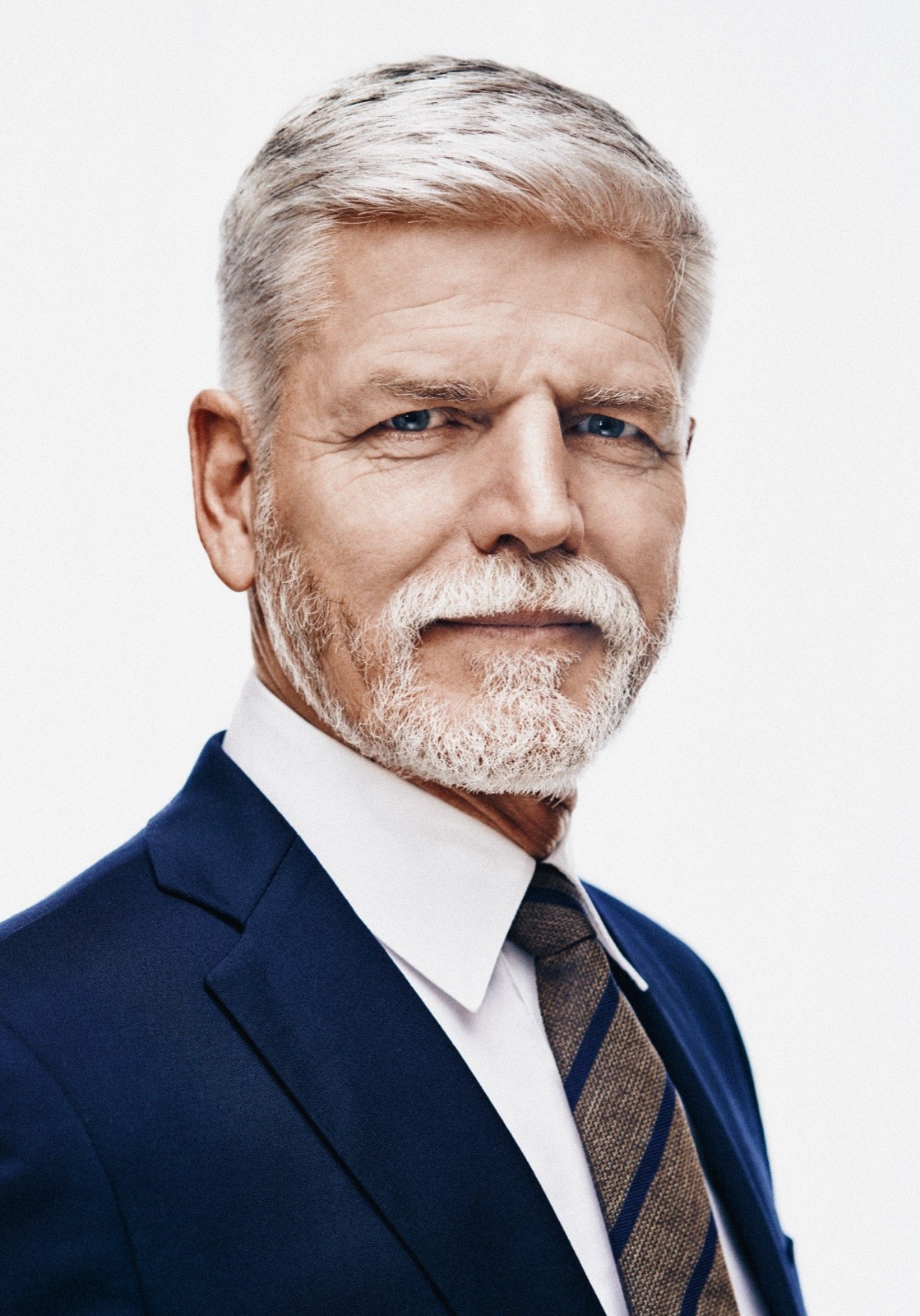
Petr Pavel
Petr Pavel is President of the Czech Republic. Petr Pavel unpacks U.S. President Donald Trump's latest rhetoric on the war in Ukraine and advocates for Europe to step up in defense of Ukraine.
Salome Zourabichvili
Salome Zourabichvili is President of Georgia. Salome Zourabichvili explains why Russian election interference has triggered a political crisis in the nation and contends to be the legitimate president despite recent election results.
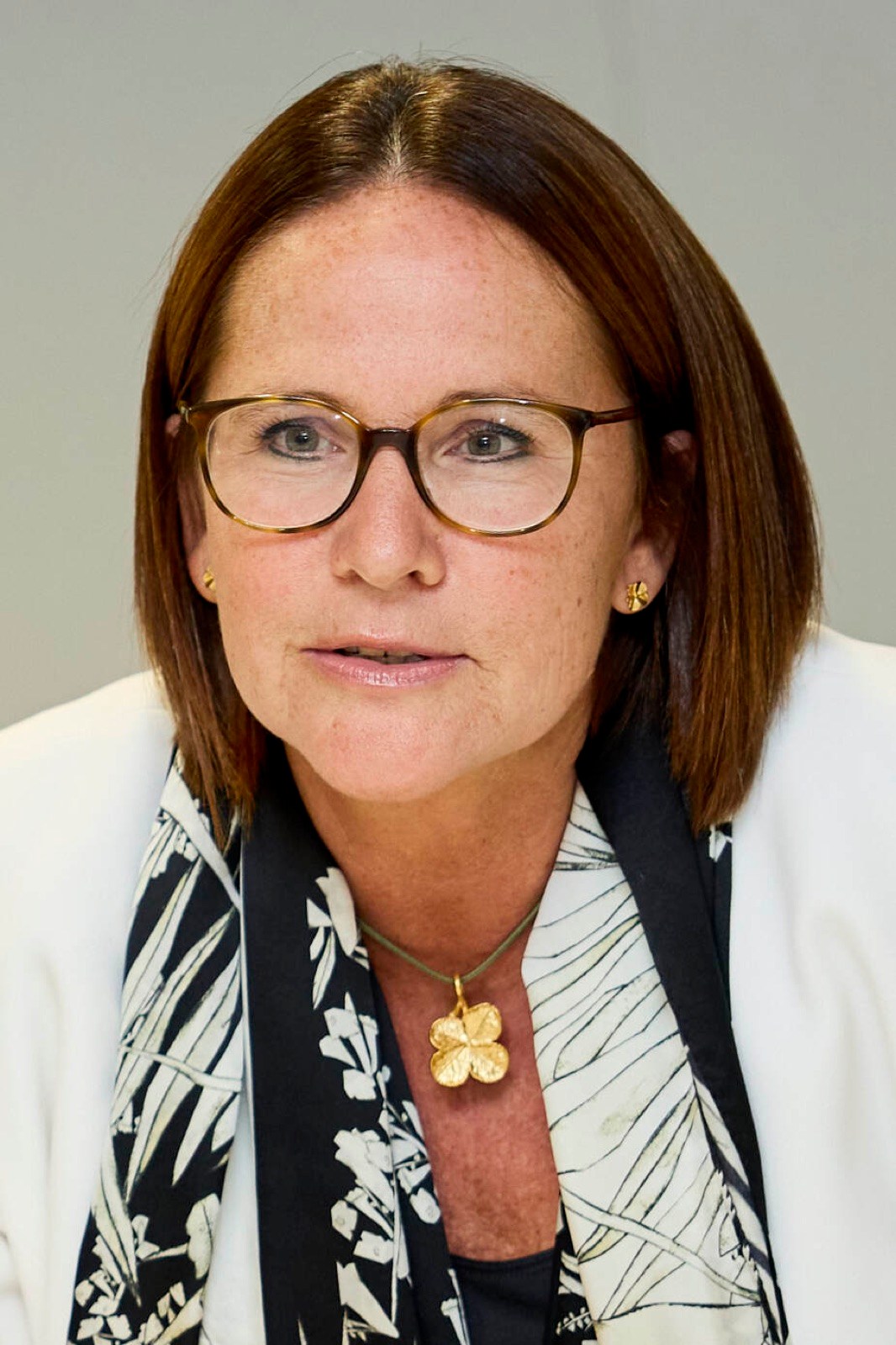
Yuriko Backes
Yuriko Backes is Defence Minister of Luxembourg. Yuriko Backes discusses the importance of gender-diverse armed forces and the role of women politicians.
Episode Summary
In this week’s episode of One Decision, host Christina Ruffini wraps up her coverage of the 2025 Munich Security Conference with three separate interviews with European leaders. Petr Pavel, President of the Czech Republic, sits down to unpack US President Donald Trump’s latest rhetoric on the war in Ukraine and why Europe should step up in defense of Ukraine. Then, Salome Zourabichvili, President of Georgia, explains why Russian election interference has triggered a political crisis in the nation and why, despite a recent election result, she believes she is the legitimate president. Lastly, Yuriko Backes, Defence Minister of Luxembourg, joins the podcast to discuss the importance of gender-diverse armed forces around the world, and being a woman politician.
Episode produced by Situation Room Studios. Original music composed and produced by Leo Sidran.
Listen & Subscribe
- Watch on YouTube
- Listen on Apple Podcasts
- Listen on Spotify
Transcript
INTRODUCTION
Raffini: I'm Christina Raffini and this is One Decision. Our coverage of the 2025 Munich Security Conference continues as we sit down with not one, not two, but three different European leaders on this episode. We got a chance to speak with Petr Pavel, president of The Czech Republic, who talked about how directness and strength is the best way he thinks to deal with President Trump.
Pavel: I believe that one of the objectives was to wake up Europeans to really stand up on our own feet and to do more. And he managed to do that.
Raffini: We also caught up with Salome Zourabichvili, president of Georgia. She sat down to talk with us about how Russian interference in her country's election has triggered a political crisis, and why she says she's not giving up and still sees herself as a legitimate president.
Zourabichvili: Well, I'm the legitimate president of Georgia. That's at least how the people see me because, one, the elections were stolen by the Russian methodology.
Raffini: Finally, we spoke with Yuriko Backes, defense minister of Luxembourg, who talked about why despite recent comments from The US defense secretary, women should have a prominent place in the world's militaries.
Backes: We need women brains in the army. We need women soldiers in the army. Otherwise, this is also not the way into the future.
Raffini: But first, let's start with Czech president Petr Pavel.
INTERVIEW: PRESIDENT PETR PAVEL
Raffini: Thank you for joining us. I really appreciate it. I know Munich is packed. There's been a couple high profile speeches. The two that come to mind are Vice President Vance and then Zelensky spoke. Since that was the most recent one, wanted to ask you what your reaction to President Zelensky's speech was today.
Pavel: It was quite strong. What I took out of it at the first glance was, after the three years of being under such an immense pressure, running his country, defending his country against the aggression and pressing challenges from all the sides, going to all the world asking for support, he should have been so much tired and exhausted. Instead he was encouraging us to have courage, to encourage him. In fact what he was saying, just, you know, look at yourself, be self confident, do what you deem is right, don't look left right, just do it, because it's in your interest. So I think this is what I took out of it at the first glance. And of course, second is that it's right. They have no other choice than to fight for their own survival. And by doing that they are actually fighting for our security, because if someone believes that Russia will stop if they got the control all over Ukraine, it would be very naive. So I think we simply have to step up our support, finally. And we tend to say at almost every meeting that we are at a turning point. Now I believe we are, because there is a chance to have some peace settlement this year. We have a new US administration which also in itself creates an opportunity. We have a great pressure on European countries to do more in all aspects. And I think we should take that opportunity seriously.
Raffini: So one of the other things Zelensky said was, you know, yesterday the American vice president made it clear decades of a close relationship between the Americans and Europe are ending. Do you agree with that assessment?
Pavel: I believe that we have to look at it from the point of view what was the objective of that speech. As I'm usually positively thinking, I think about it in a positive way. So I believe that one of the objectives was to wake up Europeans to really stand up on our own feet and to do more. And he managed to do that. Because now we really are pushed into really stand up and doing things on our own. And in that sense that speech totally met the objective. We definitely think much more seriously about being capable not only to come up with military capabilities, but also to make decisions that will be independent from The United States. Not necessarily cutting off The United States, but wherever The United States is busy elsewhere, in the Indo-Pacific or elsewhere, we should be able to come up with our own capabilities, with our own decision making power to act alone.
Raffini: That sounds like a very diplomatic and eloquent way of saying basically, yeah, you do kind of agree with that statement.
Pavel: I believe that this is exactly what the Trump administration wants from us, to stand up on our own feet, to be as grown up as possible. And to be a true partner. I believe that all of us would always prefer to work together with The US, but if it is not possible for any reason, we should be able to act on our own.
Raffini: One of the things that I thought is interesting, because we've been talking to a bunch of different ministers and different presidents while we're here, and we're talking about that 2% GDP defense threshold. And some of the countries have said, you know, we're working on it. It's a long term goal. But you've been very diligent about bringing your country's military spending up. You've said, I think you said that 2% is a starting point. It's not an ending point. How did you do that? Should other countries follow that model? And where does it end? Where do you think, you know, how much do you think you should be spending on your own defense?
Pavel: When I was chairman of NATO military committee, I was not very happy about this 2%.
Raffini: You thought it was too low, too high, or that people weren't meeting it?
Pavel: It doesn't say anything. We have in Europe a US four-star who is supreme commander in Europe. He's the guy who would actually be running the war. He won't be interested about charts of 2%, he would be interested in number of tanks, aircraft, ships. That means true capability. But we are not talking too much about true capabilities, we are talking how much do we spend, not for what, at what time. So we have a NATO process that is called NATO defense planning, which is based on assessment of threats and risks, and then we calculate the number of troops and capabilities that we need to address these threats. Then it is calculated to member states, negotiated, and it results in concrete capability targets. Every nation agrees voluntarily on concrete targets, how many units, at what readiness, how many pieces of equipment they will provide to collective defense at what time. This is very concrete. I would say now we have a new reality including new technologies requirements. So let's go through the requirements of a current, it is four-year cycle, now we have a new one. So let's calculate it in figures and then we will set up the difference between the state today and required state of forces. And we'll immediately see what we are lacking and what country is lacking how much. Because I can tell you there are countries that are spending 2% but meeting their capability targets by 50%. When it comes to debating actual capabilities, Supreme Commander would get the set of forces that will remind the Swiss cheese full of holes. So, yeah, we should really focus on setting some target, being it 2.5%, 3%, 3.5%, I really don't know. It is an indicative target. But then, let's give it some time and more analysis, going through true capabilities that will, in the end, provide capable and credible collective defense without any holes.
Raffini: And speaking of NATO, you know, I was at the NATO conference when it was in DC last year, and that was obviously the Biden administration, and the line from almost everyone, I was actually shocked at how consistent the messaging was. Someone's communication staff did a very good job. But it was, you know, it's not a question of if, but when Ukraine will become a member of NATO. Now we're hearing the new secretary of defense from The US was in Brussels and said Ukraine is not gonna be a member of NATO and we're never gonna put US troops on the ground. Now he's since walked back those comments partially due to the response, but what kind of an impact has that had in a future peace negotiation? Is the damage already done because they showed their cards?
Pavel: I truly believe that it should start first by consulting partners and allies. So we should take Ukraine on board and discuss with all allies what are the requirements, what are the red lines, what are the withdrawal lines, so what is the room for agreement. And then there would be some negotiation, preferably with European countries or NATO Allies to be present, and if not, then European interest should be present at the table, clearly identified. And, of course, Ukraine will have to be at the table at any time.
Raffini: But what do you do when President Trump says, oh, you know, maybe I'll go to Moscow, you know, there's now a rumor that he might go to the victory parade and he's gonna bang the South with Putin and that's that, and he's gonna solve the war. You know, and if they come up with a deal between two parties, what do you do with that if they come out with that?
Pavel: I think we have to be opening up to act as partners and allies, to tell allies and friends that it is in their own interest that we are part of the game.
Raffini: Do you think this administration thinks that it needs allies?
Pavel: I hope so. At least we hear it from all the interventions, all the speeches that they want to preserve the Transatlantic link, the high quality, that they need a strong and hopefully united Europe. I believe it is in American interest because if we accept that for The United States the main rival will be China, then United States would definitely be much better off with strong and united Europe on their side rather than standing alone. In fact, I have met a number of people of that kind, and I think the first thing is that they will not be pleased to hear someone who will be bold and very open. But I think it works. I think you can be very bold and open without being offensive. And that's the thing. I believe that Donald Trump is very pragmatic, he's probably used to hear things as they are, not a very diplomatic language. And I believe that's the way how to come to common understanding, simply to explain how we look at it, not to be afraid that we're talking to a representative of the big and mightiest country. But as we are allies, we should clearly explain our position and come to understanding that we will let them act together.
Raffini: Do you think some politicians, that's where they're going wrong? Do you think they're making an error by, as you said, really needs to calm down, by reacting or, like, you know, being afraid? Do you think they should just be more direct with the US administration?
Pavel: Well, I have seen that in NATO because I witnessed the first appearance of Donald Trump in the North Atlantic Council meeting. Quite a shock to many. And, of course, there is always some reluctance for organizations like NATO, EU. They were known for their political correctness. They were very shy of even saying the truth because it might offend someone. So we were going around in very polished sentences. I believe that when we are in an international environment where English is not our native language, sometimes we have to use really the rule of keep it simple. And that's why I believe that we should use a simple language but very open, because as I repeat so many times, we are allies. We are allies, that means friends. We might have different views, but we should talk to each other in an open way with goodwill to understand each other's concerns, and then we'll find a common solution. I think that's the culture that we have.
Raffini: Thank you so much. I really appreciate it.
Pavel: Many thanks. Thank you for taking the time.
INTERVIEW: PRESIDENT SALOME ZOURABICHVILI
Raffini: Now we wanna turn to Georgia where a contested election and a split between the president and the Georgian Dream party have been the cause of mass protests for the last couple months. The Georgian government is heading more in line with Russia while the Georgian people, according to most opinion polls, want to head towards Europe. In between is president Zourabichvili, who is technically out of office, but says the results of the election were wrong and she's still fighting to have them overturned. Take a listen.
Zourabichvili: I consider, but I'm not sure in this conjecture, that I think it would be very wise for all the people involved in the peace talks to realize that you won't have a just peace, not only if it's not a just peace for Ukraine but if other occupied territories by Russia remain occupied, because that means that Russia will not change. If Russia doesn't have to realize that it cannot occupy territories that belong to its neighbors then it will continue whenever the time comes to try to grab territories either through military actions or through election manipulation. So beware of election manipulation, look at Georgia, do not forget Georgia and see that if you do not defend it where it's easy, where it's a small country and you can still have a very strong weight on what happens in this country, where people are on the streets now for eighty days. The protests have been enormous. So everybody that thinks that it's going to wither away does not understand Georgia, because Georgia is not fighting their political crisis or one party against another, or even against an autocracy, that Georgia is fighting for its survival, for its freedom, for its European future, for everything it has been fighting for centuries. So these people won't stop and they call themselves to the end. And we also have, and I should mention her, a very strong lady, Mzia Amaghlobeli, who is hunger striking, she is a journalist, she has been one that has started the media in regions where it was very difficult, some of us, thirty years ago, at the time of the independence. Since then she has been fighting each time there was a threat to democracy or to human rights and now she's hunger striking saying that she will go to the end and she has to be supported by her colleague journalists, so have the prisoners, but the main thing is that we have to see what is happening, that's what people are asking. They know that the fight, they will have to have it to the end and that's their responsibility, but they want to be seen, to be recognized, and so that the same mistakes are not made elsewhere.
Raffini: You talked a lot about Russian interference and disinformation kind of goes along with that, but I did want to ask you, one of the parts that really stood out to me in Vance's speech was when he said, many of us on the other side of the Atlantic, it looks more and more like old entrenched interests hiding behind ugly Soviet era words like misinformation and disinformation, who simply don't like the idea that someone has an alternative viewpoint or might express a different opinion. Does that make it harder to combat Russian efforts when you have the Vice President of The United States saying disinformation isn't a thing?
Zourabichvili: It might, but not for us who know so well what has been Soviet propaganda. Maybe when you're far away and you're younger you don't know how it was and how it was used and we have this direct experience today so we know exactly how they use it. If you can have an impact on Georgians that have been fighting for their independence for the whole century and the century before, and suddenly they can be affected, even to a certain extent, it was not massive, by the propaganda about the fact that Americans and Europeans were willing to start a war from Georgia against Russia. If you can believe that, it means that propaganda is very strong and you have to fight it and you have to know where it is. Ignoring it is giving away the defense of your freedoms.
Raffini: Can you explain to people who may not understand what your current position is, your relationship with the Georgian Dream party, how we got to kind of where you are right now?
Zourabichvili: Well, I'm the legitimate president of Georgia. That's at least how the people see me because, one, the elections were stolen by the Russian methodology. That doesn't say that Russia was present and there were an army of Russians in Georgia, no. They use the proxy that they have, but the methodology.
Raffini: But how do you know that? I mean, I'm not disagreeing with you, but how do you know that the Russians stole the election?
Zourabichvili: I know that because when you have 3,000 call centers that were established before that and that were using, by the way, the funds of the pensions in Germany and in other countries, and that stays in place for the elections, then you know that it's a big sophisticated organization that is not born in the minds of the people that are today in the Georgian politics, which we know. When everything is done and very well organized in advance, because I was trying to prevent that and I could not allow the diaspora to vote, the Georgian diaspora. You know it's inspired by the experience in Moldova where diaspora won over. So it's well planned in advance and many other details, for instance all the personal data of the Georgian citizens are in the air, and that is something that we discovered months ago.
Raffini: What do you mean are in the air?
Zourabichvili: That means that they are available to everyone.
Raffini: Right. Oh, they could directly contact them and pressure them is what you're saying? I understand, okay.
Zourabichvili: Available to everyone because they were made available at the time of the elections because the pressure on the citizens, who needs health support, who needs, who has a crediting bank on which you can put pressure and so on. So that's how we know the extent of this. So elections were stolen and were stolen in a big sophisticated operation, but beyond that the government that came out of these elections and that people do not consider as one, has started to behave unconstitutionally. They have called the parliament against constitutional rules, they have not waited for the constitutional court to give its decision on the appeals about the elections and they met before that, again unconstitutional. They have violated almost all the principles of the constitution, human rights, freedom of speech. They passed a really strict press law as well, more and more, and they have decided on the November 28 this decision that runs against an article of the constitution that they introduced themselves, which says that every institution in Georgia has to do the utmost to go towards the European, Euro-Atlantic integration. So they violate directly what is the will of 80% of the Georgian people, before the elections for thirty years and now. Yesterday or three days ago there was a new opinion poll in which 81% wants European Union. Those are the people that consider me as legitimate.
Raffini: What do you do? I mean, what is your daily life like? Do you go to an office? You know, you say you're president, they say you're not president. Like talk us through what, you know, as you're working in this job, what you do.
Zourabichvili: One thing that has changed for me is that I'm not in the palace. And I don't think that it matters. The walls do not make the legitimacy. The legitimacy is made by the people that I meet every day on the streets and say, 'Mrs President, you are President'. And the daily thing is meeting with the political parties on one side to manage that they are coordinated in their demands, meeting with different segments of the population, with the media for instance, and I'm bringing this appeal of the media that was a result of one of our latest meetings, meeting with the people that represent business or that represent finances and economy to know what is the situation in that respect. So trying to do what I was doing before, I didn't have any real executive powers when I was president. And my power today is the same, but it's a stronger one.
Raffini: But what is the end game here? Because it's a bit complicated to call an election illegitimate, especially when you're talking to Americans because that's a very hot button issue in our country because we have a president now who says the last election was illegitimate in The US. Once the election is done, like, it's done. Whether it was or not, there's no way to undo it. But to an American, it's hard to understand that you're trying to either redo an election or repair this damage. Are you confident that Georgia has enough of a process that you will be able to do that at some point? How does that work?
Zourabichvili: We have no other option. It's a very peaceful protest. It has remained over the past three months, there is not one car that was broken or put fire to or anything. Why is it peaceful? Because people know that we are in a geopolitical environment where you have no chance or reason or you do not take risks with the stability of country. So the only thing they're asking and they've been asking are these demands for new elections and that's the only way out of a deep crisis. We are for three months now in a standoff. The authorities that pretend to be the authorities of the country do not govern, except dictating repressive measures, but they do not govern the country. And the people on the streets continue protesting, so we are in a deep crisis. And all the, if you look at political science, the rules and the principles, when you're in a deep crisis the only way out is going back to the people to ask them what they really want. And I can tell you what the people really want in Georgia are new elections, going back to their European future, taking back their vote but taking back their vote in order to give back their future and not go in the direction of Russia which is the direction in which they are led by just one oligarch that has infiltrated its own party.
Raffini: Where were you in 2008, and do you think if the world had reacted stronger to Russia's invasion of South Ossetia, we might not be where we are now with Ukraine?
Zourabichvili: Yes, where I was, it's very interesting, I was in Paris, I left that evening when it all started, I was flying. I found out as soon as I arrived on the other side. My husband was in Tbilisi and I saw everything that was happening and I had at that time, in the next few days I think 17 interviews on the European media. And I was saying at that time, and I'm still saying, that if you do not see that Georgia is a testing ground, because it's an old testing ground of the Soviet empire, we are the testing ground, it's a small country, it's a very important strategically country for Russia but also today for Europe, because we are the connection with the Black Sea and the Caspian Sea. So look at what's happening, do not forget, and do not forget that not reacting in 2008 led to Crimea, led to Ukraine, and not reacting today to this new hybrid strategy might lead to again losing the Black Sea because the other countries are also as vulnerable as we have been in these elections.
Raffini: Thank you so much. I really appreciate you taking the time.
INTERVIEW: DEFENSE MINISTER YURIKO BACKES
Raffini: For our final interview from our Munich chats we caught up with Luxembourg's Defense Minister, Yuriko Backes. She's the first woman to hold the job and she had some pretty strong opinions about why other women aren't defense ministers. It might surprise you. It certainly did me. And she also believes women should have a role in militaries around the world.
Raffini: Thank you so much for joining us. I know you were here, as I was, during Zelensky's speech. Did you get to listen to it?
Backes: Yes, I did.
Raffini: There's something else Zelensky said that kind of stood out to me, and he said, some in Europe might be frustrated with Brussels, but let's be clear. If not Brussels, then Moscow. And Moscow will pull apart Europe if we, as Europeans, don't trust each other. Does anything in that phrasing stand out to you?
Backes: Well, I think this is what also our partners on the Eastern flank, who are geographically closer to Russia, have been saying to us for a long time. And the Baltics have been really kind of raising the alarm about this for a while. I've been discussing this for very long. So Luxembourg, a little bit more geographically removed from this eastern flank, I also need, and I am explaining to our population, this war has changed European security. It has also had an impact and is having an impact on our security. That's why despite the fact that our army is not the hugest army in the EU or in NATO, we are also sending our soldiers to the Eastern flank. We have soldiers stationed in Romania. We have soldiers stationed in Lithuania. We are part of the EU battle group. We will return now also to the KFOR mission that Luxembourg was also contributing soldiers to in the past. So despite being small, we feel that we have a very important role to play by contributing to our collective defense, and that is what we are doing.
Raffini: Well, I mean, I just wanna ask you. Given the rhetoric coming out of Washington and this issue of pay for plays, it was a big issue with President Trump in the first term and is an even bigger issue at this point, are there any concerns that, you know, whether it's justifiable or it's been agreed to or not, that not meeting that 2% threshold will give the Americans more ammunition to withdraw or malign Europe?
Backes: I think today, the 2% is still a goal even though we know that today we're talking about three, four, 5% as well. But this was the goal that was agreed and this is what we are working towards. Since the illegal annexation of Crimea by Russia just over ten years ago, Luxembourg has tripled its investment into its defense. So, we've come a very long way. We know that we still have a very long way to go, and we are committed to doing this. Now, President Trump has thrown on the figure of five into the circle. Some member states are not yet at 2%, and Luxembourg included. The EU is at 1.9, I think, today, so let's say 2%. We, as Luxembourg, are very well aware that in the next couple of years, we will need to at least double our investments, which is huge. But we know we need to do this. We are an ally that our allies can count on. But like I said before, requests by The US, they are nothing new. So we take this seriously and that's what we are working towards. We know we need to do this quicker. We need to have partners that we as Luxembourg can also reach these new NATO targets that are currently being discussed. We need partners to do this. We cannot do this alone. We need tremendous human resources because you cannot just invest in capabilities and then not have people to run, let's say, the machines. If you have planes and no pilots, it doesn't work. If you have all sorts of weapons from drones to whatever, you need to have people to operate this. This doesn't go from, you know, you cannot do this in a day or two. If you want to have or if you need to have deployable military hospitals, you need to have the nurses, you need to have the doctors. This requires a huge recruitment effort. It takes time. So we need to be realistic. We cannot invent these human resources. We need to recruit them. It takes time, but we know we are under pressure because it's about our security. It's about our collective security, and that's why we need to work on this together, and it's a matter of urgency.
Raffini: Can you talk to me a little bit about your armed forces for people who aren't familiar with your capacity, like who makes up your armed forces and how you became defense minister?
Backes: So we have an army of about 1,200 men and women. So we have a small army, but it's an army of soldiers that are ready to combat also in the context of NATO collective security. Like I said, we are stationed on the eastern flank to protect these countries, but also to protect ourselves. How I became a defense minister, well, this is part of a coalition negotiations to my party. This job was proposed within my party. I was a candidate to take up this challenge, especially today. It was important for me to be a part of this very important decision making for the future of our country, but collective defense. These are some of the most important issues that we are discussing today. As a former finance minister, of course, the job was more to, you know, keep finances under control. With my new portfolio, defense minister, but also minister of transport, also minister responsible for gender equality and diversity. There are synergies between all of this. Of course, the gender dimension is something that is anyway important in everything we do. So there are important synergies even between transport and defense. Military mobility is also important, everything is connected.
Raffini: We did a panel with all female defense ministers and foreign ministers, and one of the things the defense ministers were saying is, as the job has gotten more important and more prominent in nations around Europe, she's seen fewer and fewer women in the jobs. When she goes to the meetings, there are fewer and fewer women in that last photo. Is that something you've seen, and why do you think that's happening?
Backes: I've seen this also with finance ministers. When I went to the finance ministers in the EU, there were nine women. I don't have the exact count today, but I know there are a few less. Same in the defense area. I'm not sure that this is an active policy in member states not to put women in these positions. I would say more generally, women sometimes also run away from bigger challenges. This is just one dimension. We cannot just go around and blaming men for not putting women in important positions. We also need to have the women to have the courage to take up bigger challenges.
Raffini: So maybe that's in the confidence.
Backes: Yes. I mean, you are under bigger scrutiny when you're a woman in politics. Always. Many other things are thrown at you that are not thrown at men. So it's not an easy environment to operate in, but I absolutely agree that we need women in positions of responsibility, be it in politics, be it everywhere, be it in the private sector. More diverse decision making groups, that goes beyond gender equality. I think the better the decisions are, and we are far away from, you know, having a proper reflection of our society also at the level of politics, same goes for the private sector. If half of our population is women, this should be reflected in the way we make decisions, but we need to better support also women to get there.
Raffini: When it comes to your armed forces, do you feel like your country is doing more than others to try to have a gender diverse armed forces? Is that something you think about? How does that work?
Backes: I think just the fact that I'm a woman, at least for Luxembourg, this has been more thought about than ever before.
Raffini: Are you the first one in this job?
Backes: I'm the first woman in this job. Although my predecessors did a fantastic job, I think the woman dimension was not so prevalent. So for the army also to have a woman boss now is a change. This is a dimension that is very important for me, and I bring it up in all the discussions. We discussed before recruitment. And also there, when we are recruiting, we shouldn't be addressing just 50% of the population in our communication campaign. This won't work. We need women brains in the army. We need women soldiers in the army. Otherwise, this is also not the way into the future. So this is a big change for our army that I'm putting a lot of importance on this.
Raffini: Do you worry at all about there being a backlash? Because in The US, we had a couple of administrations who are very vocal and very active about diversity, inclusion, and female parity, allowing women in roles in the military. They previously had been excluded, allowing them in military academies. And now we have this kind of snapback reaction where our new Secretary of Defense has been pretty critical about women's roles in the military and said, who doesn't think they should be in special operations, artillery, infantry, or armory units?
Backes: We have more generally a backlash against women's rights. Things that we thought were for granted, that we take today for granted, are being rolled back in terms of, you mean like across the world? I think across the world, but not only for women's rights, also LGBTIQ plus rights are also being targeted. So I find this a very, very worrying development more generally. But, yes, I've seen these statements. Obviously, I don't agree and I will make sure that as long as I'm in charge of the Luxembourg army, we don't go down that road because we need women everywhere in the army, from the top positions of decision making to the soldiers.
Raffini: That's a great note to end on. Thank you so much for taking time with us today.
Backes: Thank you so much. Appreciate it.
CLOSING
Raffini: Thanks to presidents Petr Pavel, Salome Zourabichvili, and of course, Luxembourg Defense Minister, Yuriko Backes. That was One Decision. This wraps up our coverage of the 2025 Munich Security Conference. It was certainly not a dull one and we hope you enjoyed these candid conversations. Tomorrow in the feed we're going to release an episode with Sir Richard Dearlove ahead of the highly anticipated German elections. He sits down with a member of the Bundestag to get a better understanding of what's at stake. If you don't know the website by now, my friends, you've just not been paying attention. For more content, please go to onedecision.com. I'm Christina Raffini. Thanks for listening.