Episode Info
- Season23
- Episode2
Hosted by Christina Ruffini and Sir Richard Dearlove
Guest
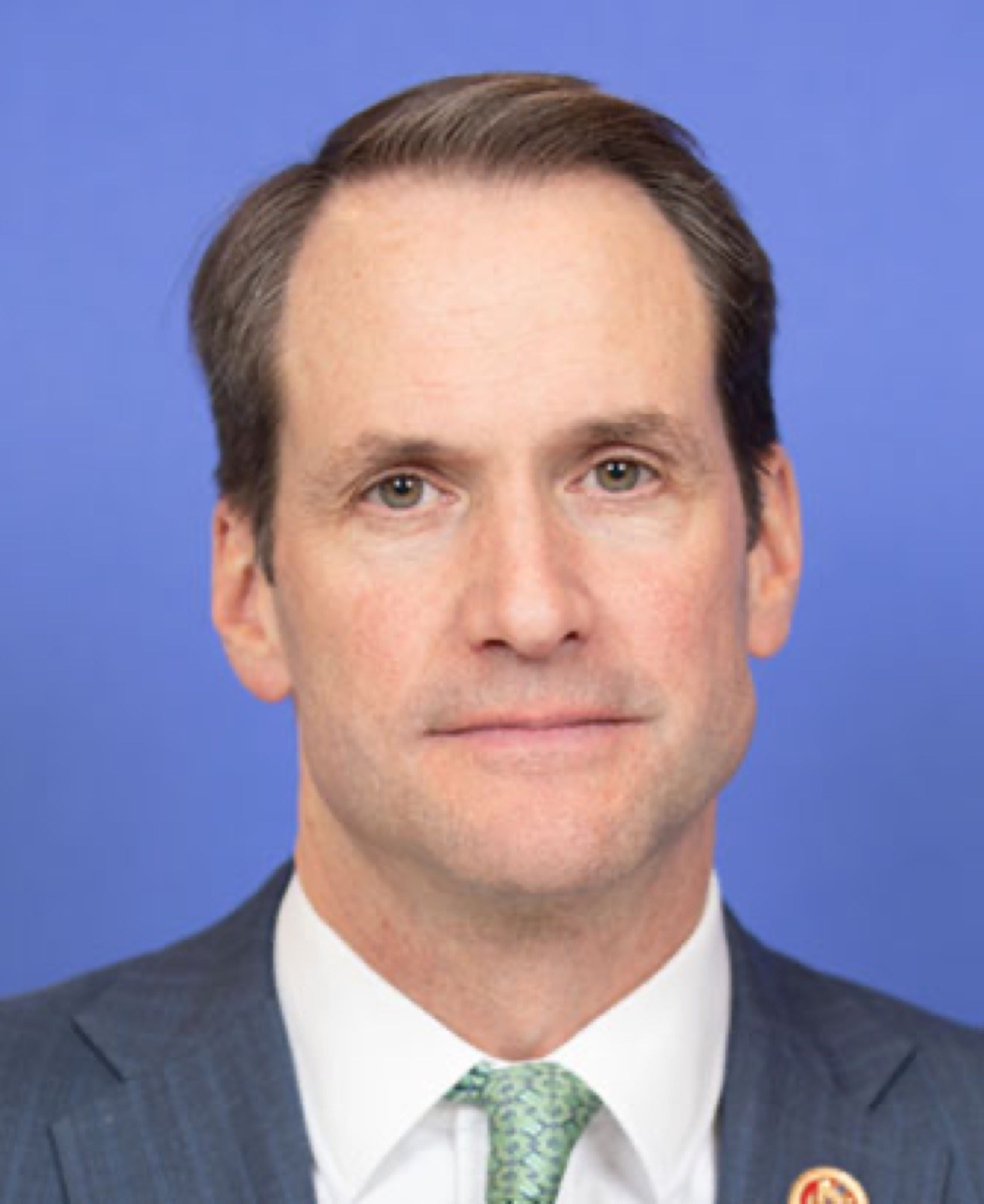
Jim Himes
Jim Himes is a Democratic Congressman and ranking member of the House Permanent Select Committee on Intelligence, which provides oversight of U.S. intelligence agencies including the CIA and NSA.
Episode Summary
Democratic Congressman Jim Himes is the ranking member on the House Permanent Select Committee on Intelligence, with oversight of U.S. intelligence agencies, including the CIA and the NSA. He’s also one of the most outspoken members of Congress advocating for supporting Ukraine against Russia’s invasion. Guest host and foreign affairs journalist Indira Lakshmanan spoke with Himes about his recent meetings with Ukrainian President Volodymyr Zelenskyy as Republican leaders block a vote on a $60 billion aid package to Kyiv, and with Yulia Navalnaya, wife of Russian dissident Alexei Navalny, just as she learned of her husband’s suspicious death in a Russian gulag. Himes discusses the global competition between democracy and autocracy and says there's one decision for the United States—"Do we shrink from that fight?" He calls Donald Trump a "cult leader" whose hold over the Republican Party is dangerous to democracy and global stability. Indira and One Decision’s resident spymaster, former MI6 Chief Sir Richard Dearlove, discuss the Congressman's comments on the threat of Russia deploying a nuclear weapon in space, the massive growth in open-source intelligence, and threats to security from internet-connected technologies.
Listen & Subscribe
- Watch on YouTube
- Listen on Apple Podcasts
- Listen on Spotify
Transcript
INTRODUCTION
Lakshmanan: You're listening to One Decision, the podcast that looks at the choices that shape our lives. I'm today's guest host, journalist Indira Lakshmanan.
Dearlove: And I'm Richard Dearlove, former chief of British intelligence, otherwise known as MI6.
Lakshmanan: Each week, we explore some of the biggest choices and issues that have global impact. We hear from the key players and influencers making, informing, and shaping the decisions that impact us all. Sir Richard, it's such a pleasure to be with you today as the guest host for One Decision. I just had a really interesting conversation with Congressman Jim Himes of Connecticut, who is the ranking Democrat on the House Select Committee on Intelligence.
Dearlove: I think that was a really fascinating interview. Extraordinarily interesting things to say about Ukraine and about the changing nature of intelligence collection, and he identifies some rather important issues there. And of course, he also mentioned the threat from Chinese chips in cars and cranes and the United States reaction to that. So, yeah, I found it a very perceptive and unusually informative discussion.
Lakshmanan: Let's give it a listen.
INTERVIEW WITH CONGRESSMAN JIM HIMES
Lakshmanan: Congressman Himes, thank you so much for joining us today.
Himes: Thanks for having me, Indira.
Lakshmanan: I wanted to start out. You were just in Munich at the Munich Security Conference, and you met with Ukrainian president Volodymyr Zelensky and the widow of the Russian dissident Alexei Navalny. You were with NATO allies when they heard Donald Trump's threat to encourage Russia to do whatever the hell they want to any NATO ally who doesn't meet spending guidelines. Tell us about what the mood was like in the room, what you heard from Zelensky and Navalnaya, and whether there's anything they said that would be able to convince Republicans, Donald Trump, House Speaker Mike Johnson to bring to the floor a vote on the $60,000,000,000 of US aid for Ukraine?
Himes: They were both emotional meetings. Navalny's wife had just learned that her husband was dead, and it hadn't been confirmed, but nonetheless. And it was enormously emotional. I mean, it was just the most tangible example of the brutality of Vladimir Putin that most of us will experience. Most of us are not going to see the fighting in Eastern Ukraine. And then, of course, you know, president Zelensky, just a real profile in courage, he said, look. I need your help. We're not gonna stop fighting if I don't get your help because this is our country. A day later, I thought, there's one decision the United States needs to make. And I don't know that I can be persuasive with a guy like Donald Trump or Speaker Johnson. But abstract away from those two conversations, and there's one decision that needs to be made here, which is, is the United States at a moment in time where there is a global competition between democracy and autocracy? And the players are very clear, and their intentions are very clear. In that moment, there's one decision for the United States, which is do we shrink from that fight? Do we let Vladimir Putin — he'll never take all of Ukraine, but do we let him set up a puppet state in Kyiv, which if we don't provide the aid, he will do, that is very much in his orbit. It'll be like Belarus. He and the Chinese will learn that, forget about American casualties, if it feels like a lot of money, we've shrunk from the fight. That'll have implications for Taiwan. The authoritarians will learn that we're not there, that we've taken one decision not to be in the fight anymore, and it will become a very, very dangerous world. I hesitate to use the word fight because it's not going to be combat everywhere. But we are in a global argument right now between authoritarianism and democracy. And whether we wanna do what our grandparents and our parents did in World War II and the Cold War and say, no, we're gonna stand for democracy, or are we just going to let the authoritarians of the world do what they will?
Lakshmanan: So a follow-up to that is that on the House floor, you made a very ominous reference to Neville Chamberlain, of course, famously the British prime minister who tried and failed to appease Hitler by giving away Czech territory where 3,000,000 people, mostly ethnic Germans, lived. Sounds familiar, doesn't it, to what's happening in Ukraine. In your analogy, who is Chamberlain, and what is the risk we face?
Himes: Well, the point I made on the floor was that today's Republican Party — and I don't wanna paint the Republican Party with too broad a brush. The truth is that probably half the Republicans in the House of Representatives today are ardent supporters of Ukraine. But there's another half who range from not our fight to I kinda like Vladimir Putin. And so put yourself in the shoes of Neville Chamberlain in 1938. It's twenty years after World War One, an absolutely apocalyptic conflict. People are tired. The Brits are tired. The French are tired. You know, they've just been through a disastrous war. And they wonder why, and Neville Chamberlain said this, why should we be interested? I can't remember the precise words he used, but why should we be interested in this fight that is so far from our shores? And so you understand the upwelling of hesitation that drove him to ultimately appease Hitler. And frankly, that upwelling is a lot of what's happening in this country. In the last twenty years, we've been through an unsuccessfully concluded war in Afghanistan and a very ambiguous outcome in Iraq. And a lot of Americans are saying, my God, you know, the bridge is crumbling down the street here. Why in the world would I want to do that again? But remember, and here's what — you know, the upwelling of emotion that leads to appeasement, you may understand it, but history shows us that if you fall prey to that, you pay an awful lot more down the road. And there's no question in my mind that if we walk away from Ukraine and Vladimir Putin's thesis is proved and president Xi of China realizes that the West doesn't have any backbone, our kids' world will be a complicated one to say the least.
Lakshmanan: I had maybe read into your statement that you were posing Donald Trump as the Neville Chamberlain because he and others, supporters of his, have talked about the idea of why not just, you know, keep the borders where they are now or allow Russia to have that eastern part of Ukraine where there are Russian speakers and Crimea where there are ethnic Russians, Russian speakers?
Himes: Yeah. I think that's giving Donald Trump way too much credit. I mean, you know, they both may be undertaking an act of appeasement, but Neville Chamberlain, love him or hate him, I think probably thought this through. Donald Trump is a little bit of a single celled organism. He responds to one stimulus and one stimulus only, which is, does this make me feel good or does it make me feel bad? And Ukraine makes him feel bad because he got impeached over Ukraine. Right? So again, there's a limit to how much I would draw an analogy between Trump and Chamberlain. But Trump, as a single celled organism, feels intensely with all of his being that Ukraine is a bad place. So two things are happening in the Republican Party. One, some people are channeling that traditional isolationism, which we've lived with in this country forever. And by the way, it's not a terrible instinct. Right? There are episodes in our history where we probably should have been a bit more isolationist. But then you have Donald Trump as a single cell organism saying Ukraine bad, and his acolytes, his followers saying the boss thinks it's bad. And an awful lot of my colleagues just realize that if they stand up and say things that are contrary to what the cult leader is saying, they'll put their own political careers at risk. I mean, look, we're gonna have a test probably in the next two weeks. I heard Republican after Republican in Munich saying it's absolutely essential that we get this aid done. Not the question I want them to answer. The question I want them to answer is, will you sign a discharge petition which will get you in trouble with the speaker? Is it that important? And the answer — most of them they won't say it, but the answer is no. They're not gonna take risk on behalf of Ukraine.
Lakshmanan: We found out recently that former FBI informant Alexander Smirnov passed on false allegations planted by Russian intelligence about the Bidens. So, essentially, the Biden impeachment case is based on Russian disinformation. Let me ask you, how worried are you about Russian disinformation ahead of the 2024 election? Is this just another variation on what we saw in 2016 and 2020?
Himes: Yeah. Well, first, you know, I've learned that on these things, having gone through the Trump impeachment and everything, it's really important to make sure you know what it is you're talking about. And what we know is that Smirnov, we believe that he talked to people affiliated with Russian intelligence. The man — what we know for sure is that he is profoundly dishonest. So what we've heard from him, we don't really know. But you asked two really good questions. One, about the Biden impeachment, which is always based on sand, really. You know, once Trump got impeached twice, the Republicans decided they were going to turn around and do it again. And they have struggled all this time to find any evidence because there appears to be no evidence that Joe Biden was wrapped up in his son's business. But just because we don't know exactly what Smirnov was doing doesn't mean that we are very worried about attempts by the Russians to influence our elections. And I've seen this. And again, it gets pretty murky. But you'll recall that a couple of years ago, there was an incident where a package of material was sent to senator Ron Johnson of Wisconsin and, you know, is of sort of questionable origin. But the next thing you know, senator Johnson is, you know, waving it around saying this shows something, you know, terribly politically. So number one, the Russians, in contrast to the Chinese and the North Koreans and the Iranians, you know, they're after chaos. They're after uncertainty and instability, and that's not hard to do in a political context like the one that we live in today where people are just so hungry to jump on to information which confirms their, what the young people call priors, you know, what confirms their political prior beliefs. And so we're really susceptible to it today.
Lakshmanan: So how much of this is about, you know, as you say, sort of messing up the atmosphere and confusion? Or is it about the Russians actually preferring one presidential candidate over the other? We recently heard Putin allegedly saying that actually he wants Biden to be president, but other people have said, no. No. No. That's disinformation. He actually clearly wants Trump to be president. So what do we know about what they're doing above the surface and below the surface to influence our election?
Himes: I think what Putin wants is not unclear. Putin wants the world to see that democracies are unstable, that there is violence and chaos and challenge inside democracies. There's probably no better day for Vladimir Putin than January 6 when Americans are attacking the seat of their own government. And that's because he wants to tell a story to the world, which is that democracy doesn't work. That helps him with his periphery, with Ukraine, with Belarus. He needs to tell that story. And so what he's looking for is absolute chaos. The Chinese in contrast, you know, have $700,000,000,000 in annual trade with the United States. And as a result, you know, they would like us to leave them alone with respect to the Uighurs, with respect to what they may choose to do in Taiwan. It's very, very different. So what we know is that Vladimir Putin really values chaos in our country. And it's not hard to induce chaos. Again, if you imagine what the Chinese might be trying to do, they would really like to get Chinese friendly legislators into the Congress. And that's a complicated thing to do, but we've sort of seen them try to do that. It's a lot easier to simply inject FUD — fear, uncertainty, and doubt — into a receptive population, which is what Putin's doing. How is he doing that? Well, you only need to read the report of how the Russian services tried to influence the 2016 election to know that it's as simple as buying Facebook ads that reinforce somebody's belief that the Democrats don't believe in Jesus, to actually cite, you know, an attack they made on Hillary Clinton. So, again, it's a pretty easy thing to do because he's not trying to achieve anything other than chaos and uncertainty.
Lakshmanan: Well, I think the question a lot of us have is we saw what happened in 2016. All this information about Cambridge Analytica came out later. As you say, there were a lot of ads bought that confirmed people's confirmation bias, you know, about what they wanted to think anyway. I was astonished at the time that there were 1,300,000 more Facebook engagements of false headlines related to the 2016 election than real headlines. And yet, what have we learned? What is the US government doing to protect all of us against disinformation, misinformation in the run up to this election? We don't seem to have a sort of airtight system that prevents these falsehoods from being out there because of course we have freedom of speech, platform freedom for all these social media platforms. So what can we do about it to protect ourselves?
Himes: That's a great question. And I think you put your finger on a very challenging constraint, is that under the First Amendment of our Constitution, the federal government, any government really can't mess around, control, regulate, stop the flow of information. So what can we do? You know, our security services and others, the platforms themselves, are pretty good at identifying social media posts that may have originated in an African troll farm. And I say Africa because of course, Prigozhin, the dearly departed Prigozhin of the Wagner Group, was actually running troll farms in Africa injecting Twitter posts and social media stuff that influence people. They're pretty good as a technical matter at seeing that. But on the other end of the spectrum, what do you do about Tucker Carlson who is running around Russia saying, these grocery stores are amazing, and the subways are so much better than they are? You can't do anything about Tucker Carlson.
Lakshmanan: We live in this fabulous world connected to the Internet. We practically can plug ourselves into the Internet. We have home speakers, cars that are connected to the Internet, refrigerators, and yet this is also dangerous. And we know that hackers based in Russia have used ransomware to shut down critical US infrastructure like a major US oil pipeline back in 2021. President Biden has just taken steps to block Chinese manufactured Internet connected vehicles from coming into the US. We know that there's an investigation underway in the commerce department, and he has also said that the US is gonna replace Chinese made cranes at US ports because of security threats. So tell us, you're on the intel committee, specifically, what can the US do to protect our critical infrastructure and protect ordinary consumers for that matter?
Himes: In your question there, there are a couple of things that we should unpack too. I mean, you know, we've been talking about sovereign actors acting here. Remember, a lot of the bad guys here are either quasi sovereign or just rogue. And that's another reason why this is hard to track, right? You may be able to track the offensive activities of the Russians or the North Koreans or the Chinese. You may be able to track the quasi sovereign actors like Prigozhin's troll farms in Africa. But, you know, hey, this is stuff where if you get six smart engineers together, a rogue actor can do things that, A, are hard to track and B, are very, very damaging. So that's another complicating factor here. But, you know, it's a super interesting question. And I don't know that we as people have really adjusted to this new environment that we live in, the Internet of Things, where everything — our cars, our toasters, our refrigerators, the floors of our house, you name it — everything watches our behavior. So I think a couple of things need to change. And let me steer away momentarily from kind of what we do technologically. Here's a premise that I know will be very unpopular, but we're gonna rethink the concept of privacy. So many people are still sort of stuck in the world of thirty years ago where you really could have privacy and be untrackable. I mean, today that's almost impossible. And people talk about, oh my goodness, you know, my Chinese made car may know where I'm driving. Well, what? For the last twenty years, if you're on the social media platforms, everybody has known where you were driving or what your geolocation was or what kind of shoes you buy. So I think we're gonna radically rethink the nature of privacy. That's gonna be pretty uncomfortable for a lot of people. I personally for a bunch of reasons don't think that's categorically a bad thing. That's number one. Number two, we're gonna need to sober up as citizens. Back to the misinformation conversation. There's only so much we can do defensively as a government. There is an awful lot we can do as citizens of the democracy to just understand what is happening. You know, I try to tell my constituents in town hall meetings, if you spent five minutes on the Internet and there's steam coming out of your ears over some political slight or some treasonous political group in the country, you've been manipulated by somebody. And think about that. My real fear is that people will abdicate the responsibility that must be on the shoulders of citizens of a democracy. To be critical thinkers, to look at media and not necessarily accept it because it reinforces a prior belief, but to be good critical thinkers. The concept of citizenship, you know, it's not an award we get, it's an act. It's a very active thing. And I really worry that if we don't take our responsibility as citizens to be critical consumers of media, to be thoughtfully engaged in the political process, we'll get the democracy that we deserve or, more concerningly, we'll lose our democracy because citizens have just decided that the act of being a citizen is too hard and we will lose that democracy.
Lakshmanan: So that's the one decision you're asking us to make as individuals.
Himes: Absolutely. There is no combination of things in this modern world that the government can do to completely solve this problem. Every citizen needs to decide right now what it means to be a citizen and are they willing to do the thinking, the critical analysis, the hard work of being resistant to attempts by outside actors to turn them into automatons essentially.
Lakshmanan: Well, you make a strong case for we have to rethink privacy and what we're willing to give up privacy for. We have to rethink, you know, democracy and how do we interact with those values. At the same time, though, I think people are legitimately worried about as they adopt technology, as you said, the Chinese are thinking about how to bring down our critical infrastructure, how to bring down our financial system if they wanted to. You point out that also at the moment they have so much business interests in this country that hopefully they don't wanna bring down our economy, but the risk is there. We are vulnerable. So does that mean that you don't necessarily agree with the president on taking steps about Chinese made cranes or Chinese made vehicles? I mean, do you think that those are not a risk to us?
Himes: Yeah. I mean, this is a conversation we have every day because, of course, TikTok. As I walked into my office today, there was somebody here saying that we need to shut down TikTok. I think you need to take technologies one at a time and ask yourself, how well can I look at the software inside this technology so that I'm comfortable with it? By the way, that comes with an obligation to say, if you're going to buy a Chinese crane or a Chinese car, that car and that crane will abide by certain standards. This gets pretty technical and brings up organizations like NIST and everything. But the point is that, you know, something like a car, I think you could theoretically say you can audit the software in that car to see if there's anything that concerns you. I don't think you can do that with Huawei communications gear. Why do I say that? Because communications gear by definition, the software is constantly being updated. There are constant transmissions and reception of gigabytes worth of data. So I don't know that there's one answer to govern all of technology. I think you have to take it case by case. And I don't want to be interpreted here as saying that we shouldn't do anything. Dag on it. We gotta pass a federal privacy law in this country. I mean, we're ten years too late on that. We need to do that. We need to take up standards and ways of thinking about not just the social media platforms, but the intersection of artificial intelligence and the social media platforms. We are way behind. But again, I mean, let me just tell you as the ranking member of the intelligence committee, we could make sure that TikTok was in Swedish hands instead of, you know, in the hands of a Chinese company. If the Chinese want to get a Swedish owned TikTok data receptacle, they will get it. They are very, very capable. So I just think we need to be realistic about all of this stuff.
Lakshmanan: About the limits of our ability to regulate, it sounds like, and to control.
Himes: And remember that there's other dynamics. And the point I was just trying to make is that we should set certain behaviors out of bounds, acknowledging that you could get into a really ugly spiral of punch counterpunch because we're very capable offensively. I think it's important to remember that there is a sort of mutually assured destruction, which is overstated. This is not nuclear war, but there is an ability if somebody goes after us for us to go after them. And that opens the door to saying, hey, let's establish some guidelines, let's establish some norms here, such that we can both be more comfortable than we might otherwise be.
Lakshmanan: Okay, so you mentioned nuclear war, so it reminds me of course that your committee recently looked at intelligence that Russia may be planning to put a nuclear weapon into orbit. That's been widely reported. Your colleague on the committee, chairman Mike Turner of Ohio, the Republican, raised a huge alarm about this. He put out a statement that we know upset you, that you felt it shouldn't have been raised in that public way. Now everybody knows about it. So the question remains, a nuke in space could destroy satellites, if that's a real thing. It could fry electronic systems. How worried should we be about this, and what is the US government doing to protect us from this possibility?
Himes: Yeah. Well, let me be a little vague about what the capabilities of the Russian satellite are or are not. So let's talk hypothetically. First of all, the placement of a nuclear weapon in space — and the treaties are clear as can be — would be a very, very clear violation of treaties. Illegal. Flat out. Now should that make us comfortable? No. It turns out that Vladimir Putin isn't necessarily the most punctilious observer of international norms or treaties. But there's an interesting dynamic with respect to the possibility that somebody might choose to put a nuclear weapon in space. First of all, why would you do it on a satellite? If you wanna create a nuclear explosion in space, you knew that with a missile. Our intercontinental ballistic missiles go into space, so you could do it. Now there are some interesting thinking about why you might want to do that. But here's the bottom line. There's two interesting things about the possibility that the Russians or somebody might put a nuclear weapon in space. First of all, it would be massively damaging to lots of people's stuff. I don't know the exact number, but there are dozens of countries that have satellites in orbit. It's not that hard to do — Russians. So wouldn't they be destroying their own stuff? Absolutely. And the Indians. And, I mean, I don't even know the long list. But the point is here's a classic example of where, you know, the vast majority of countries would say, hey, terrible idea. This is not a US versus Russia thing. This is, if Russia were to choose to put a nuclear weapon in space, it would be Russia putting at great risk lots and lots of countries' stuff. You know, modeling indicates that if you did set off a nuclear detonation in space, remember, there's nothing to block the energy that gets expended. It would have a devastating effect to lots of assets that are in orbit. So that opens the door to lots of countries saying really, really bad idea. And if Russia were planning to do this, I would assume that folks like the Indians and the Chinese and the French and many, many other countries would say, no. Abide by the treaty or, you know, there will be collective action against you.
Lakshmanan: So you are comfortable that something like this can be averted?
Himes: When chairman Turner sort of lit the fuse on this thing, I suspected that there was going to be a panic. Why? Because people panic when they have a little bit of scary information. You know, the way to de-panic people is to give them more comprehensive information. And, of course, we couldn't do that and can't do that because so much of what is associated with this particular Russian effort is classified. And there was indeed a panic. But look, I wouldn't urge anybody to go through life worried every day. But, you know, the Russians today have the capability as they did when we were children to incinerate the United States if they so choose. I would worry not too much about either of these, but, you know, let's not get too obsessed over one sort of quirky and slightly esoteric asset.
Lakshmanan: Well, let me ask you because, as you say, there are quirky and esoteric assets, but there are so many assets that we can find out about through open source intelligence. You and I, anyone, can go on the Internet and learn things that used to be not accessible to ordinary citizens. We now have wars that are being livestreamed on Telegram, even war crimes that are being discovered and shown on Twitter. Public satellite data allows ordinary citizens to track troop movements. We know that Hamas was able to plan an attack that caught Israel completely off guard. They planned it through open source intelligence to discover Israeli weaknesses. They found this on social media. US think tanks, for example, tracked Russian troop movements and were able to say and predict that Putin was gonna do a full scale invasion of Ukraine two years ago at the same time that our European allies were saying, no. This is not happening. So tell us about how open source intelligence is really altering fundamentally spycraft and warcraft in 2024.
Himes: Yeah, great question. Funny, it resonates with the conversation we just had about a world with no privacy. If you think about a world with no privacy, it's a world in which — you know, this is not true, but — intelligence agencies could be out of business because you can't keep secrets. Now, I'm not making that argument, but the world is moving in that direction for all the reasons that you outlined. So what does that mean? That means, and as an overseer of the intelligence community, that means that $90,000,000,000 — that's more or less what we spend on our intelligence community — you know, an institution that has been primed to try to get spies to skulk around the back alleys of Kandahar or Moscow, traditional stuff in Hollywood movies, we need to say to them, guess what? Now what you really need to do is start googling. Right? I mean, I'm exaggerating a little bit here, but everything is knowable. And by the way, not everything, not everything. But a lot. Almost everything is knowable. And so one of the challenges we have is again, getting these institutions that draw a certain kind of person to say, guess what? You know, so much that we would have done incredibly expensive operations for, truths to know, now you can get it through a little bit of work looking at Russian newspapers or looking at Chinese websites or what have you. So yes, there's a huge shift that we need to make to really monitoring open source. Now that's never gonna replace things like signals intelligence collection or stuff that you'll never get on open source. I mean, the holy grail is leadership intentions. Can we get somebody in the room where it happens in Pyongyang or in Beijing? So I'm not making an argument that open source will completely put traditional intelligence work out of business. But yes, everything will be knowable in a world where we're radically rethinking privacy. Right now what we need to do is invest to make sure that our intelligence organizations are doing something counterintuitive, which is again, I'm drawing a cartoon here, but search the Internet.
Lakshmanan: You know, it's funny you say that, but it tells me that it's no longer the world of the CIA and the KGB and about who has the most toys. You know, a lot of it is also about who is going about it in the smartest way, which means it can become more asymmetrical. That means spycraft and warcraft, obviously, can become more asymmetric, and we've seen this happening over time. But it strikes me that we're not in this multipolar world anymore. We're in a world where the Turks, the Ukrainians, the Pakistanis, there is strong intelligence, the Cubans, coming out of so many different places, that it makes me wonder, are we still up to the task? I mean, just a couple months ago, the US narrowly averted an assassination attempt of an American citizen on US soil by Indian intelligence agents. So how are we — I don't know what we don't know, what we're not averting when it has become this asymmetric world where a lot of intelligence agencies are doing a really good job with not quite the resources that we have.
Himes: So the Indian intelligence service trying to assassinate somebody outside of their country — that would have been considered radical, and in fact was considered radical when Chile murdered a diplomat in Washington. That was apocalyptic, and here we are decades later talking about it because it was so shocking. The norms have eroded. It's partly Vladimir Putin using Novichok very publicly to kill and try to kill dissidents. So the norms are eroding. That's concept number one that you could write a book about. Number two is, yeah, the availability of technology. I mean, forget about a nation state, even a nation state without a lot of resources. A small private sector actor can, or an individual can, get access to overhead imagery today that the American intelligence community would have dreamed of twenty years ago.
Lakshmanan: Yeah. And it's tough because I also think about small countries with few resources like Cuba. I mean, we're talking about a former US diplomat, former US ambassador to Bolivia, Victor Manuel Rocha, who pled guilty last week to working as a Cuban spy for more than forty years. I was struck that the attorney general, Merrick Garland, called it one of the highest reaching, longest lasting infiltrators of our government. Former CIA head of counterintelligence James Olsen said the Cuban intelligence agency is pound for pound more effective than the KGB ever was. How in the world did this go on for so long from a tiny nation like Cuba, which, by the way, we've had under a more than half century long embargo? How did they do this to us?
Himes: Well, you know, the ability to recruit a spy, I bet that was happening in the Old Testament. Right? So, you know, some things never change. And, yeah, the damage — and let's remember that he's been charged, so these are all allegations. But the damage, considering what a diplomat like him does, because, of course, he'll be ambassador somewhere and then he'll come back to Washington and serve in the National Security Council and get exposed to really some of our most sensitive secrets. So that's a risk that is millennia old, and the things that drive that risk we don't know in this particular incident, but I'm quite certain that of the four or five motivations that cause somebody to betray their country, he will be guilty of one of them, allegedly anyway, and that can be disaffection, it can be ideology, it can be money, it can be sex. I don't think those things which appeal to flaws in human nature are going away anytime soon. And even though we now live in a world where almost everything is technologically knowable, we get back to that room where it happens, right? And so while traditional human intelligence gathering may become less important proportionately to capturing lots of technological data that is, you know, on cables or floating around in the ether, a guy that you can put into very sensitive positions will always be enormously valuable to the United States, to Beijing, and to Havana.
Lakshmanan: Well, you're right that nothing replaces human intelligence. That's true. At the same time, I think there are real concerns in this government and in the sort of intelligence observer community about China and its Ministry of State Security having dramatically increased their capabilities in recent years, specifically using AI and advanced technology to steal state secrets in a way that the KGB never did, for example. And we also know they've managed to recruit spies, a lot of spies in the United States, including some young students who were studying in China who weren't even of Chinese origin. What is the US doing to counter this threat? Everything from AI that's sweeping up everyone who's walking down the diplomatic streets in Beijing to really active recruitment of spies throughout our military, defense, scientific complex in the United States.
Himes: Again, there's kind of an old world challenge there. We've been working for generations to try to prevent — and we're never 100% successful — but to try to prevent Americans from being recruited to be agents of a foreign power. The Chinese, obviously, especially since they can play in the Chinese diaspora in this country in ways that are probably culturally and linguistically comfortable for them. Because there are such deep business and commercial ties between the United States and China, there's a lot of opportunity for them to recruit. What really worries me with respect to the Chinese though is not so much that we need to double down on counterintelligence, which is the question you're asking, as — to me, the really ugly scenario is that our near peer competitor or our peer competitor, China, pulls ahead of us on the innovation front. I mean, I can name for you right now, and I will name for you right now, three technologies that I want us to be first to, in the same way we were first to nuclear weapons. Whatever you think of nuclear weapons, I think we could agree that it's better that we got them first versus Japan or Germany back in the 1940s. You know, one is quantum computing. A quantum computer could theoretically break all cryptography. That means that all of our networks, banking, our secure communications, everything is available for somebody to view. That's terrifying. Terrifying. Biosynthesis. We can now sit at a typewriter and create new creatures. You know, there's companies that are very literally creating new forms of life simply because genetic codes are simply software written in amino acids rather than in binary code. So if you want to go down a street of a parade of horribles, you could create viruses that target specific groups of people, specific genetic types. That's another area where I want to stay ahead of everybody else so that it is a more benign country, us, that gets there first, and AI. So you asked about counterintelligence, and I'm saying that's really important. We do need to redouble our efforts, but what we really need to do is to avoid a situation where on some of these enormously sensitive twenty first century technologies, we're late to the table.
Lakshmanan: US congressman Jim Himes of Connecticut, ranking Democrat on the House Select Committee on Intelligence. Thank you so much for joining us today for One Decision.
Himes: Thanks, Indira. Real pleasure.
ANALYSIS WITH SIR RICHARD DEARLOVE
Lakshmanan: Sir Richard, what struck you the most from what the congressman had to say?
Dearlove: Well, he's one of the sanest political voices that I've heard recently in the United States given all the concern about the forthcoming presidential election. And particularly what he says about Ukraine, I think, needs to be listened to carefully. And I wish that his words in some respects were more influential because, as you know, you've got this subvention for Ukraine, which is crucial to its performance on the battlefield, blocked now in Congress. And it seems blocked by those congressmen who don't want to prejudice their relationship with Trump, or that seems to me to be part of the reason, or they don't want to be seen to be going against him. But of course he's absolutely correct. When he's making comparisons with Neville Chamberlain, which is quite striking, and historically, that's quite interesting because, of course, Neville Chamberlain was the great appeaser of Hitler, which I think he did with good intentions, but turned out to be historically entirely on the wrong side of history. And I fear that that's the position that, you know, the Congress is in at the moment because the threat from Russia, as expressed through their predatory invasion of Ukraine, is not just a matter of European security, it's a matter of global security. And of course the Neville Chamberlain lesson is if you don't take a stand you pay a really high price, a very, very high price later on. However, I would just add one point which I think is really important. Because of the hold up in this funding — and I hope it is a hold up and not a permanent refusal — the European nations have really been forced to get their act together and try to start substituting for the loss of that American money on the battlefield. So there is a lot happening in Europe which wouldn't have happened otherwise because of the urgency of the situation. Well, we've got the example of the Danes stripping their armaments arsenal and giving a massive amount to Ukraine, and then various manufacturing projects for artillery shells which the Ukrainians are lacking being accelerated. So there's a huge amount going on, and it's important that the Ukrainians can hold the line militarily even if they're suffering some setbacks at the moment until they're in a better overall position. But I don't think it's possible that even Europe can really replicate or replace that funding that isn't coming from the United States.
Lakshmanan: We also talked about changes in the way that intelligence is gathered. And when we were talking about that, the sort of rise in the importance of open source intelligence, the way in which Hamas was able to use postings they found in social media, just publicly available information on the Internet to research Israel's vulnerabilities in order to mount the October seventh attack. The way in which so much is happening on the Internet. I mean, we talked about how ordinary citizens have been able to track troop movements in Russia and in Ukraine over that war. What is your perspective as someone who is so deeply steeped in, you know, human intelligence and other kinds of traditional spycraft? What do you think about the fact that anyone, I could get on the Internet and gather a lot of valuable intelligence?
Dearlove: Himes is right because the fact is you can sort of gather a huge amount from informed use of the Internet. I mean, services actually have been doing it for a long time. I mean, I retired a long time ago, but even when I retired, the United States was pretty good at OSINT, open source intelligence. I mean they had a very good research capability and they had people who are really, really good at going to these more abstruse sites but knowing how to manipulate them and how to extract material. And of course that's only developed more and more. But look, it doesn't mean that traditional intelligence collection is by any means dead. And what I mean by that is there's still nothing that would replicate the usefulness of a human source in the right place at the right time with the right access. But what's crucial is in the right place at the right time with the right access. You know, you don't waste the scarce resources of intelligence services doing things that can be replicated in a more simple and straightforward fashion. So the effect of this shift, and it is a very significant shift, should be to make intelligence services focus their resources more accurately and more usefully. But I'll say that there's one other thing, which actually has been a complete eye opener for someone like myself. And I have had a couple of long conversations with the people at Bellingcat, particularly the Bulgarian guy Christo Grozev. And what I hadn't really understood, but I do now very clearly, is that they're buying stuff for sale on the dark web. So a lot of their analysis is a sort of open source intelligence, but actually it's anonymous people on the dark web selling access, which would be espionage access in normal times. Do you see what I mean? And they've been able to obtain some extraordinary — identified the two GRU officers that tried to murder Skripal in the UK. And they did that through having purchased, presumably for significant sums of money, records of GRU officers, which somebody must have been selling on the dark web. So there's a lot of material on the dark web, I think, which is enormously valuable to people who know how to use it and how to exploit it. And I don't know this for sure, but I think one could make the supposition that that's really important to CIA, NSA, the British equivalents, GCHQ, SIS, who must be getting a lot of material. Because, you know, there are people there who've got this stuff, they've stolen it. They're probably underpaid employees who can maintain their anonymity and get paid in Bitcoin. I think that's what's going on.
Lakshmanan: And for listeners of course who may not be familiar with Bellingcat, it is an investigative site. They basically operate like investigative journalists and are able to use satellite imagery and as you say, information. I was not aware of the dark web component of it. I thought most of it was information that they gathered on Telegram and other social media sites.
Dearlove: No. I think most of it's actually purchased on the dark web, I think.
Lakshmanan: Fascinating. Another thing that struck me from what congressman Himes said was we were talking about president Biden's concerns about the Internet of Things and the fact that there's now interest in bringing cheap Chinese made electric vehicles into the United States that would be connected to the Internet that would know everywhere we're going and everything we're doing. Likewise, the president is worried about that. He's also said that he's going to get rid of and replace all the Chinese made cranes that are at US ports because of his concerns again about the ability to hack into US infrastructure. Talk to us about that. What should we be worried about in terms of the Internet of Things and how much we as individuals as well as our country's infrastructures could be hacked by hostile governments?
Dearlove: I think you should be worried about anything manufactured in China with one of these cellular modules inside it. And there are two primary Chinese manufacturing companies who are making the majority of them. In January 2023, British Security Service MI5 — this is in the public domain so I can talk about it — dismantled a ministerial car in the UK which was an electric car. I don't know whether it was a Chinese manufacturer but it certainly had Chinese cellular modules in it because the car, the eSIM in the car, was broadcasting data back to China. So what I'm saying is that you need — don't just speculate about this stuff. It's there, and it's happening. Now they're in your mobile phone, they're in your cars, they're gonna be in your fridges, in your freezers, any chip controlled electronic device with a Chinese chip in it might be vulnerable. Look, this is a serious problem which needs some sort of regulation and control, and President Biden isn't making this up. I mean there are people who are poo-pooing the threat and saying well you know that's not the case and we shouldn't really be worrying about it. But you know, go back to the twentieth party congress, Xi Jinping made it quite clear and the documentation makes it quite clear, that China's strategic plan is to dominate the West by 2049. Their intentions are hostile, and we are allowing them the opportunity to put data collection devices into many, many aspects of our day to day life. Let me just give you an example. How many immobilized electric cars would it take to freeze New York traffic? I think if you immobilized 50 Chinese manufactured electric cars you could block the whole of Manhattan for many hours and cause massive problems and dislocation. This isn't a fancy idea. I may be sounding alarmist and I'm not a conspiracy theorist either, but it's a fact we've been completely uncritical in terms of national security and allowing China these opportunities.
Announcer: That's it for this week's episode of One Decision. We drop new episodes every Thursday. Like and subscribe so you never miss an episode. Drop us a line. Tell us your thoughts. What decisions have impacted you and where you live? You can write to us. Our email is 1decision@1decisionpodcast.com. From me and the team, thank you for listening, and see you next time.