Hosted by Christina Ruffini and Sir Richard Dearlove
Guest
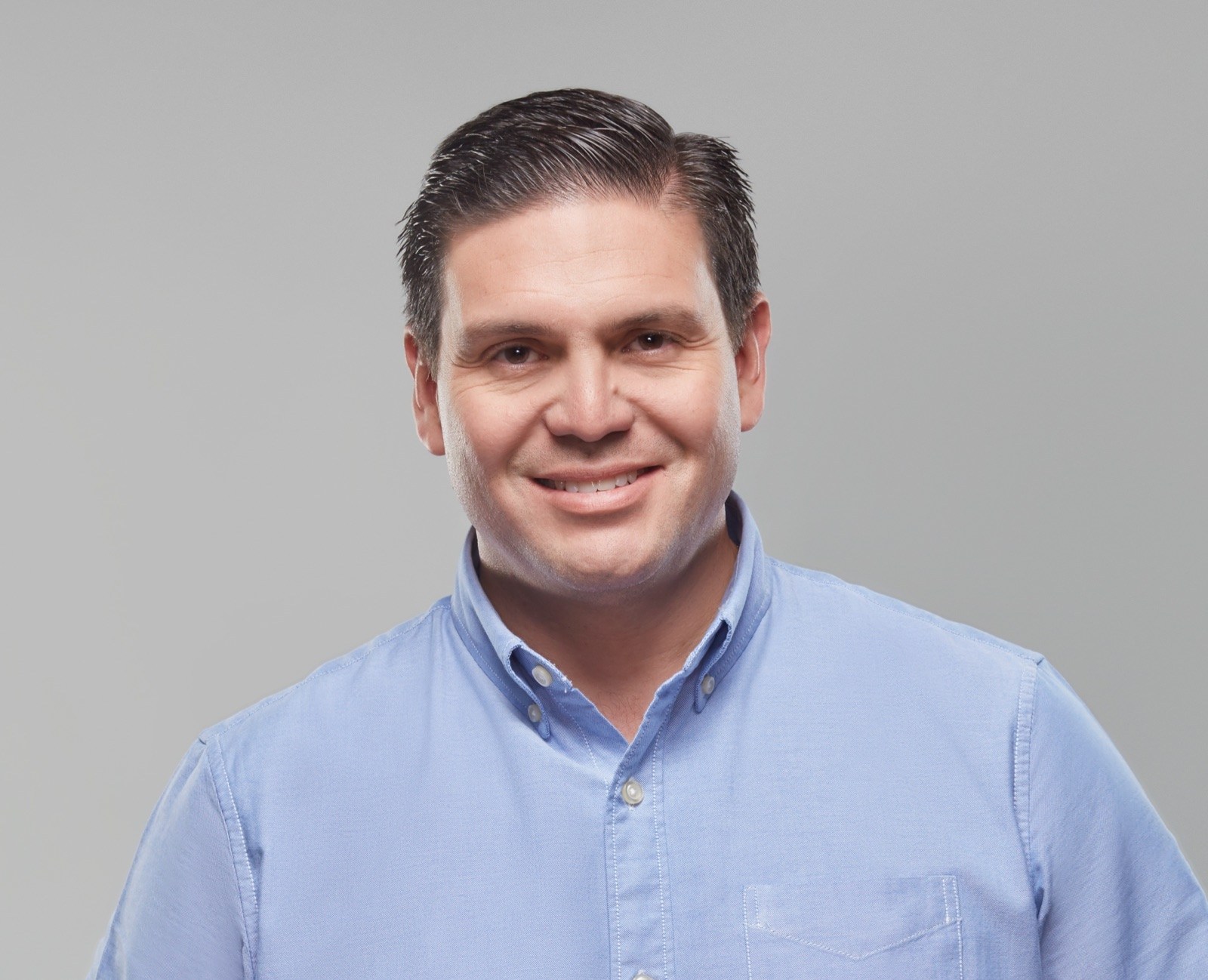
Juan Carlos Pinzón
Juan Carlos Pinzón is a former Defense Minister of Colombia and two-time Ambassador to the United States who discusses recent developments in Colombia as Trump's tariff threats influenced deportation efforts and addresses the growing role of China in Latin America.
Episode Summary
In this week’s episode of One Decision, host Christina Ruffini and resident spymaster, Sir Richard Dearlove, former head of MI6, are joined by Juan Carlos Pinzón, a former Defense Minister of Colombia and two-time Ambassador to the United States to unpack the recent developments in Colombia as President Trump’s tariff threats compelled the nation's president Gustavo Petro to give into deportation efforts. They also discuss the growing role of China in Latin America, the drug crisis affecting the region’s political sovereignty, and the threat of Venezuela's Nicolás Maduro's regime on the region's democracy. Plus, the future of the Panama Canal.
Listen & Subscribe
- Watch on YouTube
- Listen on Apple Podcasts
- Listen on Spotify
Transcript
COLD OPEN
Pinzon: The global power competition, especially with China, is a fact, and Latin America sadly has become a chessboard for that.
INTRODUCTION
Raffini: I'm Christina Raffini, and this is One Decision. The voice you just heard was Juan Carlos Pinzón, former defense minister of Colombia and two-time ambassador of the United States. He joined us to talk about the outlook for Latin America during the second Trump administration and explain why he thinks the Colombian president turned around those deportation flights, prompting a diplomatic spat involving threats of tariffs and personal sanctions. We also asked about China's growing influence in the region and if tough talk is enough to keep countries on the US side of the growing power struggle. Thank you so much for joining us. Obviously, I think we wanna talk about Colombia first and this kind of mini diplomatic blow up that happened over the last week. There's been so much going on with the Trump administration that I think it got a little lost in the shuffle, but it was important and especially between two countries that have really collaborated on a lot of policy over the years. Can you just explain a little bit about what happened with these deportation flights and why they weren't allowed to land? What your understanding of it is?
INTERVIEW
Pinzon: There's a president in Colombia that we have for the last two years. He was the first president coming from extreme left, someone that, as part of his past, was member of a guerrilla organization that was responsible for major terrorist actions. He has been a member of the congress, a senator, a mayor of Bogotá. So, I mean, democracy gave him everything. And as he arrived to the presidency, there was a big expectation of a very strong social agenda. But suddenly, internationally, he has been doing a lot of things that are very much against Colombian tradition. One, he went to Berlin once and said that he lamented very much the fall of the Berlin Wall. And that kind of created a little bit of a concern, well, where he's going. He got into saying that in the Ukraine invasion, he decided to make Colombia neutral as opposed to the democracies and as opposed to what was Colombian position in favor of Ukraine. And then when Hamas committed this terrible massacre, he decided to side to Hamas and actually broke relations with Israel. And later on, sided somehow with Hezbollah and Iran in his comments. More recently in Latin America, he has not condemned the fraud that was made by Maduro in Venezuela. And as President Trump arrived, he started to make comments in public, somehow demeanors against Trump, using words that are not appropriate for a head of state to speak to a head of state of the closest ally, especially knowing that we receive a very important set of funds from the United States every day. So now what happened? There was a plane of immigrants that were being repatriated into Colombia. That is not a new thing. It has happened for years, the flights that were coming into Colombia to land. And those flights needed to come back, and that was, like, 3:30 in the morning. Around 11:30 in the morning, 10:30 in the morning, President Trump comes back with another public announcement, by X, which I have to confess, that's the new thing in global politics and diplomacy. Diplomacy is now X tweets and those kind of things. And, of course, that creates a lot of interpretations and makes life harder. But the fact is that President Trump came with a very massive set of potential sanctions for Colombia. This was a major disruption for Colombia. I have two approaches to that. One, I think it's a self-inflicted action from President Petro. He challenged. He looked for this. He wanted to be the regional leader. And by the way, he's trying to get away the attention of the bad things that are happening in Colombia right now. So drug trafficking has grown to the highest ever. Illegal gold mining is to the highest ever. 60% of Colombian gold is produced today by illegal organizations, by criminal organizations. And, of course, the country is going backwards, deteriorating. So probably he thought that this was the perfect spot to look like a great leader of Latin America, fight the president of the United States, and get away with that in Colombia, moving attention from—
Raffini: But it sounds to me like a clash of personalities almost rather than a political clash.
Pinzon: In a way, it is. I think there's a clash of personalities, but I would add that I think there's some ideological event going on. It is a great opportunity for Trump to send a message—
Dearlove: —around Latin America, assuming you agree with his approach to, you know, sending diplomatic messages.
Pinzon: I think so. Of course, as a Colombian, I never wanted and thought that Colombia was being the closest ally historically to the country to be used for that. But I think Petro created conditions for that event, and suddenly we got into a middle of a storm. I think that what made Petro move backwards was mainly the sanctions that were related to him, to his family, and to the top members of his government and party because those were going to be personal sanctions. And when they got that, he really felt that that was something dramatic. And, you know, at the end, he backed off. But I feel today, like, after an earthquake, you get the shock, and now we're trying to understand how are the conditions of whatever we had constructed for years. Is it broken? Is this something that we can still build on? And this is a conversation from multiple leaders in Colombia today.
Dearlove: Presumably, this undermines Petro's political future in Colombia. It sounds there's credibility will be pretty seriously damaged.
Pinzon: I think that his international credit was damaged. And I think that, for Colombians, it was very dramatic because it was clear that beyond the very tough response and unexpected from the US, the reality was that Colombians were getting affected and are concerned about their own personal lives and businesses because of these actions.
Raffini: What is the take—you're in Panama now. I'm assuming you're meeting with regional leaders and folks from around the area. What is the take on kind of this approach with these threatening sanctions, threatening tariffs on anybody who doesn't go along or even kind of flinches at Trump's foreign policy, especially in Latin America, where it seems to me, you know, Trump threatening tariffs, it has a different feel to it than the US threatening this in your region just because of the history there. Is that something people are talking about, or is it all just kind of trying to figure out what's going on?
Pinzon: I think there are two realities to this. One, is the US powerful enough to make people think about this when they want to use another soft power but give the impression that they have a narrative of hard power? Of course. And I think people need to be pragmatic and rational. Why you wanna be the victim? So I think if you are a good leader for your country, you got to understand that there are chances of you getting caught in the middle. So why would you expose for that? I think that's part of what leaders are discussing these days. Nobody wants to be the country that gets the consequences or gets hit. If you put it in terms of global politics and global power competition and international system, it's quite new in a sense that for years, the United States was the country that was promoting with the Western democracies the idea of a balanced international system based on rules, based on a global order, and this is a little bit different. But I guess it invites to pragmatism from countries on one side. And second, I would not even underestimate whatever is going on. First, domestically in the US, there's a major divide in the US these days. So everybody that relates to the US needs to understand that and learn how not to get in the middle. That's one thing. And second that I foresee is that the global power competition, especially with China, is a fact, and Latin America sadly has become a chessboard for that. And I think part of the reason why Latin America is a chessboard—there are multiple reasons, but one that I foresee is that some extreme left governments have come to power. And as we thought they were more rational and they were trying to be modern, some of them still keep this resentment of the seventies and sixties in which the empire of the United States is, like, the cause of the problems, which is not true at the end. But it's a very positive narrative, especially for leaders that are not being successful to find someone else to respond to. But in that process, there's something else going on. Organized crime is increasing its presence in Latin America. And organized crime is making two kinds of crimes that are specifically important for current politics in the US. One is drug trafficking, both from fentanyl in Mexico and cocaine in Colombia. It's at the highest ever, and that is creating disruption of territorial control in multiple countries, Honduras, Mexico, Venezuela, Colombia, Ecuador, etcetera. Second, the crime of human trafficking. That for the United States is the whole immigration challenge that is very sensitive for domestic US politics, but that for the case of Latin America, I would see it in a different way. The failure of policies from Latin American leaders into our countries is making people feel in trouble, and that's why, because they feel there are not enough economic opportunities or jobs. And security is becoming an issue in many countries. They rather go to the United States. And that's a little bit of the mix. But behind that is China appearing to be funding more and more infrastructure projects, becoming more vocal. So it's kind of the new realities that we have to all figure out and understand.
Dearlove: Ambassador, when I was in office, well, I went to Colombia several times. In that period, both the UK and America, or the United States, but more the United States, were running very significant, what we call, vetted units, which were working in conjunction with the Colombian authorities, but with a very, very wide remit. And we had a, I think, very successful program countering the drugs trade. And it was very well supported by bits of the Colombian government, and we were careful to sort of protect it from penetration by the sort of crime syndicates. Has that now largely broken down? Because it was run very intensively, although it was a difficult program, and it was well supported financially. But you're rather suggesting the beneficial effects of that are disappearing.
Pinzon: Sir, I first wanna thank you, because you and others were very important leaders at a time in which Colombia was really confronting the most difficult war against terrorism and the resources of funding, including drug trafficking. Even on my time as deputy minister, that was the end of the government of President Uribe. And as my time as minister during President Santos' time, we reached the lowest ever production of cocaine in Colombia. That was what set up the conditions for even thinking on establishing a peace accord with, at that time, FARC, the most violent terrorist organization ever to exist in Latin America. And, honestly, it was out of strength and out of defeating them. One of the main things that we did against them was reducing their capabilities of funding through cocaine, and that was very successful. But sadly, as part of those agreements in the year 2016, the way the fight was being done was suspended. And what you can look now in history, that was a mistake because we stopped doing that kind of fight, including spraying, including getting all the pressure to the coca fields. Sadly, that was probably hopeful, but not effective. And the results today are that Colombia has five times, six times more coca fields and seven times more cocaine than the year 2015. That has regained in a very disorganized way the opportunity for criminal bands to become stronger organizations that are slowly but steadily controlling territories. The other mistake I believe we made was that the hope of peace dividend that all politicians always have out of ending a struggle, again, was applied too fast. And we start to cut resources. Even the United States, even the UK, small but decisively, we were cutting, cutting, cutting. And as the trend of funding for criminals were growing up, the trend of capabilities for our security was coming down. And as Petro has arrived, he has even brought a more drastic approach, which is on one side, he has a narrative to justify the existence of cocaine and all the illegal trade as something related to poverty and inequality and has created that narrative even for them. But second, he has contained the armed forces even further, created confusion. He created a problem called paz total, total peace, you can call it, which at the end is granting the sense of impunity to everybody and allowing them to act. So we are really in trouble right now. But as I'm speaking this, think about Mexico. Mexico created the policy from President López Obrador meaning, I'm not going after the cartels. What is happening today in Mexico? That is a real failed republic now because there are multiple states that are fully run by the cartels, and they are fighting among them. So the level of confusion is big. You see the case of Honduras where every politician somehow has been related to drug trafficking. And we saw recently the case of Ecuador, where the government was challenged by drug traffickers in the opening on TV. And not to forget Venezuela, which has decided to become a narco state. Part of their funding is related to allowing cocaine and gold and coltan to get through their lines and get it exported at the end to places like Turkey or Iran or other destinations that are somehow related to rogue realities. We got here for, in my opinion, bad decisions. I'm very onto this. I have to confess because, of course, as minister of defense, I opposed to the idea of stopping the fight against drugs. At that time, I was perceived as a hawk, and I was declared, well, this guy doesn't want peace. Of course, I wanted peace. We were fighting for that. We were trying to make it happen. But what we couldn't do was to renounce to our strength, and especially to deny the recovery of crime as has happened in Colombia.
Raffini: With that issue, as I understand, all politics is local, like we keep talking about. And if you pull up articles from the time, the thought among the Democrats was it's been decades, it's been over $10 billion, and we haven't won the war on crime in Colombia, so we need to stop throwing bad money after good. They've got this peace negotiations with FARC. They're on their feet. It's time to let them stand on their own two feet. And now we're almost seeing the opposite end of that. That was an administration that didn't value funding hard power moves. Now what you're seeing is an administration that doesn't value funding soft power moves. And as we talk about China's influence in the region, I'm curious to get your take as well as, you know, carrot and stick approach is two-pronged for a reason. And if you only have one or the other, does it work? And if you're trying to compete with China by pulling foreign aid, which does help a lot of organizations doing things like combating crime, can you be effective with just hard power in any region, but especially in Latin America?
Pinzon: I like, you know, the old approach—we use speak softly. But if you wanna make something happen, you make it happen. And we'll see where are we right now. But I definitely agree with you. I think that for the conditions that we have right now, we need both. We need a big plan for prosperity in Latin America. Latin America continues to be the place that is better positioned for the future. Sadly, always that has been the condition. So we have more natural resources than any other area of the world. We have water. We have gold. We have oil. We have lithium. Everything you want in Latin America, 700 million people that are relatively young as compared to Europe or to Asia. And sadly, that connection between the US and Latin America hasn't been created with that perspective. But second, you need a hard approach to these regimes that are trying to be kind to autocracies. I think that there are some old sentiments from the previous Cold War that have come alive to this new Cold War, and they are trying to set up themselves into this idea of taking aside or at least taking distance from the West, thinking that the West is declining, and that's the narrative. So it's the perfect spot. But at the end, what they're doing with their governments is not really successful. About Panama, just one line, I think that the invading Panama, it was surprising for the Panamanian leadership at all levels, business and government. But at the end, I was discussing very recently with one of the former SOUTHCOM commanders, and they were saying that for years, they've been expressing the concern that the Chinese have been taking a role beyond what was expected in the canal by having ports and by having some economic access that is maybe preferential as compared to whatever the US has. And that has created, as times we are, a spot for this debate that, hopefully, will be solved as well.
Dearlove: It sounds to me from what you're saying, ambassador, that we're pretty close to a situation which, particularly on the drugs and criminality side, is almost irretrievable. I mean, is there a way back? We did it partially before working closely with Colombia. And as you say, the programs that we ran there were pretty successful. We also impacted the rate of importation of hard drugs into Europe. We saw a reduction, and we saw a rise in the street price of heroin and things like that, which were, I think, directly a result of the intervention. But I'm slightly depressed by your description because it sounds on both of these issues, criminality and China, that we've just been laissez-faire and let things go, let things run for too long in their favor.
Pinzon: I feel that, sadly. I have to agree with that statement. I am convinced that we can do things and we can change reality. That's where policies, and I strongly believe into that. But I think we cannot just use the same tools or the same medicine we use ten years ago. Sadly, there are things that have happened. There are things that have evolved even in technology, from simple things as social media that are not so simple in terms of impact in societal realities to political changes, both even in the United States and in Europe that make trying to do exactly the same very difficult. But what we have is a lot of lessons learned from the past that were successful. And we can try to implement new tools, new ideas, and, honestly, we need to regain back clean institutions. We need to make sure that Latin America has stronger democracies, and more important in all, that we can create stable prosperity policies. Because at the end, if we don't want this immigration friction, best thing we can do is to have people in their own turf, but hoping that they can do well. As a critical condition for that, we need to provide security. Without security, nothing happens in any place of the world. Even when I travel to America, there are wonderful places that are incredible and are like islands of prosperity. But certainly, you get into a neighborhood where nobody's gonna put a penny simply because there's no security and stability. Well, if you scale that up into global affairs and you put it in terms of countries, you only will bring money to places where you feel you are secure, you have stable rules, and at the end, you have the human capital that can make something with that financial resources. And I think as simple as a town is exactly the kind of climate and environment that we need to build and gain. Thinking about my own country, that's exactly what I think we can do. We did it before. We were very successful. We made mistakes. We gotta learn from those mistakes, and now we gotta move forward. One mistake I think we learn is hope is not a method, definitely. Because you want peace and you feel that the joy of peace is coming, you cannot stop doing the things that you're doing well. And second, impunity is typically the worst tool ever. Because if you don't limit it, it starts to grow and grow and grow and simply, you know, people gets always the hope of getting away with their crimes, and that's another thing.
Dearlove: We've talked briefly about Panama and the canal, and I understand that the Panamanians actually did a pretty good job in running and administrating the canal, but the problem, really, with Chinese influence is the ports at either end. And the fact now that the canal is being operated at a loss because of the water problems, whereas it used to be profitable. I mean, is there a sort of practical, basic solution to that? Given Trump's aggressive attitude on the canal, which strategically, let's face it, is a big deal. It's very important. Do you see a way through this particular local—well, it's local regional problem?
Pinzon: I think so. Next week or in the coming days is expected the visit of a secretary of state, Marco Rubio. For years, the first visit of any major American leader was always to Colombia. And that was the reason. We had the closest alliance. We became a non-NATO ally status, and, certainly, we are not anymore the country that is included in the tour. I think it's very important that visit of secretary Rubio. He knows the region. Honestly, probably will be the American leader that gets better Latin America, understands what is going on. And, hopefully, talking to the Panamanians, which, by the way, President Mulino is a wonderful leader. He really is trying to make good for his people. I think he was caught by surprise with this debate. The Panamanians knew about this for years, as I said before, but they were kind of always sneaking around, avoiding the problem. And suddenly, the bull came in front of them. But I think they need to be pragmatic at the end. Is pragmatism what matters right now? The reality is that the US-China struggle is happening, and countries will need to be smart enough not to get caught in the middle and make the pragmatic decisions for their benefit, short term and long term.
Raffini: But how do they do that? What is the way to not get caught in the middle of that debate or of that pulling of powers?
Pinzon: I think they will have to make sure that, first, that there's something related to the cost of transit for the canal that has been a frustration for the American government. That was even publicly expressed by President Trump. So that's one first tool. They need to find some kind of fairness on that part. Second, I think about the influence from China, which is the elephant in the room, I guess both the United States and Panama will have to have a serious discussion on what means is feasible. Because, anyway, there are contracts from the Panamanian government, the Chinese companies, and that's something you cannot just overrun even on a legal system, you know, that you are liable for whatever has been agreed. But one thing that I saw already that the Panamanians did was the fact that the general controller opened a case against one of the ports from China expressing that they were not coming or taking their dues effectively. But you said something, Christina, that I strongly believe. The US needs to come with a clear voice on national security affairs and concerns. On the other hand, they will need to have a very good plan for development and for cherishing the region. You need to somehow warn them on the risk of going to one side, but on the other side, you need to make them like you and attract you and get both benefits in the same package. Deterrence with love, apparently, will be a lot better.
Raffini: If you're trying to counter China, how do you do that when you're cutting one of the big things the State Department just announced a freeze on and specified, called out the programs they called, particularly, quote, egregious? One of them was democracy building. These NGOs that go out and observe elections and advise governments trying to have democratic access and aid groups, and there's so many different places that USAID reaches. Do you think it's an effective way to counter China to scale back on that aid, and do you think China might step in and start offering its own, quote, humanitarian projects in an effort to gain favor in the region?
Pinzon: I guess that what the US government, the new administration is doing anyways, figuring out. The impression that I have according to even some friends that I've been talking in Washington is that sometimes they said, look, US taxpayer money is going to many places, and the results of that is not clear. That's one thing. And the other thing is that some people is getting the idea that getting the US money is something that you now get for years without a major review. And I think they have created this opportunity of holding the money for some time and really figuring out where priorities are going to be and who really is willing to get the money and do something with it that is somehow beneficial for the US. It's an uncomfortable place to be for countries, anyway. And, of course, this idea then, well, if you don't do it, China will do it, is a big debate. But still, there's the funding, and the US will be having the opportunity to reallocate or to do laser focus on some cases and some countries. So, for some time, it's a good strategy. Will that be the perfect way of doing things for a long term? I don't think so. But I think they have created at least the pressure to make the discussions more realistic and not just people getting the check and saying, yes, yes, yes, but not doing something about it. On the other side, I just came from El Salvador, and I got impressed on two realities that I saw in El Salvador. The Chinese offer a major library, and it's not theoretical. It's not a discussion. It is a wonderful, beautiful library in the middle of Downtown San Salvador, and they are building now the new stadium. As you know, in Latin America, and I guess in any country of the world, stadiums are the thing that every Sunday we care. It's something that is really the most important gathering place for everybody. So that's something. Now as I was seeing that, I was thinking, well, it's good for the Chinese for a short term because people gonna love that present. But people tend to forget those presents, and at the end, you cannot take that present. Once it's there, is there money invested? And whatever they're gonna do with that influence, they gotta do it fast. It's not gonna feed your family. It's not gonna get you a job. It's not gonna get you to the polls. Right. So those are the things that the West needs to figure out in that process of competition.
Dearlove: Can I ask you one further question about Latin America? Can Trump do anything significant about Maduro?
Pinzon: That's a big one. I think Maduro is this somehow bad apple that is contaminating the region. His presence invites, as I explained in the case of Colombia, to impunity. I mean, if you can, though, do a fraud in front of the whole world and nothing happens to you, why others will not think that that's something they can do? And that to me is a thing that I believe needs to be addressed. Now options are becoming limited because the Venezuelan opposition has done everything they can. So what can be done? More sanctions can happen. Again, what put Maduro in a tough condition five, six years ago were those oil sanctions that really create them a major stress. But I think what happens with Maduro is a very difficult example for the region. And worst of all, those kind of regimes in agreement with other regimes, they don't stop trying to hold power. They are seeking to undermine other countries' power and somehow even conquer, not in the old way of military struggle, but using these hybrid tools that are very much seen in the world, disinformation, specific money for parties that can make a difference, threatening when they can, creating press scandals against people. Those are the tools that we know are being used. And in democracies and freedom, as we cherish that, we're more exposed than other places. And that's something that I foresee they've been trying, and they will. And in my own country in Colombia, that, I would say, bromance between Petro and Maduro is something that worries us very much because, of course, for them keeping Colombia side of the game, I'm speaking on Maduro, is the perfect spot. If Colombia is not anymore requesting democracy, creating the pressure for that. And on the other side, Venezuela has a leverage in Colombia. They're their own territory as protected people, the ELN, former FARC, and other criminals. So it's a challenging situation as well.
Raffini: Ambassador, thank you so much for joining us. We appreciate it, and good luck in Panama. I understand the canal is literally right out your window as you're talking to us.
Pinzon: Yes. It is. It is. Thank you, Christina. Thank you so much. It's an honor. It's a pleasure to be here.
Raffini: Thank you, Ambassador. Great discussion. Thanks for listening to One Decision. If you enjoyed this conversation and wanna hear more about China's growing influence in another region, please check out a previous episode with Philippines foreign secretary Enrique Manalo. Do you think the US would come to the defense of the Philippines? Of course, I believe it. Do you think China believes it? Perhaps. And Taiwan's representative to the US, Alexander Yui.
Yui: Dictators are not rational. They'll do whatever they think is right. They don't care about people's well-being. They don't care about people dying. They just think what's best for them or themselves.
Raffini: And of course, to unlock more exclusive content, get timely updates on crucial global events, and listen in on meaningful conversations with thought leaders, be sure to check out onedecision.com. From the whole team, thanks for listening and we'll see you next week.