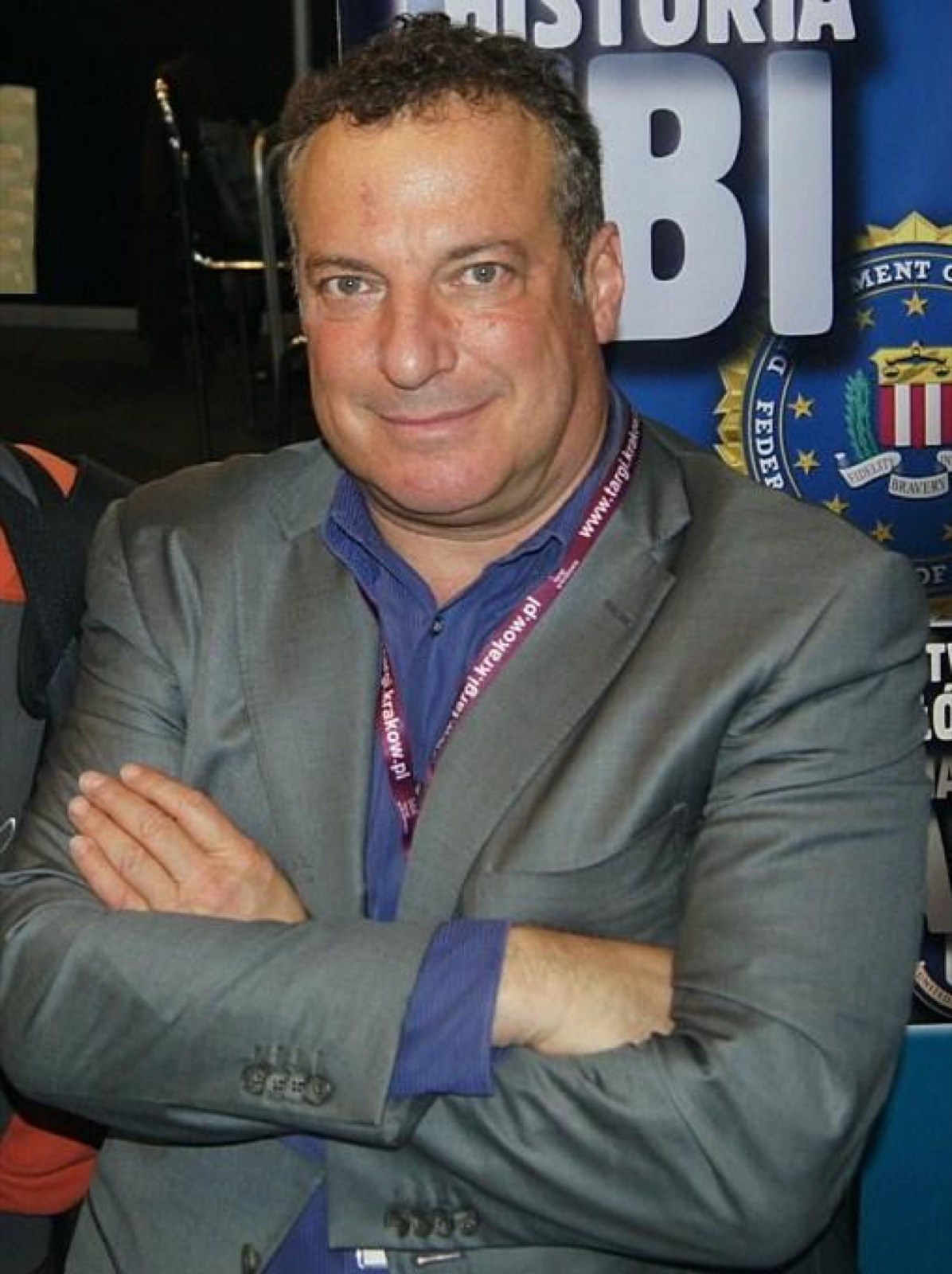
Hosted by Christina Ruffini and Sir Richard Dearlove
Guest
Tim Weiner
Tim Weiner is a Pulitzer Prize-winning reporter and author of 'The Mission,' which details how the modern Central Intelligence Agency has evolved during the era of the global war on terror.
Episode Summary
What role do intelligence services play under a president that does not heed their advice? That’s one of the questions Pulitzer Prize–winning reporter Tim Weiner posits in his most recent book, The Mission, which details how the modern Central Intelligence Agency (CIA) has evolved during the era of the global war on terror. Weiner describes the evolution of the missions undertaken by the CIA, which were historically driven by presidential desires to change the world through covert action, and contrasts them with the post-Cold War agency that grapples with trust and reputation in the information era. Weiner also discusses how the delicate interplay between betrayal and trust underwrites intelligence work, the common aim of pursuing secrets that intelligence and journalism share, and why he believes the cumulative effects of partisan purges within intelligence services under President Donald Trump leaves the United States in a dire state of danger.
Sir Richard Dearlove and guest co-host Rosanna Lockwood dive into the news stories in geopolitics shaping the world this week: how a secret CIA task force in Cuba may be laying the groundwork for a more American-friendly government, why the construction of a new giant embassy for China is igniting political NIMBY-ism in London, and what US intelligence says about how stray Russian missiles and drones may be Putin’s way of testing NATO’s resolve.
(03:07) Secret CIA Cuba Task Force
(07:24) New Chinese Embassy in London
(12:31) Will Putin Test NATO’s Resolve?
(14:37) Interview with Tim Weiner
(15:29) Difficulty of Writing About the CIA
(20:07) Human Element of Espionage
(22:56) Evolution of the CIA
(25:57) Sir Richard’s Post-9/11 Intel Recollections
(30:08) Journalists, Intelligence, and Secrecy
(34:58) Intelligence and Policy
(39:59) Modern CIA Missions Under Trump
(48:31) Partisan Purges in US Intel Services
(54:55) Can Institutional Trust Recover?
(58:48) Trump’s Potential Paradoxical Legacy
(01:02:47) One Decision to Watch
(01:03:32) Takeaways, Audience Comments, and Wrap Up
Hosted by Sir Richard Dearlove (former MI6 Chief) and guest co-host Rosanna Lockwood (international journalist).
Listen & Subscribe
- Watch on YouTube
- Listen on Apple Podcasts
- Listen on Spotify
Transcript
COLD OPEN
Weiner: So off I went to CIA headquarters, and I walk into the lobby. The Gospel of John is engraved: “And ye shall know the truth, and the truth will make you free.” That engraving must be read uncynically. You cannot look at and say, here's an organization devoted to deception and they're talking about the truth. Ha ha. No. The mission is to know what's going on in the world in the hope that the United States can form a coherent foreign policy as it faces the dangers that surround it. And that mission is very much endangered today.
INTRODUCTION
Lockwood: Hello and welcome to One Decision. I'm your guest co-host Rosanna Lockwood, joined as ever by former head of MI6 Sir Richard Dearlove. Good to see you Richard.
Dearlove: Yeah, good to see you too, Rosanna. We're sitting here in England in another heat wave, the fourth or fifth of the summer, and wow, it's hot and we don't have air conditioning.
Weiner: Yeah.
Lockwood: Well, I'm sat still in Los Angeles in the United States with air conditioning, but it's still rather warm here. Yeah, hoping it cools down for you guys there in the UK in the coming weeks. We've got a very exciting guest joining us this week. Tim Weiner is an award-winning journalist who's here to share his reporting into America's secret intelligence and national security services. Certainly one for Sir Richard this, especially as he wrote — I think it's fair to say — a rather blunt review and, you know, certainly well justified given your experience and knowledge of Legacy of Ashes. So before we get into that interview, Sir Richard, what did you think of The Mission?
Dearlove: I thought it was a much better book than Legacy of Ashes, which really struck me as very partial, interesting, but something of a hatchet job, where everything is viewed through a rather negative perspective. The Mission is just a more chronological account of what's happened in CIA, starting with the events leading up to 9/11 and the impact of 9/11 on the United States generally and on CIA in particular. And it's an intriguing story and it's told with thoroughness and a degree of completeness which is quite surprising. So for anybody who has, you know, passionate interest in intelligence organizations, this book is — I think I would call it revelatory.
Lockwood: That's a very complimentary review and certainly going to lead to a solid conversation. I'm going to take a little seat back through a lot of this because you two, I think, have a lot to discuss with each other. Of course, I'll still be in the conversation, but I'll let you two have at it, so to speak, a journalist and a spy chief tightening up on the current modern CIA in the last 25 years or so. Now you're not going to want to miss that interview. Do subscribe to One Decision on YouTube or wherever you listen so you don't miss out on any of our conversations. But first, Richard, as ever, it's time for In Brief, where we make some sense — we try to at least — of some of the big geopolitical news stories that have caught our eye in the last couple of days. This first one on the CIA setting up secret Cuba task forces as President Trump pressures Havana more. A task force is going to allow the CIA basically to, quote, quickly direct more financial, human and technical resources at Cuba. This is supposedly to apply pressure to the current Cuban regime to kind of spot and exacerbate fissures in their intentions. We have to note, of course, that a previous CIA Cuba task force was responsible for the failed Bay of Pigs invasion, but this is all part of Trump's focus on Cuba. It's been ongoing certainly this year and seems to be set to — or what does it tell us Sir Richard about where they're currently at, the Trump administration and their pressure on Cuba that they're setting up this task force now?
IN BRIEF: CIA SETS UP CUBA TASK FORCE
Dearlove: Well, I think they're living in the expectation that the regime is going to founder and that there will be a new government of some sort in Cuba which may still be highly nationalistic, but will be better disposed to the United States and certainly will not be, as it were, operating in that geopolitical theatre at the behest of either Russia or China. So this is a huge issue historically for the United States, of course, going back to the Cuba crisis of 1962-1963. I think we are already seeing signs that the Cuban government as it still is instituted is beginning to crumble. Obviously the problems it's got are economic because it's not getting cheap oil from Venezuela any longer and it's running out of energy. And it doesn't have an alternative source of supply. Okay, we know of the resilience of the Cuban people, but on the other hand, I think the situation is parlous. And I think that CIA will be doing everything it can to, let's say, detach political figures from loyalty to the regime and begin to undermine the regime in the hope that, you know, something more compliant, something different will emerge. None of this is particularly surprising. And I don't think we're looking at a new military invasion of Cuba. I think what we're talking about is, let's say, an economic collapse and the investment of American know-how and money in business against conditions that the politics of the government will be different. And this may take a year to play out, but I doubt that it will take longer.
Lockwood: That was going to be my question as we approach obviously the US midterms in November and the type of strongman approach that Trump has taken to a lot of his foreign policy aims throughout his second term so far, that type of slightly more nuanced intelligence-gathering sort of mandate that this task force is expected to have is set to be limited, and not in the sense of any kind of militaristic or going in there and wiping out the current leadership and replacing them or a Bay of Pigs type scenario. But could you see that mandate changing if Trump's patience erodes as he approaches some big political milestones?
Dearlove: Not really, because if you look at what's happened in Venezuela, okay, they remove Maduro, but they stick with the regime and then try to change the regime economically. I would have thought that you'll see a similar approach, which would not be military, in Cuba. And I'm sure that there will be Cuban politicians or members of the elite who are thinking about how they can personally reinsure with the United States and therefore be part of the story if the government begins to shift and change significantly. And this is very much the sort of situation which a sophisticated intelligence service should be able to exploit readily. If I were, as it were, in the task force or leading the task force, I'd have a pretty clear idea of what I wanted to achieve or wanted to do.
IN BRIEF: CHINESE EMBASSY IN LONDON
Lockwood: That type of sophistication plays in neatly to our conversation upcoming in today's episode with Tim Weiner. Do stay tuned for that. Let's head to Blighty, head to the UK, for some other news that caught our eye this week as well, which is the supposed plans for building this gigantic Chinese embassy in central London, I believe around the site of the Royal Mint. It's come up with some objections in the courts and it's, to my mind, Sir Richard, an interesting case of not-in-my-backyard NIMBYism – a very specific kind, which isn't about the of necessarily the look or the size of the scope of this building on this 5.4-acre site, but more what it represents — a Chinese embassy — because you've got this executive director of the Inter-Parliamentary Alliance on China in the UK, a guy called Luke de Pulford, saying, “If they expect us to roll over and allow our own capital to become a Chinese Communist Party power centre, they have completely misjudged the strength of opposition.” So this is really political NIMBYism, isn't it? Yeah.
Dearlove: It's also, I think, a feeling that we shouldn't be allowing China such a vast and prominent embassy site on the edge of the City of London. Those people familiar with the Royal Mint Building will know it's just beyond the Tower of London. It's a huge, empty but prestigious venue. It will allow them to have a massive community there with a lot of residential property inside the compound. And there have been worries about communications cables carrying very sensitive material running close to the site or actually through the site. And then there was a large — I wouldn't say uprising, but movement amongst the neighbors to the site or people living in that part of London who were opposed to the redevelopment as a Chinese embassy and had made a planning appeal to try to stop the whole project. But the news is the failure of that appeal to stop the project. But the project is going ahead. And there's a certain element of reciprocity because the British Embassy in Beijing needs to be modernized and rebuilt. And that wasn't gonna happen unless concessions were made to the Chinese. I mean, personally I find the symbolism worrying and I think I find the size of the compound worrying because it will become a sort of European centre for Chinese representation. And the question is, you know, how many intelligence officers are going to be in there? How many people planning mischief who won't necessarily just be in the UK, they'll be moving off travelling through Europe and other places. So yeah, there are real concerns. And another thing which has affected the United States as well is the creation of these sort of unofficial Chinese police stations across the country which are there to observe the behaviour of the Chinese community and make sure that, you know, Chinese students at British universities are not indoctrinated in a way which is prejudicial to the leadership of the Chinese Communist Party. So I mean there are lots of different aspects to this project, but the size, the symbolism, the significance has been a point of huge discussion, but it looks as though it's going ahead. And I have certain misgivings, but none of them would be sufficient to really stop the project in its tracks.
Lockwood: Okay, I hear your point about the symbolism, particularly in the Royal Mint, edge of the city of London and the scale. I mean, but nobody is arguing here that there shouldn't be a Chinese embassy in London because that's how this game works. As everyone knows, you've got to have reciprocal embassies in each other's countries for various reasons. I'm not at all saying spying, but you know, for diplomatic reasons as well. Where would be an appropriate place in Zone 1/2 of London? What would you consider?
Dearlove: Well, at the moment the Chinese embassy are pretty well housed across London. The Chinese have argued that they want to consolidate onto one site. But there's no real strong case for allowing them to move, other than in the days when it was less controversial and this site came on the market, the Chinese government bought it. And I mean if it had been thought a bad idea at the time, they should have blocked the sale to a foreign government on whatever grounds would be possible and I don't know what the legal grounds would have been. But I mean once the Chinese had bought it, the project of unifying the different units, which, as I said, are well housed in London, has been difficult to stop. I mean we're not an autocracy. We have the rule of law, and the rule of law operates in a case like this. Okay, diplomatic relations come into it as well, but there has been no mechanism to frustrate the way that this project has over the months moved forward to full agreement, which is now going ahead.
IN BRIEF: RUSSIA TESTING NATO
Lockwood: Staying in Europe, returning to the story of US intelligence, which is now finding that Putin could test NATO's resolve with a limited incursion – assessment coming amid a shortfall in certain critical munitions. Of course, on the US side, the idea is that the US and European leaders are increasingly seeing signs of Russia conducting probing attacks to test NATO's resolve. And in my mind, Sir Richard, I mean, nothing new here. Russia is obsessed with NATO. We'd love to test it. We'd love to work out how to separate it. The US, particularly from its allies. And, you know, we've already been seeing recently all sorts of projectiles and missiles and bits and bobs landing in Poland, Romania, places like that, whether intentionally or not. To my mind, they're going to try and test this whilst Trump is still leader of the US, because obviously his cynicism towards NATO has been well noted. I mean, any of this come as a surprise to you?
Dearlove: Not particularly. I think the American comment was a little misleading because it seemed to imply a sort of formal military incursion into one of the Baltic states. I don't think that's gonna happen. Nothing is likely to happen that would trigger Article 5 of NATO. So what you'll get and what you're getting already, but the incidents which you're correctly describing, incursions, let's say drone incursions, missiles landing in Poland quote-unquote accidentally, one can expect more provocative grey war incidents of greater seriousness. We're not talking about a conventional military attack. And, you know, Putin's purpose will be to see what sort of reaction he gets, not just from the individual country, but from NATO as a whole. And I think as the war in Ukraine generally goes less well for Russia, the risk to these sorts of incidents probably does increase.
GUEST INTRODUCTION: TIM WEINER ON THE CIA
Lockwood: Constantly pushing the envelope, seeing what reaction it inspires and then adjusting accordingly. It is time for our interview. What does it take to anticipate the moves and thinking of your adversaries? That's the role of government intelligence and our guest today has spent most of his career assessing from the outside exactly how good the US Central Intelligence Agency is at this vital task. Tim Weiner is a Pulitzer Prize-winning journalist who covered the CIA for decades for The New York Times and before that The Philadelphia Inquirer. He won the National Book Award in 2007 for Legacy of Ashes, a history of the CIA that is as damning as the title suggests. His newest book, The Mission, picks up where Legacy of Ashes left off. Bruised egos from the previous book didn't deter a long list of senior US intelligence officials from speaking to Weiner on the record for the sequel. He joins us this week to talk about reporting on government secrets and the current state of the US intelligence community. Welcome, Tim.
Weiner: Thank you, my pleasure. Honor to be with you and with Sir Richard.
Lockwood: An honor to have you on with us. And I just want to start here just on the book process because we're talking covert information, people who don't normally come out of the shadows. Just generally, how hard is it to write a book about the CIA and has it become harder now? LEGACY OF ASHES VS. THE MISSION — A DIFFERENT APPROACH
Weiner: I think it would be very hard today. Under the present US administration, there has been an ideological purge at CIA as well as at FBI and State. You cannot be promoted, you cannot rise to power unless you correctly, in the view of the Trump administration, answer the following questions correctly: Who won the 2020 election? What did you think of the January 6th insurrection of the Capitol? And who did you vote for in 2024? And while I don't want to compare the two regimes, I don't mean to do so invidiously. In Pol Pot's Cambodia, people were purged because they wore glasses. In Donald Trump's America, people are being purged because they can see things as they are. The process of writing Legacy of Ashes is quite different from the process of writing The Mission. With Legacy of Ashes, you had a pretty rich trove of declassified documents to work with, covering most of the Cold War. In 1991, the then director of CIA, Bob Gates, later the US Secretary of Defense, said, we're going to declassify our Cold War history, warts and all. Well, it took more than a decade for the pig to go through the python, but indeed it did, much of it anyway. And so by the early aughts I had, I would say, about eight bankers' boxes worth of declassified CIA documents to work with. And then of course, working on an actuarial basis, I interviewed the oldest of the old boys and worked my way forward. So that you had a pretty good record to work with of documents and oral histories and interviews. With The Mission, there are no declassified documents to speak of from the 21st century. That process is broken down. And so it was almost entirely with interviews that The Mission was reported and researched.
Dearlove: Tim, can I sort of straightaway interject? I mean, that's fascinating what you're saying, because I think that The Mission is a much more interesting and better-informed book than Legacy of Ashes. And I think you'll certainly be aware I was pretty critical of Legacy of Ashes. Because I think a lot of the CIA's success during the Cold War was not actually in the material that Bob Gates released. And there's a lot that happened, some of which even today isn't in the public domain. So I felt somehow there was an unfairness and that CIA had a much better Cold War than you painted. But I agreed with the basic theory of the book about the distractions of covert action and the impact that that had on CIA's reputation. But The Mission — okay, I admit I've read it up to the point where my knowledge dries up. And after that your knowledge is greater than mine. Mine is greater than yours.
Weiner: I would dispute that. Go on.
Dearlove: Well, you start with 9/11 or around 9/11 and then you write about the impact that 9/11 and the subsequent events had on CIA. And I think it's a very revealing and very accurate chronology. And I also think that it captures very well the sort of psychosis, if one can call it, that attacks —
Weiner: That is the word, Sir Richard.
Dearlove: — that attacked the intelligence community, you know, as a consequence of 9/11. And of course, you know, I was in a strange situation because we were the closest allies of the United States. But on the other hand, fundamentally were in disagreement with them in certain areas of their methodology and approach to the problem. I suppose my question is, do you, with the benefit of hindsight — and we are talking about hindsight now — do you agree that The Mission is actually a more accurate — I'm not saying it's a better book, it's a more accurate book than Legacy of Ashes. TRUST AND BETRAYAL — THE DNA OF INTELLIGENCE WORK
Weiner: The fundamental difference in reporting and researching the book is that there's more humanity in The Mission because there are more voices from the living as opposed to the dry documentation of the dead. I think I was able to plumb the human element of espionage and, to a lesser degree, covert action. And I think you get to it — I don't know if you've read this far, I hope you have — where I have a long interview with the then-sitting director of the clandestine service of the CIA, Tom Sylvester. And he speaks of the humanity of espionage and the morality of espionage, in which the bond between the operations officer and the recruited foreign agent is annealed. The operations officer is entering into a criminal conspiracy with the recruited foreign agent to commit treason against his tribe, his country, his party, to betray. And yet this bond is a covenant, not unlike marriage, and it depends on trust. And this double helix, if you will, of betrayal and trust is the DNA of intelligence work.
Dearlove: I couldn't agree with you more, because I think the issue you're expressing is fundamental. And I got into terrible trouble after my retirement with le Carré because I said he had flipped the coin of espionage and made its currency betrayal, whereas its currency was actually trust.
Weiner: Well, it's both things are true. And I can see where you can get in a tussle with John le Carré, because he certainly does emphasize the betrayals. And I can see why you found some of Legacy of Ashes distasteful. Because the documentary record emphasized covert action. And like the drunk looking for his keys underneath the lamplight, that's where I found the greater part of my information. The record is not a happy one because, you know, the CIA doesn't dream up its own missions by and large. It's not as if a bunch of officers were sitting around in Miami in 1960, you know, on a second or third martini, and one of them says to the other, hey, I've got a great idea. Let's go kill Fidel Castro. It was presidents Eisenhower and Kennedy that wanted that done. And so the CIA, certainly in the, let's say, the first 25 years of the Cold War, was largely driven by taskings from presidents, secretaries of defense, secretaries of state, and their minions to do something – to change the world. The mission was twofold: to know the world through espionage and analysis and to change the world through covert action. And the tail wagged the dog more often than not. You cannot change the world without understanding it. And very early on, and certainly through, let's say, the fall of Saigon in 1975, when a serious revaluation of things took place, the covert action tail wagged the dog of the CIA, with unhappy results. But The Mission takes place in a very different era. The CIA, in the months and years before the 9/11 attacks of now nearly 25 years ago, was, in the words of its director at the time, George Tenet, a burning platform. Now imagine an oil rig in the North Sea and it's a stormy night and the rig is on fire. There had been a diminution of talent and expertise after the fall of the Soviet Union. In 1995, the CIA admitted through its School for Spies 25 people. There was a — you know, who wanted to work in the world of secrets in the mid-1990s when the world of information was exploding. I mean this was the time that Google was a startup and Microsoft. And so you had a diminished crew and an abridgment of abilities. And while, as George Tenet, who you know well, said at the time, the system was blinking red. He was trying to shout from the rooftops to the president, George W. Bush, and the Secretary of Defense, Rumsfeld, that something terrible was about to happen. They weren't listening because the trust of the administration in the CIA was diminished. Those are the early chapters of The Mission, this terrible sense that something awful is about to happen, but the time and place we do not know. And I want to ask you a question, Sir Richard. I think it was perhaps 36 hours after the 9/11 attacks, you and your colleagues flew through the closed airspace into Washington and met at CIA headquarters. And I've always wanted to ask you what your assessment of that meeting was, and if you felt strongly or sensed that the US was going to go to war not only against al-Qaeda in Afghanistan, but into Iraq.
THE BERMUDA SUMMIT AND THE FAILURE OF IMAGINATION
Dearlove: It was clear that there was a wish in the Bush administration to somehow ascribe 9/11 to a linkage with Saddam Hussein. We in the UK violently disagreed with that assessment. And in fact, at a briefing in the White House with the president, I challenged the CIA briefer and said he was talking nonsense and that there was absolutely no linkage. In fact, I could say authoritatively, we knew that there wasn't a linkage. I don't want to go into detail as to how we knew that between Saddam Hussein and 9/11. And I think what's also highly relevant is that in June there had been an intelligence summit in Bermuda sponsored and organized by the Brits to discuss and to exchange the information we had on a coming catastrophic attack, but we didn't know the time or the place. So the dreadful thing is that when 9/11 happened, it wasn't a surprise.
Weiner: Yes.
Dearlove: It was that the jigsaw hadn't been put together and there certainly wasn't a picture of the jigsaw on the lid of the box. And most of the intelligence was littered around the United States, particularly in regional FBI offices that had failed to coordinate with the CIA. It was an extraordinary situation, all the more so because in 1993, I think, when Ramzi Yousef had tried to blow up the Twin Towers, I had been in DC and was briefed in detail by the Bureau. And I went back to London. At the time, my boss, David Spedding, was suffering from a serious cancer. So I was effectively head of service in his absence. And we had a big meeting of all the seniors in intelligence and defense, the chiefs of staff of everybody. And my opening sentence in 1993 at that conference was, imagine what the situation would now be like if Ramzi Yousef's surrogates had put the bomb in the right place in the parking of the Twin Towers. Because what they were trying to do was to sever the structural pillars and collapse one tower down into the other. So when the 9/11 Commission said it wasn't a failure of intelligence, it was a failure of imagination, this rather struck home. I don't like judgments for the benefit of hindsight, but in this case, actually, after the event, if you put it all together, the intelligence, the targeting was all available.
Weiner: Not unlike Pearl Harbor.
Dearlove: Scattered but available and one felt a huge sense of inadequacy that we hadn't stopped this thing happening.
Weiner: Yeah, let us remember, and then let's move to the present day or closer to it, that the CIA was created not to fight the Cold War. That came later. The CIA was created to prevent a second Pearl Harbor. That was its raison d’etre. TRUST AS CURRENCY — THE JOURNALIST AND THE SPY
Lockwood: Far be it for me to get between you gentlemen, because you've got some interesting content there. I wanted to see, before we get to present day, because there's a lot to say about the current CIA and what they're dealing with under the current administration. I want to return to a point you made there, Tim, about trust. Because it seems to me that the general friction that insofar as it exists between intelligence officers, intelligence officials, and journalists, is that intelligence needs to be done covertly. As journalists we bring, you know, the truth to light, hold truth to power. Try to — that's the goal. So intelligence relies a whole lot on the sort of the myth of reputation and trust and reputation. Do you think that's where the issue lies in even attempting to write about the intelligence service, is that you're always going to come up against this? And it's clear, I think, from your writing that you believe in the importance of intelligence and the importance of intelligence agencies. Exactly, but whilst investigating them do you potentially undermine some of the foundations of the kind of the myth that surrounds them?
Weiner: You know, we have a slightly different setup here in the United States. We don't have an Official Secrets Act. You can't get a D-notice around here. Not yet, anyway. My experience, and perhaps I've been, you know, unusually fortunate. But my experience is that I get along quite well with intelligence officers and analysts because we're essentially in the same business. We want to know secrets. We want to try to divine mysteries. And both of us can parachute into a foreign country and say,”Take me to your leader.” And often as not you will be taken. And covering CIA for me has been like covering a foreign country. You have to learn the customs of the tribe, the lingo, the history, and the culture. And I will never forget the first time I went to CIA headquarters. It was in 1987, I had just turned 31, and I thought it would be a great idea to go to Afghanistan during the Soviet occupation. Of course the CIA had been financing the Afghan Mujahideen in their jihad against the Soviets. Quite openly, Congress in its wisdom decided to introduce the Stinger anti-aircraft missile, an American weapon, into the battle. Deniability be damned, because previously we had supplied the Mujahideen with Soviet bloc weapons, and this was going to be the first time in the history of the Cold War that American weapons were going to be used to kill Soviets. And my editor said, sounds like a great idea. And before I left, I called up CIA, which of course has a public information officer. And I said to him — his name was Pete Ernest — I am about to go off to Afghanistan to write about this gigantic covert operation you guys are running. And I understand you folks sometimes do country briefings for reporters who go off to strange places. How about it? Pete said, absolutely not, and hung up on me. So off I went. I had a grand time backpacking with the Mujahideen. I saw a Stinger fired in anger. Three months later came back to Washington and I hadn't been back at my desk for more than a day when the phone rang. It was my new best friend from the CIA, Pete Ernest. He said, Tim, how are you? How was your trip? And I said, it was amazing. And he said, how would you like to come in for that briefing now? And I said, I'd be delighted. So off I went to CIA headquarters, which as you know is about seven miles outside of Washington. And I walk into the lobby on the left-hand side, you know, the cathedral that Allen Dulles had built to himself, is the Gospel of John engraved, John 8:32: “And ye shall know the truth and the truth will make you free.” Well I was hooked. Who wouldn't be? You know, 40 years later here we are. That engraving, that gospel must be read uncynically. You cannot look at it and say, here's an organization devoted to deception and they're talking about the truth. Ha ha ha. No. The mission is to know what's going on in the world in the hope that the United States can form a coherent foreign policy as it faces the dangers that surround it. That mission is very much endangered today.
Dearlove: Tim, I'm alarmed when I hear you say that, because I think you and I agree that the fundamental role of an intelligence service is to create the information flow which makes good policy. But the division between collecting the intelligence and making policy, I think, is much more respected and reinforced in the British system than it is in the American system. I mean, we have a clear-cut difference. You're not a policy maker if you're the head of MI6. You might be asked your opinion, but you are not inclined to give it. And actually to be fair to George Tenet, George understood that difference as well. And I certainly sat next to him in the Information Room in the White House with the president and saw that played out in real time.
Weiner: Absolutely.
Dearlove: The one thing I think I would say in CIA's favor, and we all know about the problems, they're historically all recorded, or most of them are recorded, is that over time CIA has had some really significant successes and some really good case officers. And I sometimes feel in your books, both books, that you're so keen, as it were, to present the warts, that some of those successes are not minimized or overlooked, but they just sort of don't have the same weight or balance as your critique. And I think a lot of your critique is fair. I mean I'm not disagreeing with it. I understand that.
Weiner: Here I would cite General Michael V. Hayden. He's a wonderful man, actually, who ran CIA from 2006 to 2009, and before that, the National Security Agency, which is our eavesdropping agency like GCHQ in the UK —
Dearlove: Yeah, my good friend Mike.
Weiner: — picking up on something that President John F. Kennedy said to CIA after the Bay of Pigs. He says, your failures are trumpeted and your successes are unheralded. And General Hayden said, well, of course, if they go heralded, they're not successes. That is, they must stay covert. And this is a fundamental problem, and I recognize it. And winkling out the successes after the fact is a formidable task. Will you grant me that there are striking successes that are heralded in The Mission? And further, would you agree that what people often call intelligence failures are in fact policy failures, and that the policy makers are directing policy without heed to the intelligence?
Dearlove: I absolutely agree with you, because in my book, intelligence failures are a very misleading phrase or categorization because most intelligence requirements are so tough to fulfil that you're in a permanent state of failure unless you have a success. I mean, for example, to penetrate Xi Jinping's, let's say, immediate entourage of advisors so you know what's going on in his head with regard to China's medium to long-term strategy and its plans for Taiwan, that is a very tough intelligence requirement.
Weiner: Well, and that goes specifically to one of the great successes and, laterally, one of the great failures of the CIA in the 21st century, which is penetrating the Chinese Politburo and the Ministry of State Security.
Dearlove: Absolutely. And those are fundamental requirements for British intelligence as well. And those are the sort of areas maybe where intelligence services which have particularly close relationships are able to talk about the most sensitive operations because very much those types of issue are so restricted, they're either no-foreigners or UK-eyes-only. And but on the other hand, there is a mutual interest in sharing and combining when you get into those really esoteric but key intelligence issues. I think CIA historically, despite all the problems, is not bad at all in, as it were, really the premier division of espionage.
CIA UNDER TRUMP — AN IDEOLOGICAL PURGE
Lockwood: That's a solid review. Look, before we go any further, let's get to the modern-day CIA, because there's a lot to unpack here. It's the long shadow, if you like, that overhangs much of The Mission. Tim Weiner in his openness says he's writing The Mission at a time of great peril, unequivocal in the fact that he's right. You know, the CIA is now operating under what you describe as the autocratic regime of Donald Trump. And — terrible thing to do on an audio podcast — but the front page of the Financial Times today, as we're recording, the headline is “Trump is dismantling US democratic guardrails, warn former CIA officials.” These groups of former station officers and intelligence officers that are now going on the record. So they are coming out into the light and talking about this in the open. Give us a — I think one of the hardest things to ascertain, Tim, from The Mission and from what you're doing is how easy it is to get a sense of the mood inside the CIA at the moment as it pertains to the president and the work, how it affects their work.
Weiner: Shortly — in fact, the week after The Mission was published in the United States, in July of 2025, Tom Sylvester, who had been the chief of the clandestine service, was summoned to the seventh-floor director's suite by John Ratcliffe, the director. And Sylvester had spoken on the record and at length with me, with particular emphasis about the CIA's support for Ukraine, going back to the 2014 Russian attack which seized the Crimean Peninsula and parts of eastern Ukraine. Tom Sylvester was quite explicit with me about the enormity of what support for Ukraine meant to the United States, of course to Europe and of course to the Ukrainian people. Tom was slated, as chiefs of the clandestine service have been since time immemorial, or at least the 1950s, for his final posting. The final posting for the director of the clandestine service is Chief of Station London. Ratcliffe told him to unpack his bags. His career was over because he had spoken to me about his full-throated support for Ukraine. Now the man who had initially been slated to replace him, Ralph Goff, six times station chief, was also keelhauled because of his full-throated support for Ukraine. This set a tone, which is if you are athwart of what the president's impulse is at the moment, and his impulse is generally to screw Ukraine and to parrot the talking points of Vladimir Putin, you're screwed. At that point, Ratcliffe was pulling hundreds of officers and analysts away from Russia and Ukraine and focusing them on Latin America because the president in his wisdom had decided, along with the Secretary of Defense, to mount an intelligence-based campaign to blow up boats in the Caribbean, blow up suspected drug boats, which the president said falsely, were ferrying fentanyl from Venezuela to the United States. Well that was — what is the best word I can use? Codswallop. Utter nonsense. And yet, since then, the new chief of the clandestine service, who I will not name, but whose name I know and will not publish, has been roped into the war crime of blowing civilian boats out of the water and killing to date more than 200 people, most of whom are not known to be drug smugglers. It is a violation of the law of war to deliberately kill civilians. None of this is ennobling. And let us speak of successes that have been wrought. Okay, the president of the United States tells you that you are to kidnap the despicable and despotic leader of Venezuela on a charge that he is, you know, a drug kingpin. CIA forthwith helps carry out that mission, providing the intelligence that allowed US commandos to kidnap Maduro. And in the process, kill about three dozen of his Cuban security team. Striking tactical success in the service of the strategic goal of empire. Because the target here was not Venezuela, it was Cuba. To cut off Venezuela's oil supply to Cuba and thus strangle the Cuban regime. Well, say what you will of the Cuban regime. They are resilient. Again, tactical success in the service of strategic, in this case, disaster. You are then, as the chief of the clandestine service, ordered to help pinpoint the supreme leader of Iran so that he may be killed by American and Israeli bombs. Tactical success in the service of strategic disaster. The fundamental problem here for intelligence in the Trump second administration is that intelligence means nothing to Donald Trump. When he uses the word, he puts it in scare quotes. He cannot be briefed. His mind is made up, and he does not want to be confused with facts. What is the role of an intelligence service in an open American democracy when the president does not heed it?
Dearlove: Tim, can I interrupt you at this point? I agree, like 100%, with pretty much everything you have said. And obviously the issue of Ukraine in Europe generally is an extremely painful one when it comes to the Trump administration's attitude. But — and the but is purely an observation. We have a US administration with which many of us fundamentally disagree on issues of policy. But the misfortune is they are the elected government of the United States. And they are instructing the CIA to do what is their policy and or collect intelligence to support it. We fundamentally disagree. And I mean the human rights issue you raise in terms of attacking so-called drug fentanyl boats is a crucial one because, you know, we've been round this circuit, well, subsequently, in the war on terror, in terms of black sites, interrogations, and all the other things that CIA were encouraged to do and hid from their British allies because they knew fundamentally at the time they didn't want to contaminate us because we disagreed, we would have disagreed so heavily with them. But in a way we're just going through another cycle. And I mean go back to 1939, 1940, when you have a very reluctant American government that doesn't want to go to war with Germany, whereas that's the catastrophe that is falling on Europe. I mean it almost plays out as an exact historical parallel.
Weiner: Yes, and British intelligence very cannily tried to work the United States closer to entering the war, but of course it took —
Dearlove: Well it did. That was a British intelligence operation carried out by the New York Station, which we all know about historically. I wish we could do the same with the Trump administration now in Ukraine.
Weiner: So do many Americans.
THE CLANDESTINE SERVICE GUTTED
Lockwood: Tim, what I'm getting at is, if the rank and file of the current CIA is being stripped and purged, if they do not engage in the right type of group-think, there's got to be some people remaining that engage in other types of think. Do they just stay quiet? I know it's very hard to get a sense of the sort of the mood within the current CIA and how many people are just waiting this administration out, but talk to us about the damage that is being done in the long run and how quickly you could seek to repair it with a different administration.
Weiner: All right, I will cite you several examples, and then I will posit a very disturbing theory. So among the first things that the present CIA director, John Ratcliffe, did on orders from the White House was to fire everyone the CIA had hired in the last two years of the Biden administration. And these are hundreds and hundreds of people who had been trained at the CIA School for Spies, a plurality of whom were to join the China Mission Center. These people were kicked to the curb because they had been hired under the Biden administration. Then Director Ratcliffe, in his wisdom, sent through an unclassified email the true first names and true first initials of all these people to Donald Trump and Elon Musk, then at the White House, to say “Look what I did, boss.” I guarantee you that the Chinese can read the unclassified email systems of the White House and have done so for years. The counterintelligence dangers of these two acts, I don't need to spell out to you. Along with the ideological purge, which is that you had to be MAGA to be promoted to command rank, has resulted in an exodus of talented operations officers and analysts. Because pity the poor analysts, if their work does not conform to the president's preconceptions, it is rubbished. And pity the operators who are trying to recruit foreign agents in some of the world's most dangerous places, because the word of the United States is no longer the coin of the realm. Would you trust this administration? Would you put your life on the line for this administration if you were an Iranian or Russian or a Chinese who wants to fundamentally change the world around you? I posit that you would not. Along with the purge that has gone on at the FBI, in which the director, the party animal Kash Patel, has similarly purged scores of agents because they worked on the counterintelligence case involving Trump and Putin, because they were involved in the search and seizure of the scores of bankers' boxes of highly classified documents that the president stole and took with him to Mar-a-Lago after he was defeated. Those people are all gone. And he has systematically purged the national security and counterintelligence ranks of the CIA. I posit to you that the cumulative effects of these purges leaves the United States in a state of danger that approaches the months leading up to the 9/11 attacks 25 years ago. Trump has also destroyed the cybersecurity offices and systems and architectures that were set up after the Russians attacked the election and our democracy to help elect Trump in 2016. You will note that the United States, with its Israeli allies, has created a state of general conflagration in the Middle East. You know, the next attack will not look like the last one. It may be silent, it may be unseen, but it is coming.
THE FUTURE OF AMERICAN INTELLIGENCE
Dearlove: I certainly find your assessment terrifying and worrying, but it does get back to a fundamental point about, let's say, national security and espionage. I think that you and I probably agree that the core issue which we've referred to is trust. And particularly if you're going to recruit highly placed human sources with access, trust is your currency because you have to give the source or the spy a lifelong guarantee of anonymity. I mean in the UK we go further than that. We give them a permanent guarantee of anonymity because the archives of MI6 are never released. And we as former officers never discuss casework unless it's fully in the public domain already for other reasons, when there's a certain license, but even that license is limited. And I mean, from what you're saying, it seems to me that that citadel of intelligence trust, which has been important to the United States, is actually being destroyed or diminished. That seems to be your theory.
Weiner: I'm afraid so.
Dearlove: That's a pretty depressing note.
Weiner: We are not here to enforce happiness, Sir Richard.
Dearlove: I know we're not. But I like to have a touch of optimism in terms of the direction that we're going in. Trump's currency will run out at some point. I suppose the question for both of us, but for you in particular, is how quickly can the systems that we are familiar with that have played such important roles and, okay, they failed us at times, can they be reconstructed, rebuilt?
Weiner: Yes, but it will take a very long time, and trust once broken is not easily restored. I ask this of both of you: Trump has broken trust with allies throughout NATO and beyond. That trust can be restored, but it will be difficult. It will be equally difficult to replace the experience and expertise of people who have fled or been keelhauled. The State Department, I would add, is a ghost ship. Of the some 200, close to 200 countries in the world where the US has embassies, more than 80 of the ambassadorships are vacant. And American diplomacy is being conducted by the president's shady son-in-law and a cryptocurrency hustler who are cutting side deals for great profit, as they, if you will, project American power throughout the world. This is a dangerous state of affairs. I mean the Foreign Service is in trouble. The clandestine service is in trouble. The FBI is in trouble. And I will note that the former Fox News host who is running the Pentagon has also purged everyone who is not a straight-up MAGA white man from the command ranks of the American military. And the zeal of Christian nationalism that he and the president have injected into the body politic, if you will, of American national security and intelligence, that is toxic. So if you think of, and you know, King James I would appreciate this, that the president is the body politic, right? It resides within him.
Dearlove: We called it divine right.
Weiner: Indeed, the divine right of kings. Trump has an element of this running through him, although he himself is a godless man. And I don't know how, once you have removed the administration, how long will the poison running through the bloodstream of the body politic persist when they were gone? That I cannot tell you. The CIA's crystal ball is better than mine on many a matter. I have no idea what that will take or how long it will take.
Lockwood: Before coming to Sir Richard for his far more useful comment, I just wonder whether it opens a conversation if we get to another very different administration next in the US about whether the system does change — not saying that the Brits do it the best, but more towards a system where the commander in chief, the president, doesn't get to dictate the policy of the intelligence agencies and there is more of a separation of church and state. That seems to be the safer route for me. But I mean, Sir Richard, what do you think?
Dearlove: Well, I think that the president is an aberration. And I still have a —
Weiner: Well put, Sir Richard.
Dearlove: And I think I have a profound trust in the civic strength of America over time, I guess is where I come down. But I've got one last comment I'd like to make to Tim. And it is sort of bizarre in a way, but I think one has to think about it. If Trump's legacy is that he disposed of the regime in Cuba, he disposed of the regime in Venezuela, and he disposed of the regime in Iran for something more amenable to the West in those three crucial countries. This would be a legacy unmatched by any recent president in terms of foreign policy. That's the confusing thought in my mind.
Weiner: Well, Sir Richard, those are three big ifs. I submit to you that the regime in Venezuela has not changed. Maduro is gone, but the regime by and large remains in place. The Cuban regime is tremendously resilient. I've been there a number of times. I imagine you might have too. And nothing short of American military invasion, I think, will supplant them. They may evolve if the United States decides to give them a whole bunch of carrots as opposed to the big stick. And the regime in Iran six months later seems to me to be more hardline than it was before the attack. The fallacy that air power can create political change is – well, let's say, the Americans have a touching faith in that particular fantasy. Let me say one thing to end on a note of hope. We Americans are quite new at this. You know, the Chinese have been at the business of intelligence since Sun Tzu wrote The Art of War 26 centuries ago, the British since Queen Elizabeth I, and the Russians since Peter the Great. And we Americans have only been at it since 1947. We will get through this, I submit, but it will take years to repair the damage that Trump has wrought. He has swung a wrecking ball through the architectures of American intelligence and national security that were created after World War II to, among other things, protect the United States and its allies against the Russians and their allies. The Americans do not yet grasp, in a way that the British do, the uses of intelligence to inform foreign policy, because they have seen — and perhaps I will take a small measure of blame for this – too little good flow from our intelligence and national security services. They have seen attacks on our civil liberties over the years and decades by the American intelligence and national security services. You know, I submit to you that the stain that will not out is the use of torture in secret prisons in the name of American national security. As it recedes in the past, the unwisdom of those actions does not fade, in my mind. And yet, we do still stand for something. And it, you know, it is written in our Declaration of Independence. And those things are life, liberty, and the pursuit of happiness. We will regain those ideals in time.
ONE DECISION TO WATCH
Lockwood: A lovely optimistic note to end on. Just briefly, Tim, when we invite people onto One Decision podcast, we ask them what one decision they're looking out for, usually sort of in the coming week if it's to do with something topical in the news, but perhaps for you, what one decision are you looking for as it pertains to national intelligence in the United States in the coming few months or years?
Weiner: The restoration of sanity in our political discourse and the wheels coming off the juggernaut that is Donald Trump's Make America Great Again campaign.
Lockwood: Tim Weiner, it's been a pleasure to have you on. Thank you.
Weiner: Thank you, Sir Richard. A pleasure, and may we meet again.
POST-INTERVIEW DISCUSSION
Lockwood: Well, Sir Richard, fascinating discussion. I think you did the noble thing there by highlighting your 2007 review in the Financial Times of Tim's earlier book, Legacy of Ashes, at the start of the conversation. I'm just going to quote some lines back from you from that original review: “It was polemic, fundamentalist style of argument and uncompromising bias.” It sounds like you read The Mission with a slightly different review of it this time. Was that aided by the conversation today?
Dearlove: Yeah, I think what got me about the first book, Legacy of Ashes, is it was really a hatchet job on CIA based on the consequences of failed covert action missions, which of course, as he explained, were imposed on the agency because the presidents or that have, as it were, used CIA have used their covert action capability to get round Congress and the Senate in terms of controversial foreign policy activity which would have been, you know, condemned on the Hill, or it would have been highly controversial. So I mean, there is a circumstance that you have to explain. And I think there's an awful lot about the Cold War when he wrote that book that he didn't actually know, because there are pretty draconian rules in CIA for talking about operations that are not in the public domain. And I think his interlocutors just didn't inform him. So the book comes out as a distortion. But it's also a very interesting book historically, because it does cover so thoroughly the covert action activity and failures. And the point he made about The Mission, which I think is spot on, is that there's much more humanity in the book. It isn't based on a reading of released documentary material. It's based on talking to a succession of — some of them I know — very talented and thoughtful CIA operatives who were put in a very difficult position in the war on terror. Well, a lot of what was done was on the borders of legality. I'm not gonna go into detail about it. And that whole tension really sticks out firmly from the first half of the book. However, I mean what Tim is saying about the current state of the national security community in the United States, CIA in particular, is pretty scary stuff. Of course, what he didn't talk about, because we didn't give him the opportunity, is that this is by no means the whole story, because what you have to add on is the massive capability of the United States that exists in the National Security Agency, NSA, that exists through overhead in terms of their satellite technology. And in fact, you know, we know from published evidence that Zelensky would be having a much, much tougher time in Ukraine if the intelligence feed from Wiesbaden in Germany dried up. So we're still getting from Tim what I would describe as a partial view, a partial interpretation, because the machine, the overall machine which represents American national security, is massive, is sophisticated, highly technical, and human — which I think is so important, and he does — is for many people in that community just a section of it. So we should have a sense of proportionality about that discussion, which I found in his conclusions pretty depressing, but then I was trying to think, well, are there any mitigating factors? And I think I've mentioned some of them.
Lockwood: You certainly did. I'm just going to touch on this again, which is whether or not there is a point in your mind in anybody outside of the intelligence community trying to write about it at this length and in this detail, because there's always going to be that omission. There's always going to be a failure to have all the facts because of the point of the intelligence services highlighted in the discussion of the difference between the American and the British systems in terms of secrecy of information, but you'll always going to have the view that it's going to be a partial account because necessarily it has to be.
Dearlove: Yeah, and it is a partial account, but it's a pretty extraordinary one. And when I read about, you know, the chronology of what happened around the time of 9/11 and afterwards, bearing in mind I was involved in that on a day-to-day business. I mean there's a lot of stuff in there that I didn't know. Okay, the Americans would never have discussed it with a foreign service, even with the Brits. So it comes out after the event. But the book in that sense is pretty revelatory. And for anyone who wants to have a better insight into those events, it's certainly worth reading. But I wouldn't take it as the only source and interpretation. You know, people should come and talk to me as well. I mean that as a bit of a joke. But I mean it's probably pretty clear to you talking to him that he and I share a huge amount of common knowledge, and some of which, you know, I probably know better than him. But I can't talk about it.
LISTENER COMMENTS
Lockwood: And indeed people could just listen to One Decision podcast to listen to your views as well. And maybe you're inviting some more listener feedback there to ask you things directly. Because let's talk about some audience feedback we've had in recent weeks. We've gotten a number of insightful emails and comments from all of you around the world. A number of you wrote in about last week's episode with military analyst Michael Kofman. Some eagle-eyed viewers may have noticed a portrait hanging on Michael's wall. Viewer lewinrims wrote in to kindly compliment the show, and also pointed out the painting and identified the subject: Star Trek's Captain Jean-Luc Picard dressed as Napoleon. Two viewers also got into an interesting debate on YouTube about Putin's actual understanding of what's happening on the ground in Ukraine. CasualBrowser407 questioned Kofman's claim that Putin's generals deliberately mislead him about how much territory they hold, and suggested that Putin has shown increasing caution that seems to recognise his setbacks. In response, GraHortog9933 argued, among other things, that Putin hasn't learned any lessons from his miscalculations because dictators never do. And in suggestions for a future show topics, we heard from Marie-Claire Dibben. She sent us an email that included this suggestion for a future show, saying she “would like to understand more about the situation in Israel knowing they have an election coming up and would like to know more about that, and indeed the fate of Netanyahu” from your election. Sounds like a sensible decision for one of the future podcasts.
Dearlove: Yes, we should interview an opposition politician who's an opponent of Netanyahu, and we would get, I think, a very, very interesting interpretation of the complexity and robustuousness of Israeli internal politics.
CLOSING
Lockwood: That's one for the stellar producers and guest bookers of One Decision podcast. And do listen out for that, and do comment an episode idea or an interesting observation. You can email us as well. We might just respond to you on the show as we just did. That's hello@onedecision.com. And that is all for today's episode. Do join us every Thursday for more exciting conversation about world events that goes beyond the usual headlines. Subscribe to One Decision on YouTube so you never miss out on a conversation putting the global news in context. Email us at hello@onedecision.com. And for more conversations with leading decision makers and thinkers, do check out onedecision.com where you'll find additional commentaries, conversations, and explainers. I'm Rosanna Lockwood, joined as ever by Sir Richard Dearlove. Thank you for listening.