Episode Info
- Season12
Hosted by Christina Ruffini and Sir Richard Dearlove
Guests
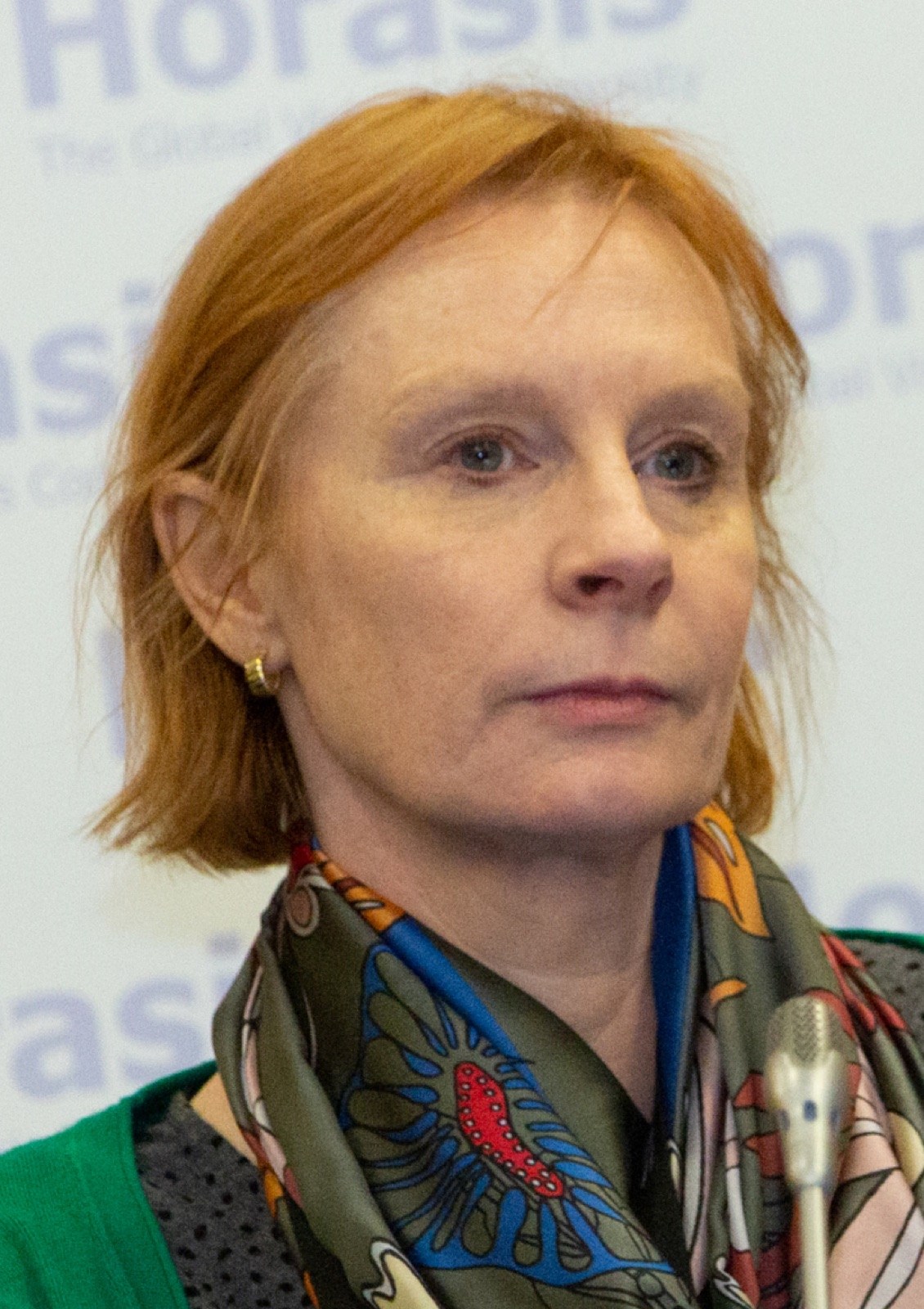
Anne McElvoy
Anne McElvoy is The Economist correspondent examining how the Ukraine war has changed the political map for Europe.
Prashant Rao
Prashant Rao is a Semafor correspondent examining how the Ukraine war has changed the political map for Europe.
Maria Tadeo
Maria Tadeo is a BloombergTV correspondent examining how the Ukraine war has changed the political map for Europe.
Episode Summary
As part of our end-of-year review looking into the biggest decisions of 2022, we look at how Putin's invasion of Ukraine plunged Europe into its biggest security crisis since the Second World War. Just a few days after Putin ordered troops to cross the border into Ukraine, German Chancellor Scholz declared a historic reversal of decades-old policy and a 100 billion euro fund to bolster Germany's armed forces. After leading the UK out of the EU, Boris Johnson suddenly became one of the continent's biggest advocates for defense, spearheading much of the response to Ukraine. And old attitudes to Russia and the West were suddenly reevaluated around the world. The Economist's Anne McElvoy, Prashant Rao of Semafor, and BloombergTV's Maria Tadeo joined One Decision for a look at how the Ukraine war has changed the political map for Europe.
Listen & Subscribe
- Watch on YouTube
- Listen on Apple Podcasts
- Listen on Spotify
Transcript
INTRODUCTION
Mcfarlane: You're listening to a special episode of One Decision. I'm your host, Julia McFarlane. We've been taking a look back at 2022 and the biggest decisions that changed our world. In a poll we commissioned, over a 100 journalists, unsurprisingly, voted Vladimir Putin's decision to invade Ukraine as the most significant event of the year. Not only has the invasion wreaked devastation upon Ukraine, killing tens of thousands of soldiers and civilians with many reports and allegations of war crimes and atrocities committed by Russian mercenaries and soldiers. It's also plunged Europe into its greatest security crisis since the Second World War. For years, Europe has been divided over how to deal with the hostile bear next door. Some countries, like Germany and Hungary, have sought to prioritize economic and political ties to Moscow and now have come under criticism for doing so. Others like the Baltic nations and Poland have been deeply concerned about the perils of doing business with Russia for years and as a result, now feel vindicated. One thing is for sure, Putin's actions have forced Europe to come off the fence. Our expert panel, Anne McKelvey from The Economist, Prashant Rao of Semafor, and Bloomberg TV's Maria Tadeo joined us to take a closer look at how the war in Ukraine has changed Europe, its political calculus, and what comes next. Maria, one of the places where this war had the biggest impact, perhaps, I mean, its shock waves felt all over the world, but particularly perhaps in Germany. And we had, of course, Angela Merkel, the longtime former chancellor who stood last year, has retrospectively come under immense criticism for not being tough enough on Russia historically. And we've talked on this podcast about things like the legacy of the Warsaw Pact and how Germany has always looked both ways between East and West when it came to Russia. But Putin's invasion prompted the new chancellor, Olaf Scholz, to make that pretty stunning announcement just three days after the invasion on the February 27, where he said, we must support Ukraine in this desperate situation. We have and we have done so to a large extent in recent weeks, months and years. But with the invasion of Ukraine, we have entered a new era.
INTERVIEW
Tadeo: Yeah. And what a shock. And I think the entire playbook of Angela Merkel, this idea — and I worked for Bloomberg. So there's this very strong intersection between trade, economy and politics. She had this theory that you could achieve diplomacy through trade. The more you trade, well, the better the diplomatic relationships will get because there's no incentive to fight. With the war in Ukraine, obviously, you realize that for Vladimir Putin, the politics are way more important. The idea of Russia, you know, mother Russia is way more important than that. I think there's also generational change to this. Coalition in Germany is way younger. For also the history of Germany, for Eastern Germans, there was also this idea of many that, well, there's a lot of war guilt of the things that we did to Russians. And then they rebuilt the entire thing. And maybe Russians are not completely evil because the Soviets then helped us in some ways. So I'm kind of shocked by the difference also within Germany and in the two ways. But I think this playbook of trade and security kind of go together is completely out the window. Then this idea that you can take CEOs on a German plane, take them to wherever you are to try to get deals on a political and an economic level. It's a nonstarter for Germany anymore. It's a bad look. They realize about this. I think there's questions about whether or not they're willing to do that with China. But going back to Russia, this is not a glitch. This is over. The idea that Germany will go back to Russia, it's over. The Nord Stream One is over. The Two is completely over. And the Germans have now moved to LNG, taking a huge economic hit and realizing this is not going back, this is not a glitch. What I wonder, though, is whether will they learn the lesson and not do it with China or actually stick with the Chinese market, because still make a lot of money there. Well, Anne, you spent a lot of time covering Germany. What was your response to that $100,000,000,000 fund that Scholz announced to revamp Germany's defense?
Mckelvey: I mean, it was a stunning announcement, wasn't it? It was. I mean, a number of things I think came together beneficially just to give the Germans — we do tend to sort of bash away the poor old Germans. And I think in many ways, Scholz, we were kind of lucky that Scholz had come in, he had this coalition that the Greens have been in a phase where they have really driven this policy. I think Maria reflects it very well. But I wouldn't fancy it left, frankly, to social democrats in Germany, because they do still have a bit of a sort of, you know, who really wants to be on Washington's side? Can we be neither Washington nor Moscow? And can we just like, please all rub along? And social democrats anyway, you know, feel the pressure of history very much. And sometimes I think it's disenabling. I think it stops them acting. I think the Greens and Annalena Baerbock and Robert Habeck have been fantastic on this. They really have stuck their neck out. That made it easier for Scholz to have the cover of the Zeitenwende. The Bundeswehr, as we know, is in the most terrible state and has been historically. It is hard to let Angela Merkel off the hook on that count. And I think there was always a feeling that somehow it would get sorted out through a European defense identity. And it was those like the awkward Brits who were maybe sticking their necks out, going along with everything lovely and European, who were in the way, or that you didn't want to go too far because you're German, you don't want to be seen as militaristic. And I think Scholz did get that message. I'm not sure that he's delivered on it. I mean, which bit of the Zeitenwende has really been delivered on? It still seems to me to be painfully slow. It's very bogged down internally. But at least it is there, it has been said and it can be referred back to. And I agree there was a danger. I thought of it slipping back and it's like, can't we just go and talk to Mr. Putin again? Please don't do this again. But there is still that tendency. I wouldn't underestimate it. In the society, it's much more split than if perhaps we were talking in The US or The UK. A lot of people would like it over.
Mcfarlane: Prashant, Anne mentioned the Brits, and it's not often I say this but I do want to talk about Boris Johnson because he has sort of been a kind of a mascot of Ukraine's defense and of course Britain taking on European security priorities after years of pitching their tent outside the European camp saying Britain wanted to chart its own path. I mean, how significant do you think the British cheerleading of Volodymyr Zelenskyy and of the Ukrainian effort had much of an impact on the rest of Europe maintaining some political will for Ukraine?
Rao: I mean, I think it's important. I always am a little a bit too reflexively defensive of the British decision to leave the European Union, but I think it too often gets conflated with Britain wanting to set up a stand aside on defense. I don't think that was ever said, actually. Britain was always — every British prime minister, you know, you could maybe make an argument that David Cameron was slightly, but at the same time, there was never a question that Britain wanted to be a global defense power. And perhaps Cameron wrote it back a little bit, but, you know, the Libya war made clear that they still had an ambitious defense policy to some degree or another. And so this idea that Boris Johnson was kind of surprising, I mean, perhaps, but in fact, like, Britain has always been quite sort of — it has always been the most powerful and expansionist defense power in Europe, you know, in the postwar era, and so the fact that it stepped up is not that surprising. Now Johnson has also, you know, been hawkish on Russia in his comments. You know, when Sergei Skripal was poisoned, Johnson was foreign secretary, and he was the one who came out and said that Russia is to blame for this. He was far ahead of Theresa May on that. And so the idea that Johnson surprised us, I think sometimes we paint him as a cartoon character, and, you know, understandably, I see why we do that as a sort of journalistic community, but at the same time, you know, if we look at actually what he did and what he said and just remove that from the character, it's not out of step with what British prime ministers have done for quite some time.
Mcfarlane: But he did, his office did bury that report into Russian interference, and one might ask the question if perhaps he is so hawkish on Russia, given that he has some quite difficult questions to answer.
Tadeo: I don't mean to say that, Julia. There's a money question too because — Oh, absolutely. But we've got to talk about that too. There's a lot of criticism. The European Union, what I would say, though, and to follow up on what you said, I think one thing he got right, and Ukrainians love him for this, and he's got incredible name recognition. You go to Ukraine and you say Boris Johnson and they go, we love Boris Johnson. Like, go UK. We love Boris Johnson. I'm not sure Macron would get that kind of response. In fact, I doubt it. I'm not sure Scholz actually has that name recognition in Ukraine. Von der Leyen, perhaps, because she came in with the, well, questionnaire to join the European Union, and, you know, this is their aspiration. But what he got right was a message the Ukrainians wanted to hear: yes, you will win. There will be complete victory, and Vladimir Putin is a loser. That's what they wanted to hear, and he rallied that well. What I would add, however, is — and this is from the Brussels perspective, and I don't want to be the Brussels cheerleader, but what the European Union would suggest is we've taken a massive economic hit. We've done nine different packages of sanctions. We got hit on the coal, the oil, the gas. All of this is costing an enormous amount of money. We are probably going into a technical recession at the end of the year. You have the biggest economy in Europe potentially also going into recession. You have a message today from the French president telling people do not panic. That is a general sense in Europe that, my God, am I going to be able to pay for my bills this winter? So the Europeans do like to say, or the European Union — because The UK is first, I know, is still in Europe — but the EU will say, you know, we always get a lot of the flak, but we have done a lot here. And one of the questions that perhaps Boris Johnson did not get or should have gotten is what about the money, the Russian money in London and the political establishment into all of this? So if we are going to be criticized, there's also criticism that goes both ways. But that, again, is a Brexit tension.
CLOSING
Mcfarlane: This has been a special episode of One Decision, looking at the year in important decisions, choices that have been made, and choices still to come. You can hear our regular program every Thursday. Head on over to our page wherever you're listening now, and subscribe or follow to make sure you never miss an episode. From me and the team at One Decision, thank you so much for being with us during 2022.
Mcfarlane: We wish you a very Merry Christmas, Happy Hanukkah, whatever holiday you're celebrating, and, of course, a Happy New Year. See you in 2023.