Episode Info
- Season12
- Episode6
Hosted by Christina Ruffini and Sir Richard Dearlove
Guests
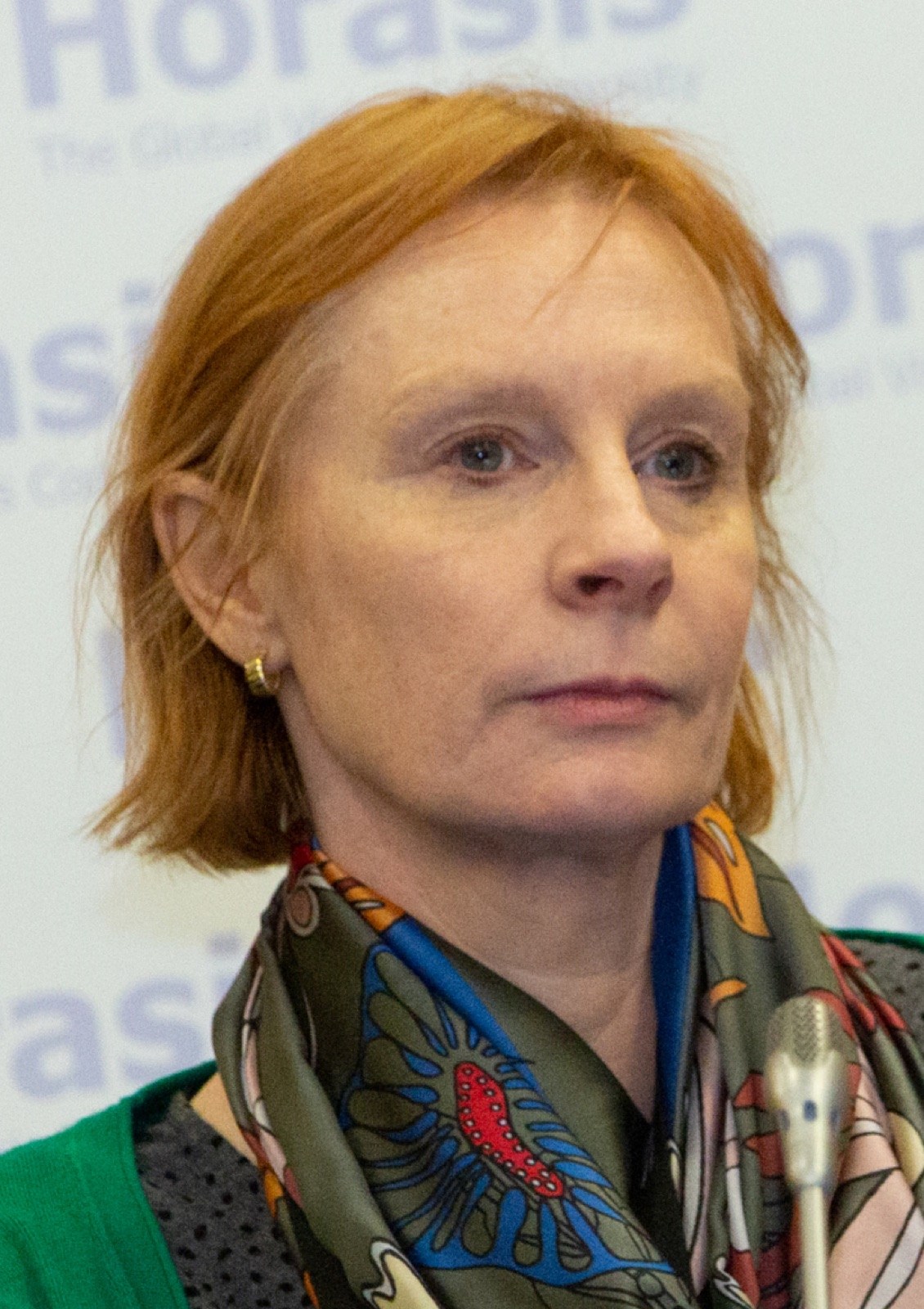
Anne McElvoy
Anne McElvoy is The Economist correspondent examining Putin's invasion of Ukraine as the biggest decision of 2022.
Prashant Rao
Prashant Rao is a Semafor correspondent examining decisions of 2022.
Maria Tadeo
Maria Tadeo is a Bloomberg correspondent examining decisions of 2022.
Episode Summary
2022 started with the White House warning that Putin planned to invade Ukraine. Many were skeptical. But in this year's most significant decision survey of more than 100 journalists, the consensus is in: Putin's decision to invade Ukraine was the biggest decision of 2022. Some of the other decisions will surprise you and might end up having more impact in 2023. In this roundup of the biggest stories of the year, we examine them all as we end one year and move on to the next. One Decision is joined in London by The Economist's Anne McElvoy, Semafor's Prashant Rao, and Bloomberg's Maria Tadeo.
Listen & Subscribe
- Watch on YouTube
- Listen on Apple Podcasts
- Listen on Spotify
Transcript
COLD OPEN
Mcfarlane: Hi, everyone. Before we start the episode, I have a bit of good news and a favor to ask. First, the good news, One Decision has been selected as a finalist for the first annual Signal Listeners' Choice Award in the category best conversation starter. And now the favor. We need your vote. Please head over to our Twitter page One Decision Pod to vote now. The deadline to vote is December 22, and the episode in the running was Lithuania and the Two Goliaths, NEWS CLIP [0:27] the tiny Baltic nation taking on Russia and China. Without further ado, let's start the show. In an address to the nation, Putin said reservists will be drafted into the army to fight in Ukraine. Putin is the aggressor. Putin chose this war, and now he and his country will bear the consequences. The war of Russia is not only the war against Ukraine. Its meaning is much wider. Russia started the war against freedom as it is. This is only the beginning for Russia on the Ukrainian land. Russia is trying to defeat the freedom of all people in Europe, of all the people in the world. French president Emmanuel Macron tweeted, abortion is a fundamental right for all women. It must be protected. British prime minister Boris Johnson also condemned the decision. Clearly, it has massive impacts, on people's thinking around the world. It's a very important decision. I gotta tell you, I think it's a big step backwards. Breaking news. The deal is done. Twitter has been sold to Elon Musk. The Tesla and SpaceX CEO acquired the social media company for roughly $44,000,000,000. I have therefore spoken to his majesty, the king, to notify him that I am resigning as leader of the conservative party. In order to make America great and glorious again, I am tonight announcing my candidacy for president of The United States.
INTRODUCTION
Mcfarlane: You're listening to a special episode of One Decision. I'm your host, Julia McFarlane. When I first joined this podcast, having spent four years as a foreign correspondent at The US network ABC News, I was really looking forward to exploring global politics and events in-depth at a slower, perhaps more thoughtful pace than you tend to get in the world of network news broadcasts. The world was slowly emerging after two long years of the COVID nineteen pandemic. America was gearing up for an election year. But from early on in 2022, there were hints that it was not going to be a quiet year after all. So we decided to publish a survey of what were perhaps the most significant decisions made in 2022 and invite along a few friends of the podcast to our studio in London to chew over the results. So it has turned into quite the fast moving year of news, and we really have had far too many significant moments to choose from. And so in order to help us, we've enlisted the help of a 100 journalists around the world to vote on what were the most important decisions made in 2022 that shaped our world. And while some of the results were surprising, they also showed a clear lead at the top of the table. First of all, we had Vladimir Putin's decision to launch a ground invasion into Ukraine beyond the areas he's occupied in the East since 2014, of course. And then shortly after that, interestingly, came the decision of the US Supreme Court to overturn Roe versus Wade, the landmark piece of legislation that enshrines a woman's right to abortion in The US. The third most important decision was that of the Chinese Communist Party to confirm Xi Jinping's unprecedented third term in office. Now, we will go through our list of important decisions. But first of all, I wanna introduce this amazing panel that's with me today to help me chew over the ramifications of these decisions. We have joining us Anne McKelvey, who is executive editor of The Economist and head of the radio output. You may have heard her hosting many of their panels and podcasts, including The Economist Asks. We have Maria Tadeo, friend of the podcast and correspondent at Bloomberg TV covering everything EU, economics and good friend of the podcast. Very good friend of the podcast. And last but not least, we have Prashant Rao, who is joining us from the news startup Semafor, formerly of The Atlantic via The New York Times and AFP in Baghdad, Hong Kong, and London. Thank you so much all of you for being with us today. We've got a fair amount to get through. But let's start with Putin's invasion of Ukraine. And before the actual day, the February 24, when he launched those ground troops over the border, let's just go back a wee bit earlier because I think there are a couple of things that are worth reminding ourselves about. Back in 2021 last year, there was that growing buildup of Russian troops near Crimea, near the border with Ukraine. Russian officials were constantly denying that this was taking place, denying that this meant that they were preparing for an incursion. The United States becoming more and more agitated as the months went by with repeated warnings about what Putin's intentions were, which interestingly were not at least publicly shared by even the Ukrainians. Volodymyr Zelenskyy, the Ukrainian president downplaying The US intelligence assessments of a potential invasion at the start of the year, and he even said, it's been like this since 2014. And then of course, we had February 4, which was the day that China and Russia issued that really interesting joint statement opposing further NATO expansion, a press conference where they declared that they had friendship with no limits. So to start off with, I'm gonna go to you, Anne, first of all. What do we think went on at that particular press conference? Where we were, we were a month before he actually launched his invasion into Ukraine. Xi Jinping went over to Beijing at the start of the Winter Olympics. They had that very interesting press conference. What do you think was going on here? Was Putin briefing Xi about his plans for Ukraine? Was Xi saying, whatever. Just don't do it during my Winter Olympics.
THE INVASION OF UKRAINE
Mckelvey: What do you think that was all about? It really depends what account you read. I remember at the time there was a protocol that seemed to be saying there was a bit of a warning to Putin not to overdo it. The President Xi was basically waving a finger at him. But then when you look at what was put out in Chinese media and looked again, of course, under control of the Kremlin, what Russian media was reporting, you were often hearing much more friendly terms. The way I would read through all of that is that the terms were being effectively nailed down in the background on which Putin would be allowed to go ahead. And you mentioned 2014. I'm very pleased you did. This idea, I think, that it all just started when everything rolled across the border in February is really not right. I mean, 2014 was the invasion of Ukraine, Ukrainian territory that the West just chose to play down and tried to get rid of through Minsk accords and put somewhere in a closet and hope it never came out again. I suspect what happened was that Putin at least signaled very strongly to Xi, I don't think he would hold it from him. It would be too much risk because there is still a bit of jeopardy in that relationship, which we might come onto. He can't fool around too much, I think, with his authority when it comes to dealing with the Chinese. And my guess is that Beijing said, well, go ahead, but don't overdo it. Now, the question is, is that still the view that they take so long after this conflict?
Mcfarlane: Yeah. And Prashant, I almost feel kind of sorry for the White House because there was that, it was a couple of weeks before Putin actually bit the bullet and went ahead for it that the White House was saying Putin's gonna invade, Putin's gonna invade. And a whole lot of us on this side of the Atlantic, we were pretty complacent about it. And certainly, my cohost on this podcast, Richard Dearlove, and I both were like, Peter, that's not gonna — he's not gonna invade Ukraine. He's not that stupid.
Rao: I mean, the Americans were right. I mean, you could call it complacent. You could also say that as journalists who grew up on the Iraq War, we had sort of reasonable questions about the vociferousness of American intelligence. Because the last time or one of the last times that The United States told the sort of international press corps that an invasion is about to — or, you know, there are weapons of mass destruction, and a dictator's about to do something horrible. You know, it turned out that, like, that intelligence did not live up to the sort of claims that were being made. And so I think, you know, I think it's right. One of the organizations, one of the groupings that has been vindicated through the course of this has been American intelligence, and so entirely, full credit to them, but I think complacency is certainly one characterization, I think that's a fair one to lob at the press corps or anybody who kinda questioned it, but at the same time, I think it was reasonable for us to be complacent. Just going back to the Xi thing, though, I think one of the interesting reports in the past month that I think has been really fascinating is the Financial Times has a piece that not everybody's followed up on and, you know, hasn't been confirmed, but I've been utterly fascinated by it about citing sort of anonymous Chinese officials, who you rarely see in the Western press, talking about how Xi Jinping believed he'd been had in that February meeting. And, you know, this is fascinating on a number of levels. One, you know, Chinese officials talking at all to the Western press is sort of unusual. But secondarily, you know, making Xi look bad as well. You know, if that leaker was ever found out, you know, were they sanctioned to speak, all these kinds of things. So I think, you know, you're absolutely right to sort of figure out what happened at that meeting, the fact that we don't know is, you know, hugely important to global history, but it is certainly, I think, coming out that it might well have been that Putin didn't tell the truth.
Mckelvey: Didn't tell the truth. Goodness, that would be new. Yeah, a shock. Well, that would be interesting because that would revisit the way that it was put at the time that in some terms, he signaled enough to get the go ahead. But that's not quite the same, is it? As saying, oh, by the way, I'm about to sort of launch a war that's going to suck everybody in and take up most of a year.
Mcfarlane: Maria, you recently sat down with the NATO Secretary General who last week said at an FT event that he believes the conflict will likely enter a quieter phase over winter, but that Russia is showing no signs of seeking a peaceful end to the conflict, nearly ten months into his war. And you spoke to the secretary general quite recently.
Tadeo: Yeah, I did. And there's two things that he said to me that really stuck with me. First of all, he said, this is now a war that's perverse because it's not an army that fights another army. This is Russia 100% intentionally destroying the energy infrastructure of Ukraine. They know that temperatures are going minus. We all know it's a very cold country. I mean, that's not a secret. And essentially, what you have is people. And every time I think of this, my blood just kind of — it's incredible to think of this in the heart of Europe in 2022 that you could have people that could die of cold this winter. And this idea that Russia believes it will break the will of the Ukrainian people. And at one point it will be the Ukrainian people who will tell Zelensky we need some type of peace deal. You have to now talk to Vladimir Putin. By the way, the Ukrainians always say we did try, but he never took him seriously. He never wanted to speak on the phone with Zelensky because he is referred to in the Russian media until recently as a clown. Russia only speaks to the great powers of the world. He's an actor. He's a fool. Well, the situation, of course, has turned out to be very different. And then on the other hand, when it comes to NATO, I think there's a real debate about the weapons. So it is clear they need weapons. But what type of weapons? And if you go into long range, then that means should Ukraine hit Russia? Do they have a right to hit Russia? And ultimately, some believe this comes down to Crimea and Crimea is very dangerous because the Ukrainians are not willing to let go of this.
Mcfarlane: Well, it's not just Crimea, but Anne, Putin, a few months ago, declared that Kherson, the city in the South near Crimea, he declared it part of the Russian Federation when the Russians had taken control. And, you know, so technically, the Ukrainians have attacked, I quote, Russian Federation territory. But also quite recently, we've had reports in the press about drone attacks well within Russian territory. So in a way, the Ukrainians are actually sort of responding, perhaps not in kind, but they have attacked the Russians at home.
Mckelvey: Well, you're absolutely right to make that point about Kherson. And, of course, the more territory Putin puts a big sticker on that says, this is Russian Federation, then he has a better excuse if he wants to escalate to say, well, the Ukrainians attacked Russian territory. There are also attacks falling into existing Russian territory as was in the status quo, and that is true. But if you look at it from the perspective of Ukraine, otherwise they're always just going to be defensive. So what they do is they get whacked in terrible ways, both by conventional methods, but also, as we were just reflecting there, that people are effectively being sort of starved into submission or frozen into submission or not having water supplies. And are they simply supposed to kind of fire back within the range of the territory they're in while their neighbor has invaded them? This is a really tricky area, but I think it is the one that it comes down to and that the Biden administration — and ultimately you can send a lot of postcards to leaders on the bits, but the one that matters is the one that reaches the White House. Does the White House say, okay, it has now gone on so long, so much is at stake. It is really about the survival of Ukraine that, you know, we will back you as long as there's great visibility, which there is of what you're gonna do. You know, we don't want you doing things that we don't want to be responsible for. But that is something I still feel when I'm listening to Biden, I'm listening to officials in Washington. I do feel it's through a glass darkly. I don't think they're very clear on that. I suspect they'll have to be in the months ahead.
Mcfarlane: Prashant, because we've touched upon the attacks by Russia on civilian infrastructure, the kind of psychological warfare and physical warfare they are inflicting by taking away people's heating during winter, taking away their water supply. We have had this as part of the conversation at the start of the Ukraine war that a lot of what we were seeing in Ukraine was going on in Syria and did not receive the same amount of attention.
Rao: Yeah. There I think there are two interesting lessons from this. Anne's colleague, Shashank Joshi, was fantastic on the Economist Babbage podcast recently talking about the sort of cyber warfare that the Russians initially waged. And one of the points he made, which I thought was really astute, was, you know, the fact that the Russians didn't try to disable civilian infrastructure at the beginning of the war suggested that they thought they would take over because they thought that they would eventually have control of civilian infrastructure. And the fact that they are attacking civilian infrastructure now suggests a step change in how they perceive future control of Ukraine and the likelihood that they probably will not control Ukraine. I think this is — you know, Putin said recently in his speech to the National Security Council about how this is gonna be a protracted war. I think this has now become clear to Moscow that this is not going to be — obviously, it's clear to everyone that this is likely to go into next year and possibly into the year beyond. Now the other thing that is, to your point, interesting is you're right. We saw this in Syria, but at the same time, you know, you're right to mention we saw it in 2014. We saw it in Georgia. We've seen this play out for actually quite some time. And the idea that any of this is new is — I mean, the facts are new, but in fact, all of this was signaled to us for a long, long time. And I say us as the collective people who lived in London, Washington, Brussels, Paris, Berlin, none of this is that surprising. You know, exactly as you say, if you'd watched how Syria and General Armageddon, Surovikin, the general who's currently in charge of Russian armed forces partook the conflict in Syria, this is not that different from what is happening now in Ukraine. If you saw the sort of slow takeover of territory in Georgia, then the takeover of territory in Ukraine wasn't that surprising. There are lots of these things that Putin has actually signaled to us in the past. Chechnya is also another great precursor in terms of evidentiary signaling of what he believes conflict to entail. And I think all of these should have told us what was going to happen.
Mckelvey: I covered the war in Chechnya a long time ago. I mean, I do feel I'm sitting here on this panel like someone is going to come and say, you know, I was around when Palmerston was looking after Britain's foreign policy. Forgive me and I won't go down memory lane too far, but this year — I had done the Balkans war before and Yugoslavia, but the sheer destruction of Chechnya, which, I mean, it was also very clearly going to lead to a change, getting rid of it. Yeltsin — Putin was the beneficiary and drove it. But I think it's a very good point that we're almost programmed to forget the amount of destruction that can be unleashed when you get a power that decides that that is how it is going to measure its strength and success. And there's been a degree to which Chechnya — too far away, too minor perhaps in the world stage to be much referred to, but I think you're absolutely right to point out that it's almost again and again, Moscow has tried to remind us what it's capable of, and again and again, we've gone, yeah, you don't really mean it, do you?
Mcfarlane: Maria, you are based in Brussels, and I just wanted to ask you, I wanna take you back. Where were you when the invasion launched? What was the reaction of EU leaders?
Tadeo: Well, funnily enough, there was a European summit that was happening that day, and I remember, and I have this ingrained in my brain, the face of the Polish Prime Minister, Morawiecki, who was just furious. The Lithuanians just furious. The Baltics. This is now a full scale war. And we told you for a very long time the idea that Vladimir Putin wants the return of the USSR, that Russia is an imperialistic nation by history that feeds off neighbors. This was not an exaggeration. And in the West, you did not believe us for so long. I think also I remember and I can't say who told me this, but there was also this idea of, you know what, Zelensky in a week, he's dead. I can't really say who told me this, but a European official at that point, there was this idea that in a week this is over and Zelensky is dead or gone. And we talked about how there were signals and Russia has done this previously and so on. But I think, of course, there's a miscalculation also in the Russian part that this has been a social media war, so that has changed the nature of the war in so many ways. The message was very good from the Ukrainians that day.
Rao: I remember President Zelenskyy on his phone recorded himself 6AM in the morning. He said, we're not gonna leave. There's a full scale war, but we are here and stay with us. Actually, I think the most important point in all of this is something that you said earlier is frankly, none of this matters because the only place that matters right now is DC. Like, what Washington does — the equipment it provides, the defense support it provides, the intelligence it provides, all of it, this is really what makes or breaks. I mean, if you look at the charts that illustrate the defense support that's been given to Ukraine, what even Britain has been — out of, you know, far ahead of many European powers and what it's given, it's a sort of drop in the ocean compared to what The United States has done.
Tadeo: And can I just say I have been to — well, I was in Romania last week. I've been in Poland. The Baltics was an entire tour. And when you read the news, when you turn on the TV, when you see kind of the media cycle that they have, it's all about President Biden and NATO. We spent all of this time in Brussels debating. Well, von der Leyen said this. And the commission in The UK and Macron, we don't understand what he says, and he's confusing. And Charles, why is he so weak? In Eastern Europe, it's about NATO, 200%. It's about DC, it's President Biden, and who's gonna send what. Absolutely.
THE OVERTURNING OF ROE V. WADE
Mcfarlane: Well, that brings us beautifully to the second answer of our survey. And interestingly, the decision of the US Supreme Court to overturn Roe v. Wade was actually voted the second most important decision of 2022. I mean, I wonder what you guys think about that. Personally, I think the fact that there are now a lot of states, particularly ones that have had trigger laws before the Supreme Court made this move, that now abortion is illegal in a lot of places in The US. I mean, I don't believe it has international impact, but certainly it has really shifted a lot of the ground in The States and The States obviously impacts all the rest of us. Of course, the Ukrainians were watching the US midterm elections extremely carefully. So I wonder if perhaps the fact that Roe v. Wade had really important consequences for the midterm elections, and perhaps gave the Democrats a helping hand in retaining the house, excuse me, the Senate, and will therefore make it easier for the Americans to support Ukraine. I mean, Anne, what do you make of the fact that Roe v. Wade was the second most important decision of 2022?
Mckelvey: In some ways, I'm heartened that it was, because it's quite hard for those outside a country, even one as influential as America to get very interested in social and health policy of other countries. You know, it's always a harder sell journalistically. But I think that this did capture the imagination, and for many people it was really the sense of, if we're looking around the world, where is their progress and where is their regress? This felt regressive. And I don't mean to say that everybody, you know, who has doubts about term limits or a more nuanced debate about abortion — I appear on Sunday or The Moral Maze, it's exactly what we would debate. We have different views on the panel, but there was a sense that here was a sort of sledgehammer being applied to a fundamental right, and that it would have very bad consequences. I also believe it will, and is having very bad consequences. So in a sense, I think that is good. I think it is good that there is a sense, if you like, of a civic society and debate that isn't always about who's attacking whom or oil prices. And I say that knowing that I've got a Bloomberg representative, who actually lives and breathes this stuff. But we do have to remember that societies are also about what freedoms you have, what are you able to do, what are you not able to do and those who suffer most from those decisions. So I think in the case when it comes to abortion rights, all those who often don't get their voices heard, they're not in those big debates that we're having about geopolitics. And as you say, it may well — I'm still curious, I'd love to know what the other panelists think, how much it played into the midterms. Some people say a lot, some people say not at all. I was worried that it might just become one of those left Democrat motivator issues. And of course, a lot of Democrats also have doubts about abortion, so my jury was out on it. It appears that it did have some influence, but I would be interested in what other people think on that.
Rao: I mean, I think the polling seems to indicate it had an impact, at least in blunting Republican gains, you know, given the polling suggested that the Republicans would easily take the house and possibly take the senate and neither were born out. I'm actually more interested, you know, in the long term ramifications for American politics. I think if you listen and read sort of conservative commentators in The United States, one of the kind of questions that came up right after the decision was, you know, I think in the Republican umbrella, Roe v. Wade was a unifying force to a disparate group of interest groups. You know, much as you say Democrats had concerns about abortion, I think there's a coterie of Republicans who support abortion rights, sort of what we, you know, possibly what we old fashioned described as Reagan Republicans, the kind of people who don't want to get involved in, you know, classic Economist readers to some degree, or, you know, of a different era perhaps, and so losing this kind of unifying force and then uniting it on the other side with Democrats and providing a kind of unifying umbrella to campaign on, I think could have a long term impact on American politics that could also reshape where, you know, party votes come from. I mean, to say nothing also, the fact that — just I think Anne's point, you know, cannot be understated. Just focusing in on a woman's right to choose around the world, it sort of provoked debates in places that didn't typically have those debates. I mean, suddenly, we've seen a bunch of stories about, like, what is the abortion limit in France? Why do women in Northern Ireland have to cross the water to get an abortion? I think that sort of generated a level of debate about, as you say, an element of social policy that does not get sufficient debate, and that had international ramifications that we could not reasonably have predicted, and that's really only because it happened in The United States, and The United States has sort of multitudinous impact around the world.
XI JINPING'S THIRD TERM AND ZERO COVID
Mcfarlane: Our third voted biggest decision of 2022, which was the decision of the CCP to confirm Xi Jinping's third term in office. And I mean, this was a really long time coming. Xi, of course, he took power in 2012. And over the last few years, he has really got to work in centralizing power in getting rid of a lot of his political opponents. And the decision of Xi to dig his heels in on zero COVID is one that he perhaps needed to take because zero COVID is sort of hand in hand with legitimacy? It was his decision to lock down. If he were to scale back, would that be him admitting that he was wrong? And of course, one thing that was really interesting was he got rid of Li Keqiang, who had publicly criticized the COVID lockdown, and we're now seeing these incredible protests all across China and these incredibly dystopian scenes of these guys in white boiler suits dragging people out of their apartments all over Chinese social media. I mean, what do you make of what's happening in China at the moment?
Rao: To some degree, the most important thing that happened in China this year was the zero COVID decision rather than the decision to anoint, to reanoint Xi. The zero COVID decision was possibly, I think, almost certainly the most important thing that any — that he or any person in China did this year because it impacted all of us. It changed supply chains. It transformed economies. It saved, you know, certainly a number of people's lives, but, you know, coupled with the fact that they didn't vaccinate people, they didn't build up any kind of stockpile of medicine as we're seeing now and maybe at risk of a winter wave in which the FT has modeling which says that up to a million people may die, suggests that, actually, it wasn't simply Xi winning the third term, but, actually, the decisions he made along the way, particularly zero COVID, which I think will go down as — you know, we can quibble with it because in the early parts of 2020, zero COVID was the right thing to do. It saved, hey, God knows how many lives. But by this point now, the continuation of zero COVID through the summer and the Shanghai lockdown and all these things had impacts on all of us. And for financial markets, if I may say, that's the only story that matters out of China, 100%.
Mckelvey: I'm really interested in where it goes because I don't think he's going to be able to prevail this way. At some point, he will have to make a change. What does he do? What external force can he blame for that? He's there. We know he's there in pretty much in perpetuity. I suppose that is a strength that he does have. He can make a change without losing power, but he doesn't want to lose face. And that seems to be the problem.
Rao: We already see. Right? Effectively, zero COVID is dead now for all intents and purposes. Now in Beijing, you can quarantine at home, you can take public transport, the requirement for mass testing is effectively gone, you know, they're starting a vaccination drive, so you see suddenly state media is pivoting in this way that sort of doesn't acknowledge the history of what just happened, but now I think the difficulty will be, as you say, how do they sort of frame this and who do they blame? And it seems increasingly clear to me that they're gonna blame sort of the overzealous local officials who police zero COVID, the people who, you know, went too far. There are these sort of isolated reports of apartment buildings in Beijing and Guangzhou and Shanghai where residents are questioning the police as to whether they have the authority to conduct these building wide lockdowns. And so the blame is being put as it often is in autocratic regimes, not at the person who made the decision, but the people who are enforcing the decision.
Tadeo: And it looks like doing what they were told to do in the first place. Or where the incentives lay, and the incentives clearly lay in locking down. The global narrative has completely changed. I mean, I remember at the start of the pandemic, we were all being told the Chinese have handled this so much better than the — oh my God. This shows the power of China. And now you're looking at a situation where here we are. I mean, the four of us debating here, go to The United States, the President of The United States says it's over. The pandemic is over. Let's get back to work. You have every major CEO that says work from home is over. And in Europe, essentially, you're back to kind of how life was before with some minor restrictions. But the narrative has changed.
Mcfarlane: You know, this idea that China handled COVID better, does it stand two years later? I just want to quickly, because we're running out of time. Maria, I have to ask you the money question, because part of the decision to pull back will be an economic one. And the CCP, they put off publishing their GDP growth in the last quarter of this year because it was not good news. They had set this target of 5.5% or whatever, and it was 3%. And so, part of the CCP's legitimacy is the fact that it was able to raise millions out of poverty. And so for the Chinese people, a lot of them have been tolerant of the CCP and of the ideology because it has benefited them in some sense. And if that goes, if the Chinese economy trips, the whole world shakes. So what do you think is going to happen in the months to come?
Tadeo: I think for markets and investors, they want to see this policy being dropped. This is the one thing they want to see. I work in Bloomberg Financial News, traders, investors. This is the one thing they probably check every day. Has there been any changes? The market immediately rallies on any rumor that potentially suggests some of the restrictions are going to be changed on the Chinese data. I mean, that shows you it is not or was not looking good, but also a lot of the analysts out there. And this is not a secret. They also tell you they do their own data and analysis because they don't trust the official numbers either. But again, I think it goes back to the narrative before, you know, we're being told China handled this so much better than everyone else.
Rao: I think after two years, have they handled this better? I mean, it's very difficult to maintain that line of we did a good job here, and everyone else kinda didn't, and that has flipped. You know, you have an economy in The United States where it is kinda back to normal. I mean, and the economy — like, the danger is I sort of don't wanna be put into the position of being a CCP apologist. I don't mean to claim that point. I just think, you know, both things can be true. Right? We shouldn't forget how many people died in Britain and how many people died in Germany and how many people died in The United States.
Tadeo: And so, you know, the fact is — once you got the vaccination campaign — absolutely. That's the point. Yeah. I think that's not a political decision where you say, I will get the most effective vaccine. I don't care where it comes from, and you were offered multiple times in China. There's many other options, not just the one that you made — that's vaccine nationalism. Once you had the vaccine, that flipped. It was get vaccinated. It was a political decision. You do it in some countries in Europe — I mean, you have to take this vaccine and you have to do it. I remember in Brussels to go to any restaurant, show this pass, you know, there's just — that is a political decision to get the best contract. It costs money. Sure. No problem. I don't care where it comes from. But you take the best vaccine you can possibly do and you do a good vaccination campaign.
Mckelvey: Well, the thing I would say about that is inflexibility is a feature, not a bug of authoritarian systems. And there is only one way, at least, that I see through it is that he has to change his policy. He has to acknowledge however tacitly — he can say that it was a great idea for a long time. I might disagree how long that should have been. But, you know, he could say, well, we are now in a different phase, very good at inventing new phases and new eras. If you want to change something in China, it's been done many times before. You simply put a new set of words around it. It does seem that he has difficulty with that specifically on COVID. And it may be that it's because he's seen as so much the author of that decision. And as you reflect quite rightly, he has also got rid of people who were obviously trying to push him in a more nuanced direction. So what he can do now is continue a cycle of repression. I'm really interested in where it goes because I don't think he's going to be able to prevail this way.
Rao: Yeah. I think, like, what I was struck by in the list is — my sort of general sense is it's a really weird thing to say while sitting in London with a series of correspondents who live and work in Europe, but functionally, you know, I mean, the future of this world does not hinge in this part of the world. Beijing will define it, and DC will define it, and growing populations and changing demographics in parts of South Asia, Southeast Asia, and Africa will define it. And, you know, people come to power and they don't, and frankly, the more important things are the subtler shifts that are happening in Chinese politics, in sort of growth in power of Xi Jinping, and the curtailment of his power, whether he decides to invade Taiwan or not, what Japan decides to do, changing Pacific alliances, and how people change in terms of their investments in renewables, these are all the things that will actually, I think, define. These are the decisions, I think, that will define the coming decade. And frankly, you know, it goes back to Maria's point that, you know, in some ways, Eastern and Central Europe is right. Like, the leaders in Brussels and Berlin and Paris are accessible and interesting, and they do matter, but, functionally, they matter because of past performance, holding UN Security Council seats, not because of future economic growth, not because of future demographic growth. These are the things that are happening in parts of Asia, in parts of Africa, in parts of Southeast Asia that will define how this world changes and how we live, and particularly how Beijing behaves.
CHINA, TAIWAN AND THE FUTURE
Mcfarlane: So then my question is, were you heartened perhaps or am I reading too much into things with how almost sort of chummy Biden and Xi were at the G20 in Indonesia? And they both said quite some interesting things. They both alluded to the fact that the world is sort of counting on us to be the grown ups and to recognize that we are at a time of unprecedented global challenge that we cannot figure out on our own. I mean, what did you guys make of that meeting?
Rao: I think it's always dangerous to read too much into individual statements by these leaders. I think it's good that The United States and China cooperate, but I think there's a reasonable sort of — particularly on climate. Fantastic essay. Again, I referenced foreign affairs. Fantastic essay in Foreign Affairs that made the case that actually US China climate competition is better for the world than climate cooperation. What does US China climate cooperation actually mean? Whereas, actually, if you have The US and China competing like crazy, like The US is doing now with the Inflation Reduction Act and China is doing with its of carbon targeting and building solar panels. Isn't that kinda better for the world in a way? And so, you know, in a lot of ways — and frankly, we can talk all we want about them being sort of chummy, but the incentives are still towards The United States and China not cooperating.
Mcfarlane: Well, they did say it's important to compete, but to not end up in conflict. And so I think perhaps the idea that, you know, are we gonna go to war with China over Taiwan? It seemed to be downplayed quite a lot.
Tadeo: It has been downplayed. Would you say it has been downplayed? I mean, I think ultimately with the case of Ukraine, what Vladimir Putin figured out is that they're not gonna put boots on the ground. They're not gonna go all in to help Ukraine. And that's essentially kind of what happened. Then he miscalculated on the Western response, which has been super compact and the money, the cash, and all of this. But your view, I wonder when this G20 meeting happens and you got this communiqué, which for a lot of people is relief. I mean, it was not escalation. In fact, it sounded okay. Do you take that? Do you take any lessons there and does it signal anything about what could happen in Taiwan? Do you think the Chinese walked out of that meeting being, like, The United States would not risk it all for this country or the opposite?
Rao: I think you're both right in that it is a sort of lower temperature, but, I mean, I think, again, we have to sort of remove ourselves from this G20 meeting. Right? Like, this meeting happened, great. Everyone was sort of a little bit pally. But Xi Jinping still believes himself to be a man of history. Right? I think we all agree on that. And that includes what? He believes he's a Mao Zedong level leader, and that inevitably must certainly include the takeover of Taiwan. I mean, can you describe a Xi Jinping scenario in which, like, he does not want that? Now he may be sort of held back from that, but it seems clear from all the literature that we know about him and seems clear from American intelligence and, you know, admiral after admiral — and, you know, you might say that they're asking for increased defense spending, but they'll come out and say, hey. This could happen next year, or it certainly could happen within a 2027 scenario at the sort of centenary of the founding of the PLA. And so the idea that this one meeting sort of makes us calmer because — I mean, Ukraine is one thing, but, really, a Chinese invasion of Taiwan and an American inability or refusal to defend Taiwan would shred the entire American defense structure in The Pacific. Japan wouldn't trust The United States. Korea wouldn't trust The United States. Australia — I mean, all of these countries that rely on The United States for defense implicitly or explicitly would immediately cease to rely on The United States. We would have this enormous multitudinous impact. And so, I mean, Xi also must know this that, you know, if he was to successfully pull this off, it would work. The other thing I think we can take — there are two things I take from, you know, Putin's invasion of Ukraine. One is the tactical thing, which we kind of alluded to. American and Western defense stockpiles are falling. Right? And, you know, NATO has talked about this. There's a really interesting analysis that makes a point that maybe, you know, China takes a lot from this, that actually a Chinese invasion of Taiwan will mean that, you know, Western defense stockpiles are not what they were. And so actually, like, how long could they supply Taiwan's military, which, you know, has been reported to be wildly underprepared for invasion?
Mcfarlane: Well, I mean, the thing with president Xi is I think unlike a lot of Western leaders, he does not think in election term cycles. I mean, traditional two term limit, he has like a one hundred year plan. He has like a five hundred year plan for China. And I think he is laying the groundwork. And when it comes to Taiwan, I feel like we are not likely to see the Chinese Navy encircling the island or trying to get their boots on the ground. I expect what we would see is economic leverage and ways in which the Chinese can reassert their control and their authority on Taiwan without a shot being fired, because also that makes it much harder for The US to really justify getting involved in anything. But I think this idea of, you know, there is a few cities — a great power trap that The US and China are inevitably headed towards conflict some point in the future. I think we are sort of moving away from that.
Rao: I mean, warfare can be pretty damaging, but I think — oh, it certainly was. Yeah. But I think war for sure. The one of the interesting thing though is, you know, this podcast is called One Decision, and, you know, one of the interesting things though is, like, what are all the sort of decisions that feed up to the one decision? Right? So what's clear is Putin's intelligence as he went into — I mean, like, sort of espionage intelligence, not his intellect, in the lead up to the war in Ukraine was clearly flawed. I mean, it was just a complete failure. Now why do we think that Xi Jinping is getting real time smart intelligence about Taiwan when all of the incentives for all of his underlings are to tell him he is right? He is now not going to be taken out of power. So what is the reasonable belief that, like, I'm gonna tell Xi Jinping no, and in five years, I will still have a job because he will still be ruler of this country?
Tadeo: But so you actually say that if Russia fails in Ukraine, that means or would mean — this is a Chinese leader that becomes increasingly paranoid. Maybe — no, I'm not being told they're right. And for me, this can go very wrong. I mean, what lessons then do you take from Ukraine?
Rao: I actually — it's the lesson of what happened before the invasion that we should not fail to learn, right, which is what the sort of academic Brian Klaas calls the dictator fallacy, the dictator trap, which is when you're a dictator, everyone's incentives in the political structure is to tell you, yes, you are right. Absolutely. And so why do we think that Xi Jinping is getting this kind of nuanced analysis? And even if he reads it, why does he think it's reasonable? Because everything seems to suggest that, like, actually, CCP cadres believe that the protests of, you know, late November and early December were a foreign plot, that the Hong Kong protests were egged on by The United States. And it's not that they're sort of putting that out there. There is an element of belief in this.
Mcfarlane: Well, you look at Hong Kong, there were — the Chinese said that, you know, they had their tanks. They had the military on standby ready to help should the Hong Kong authorities need it to stem those protests, and that was not necessary because there was Chinese influence within Hong Kong. So Prashant, don't you perhaps that is going to be the slightly more strategic — potentially — way in which Xi is going to claw back authority over Taiwan?
Rao: That's true. I mean, Taiwan has — I mean, the Kuomintang has, like, been roundly defeated in previous elections. And so, you know, that's the Beijing friendly party. It suggests that at the moment, at least, Taiwanese — and the sort of war in Ukraine seems to have strengthened a sort of distance that they want from China, and there's probably some sense that, you know, the KMT is struggling in the polls. And so the idea that — I think making Hong Kong and Taiwan comparisons, they can only go a certain way. Hong Kong was still legally Chinese territory, and so Beijing could impose a national security law. They cannot use those legal and political mechanisms in Taiwan in the same way, and the sort of roundly failure to promote the KMT in the last Tsai Ing-wen election suggests that actually Taiwanese are not particularly amenable to this kind of influence and have smartened up about it.
Tadeo: So everything being said, or everything we've debated here, there are still those that hope he will play mediator between Russia and Ukraine. Can he actually do that?
Rao: I'm curious what you two think, but if you were to suggest that he could, what does Xi Jinping get out of this? Will The United States suddenly drop its semiconductor sanctions? Will The United States suddenly sort of —
Tadeo: Which they have just increased and are looking for European countries to increase. That's exactly the point. But then you hear very conflicting signals where the head of the European diplomacy, Borrell, says, I do think that he can talk to Vladimir Putin in a way that maybe we can't, and that he's the one that can say this is a red line and you need to stop it now. Sit down and get a diplomatic way out of this. So I just wonder how much of this is just Western wishful thinking and or how much of it can actually manifest, because I don't really see what's the incentive at this point to have Vladimir Putin look like the one who compromised, who was humiliated. And if it does get to what could be the flashpoint, that is Crimea. And we talked about it before. Oh, but he annexed Kherson. Yeah, but everyone knew that was fake. And he was there for, well, what, two days?
Mcfarlane: I think it's clear that what Xi is doing, perhaps because he's been so disappointed by Putin, is he's clearly diversifying his alliances, and we're seeing him moving into The Gulf. We have seen him through the Belt and Road Initiative moving into Central Asia — that's very right — which was the traditional Russian sphere of influence, and, of course, in Africa.
Rao: One of the difficulties is China is opaque. It's really hard to read. I don't claim to be — I just read a lot about China. I just find it a fascinating place. I think even sort of well versed China experts will tell you, you know, you're parsing details here and there, so we don't know. And that's, I think, part of the difficulty is — could he be the mediator? Sure. But then I find the sort of biggest driver in my experience is we don't talk enough as journalists and analysts about what is the structural incentives for this to happen. And the structural incentives for Xi don't seem to align to me with telling Putin to stop because he doesn't really get anything out of it. I mean, he gets maybe some sort of sense of being an international statesman, but, like, you know, again, like, The United States isn't gonna lift semiconductor sanctions. They're not gonna suddenly say Taiwan is part of China. The trade deal is also dead. The Silk Road Belt, we mentioned it, is dead in Europe. They're not gonna suddenly drop sort of support for Japan building up its military. None of this is going to structurally change. So what is Xi Jinping's incentive in this if Vladimir Putin is — you know, if we at least buy something of the notion that Vladimir Putin is slowly bleeding Western defense stocks and making life costlier for Europe and The United States right now. Isn't that kind of in — I mean, to some degree in Xi Jinping's incentive structure?
Mcfarlane: Well, the speculation makes excellent fodder for podcasts, and unfortunately, we are running out of time. We have run out of time. But thank you to all of my panelists. That's been a fascinating conversation. I'm so glad to have you all on board, to talk about this year in review. Thank you so much for joining us here on One Decision, looking at the year in consequential choices that have shaped our world this year. If you enjoyed this episode, do subscribe to us so you never miss a show. We drop new podcasts every Thursday. And if you're feeling generous, do give us your vote. We've been shortlisted for the Signal Listeners' Choice Awards for best conversation starter for our episode earlier this year on Lithuania taking on the two Goliaths of Russia and China. Head on over to our Twitter page One Decision Pod for the link to vote. We'll put it in our show notes as well. For me and the team, thank you so much for being with us. See you next week.