Hosted by Christina Ruffini and Sir Richard Dearlove
Guest
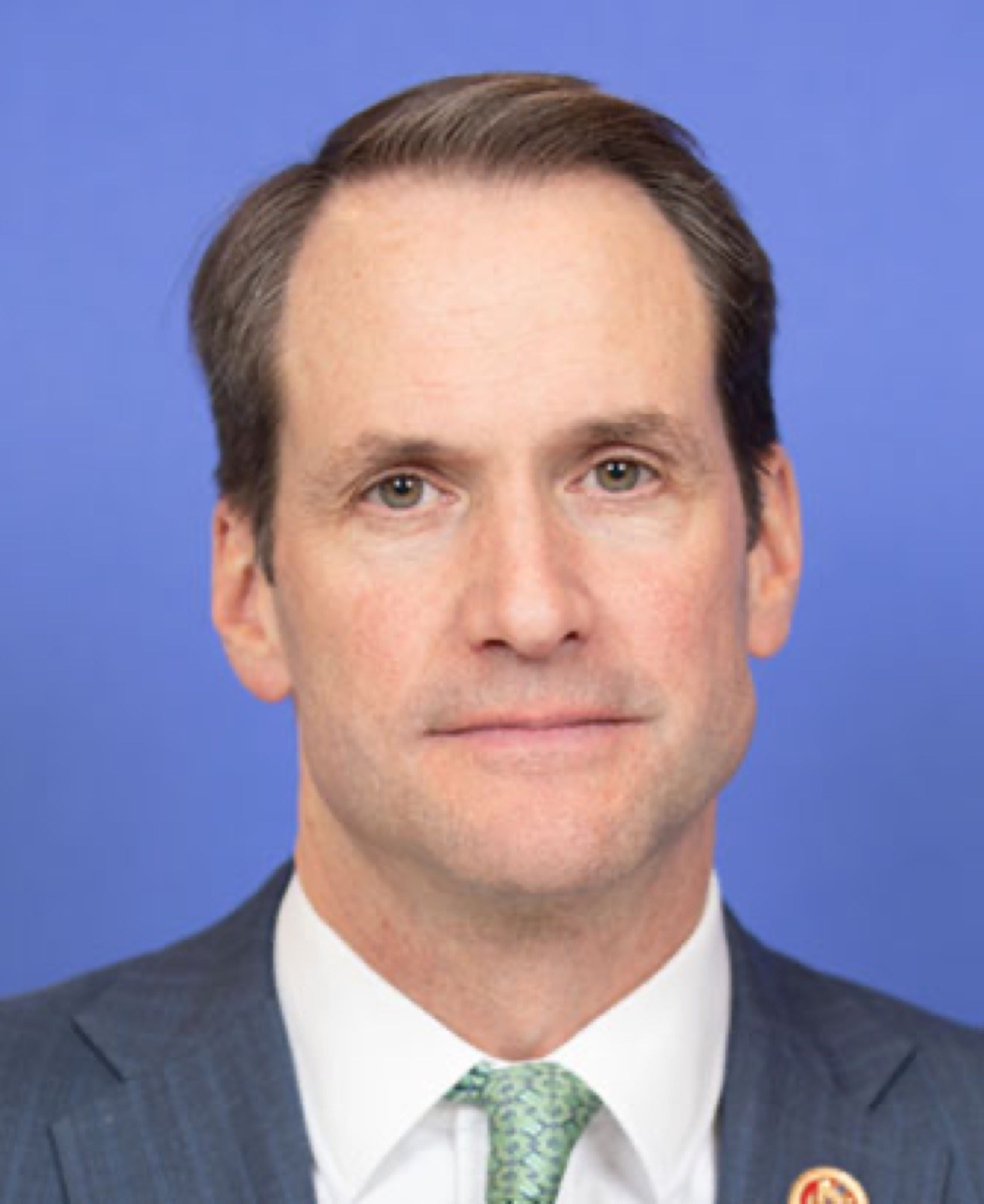
Jim Himes
Jim Himes is a US Representative (D-CT) and Ranking Member of the House Intelligence Committee and one of the few Americans briefed before the US hit Iran, sharing analysis on Trump's grip on Capitol Hill.
Episode Summary
One of the few Americans briefed before US hit Iran sits down with Sir Richard Dearlove and Rosanna Lockwood to share his analysis: the legal justification is false, the strategic endgame doesn't exist, and we may have just handed Iran every reason to build a nuclear weapon. US Representative Jim Himes (D-CT), Ranking Member of the House Intelligence Committee, breaks down Trump's grip on Capitol Hill, and whether the only exit is a face-saving declaration of victory.
Recorded March 9th, 2025.
Hosted by Sir Richard Dearlove (former MI6 Chief) and guest co-host Rosanna Lockwood (International Journalist)
Listen & Subscribe
- Watch on YouTube
- Listen on Apple Podcasts
- Listen on Spotify
Transcript
COLD OPEN
Himes: We've actually gone backwards with respect to creating a more stable, more peaceful Middle East. There's an open question as to how much the American public would be willing to tolerate that. It would become staggeringly expensive, much more so than it already is.
Lockwood: You've said in the past, what is it about the Middle East that draws every president into the region to disastrously end their own presidencies? You posed that question. I'm gonna pose it to you. What what is it?
INTRODUCTION
Lockwood: Hello, and welcome to One Decision. I'm your guest cohost, Rosanna Lockwood, and I'm joined by our cohost as ever, Sir Richard Dearlove. Hello, Sir Richard.
Dearlove: Hi, Rosanna. Yeah. A lot to talk about today.
Lockwood: Yeah. That's, that's putting it mildly. You know, there's so much going on. We've got lots to cover. This is a special bonus episode. We sat down with the US representative Jim Himes, Democrat from Connecticut on March 9. He is the ranking member of the House Intelligence Committee, which puts him in the so called gang of eight, an exclusive congressional group of leaders briefed on some of the most sensitive intelligence operations. Himes knew the US would strike Iran hours before most of his colleagues. In that case. Welcome, congressman. So good of you to make time for us.
Himes: Thank you for having me.
INTERVIEW
Lockwood: There's so much we wanna cover with regards to the American process, the system, the votes, especially for our non American listeners. So perhaps let's start there. Could you explain to some of those who join us from outside the US why this war powers resolution vote, as it was being called, didn't pass last week, why congressional Republicans voted to block it, and why further motions will probably face hurdles even if there isn't full support within the Republican party.
Himes: Yeah. And there's a few things to say about that. One sort of a near term observation and one a much sort of deeper historical observation about the push and pull between the congress and the executive over many decades. The most immediate answer to the question, of course, is the resolution never stood a chance in the house and the senate because in the house and the senate, the president's party, the Republican party is still in no mood to in any way cross this president. The grip that president Trump has on congressional Republicans is absolutely remarkable. You know, it begins to wane a little bit as the electoral consequences of some of the actions of the administration begin to be manifest, but, you know, Donald Trump still rigidly controls his majorities in the House and the Senate. And, of course, you layer that on top of a great deal, particularly on the right end of the political spectrum in the United States, a great deal of anger and resentment and just plain hatred for the Iranian regime. Well earned, by the way. And you sort of get this combustible mixture, which is willing to tolerate despite what we've been through in Afghanistan and Iraq, willing to tolerate a poorly thought through, unclear in its objectives, wading into military conflict in the Middle East once again.
Dearlove: Does the gang of eight I mean, I don't want you to be indiscreet, but I'm just intrigued to know how thorough the gang of eight briefings are. I mean, does the executive fulfill its obligations? Because this, you know, it's hugely sensitive area, really.
Himes: Yeah. And it's important to remember that constitutionally speaking, and it's really not complicated legal language, anybody can pick up the constitution and read the very clear language that it is up to congress to declare war. You know, the obligations are to secure not just notification, but to secure assent. As I alluded to before, there's been a back and forth between the executive and the legislature in the United States for generations now. So that's a wholly other topic, but let's not concede that all the administration must do is inform the congress of a war, of hostilities. But I will tell you this. I think this administration and Marco Rubio in particular learned from the Venezuela experience. I will tell you as a member of the gang of eight, I learned about the Venezuela attack, the raid to, of course, secure, to extract and secure Maduro. I learned about it when I turned on the television, one weekend morning. There was a great deal of blowback for that to the administration. And so this time, yes, the gang of eight was briefed, you know, roughly three or four days, before the attack on Iran. We were not told that the attack was moving forward, but we were told that the positioning had been put in place pending a final decision by the president. And then, yes, there was a series of phone calls to the gang of eight from Marco Rubio immediately preceding the attack. But, again, let's not lose the fact that the constitution is pretty clear on the need for congressional authorization for these things.
Lockwood: So that's absolutely fascinating to hear that you found out about the Venezuela attack from television. I know our listeners will be surprised, and it leads me to my next question. I don't mean this to sound as potentially as sort of personally offensive as it might be, but I've just got to ask when I was thinking about you being in the gang of eight, the type of briefing you might have received before the Middle East Conflict, and how that has differed, maybe the justifications that you heard then versus what's actually happening now on the ground. How sort of useful or powerful is having something like the gang of eight if the information you are being fed by the incumbent administration is inaccurate or unreliable? Is it just sort of a process, a sort of paper process?
Himes: Yeah. It's a ticking of the box exercise. I mean, you know, Marco Rubio has very strong relationships, particularly in the senate where he served for some period of time, I think does care about those relationships. But, yeah, make no mistake. I mean, not only was there not an opportunity in the gang of eight briefings to say, you know, this must not go forward. Congress will exercise its power of the purse to prevent you from doing this. Even had the war powers resolutions, but one of which failed in the senate, one of which failed in the house, even had they passed. Both of them had they passed, would have been ignored by Donald or more appropriately, I should say, vetoed by Donald Trump. So, you know, we're largely talking about an academic exercise here. What moderates administrations, and you could ask pretty much any of the last four administrations in the United States, is not so much the constitutional demand that congress approve war making. You know, the truth is that our last four or five presidents have all, to a greater or lesser degree, participated in or initiated hostilities of one sort or another. What really moderates administrations is what you're about to see when the stock market opens this morning, this Monday morning. It is in fact the sort of market blowback public opinion and those sorts of things, which ultimately seem to be the main controlling factor on the executive's ability to wage war at this point.
Dearlove: Jim, there's a huge amount of concern here in Europe on the issue of international law and the legality of this conflict. I mean, personally, I'm sort of take a rather skeptical view, and I know that in the US, there are various different interpretations of international law, and you virtually have two schools of international lawyers. I mean, how do you perceive this issue, and how troubling is it really for the administration, or do they have lawyers that are saying they're in a fine position?
Himes: Yeah. You know, I've reviewed the legal rationales for a number of Trump administration actions, and they make no attempt to argue that they are complying with international law. In the realm of international law, the answer is pretty clear, which is this is clearly illegal. The UN Charter makes it very, very clear that states are not to resolve their differences through military means. And if they must, such activity must be authorized by the Security Council. None of that, of course, took place here. You know, with respect to domestic law, the administration makes an attempt even though we've now seen a full year plus of the Trump administration, this is not an administration particularly constrained by the law. We've seen this, of course, the judiciary turning back initiatives that the president has made. So they make a feint at suggesting that these things are consistent with US law, but it's pretty lame. Let me highlight one example for you. It took the administration a good week to settle on a cause for action here. You know, we heard about nuclear weapons development. We heard about terrorism. The president briefly spoke about the Iranian attempts to assassinate them. And they finally sort of settled on this argument of imminence, that Iran was about to attack the United States or Israel or United States assets in the region. That's simply flat out false. I mean, I marinate in the intelligence reporting on this stuff, and you don't even need to marinate in the intelligence reporting to know that subsequent to the twelve day war and largely the destruction of Iran's nuclear weapons infrastructure, the bad damaging of Hezbollah, where now the Lebanese armed forces are largely pushing Hezbollah back. Iran remains a threat and an evil regime, but if you look at the last ten to twenty years, at no point in time have they been as weak as they are right now, or as weak as they were, I should say, a week ago when this military adventure was launched. So, anyway, I tell that story mainly to say that this is not an administration that is particularly concerned with legality nor with practical considerations. I mean, contrast this with George H. W. Bush, who spends weeks putting together a coalition and goes to the UN when the Iraqis have invaded Kuwait, you know, really sets the stage with the American public, works on public opinion, establishes a very large coalition, makes clear certain specific objectives, and only then moves. This has been the opposite. Right? The American people woke up to this conflict. It is already underwater, as we say, in politics from a public perception standpoint. You know, not only was the legality not particularly paid attention to, but the all important massaging, if you will, of public sentiment never occurred.
Lockwood: Casting our mind back then to the Iraq war as you bring it up, which, you know, Sir Richard and I, both Brits, a lot was deemed foolhardy, especially the justifications for that war at the time, and then the ensuing conflict, which did require boots on the ground. And boots on the ground is the phrase most being heard in America at the moment. I'm here in the US at the moment, and it does seem obvious for anyone who watched prior US activities in the Middle East, why this would be the case. But walk us through your concerns about US ground troops in Iran or potentially anywhere else in the region at the moment.
Himes: You know, the concerns are pretty clear, and, you know, you don't need to have studied the Afghanistan and the Iraqi conflicts terribly closely to know that when we have troops on the ground, they're enormously effective. But now all of a sudden, the dramatic asymmetry that exists between an aircraft carrier in the Indian Ocean with standoff weaponry and the Iranian response collapses. You can't protect an infantryman so well against a roadside improvised explosive device in the way that you can protect assets that are at a standoff distance. So my own view, and this isn't controversial, putting troops on the ground would result in yeah. It would result in American casualties. There's an open question as to how much the American public would be willing to tolerate that. It would become staggeringly expensive, much more so than it already is. It would also interestingly enough, I keep reverting to the politics of this, as probably the most active check on the president. Right? I mean, remember, the core thesis of president Trump slash MAGA is I will bring your costs down, and I will not get you involved in stupid foreign wars. And where are we? Right? Oil went through a $100 a barrel as on my way to the office this morning. You know, gas here where I live is approaching $4 a gallon. So the American people are saying, wait a minute. We were told cost would come down and no wars, and we're getting not just a war, but arguably the most complicated war that we could involve ourselves in and much higher cost. So I really do think at the end of the day that, you know, the decision or the consideration even of putting ground troops into Iran would absolutely break the president's party. It's much more likely than not that they do not actually put ground troops in. My own view here, just watching the markets and watching public sentiment, my own view is that Donald Trump is very likely in some period of time, two, three weeks from now when, you know, gasoline is at $5 a gallon, the stock markets have been hammered, you know, some of the economic repercussions are starting to show up in inflation. My own view is that in two or three weeks, the president is simply gonna declare victory. He'll say, look. I wanted to sink the navy, and the navy is all sunk, and we're out of here. Mission accomplished. Because to me, that sort of feels both the easiest way out and the one most consistent with the way Trump backs down from things like the liberation day tariffs when they go in a negative direction for him.
Dearlove: Jim, one of the issues in Iraq, at least, looking back to Iraq, in my view was things went badly wrong when Bremer disbanded the Iraqi army, which could have controlled and run the country for a period of time after the intervention. And it seems to me that the only remote possibility of a successful outcome in Iran is perhaps a couple of the Iranian generals, not from the IRGC, but from the conventional military, taking over or, let's say, forming a group which wouldn't necessarily be super well disposed to the West but but would be amenable. Is there any evidence in your view which points in that direction? I'm just sort of suggesting the possibility that, you know, Trump could have a successful outcome to this venture. I mean, I know we're skeptical about that, but I think one has to consider it.
Himes: I think you're directionally right, Sir Richard. The best case scenario, and the Middle East so rarely delivers the best case scenario, is one I suppose where a very strong faction, and it would have to be a strong faction of senior military leaders or other leaders within the security services decide that enough is enough and that their interest lies in overthrowing their own regime. Now open question as to whether that simply happens overnight and everything is fine, much more likely, of course, would be a Libya situation where now you have heavily armed factions battling each other. And God only knows what that looks like. If you've got a civil war in a country that can stop the flow of oil through the Strait of Hormuz with a couple of rudimentary missiles, where you've got, you know, uranium sitting around in collapsed tunnels. I mean, it's almost horrible to contemplate. But, yeah, I suppose the best case scenario is a clean and effective coup supported by the Iranian people. But to your question, Sir Richard, no. We certainly see no signs of that occurring. Remember, the IRGC, as you know, made up of thousands of senior people who not only are ideologically very committed to the revolution, but they are making immense amounts of money under the status quo. They run businesses. God only knows. Half of them probably have Swiss bank accounts. And so between their commercial interests, their ideological interests, and the fear that they would have, that they would be thrown up against the wall in the event of an attempted coup. Now remember what happened to the Shah's officers when the revolution succeeded. My guess is that the regime, even if faced with a mutiny, does not go quietly into that good night.
Lockwood: That's your calculus for the chances of revolution, coup, or uprising. You've also mentioned that you think Trump may even just try and get out of this once some of the, quote unquote, stated outcomes that Rubio came out with, for example, destroying the navy, destroying the missile launches, etcetera, are achieved, and boots on the ground, potentially, and indeed, hopefully, not before then. Let's go back to some of the political justifications of why we're here because you've been clear in a lot of interviews so far that, quote, this is a war of choice, you said previously, with no strategic endgame. Today, in the Financial Times, as we're recording this, noted American diplomat Richard Haass said, quote, America chose this war and must now choose to end it. He says it only takes one side to start a war, but here it will take all three to end it. I just want to get your response to that. And also just it sounds simplistic, but I know it's not. What is your understanding of why Trump chose this war?
Himes: I have to take the secretary of state's statement seriously. You know? And after floundering around for a little while as to why now was the time, the secretary of state over and over again elaborated in private meetings and in public that the United States had determined that Israel was committed to an attack on Iran, that it was a certainty that Iran would respond to that Israeli attack with an attack on US assets in the region. Ergo, it was essential that the United States join in on the Israeli attack. That's, of course, absurd on a number of levels. Right? It puts the United States in the position of Liechtenstein or something as a passive observer to the events in the region. You know, it turns out that the United States actually does have some leverage with the Israelis. There's an immense amount of military aid that goes to the Israelis. Donald Trump, to his credit, put prime minister Netanyahu in a corner on the ceasefire in Gaza. So, of course, we have leverage with the Israelis. And if we think that an Israeli imminent attack is likely to result in blowback to us, we probably have a conversation to be had. And, of course, there were lots of options with Iran too to say that, you know, look, you attack us as a result of an Israeli raid, you know, the next morning is the apocalypse for you. So I have to take seriously what Rubio articulated over and over and over again. And frankly, I think that that jives with the fact that the prime minister was in the White House a couple of weeks before. The prime minister, his entire life has been dedicated to the notion of the eradication of the Iranian regime, and I don't criticize him for that. The existence of the regime of the mullahs is an existential threat to Israel. But I have no doubt that this was an easy decision for Donald Trump because I think he fell under the sway of Marco Rubio and others on this point, and because president Trump, let's face it, you know, he didn't spend thirty years at the Council on Foreign Relations studying this stuff. I think he looked at the Venezuela raid, which was militarily spectacular. Looked at the bombing of Iran of the nuclear tunnels and that sort of thing where everything went perfectly. And Donald Trump just assumed that when you do these things, they go perfectly because we have the best military on the planet or whatever it is that he justifies. And so now he's being surprised by seven fatalities, by the fact that the economy is gonna suffer, by the fact that taking on the Iranian regime is a much different thing than extracting Maduro from Caracas.
Dearlove: The election by the Council of Eighty Eight of Mojtaba looks very much as though the regime is sort of doubling down on their extreme position. And from what one knows of Mojtaba's background, he's been very much involved in the enrichment of the leadership of the IRGC and himself. But in this raid, you know, his wife and the mother were all killed apparently, it looks as though this is an act of escalation from the Iranian side rather than any move to a more reasonable position.
Himes: That's right. And, I mean, two things to say about that. I think the Iranians understand that to win this, they simply need to apply, through their control of the Strait of Hormuz, apply economic pressure to the global economy, which they're doing. They don't need to sink an American aircraft carrier to win this, and they can't. They simply need to make the costs of this war economically intolerable. Mojtaba seems to be the kind of person that would do that. But it also raises questions, Richard. You know, where are we in this, strategically speaking? If the war were to end right now, where would we be? We would have replaced a pretty evil supreme leader with his much more extremist, much more ideological, much more inclined to build a nuclear weapon son. And that son, as you point out, has probably a certain amount of emotional, what's the right way to put it, rage maybe over what has happened. And, of course, he would be irrational were he not to arrive at the conclusion that the only way to avoid this humiliation in future would be for Iran to actually develop a nuclear weapon the way Pakistan and India did. On the strategic calculus front here, we're already well behind the eight ball, and everything could change tomorrow. But, you know, right now, we've actually gone backwards with respect to creating a more stable, more peaceful Middle East.
Dearlove: It may be a bit too soon in the crisis to start considering the reverberations, but I think there are two which are unavoidable and important. The first, I think, is Trump's imminent visit to China and what impact this crisis could have because, of course, China has had a pretty close relationship with Iran. And, of course, the other aspect to this is Putin and Russia and the fact that here are the Ukrainians offering defensive capability on drones across the Middle East, where they do obviously have this super established expertise. I mean, how do you read these signals? Is there likely to be a change of attitude on Trump's part towards Ukraine perhaps because of this? And how do you think he's anticipating his conversations with Xi, which could be rather awkward?
Himes: Yeah. I think the conversations with Xi are going to go very smoothly. And what I mean by that is that as the Chinese so often do, they are sitting back right now watching the United States do, I won't use the word suicidal, but, you know, terribly self damaging things. If nothing else, and if we are fortunate enough to lose no more troops, this war is going to add a billion dollars a day to our deficit. It is going to further split the American polity. This stuff all accrues to the benefit of the Chinese. They're sitting back as they did in Afghanistan and in Iraq and in the Kuwait conflict and in Venezuela, realizing that we are doing their work for them. We are breaking the Western alliances. Witness the horrible breach between the United States and the United Kingdom right now. Our immigration policy is rapidly sapping our innovative capacity, which at the end of the day is truly our competitive advantage over the Chinese. So they're sitting back and saying, my god. The United States, Donald Trump is doing our work for us. Now there is an asterisk on that. Right? The Chinese, of course, are profoundly dependent on energy. And there's no doubt in my mind that they're quite worried about the flow of energy out of the Gulf. But strategically speaking, the United States continues to do the Chinese's work for them by dismantling our unity, by dismantling our innovative capacity, by wasting staggering amounts of money on a war that is sort of impossible to imagine ends better than it started. With respect to Russia, you know, I think of Russia as a lot less important. You know, this is no China, but what an irony. Right? I mean, who is the beneficiary of a $100 a barrel oil? That beneficiary, of course, is Vladimir Putin. So once again, Donald Trump seems to be taking actions which are very much in the interests of a murderous dictator in Moscow.
Lockwood: I want to ask you this and pose this back at you, question of your own, Jim Himes. What is it you've said in the past about the Middle East that draws every president into the region to disastrously end their own presidencies? You posed that question. I'm gonna pose it to you. What what is it?
Himes: There's a quick answer to that question, which is the oil. You know, obviously, the fact that a quarter of global energy passes through the region, maybe more, means that it's a strategically essential area. Even in this era, by the way, we were promised energy independence in the United States and energy dominance. So it's chiefly that, but it's also, you know, to recollect what it was like in 2002 under George W. Bush with Donald Rumsfeld and Dick Cheney, it's also a naive idealism about our ability to use our second to none military to achieve democracy around the world. I always resented a little bit back in 2002 the criticism from the left that this was all about the oil. It was partly about the oil. And, of course, Donald Trump has made everything about the oil, especially with Venezuela. But it's also about this recurrent belief of a revolutionary country whose values are specifically universal. Right? Our declaration of independence says very quickly, all men, by which we mean all people. And so there is just always this neocon temptation to try to remake the world. And it turns out that remaking the world is a great deal harder than it would appear sitting in Washington DC.
Lockwood: Just very briefly, a question we ask all our guests. We must ask you too. What one decision are you looking out for in the coming days?
Himes: If I can alter your question to say coming weeks rather than coming days, it's when Donald Trump realizes that he has overstepped here politically. And I really do believe it's probably a matter not of days. You know, Pete Hegseth will do push ups and run videos of jets dropping bombs for a period of days, but eventually Donald Trump is going to realize that he has risked his presidency and his own political coalition. So the decision I'm looking for in the, let's say, two to three week timeline is when the president says, I told you I wanted to sink the navy and eliminate the missile launchers. Those things are done. We're gone. We're going home. I think that that's the decision. And then the interesting question around that is what remains in the region? Mojtaba, the son of the supreme leader now in charge, are we now committed with the Israelis to every six months flying in to destroy the rebuilt missile launcher factories? The strategic calculus behind, I think, that inevitable decision of Trump to pull out is going to be extremely complex, interesting, and every other superlative adjective I can think of.
Lockwood: US representative Jim Himes, it's been good to talk to you. Thank you.
Dearlove: Thank you, Jim.
Himes: Thank you.
ANALYSIS WITH SIR RICHARD DEARLOVE
Lockwood: Well, Sir Richard, an interesting conversation as expected there, and really interesting to get a US political voice on this situation. What was your main takeaway?
Dearlove: Well, I think Jim Himes is a pretty sophisticated player, a sophisticated analyst, but it gives you an idea of the gap between, you know, the Republican position in Congress and the Democrat position in Congress. And I don't see that difference at the moment being very easily bridged. And I think the other thing which was fascinating was his description of the briefing or, let's say, the implied lack of briefing of the gang of eight and, you know, his staunch statement that, you know, declaring war is a congressional responsibility in terms of the sort of legal position as seen by Democrats on the hill.
Lockwood: Certainly, my takeaway, the gang of eight and the briefing that he had, and not finding out until the operations that he saw on the television.
Dearlove: I think their explanation would be they were arresting him, and you don't need to inform them.
Lockwood: Really? Do you think that was it? It was a pretty weird arrest. It was. Does any of that surprise you, the way that the Gang of Eight operates? I know you will have been familiar with it from your MI6 career, but that type of briefing was just a kind of box ticking exercise, as he called it.
Dearlove: Yeah. It didn't surprise me particularly. And I think particularly with this administration, they would be very economical with the truth, to quote a famous British incident.
Lockwood: Absolutely fascinating. Look, that is all for this episode. Do join us Thursday where we're going to get an Israeli perspective. And as this crisis continues, I encourage you to stay across all of our special analysis on Iran. Do watch and listen to our recent conversations with former national security adviser John Bolton, commander from Operation Iraqi Freedom Mark Hertling, and Iran expert Trita Parsi. For more conversations with leading decision makers and thinkers, do check out 1decision.com and our YouTube page where you'll find additional commentaries, conversations, and explainers. I'm Rosanna Lockwood. We're joined as ever by Sir Richard Dearlove. Thank you for listening.