Hosted by Christina Ruffini and Sir Richard Dearlove
Guests
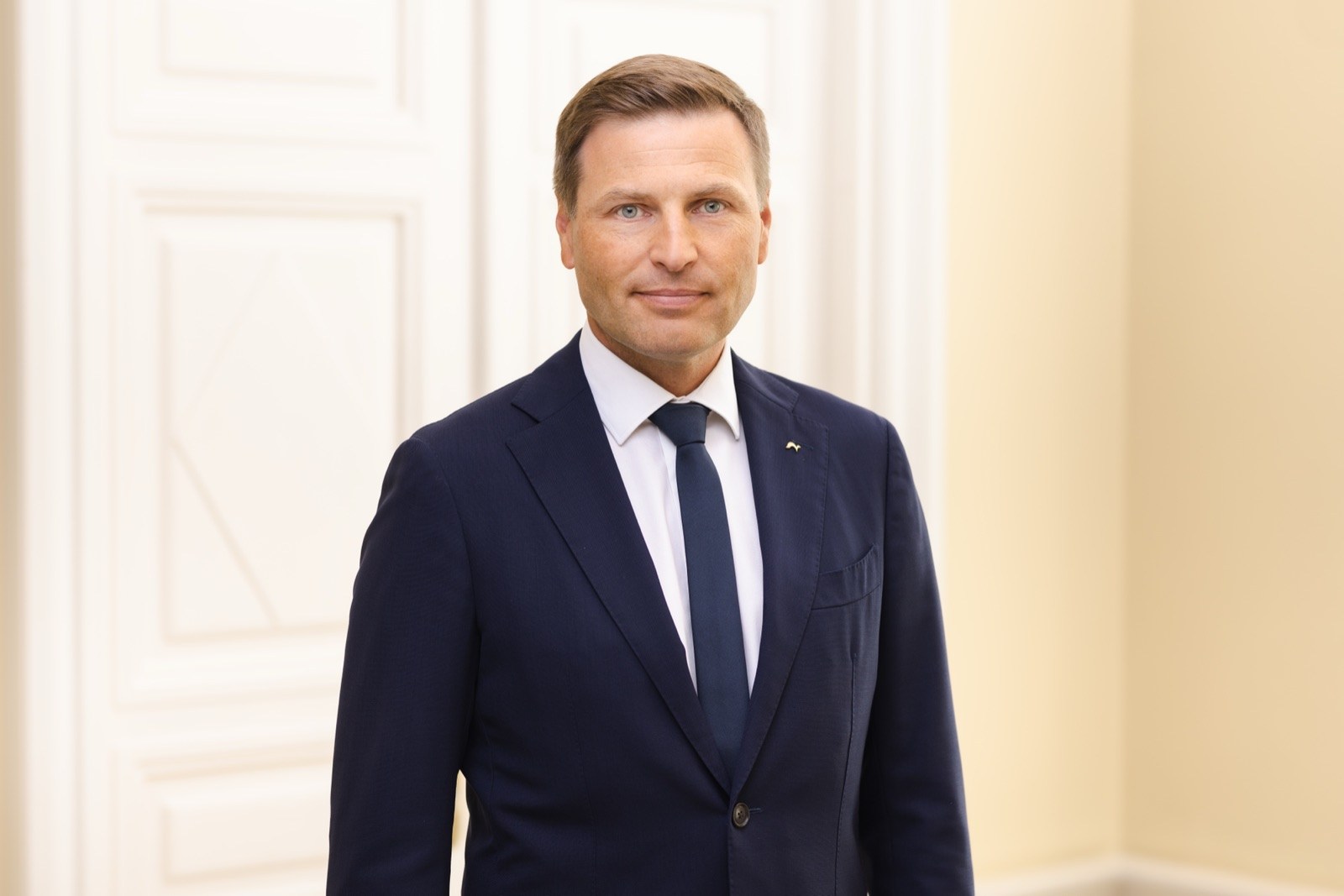
Hanno Pevkur
Hanno Pevkur is Estonia's Defense Minister.
Lt. Gen. (Ret.) Ben Hodges
Lt. Gen. (Ret.) Ben Hodges is a former Commander of the U.S. Army in Europe.
Episode Summary
From cyberattacks to drones over NATO skies, defense leaders believe Russia is probing for weakness. At the Warsaw Security Forum, Estonian Defense Minister Hanno Pevkur and Lt. Gen. (Ret.) Ben Hodges, former Commander of the U.S. Army in Europe told One Decision that Moscow’s provocations aim to divide allies and mask failures in Ukraine. They join hosts Christina Ruffini and former MI6 Chief Sir Richard Dearlove to explain why NATO’s unity—and America’s staying power—will decide whether Europe’s defenses hold.
One Decision is an official media partner of the Warsaw Security Forum. The gathering was held this week in Warsaw, Poland. #WSF2025 #DividedWeFall
Episode produced by Situation Room Studios. Original music composed and produced by Leo Sidran.
Listen & Subscribe
- Watch on YouTube
- Listen on Apple Podcasts
- Listen on Spotify
Transcript
COLD OPEN
Pevkur: What is the role of United States globally? Because globally, if US will reduce its presence, then some somebody will take or someone will take it over.
Hodges: Clearly, the Ukrainians have the superior will to the Russians. It remains to be seen, do we, our leadership, does it have superior will to Vladimir Putin?
INTRODUCTION
Raffini: Welcome to One Decision. I'm your host, Christina Raffini. And this week, I am here in Warsaw, Poland with Sir Richard Dearlove. We're at the Warsaw Security Conference, and we're gonna start our coverage with two really good interviews. For those of us who are watching on video, you can see I'm standing in front of two very large armored vehicles. Their presence is not subtle out in front of the conference hotel, and that's because the word of the wise is European security. It's happening amid the backdrop of increased Russian incursions both from drones and these near flyovers, and we spoke to someone whose country has experienced one of those. That's defense minister for Estonia, Hanno Pevkur. He talked to us about NATO and a little bit about The US and his time with secretary Pete Hegseth. We also spoke to retired general Ben Hodges. He was the commander of the US army in Europe. He has a lot of experience in this region, and he had some interesting things to say about The US's place in the world, about NATO, and Ukraine. Take a listen. We are back at the Warsaw Security Conference. I'm Christina Raffini, your host, of course, here with Sir Richard Dearlove, and we're gonna let our esteemed guest introduce himself because he's one of the few people we would get up at 08:15 in the morning for.
INTERVIEW: HANNO PEVKUR, DEFENSE MINISTER OF ESTONIA
Pevkur: Good morning, guys. It's good to see you, Christina. And, of course, you know, it's good to be here. Well, that's our job as a minister, is to be awake early. So the defense ministers get up very early. That's true. But it's a pleasure to be here. So, yes, minister of defense of Estonia, Hanno Pevkur.
Raffini: We've been talking a lot about it, and you and I have been messaging quite frankly, although, you know, you're very proper and never give me any of the dirt that I want because you stick to the points. But what is the prevailing opinion about all these drone incursions? We've had different levels of alarm. You know, when you and I have talked to you, you didn't seem that concerned about them. You seem to think it was more testing. But what do you think the Russians are testing? Are they testing security points? Are they testing resolve? Are these drones actually posing a damage to human life, or is it not really about that? What is the purpose of all this?
Pevkur: Well, first of all, it is not only the drones. We have to go back actually already to 2007. So 2007, Russia conducted the first ever, like, state orchestrated hybrid attack. So it was the cyber attack against Estonia. And since that time, you know, on the cyber field, we see that all the time. Every day, basically, we have attacks and other countries also. Then we started to see the influence to the elections. Then we started to see already some more serious attacks like you remember, and Navalny's associate, mister Volkov, being beaten up in Vilnius. Then we started to see also some other influences, like serious influences already to elections, latest in Moldova now. And then we saw that they started to test already on totally new level to test where is, or scratching the surface of NATO, that what is the article five threshold. So is it okay to send drones? Is it okay to have the air fighter jets in our airspace for twelve minutes? Because they've cut the corner of Estonian airspace many times. But this has been the longest on nineteenth of September. And, of course, you know, there are many cowboys who are saying that, you know, shoot them down, shoot them down, but you have to be realistic, and when you say a, you have to also say b. And, you know, you have to keep your brain cold and head, you know, calm or vice versa. Brain calm and head cold. So however you want to say it. But the point is that we saw that there is no direct threat to our sovereignty or something. And it was proportion to push them out from our territory. That was the correct response because first, MiG-31 is a quite old plane. So I remember them from the Top Gun movies in the eighties. Exactly. So you cannot hide anything into the belly. So F-35, you cannot see anything. With MiGs, you see immediately. So it was just airflow. We knew what they had. And we also saw the trajectory. And we assess every time because we scramble them even when they are not in our airspace. So in last couple of months, we've scrambled them seven times. When they are near to our border, and every time they pass Finnish Gulf, they are not close. And I said also to Pete Hegseth when I had a call with him that, well, during that incursion, actually, they were closer to Estonian government building than White House is from Langley. So just to get the scale and the distance, but we have to, you know, be very calm and not to react to all the stupidities what the Russians are doing. They will not stop. And, you know, they want us more to come. And they want us to escalate. So they are escalating actually and then claiming that we are escalating. So it's always like this with Russians.
Dearlove: But is this central — I mean, you're in a pretty unique position in Estonia, so you must have sort of insights into their thinking. Is this locally driven? Is it centrally driven? I mean, is it, you know, is it the command in Kaliningrad, or is it sort of Moscow driven?
Pevkur: In Russia, nothing is decentralized. So we just have to understand that everything comes from the top. But although in that case, I believe that there was some misinformation between the layers because the first reaction was also in the UN that they didn't come into our territory. So they didn't violate anything. But, you know, we have, like, five sources from different radars. They were denying it in the beginning, so it seemed that they didn't have good communicators at work that moment. So then the first version was a pure lie, and then they started to say different things. But this is what they do. But coming back to the centralized or decentralized. First, definitely, this centralized order that we need to disturb the western society, that they want to put us to inconvenient position that, you know, deal with your own matters, that your societies will be teared apart and then the societies will demand that don't send anything else, or additional, to Ukraine. And this is first goal, not only to test us, but also to put our societies not to support Ukraine. And the second goal, of course, is to test the threshold of article five, that what is our reaction and also to see that when we do something, you know, how quickly we can move, what we do. Because they don't care about the international law or regulations or the whatever, you know. They've been so for a long time.
Raffini: It seems like you're saying the objective of these attacks is just to sow chaos. Is it being successful? Do you think Europe is showing enough restraint? I mean, here in Poland, they've now said they are gonna maybe possibly shoot down these drones if they come back in. Do you feel like that is an overreaction? Is that what Russia wants? Would you prefer everybody just cooler heads as you said? Or is there gonna be different responses in different countries? And despite the alliance, that's gonna be a hard thing to fight.
Pevkur: Well, definitely, there has been and there will be a response. And also in the, let's say, security footing because when you take what we are doing also in the European Union, European Union has never been defense alliance. It has always been the political economical alliance. But now we have the defense commissioner. Defense commissioner is heavily looking into the cooperation among the eastern flank countries to have the eastern flank watch, or as he says or we say, that the Baltic defense line together with the counter drone, the counter UAV capabilities. So, yes, we are also investing taxpayers' money to be more protected. And this is a burden for all of us, and Russia is the cause of that, that we had to raise taxes to have 5% into defense. We had to cut the budget to have 5% into the defense. And we are at 5% now, starting from the first of January. And then we will go up to 5.6. But this is core defense, not like we agreed in The Hague that we have 3.5 plus 1.5. So we have 5% starting from first of January. But the point is that what Russians achieved in a way is that, yes, NATO is stronger. Yes. We have Finland and Sweden. So in strategic calculus, they made huge mistakes. They are making this mistake that, yes, we will be more prepared. Yes, we'll be more resilient. But this has been, you know, in a way, also the same in the history, that they want to achieve something, but the end result is exactly the opposite.
Dearlove: You mentioned European defense policy and the role of Brussels, particularly in, you know, building funding and as it were spending more on defense. What about the issue of sort of coordination of European, I mean, European Brussels driven policy with NATO policy? Does that create a problem in Estonia or is it a sort of smooth relationship between these two elements?
Pevkur: Well, one thing what is good, I mentioned that European Commission is also now seeing that we will invest, and also for the next MFF, which is the European budget for seven years financial framework. This has never given or foreseen so much money for defense matters. And to be honest, you know, I've always said that we can have common agriculture policy. We can have infrastructure projects. But when you're not free, it's not meaningful to put any money to that. So this is why I'm happy to see that European Union has understood that we need to focus also on defense matters. But the point of the European Union is to bring countries to one table and to finance different common projects. Because defense planning, pure defense planning, what we do and how we do, this is NATO, and this will never change. And this has been my very clear position that European Union will not have its own army. It is a NATO army, and NATO will do the defense planning. So regional plans, capabilities we need to have, practical cooperation, trainings, exercises, this is all NATO. European Union can help countries to finance that.
Raffini: I do wanna ask you about Pete Hegseth. You brought him up. You guys had, seems like a bit of a vibe going on, in a visit. I remember some social media stuff of the two of you. What's your impression of him?
Pevkur: Well, I would say that as always, one thing was what you see in the media. And the other thing is what people are saying and how they behave when you talk to them privately. We have a good relation, and I also had a very good relation with Lloyd Austin. This is because, and this is my message also, that it is not about, you know, Republicans or Democrats. It is about the country. And when the people of that country have chosen and made a choice that these are the White House or, you know, Pentagon governors, then leaders, then this is their choice. And for us, also the same. I'm not the minister of defense for all the years to come. So there will be a change. But that doesn't change the relations between Estonia and United States. This has been very good, and we have to have these good relations with different approaches. So in a way, I clearly see that Pete understands what is on stake. But also, it's not only him. It's also his team. There's Bridge Colby, the secretary, and also army secretary. So there are different people. And they have different perspectives. So this is important that at the end of the day, you will have one position, and this position will be also then fulfilled or, you know, executed. And, of course, we see also that White House is playing maybe a bigger role when before, coming also or looking also at not only at Pentagon, but also state department. That's only truth. So this is what we see, that the White House is taking more decisions.
Dearlove: I mean, we have a really good result in the Moldova election with Sandu looking as though she's got an overall majority in her own right. I mean, this must have a big psychological impact in the Baltic Republics because, you know, you're vulnerable as well. So I'm quite interested to know, you know, what the reaction has been to this result.
Pevkur: Well, the reaction is good and it gives hope, in a way that the margins were so good. Because it was very narrow. Yeah. And this is good that the Russians didn't succeed again. They put a lot of money into that. And in a way, we've seen, and it's the same also in the Baltics and in some other countries, that when you really have to bring the society together and to show what it is on the stake, then people will say. It was the same with the election of Maia Sandu. Then the margins were even closer, but still, you know, the people said that we want to be in Europe. We want to be in the West. And, of course, this is a good message not only for Ukraine and Moldova, but it is a good message in general, that Russia will not succeed when, of course, we can also help them to identify those frauds or interferences. So we need to be there also. This is why, for instance, Estonia is helping to buy military equipment for Moldova. So we are giving our share to that. Some are giving something else. But the point is that those communities, those countries who are still on the edge, we need to help them because our society is quite strong today. But that doesn't mean that Russia doesn't want to interfere into our elections. Yes, it wants. So this is the reality. So it was a good result. Now we have to continue with the foreign government. And, you know, still, it is important also to see that this narrow margin, which is over now, it stays, and there are others who will support Sandu's party.
Raffini: Do you think The US needs to do more outreach to countries like Moldova? You're talking about what Estonia is doing because it's important to support these countries that wanna look towards the EU. I remember when I covered the first Trump administration with Pompeo, we spent a lot of time in Eastern Europe. He was very big on this because he'd been an officer during the Cold War. He'd been on the front lines. I feel less of that from this administration. Do you think that's a missed opportunity by The United States?
Pevkur: Well, it's the question of The US policy globally. What The US wants to be, as I see it, US needs Europe the same as Europe needs US. And this is like the two fists you have, and you can have a very strong one fist. And when you go to the boxing ring, it's better to have two. So this is the point also, that Europe has 500,000,000 people. The size of the economy is close to US economy. And when you put those together, for seventy six years, we've been able to keep the peace in Transatlantic Zone. And this is why I strongly believe that it is important for United States to keep the track, to stay on track and to be with us, not only in defense policy, but also on diplomatic track and to help countries who are just on the margin or on the edge to be finally in the West, to be in the European Union, because stronger Europe is important for United States for their global interests. And now is the question when you ask what is the stake on The US. I would say that this is the question to the White House first and foremost, but also to the state department, that what is the role of United States globally? Because globally, if US will reduce its presence, then somebody will take or someone will take it over. There will be no empty spot and empty place. So somebody will take it over. And we don't want to see that China or Russia will take it over. So this is why US has always been a global watchdog of democracy. And I believe that it is important for United States to have, and it's not only for the White House. I believe it's for the people in The United States, that they have believed that their government can always play the role to keep the world safe. Because when in one moment there is only domestic politics, then we will see a huge shift globally because the, you know, the dictators would be happy to take over.
Raffini: You're seeing that a little bit. Right? As The US retreats in certain places?
Pevkur: Well, we've seen that the current countries, North Korea, China, India, Russia, that they want to form this, you know, new axis of evil as I've been saying, that they want to have the weight balance for NATO. But, of course, today, they are not even close to that. But still, when you take the potential and when we cannot globally engage India also to have good relations with China, especially from The US side, then just put together India, China, North Korea, Russia, Brazil, you will have also BRICS countries. So you will have about, like, 4,000,000,000 people against or comparing to 1,000,000,000 in NATO and in the Western Hemisphere. So it will be really tricky to keep the balance. And we see how the emerging markets are growing in India, in China, how do they, you know, the China is building sixth generation fighter jets, and they are doing that already. So this is why, you know, I believe that it is important to keep in mind also the role of the global watchdog of US. And I really do believe that US doesn't want to lose that.
Raffini: Minister Pevkur, we're getting the sign that you have another meeting to go to. Thank you so much for spending this time. We really appreciate it. Thank you very much. Always happy to come back sometime. Thank you to minister Pevkur. We wanna turn now to our interview with general Ben Hodges. He was one of the big speakers here. And if you're listening to our interview, it's because we're in the middle of the lobby, and you can hear delegates coming in and out, lots of security details. But it's a really interesting and very detailed conversation with a guy who, frankly, knows what he's talking about. Let's take a listen. INTERVIEW: GENERAL BEN HODGES, FORMER COMMANDER OF US ARMY EUROPE
Raffini: Hi. And welcome back to One Decision. We are here at the Warsaw Security Conference. I'm Christina Raffini, and I'm here with my cohost, Sir Richard Dearlove. And our current honored guest is general Ben Hodges, commander of US Army Europe. What is the issue that everybody's talking about? What is the thing you're being asked about the most?
Hodges: Well, of course, the drone activity over Denmark is in the front of everybody's mind, as well as last week's Russian drone operation against Poland. And then the Russian Air Force operation in Estonia. You know, these are the things, and I don't think people are confused anymore about who the bad guy is or who the aggressor is, but they still are not sure what to do about it. And you've got a full range of, you know, shoot everything down to, let's don't overreact.
Raffini: Well, that's one of the things we've been talking about, is, is he testing security responses or is he testing the alliance or both? Is he doing exactly what you just said? Dividing by having people react differently and wanna respond differently. Those are exclusive.
Hodges: There's no doubt they're probing to see what reaction times, how do we react, levels of readiness. That would be a part of it. But the part that is more dangerous is keeping people on edge. People are worried, and the Russians are showing that they get to decide when we work. You know, you've got this big EU summit happening in Denmark this week, but, you know, airspace is being turned on and off because of these drones. So the Russians are in effect saying, we decide when. And so this is this power leverage. And then, of course, while this is all going on, you still got three shadow fleet oil tankers a day heading out of the Baltic Sea, right past not only Baltic countries, but Finland, Poland, Germany, Denmark, Sweden. So this is all part of an effort to keep us off balance.
Dearlove: But there's also a theory that I was reading about recently, and I've discussed it with others, that this is also, you know, a classic Putin distraction because things in Ukraine may not be going quite as the Russians would like. And in fact, there's an argument to say that they're in a fragile position economically. They may be at peak performance in Ukraine now and the slope is downward. And the Russians have always been brilliant at opening up another issue, making you turn your attention to that. Whilst the main subject, which is the war in Ukraine, ain't going quite so well as they hope. I don't know whether you agree with that.
Hodges: Well, the way you said it is even better than I could have said it. I think that's exactly right that Russia, after eleven and a half years of war — and, you know, I wanna keep emphasizing this war started back in 2014 — so after eleven and a half years of war, Russia still only controls about 20% of Ukraine. The great Black Sea fleet, gone. The great Russian Air Force failed its main task of air superiority and interdiction. The army has barely gained any meaningful ground over the past almost two years, year and a half, at enormous cost. So the only thing the Russians can do, and will keep doing, is killing innocent civilians with their hundreds of drones every night on Ukrainian cities. But they're not gonna quit just because the Ukrainians kill a lot of Russian troops. They only will quit when they realize that they can't win and that the West commits to helping Ukraine actually win, not this we're with you for as long as it takes nonsense. So I think on the ground, while it sucks to be a Ukrainian soldier sitting in a trench in Pokrovsk, the fact is they have stopped the Russians, and the Russians don't have the ability like their grandfathers did to overrun, break through, exploit. That doesn't exist.
Dearlove: But the other thing that worries me is that we're teaching the Russians in this war how to fight a conventional war which they were clearly really ill prepared for when they started this in 2014. So in a way, there's a sort of irony behind the conflict because you're making the Russian military more effective over time. The longer the war goes on, that worries me as well.
Hodges: The fact is Russia's economy — I do subscribe to the theory that their economy is in deep trouble. Ukrainians have put their finger right on the bruise that is Russia's vulnerability, its oil and gas infrastructure. But if they cannot export oil to India, China, Turkey, and others, then they cannot sustain this war past next year. So continuing to hit that. And it's interesting that, and you would know this from your professional background, Russia's great strength over the centuries was its vastness. I mean, invading is a numbers game. The distances, you know, the czars, Stalin, everybody could always just kinda keep withdrawing, keep withdrawing, and allow the invader to overextend and be swallowed up. Now, that vastness is a vulnerability because they cannot possibly protect all of the infrastructure. And Ukrainians, of course, know this better than anybody. They now have weapons that they are making that can reach all the way to terminals for export. They just don't have enough with the big warhead on them yet. So this is where we could help. The point is Ukrainians have made it clear that there's no part of Russia that cannot be touched. And so this vastness is a vulnerability. So they're constantly having to decide where do I put my air defense. Do I defend logistics sites, transport, oil refineries, barracks, whatever.
Raffini: You said that The US and Europe have gotta stop holding back and give Ukraine what it really needs to win this war, be all in. You just mentioned it a little bit, but what do they need that they don't have? Where does it need to come from, and how does that happen?
Hodges: Well, as president Zelenskyy said, the most important thing that the West could contribute would be a statement that we want Ukraine to win. We want Ukraine to be able to regain all of its sovereign territory, 1991 borders. That's our objective because it's in our interest. You know, it starts with what is our strategic objective. What do we want to look like when this is all over? And no administration, the Biden administration, Trump administration, has never done that. And frankly, I haven't heard that from most European governments either. Just say, we want Ukraine to win, and this is how it should look like. Instead, it's, you know, we wanna have better negotiating position. So the second thing, I think that Ukraine needs is commitment to deliver long range precision strike capability. That's how you defeat Russian mass, is with precision, is you take out headquarters, you take out logistics, you take out oil and gas infrastructure. Without those things, it doesn't matter how many tens of thousands of unlucky privates they have out there on the steppes.
Dearlove: I've heard a suggestion also, and I think it's quite controversial, that, you know, America could supply certain bits of kit like warthogs which could change the infantry battlefield and make up, you know, the A-10s. Because there's a ton of them sitting in a desert in Arizona completely unused apparently. I mean, is anything like that really practical or not?
Hodges: Well, first of all, we have consistently underestimated Ukraine's ability to take something and get the most out of it. I mean, I remember in 2015 when I was still the commander of US Army Europe, and the Obama administration made the decision to provide the Q-36 radar to the Ukrainians. There was still no lethal aid, but this radar is a counter fire radar. It's intended to detect incoming rockets, artillery, etcetera. And so it provides early warning, obviously, but it also provides the location, the point of origin. So you can shoot back. And I was very familiar with this. This is old kit. What we discovered, it's much better than I ever knew. We put it in the hands of Ukrainians and, you know, they figured out how to really exploit that. And I had no idea because I've never been under Russian artillery fire. They are very good at it. But this has been true of everything else we've given them. Now, to provide A-10s for example, every infantry soldier loves A-10s because of what it does. But to be honest, that would be a policy decision. And I'm gonna sound a little bit like a scratched record. I would much rather see us say we want Ukraine to win and we're gonna give them every capability they need to win. If that means A-10s, great. But you know what, A-10 is not self sustaining. There's always a huge maintenance package that comes with these things. They can go through a lot of ammunition.
Dearlove: No, I appreciate it's really complicated. But I mean if you talk to some of the MOD in London military analysts, I mean they do say that sort of Russian military performance is pretty much peaked and that they're heading for great difficulties. So I mean there is an argument now for saying if we can sustain and improve the armaments that Ukrainians have that you really could see a change on the battlefield.
Hodges: Yeah. I completely agree with that. You know, of course, you would know and most of your listeners know that soldiers and units and pilots, they don't just pop out of a box. I mean, you've got to bring them in. You have to train, build up, and you have this what we call the institutional army, which is responsible for recruiting and training and equipping and then taking civilians and putting them into operational fighting force. So that takes a lot of time, and Russia's institutional army has been shredded. They don't have a lot of experienced sergeants and officers still around. The famous Russian airborne division, which is, you know, most Ukrainians say they were always the elite of the elite, they're like on their third generation of people. The only thing that's still there is the shoulder patch. They've been wiped out three times. Same with the Russian marines. So you can't just sustain that level of capability. You have to replenish it. And, when you think of the casualties they've had, who's gonna train all the new troops? It's more than just having bodies available for the meat grinder. So to answer your question, yes. Again, if we made the decision or recognize it's in our interest, all of Europe, US, UK, Canada, that Ukraine wins and Russia is defeated and forced to live inside their own borders, it would be worth every penny, and not one American or British soldier would have been killed in the process.
Raffini: But do you think you're getting any closer to that given, you know, we've had people say that The US president says a lot of things, and they're gonna wait for the policy. But it does seem like these recent remarks from Trump saying he's convinced now that Ukraine could win this war. Do you think that helps European nations say the thing that you want them to say? We will back you, we will do what — and do you think that could have its own momentum, or is it still we're still not there yet? You think it's still a mental obstacle to overcome to make that kind of commitment?
Hodges: It's about 1,000,000 times better than that awful meeting in the Oval Office back in February when he said you got no cards. I mean, clearly, the administration had no idea of what war is about, why people fight, to say that Ukrainians had no cards. They really were out of touch with the reality there. So now if the president says, oh, I think Ukraine can win and get all their territory back, that's a million times better. Now what I really heard when he said all that was the administration washing their hands because he said Ukraine can do this and the European Union should help. Well, of course, The US is not in the EU. And even within twelve hours, both secretary Rubio and secretary Bessent, the treasury secretary, were making statements that kinda were walking this back a little bit. So, you know, in a normal time when the president said something, you could, okay, this signals new policy. I don't have that sense here. But even president Zelenskyy, when he was asked about that, he says, well, okay, whether or not the president means it or follows through with it, maybe this oath makes it easier for Republicans in congress to be more outspoken in their support, that at least they're freed up.
Raffini: But, like, what is your assessment in general? Because we've talked around it a lot, but I'm curious to know if this is a war of attrition and we're talking about Russian capabilities degrading versus Ukrainian capabilities degrading, you've said Ukraine is at the risk of exhaustion and getting, you know, a bit fatigued. What are your assessments of these two militaries at this time? Can they both keep going? Who has the upper hand?
Hodges: Well, I think you could not find five Russian soldiers that wanna be in Ukraine. They're not there because they're defending mother Russia or their families. Every Ukrainian soldier, they're defending, you know, literally, their grandmother lives in a village behind them somewhere. So we know from history that war is a test of will as much as it is a test of logistics. And, clearly, the Ukrainians have the superior will to the Russians. It remains to be seen, do we, our leadership, does it have superior will to Vladimir Putin? They need a strong defense industry and all that stuff as much as they need brigades. And the way the war is right now, if they can continue to produce and improve their own defense industry, their long range strike capability and counter drone and do these things, I think they're smart not to put as many people out into the kill zone as possible. On the other hand, I would also say, the government still has a responsibility to earn the confidence of Ukrainian families that their son or daughter or brother or sister or whoever, if they do decide to join or if they are conscripted, that they will not be sent into combat until they have been properly trained, properly equipped, and put into a unit that is ready to go. So that's a contract that the government has. And I think right now, you still got a lot of Ukrainian families remember the old prison armies of the Cold War days. Secondly, they have not yet made the decision to look at the tens of thousands of women that want to fight. There are thousands of Ukrainian women in uniform, but they still tend to be in traditional roles, versus being out there killing Russians. And I think, you know, US army, 20% female. We did that because we had to. And, also, we discovered that, you know, they're much better than men are at most things that you need to do in combat anyway. I'm not throwing a bouquet to anybody. It's a fact. And so I think Ukrainians are gonna have to address that.
Raffini: I mean, I covered the start of the war here from Poland and was watching these Ukrainian women come across the border having walked 30 kilometers in the middle of the night hauling two kids, dogs, suitcases, just absolutely indefatigable. I remember I said to one woman, you know, are you okay? What are you doing? Do you know what you're going to do? What do you mean? I'm gonna move forward. This is what I'm going to do. And I have to say, I would not wanna come up against any of those women on the frontline. They are a fierce force to be reckoned with.
Dearlove: You mentioned, and of course, we all know war is logistics as well. How optimistic are you about the sort of coordination of European arms production? I mean, you've got some amazing developments like, you know, the stocks of artillery shells and things like that, which have been being built up at speed. You've got production of Patriots in Germany, but there is a necessary issue of coordinating and focusing that production, particularly with regard to supplying Ukraine?
Hodges: Well, it boils down to requirements and strategic objective. What is the objective? And I think more and more European leaders are realizing and saying that the best way to make sure that Europe is never involved in a war, or that NATO was never involved in a war with Russia, is to help Ukraine defeat Russia. So, you know, the idea of producing capabilities that you give to Ukraine, is a better investment than if you have to choose than just stockpiling ammunition for yourself. That's one thing. Second thing, I think that European countries are more and more cooperating in exactly what you're talking about in providing certain things. I don't know that it's obviously not exactly where it should be yet. And this is — we're at a place now we should have been at least two years ago.
Dearlove: The other crucial issue is American intelligence of the battlefield supplied to the Ukrainian army. I mean, it seems okay. That was cut briefly under Trump, I seem to understand. There was that eight day hiatus or a ten day hiatus. But in my view, there's nobody who can really replicate that for the Ukrainians given the sophistication of your coverage.
Hodges: Europe, our allies, not just Ukraine, but our allies should not assume that The US will always be there to provide that. I mean, as we've seen, it can be turned off, at least by this administration. Now we're gonna regret this forever, but that's a fact. And so I am hearing of some countries are starting to look for ways to plug that gap in US capability. But, you know, I'm a little embarrassed to tell this story on myself, but it's revealing. I went to Estonia for the first time in 2015, or maybe late fourteen. It was not too long after Russia had invaded Ukraine, seized Crimea, and all that. And the chief of defense said, Ben, I'd like you to take a briefing from my chief of intelligence. I said, yeah. I'd love to. Of course, I'm an American. I'm thinking, you know, the sky is full of American satellites and blah blah blah. Kalle, a lieutenant colonel, talking about what they saw, what they heard, and how the Russians did all this. And I'm like, holy hell. How does he know all this, you know? And they're not five eyes and blah blah blah. And finally, after it was over, it was the best intelligence briefing I had ever received. I said, how do you know all that? And he looked at me and said, well, sure. We live here. And we all can speak Russian. We know who all these guys are. We read everything they write and what they say. We know it. And I was like, man, just because they're not Five Eyes and don't have a thousand satellites doesn't mean they don't know what's going on. And so the real magic is not American satellites. It's the intelligence sharing, the trust that US, UK, Estonia, and all the others have had over the years. That's what's gotta be protected. And I think, hopefully, even in the current US administration, there's somebody there that's smart enough to say, we'll be screwing ourself if we withdraw from that intelligence sharing or if our allies lose trust in us.
Raffini: Thank you so much for taking the time. I could have saved her all day. I really appreciate it. Thank you very much. Thank you so much. That does it for this week's episode of One Decision here at the Warsaw Security Forum. Stay tuned to the feed because Tuesday, instead of an in brief, we're gonna drop two more interviews from the conference with world leaders about all of the issues we discussed today. We'll be teasing them shortly. Stay tuned, and we'll see you next week.