Episode Info
- Season23
- Episode3
Hosted by Christina Ruffini and Sir Richard Dearlove
Guest
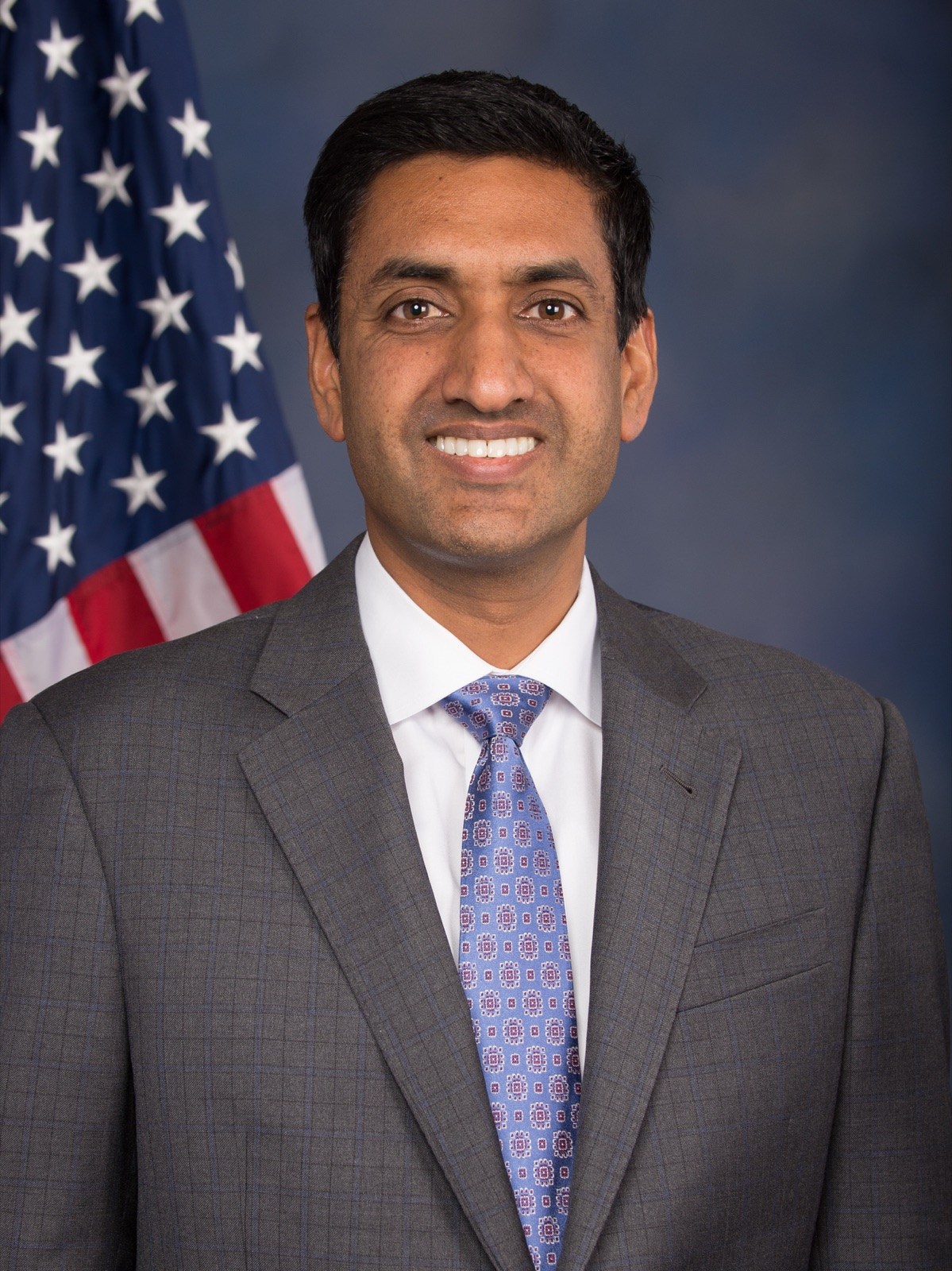
Ro Khanna
Ro Khanna is a California Democratic Congressman representing parts of Silicon Valley and one of the leading voices on technology regulation in the House of Representatives.
Episode Summary
California Democratic Congressman Ro Khanna represents parts of Silicon Valley— the wealthiest congressional district in America and the world's largest technology hub, home to tech giants Apple, Meta, and Google. Khanna sits down for a wide-ranging conversation with One Decision guest host and correspondent Liz Landers to discuss tech, AI regulation, and the ongoing conflict in Gaza, saying the United States’ “bear hugging" of Israeli Prime Minister Benjamin Netanyahu has been a "strategic mistake.” As one of the leading voices on technology regulation in the House of Representatives, Khanna says Europe shouldn't be "preaching" when it comes to regulation, and we're past the days of "colonialism where Europe thought they could tell the world what to do." They also discuss his role as a Biden campaign surrogate and President Biden's reelection prospects. Plus, former MI6 Chief Sir Richard Dearlove joins Liz to discuss the proposed ban on TikTok in the United States and the backlash over Indian Prime Minister Narendra Modi's new citizenship law.
Listen & Subscribe
- Watch on YouTube
- Listen on Apple Podcasts
- Listen on Spotify
Transcript
INTRODUCTION
Landers: You're listening to One Decision, the podcast that looks at the choices that shape our lives. I'm today's guest host, journalist and correspondent Liz Landers.
Dearlove: And I'm Richard Dearlove, former chief of British intelligence, otherwise known as MI6.
Landers: Each week, we explore some of the biggest choices and issues that have global impact. We hear from the key players and influencers making, informing, and shaping the decisions that impact us all. Hi, Sir Richard. Great to see you again. And we had a great conversation, I think, with Congressman Ro Khanna. We hit a bunch of different issues with him. But the one thing that I want to set up at the top here for our audience is that the US had a vote in the House of Representatives on TikTok on Wednesday. This vote happened the day after we spoke with Congressman Ro Khanna and the House of Representatives passed this ban on TikTok, which would require ByteDance to sell and be sold to a US company. Overwhelmingly, this bill passed. Ro Khanna previewed this and said when we spoke with him the day before the vote happened that he would be voting against the bill. Take a listen to why he voted that way.
Khanna: I'm for a forced sale. I have concerns about what happens if the sale doesn't take place within 180 days. Will there be a ban? And that strikes me as overbroad. Under our First Amendment, you need the least restrictive way of regulating content. And I would be for a forced sale. And then at the same time regulating to make sure that our privacy isn't being violated, that data isn't leaking, but to move from if a forced sale doesn't happen that we're gonna ban 170,000,000 Americans, many of them on the left and right who've questioned the political establishment. My sense is it wouldn't hold up in the courts. I think it's a violation, overbroad violation of the First Amendment. So I'm not gonna support the bill in its current form. If it's amended and if it has a forced sale, I would support that. So that's a no as of now? No as of the current form. But I don't think this bill in the current form goes anywhere in the Senate.
Landers: Gotcha. Yeah. I've seen some of that as well that they may be hitting a wall.
Khanna: Well, they're hitting a wall because it's poorly drafted. I mean, someone should have a First Amendment lawyer work on the bill. Sounds like nobody consulted you. I know that's not exactly your forte in law. Yeah. I mean, certainly, there are people who know the First Amendment much better than I do. But, you know, there was a Montana decision. The federal judge struck down the Montana ban on First Amendment grounds. We have a very robust First Amendment tradition.
Landers: So, Richard, do you think that this would pass in the UK, this kind of TikTok ban?
Dearlove: Well, bear in mind that we don't have a written constitution so it's a complicated issue. In a way I'm surprised it passed the vote in Congress because it does violate the First Amendment and I can see why our interlocutor took his position that he did and I rather agree with him if you look at it legalistically. I think in the UK because of common law it would be very very hard to legislate to ban something like TikTok. So I mean the ideal solution would be if the Americans solved the problem and bought the company because then you know we don't have the problem of Chinese ownership. But there's no question that you know TikTok is problematic because of the amount of material being placed on there, particularly by young people, and you know over time I'm absolutely of the view the Chinese would be storing that data, God knows what use might be made of it in the future. I mean, it's a really problematic issue, but we're not in the lead on it.
Landers: It doesn't seem like this will actually pass in the Senate or it will face an uphill battle right now based on what we've seen from senators' public comments about this. TikTok though has been really kind of lobbying and campaigning on behalf of being able to stay in the US app store. They sent their CEO to Capitol Hill to meet with some of these lawmakers. So we'll see what happens next. And also just one thing I'd add too is President Biden has said that he would actually sign this bill into law, which could bring about a whole other slew of issues for him, I think in an election year when he really needs to get younger voters right now. I don't know if that's exactly the path to getting those 18 year olds to turn out and vote for you if you ban TikTok. But it shows the complexity.
Dearlove: Of, you know, globality when it comes to social media and these companies that you know have Chinese origins. They are very very intrusive and the problem is that you know you leave your traces, your personality at an age when your judgment is impaired, let's say, just because we're not fully developed. Yes. So I mean it is really problematic and the solutions are very problematic as well. But I don't think in the UK you could possibly introduce a legal plan.
Landers: Let's hear the rest of the interview with Congressman Ro Khanna. We talked about a wide range of issues from artificial intelligence to global elections this year to how he views the United States versus Europe on tech regulation. And, of course, we also discussed the pressing issue of the war in the Middle East. And so, Richard, of course, I want you to stick around and to get your reaction on the other side of this and your analysis to this conversation.
INTERVIEW WITH CONGRESSMAN RO KHANNA
Landers: Congressman, thank you so much for joining the One Decision podcast. I'm excited to get your view on a host of different issues today. I wanna start with kind of a big picture look at 2024 this year. There are a number of democracies that are having global elections this year. We've seen some already in Taiwan. In a few weeks, we're gonna see India have their elections. India has recently implemented a citizenship law that is viewed by some as anti-Muslim. The government of India has pushed back on that. I'm wondering what do you think of that decision, and how do you see democracy in India trending right now?
Khanna: Well, I chair the India Caucus in the Congress and have pushed for stronger ties with the United States and India economically on defense. India is a huge buyer of our products that increase jobs in the United States unlike China, and we need to be diversifying our manufacturing base. But I opposed the citizenship law that they passed, which basically says that they would expedite citizenship into India for refugees, but not for Muslim refugees. And their rationale was, well, Muslim refugees could go to Pakistan, but that I didn't find compelling because India has always been a pluralistic democracy. My grandfather spent four years in jail alongside Gandhi as part of India's independence movement fighting for a pluralistic India. So I have always spoken out directly about that vision even with the prime minister and with Jaishankar when I recently visited on August 15. I do think India's democratic traditions will prevail. It's in the palimpsest of the Indian constitution and character post Gandhi and Nehru, but there are stresses to it, much like we have stresses in our democracy.
Landers: Yeah. Why do you think countries like the United States and India are potentially dabbling with leaders who may have autocratic tendencies?
Khanna: In the United States' case, it seems to me there were a lot of people who were left out of the modern economy and globalization. We made a colossal mistake in America of hollowing out our industry that led to a feeling that the American dream had vanished, this feeling of anger at institutions and despair. And we were also trying to do something unprecedented, which has become this multiracial democracy in a diversity that exploded after 1965's Immigration Act when my parents came here. And so that poses challenges. And as much as we move forward, there is a sense of wanting to hold on to tradition and a traditional American way of life that's created a lot of friction in our politics. But I think it will resolve in a way that does embrace a multiracial democracy, especially if we can get the economics right and provide economic opportunity in places that have been left out. In India's case, I think it is tied in part to a postcolonial sense of identity, India finding its voice on the national stage saying that it is overcoming 125 years of colonialism from the British and invasion from foreign rulers and what that identity looks like. Now I hope it would be in the tradition of Gandhi and Nehru, a pluralistic identity, but nationalism can veer away from that. And I think that that's the balance that India is trying to find.
Landers: When we're looking at US elections in November, there have been a number of the leaders in the national security space, specifically recently warning about potential threats to elections from China, Russia, Iran. Some of this is stuff that we know, but some of this is also potentially through other platforms like TikTok, through some of these troll farms. You get briefed on things that some of the American public is not privy to. What don't we know about what's happening behind the scenes from some of our foreign adversaries, specifically targeting US elections?
Khanna: Well, without going into anything classified, I think we have to be vigilant that there are gonna be misinformation campaigns, that there are gonna be bots that try to suppress the vote, that there will be efforts at propaganda, perhaps. Tech platforms need to be vigilant about that. Our government needs to be vigilant about that. But, ultimately, I think these things matter on the margins. If you have a candidate like Barack Obama, he'd win decisively, or on the other side, Ronald Reagan. And what matters most in politics is inspiring people and being able to build movements. And, of course, we have to be vigilant against this kind of interference in our election. But the main thing we have to do is build movements that inspire people and build majorities so that we're not susceptible to 10,000 votes in a battleground state where these things make a difference.
Landers: Can you talk at all about how much China is doing this versus other countries?
Khanna: That's unclear. I mean, I think there are a number of bad actors, Russia being among them. China is, of course, did that in Taiwan. It's clearly unclear how much they would do in the United States, and Iran. I mean, we know that there are bad actors and that our intelligence agencies need to be vigilant. Our technology companies need to be vigilant in cracking down on that without taking away American speech. I mean, the American Supreme Court has always said that even foreign information is something that American citizens should have because we're a robust democracy. We wanna hear the perspectives of people outside the world. And ultimately, it's education. If we have, as Madison pointed out, an educated citizenry that can engage in critical thinking, then we'll be able to sort out the noise and propaganda from the truth. And that ultimately is the safeguard to a strong democracy here.
Landers: TikTok has kind of taken this sort of place in American culture right now where it's really widely used by a lot of Americans, especially younger people, but it's also really been demonized, I think, in a lot of public political conversations. Huawei is a technology that's used fairly widely still in Europe. It has been banned though in some European countries and governments that refuse to use the technology because of the ties potentially to the CCP. What more broadly when we're looking at Chinese technologies like this and companies that have really wide influence in the West, what are some of the vulnerabilities and red flags that you see for the United States and for European allies?
Khanna: The biggest red flag is economic. I don't understand why the establishment, collectively more Republican than Democrat, but both parties basically said, okay, we don't need to build steel in America. We don't need to build aluminum in America. We don't need to build textiles. We went from being the world's largest exporter in steel to having nine out of 15 steel plants in China. We have got over a $400,000,000,000 trade deficit. We took people's livelihoods and jobs in Pennsylvania, where I grew up, in Ohio, in Michigan, and basically sent them over to China after the World Trade Organization entry of the United States in the early 2000s. That was the mistake. And what I have said is let's reduce the trade deficit by 10% every year. Let's rebalance the economy. I have a bill coming out in Johnstown, Pennsylvania, with David Joyce, a Republican, to build new steel plants in America, modern steel plant, direct reduction iron, hydrogen. I wanna reindustrialize this country. The challenge that China poses is an economic challenge first and foremost, and that's what we should be focused on, in my view, for the American people.
Landers: So for you, it's an economic decision more so than relying on the tech and worrying about the security concerns.
Khanna: I mean, I have security concerns that we should certainly restrict high technology exports to China like Jake Sullivan has done on giving them semiconductor technology. I would make sure that we're not importing sensitive technology for critical infrastructure. But what I really think is that we need a more broad industrial strategy. It's not just, okay, let's not have Huawei. It's also why are we importing Chinese steel? Why are we importing Chinese aluminum? Why have we ceded being a manufacturing superpower to China? I don't wanna dismiss the national security conversation. That's obviously important, but that's not what's affecting on a day to day basis the lives of people in these communities that have been hollowed out of seeing their parents' jobs shipped offshore. That's what we need to address.
Landers: You represent your district, I believe is the wealthiest district in America. You represent a lot of the tech companies there right now. When it comes to tech regulation, I've heard you talk about the US model versus the European model of regulation. And you have said that Europe is, quote, not a model for the US to copy and they're a disaster on tech innovation. But the US of late has, well, in the last ten years or so on a variety of different issues has been following Europe's lead on some of the regulations that they have set that have then changed the marketplace here in the US. If they are overregulating and there's not much tech regulation right now in the US, what's the happy medium? What do you wanna see?
Khanna: Well, Kara Swisher reached out to me. She's got a new podcast that she wanted me to ask Commissioner Vestager a question. In my question, I said, Commissioner Vestager, Europe has produced two technology companies of any note, ASML and Spotify. We have Apple, Google, Intel, Nvidia, Microsoft, Tesla. Why does Europe think that they should tell the world what to do about technology? We're way past the days of colonialism where Europe thought they could tell the world what to do on colonial sites. If I was Europe, I'd have some humility. You haven't produced any technology. And yet you think you're going to preach to the world what to do about technology? How about actually producing some technology first? I'm curious what you'll say, but all of the innovation is happening in America. The second part where the innovation is happening is China. Europe is totally irrelevant to technology innovation. And they should have some humility to realize, you know, Macron still thinks he matters as if it's like the 1800s. And I just think that they have an overinflated view of their place in the world. That's very American of you. No. It's not American. It's historic. I don't think China has an overinflated view of their place in the world. I don't think India does. I think Europe does. I think, look, I love European philosophy. Let's read Rousseau. Let's read Habermas. It's just their power is not where they think it is. And on technology, they've been horrible in terms of just their record. So what I would say is America needs to lead and we should lead. And we need to have an Internet bill of rights, which makes sure that Americans' data is protected in a smart way. We need to make sure that there are protections so that we are open to competition in different parts of innovation. We need to make sure that people have a right to their data and know what happens. That's something I do blame our Congress that we haven't done enough and we're responsible. It's social media. It's horrible. Being on Facebook or Instagram or TikTok sometimes is like your worst experience in junior high on steroids. We need to regulate that. But that should be a question that we do as Americans.
Landers: Do you think the White House and President Biden is putting enough emphasis on tech regulation?
Khanna: No. I look, I think the president is in the right direction, but he's got a lot on his plate, and he's trying to prevent Putin from taking over Ukraine, and he's dealing with the war in Gaza, and he dealt with the pandemic, and he was dealing with the economic recovery. And so I don't think that this has gotten the attention that it needs. We need far more leadership in the Congress on technology regulation. But what we need more than the regulation is the opportunity.
Landers: I think that the technology that's sort of most confusing right now and befuddling for lawmakers, and you correct me if you think this is wrong, but is artificial intelligence. We've seen really in the last year just a huge boom in the public conversation around AI. President Biden actually mentioned artificial intelligence and deepfakes in his State of the Union address. He said he wants to ban AI voice impersonations. He was the target of a deepfake audio message during the New Hampshire primary, and it sounded a lot like President Biden when I listened to it. How should the United States be working with allies to regulate deepfakes? Because it doesn't seem like there's a whole lot going on here. Is there stuff that can be happening across different democratic countries that the US works with in order to create a framework that will potentially save some of these elections that are coming up?
Khanna: Well, I think we need to have a regulatory framework where if something is produced by AI, it's labeled as AI, and it needs to be banned right now while we don't have that framework. Look, there could be constructive uses of AI if we knew that. For example, Modi who's campaigning in India because India has 20 different dialects, they have his speeches being translated in different dialects, and they've got this AI generated image of Modi giving a speech in Bengali and Gujarati and Hindi. And now that's an innovative technology, but the problem right now is that it is so susceptible to falsehood and manipulation that I don't think our country is ready for that because of the case of the president's deepfake. So the basic regulation we need is if something is AI generated, it should be labeled and disclosed as such. And if a platform is creating it without that, they should have some liability.
Landers: As a person who's gonna run for election, reelection in November, how often do you think about this? Are you worried you're gonna be a target of this?
Khanna: I'm fortunate to have a seat that's Democratic, and I won the primary. So probably Republicans will have other targets, but I'm concerned about the use of AI manipulation in battleground states, in close precincts, in a very close election. And that is why a lot of this is gonna have to be voluntary standards from technology companies given that Congress has been unable to act in passing the regulation.
Landers: OpenAI is part of your district. Right? Right around it. Okay. What are your conversations like with someone like Sam Altman? In other words, I think a lot of people see these big tech CEOs come to Capitol Hill and say, regulate us. Regulate us. And then they have meetings. What's the line like between these people who run these huge billion dollar companies coming up here asking to be regulated? How involved are they in the regulation and the process that you guys are doing to write laws around how these companies can operate?
Khanna: I had an op-ed recently in the New York Times about this topic that the confabs with Sam Altman and others coming to DC reminded me of the Davos conferences where all the big leaders from McKinsey and global corporations went and said globalization was going to work out and everyone would benefit. And that didn't happen. And I fear the same thing will happen with AI if we don't have workers involved, if we don't have academics involved, if we don't have nonprofits involved. So I convened a roundtable of the 25 top scholars in the world, Fei-Fei Li, Erik Brynjolfsson, who came. And the central thesis was that AI needs to develop not just in a way that's safe, but in a way that gives employees and workers part of the equity and the gains that are being produced with AI and a say in how AI is used. So it's not just used to eliminate jobs, but to enhance jobs. What Brynjolfsson said is augmentation versus elimination versus automation. And I believe that's the framework for policy that we need. So should Sam Altman be part of the discussion? Yes. But should he be the decisive voice? No. So do you think they are too cozy with DC? Well, I don't think anything has been done yet. So it's sort of, you know, it's just dysfunction. And I don't think that's because of regulatory capture of big tech. That's just because we haven't been able to get our act together to regulate it. My bigger concern is how do we get something moving here on the Hill.
THE MIDDLE EAST
Landers: I wanna shift gears a little bit with you, talk about the Middle East. You met with Arab American leaders in Michigan recently. I'm wondering, what did they tell you about the Biden administration's policy with Israel?
Khanna: Oh, they were opposed. I mean, I, you know, have been a longtime supporter of the US-Israel relationship. I've been in Congress eight years, and my record reflects that. I unequivocally condemned the brutal Hamas attack on October 7, the rapes, the murders, and I've called Hamas a terrorist organization, which obviously they are. I mean, they committed a terrorist act on October 7. But the bear hugging of Netanyahu has been a strategic mistake. Netanyahu has conducted a callous war in defiance of the United States. I did not support a ceasefire for the first six weeks. I thought they would go and get the people responsible, but they started bombing refugee camps, bombing hospitals, defying the United States and not letting aid in. And the president needs to have clear consequences for Netanyahu. He needs to say, I'm for Israel, but I'm not for this extreme right wing government. And that means if he defies the United States in not allowing aid or going into Rafah, no more weapons transfers, not these 100 weapons transfers that we've given Netanyahu unconditionally. It means not protecting him from the entire international community at the United Nations. It means recognizing a Palestinian state, and those are the things I think some of the Arab American community wants.
Landers: You just described an inflection point that it sounds like may actually happen this week. President Biden in a recent interview said that it is a red line if Israel goes into Rafah, but he also said, I'm never going to leave Israel. Bibi Netanyahu said in response, we'll go there. We're not going to leave Gaza. You know, I have a red line. You know what the red line is? That October 7 doesn't happen again. Seems like Netanyahu and President Biden are potentially going to clash over Rafah. And if the IDF moves into that area for a full scale invasion, what should the US do?
Khanna: You know what I disagree in sort of the media narrative on this is to describe Netanyahu and Biden as somehow they're equals. They're not. We are the greatest superpower in the world. We're giving Netanyahu 100 times weapons. He needs to be deferential with respect to the American president, whoever that is. And I find it insufferably arrogant for him to act as if he's somehow an equal to the American president, and that's just going to rub people the wrong way. So if he defies the American secretary of defense, the American president, then we should stop the arms shipments. Now we can stop the offensive arms shipments. I voted for Iron Dome funding. I voted for defensive funding, and we need to continue to protect Israel against an invasion from Hezbollah or Iran. But we certainly shouldn't be giving Netanyahu the offensive weapons to go kill more people in Gaza when he's acting in defiance to the president of the United States. You can act as an equal if you're not begging for weapons at the same time.
Landers: You're a Biden campaign surrogate. Yeah. Do you think that Biden could lose over this issue in some of these key swing states where he won the margins in Michigan in the last election. Could he lose this election because of his positions on the war in the Middle East right now?
Khanna: I think the president's gonna win. I mean, he won Michigan by almost 150,000 votes. But what I would say is, but 100,000 or so people voted uncommitted? I mean, that could matter in a general election. It could, but I think it's probably beyond the Muslim or Arab American community. It's more young people, voters of color, the broader Democratic coalition. And I think if this war continues, particularly if it's continuing when we head to the Democratic convention in Chicago, then it creates a problem for us with the coalition that Barack Obama built, which was young people, progressives, voters of color that really turned out. And so I still believe the president will win, but there should be a warning sign that there are large parts of our base that are unhappy. Do you think that DNC in Chicago could follow some historical precedents and potentially be a very volatile situation with a lot of protesters showing up. I hope not. I think though if the war is continuing in a way where Netanyahu is continuing to be brutal, then yes. But my hope is that the president, I believe, has changed tone and changed course. He's now using the word ceasefire. He's saying that weapons will not be indefinitely transferred to Netanyahu. So my hope is this pressure is going to work on getting a ceasefire and release of the hostages.
Landers: One final question for you. Former president Trump met with Viktor Orbán at Mar-a-Lago. He praises him regularly. Why should Americans care that the Hungarian president is going to meet with the former US president?
Khanna: Well, Viktor Orbán has not been democratic. I mean, he has been authoritarian in his own country. He came to election through the democratic process and since then has defied democratic norms. And I think America has always stood for seeing democracy thrive in the rest of the world. Doesn't mean that we can impose democracy, but we certainly should celebrate it and not ally ourselves with authoritarian leaders who don't share our values. Do you think Trump wants to be an authoritarian leader? I think he doesn't have respect for the democratic traditions and norms of America. Do I think he will be able to become a dictator? No. Because I think American democracy is very, very strong, but I think he will try to break every norm and tradition that there is and inflict incredible damage on the American body politic. Any campaigning you're gonna be doing for him or preview of what we should be looking at for your role involved in the 2024 election? Well, I've been out to New Hampshire, to Michigan, to South Carolina for him, and I'm going to be out there, particularly to young voters, to progressives, to voters of color making the case for the president's reelection.
Landers: What is your message to these younger voters who say he is too old?
Khanna: Well, I think values matter most and that he has the values more than Donald Trump to move this country forward. And that you can disagree with the president as I do on a couple key issues, and he'll listen as he has been on Israel-Gaza. Whereas Trump, you're not gonna get any audience, let alone influence him.
ANALYSIS WITH SIR RICHARD DEARLOVE
Landers: So, Richard, we had a great conversation, I think, with Congressman Ro Khanna. We hit a bunch of different issues with him. One of the other topics that we got into with the congressman was tech regulation in the United States and this idea that he was pretty tough on the European Union and basically the lack of innovation and the fact that the US has these trillion dollar companies now like Apple and he was sort of like, what does Europe have to show for themselves? I thought that that was just kind of an interesting point that he's making. And of course, he represents Silicon Valley. But he's right. There is a lot more innovation coming out of the US tech industry.
Dearlove: Well, it's pretty cheeky of Brussels, as they were, to try to dictate globally a regulatory regime, particularly when you look at the innovative capacity and momentum that Silicon Valley has provided. And there is a negative side to that, but the balance is supremely positive in other respects. Look, the EU is a trading cartel. And there's no question that it acts like a cartel, and its standing on these issues is not strong. And I'm sympathetic to the view that was put across in the interview. And when he said Europe, I hope he didn't include the UK, because the UK is innovative and has been strongly innovative in a way that's not okay. We haven't created any of the big companies, but you know there is a hugely innovative streak in this similar area in London. And I think a lot of people in the UK resent the way that the EU is trying to orchestrate and create a global regulation system. I mean, although we have Brexit and we're not in the EU, it'd be very difficult for the UK to resist a European regulatory system. And let's face it, you know, this area does need to be regulated. And what I hope is that if the EU has taken this initiative, it will stimulate the US to get its grip together, or get its grip on the issue, or get its act together, do something about the problem, because we all know what the problems are.
Landers: Yeah, I think Congressman Khanna certainly said there's a long way to go in terms of regulating tech. I know one of his sort of main areas of interest around tech regulation is around children's access to different platforms and the amount of time they spend and stuff. So yeah, there's tons of room in the United States for growth and regulation specifically around this.
Dearlove: Well, the irony is you've got Xi Jinping in China legislating to restrict the amount of time that children can spend on social media. So every country, you know, struggles with this in its own way, but the US really ought to take the lead. I know it's difficult politically for the US to do that, but it would be great if it did.
Landers: One of the other news of the day topics that we got into with the congressman, of course, is the conflict in the Middle East right now. And he had some really sharp comments for Israel's Prime Minister Bibi Netanyahu. What do you make of that, Sir Richard?
Dearlove: Well, I think one has to conclude at this point that the Israelis have overplayed their hand and the pressure on Netanyahu for some sort of restraint is absolutely clear. I think the problem is that Israel walked into this trap that was set for them. I mean Hamas have had years preparing their position, creating out of the Palestinian population a defensive shield so that they couldn't be attacked without the Palestinian population suffering massively. That's what's happening. I think there is now this pressure for, I wouldn't say moderation on the Israeli part but more subtlety, more precise targeting. I mean, let's face it, the fate of the Palestinians is catastrophic and they have been exploited in successive Middle Eastern crises and now it's happening again. The only thing I would say is I'm somewhat suspicious of the news that comes out of Gaza because it is still largely controlled by Hamas mouthpieces. So whether we're getting a totally accurate representation, I'm not sure. But I can see the criticism of Netanyahu is justified. I mean, the only country that can pressurize him to change his behavior in any way is the United States. I don't think anybody else can do that.
Landers: Yeah. And that was sort of the point that the congressman was making, especially because at least the United States holds the power of the purse in this situation. That was the point that the congressman was making there. One more thing too that we talked with him about. He is an Indian American lawmaker and he chairs the India Caucus on Capitol Hill. So we were talking about the upcoming elections in India, which will take place next month. And also this new law that has gone into effect that has been perceived to be a citizenship law, and it's been perceived by some as being anti-Muslim. Ro Khanna said that he was opposed to that law. And we just kind of talked more about overall global democracies with him. I'm wondering what you think of the US-India relationship at this point.
Dearlove: It's a crucial relationship, partly because of India's geopolitical importance, its size, its defense capability. I mean there are many, many different reasons why India is such a crucial player globally. And I mean, if you go right back to the Bush administration, their great achievement as an administration was to really reconsider the relationship with India and perceive India as an important Western ally, which they are now of course in terms of a bastion against China. I thought his comments were striking in relation to the election because basically siding with the Muslims against Modi's very highly nationalist BJP party, which has discriminated strongly against the Muslim community, and I think in essence he's right to do so. What the response in India will be to that, because Modi's sort of Hindu nationalist party has taken a very strident line on, I wouldn't say suppressing the Muslim community, but treating them in a very difficult and controversial manner. But India is the largest democracy in the world. It functions as a democracy. Modi's performance on the Muslim issue is not very engaging and is a worrying aspect of the way that India is progressing to being a very dominant power in the region. And of course it has a huge Muslim population. Modi's answer to that is, you know, well Bangladesh and Pakistan couldn't look after the interests of the Muslims, but I mean that separation took place a long, long time ago, and a large chunk of the Muslim population did remain in India. And, you know, that's a fact that the Indian democracy has to come to terms with, and it has to manage it properly.
Landers: That's it for this episode of One Decision. We drop new episodes every Thursday, so like and subscribe so you never miss an episode. Drop us a line and tell us your thoughts and what decisions have impacted you where you live. You can write to us. Our email is 1decision@1decisionpodcast.com. From me and the team, thanks for listening. See you next time.