Episode Info
- Season22
- Episode6
Hosted by Christina Ruffini and Sir Richard Dearlove
Guest
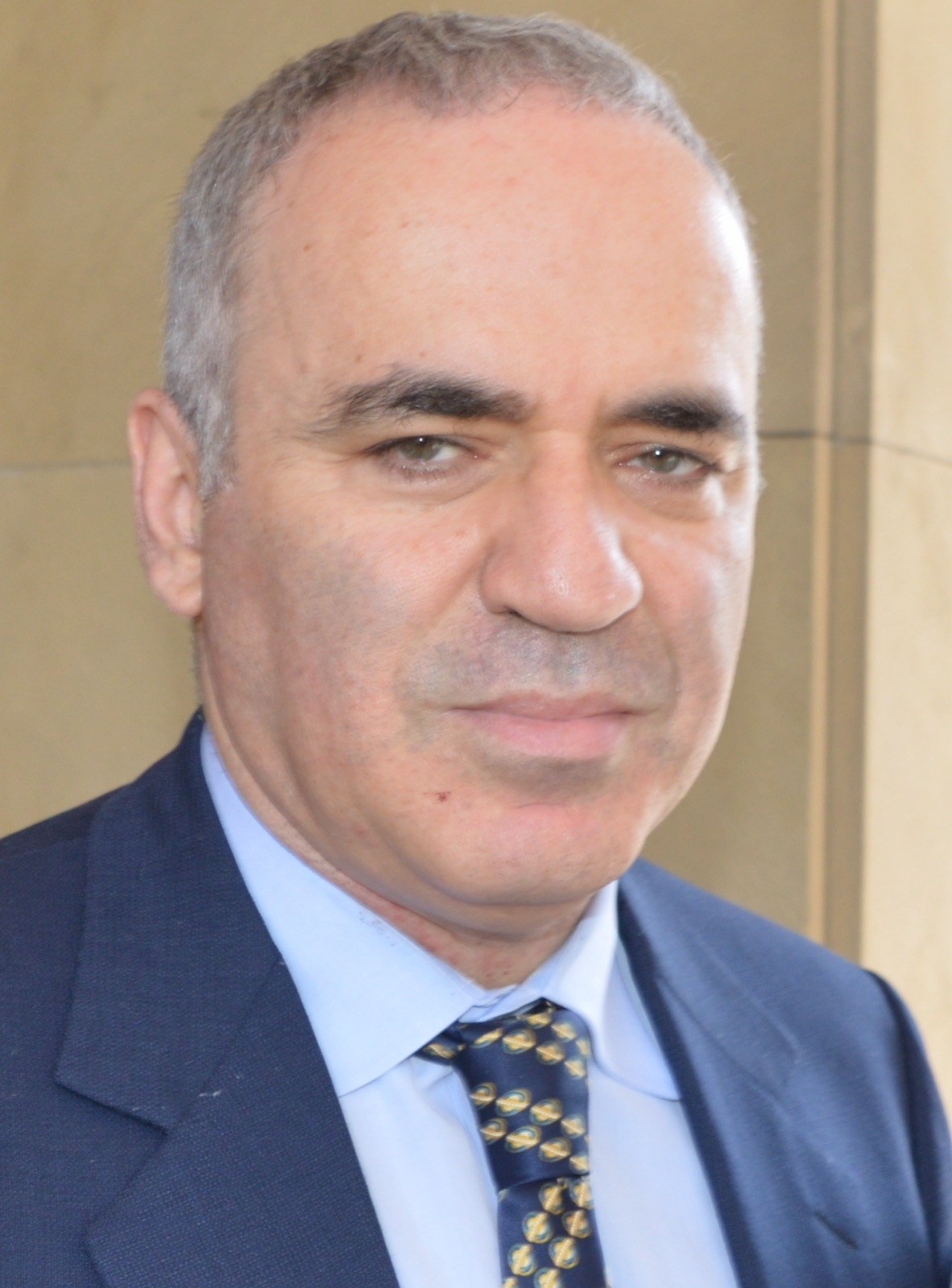
Garry Kasparov
Garry Kasparov is a famed former chess grandmaster who has campaigned against Putin for years and continues to speak out from the United States discussing the West's eroding support for Ukraine.
Episode Summary
With the news that longtime Vladimir Putin critic Alexei Navalny had died mysteriously while serving in a Siberian penal colony, it seemed that the hopes of the opposition to Putin inside Russia had died with him. While there are still remaining critics in Russia, jailed and facing an uncertain future, Navalny was undoubtedly the most high profile. However, another well-known activist against the Kremlin continues to speak out—from the United States. One Decision sits down with the famed former chess grandmaster Garry Kasparov, who has campaigned against Putin for years, to discuss the West’s eroding support for Ukraine and the continued fight against Putin, now increasingly being fought outside Russian borders, by voices like Kasparov’s. Sir Richard and Julia discuss Navalny’s legacy and his choice to return to his homeland, which ended up costing him his life.
Listen & Subscribe
- Watch on YouTube
- Listen on Apple Podcasts
- Listen on Spotify
Transcript
INTRODUCTION
Mcfarlane: You're listening to One Decision, the podcast that looks at the choices made that shape our world. I'm your host, Julia McFarlane.
Dearlove: And I'm Richard Dearlove, former chief of British intelligence,
Mcfarlane: otherwise known as MI6. And together, we speak to the key decision makers, influencers, and experts behind the biggest decisions in our world today. When Alexei Navalny, the Russian opposition leader and Putin's longtime nemesis, was poisoned by Novichok smeared onto his underpants by FSB officers in Siberia back in 2020. One would have thought he'd be forgiven for choosing to live in exile, away from the clutches of a murderous regime. He survived the assassination attempt, having received treatment in Germany. But then, incredibly, he decided to fly back to his homeland, an act of courage and determination that won him admiration around the world. Surely, he knew, and his family must have known, this decision would lead to certain death. It now appears to have done with reports that Navalny died suddenly last week after a walk while serving in a notorious Siberian penal colony, nicknamed Polar Wolf for its location in the Arctic Circle. This week, we look at two longtime Putin critics and opposition figures. One of them met his end, as you've just heard, but the other chose a different path, seeking refuge in the United States, continuing to criticize Putin from arm's length, but will hopefully continue to do so for many years to come. He is the former Russian grandmaster, world chess champion, Garry Kasparov. We had an incredible discussion with him, and I cannot wait for you to hear it. But first, we will look at the death of Alexei Navalny and what it means for the anti-Putin movement in Russia. Richard, what came into your mind when you first heard of the news?
Dearlove: I suppose I would say that I wasn't surprised, which is a rather tragic thing to have to say because I think Navalny himself knew his days were numbered and I think the rest of us who followed him closely realized that he probably would never come out of that penal colony. And that's what's proved to be true. I think in a way it is probably a seminal moment in judging Russia and judging Putin, because if we had any doubts about the nature of Putin's regime they should have been removed by this dastardly and aggressive event. But it also I think shows that Putin must have in his makeup an element of insecurity. Why, if Navalny's locked up in a penal colony in Siberia, do you bother to kill him? He's still a symbol. And I think the other extraordinary thing, and in a way this is Putin's rather adverse achievement, is the stunning indifference of the majority of the Russian people towards what has happened. And I find that really overwhelming. In which other country would the population be so submissive and watch the opponents of this dreadful dictator be rubbed out one after the other.
Mcfarlane: I want to pick you up on that. I do want to look at what this whole thing could possibly indicate about Putin's state of mind and his position. But what you just said about the perceived indifference is very interesting because a lot of people have been speaking recently. I think Arkady Ostrovsky, who's the Russia editor of The Economist, and Marina Litvinenko, who is the widow of Alexander Litvinenko, who was assassinated by the FSB several years ago. Both of them have been hearing from people in Russia. I heard from both of them that the mood in cities in Russia, like in Saint Petersburg and in Moscow, people have been reacting to the news of the death of Alexei Navalny by mourning, by placing flowers at the spot on the bridge outside the Kremlin where Boris Nemtsov was assassinated when he was shot. When was that? 2014 or 2015 around then. And that's turned into a kind of very symbolic location for Russia's martyrs. And people have made the observation that all of the anti-Putin Russians have emigrated. They have left. The people who tend to form the opposition have left. That the mood in Russia right now, I think Arkady Ostrovsky said, was black. It was very somber. It was a terrible mood in Russia. And it's interesting that you say, you know, have the Russians given up? But it seems like Russians in Russia right now, they are grappling with the fact that they live in a dictatorship where they cannot voice their opinions. They cannot do anything. They know that to hold up a banner and to protest is akin to a death sentence, really.
Dearlove: Yeah. But I mean, the fact is if the majority of them came out onto the streets, there would be nothing that the security authorities could do about it. If enough people demonstrated, if enough people in any of the major urban centres, they would just overwhelm the security authorities.
Mcfarlane: That is true, but it's interesting because now I was still working for ABC when Navalny was poisoned, when he had just made that incredible documentary about Putin's Black Sea Palace in Sochi and all of the corruption. He'd done this incredible investigation. He put it on YouTube. Millions of people watched it, and there were loads and loads of Russians on the street. And then there was that attempted assassination by the FSB. They tried to poison him with Novichok. There were strong protests in Russia then, and I remember watching those scenes. And I also remember seeing Navalny and his wife getting on that plane to go back to Russia and watching their faces and his defiance going back knowing that he was going to be sent to prison, that knowing that it was possibly the last time he was going to be a free man, he was probably going back to die in Russia. Obviously, the big thing that's changed since then is the war in Ukraine. You've had so many Russians leave the country to avoid the draft and to avoid conscription, but also a lot of people who don't agree with Vladimir Putin, are wanting to get away from the grip of tough Russian life under sanctions. There is a rump of Russian opposition that's just not there anymore.
Dearlove: Yeah. But I think one has to conclude that the way that events have evolved is that, you know, a majority of the Russian people, whatever they may think, end up being complicit in the assassination of Navalny, maybe not to the extent with Nemtsov as well. But I mean it is, I think, quite extraordinary that you have this sort of passive objection, and you can say, well, the lockdown, the security forces are so powerful, which they are, but on the other hand if enough people felt that this was a completely unacceptable way to be governed and the way to live, then something might happen, something could be done about it. You know, maybe I'm underestimating the Russian people and maybe, you know, the seeds are being sown, that there will at some point be a massive objection to the way that Putin has conducted himself. But I mean if you look at the situation in Russia, it's extraordinary. And okay, the war in Ukraine maybe has turned temporarily, we hope, in Putin's favor. It is still a huge disaster for Russia and for the Russian people. And, you know, the losses in Ukraine are quite stunning. You'll see, you know, this is unresolved. But I find the whole situation very depressive. But I mean, what it does tell us is that most of what Kasparov said to us about Russia was hugely predictive. This was before Navalny was killed, and his comments about the nature of Putin's regime, his comments about the situation, were cogent and clearly almost anticipated, they weren't predictive, but in a way you could say in the way he talked about the situation almost predicted this event. I agree with you. It's awfully sad. It's heartbreaking actually to watch a nation feel helpless really, to be unable to express itself out of fear.
Mcfarlane: It's heartbreaking actually to watch a nation feel helpless really, to be unable to express itself out of fear in the way that I think a lot of Russians have demonstrated that all they feel safe to do is leave flowers on Nemtsov's grave. And given that Yulia Navalnaya, the widow of Alexei Navalny, she has been very outspoken in the days since the announcement that her husband had died, possibly killed in all likelihood, but we don't know that for certain yet. You know, she's called on Russians to stand with her, to share in her rage, share in her grief, to not give up. And it appears at least for now that that is not being met with the kind of protests of solidarity that we have seen before. But I think you're right about, in retrospect, what Garry Kasparov's interview sort of shares with us, that a lot of this can be baked in if you look at the trajectory of Vladimir Putin, the fact that he is a man who is totally uncompromising and willing to do anything to keep his grip on power. Something we talked about with Garry was this interesting figure who announced that he was actually running against Vladimir Putin in the upcoming elections. He was former, I think, deputy state Duma leader. He's someone who is always on Russian state TV, and he has kind of been the token anti-war or Ukraine war critic on state TV. He's kind of been the only dissenting voice who's been railing against how the war has been conducted even if he hasn't really objected to the idea of Russia invading Ukraine in itself. But he ended up being this announced candidate, and he was gathering a bit of, I don't wanna say momentum, he was certainly gathering a lot of international media attention, and he claimed to get the requisite number of signatures supporting his candidacy. And this is what Garry Kasparov had to say about how legitimate he was as a viable opposition to Putin.
Kasparov: There is no election. Please don't use this word to mislead your public. Because today Kremlin is solving one problem, it's to fight back against claims that Putin is illegitimate. I've been collecting signatures and many people signing them around the world that regime is illegitimate. The only way to fight back from the Kremlin's point of view is to create an illusion of a competition. This is a great opportunity for FSB, it's to collect data because now people are signing, they're basically just expressing their disagreement with Putin. So phenomenal opportunity. So all we have to do is just collect signatures and make sure that these people now are being watched because they are signing for a candidate who is somehow opposite to Putin.
Mcfarlane: You know, what's happening with the war in Ukraine and the tide seeming to turn in Putin's favor, the assassination of Prigozhin, the granting of that rare interview to American TV host Tucker Carlson, the disqualifying of the only opposition candidate running against him in the elections, and now the supposed killing of Alexei Navalny, who was stuck in prison in Siberia. I mean, he was hardly posing a threat to Putin just before the elections. It's not like he's been inspiring protests against him as he used to. I'm not the most qualified to have an opinion on this, but my gut tells me that Putin is doing all of this because he's paranoid.
Dearlove: I absolutely opt for paranoia, not for Putin expressing his strength. If he wasn't paranoid, he wouldn't need to do anything about Navalny. Navalny alive in the prison camp is neutralized, even though he might appear still to be a magnet. But in a way you could now argue that Navalny's wife, who has just given this extraordinary speech at the Munich Security Conference, becomes a new focus, and a new and powerful emotional focus for opposition to Putin. So I think we're dealing with paranoia. Maybe it takes us back to the issue of Putin's health, I still have the view that there's something wrong with him. And I just wonder, given these events, whether all is as it seems to be inside the Kremlin, there must be tensions and problems in those immediately around Putin and we had strong evidence of that with the Prigozhin issue. So you've got Prigozhin, you've now got Navalny, okay it may be dangerous to over interpret these events but there's something in my view, more happening than we can see at the moment. Thanks, Richard. Well, as promised, here's our conversation with Garry Kasparov,
INTERVIEW WITH GARRY KASPAROV
Mcfarlane: renowned Putin critic and former Russian chess grandmaster. Garry Kasparov, thank you so much for joining us in One Decision. It's great to have you on the program.
Dearlove: I just wanna introduce you to my cohost, Sir Richard Dearlove, the former chief of Britain's MI6, and I believe the two of you have met before. Yes, that is correct. We met at the Hudson Institute in New York and had dinner together. I can't remember, was quite a long time ago though, Garry, I think.
Kasparov: Yeah, I do remember but the problem with anything that happened before COVID, it's now become very blurry. What it was six, seven years ago, I think
Dearlove: it's after annexation of Crimea, but I'm not so sure. Yeah, I think it was around that time. Yeah. Around that time. Yeah. I did an interview and a discussion, and you were there, and then we dined afterwards.
Mcfarlane: So anyway, it's a privilege to be with you again. Thank you. Garry, I want to start off this conversation just by going all the way back to the beginning. You grew up in Imperial Russia, in Baku, now Azerbaijan, in what was then the USSR. You, from a very early age, demonstrated an incredible talent for chess, and it meant that you could travel outside of the Soviet Union, which was very rare at the time, especially for kids. Just take us back to that time, because obviously we know the dissolution and the failure of the Soviet Union is something that is very central to how Vladimir Putin's worldview has been shaped. But explain for our listeners what then Russia was like then, and how you feel that journey has shaped present day Russia from your own observations.
Kasparov: It was dictatorship, but I was born 1963, ten years after Stalin died. And the Soviet Union has transformed. It was still a dictatorship, but it shifted from one man dictatorship to a kind of collectively politburo. It's more like a mafia structure and obviously they had various interests. I wanted to emphasize it because when we look at today's dictatorships like Russia, China, Iran, North Korea, it's very important to understand whether it's purely ideological dictatorship or it has one strong man, one leader on top of that. Russia today is one man dictatorship. It's a fascist dictatorship with one at the top. China actually has been shifting from collective dictatorship to same story. North Korea was always for three generations, is one man dictatorship. Soviet Union in the '70s, early '80s, it was not in a transformation stage yet, but it showed sign of, I think, ideological exhaustion. People didn't believe in it. So the ideology was there, but there was no passion. So it was like a shell, but empty shell and we could feel it. Obviously power of inertia. So nobody thought it would collapse one day. But I remember that in early eighties, people talked about some sort of reforms. Obviously we didn't know what kind of reforms. Many people, myself included, believed that maybe we have to go back to what they call Lenin's norms. Lenin was good, Stalin was bad. Again, it took a few years for this illusion to disappear. But clearly, the Soviet Union was a vibrant society, somehow vibrant. We had theaters, we had movies, closed compared to the free world, but still not North Korea. I could listen to Voice of America or Radio Liberty. Yes, after invasion of Afghanistan, they tried to jam it, but still there were many channels. So I think that the Soviet Union was already pregnant with the changes that happened under Gorbachev. And of course, the very strong policies implemented by Ronald Reagan and Margaret Thatcher helped to demonstrate the limitations of the Soviet system. It has been losing competition and there was a growing irritation, not just among the public, but also among the elite. So that's why we saw this transition, but what we missed in 1991 was that the transition happened had not touched the foundation of the empire. We were mistaken thinking that the end of the communist regime meant the total change. Actually, the seeds of the problem, imperial problems remained and that's what Vladimir Putin skillfully used to bring Russia back, which is not exactly back to the Soviet days. Vladimir Putin's regime is a kind of combination. It amalgamated many elements of old Russian history, really bad elements, and it created this explosive combination that is the existential threat to the free world today.
Dearlove: I wanted to ask Garry one practical question. Does he think that Putin has a health problem? And if he does, who amongst his successors? I mean, there must be some I wouldn't say succession planning, but there's probably a sense amongst his immediate entourage. So if something happens to him or is happening to him, that there would be a replacement. I mean, the person I've always thought was most likely, who I met when he was head of the FSB, and he's a pretty sinister character, but able, clever man, is Patrushev. But I don't know what Garry thinks about that.
Kasparov: I agree with you that Patrushev is probably the man who is calling the shots. At one point, we had rumors about Putin's being dead and Patrushev basically speaking a ruling country on his behalf. I'm always reluctant to discuss Putin's health because I don't know. The health of a dictator is one of the most important and most guarded state secrets. Is he well? Is he unwell? Looks unwell to me. Does he have doubles? Most likely, but I can talk about number of tanks Americans do have and don't want to send to Ukraine. Or about Nadezhdin, or about the financial aid to Ukraine because we can operate with numbers. I don't know. I know nothing about Putin's health and I think that is speculation that Kremlin can use to also manipulate us. So I would be very cautious, but I agree with Richard on one point. Patrushev is definitely the strongest man in Putin's entourage and whatever happens to Putin, it's likely Patrushev might be in charge. Though my knowledge of history tells me that if dictator goes down, the whole system eventually collapses because dictator is a spine that keeps system together. Nobody could replace Stalin instantly. He understands the moment dictator goes down, there's the turmoil. So that's why anything after Putin would be better because it will create chaos that will inevitably lead to some sort of negotiations with Ukraine and the free world.
Mcfarlane: Why do you think the elites who you'd have thought would not be in favor of expensive and draining war that was damaging the Russian economy. Why do you think they're still with Putin?
Kasparov: Putin's strength is a result of the Western weakness. Because today, unlike in the '70s or '80s, the free world led by America has overwhelming military and economic advantage and also political. A lot of people believe in democracy and individual rights, but having military and economic dominance doesn't bring you automatic victory unless you have political will. What's happened in Russia last year was actually it was a moment where part of the elite thought that they had to find a compromise. Prigozhin's rebellion to me was a very clear sign that a lot of people inside Russia, the Ukrainian counter offensive, which was very frightening by the standards because top generals and I think people like Prigozhin understood that if America would have fulfilled its promises and delivered weapons that Ukrainians expected, the war would be over. The Kerch Bridge, which is a key logistical connection to Crimea, could be destroyed in a couple of weeks if America supplied Ukraine with weapons. 31 tanks, come on, they sent 100 tanks to Morocco recently. More than 2,000 tanks is now just collecting dust in California Desert. So America had all resources for the war to be won by Ukraine. That's why Prigozhin tried to send this message, stop this damn war. It's a big business. Let's go back. But what's happened afterwards? It failed. What Putin saw and people around him, the free world was not ready to provide Ukraine with all the weapons. Okay, I say that Britain does whatever it can, but it's probably the only exception in Western Europe. Eastern Europe is trying, but they don't have these weapons. America, Germany, we don't want to waste our time even making comments about it. So today, they believe Putin is on a winning side and also Russian economy is a war economy and they're benefiting. It's a huge business now and as for sanctions, okay, be my guest, sanctions is a gold mine because all the sanctions are just being evaded and it's a huge business. 70% to 80% of Russian drones now have Western technology. By the way, Mainland America. Yeah, third countries, fourth countries, but at the end of the day, the free world shows no determination to win the war. So why not to stick with Putin? Because don't forget, rising against a dictator like Putin means that you lose, you lose everything including your head. So why?
Mcfarlane: Richard, I wanna bring you in at this point. Garry makes a strong case. If Ukraine loses or is forced to capitulate and see a loss of its land as part of any future negotiations down the line, is it largely a failure that belongs not to Volodymyr Zelenskyy and his troops who fought their heart and souls on the front line, but a failure of President Biden, the West, the pre-democratic world's political will to support Ukraine?
Dearlove: Well, Garry's analysis is depressing, but I fear there's an element in it which much as I don't want to admit he's right, I'm worried that he may well be right. I mean, I think the question I would like to ask Garry and, you know, the point that we discuss. I mean, Putin can declare victory in certain circumstances, and he will if he hangs on to the territory he's already gained. That is in a way of defeat for Ukraine. But I can't see Ukraine totally going back into Russian hands. I mean, there's a chunk of Ukraine now which is so westernized, which is so looking towards EU membership, NATO membership. And I mean, think if you follow the logic of Garry's analysis at the moment, what we're talking about, if the West doesn't step up to the plate and you're saying it's not going to, it's perhaps a division of Ukraine, say that the Donbas, Luhansk regions, you know, remain in Russian hands, but the western parts of Ukraine, let's say, using the Dnieper as a division, roughly speaking, you know, will be a different country. But, you know, maybe you're going further than that and saying, well, you know, the West has shirked its support, it hasn't followed it through. And of course, I mean, Biden's support disappointingly has been piecemeal. I mean, the UK has done what it can. There's been a lot of positive statements from Germany, but Germany hasn't actually done anything or doesn't done very much. And now you've got the EU talking about massive support but you've got Orbán in Hungary holding that up. And I can't see the EU stepping up to the plate with massive military support while they're talking about its financial support and reconstruction rather than military support. So we are at a very very difficult juncture. But my understanding from looking into analyses at the moment is that although there's a stalemate, also going militarily, it's not going very well for the Russians at the moment at all. There are still massive losses, they're not really advancing, and you know, they're having difficulty, huge difficulties of logistics in sustaining their own offensive at the moment in the northern region than in the South. But Garry, I'd be fascinated to hear what you think.
Kasparov: You're absolutely right. Russia is also experiencing huge difficulties. It's war and Ukrainians are getting better. But let's not forget, Ukraine does not have the same manpower as Russia. The bottom line is that Ukraine expects Russia to run out of money and weapons. Russia expects Ukraine to run out of people. And that's not what we want to be. Yes, Russia probably lost nearly 400,000 men on the battlefield and God knows how many wounded and lost their limbs. Ukraine lost more than 200,000, which is a huge loss. We talk about the war that we've never seen since World War II. Many of these was unnecessary because, again, the weapons that Ukraine could use to destroy Russian army are available, more important. These weapons had been built in America in the 70s and 80s to fight Russian invasion of Europe. It's mind boggling that these weapons that were designed, built to fight Russians are sitting now in the storages because American administration cannot contemplate what happens if Ukraine wins, Putin loses, Russia collapses, China gets too strong. So this is an old fashioned mentality that sees Washington, Moscow, and Beijing as the three key elements on the map and everything else, sorry, London included, are just secondary. So this is the mentality that dominates the thinking of this administration. They want to find some sort of a status quo that could preserve Putin in power but will not let Ukraine totally in his hands. So one of these scenarios that they have been discussing with Russians, they never acknowledge it but it's like an open secret, it's division of Ukraine taking part of Ukraine, free Ukraine into NATO, offering them part of the Russian confiscated funds. But Putin doesn't want it. So whether Putin is willing to take the compromise, it remains to be seen because Putin also does have many options. And one of them is that he can go back. War is consuming Russian society. Putin needs war. War becomes his main legacy. So that's why one way or another, he will continue attacks and provocation and the war is spreading, Gaza, potentially Venezuela, China, Taiwan. So cancer doesn't stop unless you cut it off.
Dearlove: Garry said something really, really important, which was this fear in Washington that if Russia collapses, you know, it brings down in chaos the whole international system. And you're implying that therefore there's a deliberate reluctance on Washington's part to, you know, support Ukraine, continue the war, but to make damn sure that Russia doesn't sort of suffer an absolute humiliation. And I think this is crucially important. I mean, personally, I, you know, I don't know whether that's true. I'm suspicious that it might be because, you know, as you say, there are three players. Okay, Russia is in decline. China is rising fast. But Russia isn't finished yet. It's far from being finished, and probably because of the strength of its culture, it will never disappear as a significant player.
Kasparov: Look, as for Russia doesn't disappear, I agree with you. I'm Russian and I believe one day we can come back and make our country a proper member of the family of civilized nations and for Russia to become part of the global solution rather than a permanent headache, the troublemaker. But I don't think that we should see future Russia within the same geographical borders. It could shrink, there's nothing wrong about it. Because what's happened in 1991 was not a collapse of the empire, but sort of empire shrank. Many elements of this empire, they just walked on their own. But we still have elements of Russian Federation that might follow former Soviet Republics like Tatarstan or Chechnya, North Caucasus, so even maybe something in the Far East. So we don't know. I don't think we have to foresee the future of Russia necessarily as the same territory from Kaliningrad to Vladivostok. Yes, I think Russia should stay, but sooner we start changing Russia, it's better for us because we still have a chance to reform it without total collapse. That's why I'm helping Ukrainians and I believe that the only way for Russia to revive is for Ukraine to win and the only way for Russians to lose the idea of the empire because you have to kill the idea in their minds is Ukrainian flag raising over Sevastopol. That's the only message that can eliminate all illusions about reconstruction of the Great Empire that is still, unfortunately, is playing a very important role in Russian psyche.
Mcfarlane: You've spoken to the BBC about how the keys to the freedom of your country are in places like New York, in the banks and the financial institutions, which are keeping and investing in the fortunes of Putin's cronies. Talk to us about that. If that's true, why wouldn't America, the government there, enforce action on that?
Kasparov: Look, we could separate the sanctions and the money. There is the considerable amount of Russian money, sovereign funds, that froze in the western banks. The question is that nobody knows the exact amount. It started with around $50 billion now it is about $300 billion but anytime I ask, I receive different answers, which is quite amazing. It's quite a substantial sum but when in America, the variations of the Russian funds frozen and controlled by US Feds are ranging from $5 billion to $38 billion. I mean, that makes me feel uncomfortable. But another problem is about sanctions. So yes, there are 12 packages of sanctions and the third is coming from European Union. America also imposed sanctions. But the problem is that sanctions can easily be evaded since nobody banned export to Russia via certain countries. So unless the free world shows political will and the decision to stop this export via Kyrgyzstan, Kazakhstan, Georgia, Republic of Georgia, Turkey, nothing will happen. So we see that Central Asian countries like Kyrgyzstan, they experienced ten, twenty times rise of exports coming from countries that support Ukraine like Germany, Estonia, Finland, Latvia, Poland. How can you stop? It's a free world. It's a business.
Mcfarlane: Before I hand over to Richard for last question, my last question to you is, as former world champion, grandmaster of chess, a lot of people, at least before this disastrous invasion of Ukraine, before that, a lot of people would say that Putin was so strategic, he is like a 4D chess player. How do you feel about that statement, that impression that people used to have of Putin that he was this 4D chess master?
Kasparov: I used to answer this question many times and my answer doesn't change with time. I have to defend the integrity of my game. Vladimir Putin is not a chess player because the game of chess is a strategic game with the rules. You make a move, I make a move and we play by the same rules. Vladimir Putin doesn't play as any dictator. The games where information is 100% available. If you want any comparison between Vladimir Putin and his strategies and his actions with the board game, take poker. He's very good in bluffing. He always bluffed having weak hand, but he learned that the other side had nothing better than to fold the cards. Vladimir Putin's bluff is now his signature trade, and I think his hand hasn't improved, but so far we see no political will to call his bluff, which could be done many times and we missed opportunities. Now again, the stack of money on the table keeps growing, which means the price we'll pay is getting higher and higher. Unfortunately, for many countries like Ukraine, this price now is measured not in money but in blood. Depends on definition of people or people. It also depends on definition of play because when people ask me, Mr. Kasparov, do you still play chess? I say, I'm not sure I can say I do play chess though I play chess on the internet. I do exhibitions. But for me playing means professional engagement. I stopped playing chess professionally eighteen years ago, almost nineteen years ago. And now I still have this passion for the game. I've been playing chess since I was five or six. God knows when has happened, so nobody was there to tweet about this moment when I discovered the game of chess. But it's no longer professional. I even sometimes abuse my fame and just force myself into competition with top players. I do very poorly but I still enjoy it. I do actually quite regularly because I do events, whether they are professional events, some business audience, they would like to do something that's like a part of the package. But more often it happens at the fundraisers, especially for Ukraine. This is charitable fundraisers that people, again, they make contributions. Very often it's not just about playing, it's about making a picture and sending it to all the family members and friends. I made a move.
Dearlove: Was sitting across the board with Garry Kasparov. Clearly, you have an equal passion for the future of Russia, and I admire your passionate engagement with your country.
Kasparov: Sometimes I hear from my friends and family that I'm too optimistic, but we have to believe in the future of Russia because the future of the world depends very much on the outcome of this battle. If Russia goes down and it collapses, the debris of the collapse of this empire could actually hit many innocent people around the world. I'll do my best and I hope one day, sooner than later, we can return to Russia and rebuild it.
Dearlove: It was nice to end on a positive note, an optimistic note. Thank you so much for joining us. Hopefully we'll meet again and talk about the future of Russia and the rest of the world in person. When I'm next in New York, maybe I'll let you know. Have a conversation over a game of chess and record it for the podcast. No. No. There's no way I'm gonna play chess with Mister Kasparov. Thank you. Thank you. Okay.
Mcfarlane: That's great. Thank you so much, Garry. Take care. That's it for this week's episode of One Decision. We drop new episodes every Thursday. Like and subscribe so you never miss an episode. Drop us a line. Tell us your thoughts. What decisions have impacted you and where you live. You can write to us. Our email is 1decision@1decisionpodcast.com. From me and the team, thank you for listening, and see you next time.