Episode Info
- Season27
- Episode23
Hosted by Christina Ruffini and Sir Richard Dearlove
Guest
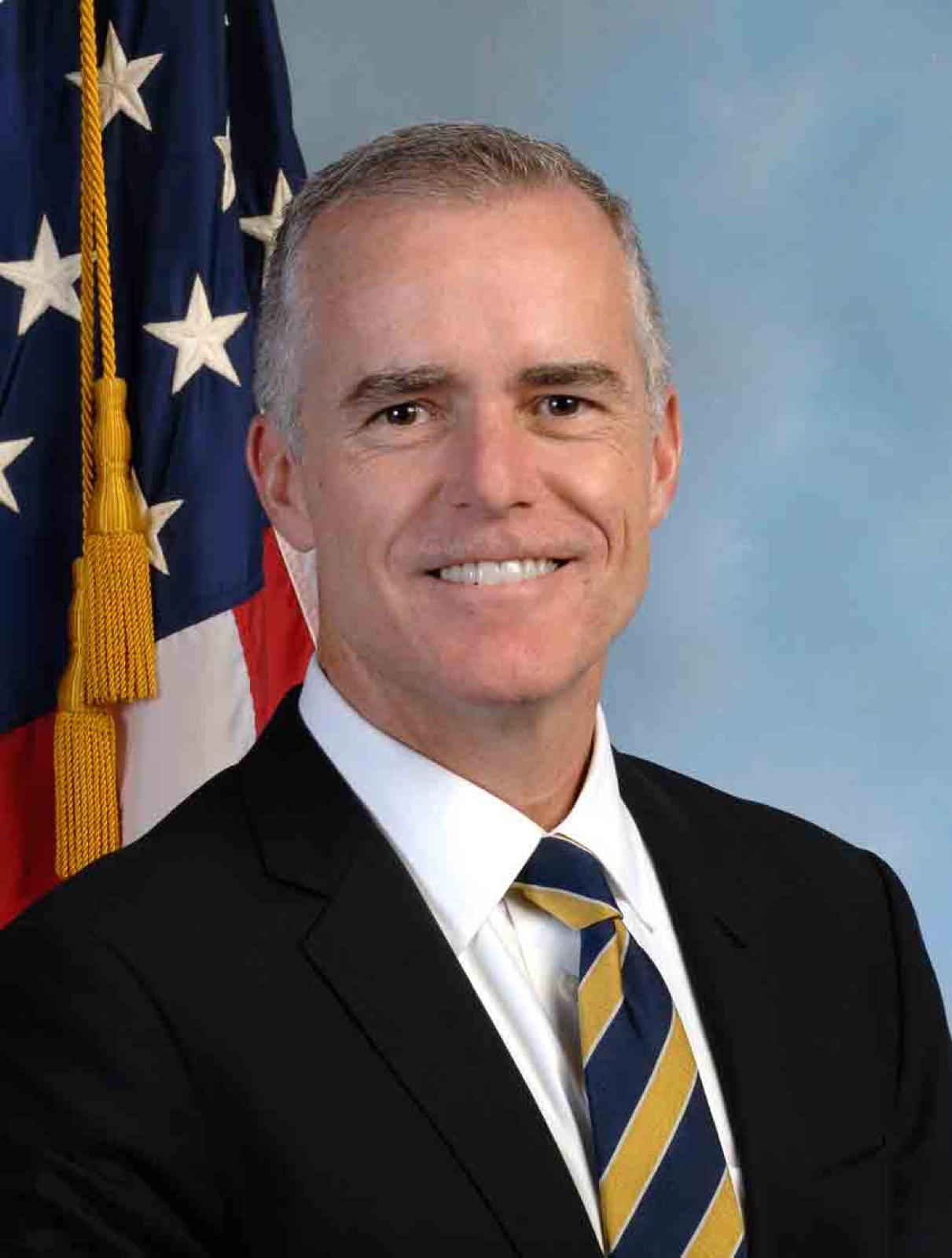
Andrew McCabe
Andrew McCabe is a former Deputy Director of the FBI who breaks down the current state of global affairs and discusses challenges ahead including ongoing wars in Ukraine and Gaza and China's cyberspying efforts.
Episode Summary
In the inaugural episode of the year, former MI6 Chief Sir Richard Dearlove convenes a panel of intelligence leaders, including co-host and former Secretary of Defense and CIA Director Leon Panetta and Andrew McCabe, former Deputy Director of the FBI. Together, they break down the current state of global affairs and discuss the challenges ahead in 2025—from ongoing wars in Ukraine and Gaza, the seismic shifts in the Middle East and what is next for Iran and Syria, and the risks to America and Western countries posed by China's cyberspying and efforts to expand its global influence. Plus, the ex-intelligence chiefs share insights on how international leaders will navigate their relationship with Donald Trump's incoming administration.
Listen & Subscribe
- Watch on YouTube
- Listen on Apple Podcasts
- Listen on Spotify
Transcript
COLD OPEN
Mccabe: Iran today is very different than Iran was in early 2017 during the first Trump administration.
Panetta: I think it is probably fair to say that it's an unpredictable situation that remains one of those flashpoints in The Middle East that could blow on us.
Mccabe: I remember Jim Comey used to describe the Chinese hackers as like the drunken policeman who breaks into your house in the middle of the night and is quickly detected in their efforts to steal what you have. I'm curious as to how we expect the internal situation in Iran itself to evolve.
INTRODUCTION
Dearlove: Welcome to One Decision. I'm your cohost, Sir Richard Dearlove, former head of Britain's MI6. Now I think you've all been keeping a close eye on events in the world like me, and we're entering a new year, and I think you'll agree that we are faced with a new chapter in global conflict and international tensions. Now today, I'm honored to be leading the discussion that we have on the podcast with my former colleagues, Leon Panetta, who is secretary of defense and CIA director, as you all know, and I cohost the program with him. And then Andrew McCabe, who was the former deputy director of the FBI. Now Leon and Andrew, welcome. Let's start with China. It's again been a big issue here in the news, in The UK. So let's look at China's role internationally and what that may mean in 2025 for the rest of the world.
CHINA
Panetta: Thank you very much. Good to be with Andy. China is a dilemma right now for The United States mainly because we're concerned about their aggressive behavior. We know what they're doing in terms of hacking and trying to penetrate our security and also the deployment of cyber. The concern that our infrastructure has been penetrated by various viruses.
Dearlove: Yeah. I think there are many dimensions to the problem. You've had the Salt Typhoon cases of cyber hacking, and then we've had all sorts of strange hacks in The UK which are traceable back to China. And the other area, of course, which is of huge concern, which the security service I think has now done a lot about, is the issue of intellectual property, particularly in research departments in universities where the Chinese in The UK at least have a big presence. And I think you have the same problem in The United States, but it does need a united policy approach so we all act in unison. I personally think the only thing the Chinese really accept or understand is strength against them and probably pretty strict reciprocity or something along those lines. Treat them like they treat us.
Panetta: Andy probably has a better sense of this, but I think one of the biggest concerns we have is their deployment of viruses into our infrastructure. And Andy, I guess I would really ask just how prevalent is that and how far have we gone to verify that that's happening?
Mccabe: Well, if we go simply by the things our intelligence chiefs and the FBI director and others have said publicly, which is always just a fraction of what they actually know, they are confident that the Chinese have established critical footholds in our critical infrastructure. And the common theory behind that is they are preparing themselves for a conflict with The United States. And the ability to negatively impact our transportation infrastructure, our financial infrastructure, our delivery of power and gas and fuel would give them a distinct advantage and cripple The United States in some ways, if we were called upon to respond to China militarily. You know, you can't project power effectively on the other side of the globe, if you can't arm those troops with food and fuel and ammunition and the things they need to get the job done. So I think they've been very adept at that. They are definitely engaged in the cyber sphere, in criminal activity, and in supporting the activity of criminal cyber groups across China, the same groups that work for the benefit of North Korea from China. And the Chinese government knows this is happening. They allow it to continue. But I think they save their most skilled, aggressive cyber activity for things that are purely in service of government objectives. That's what we see on the infrastructure side. They are far more sophisticated now than they were ten years ago. And, you know, I remember Jim Comey used to describe the Chinese hackers as like the drunken policeman who breaks into your house in the middle of the night and is quickly detected in efforts to steal what you have. They're much, much better now. They really are kind of the class of the field. That doesn't stop them from doing kind of absurd things across the rest of the spectrum, though. As you were speaking before, Leon, I was thinking about these Chinese police stations that we have now struggled with here in The United States. You actually have Chinese law enforcement and intelligence officers who are working out of official offices that they've created in The United States for the purpose of finding dissidents and people who are out of favor with the Chinese politics at home and threatening them or actually taking them back to China to face repercussions and things. These activities that if I had sent a few FBI agents over to Beijing to start knocking on doors and asking questions to people, they would still be there in prison. They do not tolerate this sort of behavior within their borders. I don't think we should tolerate it here. I think that's just one example of a way that we need to respond very forcefully and project that you're not going to get away with that sort of stuff here.
SYRIA AND THE MIDDLE EAST
Dearlove: I guess what about The Middle East? I think the key question is can HTS in Syria, I mean, the key contemporary question really, can a leopard change its spots quite so significantly as they're claiming to do? Leon, what do you think of this at the moment?
Panetta: I guess it was Rahm Emanuel, my old friend from congress who's coming back as ambassador to Japan, who said that every great crisis provides a great opportunity. And now this collapse of the Assad regime in Syria adds another crisis to everybody's concerns. And yet, you know, I really think it offers a great opportunity because it's clear that Iran's proxies have all been weakened. If that is the case, and I think there's no question that they have been weakened, is there opportunity here to try to move in a better direction in The Middle East? And one move obviously is with Syria. I recognize that this is a group we've been concerned about and some of the leadership that we've been concerned about, but at the same time, they also seem to be handling it pretty well. They're providing some governance in Syria, and they're not trying to overstep their position. And so the ability of The United States and Jordan and Qatar and Egypt and Turkey to be able to come together and provide a support system that might be able to give them the opportunity to be able to govern in Syria, I think there's a real chance that they could provide some hope to the Syrian people. They're not seeking to go after other territories. They're not seeking to go after Israel. Right now, they're basically seeking an ability to govern and secure themselves, and that's smart. At the same time, I think Israel has to be smart enough to understand that course of action for Israel right now is to try to expand the Abraham Accords and try to get Saudi Arabia to be part of that and get other Arab countries, moderate Arab countries to be part of the Abraham Accords, recognize the existence of Israel, work together in terms of both security as well as their economic ties, and also work together to determine how they can coalesce together not only to support Syria in trying to find stability, but going after Iran and going after terrorism and also trying to seek hopefully some kind of Palestinian solution in the Middle East that will allow the Palestinians the ability to also govern and secure themselves. That's the hopeful path in the Middle East.
Dearlove: Yeah. Well, I agree with you, Leon. And there are precedents, not exactly parallel, but we've had many movements which have had a terrorist aspect or strongly terrorist movement, which have mutated into political movements. You've got the ANC in South Africa. You've got the IRA in the Irish Republic, and Sinn Féin is now, you know, a fully functioning and accepted political party. So it is possible to have a process, and I just think that the situation in Syria in particular is so complex that the chances of this happening look low at the moment. But then on the other hand, I think we ought to start off with a feeling of optimism and regard it as an opportunity which might mutate into something really positive for Syria's future. I mean, Andrew, you must be also familiar with this from an investigative point of view. At what point do terrorist movements take on genuinely different character and different clothes?
Mccabe: It's a critical question for each of them. This one benefits greatly simply from comparison. They are a better alternative than the regime they just opposed. And I agree with you, Leon. I think the absence of Russian and Iranian support to the Syrian government during this revolution is extraordinary. It tells you a lot about the weaknesses that they are currently experiencing. I can't say as clearly for Russia, but Iran is never going to lose interest in Syria. They may not be in a position to defend them in the last month, but they're not going away. And Syria occupies a critical piece of real estate for them. And so I think that new regime, when you start thinking about working with that new regime, one of the motivators that you might have is having them think forward to, okay, so what happens when the Iranians have been able to take a breath and they've retrained their focus on Syria? How prepared are you to push back against that sort of malign influence? And if they decide to cast their lot with their other neighbors in the Middle East, and more broadly, the West, The United States, Turkey, all the players that we can think of, there is that possible answer to the problems they might encounter with Iran. So I think it's all about kind of working with them to build options for the future. And then let's see which of those options they start to select. That'll tell us a lot about whether they're gonna continue on this evolution away from their terrorist underpinnings and into a more functioning political movement, I think.
IRAN
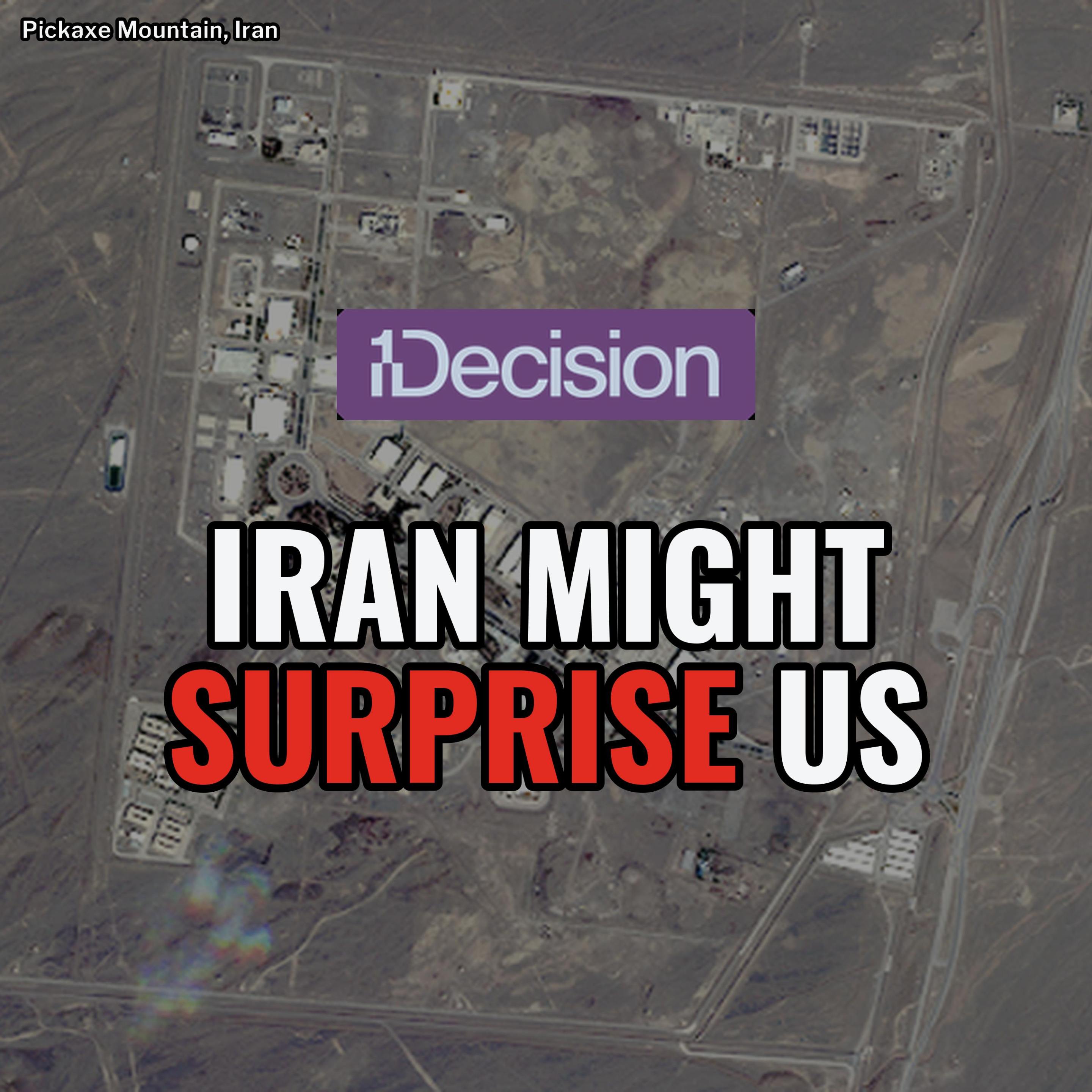
Panetta: I think the challenge of that is gonna be one that may have to be dealt with in the near future, which is the whole issue of whether or not they make the decision to go ahead with developing a nuclear weapon. Clearly, they've been enriching fuel. We know they're continuing to enrich fuel. They're probably at a stage where they're a few weeks away from developing a weapon if they decide to go ahead. And that can tell us a lot because if they really do that, I think there's a good chance then that The United States and Israel would probably take action to stop them from proceeding. On the other hand, if they operate using that as leverage and begin to try to develop a dialogue with the new administration here and with others that tries to ultimately deal with some of these challenges, that could be another one of these opportunities to try to see if we can develop an Iran that can recognize that it's going nowhere if it doesn't join the international order in some responsible way.
Dearlove: But under a Trump administration, Leon, I don't see the JCPOA coming back onto the table. It looks to me at the moment as though the theocracy in Iran must be feeling a bit fragile, let's put it like that. I mean, they are, I think, what I would describe as politically vulnerable. I'm curious as to how we expect the internal situation in Iran itself to evolve. You know, having seen the dominoes begin to fall, and let's say they've fallen pretty significantly for all the reasons you've described, I mean, this could reach into Iran itself, couldn't it?
Panetta: When dictators are deposed in some way or another, it becomes a symbol to others that they may be in trouble. And Iran in particular right now with the supreme leader and the weakness that it's shown in that region and the fact that they've lost relationship that they've had with their proxies, or certainly it's been weakened, they're in a vulnerable position right now. The difference is that the IRGC is tough, and these are hardliners. And I don't think they're going to give up easily. And so they'll put up a fight and try to make sure that Iran, no matter how it handles itself, will always continue to be disruptive in The Middle East. I think that's a reality. Will the people of Iran rise up in some way? We've always thought that could be the case, but I think because the IRGC is tough, because there are hardliners that are running Iran and continue to do that, I don't think that's gonna be so easy. So I guess the real question is gonna be whether, I mean, Iran has to make a very fundamental decision. If they decide to go ahead with some kind of nuclear weapon, I think that's the end of the regime, and they know it. Because if you have war with The United States and Israel going after you, the regime, I don't think, is gonna survive that. They recognize that. And for that reason, I think they're gonna try to probe and see whether there are some other options that might be available. Now you're right. I don't think Trump is gonna go back to the last agreement, but it doesn't mean that Trump or those he's designated are not gonna be willing to at least have a dialogue here as to what can be done to try to find a better situation in The Middle East that involves Iran. I don't know. I think it's very unpredictable right now. It's very sensitive. And I'm not quite sure that frankly all of The United States or Israel or allies in the Middle East really do understand how best to deal with Iran. I don't think they really do. I think they know how to hit back if Iran hits them. So I think it is probably fair to say that it's an unpredictable situation that remains one of those flashpoints in The Middle East that could blow on us.
Dearlove: Little Oman has a record of having, I think, quite a clever dialogue with the Iranians given their proximity. And they've played something, I think, the role of go-between. So, you know, there are definitely those links which function from time to time. I mean, Andrew, one of the problems we've had in The UK is the IRGC exercising influence through various mosques and, you know, interfering in the Iranian diaspora, which is quite extensive in The UK as it would be in The United States. I mean, do you have a problem with similar dimensions? Because it strikes me at the moment, as Leon has pointed out, the IRGC a rather crucial element in what happens with the regime in the next year or so.
Mccabe: I think that's absolutely right. And, I mean, like, Iran today is very different than Iran was in early 2017 during the first Trump administration when we walked away from the JCPOA. And I think that difference, that they're showing some weaknesses now that they didn't have then. And what sort of progress we make, I think, is dependent upon our ability to work with them and to use those weaknesses, frame them correctly in the context we're currently in. And I think that changes to some degree their options going forward. So I don't think anything's off the table at this point. It just depends on how much of an open mind the new administration brings to their interactions with Iran. As far as the influence operations, we have not seen the same level of active US-based influence operations. What we have seen historically is a great effort on part of the Iranians to bring American citizens to Iran to attend these, like, cultural conferences and things that are essentially indoctrination sessions. And so they have managed to seed influence in The United States remotely because those people all come back here at some point. But what we're seeing now from Iran and from the IRGC is a much higher degree of hostility. If you think about the targeted cyberattacks on political leaders in our last election cycle and just simply from the volume of reporting we've seen, it seems like they were pretty intensely focused on the Trump campaign and people associated with the Trump campaign. They used much more aggressive and highly evolved tactics this time by compromising the email accounts of known close advisers and associates of Donald Trump and using those accounts as their kind of way into the Trump organization and the campaign organization. And then we've heard that US intelligence has evidence of Iranian efforts to actually harm president Trump and others here in The United States. So that's a level of aggression that we really did not see ten years ago. I think personally, I think it indicates a level of desperation on their part. They probably were not looking forward to another Trump administration. It didn't go well for them the last time, but the loss of JCPOA and the assassination of Qasem Soleimani, I think they still have an axe to grind over that. But, boy, the way to avoid it was not the way they chose.
RUSSIA AND UKRAINE
Dearlove: I think not looking forward to it is an understatement. They're probably sitting extremely wide. Of course, the other issue we really do need to talk about is Russia and Ukraine. Being, for us, in Europe, such a crucial security issue, I'm not saying it's more important than China, but it does affect us in the short to medium term crucially. How do we think the Ukrainian issue now is going to play out? I mean, let me just say first, I think 2025 will probably be some sort of negotiation. But how do we envisage that coming about, and in what direction is it likely to go?
Panetta: I recognize that at some point, there is gonna be some kind of negotiations. The real question is whether Ukraine has leverage in dealing with those negotiations. So I think The United States has to make a decision here to continue working with our allies in Europe to support Ukraine, give them the support they need, give them the weapons they need in order to regain an initiative against the Russians. So there is an opportunity here to try to give Ukraine a little bit of an initiative in pushing the Russians back. And if they do, that gives them leverage to ultimately sit down and try to negotiate resolution. But they have to do that from strength. They can't do that from weakness.
Mccabe: Yeah. I agree. I think that's what they should do. Now what they will do is it'd be a very different prospect.
Dearlove: You anticipated my question. What will they do?
Mccabe: Well, if we go by what then candidate Trump said, he said many times he'd resolve it in one day. Okay, there's a significant lack of detail there. I get it. But that doesn't presuppose a very strong position for Ukraine. I don't even know. I'd be hard pressed to name one person in the transition team right now who stands out as a strong advocate for Ukraine, right? And you're absolutely right. Leverage is the thing they lack. Like, sitting down to a negotiation saying, please go home, please leave is not a very strong position. But that's basically unless we continue to support them militarily with the more aggressive weapon systems that you've seen the Biden administration deliver in the last few months or so, or authorization to use those weapons in an aggressive way, they are, you know, the Russians have time on their hands. They are locked in a static, you know, a battle of no movement. And as long as they maintain that presence in Ukraine, they'll roll into any negotiation with a stronger hand. And the question is how much support is Donald Trump and his team willing to give to democracy, to the nation fighting for its own sovereignty, for its own right of self-determination? All these things that are core to the American experience, how much are they willing to defend those concepts and these people who have been our friends for some time? That's a scary question. And I think, yeah, I can see how it's capturing the attention of many people in Europe right now because you guys are on the front line.
Dearlove: Yeah. There's a growing, I think, realization here in Europe. I've recently been in Prague. And the closer you get to the Russian border, the more people are saying, look, the Russians believe they're at war with us. Okay. They're not at war with us in the military dimension, but in every other dimension, they're conducting conflict, and they're out to do bad things. And you've seen these recent comments about sabotage, about cyber activity, all the incidents that have now been recorded and documented, mostly on the continent, but actually some in The UK. I'm thinking also of cutting undersea cables. And I think one of the problems, really, from The United States point of view, you're a long way away from this physically, not politically, but you are geographically a long way away. So maybe people in The States don't feel as strongly that they're in a state of conflict with Russia. But Russia certainly thinks differently. I mean, how does this sort of impact on you? I've been doing a lot of speaking recently in Europe to try to sensitize people to the seriousness of the situation, saying the military is only one dimension for the Russians. They look at information warfare. They look at cognitive warfare. They look at the economic circumstances, and all of these things are conflict for them. And I think it's very important to convey that message. But I guess in The States, it's not quite as urgent because you're physically a long way away. And it's more difficult to get into the Continental United States if you're pursuing Russian interests. They've got infrastructure already in place in Europe because of past history.
Mccabe: I think there's definitely a lack of focus on the threat that Russia poses to us through their activities in Ukraine. I think that one of the things the Russians did well — there are not a lot of things they did well in this conflict, but one of them was not engaging more directly with The United States in cyber attacks here in The US. Many of us felt like that was going to be part of their initial approach. They would want to stage some very aggressive cyber attacks here as a way of telegraphing, keep your involvement down, don't get in the middle of this, and they didn't. We all interpreted that as a weakness initially. I think it may have been more strategic than that because by essentially leaving us out of it, they've managed to reduce the degree of interest and alarm across the electorate here in The United States and what's happening in Europe. Yeah, you're right. It's an ocean away, an ocean and a continent away. And that's sometimes very hard politically to generate the support of everyday Americans on a constant stream of, you know, US funding and military gear going towards Ukraine. And that's the thing that's keeping Ukrainians on the battlefield. So it's a tough set of circumstances. And really, the entirety of, I think, where it ends up is now sitting in the new administration's hands. And they have to make some pretty big decisions pretty quickly.
AMERICAN LEADERSHIP AND DEFENSE
Panetta: One of the problems we've had in this country is that we have not had presidents who really have reached out to the American people and educated them with regards to the threats that we're confronting. I think we all know we're facing more flashpoints in the world today than we ever have, you know, between Russia and China and North Korea and Iran and terrorism, AI, what have you. There are just a number of threats out there. I don't think president Biden does this. I don't think president Trump ever really kind of said to the American people that, you know, there are real threats out there to our security that we have to be aware of. Now Trump is talking about building up our defense as he did in his first term, and I think one of their initial efforts is gonna be to add a lot of money to defense up front. The fact is that unless he lays some groundwork for that with the American people as to why we're doing this, the American people, for the very reasons that Andrew was talking about, which is that they really kind of have not seen these threats I just defined as a real threat to their national security and a real threat to our security. Unless that groundwork is laid in some way, it's not gonna be that easy with a country that is now $36 trillion in debt to start just throwing money around. I do think that Republicans and Democrats recognize that we do have to mobilize in this country, that we do have to strengthen ourselves in confronting all these threats that are there. But, you know, frankly, that's not gonna happen unless the American people are there, unless the American people recognize that there really are threats out there and that we have to be strong and that we have to be able to build alliances and we have to deal with these national security threats. And so until a president of The United States takes that step, I think we're always gonna be vulnerable to whether or not The United States is willing to truly provide that world leadership and build alliances like NATO and others in order to confront the series of flashpoints that threaten our security. We are at a point where leadership is gonna have to decide whether we continue to provide world leadership as we have since World War Two or whether or not we really are gonna withdraw from the rest of the world. I don't think we will. I mean, Trump talked this line in his first four years, but the reality is that his administration would not allow him to just simply withdraw from the rest of the world. And to some extent, I don't think they can afford to do that now. So I guess my hope is that push comes to shove, they recognize that The United States is gonna have to be strong, is gonna have to provide world leadership, and that we need to have our allies, if we're gonna confront the enemies that are out there.
PREDICTIONS FOR 2025
Dearlove: Are you prepared to make any predictions for 2025? I mean, not necessarily conventional ones, but, you know, black swan events, things that might worry you. Just briefly, are there one or two things that we may or haven't discussed which should be clearly in our agenda to be thinking about?
Mccabe: Well, you know, presidencies here, and I'm sure in other places as well, are defined not by what they promised on the way in, not by what they said in the campaign, but rather how they handled the events and the crisis that they didn't anticipate, but which inevitably come. And I think by that standard, until COVID, President Trump had a pretty quiet, smooth run of it in his first term. The first couple of years were not marked by any really massive international or domestic crisis that required very different thinking. Then, of course, along came COVID and everything changed. So if I'm thinking about what Leon said and really, who is the president Trump of the second term? That's what we need to figure out. Some of the indicators are not good. The fact that he may think of things very differently because he's no longer running for office. This is his last term as president. So the political reality of if I do this, then the voters will think that is probably no longer such a big factor for him. He's also now walking into this term newly emboldened by recent Supreme Court decisions that have now conferred almost impenetrable criminal immunity on presidents from this point forward. So he's picking very different people this time. You don't see so many of the old professionals from the Bush administration and Republicans from administration forward. This is, you know, the folks he's picked so far are really very diehard Trump supporters. That is the thing that you can characterize them by. The rest of their backgrounds are quite different, and I'll just say nontraditional. So that combination of things, I think we could see a different approach to crisis and to diplomacy and to dealing with partners. Whether those differences will be positive or negative, I think is really yet to be determined. So he'll have some problems to deal with. Every one of them does. Every president does. I think we could see a very different calculation on the part of president Trump in the second term.
Dearlove: Well, I can add to the fact that we're worried in Europe and in The UK. You should be. But I think we should add to that. You've got a political crisis in Germany. You've got a very weak government, which is in crisis in France. You've got not dissimilar circumstances in Spain. And in The UK, you have a new government which has not shown itself yet to be particularly competent. So we have a concatenation of extraordinary political circumstances. And, you know, my concern is how that plays out in the face of the crises we've discussed over the next, let's say, eighteen months. Anyway, gentlemen, thank you very much. I think it's a fascinating discussion, and I'm sure that our listeners to the podcast will find much in that to ponder on even if we can't end on a great note of optimism.
Mccabe: Thanks so much for having me on again. It's always a pleasure to talk to you, gentlemen.
Dearlove: Thanks for listening to One Decision. If you like this episode, you can listen to a previous one which we recorded with The Philippines' foreign secretary. Do you think The US would come to the defense of The Philippines? Of course, I believe it. Do you think China believes it? Perhaps. And Taiwan's representative to The United States. TAIWAN REP [32:34] Dictators are not rational. They'll do whatever they think is right. They don't care about people's well-being. They don't care about people dying. They just think what's best for them or themselves. And that covers how Asian countries are, of course, dealing with growing threats across their region.
Dearlove: And to unlock more exclusive content, get timely updates on crucial global events from the podcast, and listen in on meaningful conversations with thought leaders, be sure to check out 1decision.com. I'm Sir Richard Dearlove, former chief of MI6. Thanks for listening to our podcast.