Episode Info
- Season27
- Episode21
Hosted by Christina Ruffini and Sir Richard Dearlove
Guest
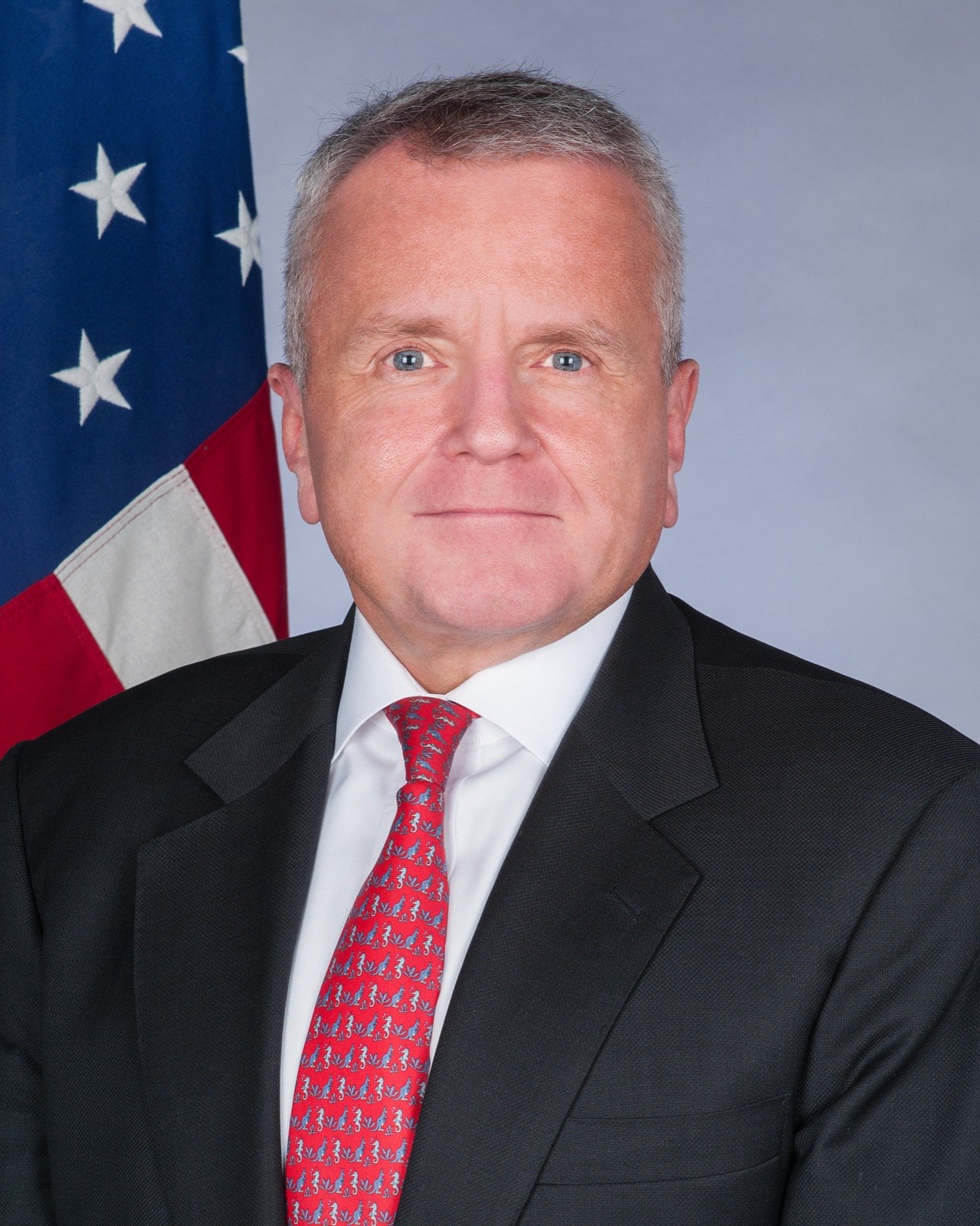
Ambassador John Sullivan
Ambassador John Sullivan is a former Deputy Secretary of State and U.S. Ambassador to Russia during the Trump and Biden presidential administrations.
Episode Summary
In this week's episode of One Decision, hosts Christina Ruffini and Leon Panetta, former United States Secretary of Defense and former CIA Director, sit down with Ambassador John Sullivan. Sullivan is a former Deputy Secretary of State and served as U.S. Ambassador to Russia during the Trump and Biden presidential administrations. They discuss the reality of navigating diplomatic relations with Russia, Sullivan's experience in Moscow at the start of the war in Ukraine, and what the fall of the Syrian Assad regime could mean for Putin's grip on power. Plus, Sullivan and Panetta share an insider view of how foreign diplomats navigate life in Russia and the number one thing a spy needs to do to protect themselves under the Kremlin's watchful eye.
Listen & Subscribe
- Watch on YouTube
- Listen on Apple Podcasts
- Listen on Spotify
Transcript
COLD OPEN
Sullivan: He is committed to this war, to this special military operations in ways that it's difficult to convince Americans to believe. He will never compromise. There is no off ramp. He will achieve his war aims, denazify and demilitarize Ukraine come hell or high water. That was Ambassador John Sullivan who served as America's man in Moscow during both the Trump and Biden administrations.
INTRODUCTION
Raffini: His new memoir, Midnight in Moscow, details what it was like to be on the diplomatic frontlines during Russia's invasion of Ukraine, the detainment of Americans abroad including Paul Whelan and a whole lot of other massive global events. Welcome to One Decision. I'm your host Christina Raffini here this week with former Secretary of Defense and former Director of the CIA Leon Panetta. Today Ambassador John Sullivan gives us his perspective on what the fall of the Russian backed Syrian regime means for Putin's power and what we can expect the US Russia relationship to look like under the second Trump administration. All right, let's get started. I want to thank you both for joining us. Secretary Panetta, Ambassador Sullivan and I know each other because he's a long suffering diplomat. And when I was covering the State Department, at first, you were Deputy Secretary of State. And then as this reward for all your years of service, you got this then great gig as the ambassador to Moscow. And then just all hell broke loose. You got COVID, you got Ukraine, and you were apparently so good at handling them, they kept you on for the next administration.
INTERVIEW
Sullivan: So your punishment was staying there even longer. I've joked with my predecessors as deputy secretary, Tony Blinken and Bill Burns, that they were rewarded with seats in the cabinet as secretary of state and director of the Central Intelligence Agency, and I got sent to Siberia for my troubles as deputy secretary.
Raffini: Sometimes quite literally, it sounds like, which we'll get to on some of the visits for detained Americans. But you have, of course, now written a book called Midnight in Moscow about your time serving over there. I just wanna start with why did you wanna go to Moscow?
Sullivan: As I write in my book, I've had two presidents think that I needed my head examined because I wanted to serve and liked serving as ambassador to Russia. First president Trump thought that Mike Pompeo was trying to fire me, or there must be some other reason why someone would leave Mahogany Row at the State Department for Moscow. And I reassured him that, no, this is what I really wanted to do. And then president Biden, we were preparing for when Biden met with Putin in Geneva in June '21, we were doing a prep meeting at the White House in early June. And one of the deliverables from this summit was the two ambassadors would return to capital. So the Russian ambassador would return I was home. The Russian ambassador was in Moscow would go back to their respective embassies. And after the meeting, president Biden walked up to me and said, you know, how does it feel to be a deliverable at a presidential summit? He said, so you're looking forward to going back? I said, yes, sir. Then he looked at me and said, really? I said, no. No. I really like my job, sir. Well, I understand you wanna serve, but you like it there? Said, no. Yes, sir. I really like it there and wanna continue to serve there as your ambassador. That's two presidents, a Republican and a Democrat, thought I had a screw loose for wanting to serve in Moscow.
Raffini: I mean, Secretary Panetta, what is your experience with that government? And have you been to that embassy? Apparently, the American residence there is massive. Right?
Panetta: It is. It is. And I had the opportunity to go to Moscow with Bill Clinton when he was president. And Bill Clinton had spent some time going there when he was a student. I think he was in England at the time and was able to break away and go to Moscow. So he spent some time there. And when we went back, I've got a great picture, a photograph of president Clinton and I in Red Square, which I cherish a great deal. But it was fascinating to go with somebody like Bill Clinton because he really digs into the history of Moscow and the history of Russia. And having him is like having a tour guide going through that area. So it was a great experience for me. And then, obviously, I spent a lot of time in Moscow, when I was director of the CIA, working with my counterpart at that time and also as secretary of defense. So I spent some time there and obviously spent some time dealing with the Russians.
Raffini: I wanna ask you both because even though CIA director or chief of station and ambassador are different roles, there's a protocol you both have to follow operating there as a US. Under that kind of level of surveillance. I mean, ambassador, were you essentially following what are called Moscow rules the entire time that you were there? I know it was a little different after you got there because it was COVID and everything kind of went crazy. But, I mean, can you just talk briefly about how they prep you to go and what the level of surveillance is and might still possibly be?
Sullivan: Well, as the secretary, former director of the Central Intelligence Agency knows, it's the most intense counterintelligence environment for US diplomats, the US government anywhere in the world. So we have both a written book that constitutes classified the Moscow rules because our operating procedures differ from every other embassy, including Beijing around the world. But then there are the unofficial Moscow rules, which is just the advice that's passed down from generation to generation. By the way, the Moscow rules, I can't go into any detail, but it's a thick book. But the unofficial rules are just the advice that the station chiefs and the ambassadors and the political chiefs have passed down over generations. You know, things like there are no coincidences. The person you see behind you in the grocery store who looks like the guy who was behind you the night before at the movie theater, that's not a coincidence. That's a person who is getting close access to you. So, yeah, there are the written Moscow rules and the informal Moscow rules, and the FSB smothers the US embassy in Moscow. The directorate so called DKRO, the counterintelligence section of the FSB, it's thousands and thousands of officers, DKRO One, that's sole job is to monitor the US embassy. And it's first of all, the FSB compared, for example, to the FBI is probably 10 times or more the size. And just the number of DKRO One officers, it's, you know, just south of 10,000 that monitor every person, not just diplomats, officers, support staff, but every family member. And I know you're a dog lover. In fact, there is an unfortunate history of dogs being poisoned just to try to ruin morale at the embassy. So, yeah, it's a pretty tough place to operate.
Panetta: I think, I mean, look. The bottom line is that the guidance is to always assume that you're under surveillance and that they're watching you wherever the hell you go. That's true for the hotels you stay in. It's true for the embassy. It's true for elsewhere. It's just that they have a massive effort to try to follow you and make sure they know what you're up to and what you're doing, and you have to operate on that basis. So if you're dealing with classified information, the best thing to do in Moscow is keep your mouth shut.
Raffini: Is there a comparable apparatus in the US for the CIA or the FBI to monitor Russians? I mean, I know that we track them, but it can't possibly be to this extent, is it?
Sullivan: We try. It was a frustration for me as ambassador when they would just smother us to no end and I would call back to Washington or adhere. We had a pretty tight and good country team at the embassy. So our defense attache, we had a pretty good sense of what was going on. We kept everyone informed, I'd hear about things that the Russians were doing, where they were traveling to, how permissive the environment was for them, and how we were being smothered. And I was always complaining back to them, why are we letting them do that when look what they're doing to us? Right? So that was a frustration. But for example, we had a case where Russian nominally interior ministry police, city police, stopped one of our school buses going to the Anglo American school, safety check, taillight out, and they searched every elementary school child on the bus. And I wasn't advocating that we do that to the children of Russian diplomats in the United States, but I'd hear stories about a Russian diplomat accredited to the United Nations who was arrested for drunk driving in Washington state near a big naval station. What the heck? How could a Russian diplomat be driving near a navy base and be passed out on the side of the road pie eyed? You know, what's wrong with this picture? So those were the things that used to make my blood boil as ambassador.
Panetta: I have a great story where I was dealing with the head of my counterpart, and he was visiting us at Langley at CIA Headquarters. And up on the 7th Floor, we have a picture of a Russian spy who worked for us, who actually did some pretty good work. I can't remember the name right now. That picture sits right outside, or at that time, sat right outside my office. We went to dinner that night and he asked me, you know, what was one of the great mistakes in intelligence. And I think I referred to the failure to come to the conclusion that there were not weapons of mass destruction in Iraq at the time. And that that was a serious mistake. And I asked him the same question. I said, what was the biggest mistake you made? And he immediately said the name of that spy whose picture's on the wall. So from his point of view, the most important mistake that was made was that we were able to get a spy who really had important access into Moscow in terms of the information that we needed. So Russia, United States relationships for a very long time have involved the ability to try to spy on one another and try to get the best information because we're adversaries. And you've gotta get good intelligence. And it's not easy to get good intelligence on the Russians because it involves being able to get into sensitive positions, and that's not easy. And the same thing's true for them in our country. But believe me, those efforts do not cease. When I was CIA director, we arrested 10 Russian spies in the United States who were planted there for the sole purpose of getting access to sensitive information. That kind of game goes on almost every day.
THE ROAD TO INVASION
Raffini: Ambassador Sullivan, I wanna ask you a little bit about what it was like being there in the lead up to the invasion of Ukraine. What it was like, you know, seeing the intelligence because a lot of us, including the Ukrainians, didn't really believe it was going to happen. I'm assuming you did. And then we were just talking about there's this photo of you going into, I think it's the foreign ministry in the dead of winter with this little folder in your hands. And I remember it was the only image we had of whatever was going on. Remind me what was happening in that photo and what the back and forth was like before the invasion.
Sullivan: So to give you a sense, Christina, I'm sure Secretary Panetta will appreciate this to give you what is going through the mind of a senior US government official, senior, you know, the US ambassador to Russia. This was February 2022. War will start three weeks later. I had helped write the US response, a letter signed by secretary Blinken responding to two draft treaties that the Russians had given me in mid December, one nominally between the United States and Russia and the other between NATO and Russia. And I was carrying them to deliver them to the foreign ministry on behalf of the United States and signed by secretary Blinken, but basically on behalf of president Biden. So it's seven or 8:00 at night. It's a snowstorm. The foreign ministry is black. It's dark. And, as you and I have discussed previously, the steps, my SUV pulls up, the steps leading into the foreign ministry are just sheets of ice. I swear they watered them down to make them treacherous for me to walk up those few steps. They've got higher Moscow press or state media. There was a Wall Street Journal photographer who took the picture of me walking in, and the thought that's going through my mind is, oh, Jesus, don't let me slip and fall on my ass. That is what's going through the mind of a US diplomat as he's preparing to engage with the Russian government on the eve of the first major war on the continent of Europe since the second world war. That was what I was thinking. They had set me up to fail, and I'm sure they were a little disappointed that my hockey skills kicked in and I was able to but I did look like a very elderly person shuffling across the ice. But to bring it back to the serious purpose for which I was there, I went in expecting to have a substantive conversation with the deputy foreign minister. Lavrov wouldn't meet with me. It was the deputy foreign minister. It wasn't the usual deputy foreign minister I engaged with, Sergei Ryabkov, but it was a deputy foreign minister Grushko who had been the Russian representative to NATO, the NATO Russia Council. I expected to have a conversation with him about these topics that they had written in the draft treaties. Because as a reminder, the treaty that they'd offered was a bunch of nonstarters. Right? It was like Ukraine can never join NATO. It was things they knew that would never be agreed to. No American president, I don't care who the president was, Trump, Biden, no American president would agree to that. I expected to have a conversation about this. And in fact, I presented our letter, and I presented a courtesy copy in Russian. They spent time reading the courtesy copy in Russian and correcting our Russian grammar. And Grushko finally looked at me and said, well, I could recite my usual talking points, but it's late. I don't wanna keep you ambassador. Thank you. And I said, that was it? But I cited in my book as an example. I call it everything the Russians did from the time that Bill Burns was sent by president Biden to Moscow and met with the Russians starting on November 2 until the war started. It was sham diplomacy. It was all a show. It was a sham. It was for show other countries, not our NATO allies, not our allies in the Pacific or other partners in Europe, but the global South, Putin's dear friend in Beijing, Modi, you name it, we tried. We tried to engage in diplomacy with the United States. It was all an act. It was sham diplomacy.
Panetta: They'd schedule meetings, read from talking points, dust their hands, and say, we're done. I talked to Bill Burns about his visit there during that time, and he basically confirms exactly what you're saying that, of course, Bill had had a lot of experience there as ambassador, but he knew that they were just putting on an act and spouting the words, basically, that would make sure that we had no idea what the hell they were up to. And yet at the same time that he was having that conversation, we were getting pretty clear intelligence that the troops were actually in position and were prepared to invade.
Raffini: I'd like to stop here to quote this very intelligent movie, The Italian Job with Mark Wahlberg, where at one point they say, I never mess with mother love, mother nature, mother freaking Ukrainians. And as I was standing at the border watching these ninety pound women in their ski suits haul their dogs, their children, their suitcases,
Sullivan: walking literally thirty hours overnight in the freezing cold. I was like, you know what? If these are the kids and the wives, I would not wanna come across these guys on a battlefield. Which, again, just thought there's a famous YouTube video, and it's from, like, a day or two after the invasion starts. You may have seen it at the time. I thought it was unforgettable. I wrote about it in the book. The Russians are moving north out of Crimea into Southern Ukraine and where they accomplished more in Southern Ukraine than they did anywhere else in the country. And there the Russian paratroopers are walking in combat formation through this little village, and there's an older woman and somebody's behind her with a cell phone camera. Right? And she walks up to the lead paratroopers fully kitted out, the mask and everything, and she's swearing at him in Russian. You know, who the f are you? Why are you in my effing town? Etcetera. And you can see the look on the paratrooper's eyes, and he's looking at his colleagues like, you know, what is this? And, you know, think about it because at the same time or shortly thereafter, his colleagues in Bucha are massacring civilians. So, I mean, this woman has got guts. And she reaches into her coat, and the national flower of Ukraine is the sunflower. And she takes out a fistful of sunflowers, holds them in this paratrooper's face and says, put these in your pocket so when you're killed and buried here, something good will grow out of you. And I remember thinking, oh my gosh. I called my colleagues in. This wasn't classified, this was on YouTube. I called my colleagues in and said you gotta see this. These Russians are in for some serious opposition here.
SYRIA AND RUSSIAN OVEREXTENSION
Raffini: I also wanna ask you, and Secretary Panetta, I'm curious to get your take too, what you think of the events in Syria because, you know, Syria has been such a longtime client state of Moscow. Does it indicate that Russia has overextended itself in Ukraine, possibly in places in Africa and other spots? The fact that they couldn't back up Assad and this rebel group was essentially able to just roll through and take control of Damascus. What's your take on that?
Panetta: I think we know pretty clearly that Russia's paid a hell of a price for their effort to go into Ukraine, not only in terms of casualties that they've taken, but in addition, the impact of the economic sanctions as well that have hit Russia pretty hard. Even the fact that they had to resort to getting North Koreans to actually go in and fight for them. And to that extent, I think it was clear that they really didn't have the capability to suddenly deploy forces or whatever military reaction that Assad thought they could make, that they were just incapable of doing that, particularly with the speed with which the rebel forces were moving at that point. And once they gained that kind of momentum, add to that the fact that the Syrian forces were falling apart for a lot of different reasons. It was pretty clear that things were gonna move very fast. It obviously is an indication of the weakness of Moscow, the weakness of Iran being impacted by Israel, the weakness of Hezbollah, and others have been impacted here. And so there's no question that the adversaries that we're concerned about, and we should continue to be concerned about. Look. The one thing I learned in the intelligence arena and the defense arena is never, never, never underestimate Putin and his will to keep fighting back as he's done in Ukraine. But having said that, it's also very obvious that they're paying a hell of a price for what they're doing and that it now is being reflected in terms of their ability to be able to respond elsewhere.
Sullivan: Yeah, couldn't agree more with this. Secretary's absolutely right. And if you think about how they've handled, my experience with this extends back to early 2017 with, you know, the Russian support for Assad, particularly through their they have a large air base there. They have a naval facility on the Eastern Mediterranean, Tartus. But what's interesting is after the war in Ukraine started, I started to notice, and there was an article I saw about the Russian military presence in Syria has not only been degraded, but it's been a dumping ground for those senior officers who failed in Ukraine. You need to save face and not just be cashiered or recalled home. They've been dumping officers in Syria, senior officers, and they just did not have the wherewithal to respond as rapidly as they had been able to before to protect their client. And now they're left with giving him sanctuary in Moscow. And we'll see, I'm sure they're gonna try desperately to keep their air base and their naval station, but because it's one of the few ways they can project their power. It's difficult for them. It's interesting. I remember as a US government official learning how difficult it is for the Russians to project power, to fly aircraft around the world. When we think of all our US bases, naval stations, air force bases all around the world, that base in Syria was necessary for them, the air base, to support their operations in Libya. It's a serious loss for them if they can't keep them. But it's an example of, I've tried to make this point. I don't wanna understate, and I certainly don't wanna underestimate Putin. He is committed to this war, to this special military operations in ways that it's difficult to convince Americans to believe. He will never compromise. There is no off ramp. He will achieve his war aims, denazify and demilitarize Ukraine come hell or high water. Oh, in addition, there's a huge disparity between Ukraine and Russia, you know, in population three times the size, etcetera. But if you look at it from Putin's perspective, he's gonna defend the largest, this is a paranoid Vladimir Putin. He's gonna defend the largest landmass in the world that he says, in his mind, is surrounded by enemies, including NATO enemies. He doesn't just have a war against Ukraine. He's gotta defend against an extended massively extended border with NATO on the European continent, across the Arctic, our NORTHCOM in Canada. We border Russia to the North and the Pacific. He's got a lot that he's gotta defend. This war is a huge stress on his military and his defense industrial base in ways that I think the narrative in Washington about how Ukraine is so overwhelmingly overmatched. Yes. But understand how stressed Putin is. Syria is just the most recent example.
THE TRUMP ADMINISTRATION AND RUSSIA POLICY
Raffini: Do you think there's a way knowing, and talk a little bit about your interactions with Putin and his government, but knowing what you know about how he operates, how the government operates, and knowing what you know about incoming president Trump and how he operates. I don't know if you both saw this tweet that he sent out after Assad fell following that meeting he had at Notre Dame with Macron and then with Zelensky, who the French were able to get them all to sit down. I thought it was very telling that Trump posted on social media and he said, Russia, Russia, Russia, and basically made a statement that was critical of Russia's involvement in Syria and then kind of meandered his train of thoughts. But do you think there is any way for NATO countries, for the alliance around supporting Ukraine to get incoming president Trump on that side, given his statements coming in and giving what you know about his leadership style?
Sullivan: Yeah. When I saw that tweet, Christina, of Russia, Russia, Russia, it's what he used to say back in 2018 about what he calls the Russia hoax. Right? What he had difficulty, and this is my experience, in trying to convince him of the Russian efforts to influence disinformation, election interference, all of that, which they've been doing forever, right, back to Soviet days, but with much more effective techniques in 2016, 2024. He couldn't acknowledge the Russian attempts because he thought to do so would be an admission that he was elected only because of that. And it became an impediment to implementing a more effective Russia policy in my opinion. The Russian social media, Russian state media are abuzz about what's happened in Syria. What does it say about us, about our strength, about our leader? Russian veterans, Russian soldiers on the front lines in Ukraine who had previously served in Syria are commenting among themselves, what did we sacrifice for back then, all those comrades we lost? This is precisely the wrong moment to be trying to offer compromise to Putin, in my opinion.
Panetta: What Ukraine needs to do is in some way gain the initiative with regards to the Russians. They've gotta start pushing them back. Why do I say that? Because in the end, that's what gives them leverage in terms of their ability ultimately to sit down and negotiate some kind of resolution. They need that leverage.
Sullivan: The interconnectedness of Moscow, Beijing, Pyongyang, and Tehran, there isn't an a la carte menu of conflicts. And you can't, as president of the United States, say, well, we'll just do an El Foldo. We'll go wobbly on Ukraine. But, boy, we're gonna stand up to Tehran. And, boy, we're really gonna be tough with the PRC or little rocket man. These are all interconnected. And the notion, so first of all, what I tell my fellow Republicans is, you know, the discussion is always about should we support Ukraine? And I, you know, we hear politicians saying, I care more about the Southwestern Border of the United States than I do about the borders of Ukraine. Well, I care about the Southwestern Border of the United States as well. We can do more than one thing at the same time. But secondly, okay, you don't think Ukraine's important to you. I think the vice president-elect has said that. Okay. You don't care about Ukraine. What's your Russia policy? You gotta have a Russia policy. And if your Russia policy leads with abandoning Ukraine, then you don't have a functional Russia policy. You may write off Ukraine, but if you write off Ukraine, you have completely undermined whatever you think your policy is gonna be with respect to the Russian Federation. And if you don't have a policy with respect to the Russian Federation and you're a member of congress or a senator, what the heck have you been voting for in our defense and intelligence budgets, spending a trillion dollars a year to defend the United States against threats one A and one B, the PRC, the Russian Federation? I think reality is gonna hit some people in the face and I hope point them in the right direction, particularly with respect to Russia's war in Ukraine.
Panetta: You cannot be tough on China and weak on Russia. You just can't be. If you're weak on Russia, if you're weak in dealing with Russia, that sends a very clear message to Xi that he's gonna be much more aggressive at moving against Taiwan if we wind up unable to really help Ukraine succeed.
Raffini: Alright. Thank you, gentlemen. Two of my favorite former officials who really appreciate you both being with us today. My pleasure. Great to talk with you, mister secretary. Good to see you, Christina. Good to be with you. Thanks for listening to One Decision. Make sure to subscribe and give us a review on Apple or Spotify. If you enjoyed this conversation, check out a previous episode with Greece's special envoy to Ukraine, Ambassador Spiros Lembrydis.
Lembrydis: We have to be on the right side of history. We as Greeks know what it means to breach the sovereignty and territorial integrity of the nation. We cannot condone this tendency of autocrats, revisionists
Raffini: of history like president Putin and others, unfortunately, in our day and age. To unlock more exclusive content, get timely updates on crucial global events, and listen in on meaningful conversations with thought leaders, be sure to check out 1decision.com. I'm Christina Raffini. Thanks for listening.