Hosted by Christina Ruffini and Sir Richard Dearlove
Guest
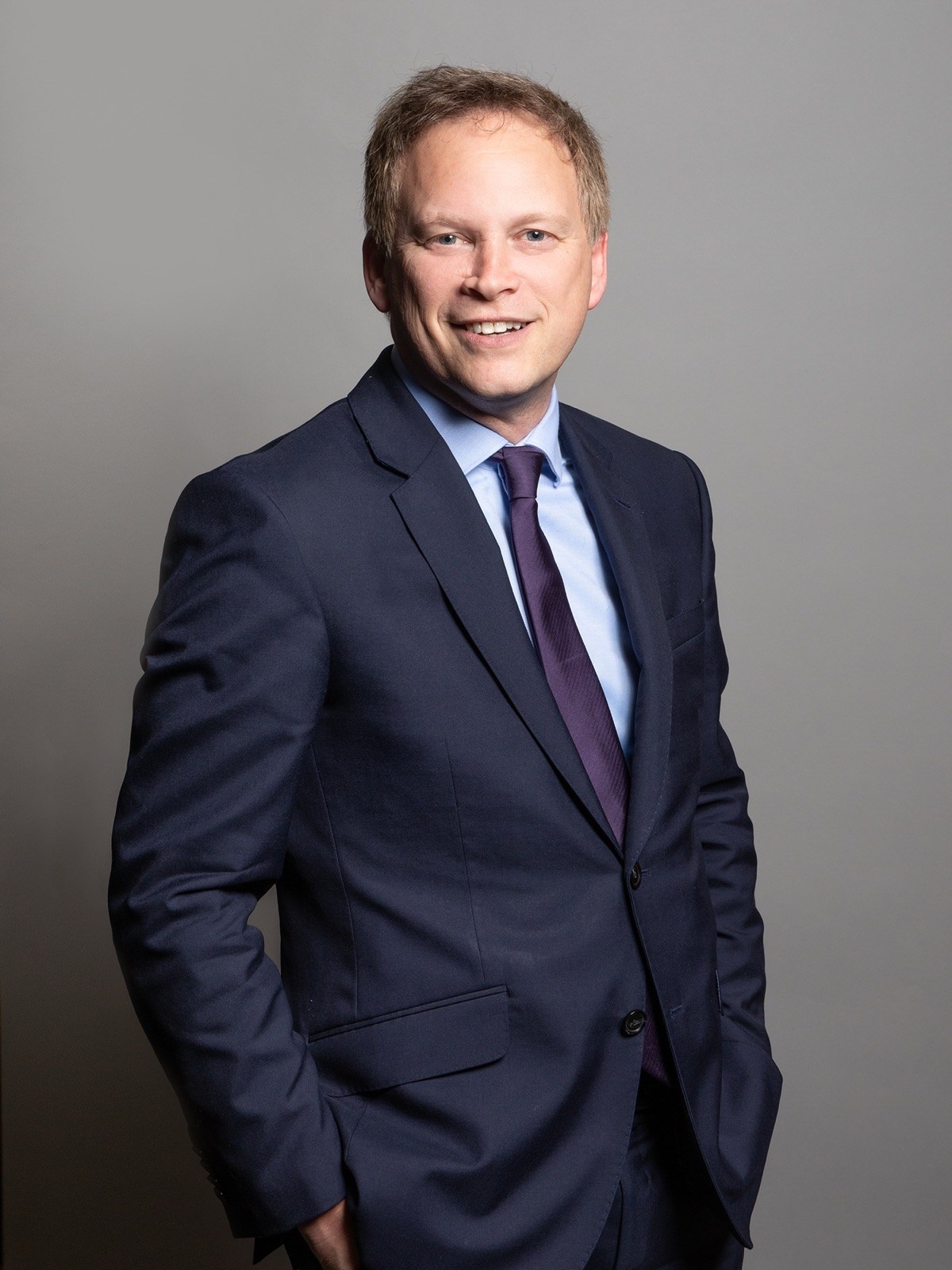
Grant Shapps
Grant Shapps is a former Defence Secretary for the United Kingdom and advocate for building European defense in the wake of the war in Ukraine. Grant Shapps discusses engagement with China and disappointment with Trump's relationship with Putin.
Episode Summary
How should the UK engage with China? In this week’s episode, journalist Kate McCann and co-host Sir Richard Dearlove, former head of Britain’s MI6, sit down with Sir Grant Shapps, former Defence Secretary for the United Kingdom. During his tenure, Shapps was an advocate for building European defense in the wake of the war in Ukraine. He gives insight into what it was like to work with China and explains why the United Kingdom should engage financially and commercially with the nation. He also shares his thoughts on President Donald Trump’s unpredictable foreign policy approaches and why he’s disappointed in Trump’s relationship with Russian President Vladimir Putin. Plus, Shapps shares his thoughts on fortifying an AI defense strategy and offers predictions for the future of foreign policy.
Episode produced by Situation Room Studios. Original music composed and produced by Leo Sidran.
Listen & Subscribe
- Watch on YouTube
- Listen on Apple Podcasts
- Listen on Spotify
Transcript
COLD OPEN
Shapps: I feel disgusted, the idea that the leader of the free world cannot tell the difference between the dictator and the country itself that has been invaded. This lack of moral clarity is completely demoralizing for the rest of the democratic world.
INTRODUCTION
Mccann: Hello and welcome to One Decision. I'm Kate McCann and I'm joined today by my co-host Sir Richard Dearlove, the former head of Britain's MI6. The voice you just heard was the UK's former defence secretary Grant Shapps. During his tenure, Shapps advocated for stronger European defence, especially in the face of the growing war in Ukraine. Most recently, he's been given a knighthood by the former Prime Minister Rishi Sunak in the resignation honours list. He joins Sir Richard and I to discuss some of the biggest decisions he made as defence secretary and in other key roles too. He tells us he's disgusted by Donald Trump's behavior towards Russia and about the Chinese companies he removed from key UK infrastructure. So Grant Shapps, Sir Grant Shapps, we should start with congratulations. Thank you very much. Join the club. Oh, so it's a great club to be in, I'm privileged. As you know, the podcast is called One Decision, and we want to explore some of the decisions that you made during your time in government, because you held a number of key positions which are particularly relevant at the moment. You were the Defence Secretary, but you were also involved in net zero, in energy security, and also in infrastructure and transport. So given how much China is dominating coverage at the moment and tariffs and questions about the global economy and security, we thought we would start there. Huge amounts of the British state is owned by Chinese companies. I mean, we've got water companies, we've got, I mean, you know about nuclear power because you were part of the team in the Tory government that bought China out of investment in nuclear.
INTERVIEW
Shapps: It is very difficult to do any of this without the involvement of China. China's a big factor here. And you're right, actually, pulled them out of an investment in nuclear power at Sizewell, that's true. However, having said that, having been pretty tough on China, not somebody who thinks that we don't live in, we live on the same planet. China have money to invest. We shouldn't always think every time they invest, it's therefore fantastic for them and bad for us. I'm very happy to have international investment in Britain, you can't have it in the critical bits of your infrastructure, like your chip manufacturer or your energy production, where if, you know, something happened, they could literally bring you to a standstill, that clearly cannot happen. So, we need to develop our relationship with China. And I'm not a China hawk. Some of my colleagues are and were, and some people will have very significant concerns. We should always be eyes wide open. They're a single party state. I mean, they have one purpose in life, and that is to remain in power. That is it, right? That is the only thing that drives them. What we should really be doing is try to be investing ourselves more in China, make it more bilateral. And I think you do have to have a certain degree of bilateral relations in order to do that. I saw, for example, in the last week, the chief of the defense staff who served with me has been to China. I think it's a good idea. I don't see a problem with having communications. And I do think that what we need to get to is them allowing us more access to their markets. But we need reciprocity basically, and we don't have reciprocity with China.
Dearlove: And I absolutely agree that it's better to talk to them and you can't avoid it in this complex world. And it isn't the Cold War because you've got intertwined economies. Say we have to work with them but we need to have a consistent government policy that is sort of subscribed to by every government that understands how to draw the line between CNI, critical national infrastructure and other stuff which isn't sensitive.
Shapps: And it is tricky because I was given knife edge decisions essentially on things like that.
Mccann: How was that decision made? I mean, was that a decision that you came to easily? Was there any opposition to you making that decision?
Shapps: First of all, not an easy decision to make. And you're given a whole load of advice and what they call remediation. So, you might be able to say, well, we're happy for them to be there, but we want a board seat or several board seats or the right to inspect or what have you, and a whole series of different sort of approaches to de-risking it were presented to me as the Secretary of State. I was business secretary at the time. And in the end, I came to the conclusion personally, but based on the evidence that I saw, that there was no single way to do that and that we needed to remove China retrospectively from ownership of that particular factory, and that that's what's happened. But as with all big decisions, and the podcast is one decision, of course, we make millions of decisions in our lives and sometimes very big ones. And when we do, you can only ever do it by weighing the probabilities and looking at the facts.
Mccann: How much, Sir Richard, would the security services be involved in a decision like what's happening at the moment in the steel sector when it comes to talking about Jingye companies that, I mean, there's allegations of sabotage by the Chinese state.
Dearlove: It depends how serious those accusations are and whether, you know, there's a dimension to it that requires security service investigation. I mean, I was a little bit surprised when I saw that aspect in the press because I would have thought it's more an economic decision to do with critical national infrastructure, which does have a national security dimension, but it doesn't necessarily involve either my former service or the security service unless there's something that has occurred in the past to make people go in that direction.
Shapps: I can shed a bit of light on it because I think either as business or energy secretary, I actually had personal negotiations with the company behind it, with the CEO of the Chinese company behind it. And I can confirm I had no briefings whatsoever from the security service in doing so. I think when, you know, one or two people have gone out and said they're 100% certain that this is the, I mean, I don't think you can be 100% certain. Is it true that China have a policy of subsidizing and dumping cheaply and therefore damaging those businesses, steel businesses or other businesses in the rest of the world? Yes, undoubtedly. On the other hand, were they deliberately putting up a front company in order to deliberately lose money?
Dearlove: I very, very much doubt it. It isn't sort of traditional security service territory. It would be more what I would have thought of in the past as Board of Trade, and it would be a purely commercial issue and looked at through that optic.
Mccann: Why do you, I mean, you had negotiations with the company at the time. What do you think drove them to make that investment? Because they took the company over in 2020. It wasn't in a good position then. It was clear the direction of travel from this government was going to be net zero, and that we were going to be closing down, not opening up blast furnaces.
Shapps: Well, remember what happened subsequently was Ukraine. And Ukraine pushed the cost of their primary input energy through the roof. Energy is the biggest single component to whether you hit profitability or not as a steel manufacturer, and the energy costs just exploded. Now, if you are in China or elsewhere, you're still buying cheap imported oil and gas energy. So, actually, it furthered the competitive disadvantage and advantage elsewhere. So, I mean, they couldn't have known about that. It didn't happen until two years afterwards. By the time I was in contact with them, the Ukraine invasion had taken place. And it's quite clear the energy costs were making that business extremely unprofitable. And this is why I don't buy the conspiracy theory about it. I mean, there might be terrible owners, and it might be absolutely right to remove them. And it almost certainly is in our national interest to have a steel industry. We'd be not just the only G7, but the only G20 country not to have its own steel manufacturing. But the idea that, you know, this is all some very sophisticated plot by the Communist Party, much as I dislike the Communist Party, I want to believe it, I don't.
Mccann: Do you think the government, this government, but previous ones, have been clear enough about areas where China should be allowed to invest and where China should not be allowed to invest?
Shapps: No, I think the policy is zigzagged for a long time. So remember the golden era, George Osborne, David Cameron, and we thought maybe they were all coming into the World Trade Organization. They'd already come in, and maybe we can make them more likely to be in some way sort of free trade and democratic and what have you. I mean, they did become more free trade. The trouble is they carried on stealing the IP, intellectual property, and then we went almost to the other extreme at different times. You're booting out Huawei and what have you. This government's trying to get closer, then quickly discovered with this particular issue that we've been discussing of the steel, that it's not quite so straightforward. And the Chinese regime is very, very sensitive to criticism. The problem if you are a dictatorship, which they are, is you cannot stand any kind of criticism, even though it might be quite minor, in honor of your minor corner of the media.
Dearlove: But no, they don't like it at all. And so, this will be causing tensions, just that there's been criticism in part. But you refer back to what you called a golden era. I must say, I thought it was more a naive era because of the enthusiasm in pursuing a commercial relationship across the board. A lot of the people who were driving that have changed their minds about it now. Not the sort of basic fact of investment in China, but exactly how it's done, where it's done and where the borders are.
Shapps: And I mean, Huawei was a bit of a disaster really because we got ourselves in a pretty outlier position if you compare with the Australians and the Americans, for example. And I think with China, just the overall strategy ought to be, and this is where the West needs the leadership that it doesn't have right now, would be that all countries go to China and say, we are really keen to trade. We'd love to have your investment, but we've got to be able to trade with you and invest in you as well. And the one way relationship, which was kind of okay when China was still coming up, needs to end. And of course, that's the difference. Back in 2010, 2012, you know, the golden era, I was in cabinet at the time, but we didn't talk about China as being on a level superpower. And so the interesting thing now is with these restrictions, the tariffs, which Trump may or may not put on, but with that, this could cause massive damage to the Chinese economy, of course, it's the point of it. And if China can't sustain a five plus percent growth rate a year, then the population may get pretty restless. So the lovely thing about a constitutional democracy like the United Kingdom is, I don't know, just got knighthoods and I was checking it up this weekend. It goes back to the 1300s. Even if you're listening in America, you've got a couple hundred, 250 years of democracy. So, we have really deep institutions, but I don't think the Communist Party has that because they took power. Eventually that power can look strong, but become brittle. And so I'm not sure they'll be around in, say, that 1700 year.
Dearlove: I think that's exactly correct because there's such a brittleness. They've got no mechanism really for handling political change. So you could sit here now and say well okay, what's gonna happen after Xi Jinping? I mean whatever happens it's gonna be chaotic because there is no solution. I mean we, despite our chaos, democracy you know delivers continuity in its own way.
Shapps: Well, it does. And I think, you know, based in Russia and China, but China in particular, we sit there assuming China's become more powerful, more dominant, but it's not like that.
Mccann: Well, I'm really interested that you said something earlier about there needs to be global leadership, but it doesn't exist at the moment. I'm taking from that that you're talking about America. Is that what you mean?
Shapps: Yes. America is shrinking from global leadership by any possible measure, and I'll give you some really simple examples. When you decide that you are no longer, and you have lots of arguments about how international aid is spent, I was also an international aid minister at different times, and I saw the good and the bad of it. But when you decide that we're no longer going to be involved in this part of the world, that means that you are displaced and replaced, and in this case, often by China. You literally shrink your world influence when you decide you're going to turn your back on Europe. Now I'm just as critical as actually Trump is about Europe's inability to look after itself. I can't think for the life of me whilst why Americans listening to this should be paying their taxpayer dollar for Europe not to invest enough in its own defense. Disgraceful. But I say that at least in the comfort of being the biggest spender in NATO, the United Kingdom, outside of the US, but still not enough. Again, if you just do it in a way where you simply say, well, okay, now we're gonna walk away. The danger is that even in Europe, you'll get countries which will look elsewhere, and there are European countries. There are European countries in the EU that are looking to Russia as an alternative source of power. But if we're not careful, then not least because America's making it harder to trade in a bit, then people start trading in another currency, you no longer are, you're not the reserve. And you've withdrawn from the world in another way. And I think all of this is missing leadership.
Dearlove: Most of us have not experienced American isolationism. I mean, it has always been alive and well. It hasn't necessarily been pronounced. When I worked and lived in the States, part of my career was in Washington, DC. Even during that period there were isolationists, for example, in the American intelligence community. You came across them. Trump really stands in that tradition. And I mean, my prediction is that this is a wave, you know, which will crest. But it just depends, you know, how long it goes on for.
Mccann: When you were Defence Secretary, did you sense this change happening even then? Different administration.
Shapps: There was a part of me that felt that that administration, so I'm talking about the Biden administration, although its heart was very much in the right place, Biden's, you know, post World War II, that very much postwar settlement in his mind, was also extraordinarily, in my view, overcautious about the way that he used America's power. And I'll give you one example of this, which would be in Ukraine. Unlike this president, Trump, Biden did want to help in Ukraine and did want to, in my view, do the right thing, but was very cautious about this idea that somehow if he acted, it would start World War III, which is simply not true.
Mccann: Give us the insight into that, because we won't have participated in those, obviously, those discussions. I was on planes with prime ministers desperately trying to get you to tell us what was happening. The debate at the time was about long range missiles, and there was a sense that America was hesitating. What was going on in the room? Where was the, you know, what were they saying out loud to you?
Shapps: Biden, as I sort of, you know, the horrors of war still close enough to his kind of DNA, was very concerned that somehow this would spark a third world war. That is never going to be likely in the case of Putin and Ukraine. And the reason for that is Putin simply would not take on a united NATO. And the sad thing about the current stature of the US position is it makes it more likely that he'd think it might be worth having a go. But a united NATO way outranks the kind of, actually, by comparison, very poor and poorly equipped Red Army. Biden, though, was nervous that he might. And Biden held back in really critical areas, for example, long range missiles, ATACMS, they were called. And this is where, in fact, British leadership was absolutely paramount in actually convincing the French, the Italians, you know, if you wanted to talk about it, the Americans in particular, to actually get on and use those weapons in the most effective way. And, you know, as a result, there is no Black Sea fleet that sails in the Black Sea right now. There was enormous amount of British leadership in ways that I'll probably have to wait thirty years to talk about in that period. And specifically, there was a time, which I can talk about, I went to Capitol Hill and to the White House. The White House still very cautious. On Capitol Hill, I found the leaders of what they call the four corners, the defense and the foreign affairs committees in both the houses, all of which happened to be led by Republicans, which I thought was extremely interesting, explained the weight that we were carrying at that particular point with regard to long range missiles usage in Ukraine, and convinced them to write to the president in what was in fact an open letter but little notice which criticized the president heavily for not backing its allies. A week later, the president joined in for the first time with long range ATACMS. So it required a good deal of persuasion of the US system, but interestingly, via Republicans to get the democratic president to join.
Dearlove: Just another concern as well. I mean, this is a question, I'm not asserting that there necessarily was, that there was a worry in the Biden administration that if the West was too assertive and that Russia really, let's say, was defeated, there was this problem of destabilizing Russia, which would have been a worse problem than a war in Ukraine. I mean, did you ever encounter that argument?
Shapps: Yes, many times. But in the end, all anybody needs Putin to do is get the hell out of a democratic neighboring country. And just, I have put this on record. It disgusts me. I feel disgusted. The idea that the leader of the free world cannot tell the difference between the dictator who locks up and murders his opponents and invades innocent democratic countries and the country itself that has been invaded. This lack of moral clarity is completely demoralizing for the rest of the democratic world. And when I say lack of leadership, that is what I mean.
Mccann: And of course, in the wake of the attack in Sumy, which has killed many, many civilians, Donald Trump, who we're talking about here, has commented overnight that he believed it was a mistake.
Shapps: Yeah. I mean, it's a sort of weasel language. I mean, we used to hear it from the IRA. I mean, it's appalling to hear this sort of thing. It's appalling not to be able to condemn it properly. I don't know what hold, well, I think I do know what hold Putin may have, but, I mean, it is not right. But going back to the original question with Biden, no one is saying Russia and its people decide who rules them, I'm afraid not very democratically anymore. The objection is being in a free and democratic country, being in Ukraine. So he only needs to pull back out of Ukraine, and that would have been it. And this idea now that we appease Putin, even if you are the Trump White House, surely you must understand that if you let one dictator get away with it, what do you think will happen when another dictator walks in to a neighboring state or one maybe just over the water and takes it over. Do you think that people will believe the West when we say you can't do that? So you're making the one thing you don't want, and the one thing I believe about Trump is he doesn't want China to walk into Taiwan. You're making the one thing you don't want far more likely. America, of all countries, rehabilitating a Russian dictator. I mean, it is really quite extraordinary.
Mccann: I wonder how you feel now about your time as Defence Secretary. You're angry, but I can see how emotional you are talking about Ukraine, talking about the war in Ukraine. How do you sum up that time from a personal perspective? Are you proud of what we did as a country? Do you think we could have done more when you look back on it? How do you feel about it?
Shapps: I think you can always do more. I think that is true. But we did more than anyone else, and particularly in the early days. So Boris Johnson is completely underestimated, I think, as a leader in this regard. I think there were two amazing things that Boris did. One was actually force us to get a vaccine before anyone else in the world that was usable and started vaccinating this country and got us out of lockdown before any other country. That was one. And two, I thought his leadership in Ukraine was absolutely exceptional. There are squares named after him. There are, when you go to Ukraine, there are street stalls that sell flags, which are actually a mishmash of the Ukrainian flag and the Union Jack. I mean, they're actually sold on the street corners. People really appreciate what we did. Now, could we do more? Could we have done more? Of course, there's always something that we didn't think of and we should have been doing. But I know, including from my own time, in ways that, as I say, we can't always be entirely clear about at this stage. But as Defence Secretary, I think the other things for me was 2.5% of our GDP spent on defence, not enough, but it was something that I managed to achieve.
Dearlove: How high do you think we should actually go now on defence spending? I mean, 2.5% is good, but one has the feeling it's not really good enough taking a longer term view.
Shapps: About 4%, 4.5% would be appropriate at this stage. And we can't do that on our own. We also need other European countries to join in. But it is at around that level, 4%, 4.5. And the main reason for that is not because we need to spend that much just in order to deter Russia in particular and maybe other adversaries over time. The main reason we need to do that is if it is the case that we can no longer rely on the United States as our closest ally in this, then we need to have a level that more than compensates for what they're doing, or at least compensates for it.
Dearlove: But would something like an Anglo-French nuclear program be a real possibility? I mean, I don't personally think the Americans are gonna withdraw the nuclear umbrella from Europe. But, I mean, it's something that people have to at least think about and discuss. So it's quite interesting that someone like Merz has already said, well, maybe, you know, we should fall back on someone. There's been another argument that we should have sub-strategic nuclear program, i.e., you know, we should develop battlefield nukes.
Shapps: On the first point, I found that whole conversation extraordinary, but most people won't know this. But in Europe, the only nuclear umbrella outside of the United States themselves, actually protecting Europe, is actually the United Kingdom. I know. And the United Kingdom have always, always committed our nuclear defense to every single country in NATO. So Europe is covered by British nuclear weapons. So when I started to hear Merz, the new German chancellor to be, talk about this, and newspapers blindly copy it, I was pointing out, actually, we already provide exactly the umbrella they're asking for. I thought that gave us an opportunity which is we spend our defense budget, a large chunk of it, on nuclear defense. It wouldn't be unreasonable to be able to say to, I think, other countries covered by that umbrella, look, we're doing that bit. You go off and do these other things and by the way, we should recognize our contribution in exactly the same way as Trump is not unreasonably expecting Europe to recognize America's contribution. Britain should be saying that to Europe. And then on your second point, what's often called tactical nuclear weapons. This is the idea that perhaps you strap them to aircraft and could deliver a tactical nuclear strike rather than, you know, we use Tridents and they would cause mass destruction, wipe out entire cities. Obviously, no one wants to ever be in a position to drop a nuclear weapon. But, yes, I do think that we ought to join a small group of European countries, and there are some others, Italy and others, who are able to strap nuclear weapons to their F-35s, for example, to tactically deliver if they had to. Again, all in the spirit of deterrence. I think, actually, and I say this with reasonable cause, relying on a single delivery mechanism, which is what the United Kingdom does with our submarines and Trident sparring from them, is actually a poor solution. We've managed to patrol the seas every year for fifty-seven years, I think it is now, twenty-four hours a day, but it would be better to have backup solutions as well. And it would be relatively inexpensive to do.
Mccann: Can you think of a time during your time in office when a weapon like that would have been appropriate and would have been deployable? No. Can you think of one in any context in the current climate?
Shapps: No, but I can, if you ask the question slightly differently, explain why they're invaluable. I took a decision ten days into being Defence Secretary that I would not have been able to take in the direction I took it if I didn't think we were a nuclear armed power. So I was able to factor in our ability to defend ourselves in taking a non-nuclear decision. And I think that in itself is the value, one of the values of having nuclear weapons. But I can say that it was for enormous good. I mean, for enormous good. If you believe in freedom and democracy and Western way of life, that decision, which, as I say, was a very, very tough decision, and I would not have made it in the direction I made it if I didn't know that we were able to defend ourselves.
Mccann: Do you think the UK could potentially be the sort of a power base for development of drones? I mean, clearly Ukraine is developing at speed and—
Shapps: Oh, no, no, no. To preempt it, we already are. No country put more into drones, no country than the UK. So, I did a package which was £350,000,000 alone into that and a lot of the drones that you see in the Ukraine conflict, in the Ukraine news, are actually British involvement, British inventive. I think that's one of the big changes in the last two or three years. We went from nothing, pretty much nothing, or very little at the beginning of the Ukraine war back in February '22, to now probably being one of the, if not the, leaders in drone technology. It's been extraordinary. But, so, a lot of this stuff has happened in cooperation with our Ukrainian friends, and a lot of the time, it's not recognized as a sort of British achievement.
Dearlove: But they get things like that off the workbench and stick them straight on the battlefield. I mean, the problem in the past is you couldn't test them at that speed, but you can actually test them in conflict conditions and adapt and develop.
Shapps: What's even more incredible is they will fly a drone and an hour later in Wales or something, a small drone company will be amending the algorithm or the AI to make it fly slightly differently.
Mccann: You mentioned AI, it brings us to the final point really, I suppose, we wanted to touch on with you, which is AI and technology and some of the risks. We talked about drones and how effective they can be, but there are some concerns about technology and AI especially when it comes to the place where we started this conversation, China. And especially in things like electric vehicles and other technology that China is heavily involved in. During your time, were you aware enough, do you think, of the risks involved with that kind of technology? Do you think the current government is aware enough?
Shapps: I noticed in government that I wasn't really very focused on it until I went to defence, at which point I was extraordinarily focused on it. And I think retrospectively, I wish I'd had a greater focus, I think the whole country should have done, on AI earlier. Are we aware enough of it? No, probably not, I think, is the answer. Not just AI, I mean, the whole kind of tech stack, everything about it, and what an adversary who wants to harm you could therefore do. But I do know, not through AI, but I do know in energy, for example, I would worry about battery storage with the opportunity for someone who didn't have the country's best interests at heart to be turned against us or turned off. And so, you know, that's not an AI function, but there's certainly a degree of understanding, but I suspect nowhere near where it ought to be, eyes wide open.
Mccann: Why don't we listen to a spy chief on this?
Dearlove: Well, yeah, the problem is it's not an immediate problem. I mean, it's something that would develop if we're really suddenly in a global confrontation with China, let's say, over Taiwan or something. Then if we've built a world which has too many cellular modules in it, whether they're in your domestic fridge or they're in your electric Chinese vehicle or whether they're in your windmill out in the North Sea, I mean they can be reprogrammed.
Shapps: Just to do that, would they have to be programmed by, would they have to have sort of an internet connection or how would, would they realistically be able to do that?
Dearlove: We have had that case of a government car being eavesdropped. And I mean, I think that's a proven case without the details being fully published. I mean, I only know about it from the details that have been published, but I mean the security service was dealing with that. So the trouble is that there's a theoretical threat, an actual threat. The government is alert to this now because there have been enough people banging on about it.
Shapps: What is now in place, which never used to be, is only a couple of years old, is a National Security and Investment Act, which is the act that I used to remove a Chinese company from Newport Wafer Fab, but also is used in a whole range of much less celebrated cases in real time, and ministers look at all the time. So, there are now some facilities. I think it's very, very good that people go into all of these relations with eyes wide open.
Mccann: You bring us nicely to the close, and we like to close this podcast with a prediction, not from either of us, but from our guests. What would your prediction be? I mean, you've got plenty of different conflicts and avenues to choose from. What would your prediction be for the coming months, coming year?
Shapps: So, I think that because, as the US President's own press team like to say, he is the most consequential president that they've been in the, you know, I don't know, ever in the twenty-first century or something, I don't know, I think that's actually true, he is, although not for the reasons that they like to say it. And the unpredictability of his behavior could mean, this is just a guess, but it could mean that the country that most loses out is in fact not China or the rest of the West allies and the rest, but actually the United States itself. Because, as we've seen in our own experiment, we're doing very radical but poorly thought through things in the past. These things often don't end as you expect them to do. And so I think my lead prediction, partly because it's so unpredictable, is that the one country that was trying to make itself great again, although it was already great in the first place and the wealthiest country in the history of humankind, in fact makes itself rather poorer inadvertently.
Mccann: I think that would be a great shame. Sir Grant Shapps, thank you very much for joining us. Thank you. Great to have you. That's it for this week's episode of One Decision. We hope you enjoyed it. A special thank you to Sir Grant Shapps, the UK's former Defence Secretary for joining us for that conversation. And if you did enjoy it, be sure to check out previous episodes, including the one we made with fellow former defense secretary, Penny Mordaunt.
Mordaunt: You need to trust the Ukrainians to defend themselves in the best way they can. It is not right in my view that you tie their hands in their ability to prevent strikes being taken against their civilian population. You deny them the ability to stop that happening.
Mccann: As always, for more exclusive content, be sure to check out our website, 1decision.com, and our YouTube page. I'm Kate McCann, thanks for listening.