Hosted by Christina Ruffini and Sir Richard Dearlove
Guests
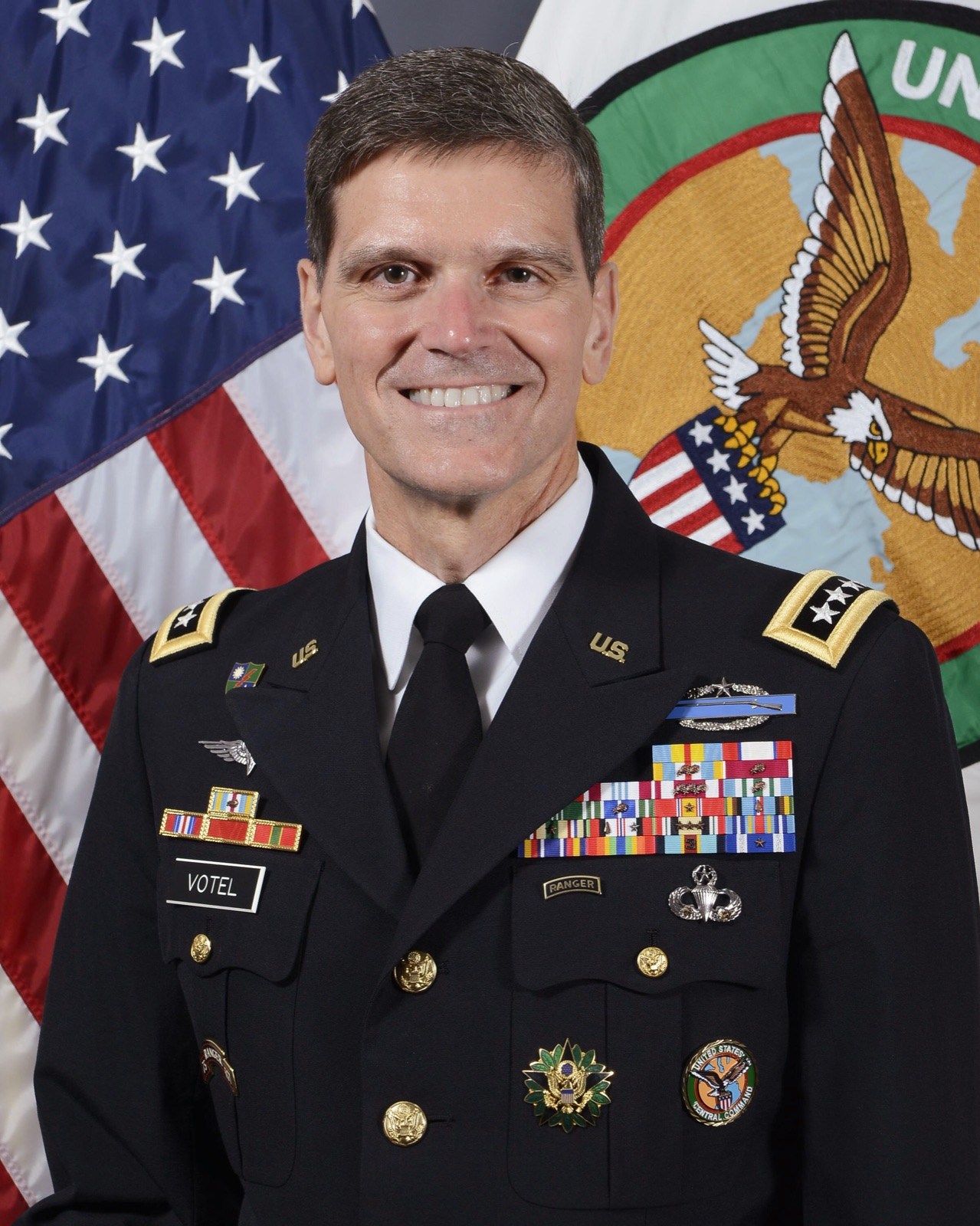
Gen. Joseph Votel
Gen. Joseph Votel is a former CENTCOM Commander.
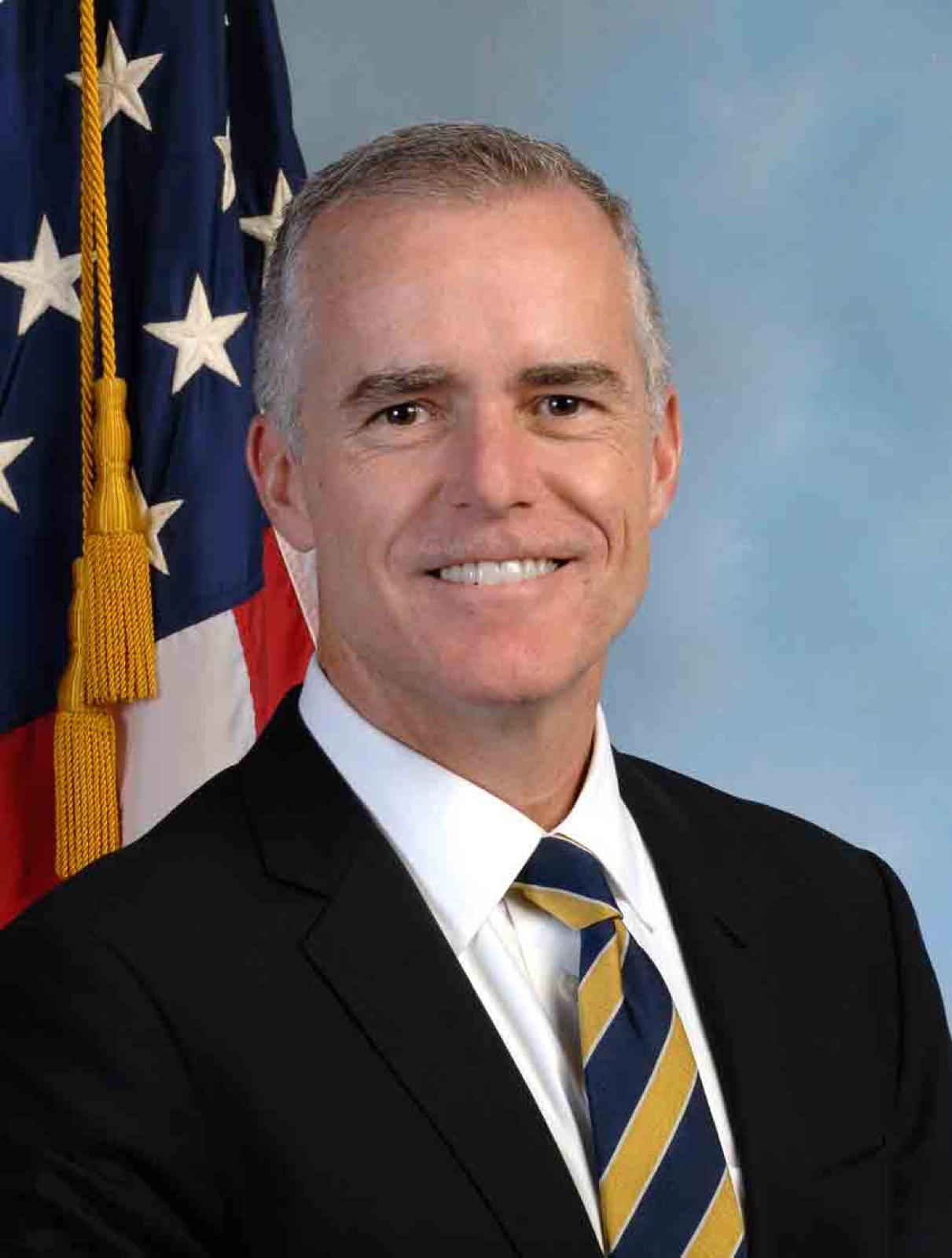
Andrew McCabe
Andrew McCabe is a former Deputy Director of the FBI.
Episode Summary
This week, Sir Richard Dearlove, One Decision’s resident spymaster and former Chief of MI6, sits down for our annual Spy Chiefs roundtable. Tune into this wide-ranging conversation with distinguished former intelligence leaders as they examine global threats and hard choices facing Western governments. Joining Sir Richard are former CENTCOM Commander Gen. Joseph Votel and Andrew McCabe, former Deputy Director of the FBI. Together, they explore the challenges posed by Russia and China’s alliance of convenience, quantum computing, and artificial intelligence, and address the disastrous impact of AI-created disinformation and deepfakes. The intelligence leaders also discuss Chinese espionage across Europe, cyber threats to critical infrastructure, and the growing vulnerability of these systems, and raise legal and constitutional concerns around the conflict in Venezuela. The episode ends with predictions for 2026, including potential regime changes in the Middle East and what's next for the war in Ukraine.
Episode produced by Situation Room Studios. Original music composed and produced by Leo Sidran.
Listen & Subscribe
- Watch on YouTube
- Listen on Apple Podcasts
- Listen on Spotify
Transcript
COLD OPEN
Mccabe: The impact of these sorts of deepfakes and AI driven disinformation, the the follow on of that is people just begin to lose faith in anything.
Dearlove: The Chinese, you know, favor a policy which, as it were, keeps The United States preoccupied with a problem with Russia and, you know, gives China more options in pursuing its own global agenda. But for many of us, they don't seem to be natural allies, but they're certainly allies of convenience.
Votel: The the administration is trying to send a very clear message, and I think their intention would be for the Maduro to go away. Now whether that takes place or not, we will see.
INTRODUCTION
Dearlove: Welcome to One Decision. I'm Sir Richard Dearlove, host of the One Decision Podcast. This is the time of the year when we assemble a few former distinguished intelligence leaders to discuss aspects of global security and examine the current matrix of threats that worry them. So today we have as our guests General Joe Votel, the former four-star general commanding US Central Command and also former commander of US Special Operations, and Andrew McCabe, former deputy director of the FBI and acting director for a period. Well, welcome to the One Decision podcast, and I thought that today what we could do is try to examine the matrix of threats that are problematic globally, but particularly in our countries, and maybe look at a bit from a European perspective and from a United States perspective. The two obviously in the forefront of my mind at the moment, Russia and China, and clearly there's a certain divergence in the way that Russia is being viewed at the moment between The United States and Europe. And of course, on the other hand, China is a long term slower burning threat, but perhaps the more serious one. Maybe I could start off by asking you, Joe, first how you sort of balance resources, how you balance approaching these two problems, and which one worries you more?
INTERVIEW
Votel: Yeah, thanks, Richard, it's good to be with you and Andy. Thanks for the invitation to join you here. So, you know, I think there's a couple of principles that are important to keep in mind as you think about both Russia and China. I think we have to be able to distinguish between the two of them. As you've kind of pointed out, they are different threats, China being more strategic longer term and Russia being more acute on the scene here right now, and more prone to doing things in the here and now to try to create effect. So, I think it's important to distinguish the two, but it's also, I think, to connect the two. One of the things I know Secretary Mattis used to talk to us about when I was combatant commander was the concern of these two coming together. So, I think we have to think about what that connection looks like and make sure we understand it as we move forward. I think that's really, really important. I think another principle we have to keep in mind is the whole of government here. We have to think about not just military options, but how we bring all the other parts of our government to bear on this. And then the third big principle, of course, is how we leverage our partnerships and friendships and relationships out there, whether it's NATO or those we have out in the Asia Pacific. But I think those three things are the things I think about a lot with this. As we kind of look at resources, I think it kind of follows from here. Obviously, we can unify our technology advancements, I think, and investments is, I think, very, very important. Where we can strengthen intelligence and early warning, I think is important, and leveraging our partners out there and where we can do that, I think is really critical. Then, you know, where we can look for vulnerabilities in the Chinese and Russian nexus, so to speak.
Mccabe: Yeah. Well, you know, it will not be surprising to you, and it won't be the last time in this conversation that I'll say that I think General Votel got it absolutely right. I think that's the right way to think about these two very different but interrelated threats. I think the things that jump out to me about both, on the China side, one of the things that concerns me the most about our current interactions with China is that we are seeing that in a very exclusive lane. And rather than thinking about how we deal with China and what type of threat China will present to The United States in the future, is defined not just by our economic interactions with them and through things like tariffs and trade wars, but very much will be impacted by the strength of our partnerships abroad. And so when we engage in what can be perceived as hostile trade negotiations with other countries, we're not linking the fact that those pursuit of immediate economic gain might be at the cost of losing a valuable ally or groups of allies who we need to rally behind us together to confront the economic and military and, you know, the truly global threats from China long term. So that's kind of my biggest concern on the China side. As far as Russia is concerned, it's a little bit of the same thing. You know, the administration seems to be very focused on finding some sort of a ceasefire and ultimate resolution for the war in Ukraine, which I think is great. But, you know, we have to constantly remember this from the perspective first of the Ukrainians who have been suffering for almost four years now in this illegal invasion and occupation by Russian forces. And for our European partners who see this very clearly and accurately as a threat to their long term safety and stability across Europe. So, you know, we can't let the pursuit of a victory in terms of some sort of a negotiated settlement cloud the overall picture of, we need a settlement that addresses those two factors, safety and security for Ukraine and safety and security for Europe. Because both of those parties have a lot more skin in this game than we do even though we have an oversized impact on the diplomacy.
Dearlove: What about the linkage between China and Russia, which clearly is so important to Russia, in particular, to its conduct of the war or its conflict in Ukraine. It seems to me that the Chinese, you know, favor a policy which, as it were, I was gonna say keeps The United States on the back foot, but keeps The United States preoccupied with a problem with Russia and gives China more options in pursuing its own global agenda. But for many of us, they don't seem to be natural allies, but they're certainly allies of convenience. Maybe allies is too strong a word, and there's no diminution in Xi's apparent support for Putin. I mean, how do you both, maybe I can ask Joe how he views that particular aspect?
Votel: Yeah, I think the way you described it is pretty accurate there. I kind of look at that relationship from my perspective, I kind of look at China as the senior partner, principally because they have the greater economic heft, they have a longer view on things, and they have the potential I think to create much more lasting changes in the world in which we live in. So, I view them as maybe the senior partner to this. But as you pointed out, I think they also look for opportunities within this so they see their ability to continue to support Russia vis a vis its Ukraine invasion, continuing to provide at least political support to Iran, for example, are ways that they can continue to keep us, if not off balance, at least offer counter narratives to the things that The United States and perhaps the broader West are doing. So, I think this is, as you point out, a very unique relationship. It's definitely not an equal partnership relationship. Xi is taking opportunity of Russia. I think Russia actually needs China in this. So, I think those may provide some opportunities for us, you know, I'd say the community here, to look for where there may be vulnerabilities that we could potentially exploit down the line.
Mccabe: Yeah, I think that's absolutely right. Richard, I think that your initial characterization was correct. I think the Chinese, their clear goal here is to keep The United States on the back foot as it were. I think they know that their interactions with us are more favorable to them, the more crowded and complicated and contradictory these relationships are. So if they can fill the zone with competing problems for The United States, and the one that we're talking about now being, of course, the Russian China alliance as it were, then they're gonna do that. If they can further complicate that picture by adding another American adversary like Iran into the scheme, this is all good for them because they are denying us the ability to focus on them exclusively, and they're complicating all of these narratives. As for Russia, it's simply an existential need. They, you know, they need the currency that comes with a trade partner. They need materials and commerce that they now can't get from a lot of the places that are, as a result of Western sanctions on Russia. So they're forced into this partnership. I think that's what makes them the junior partner in their relationship. For China, it's purely strategic advantage. And, I mean, they're taking advantage of it, I think, quite well at this point. So it makes the picture tougher for us to navigate, but not impossible as long as we keep our eye on all those separate angles.
Dearlove: The question I wanted to ask you about, because it sort of encapsulates this rather, is how would you interpret the decision of the Trump administration to let these Nvidia chips, the more sophisticated ones, not the top quality ones, be exported to China? I mean, there must be a rationale behind that, and in a way, you know, it encapsulates the difficulty of balancing this relationship between commercial advantage and strategic loss. Maybe, Andy, you could start on that question.
Mccabe: You know, I'm not sure I could explain that one. I don't know that I have, I've been scratching my head over that same solution, I guess you could call it, for quite some time now. It's maybe the chips have a backdoor.
Dearlove: Maybe the chips have a backdoor.
Mccabe: If they do, you will not hear that from me. So, you know, I think it's funny, but also true that we don't know all of the factors influencing that decision. So who knows what's happening in the background there. But each one of these decisions becomes more fraught, carries the weight of the future with it. Right? And how that balance of power will play out over time in terms of economic capability, which also always translates into geopolitical and ultimately military supremacy. So, yeah, I assume they're taking these considerations very seriously. But this is truly the war of the future, is the ability to innovate, particularly taking advantage of artificial intelligence is the thing that will drive economic development, military development, political development over the next, you know, ten years at least.
Votel: You know, Richard, I would just say, I mean, I think a feature of, you know, kind of our current administration, and I certainly don't mean this as a criticism, it is expect the unexpected, do something different. And I think that's what we're seeing in some of this. So, my personal view is I kind of look at this as, I think what the administration is trying to, the US Government is trying to do, is kind of put this relationship more on a trade footing. And in the hope that that can trump, no pun intended here, but can replace some of the other concerns that we've had with China for a long period of time. And I think that's how they are viewing it. But I think it also just highlights the complexity of exactly the topic we're talking about here. A year or so ago, I took a group of businessmen out to The Philippines. Now, a renewed relationship, at least with the US military there. We're putting resources in the bases and all kinds of things. There's conflict between China and the Philippine Navy out at the Second Thomas Shoal, yet China remains the biggest trade partner for the Philippine Islands out there. So, I think it just shows the complexity of this whole thing that we're dealing with.
Dearlove: Yeah. Well, that does bring me on to the question really of, you know, the impact of technology on the world of security, intelligence, and defense that, you know, we've all inhabited professionally. I mean, how do you see this now evolving? Are we putting sufficient resources into these developments? I mean, certainly in Europe, they're thinking about it, but they are not quite doing it fast enough in my opinion. So, Joe, what's your feeling about this?
Votel: Well, I think there are some technologies. I mean, everything I read as we look at things like artificial intelligence, stuff like that, it shows that, you know, US industry, sector, remains at the forefront of that, but that it could be fleeting. And I think what you see is that the system, the process that China is using with their kind of top driven investments into businesses and into specific technologies is really serving their national security interests quite well right now. We are, I think, trying to address that, but because of our system, it's taken us some time to turn that around. I think there are some advancements that are being made and there are some hopeful things on the future here, but this is an area in which where we may have some advantages, but China is moving quite quickly.
Mccabe: Richard, I would just add to that another example of China's success in this area is they've been focused on and investing heavily in quantum computing for years. They're clearly making progress on that front. And that's just one example of a technology that presents a clear and present danger to our ability to continue to keep our most sensitive information secret. So, yeah, I totally agree. We have remained kind of the crucible of innovation, particularly in the technology and the high-tech side here for decades and decades. But the distance between us and our nearest competitor in China gets a little bit shorter every day.
Dearlove: But this sort of AI dimension, I'm really thinking of the trust environment which is so important in the intelligence and security sector. I mean, for example, I have a good friend in Hollywood and he sent me one or two brief clips just taking stuff off the internet about me, what you can actually do with AI, and then present it as a true event. How do you feel about this, Joe?
Votel: Yeah, well I think you're absolutely right and I get what you're talking about here in terms of, you know, the use of deepfakes and other things like this that can really alter our perceptions and our knowledge and information that's available, not just to the intelligence or security community, but really to the broader population. And I think we are still very much in a reactive mode with this. First and foremost, I think we have to make sure that we are leveraging the tools just as rapidly and capably as our adversaries or our competitors may be using this. And we need to address the education aspect of this. You know, I think there are a number of nations, particularly some European nations, that have done a pretty good job of educating their populations about misinformation and understanding it better. I think we are continuing to struggle with that.
Mccabe: Yeah, totally agree. I think long term, the thing I worry about, I mean, it's horrifying now to think about the idea that somebody might be out there doing that to you, using that technology to misrepresent who you are, what you say, those sorts of things. The longer term threat to me seems that, you know, once people get more attuned to the possibilities and the impact of these sorts of deepfakes and AI driven disinformation, if we are successful in educating them about the possibility of things being intentionally misrepresented, the follow on of that is people just begin to lose faith in anything. But, you know, I think on the bright side, I do some work in the cybersecurity sector. And, you know, what we've seen in the last five years is the better, the more innovative cybersecurity companies are actually responding to the challenges that are posed by attackers and people who are present threats to our networks as they are using AI to increase their success rate against us. The cybersecurity companies are now using AI to counter those threats. So we have to kind of embrace the development of that technology and use it essentially against those who are intending to do us harm with that very technology. You've got to kind of constantly, you know, it's the one-upmanship of that capability that I think is gonna, you know, we can't afford not to be in that game.
VENEZUELA AND THE MADURO REGIME
Dearlove: Moving on, I wanted to, well, bring up the issue of Venezuela, not so much Venezuela specifically, but let's say the conjunction of drugs, organized criminality, national security, and it seems pretty extraordinary. I mean, to me quite satisfying to see The United States taking a tough line against a really ghastly autocrat like Maduro. But I mean where do we think this one's gonna end up? It reminds me a little bit about the children's nursery rhyme with the grand old Duke of York. He had 10,000 men. He marched them up to the top of the hill and he marched them down again. I mean, it seems to me that the US government can't march its massive, as it were, deployment of naval power down. Now it's deployed it along the coast. So, I mean, maybe I didn't expect you to answer a specific question, but it seems to me they're going for regime change. General, Joe, what do you think of this?
Votel: You know, I still kind of view our approach to this with our heavy maritime presence, the strikes on these boats, as part of a pretty high stakes pressure game here of trying to put more and more pressure onto the Maduro government to force him to voluntarily abdicate, to go someplace other than where he is right now and allow something else to come in its place. I think, of course, the big question is what is it that comes into place? It's still unclear what our role in that is, but I think the sustainment of military power down there now has gone on for several months. I think that exceeds what anybody expected when we first saw this late part of the summer and into September as the strikes against boats took. But I think this is clearly an effort to put pressure, especially on the Maduro regime, but on other countries in the region that are being exploited as sanctuary and space for narco terrorists or trans-criminal organizations, or their countries are being used as strategic platforms for these kind of destabilizing activities, not just in our country, but in the region down there that are supporting the illicit activities, finance activities, and other things down there. I think the administration is trying to send a very clear message. I think their intention would be for the Maduro to go away. Now, whether that takes place or not, we will see. Certainly, it's been sustained for some time. I think this is very heavily focused on the pressure aspect.
Mccabe: It's not a bad thing to have a bunch of people come into the new administration and think about doing things differently. That I think in and of itself, that process can be healthy and lead us maybe to being more effective. The situation with narcotics in this country has been abysmal for many, many years, probably decades. And so new and kind of revolutionary ways to think about that are, you know, let's hear it all. It is how they've decided to execute it that I have some concerns. And I speak to this as a lawyer and a lifelong investigator and law enforcement officer. You know, we have always treated this issue as a criminal problem. We've been interdicting boats in The Caribbean for many, many years. We use Coast Guard assets, we use sometimes Department of Defense assets, when we know with, you know, solid intelligence that those boats are engaged in drug trafficking. We board those boats, if drugs are actually found, then people are taken into custody, they're prosecuted here in accordance with our constitutional requirements. The way that the administration is framing the situation is concerning to me because we haven't seen a lot of evidence or facts upon which to base the conclusion that we are in an armed conflict with the government of Venezuela over these drug shipments, that these drug shipments actually constitute a warlike threat to The United States Of America. And these seem like esoteric qualifications, but they're all very important to how we justify the legality of what we're doing, which I think is fundamentally important. The current situation we're seeing with how the administration is handling the interest in this one particular alleged drug boat strike that people are referring to as the double tap is a perfect example of that. Many people in this country, myself included, feel like the argument hasn't really been made for handling these drug boats within the constructs of the laws of war. And so analyzing that incident as to whether or not it was in compliance with the accepted laws of war is almost putting the cart before the horse because it's hard for many of us to understand how we are justifying the argument that we are currently engaged in an armed conflict with the government of Venezuela over the actions of some people who seem to be transporting narcotics.
RUSSIA'S HYBRID WARFARE IN EUROPE
Dearlove: In London, the new head of MI6, the first woman to be head of MI6, Blaise Metreweli, gave a press conference and I think gave a very impressive conference. She didn't answer questions, but I mean she spoke to the press I think to be more accurate. But one of the clear issues which was emphasized in her talk was, let's say, Russia going feral in Europe, and what I mean by that is pursuing a policy of hybrid warfare and really not taking much notice of political risk to carry out a number of sabotage operations and really quite serious incidents from attacking sea cables to burning down arms factories. I mean there have been a whole range of incidents and quite a number in The UK, but many in Mainland Europe. I think it's a problem that hasn't affected The United States yet to the same degree, and I would say that the probability is it's the GRU, the Russian Military Intelligence Service, which is driving most of this activity. To the point now where, you know, we're talking about gray warfare, we're talking about being in a state of confrontation with Russia. From a military aspect, Joe, how do you sort of interpret that yourself now? Because it's becoming an important feature of day to day life. Maybe I should add on top of that the sort of threats to critical national infrastructure. So not necessarily threats immediately to life, but taking down the sort of facilities on which modern life depends, whether it's the grid or energy supplies or the financial system. I mean, they're all vulnerable to interference.
Votel: Yeah. Well, I think you're hitting on some really important points here, and I've long been an advocate for having more detailed and I should say aggressive gray zone strategy here, where we actually are competing here with our adversaries and our competitors, with China and Russia in particular, in being in a position to do that. And that requires us to, I think, make sure we've got the right authorities in place, we've got the right level of deployments in place, we've got the right relationships in place in order to do that. So, I definitely think we have to think hard about this gray zone competition space. I mean, we've been talking about this and thinking about this really hard since 2014 when Russia went into Ukraine the first time here with this. And we were essentially schooled on how they were doing things there. It was a reminder of the importance of doing this. So, I definitely think we have to get focused on this. And it isn't just a military. We've got to bring the other elements of power into this. We've got to recognize that this is a continuous operating space for us. We can't just deal with it in a reactive mode or a one off mode. We have to compete in this space. We have to do it through this whole series of gray zone activities out here that are available to us. I am concerned about some of the challenges to infrastructure and what that might mean for our country. We've seen episodic examples in our own country, whether they're spy planes or railroads or other things that have been impacted by attacks out there. I think it's a reminder that our infrastructure is very, very vulnerable. While I think we have a tendency to think about things like our financial network vulnerabilities, my personal view is I think the financial technology company, FinTech, has paid a lot of attention to that. While I wouldn't say we're good to go there, I think we are probably much better in that area than we might be in areas like protecting our energy, our grid, or protecting other vital resources like water that could really have an impact. And those things, I think, are things we have to pay attention to going forward.
Mccabe: 100% agree. And especially as we drift into a period where Russia, for example, is more and more isolated internationally, they care less and less about, you know, letters of demarche, like the normal kind of political diplomatic opprobrium that you would leverage to try to curb this behavior. That becomes less relevant every day when your adversary is more desperate every day. And we know that they've been looking at our infrastructure for years. We know that their malicious cyber activity has been, you know, establishing footholds in our electrical grid and our ability to distribute vital resources and services to our population. So, yeah, no question, we need to have not only a more aggressive position and be prepared to take further action, but to do the really hard work to coordinate what things look like on the domestic side with those agencies and entities that can protect us internationally.
PREDICTIONS FOR 2026
Dearlove: Maybe this is the most difficult question of all. I was going to ask you for some predictions for 2026, and what you think might be the main defining events geopolitically, how, you know, we see the global security situation evolving. I'll start off by making one to show that I'm not frightened to stick my neck out, and I'm gonna predict a change of regime in Iran. The Supreme Leader's getting very old. There's no succession plan. I think the regime is looking fragile for all the reasons that we well understand, and maybe something will trigger this, whether it's his health or other events inside Iran, and of course that would be a big event geopolitically. Joe, what are you sort of thinking about the future of, well, the immediate future, not the long term?
Votel: Yeah, I'm thinking about missed opportunities here. Obviously, The Middle East is a place I pay a lot of attention to, so I'm trying to look at the transitions that we're going through there, whether it's kind of moving forward with the peace agreement in Gaza and how that plays out, or looking at countries like Syria that really are at a much different place right now than they were just twelve or thirteen months ago, or Lebanon. I do think without more concerted effort by The United States and others here, that we will miss the opportunity to capitalize on some of these unique changes that are taking place in this troubled part of the world that continues to be a siren call for The United States and one we need to pay attention to. Cast the net a little bit wider, obviously, I think watching what happens here with the Ukraine, how the negotiation process plays out, I think this is going to be an indicator of the direction Mr. Putin will go, which I think is becoming very clear to us, and how our relationships will evolve in that critical part of the world.
Mccabe: And I guess that leaves me. I'll go ahead and put my prediction on regime change in Venezuela. Now, I'm not so sure it's going to be a voluntary change. So we'll see how that works out. But as you pointed out, Richard, there's an enormous amount of resources have been poured into that area in the last couple of months. That's a big commitment by The United States. And, you know, I think that we're gonna see some movement there one way or the other. I think that maybe it's not so much of a prediction, but the thing I hope for is truly an acceptable peace in Ukraine. Again, that's gonna be a tough target because I think Putin has really let his colors show that he has no intention of bargaining in a way that would be acceptable to the Ukrainians. I'm not sure how we get there, but I'm still hoping for that every day because it's a horrific situation that the Ukrainian people have to deal with.
Dearlove: Yeah, I'm still of the view that there's an unbridgeable gap between the American position and asking Zelensky to agree to surrender territory which is not yet occupied by Russian forces, but let's see. Maybe there is a way through that. Anyway, look, it's been great talking to you. Are there any final observations that either of you would like to make, Joe?
Votel: I would add that, you know, expect the unexpected. We are in the age of uncertainty here and things are going to continue to evolve quickly as they, I think, as they have this year. I think we're going to continue to see that going forward.
Mccabe: I think that's absolutely right. And I think, you know, as you say, in this country anyway, politicians campaign on the way they want the world to look. And then when they get into office, they deal with the world that they get. And the way to do that successfully is to be open to it. I think it's as helpful as observers of threats and of policy and of national geopolitical situations. It's good to bring that same kind of open mind to these threats and to these challenges we all face because they're all new and they'll all defy our paradigms in one way or another.
Dearlove: Okay. I'm gonna conclude by saying age of the unexpected and age of anxiety as well. But thank you both. That was a fantastically interesting discussion and I'm sure that our listeners will agree. Thank you so much, Richard. Thanks, Andrew. Good to see you. I'm Sir Richard Dearlove, co-host of the One Decision Podcast. Thanks for listening. See you on our next podcast.