Episode Info
- Season27
- Episode7
Hosted by Christina Ruffini and Sir Richard Dearlove
Guest
Anne Applebaum
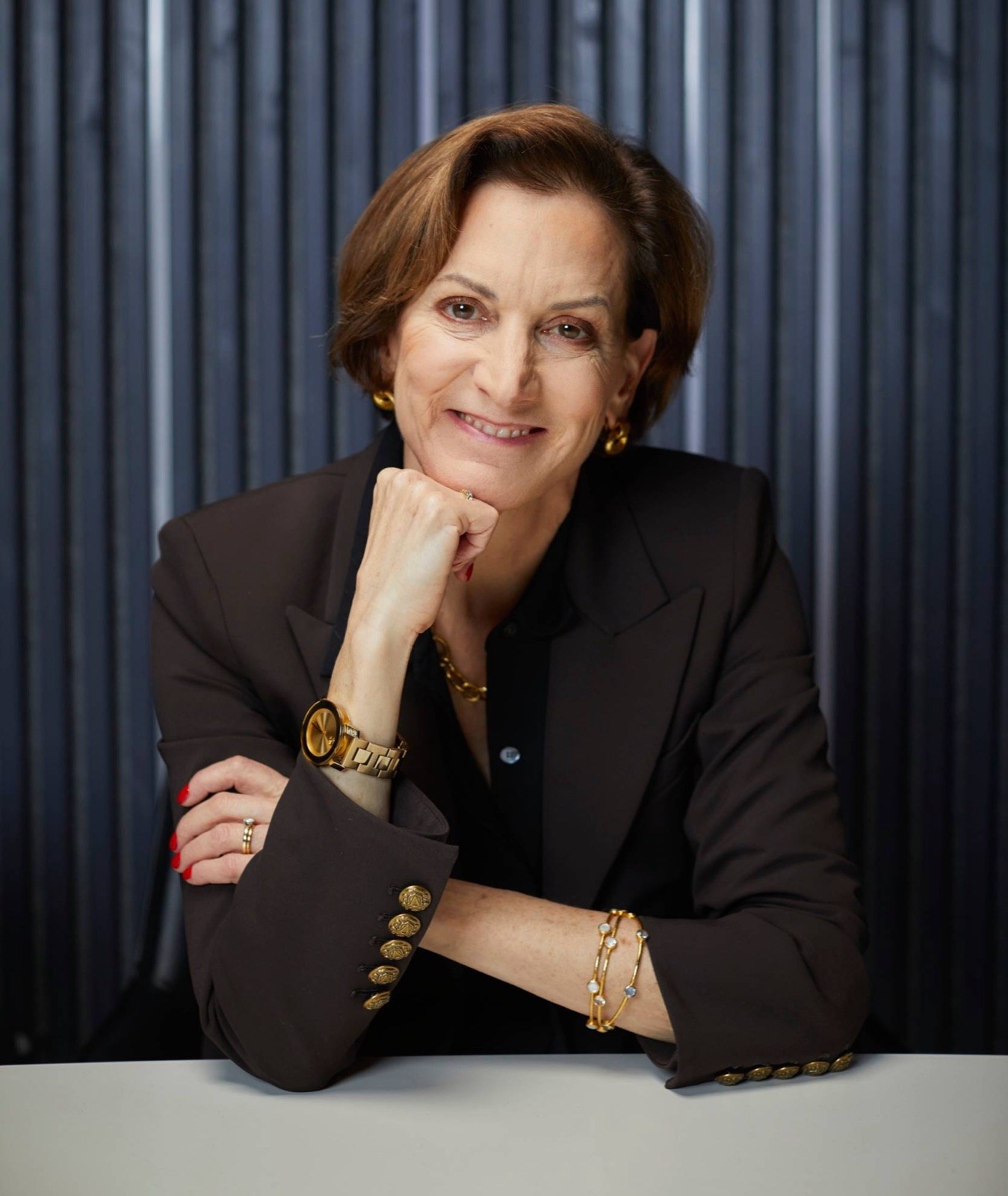
Anne Applebaum is a Pulitzer Prize-winning author discussing the future of democracy in the face of growing autocracies in Iran, China, and Venezuela and how financial interests drive autocratic success.
Episode Summary
One Decision's resident spymaster, former MI6 Chief Sir Richard Dearlove, and journalist Kasia Madera break down how Israeli intelligence orchestrated an exploding pager attack against Hezbollah in Lebanon and how Tehran may respond. They also discuss the recent second assassination attempt on former President Donald Trump. Plus, Pulitzer-Prize-winning author Anne Applebaum joins Richard and Kasia to discuss the future of democracy in the face of growing autocracies in Iran, China, and Venezuela and how financial interests drive autocratic success. They also explore the recent growth of populism in Germany and Ukraine's corruption in the face of Russia's invasion.
Listen & Subscribe
- Watch on YouTube
- Listen on Apple Podcasts
- Listen on Spotify
Transcript
COLD OPEN
Applebaum: One of the reasons why the Ukrainian state was weak enough for the Russians to consider and attempt an invasion and occupation was because it was so badly undermined by corruption. I mean, corruption weakens you. And the victory for Ukraine would be both military victory over the Russians, but also a political victory over the kleptocratic system that the Russians have been backing in Ukraine for twenty years.
INTRODUCTION
Madera: That was the Pulitzer Prize winning journalist, author, and commentator Anne Applebaum talking about Russia's full scale invasion of Ukraine. You're listening to One Decision, the podcast that looks at the choices that shape our lives. I'm your guest host, broadcaster Kasia Madera. Along with former MI6 chief, Sir Richard Dearlove, we caught up with Anne to discuss why oppressive leaders are on the rise and why she puts Donald Trump in the same camp as the autocrats and dictators she's warning about in her new book, Autocracy Inc. Now we spoke to Anne just before the apparent second assassination attempt on Donald Trump and the exploding electric pagers in Lebanon. So before we get into the conversation, Sir Richard, I have to ask you, how was it possible to get so many pagers to explode at the same time?
THE PAGERS PLOT
Dearlove: It is an extraordinary event and an extraordinary operation and I think the best way to look at it is to think about what happened before and what happened now after and not, you know, to get, as it were, too distracted by the actual attack, you know, unique though it was, and I think it is a unique event. I mean clearly Mossad or some other part of Israeli intelligence got into the supply chain for these pagers, and the reason that Hezbollah had switched or was switching their communications to pagers was because of the threat of Israeli interception if they were using other means of communication, particularly mobile phones which of course can be very easily geolocated and pretty easily intercepted. What we know about the pagers is that it was a Taiwanese company but the manufacturing was done in Hungary, and clearly at some point the Israelis diverted the supply of these phones and I'm told that the order was for 5,000 — sorry, they're not phones, they're pagers — and into each one they must have put an explosive device. I mean it's pretty amazing when you think of the amount of time and detail involved in that, plus something in the software so that when they sent us particular signals it triggered the explosive device. I think technically that's pretty straightforward and easy to do, but to divert these pagers without Hezbollah becoming suspicious. On the other side of the coin, it's a huge security failure on Hezbollah's part because it means that they received these things and their technicians didn't check them out. Okay, maybe it was tricky to find the explosive device, I don't think it would have been. I think anybody familiar with their circuitry would have been able to see pretty damn quickly that there was something odd. Israel had been really extraordinary in showing up Hezbollah. I mean they've made them look pretty stupid and pretty idiotic. It's very demeaning for Hezbollah. How carefully did Israel calculate what the political impact of this attack would be? After the event, as far as I can see, it amounts to an act of war because what they've done is taken down the communications of, let's say, all of the key members of Hezbollah. I mean the people that had these pagers must have been in the command structure, issuing orders and instructions down to the sort of street level of fighting. And how do you assemble your fighters out of the civilian population? All these things. And the section leaders, the more important people, they must have all been part of this circuit. I mean this is clearly what I would consider an act of war. It's an extreme act and it's very difficult for Israel to have predicted what the follow ons might be. And of course the other thing that you should understand is the moment that these pagers went down, what would have happened? Hezbollah would have started immediately using their mobile phones to communicate, so the Israelis would have a bonanza of intercepted material. It's terribly difficult even for the Israelis to have considered what the follow ons might be. I mean, is it a casus belli? I mean, are they really now going to break out into a war? How is Hezbollah going to respond? How is Iran going to respond? I mean we are sort of on the edge of a cliff and I think we're facing a potential crisis. I mean Hezbollah can't sit there and do nothing. They've been moderate in their response to previous Israeli successes against them in terms of rubbing out key individuals or murdering key individuals with specifically targeted attacks. What happens next? Well, I think we have to sit tight and wait, but I'm very nervous about what comes next.
Madera: Sir Richard, how can you be so certain that it's Israel, that it's Mossad behind this?
Dearlove: Well, I think it's the sophistication, not just the sort of planning and execution, but who else has the motivation to do something so extraordinary? I mean, I can't think of another intelligence led operation which has the sort of breadth, depth, and possible consequences that this one might have, and that's why I'm referring to it more as an act of war. I mean, it's extraordinary. It is absolutely extraordinary.
Madera: So what kind of reaction, what kind of response can we expect from Hezbollah?
Dearlove: Well, I suppose the choice for Hezbollah is the extent to which they now escalate. Do they continue with this restrained but pretty serious bombardment and activity on the northern border of Israel which has displaced the Israeli population that lives along that border, or do they really go for broke? Do they really up the ante? They've got a huge arsenal now built up of Iranian missiles and rockets, and they can unleash a lot of that firepower at Israel and try to overwhelm Israel's very effective Iron Dome aerial defense. Maybe do they launch a ground attack across the northern border? I think that's unlikely, but I do think that an upping of the sort of rocket attacks on Israel must be the most probable outcome. I think this could easily now begin to escalate. I've always said that Iran will not want to expend Hezbollah as a military asset and therefore they will be restrained in the way that they respond, everything short of all out war, which is pretty much the situation that you've got now. This is a provocative act when your command structure has been taken down and you've got a couple of thousand people in hospital being treated for their wounds. This is very serious for Hezbollah, so I think one has to anticipate a much more assertive response than we've seen from previous Israeli attacks. Will it be short of open conflict? Well, it may be because they may calculate that if they go down that track they're going to come off very badly. And I mean what's extraordinary about these recent events with regard to Hezbollah is clearly the degree to which Mossad has aspects of Hezbollah's activity thoroughly penetrated. It's not just, in my opinion, it's not just technical coverage. It's human coverage as well right from the inside.
Madera: Sir Richard, it's been quite a week. Of course, the situation in The Middle East and the apparent second assassination attempt on Donald Trump.
Dearlove: I've heard several Americans say it's not surprising, and I guess on reflection I was rather shocked when I heard some serious commentators say that. But I now begin to understand why because I think you have this aspect of American society where you get what I would describe as copycat violence, and there are enough crazy people with guns having seen what happened in the first shooting incident to, as it were, aspire to notoriety by repeating the act. And I think what's striking is the similarity between the planning of the second act and the first. The Secret Service clearly got in first, but it sounds pretty touch and go. And I think what it emphasizes is if you have a presidential candidate, a former president like Trump who goes off and marches around the golf course and has a very high profile. You know, the vulnerabilities are almost infinite, and to have totally effective security around him is extremely difficult. The only way you get totally effective security is if he sits in a bulletproof car and in a protected house, and every time he speaks in public he's got a bulletproof screen to the front and to the sides. That's not going to happen, so it just shows that even with augmented security, there's a fragility about his security. And, you know, maybe the same could apply to Kamala Harris as well.
Madera: Now president Biden called for more security. Of course, the security detail was criticized the first time around. What do you think? Did they do better this time?
Dearlove: Well, it sounds as though they did okay. They spotted the guy, shot at him, and he did a runner. They were successful. The trouble is that when you're dealing with these sort of security issues, the difference between success and failure is fractional. What matters is success. What's a total disaster is failure, but the distance between the two can be oh so close. And I think what's worrying is that this guy got into a position at all with a high powered rifle where he was within several 100 meters of the former president, and that I think is pretty serious. But okay, he was prevented from making the attack and not only that, was arrested pretty rapidly afterwards. So, yep, score one for the Secret Service on this occasion, but I wouldn't like to be in that job at all. There is too much uncertainty.
Madera: Obviously, an investigation is ongoing into the suspect, but we know that he was sympathetic towards Ukraine. He was there shortly after Russia's full scale invasion. What does that mean?
Dearlove: Well, I think it's difficult. I mean, let's face it. What we have is somebody who must be on balance in some respect, who's made the connection between the two. I admit politically that there are many Europeans who worry about European security and are incredibly concerned about the Trump-Vance position on Ukraine. Are they going to back out of support for Ukraine? Are they going to do a deal with Putin to end the war on terms which are appalling for European security? I think that's the position. I wouldn't like to make a direct connection through somebody who is clearly motivated in the most peculiar way.
INTERVIEW WITH ANNE APPLEBAUM
Madera: So an extraordinary week when it comes to global politics. Now let's go back to our conversation with Anne Applebaum on the rise of twenty first century autocrats. Anne, listen. Welcome. Thank you so much for joining us. It's wonderful to have you on. Your book suggests that we've been totally getting autocrats wrong, doesn't it? Because we've been talking about these twenty first century autocrats. You're suggesting that they're completely different from their twentieth century counterparts who were driven by, say, ideologies, whether communism, fascism, religious extremism, insert your own ideology. Twenty first century versions of these autocrats. What are they driven by?
Applebaum: So the book argues that there is a network and that it's not joined by ideology. It's not linked by ideology. So you have communist China, you have nationalist Russia, you have theocratic Iran, you have Bolivarian socialist Venezuela, you have North Korea, you have perhaps a dozen others. Nations who have a different vision of the world, they have a different theology, different aesthetics, they share common goals, but who do have a common enemy. And the enemy is us. The enemy is the liberal democratic world. And in particular, the ideas that rule that world. So ideas that we take for granted, the rule of law, rights, including human rights, transparency, accountability. Language like that is very threatening to people who seek to rule with no checks and balances, who seek to capture their judicial systems, to control the flow of media and information inside their countries.
Dearlove: Because those ideas, first of all, are often used by — the language it's often the language of their opponents, and it's the language that's most dangerous to their form of power. It seems to me these links of convenience which, you know, suit the participants. I mean, is that your understanding?
Applebaum: It's very opportunistic. Yes. It's more opportunistic — when the moment arises, when it's convenient, when you can make money out of it. A lot of these are — another big difference between the twenty first century and the twentieth century is we're talking about very, very rich people. We're talking about billionaires, people with hundreds of millions of dollars stashed away in different corners of the world. And so sometimes their interests are in staying in power and sometimes their interests are in keeping their money and some of their economic investments are made for that reason. In almost all these countries, they have these state or quasi state companies, semi state, semi private, who invest in one another's regimes, who make money out of one another's political arrangements, who enjoy favored arrangements not only at home but elsewhere.
Madera: At one point, you talk about it's deals rather than ideals. And it's this idea, as the title of your book itself alludes to, Autocracy Inc as in Incorporated. These autocrats, they're running their governments, arguably, you're saying, on greed like corporations, they're business people. We're misreading them, are we?
Applebaum: It's — again, there's some nuances. I wouldn't say that every single regime is like that, but in many cases, yes. I mean, their interests are financial as much as they are political. They're about preserving their family's money, their children's money, their colleagues' money. Sometimes there's a group of elite wealthy people who all make money off of their relationship to the state and seek to preserve that. I mean, it's an element of their power and their interest in power that I just think we've underestimated. So it's almost like the kleptocracy comes first and then the broader societal crackdown inevitably follows because if you want to keep that huge amount of money that you got illegally, then you're going to need to change the political system in order to do so. And you can see how that's happened in one country after the next.
Dearlove: What impresses me about the stuff that you've written is the intricacy of the investigation you've been able to do into the financial relationships and the clear evidence of corruption and scandals. I mean, some of which are in the public domain, but some of which aren't exactly fully understood or known about. I mean, it strikes me reading your text that I think this is an area which actually for a professional intelligence service would be quite a soft target, but I just wonder whether they've paid enough attention to it.
Applebaum: My impression is that intelligence services, including the one you used to be part of, are slowly beginning to understand how significant this is. It's become, you know, in the way that tracking terrorist financing wasn't something we did and then it was something that we did. I mean, certainly since the full scale war in Ukraine began, the interest in where Russian money is, where it's flowing to, who's taking advantage of it. Just to look at Russia alone, and of course, there's a dozen other countries you could also talk about, has become more central to people's understanding of what is motivating that regime and its members. Maybe there's a broader point to make, which is that generally speaking, although of course there's anti money laundering laws and regulation in every democracy on the planet, more generally speaking, the enforcement, the bureaucrats or the policemen who are tasked with enforcing those laws are almost always insufficient. I mean, they don't have the funding, they don't have the resources, they don't have enough people to track the billions and billions of dollars that can circulate in seconds around the world. I mean, it's a huge and difficult and hard to understand part of the economy. I mean, it's a strange — maybe a strange thing to say, but I think one of the other problems with kleptocracy and the whole subject of money laundering and offshore financing and so on is that it's so hard to understand and it can be so boring to explain it that it's not even that good a subject for journalism. If you can find a story to attach to it that upsets people, but it's very very hard to describe and categorize and publicize these links because they're so complicated. And it is one of the reasons why we need intelligence services and police forces to be so focused on them.
Madera: But it's interesting. One of the things that you suggest is quite tangible and quite straightforward when it comes to reforms to financial systems. Companies to be required to be registered in the names of their actual owners. It's feasible and yet it seems quite unrealistic because there will be so much pushback for something like that. So where do you get the balance?
Applebaum: Well, first of all, it is actually beginning to happen. Certainly in The US, we're very close to being able to force companies at least to register with the government. In other words, they might not have to publicize all of their information on the internet, but they have to be part of a government registry. And in The UK, there's been a lot of changes in the last year or two also pushing in that direction to force people who are registering a company at least to produce kind of the basic identification you would need to register a bank account. I mean, you couldn't set up a bank account in The UK unless you produced a passport or an ID of some kind. And that people should have to do that to set up companies seems so elementary. It's really extraordinary that we didn't require it. So I don't think it's unimaginable or so unbelievably difficult to do it. We just have to pass the law and then enforce it. And there's even, as I said, there's beginning to be the political will. It's just that there hasn't been a political movement behind it. I mean, actually I think it's a great, particularly in The UK, I think it was a great missed opportunity. Why is there no political will then? It's very complicated and people don't immediately see why it's relevant to their own lives. There was a lot of organized opposition to it. You know, I mean, they're both from, not necessarily from the criminal world, but from companies that found this system advantageous and they've, you know, found ways of making their case to politicians. I mean, as I said, I think it's beginning to change, but it really needs to change all across the democratic world.
Dearlove: About Ukraine, I'm quite keen to ask you about Ukraine. You know, we are all emotionally involved to an extent in the Ukrainian issue and passionate about, you know, the way that the Ukrainians have comported themselves in the face of this dreadful invasion. But on the other hand, I have Ukrainian contacts and friends who are appalled by their own internal corruption. And you've got a juxtaposition there, you know, of a just cause, but at the same time a country which is permeated.
Applebaum: Part of what happened in Ukraine over the last decade was — you know, there was a civil society revolution against the corrupt Ukrainian state and the fight of very determined patriotic people against the post Soviet system that was set up in Ukraine, which is very similar to the one that was created in Russia, with a few people controlling a lot of business, and their struggle has been against that. One of the reasons why the Ukrainian state was weak enough for the Russians to consider and attempt an invasion and occupation was because it was so badly undermined by corruption. I mean corruption weakens you. It divides society. It made people not feel any particular loyalty to the Ukrainian state. So there's a way in which the struggle in Ukraine is a double struggle. I mean it's against the Russians but it's also against the system that the Russians represent and the system the Russians represent is kleptocracy, and the victory for Ukraine would be both military victory over the Russians, but also a political victory over the kleptocratic system that the Russians have been backing in Ukraine for twenty years.
Madera: So, Anne, how does China fit into all of this? Because, of course, China is one of those countries that you describe as seeing democracy, the western democracies, as the enemy. But we know that Xi Jinping since 2012, he's been trying to root out corruption from his country. So how does that work?
Applebaum: As I understand it, the rooting out corruption has been very selective. And so he roots out corruption wherever he finds it among his political rivals and he doesn't necessarily root it out in other places. And we know this because there has been some mostly American attempts, for example, to report on Xi Jinping's family who are miraculously all very, very wealthy. And the question is, how did they become wealthy? And was it corruption — or sometimes it's not, sometimes they're forms of corruption that are in effect legal. I mean, it's cronyism or nepotism or something like that. It's clear that the elite in China are very wealthy. How they became wealthy is opaque. We don't really know. And of course one of the attributes of dictatorship and of modern autocracy is precisely that — that it's opaque. It's not clear where people's money comes from. We don't know that much about them or where they live. It's the lack of information, the lack of knowledge about your leaders and who they are and where their influence comes from that is part of the story of modern dictatorship.
Madera: But you have to look at, say, some of those allied countries. So Saudi Arabia, of course, is gonna come up. Arguably, you know, a country that is — how to put it diplomatically — you know, this is a country that doesn't help in stopping that kind of oppressive system within its own country. And yet it is an ally of The United States. So how — you're picking up on specific countries, but arguably, most countries have that kind of opacity, opaqueness within their governance.
Applebaum: I didn't want this book to create some black and white vision of a world divided between democracy and dictatorship. There are a lot of hybrid democracies. There are illiberal democracies. There are hybrid autocracies. I mean, Saudi Arabia is a particularly hard case, but it's absolutely clearly one of the most brutal autocracies on the planet. It enforces gender apartheid. So it is not yet a country who sees its role in the world as being one of pushing back and undermining liberal democracy wherever it finds it. They don't run information campaigns in The United States designed to shape or twist an election. They don't support extremist far right movements in Europe. You know, they're not seeking to undermine or challenge the democratic world in that way. I mean, they might eventually do that. They could go in that direction and there's, you know, I think the current Saudi leader is somebody who's much more likely to begin to think like that than his predecessors. You know? But in that sense, they're not part of Autocracy Inc. But, of course, they do collaborate with it. They do play both sides.
Dearlove: And you're an expert on Central And Eastern Europe, and obviously one is struck by the result of the recent local elections in former East Germany, particularly in Thuringia where the AfD have come through. This does link into what you've written about. It seems that there is this nostalgia for Russia in that part of Germany which to an extent, I think for all of us is quite worrying given the influence now this has on the composition of German politics as a whole. I mean, how do you interpret and see these events looking ahead?
Applebaum: So there are two elements that I think are important in the rise of the AfD. One is there has been a very carefully planned, very well executed campaign of Russian propaganda in Germany focused on East Germany and focused on the communities that now vote AfD for a decade. In Germany, as in The US, as in The UK, as in Poland, as in many other democracies, you do have populations who have been unusually affected by just massive waves of change, and you can certainly see it in East Germany — economic, social, demographic, the change in the nature of information, and you also have people living in a world that is so different from the one that they were born in. And so you have this kind of nostalgia for stability and a nostalgia for permanence, which this authoritarian propaganda — this propaganda of the idea that authoritarian states are stable and safe and autocracies are — and that democracies are divided and violent and dangerous and degenerate. It works very well in those kinds of communities and the thinking about how to offer some sense of stability to people like that is, you know, is part of the game, I think, of modern politics, some kind of sense of stability and some vision of the future in which they can feel secure and safe.
Madera: Is there a suggestion that given this uptake then that perhaps democracy isn't working as well as back in the twentieth century, we would have hoped it would have been, and it's failed people?
Applebaum: You know, you can look at almost any moment in the history of The US and you can find populations who felt democracy was failing them at that time. There was an economic boom in the aftermath of the second world war. There was a feeling of despair and failure in the late 1960s connected to Vietnam. There was an oil crisis in the seventies. I mean, we go through these cycles. I'm not sure that it's democracy that's failing people, but the particular set of political issues in the particular crisis of the moment haven't yet been dealt with well by all democratic politicians. I mean, there is certainly some change. The best evidence of that actually is Poland where there has been a backlash against an autocratic populist party that was seeking to establish a kind of mini kleptocracy in Poland, was trying to take over the institutions of the state, was very corrupt in fact, as it turned out. And yet there was a popular — there was a broad coalition that appealed to different kinds of people across the country that was able to defeat it. The argument that Kamala Harris is making in the US election is a similar kind of argument in some way. She's looking to appeal to a broad range of people to include people who are excluded economically, to make economic arguments rather than culture war arguments. I mean, we'll see — it's a long way away still from the election. But I mean, I don't think it's impossible using democratic means for democratic politicians to make the argument for our system. What future for the kleptocracy if Trump's reelected? It's very hard — you know, Trump is very hard to predict because he himself has no ideology. He is interested in himself and his own finances and his own ego and his own legal cases, you know, so he's not somebody who will do x or y for predictably ideological reasons. And so having said that, you know, that's an important thing to remember about him. I think it's pretty clear though at the same time that he does not see himself as the leader of the democratic world, does not want to be, does not see The United States as the leading nation connected to other democracies and other rule of law countries. He's not interested in liberal values or in promoting them or in maintaining them.
Madera: Your description of him sounds like your description from all the autocrats in your book.
Applebaum: Yeah. He in some ways resembles them. I mean, it's complicated because of course, you know, he would be working within The US system and there are constraints. I think were he to be elected president again, I think he would try to undermine US institutions in a much more systematic way in a second term than he was able to do in the first term. He would have a different kind of person around him. There's actually a plan that has been written to do that. This is the famous Project 2025. I mean, they actually put it on paper. You know, whether he would be able to achieve that or not, I don't know. I mean, probably not, but he could do a lot of damage while trying.
Madera: You dedicated your book for the optimists. So let's just bring this to an end in an optimistic fashion. Are any countries getting it right?
Applebaum: Yeah. I mean, I think you can look at countries that are getting it right. You can look at political movements that are getting it right. It looks to me like the US Democratic Party is beginning to get some things right, picking up things it's missed. You can look at Poland, which is getting some things right. France was supposed to be some kind of catastrophe and yet the center and the left managed to cooperate and prevent that from happening. In The Netherlands, the far right did well in the election, but then it turned out that they were willing to compromise. I mean, you can see happening in all kinds of places, catastrophe being warned off. I mean, you could also look at the democratic alliance that has worked together to support the Ukrainians. I mean, that's a thing that did not exist two years ago. There was no international alliance to help Ukraine. And now there is, and that's a political effort that it took to create that should never be underestimated. So when there is an emergency, the democratic world can and does act. And I'm simply trying to raise the alarm so that I persuade us to act more and more constructively in the future.
Madera: That's it for this week's episode of One Decision. Our thanks to Anne Applebaum and Sir Richard Dearlove. You can sign up to our website, 1decision.com, for access to exclusive episodes and articles and real time updates on the latest news and global affairs. Stay connected with us at 1decision.com. Until next time.